Serpae tetra
Hyphessobrycon eques
Also known as Hyphessobrycon serpae, Megalamphodus eques, Jewel tetra, Red minor tetra
FreshwaterFish
Care at a glance
- Temperature
- 68–82°F
- 20–28°C
- pH
- 5.5–7.5
- Adult size
- 1.8 in
- 4.5 cm
- Minimum tank
- 17 gal
- 65 L
- Temperament
- Peaceful
- Social behavior
- Schooling
- Swim level
- Middle
- Difficulty
- Easy
- Breeding
- Hard
- Rarity
- Common
- Family
- Characidae
- Origin
- Brazil, Paraguay, Argentina
Overview
Keep them in a group of at least six, and lean toward a larger group, because they are known fin-nippers and a bigger school keeps that behavior aimed at each other rather than tankmates. They hold the middle of the tank and want around 65 liters or more. Avoid slow, long-finned tankmates like bettas and angelfish. Feed flake, small pellets, and occasional live or frozen brine shrimp and bloodworms, in water from about pH 5.5 to 7.5 and the low to high 20s C.
In the wild
Serpae tetras come from the Amazon basin across Brazil, Paraguay, and northern Argentina, in slow rivers, streams, and seasonal floodplains. They live among dense plants, submerged roots, and fallen leaves over soft, slightly acidic to neutral water. A planted tank with driftwood, some cover, and a darker substrate brings out their color and keeps them comfortable. Open swimming lanes between the planting let the group move.
Good to know
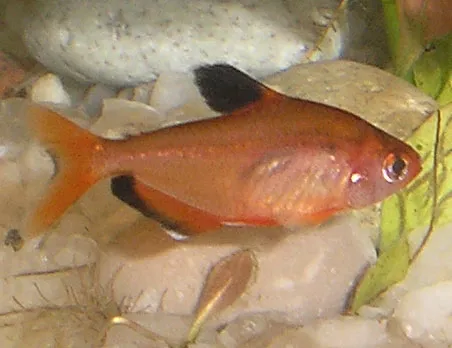
This is a characin in the family Characidae, reaching about 4.5 cm. It is known for a deep red body and a dark comma-shaped mark behind the gills. They are egg scatterers that give no parental care, with eggs hatching in roughly a day to a day and a half. Captive breeding is challenging. The species is not listed as threatened in its native range.
Did you know
Their fin-nipping is not random aggression so much as a side effect of a busy, peck-order-driven school. Keep them in tight, well-fed groups and the nipping mostly stays within the group, but a lone serpae or a tiny pair is far more likely to harass slower fish.
Weekly picks
Tank mates
Serpae tetra is a peaceful, schooling species that keeps to the middle. These picks share a community profile with it, are safe together in both directions, and overlap on water type, temperature and pH.
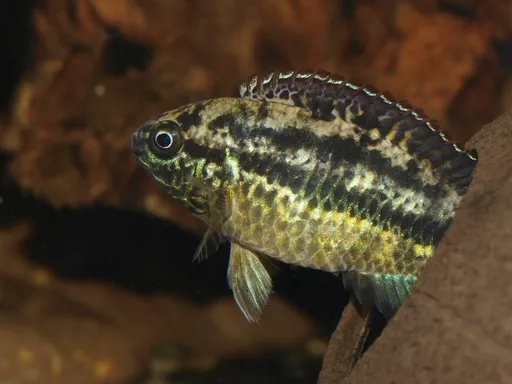
Golden dwarf cichlid
Nannacara anomala
Freshwater3.1 in (8 cm) · 16 gal (60 L)72–82°F (22–28°C)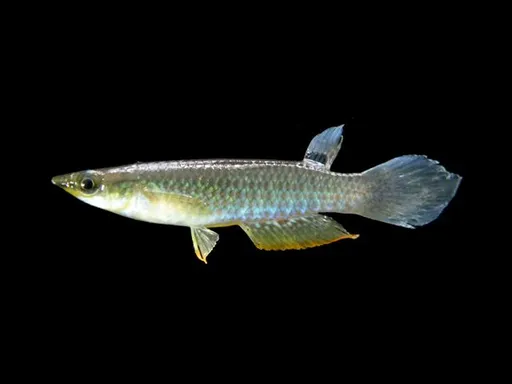
Blue panchax
Aplocheilus panchax
Freshwater3.5 in (9 cm) · 20 gal (75 L)72–82°F (22–28°C)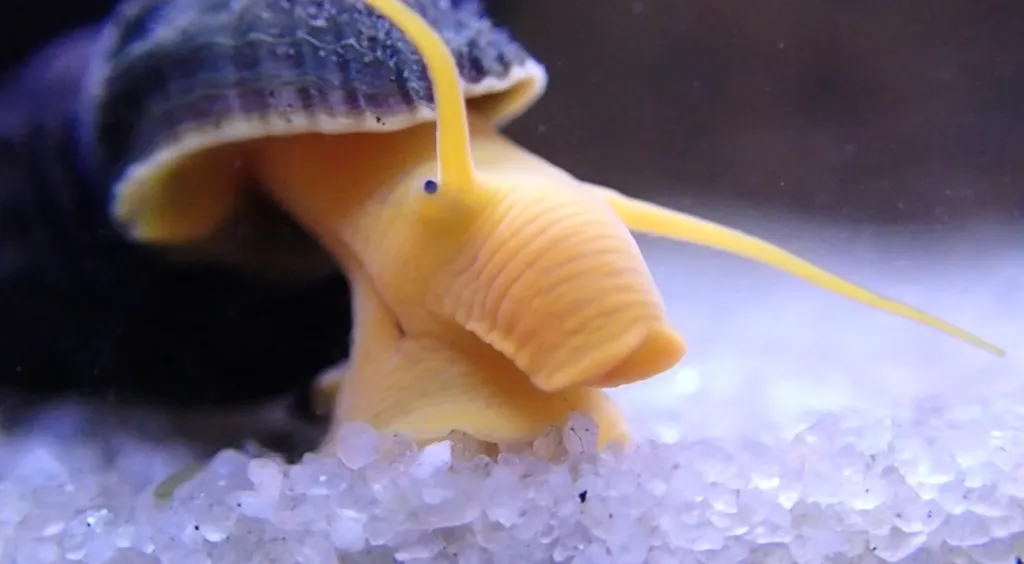
Gold rabbit snail
Tylomelania gemmifera
Freshwater2.8 in (7 cm) · 16 gal (60 L)75–82°F (24–28°C)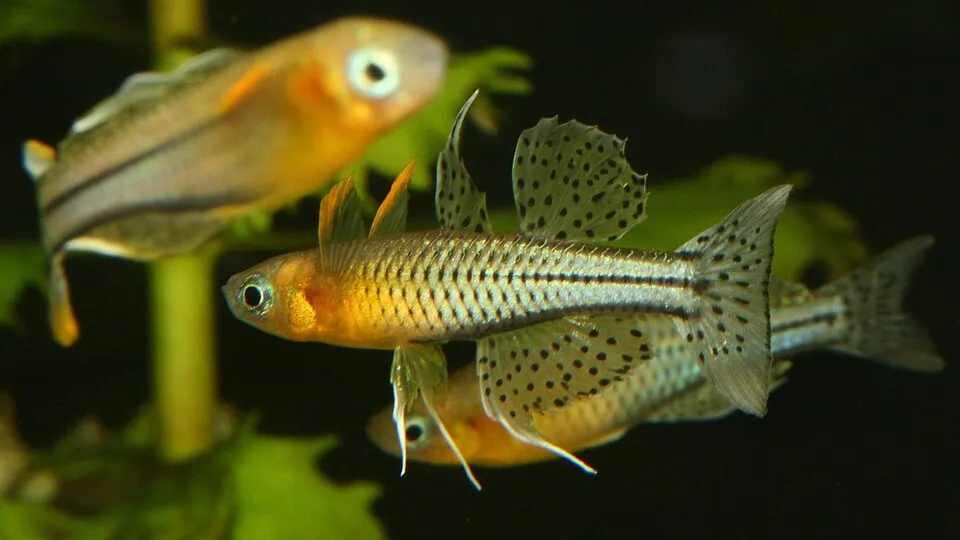
Spotted blue-eye
Pseudomugil gertrudae
Freshwater1.5 in (3.8 cm) · 17 gal (65 L)70–82°F (21–28°C)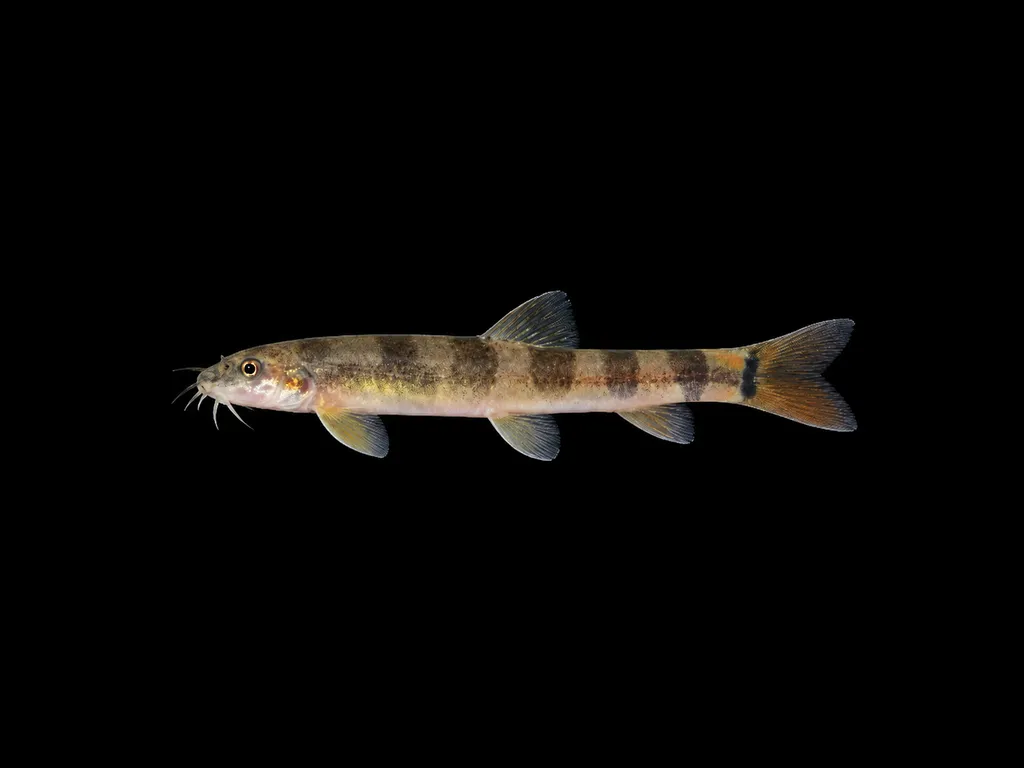
Aizawl loach
Schistura aizawlensis
Freshwater2.4 in (6 cm) · 20 gal (75 L)68–79°F (20–26°C)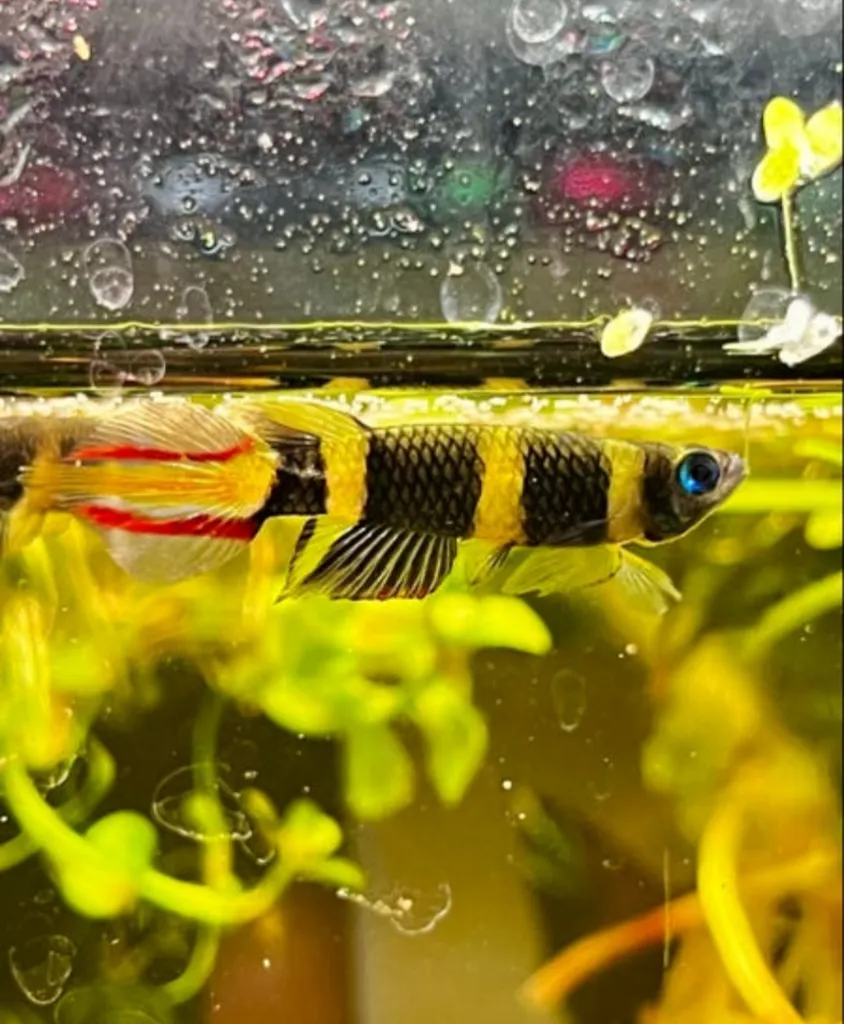
Clown killifish
Epiplatys annulatus
Freshwater1.4 in (3.5 cm) · 15 gal (55 L)68–79°F (20–26°C)
Common questions
What size tank does a Serpae tetra need?
A Serpae tetra needs at least 17 gal (65 L). It spends most of its time in the middle.
What temperature and pH does a Serpae tetra need?
A Serpae tetra is comfortable at 68–82°F (20–28°C) with a pH of 5.5–7.5.
How big does a Serpae tetra get?
An adult Serpae tetra reaches about 1.8 in (4.5 cm).
Does a Serpae tetra need a group?
Yes. A Serpae tetra is a schooling species and should be kept in a group, not singly.
Related species
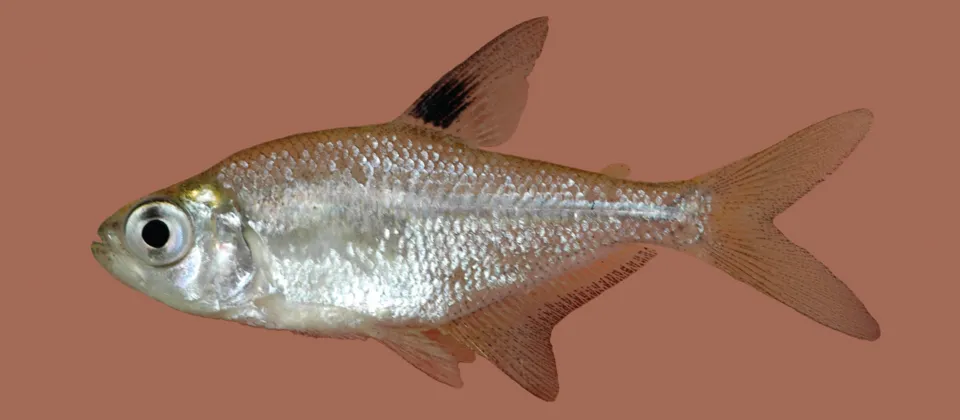 1.8 in (4.5 cm)16 gal (60 L)68–79°F (20–26°C)
Mayan tetra
Hyphessobrycon compressus
1.8 in (4.5 cm) · 16 gal (60 L)
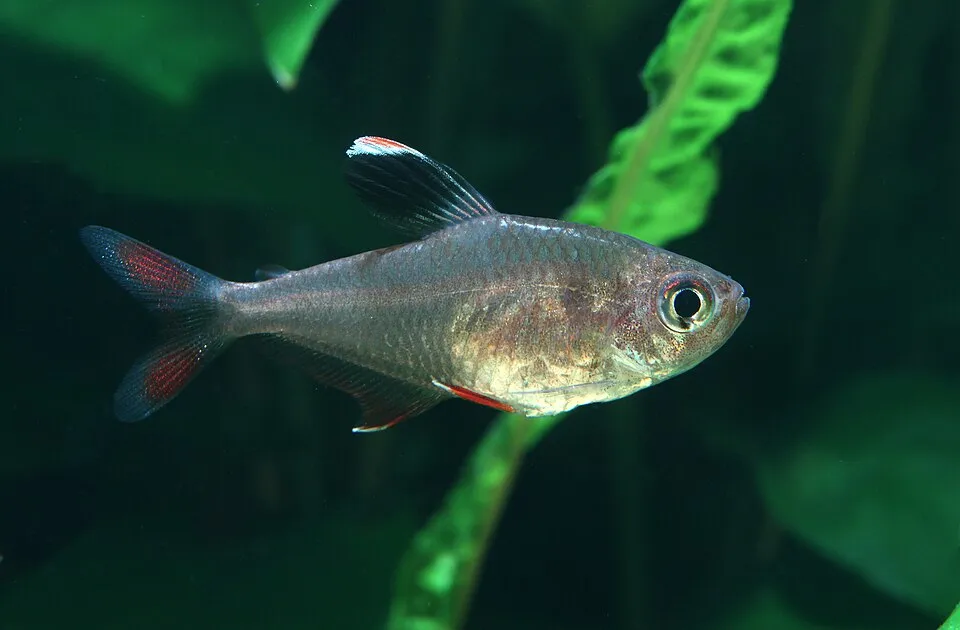 1.8 in (4.5 cm)20 gal (75 L)72–82°F (22–28°C)
Ornate tetra
Hyphessobrycon bentosi
1.8 in (4.5 cm) · 20 gal (75 L)
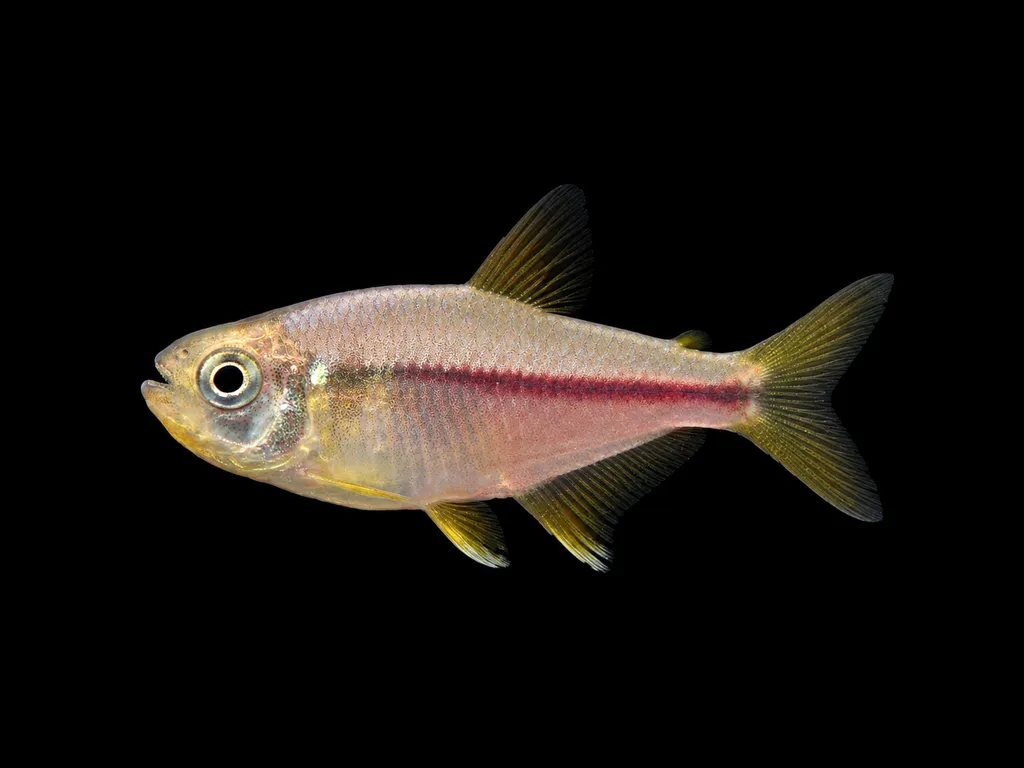
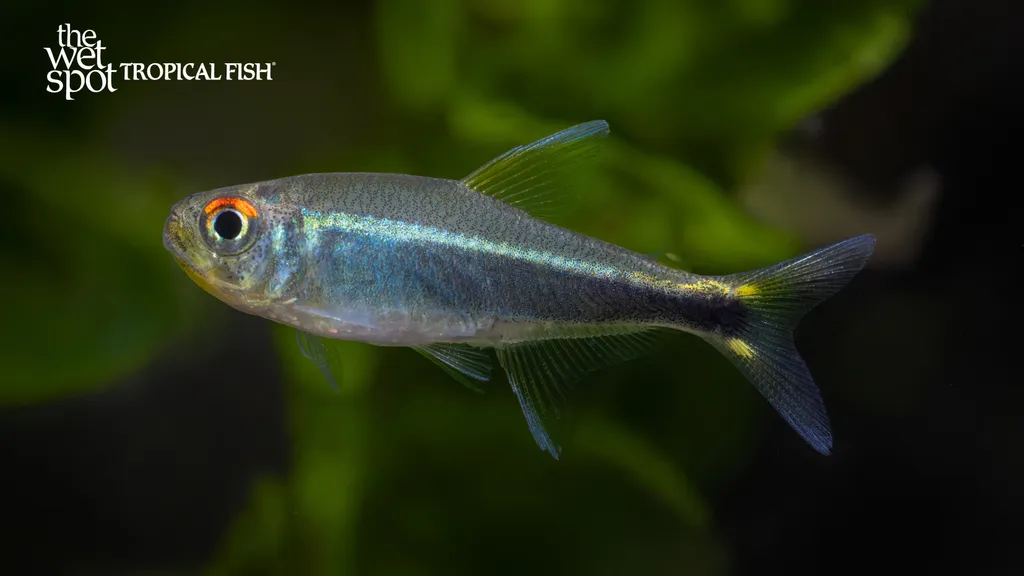 1.8 in (4.5 cm)20 gal (75 L)73–82°F (23–28°C)
Purple tetra
Hyphessobrycon metae
1.8 in (4.5 cm) · 20 gal (75 L)
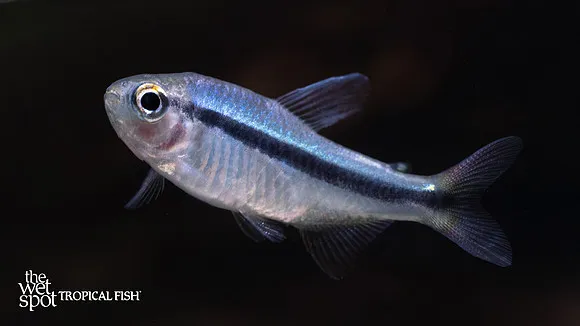
 1.8 in (4.6 cm)16 gal (60 L)72–82°F (22–28°C)
Itaparica tetra
Hyphessobrycon itaparicensis
1.8 in (4.6 cm) · 16 gal (60 L)
 1.7 in (4.4 cm)16 gal (60 L)72–81°F (22–27°C)
Lapis tetra
Hyphessobrycon cyanotaenia
1.7 in (4.4 cm) · 16 gal (60 L)
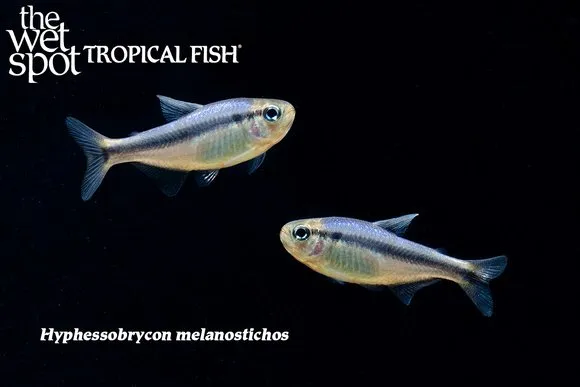 1.7 in (4.4 cm)16 gal (60 L)72–81°F (22–27°C)
Melanostichos tetra
Hyphessobrycon melanostichos
1.7 in (4.4 cm) · 16 gal (60 L)