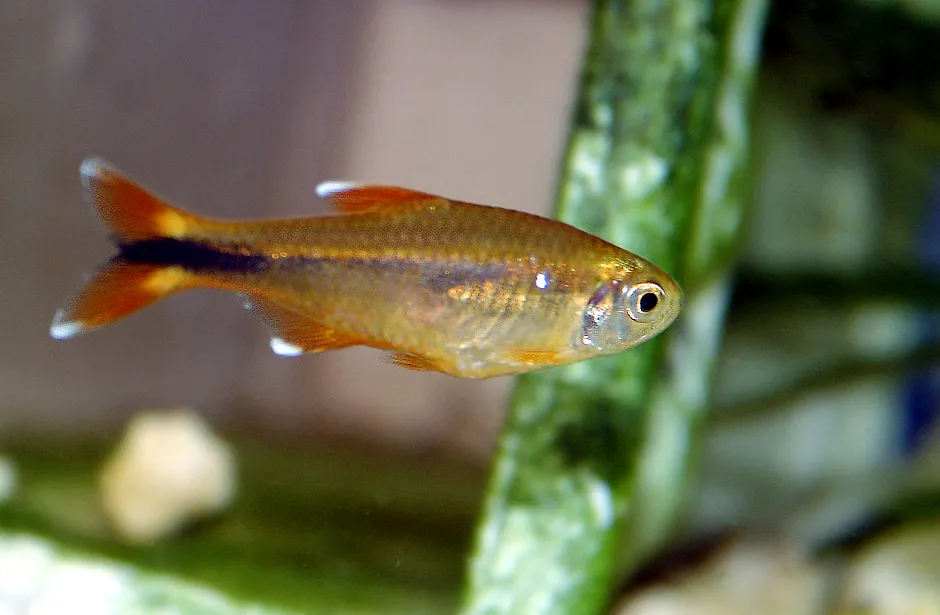
Silvertip tetra
Hasemania nana
Also known as Silver tip tetra
FreshwaterFish
Care at a glance
- Temperature
- 73–82°F
- 23–28°C
- pH
- 6.0–8.0
- Adult size
- 1.6 in
- 4 cm
- Minimum tank
- 18 gal
- 70 L
- Temperament
- Peaceful
- Social behavior
- Schooling
- Swim level
- Middle
- Difficulty
- Beginner
- Breeding
- Egg scatterer · Medium
- Rarity
- Common
- Family
- Characidae
- Origin
- Brazil
Overview
The silvertip tetra is an active schooling fish for the middle of a planted community tank. It is a solid beginner fish.
Did you know
The silvertip tetra lacks an adipose fin, which is unusual for a tetra.
Caring for the silvertip tetra
Keep silvertip tetras in a school of six or more, in 18 gal (70 L) or larger. In good-sized groups they show their copper color and tight schooling. A planted tank with some open swimming space and gentle flow suits them.
They adapt to a broad range of water conditions and tolerate a wide pH range. Aim for 73 to 82°F (23 to 28°C) and a pH of 6.0 to 8.0. Feed small flakes and micro-pellets, with the occasional daphnia or bloodworms.
Silvertip tetras are active mid-water swimmers and generally peaceful. A thin group can turn nippy toward long-finned tank mates.
Dominant males turn a deeper coppery-gold during courtship, with their white fin tips standing out more. They use that color shift to compete for females and stake out small display areas. Silvertip tetras are egg scatterers with no parental care, and the eggs hatch in roughly a day. Breeding them is moderately difficult.
Good to know
Hasemania nana is a small characin in the family Characidae. It is a hardy, widely available species with no major conservation concerns.
In the wild
Silvertip tetras come from the Sao Francisco basin in Brazil. They live in clear, moving streams over sand and rock with plant cover. The water there is soft to moderately hard and runs from slightly acidic to neutral.
Weekly picks
Tank mates
The silvertip tetra is a peaceful, schooling species that keeps to the middle. These picks share a community profile with it, are safe together in both directions, and overlap on water type, temperature and pH.
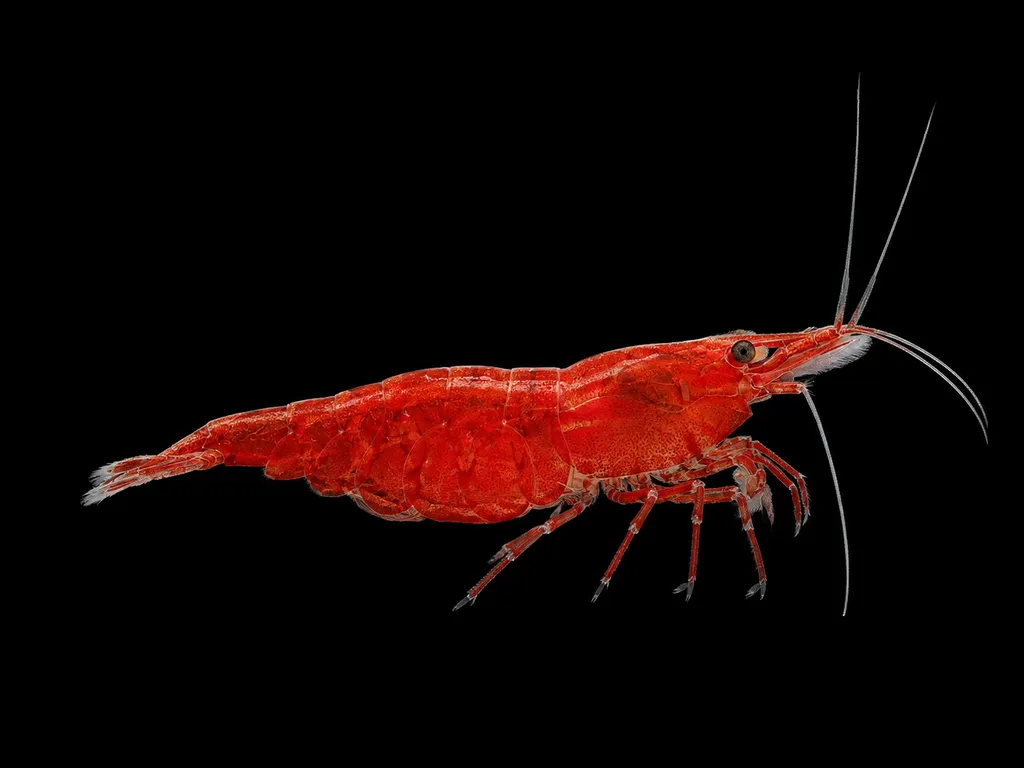
Neocaridina shrimp
Neocaridina davidi
Freshwater1.6 in (4 cm) · 5 gal (19 L)59–84°F (15–29°C)
Neon tetra
Paracheirodon innesi
Freshwater1.5 in (3.8 cm) · 11 gal (40 L)70–77°F (21–25°C)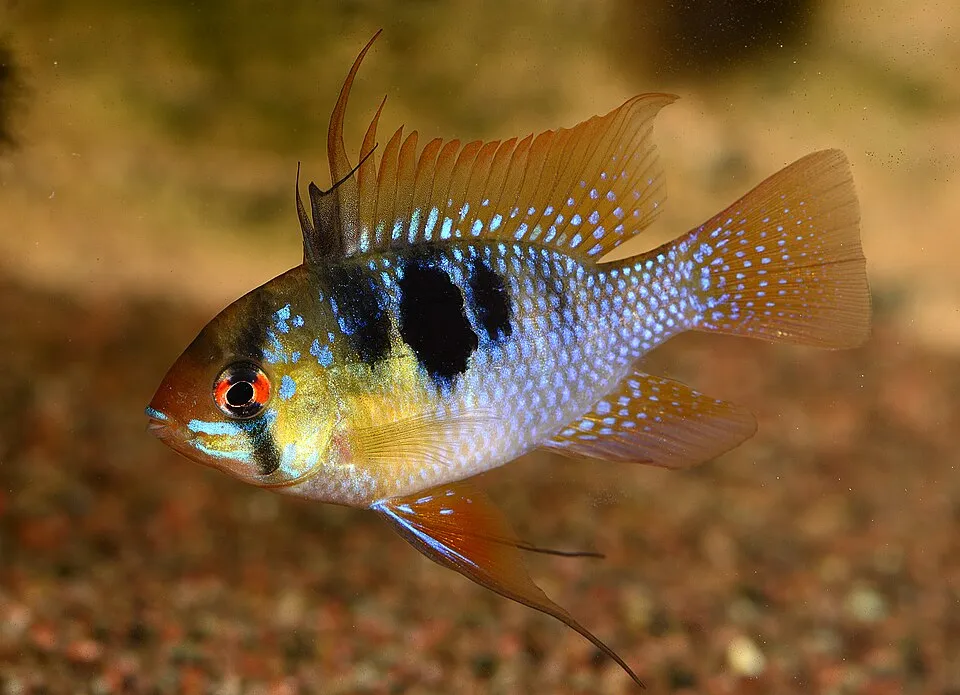
Blue ram
Mikrogeophagus ramirezi
Freshwater2.4 in (6 cm) · 18 gal (70 L)81–86°F (27–30°C)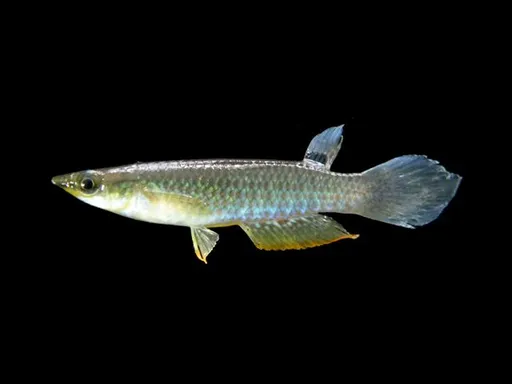
Blue panchax
Aplocheilus panchax
Freshwater3.5 in (9 cm) · 20 gal (75 L)72–82°F (22–28°C)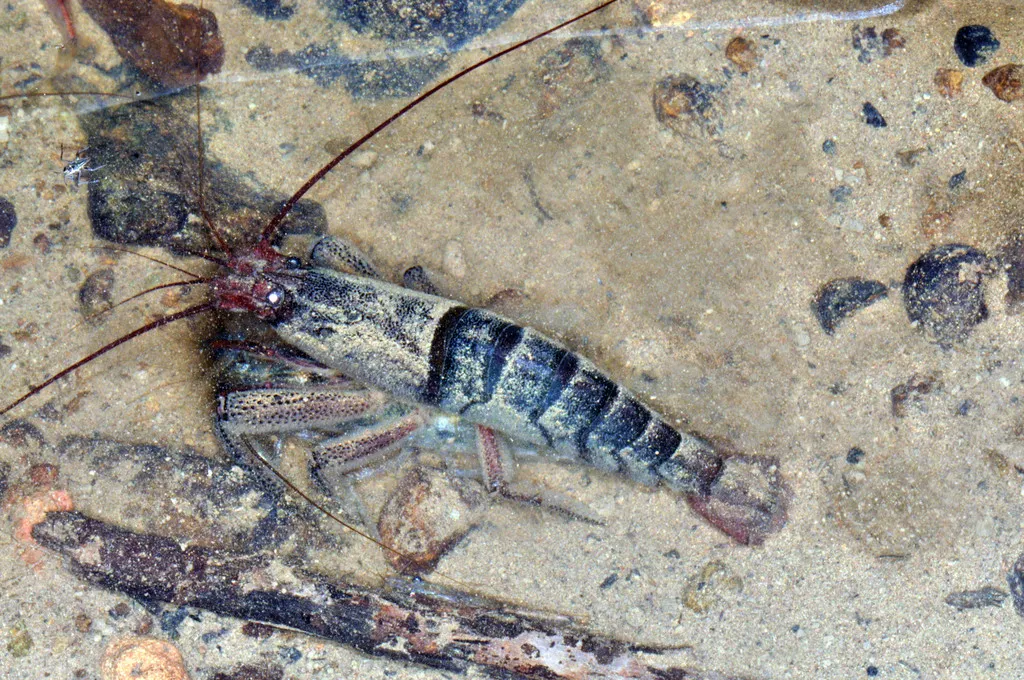
Marble wood shrimp
Atya scabra
Freshwater3.9 in (10 cm) · 20 gal (75 L)73–82°F (23–28°C)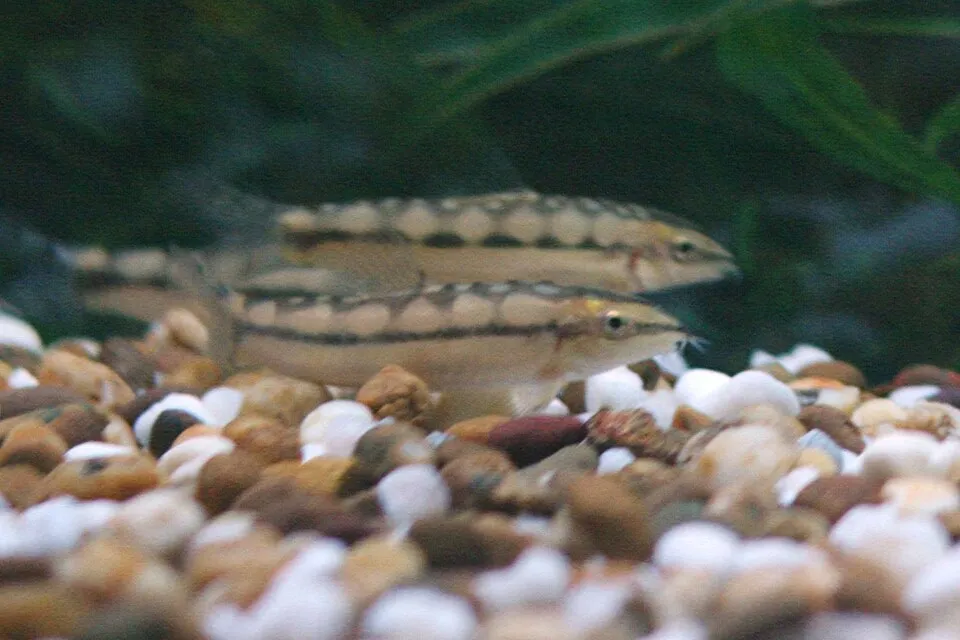
Dwarf botia
Ambastaia sidthimunki
Freshwater2.4 in (6 cm) · 20 gal (75 L)68–86°F (20–30°C)
Common questions
What size tank does a silvertip tetra need?
A silvertip tetra needs at least 18 gal (70 L). It spends most of its time in the middle.
What temperature and pH does a silvertip tetra need?
A silvertip tetra is comfortable at 73–82°F (23–28°C) with a pH of 6.0–8.0.
What does a silvertip tetra eat?
A silvertip tetra eats small flakes and micro-pellets, with the occasional daphnia or bloodworms.
How big does a silvertip tetra get?
An adult silvertip tetra reaches about 1.6 in (4 cm).
Does a silvertip tetra need a group?
Yes. A silvertip tetra is a schooling species and should be kept in a group, not singly.
How can you tell a male silvertip tetra from a female?
Dominant males turn a deeper coppery-gold during courtship, and their white fin tips stand out more. They use that color shift to compete for females.
How does a silvertip tetra breed?
Silvertip tetras are egg scatterers and give no parental care. Their eggs hatch in roughly a day, and breeding them is moderately difficult.
Related species
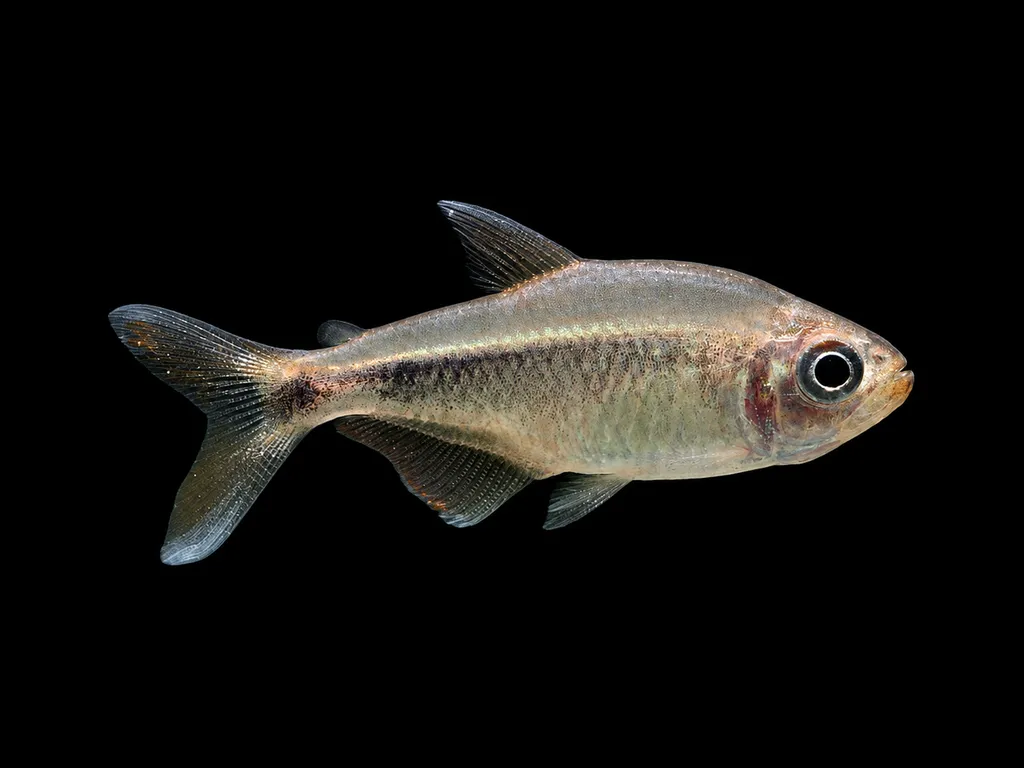 1.6 in (4 cm)14 gal (54 L)72–81°F (22–27°C)
Hansen's hasemania
Hasemania hanseni
1.6 in (4 cm) · 14 gal (54 L)
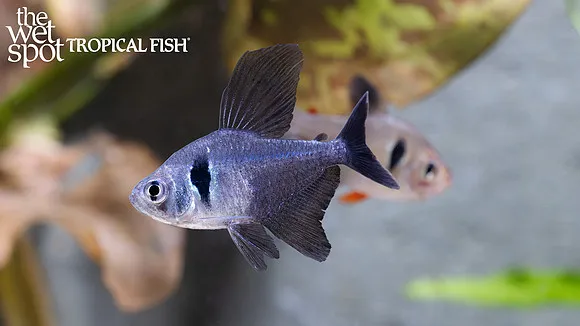 1.6 in (4 cm)16 gal (60 L)73–82°F (23–28°C)
Epicharis tetra
Hyphessobrycon epicharis
1.6 in (4 cm) · 16 gal (60 L)
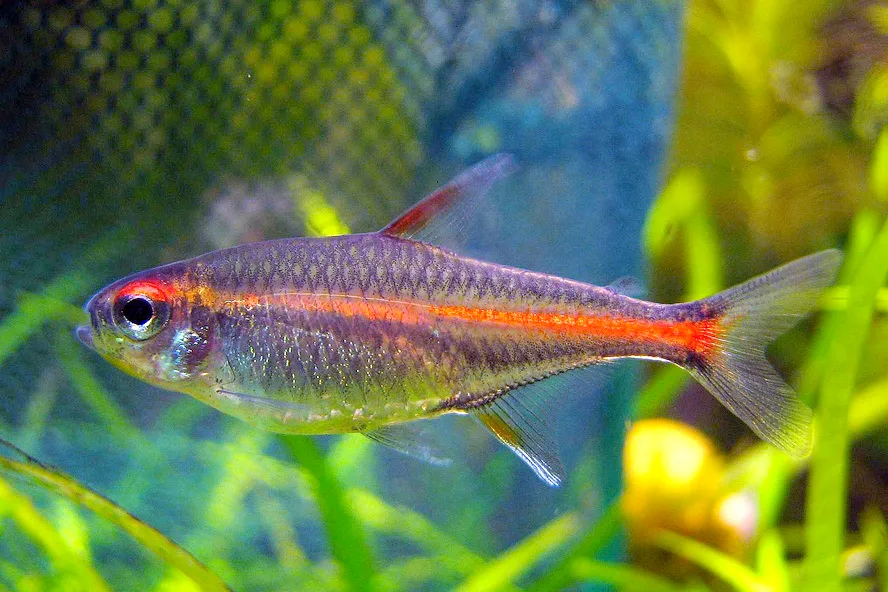 1.6 in (4 cm)10 gal (38 L)75–82°F (24–28°C)
Glowlight tetra
Hemigrammus erythrozonus
1.6 in (4 cm) · 10 gal (38 L)
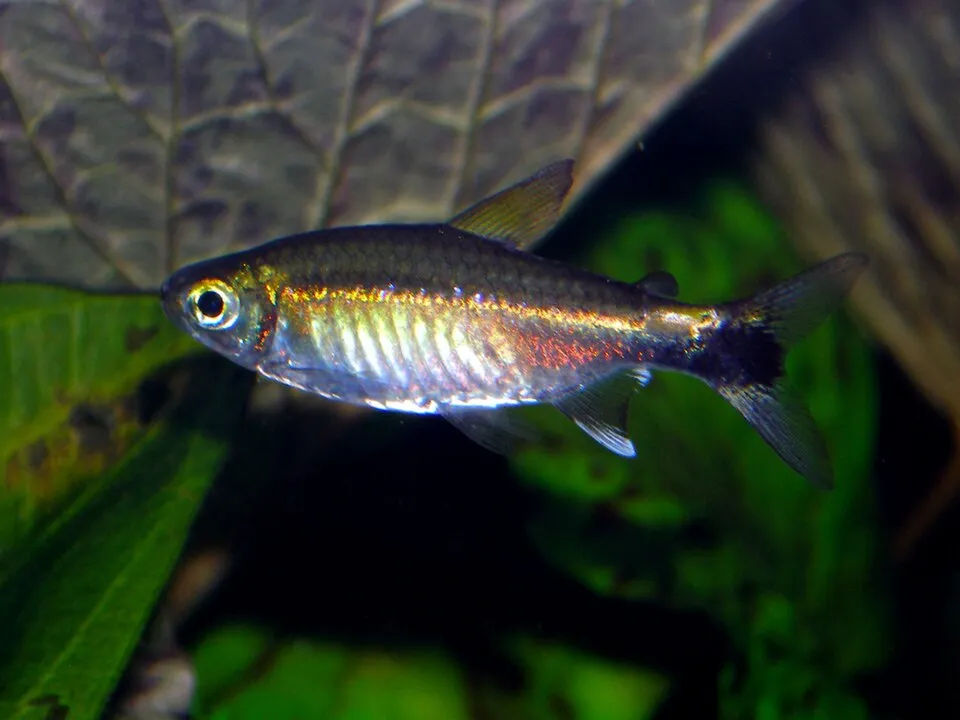 1.6 in (4 cm)17 gal (65 L)73–81°F (23–27°C)
January tetra
Hemigrammus hyanuary
1.6 in (4 cm) · 17 gal (65 L)
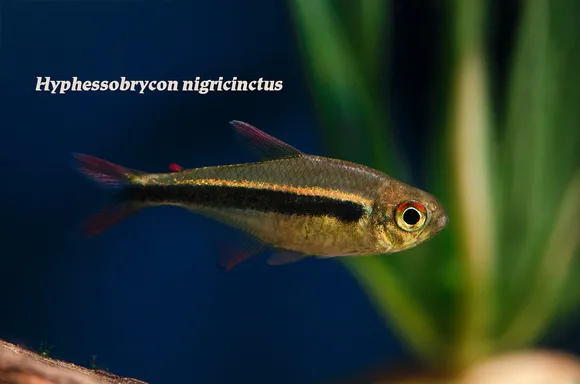 1.6 in (4 cm)15 gal (55 L)72–81°F (22–27°C)
Madre de Dios tetra
Hyphessobrycon nigricinctus
1.6 in (4 cm) · 15 gal (55 L)
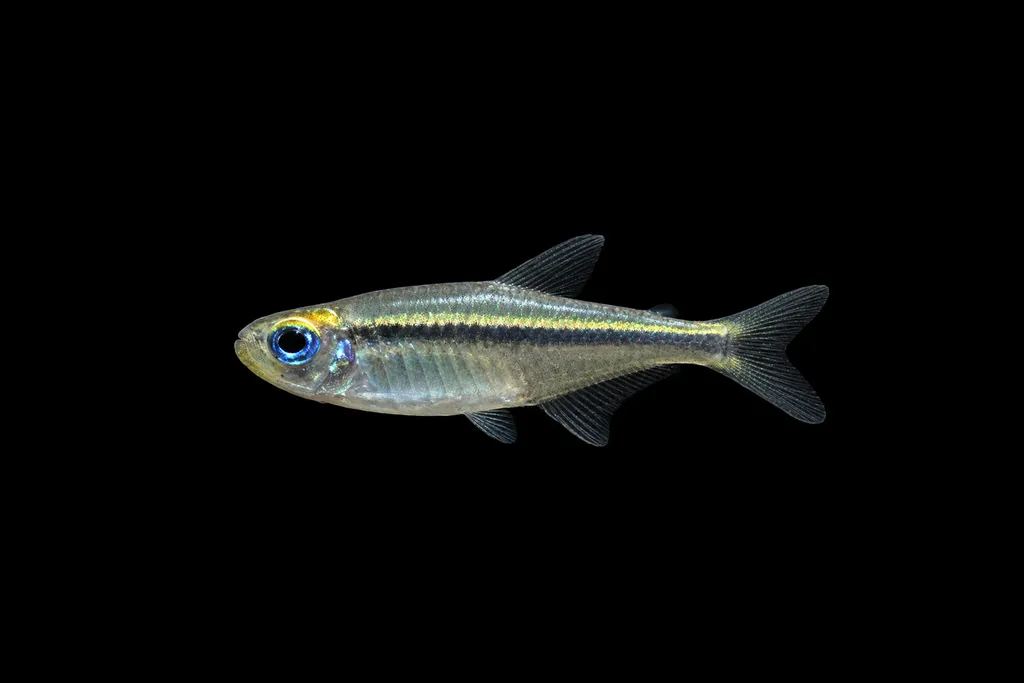 1.6 in (4 cm)16 gal (60 L)72–81°F (22–27°C)
Parrot tetra
Hyphessobrycon psittacus
1.6 in (4 cm) · 16 gal (60 L)