Glowlight tetra
Hemigrammus erythrozonus
FreshwaterFish
Care at a glance
- Temperature
- 75–82°F
- 24–28°C
- pH
- 6.0–7.5
- Adult size
- 1.6 in
- 4 cm
- Minimum tank
- 10 gal
- 38 L
- Temperament
- Peaceful
- Social behavior
- Schooling
- Swim level
- Middle
- Difficulty
- Easy
- Breeding
- Egg scatterer · Medium
- Rarity
- Rare
- Family
- Characidae
- Origin
- Guyana
Overview
The glowlight tetra is a peaceful schooler for the middle of a community tank. It is a good beginner's fish.
Did you know
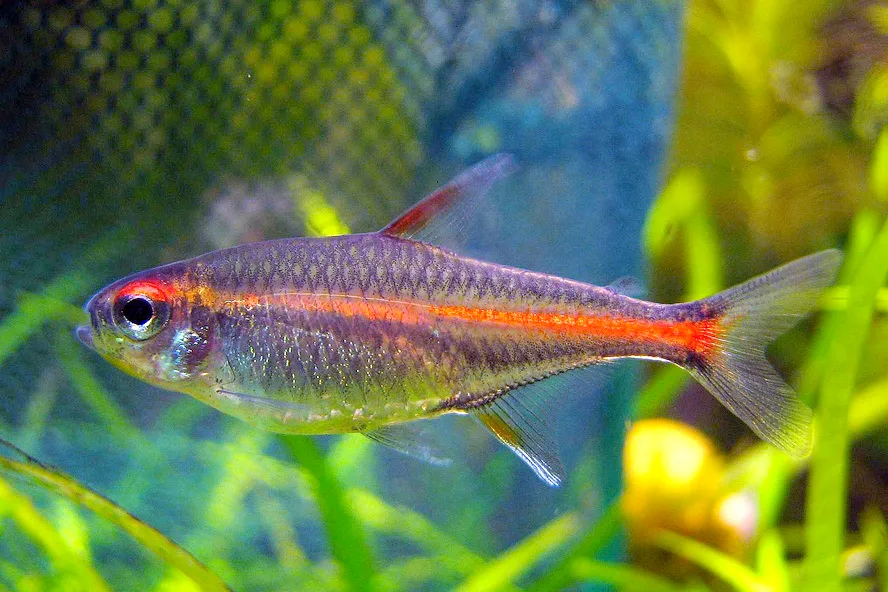
A glowlight tetra's stripe only really lights up when the fish is relaxed and settled in. Stressed or newly added glowlights look washed out, so good color is a decent sign the tank conditions are right.
Caring for the glowlight tetra
Keep glowlight tetras in a group of at least six, in a tank of at least 10 gal (38 L). More is better and brings out their schooling. Plant the tank, add some shade and keep the flow gentle. A dark substrate makes their colors show better.
Hold the temperature at 75 to 82°F (24 to 28°C) and the pH at 6.0 to 7.5. They eat small foods readily, so feed quality flake or micro pellets with frozen daphnia or bloodworms mixed in.
Glowlight tetras are peaceful and suit a community of other calm, similarly sized fish. They scatter their eggs and give no parental care, and the eggs hatch in roughly a day. Breeding is moderately achievable in soft, acidic water, but the parents will eat the eggs if given the chance.
Good to know
The glowlight tetra is a small characin in the family Characidae, and its orange-red stripe gives it its name.
In the wild
Glowlight tetras come from the Essequibo basin in Guyana. They live in slow, clear streams over sand, with plenty of plants and soft, slightly acidic water.
Weekly picks
Tank mates
The glowlight tetra is a peaceful, schooling species that keeps to the middle. These picks share a community profile with it, are safe together in both directions, and overlap on water type, temperature and pH.
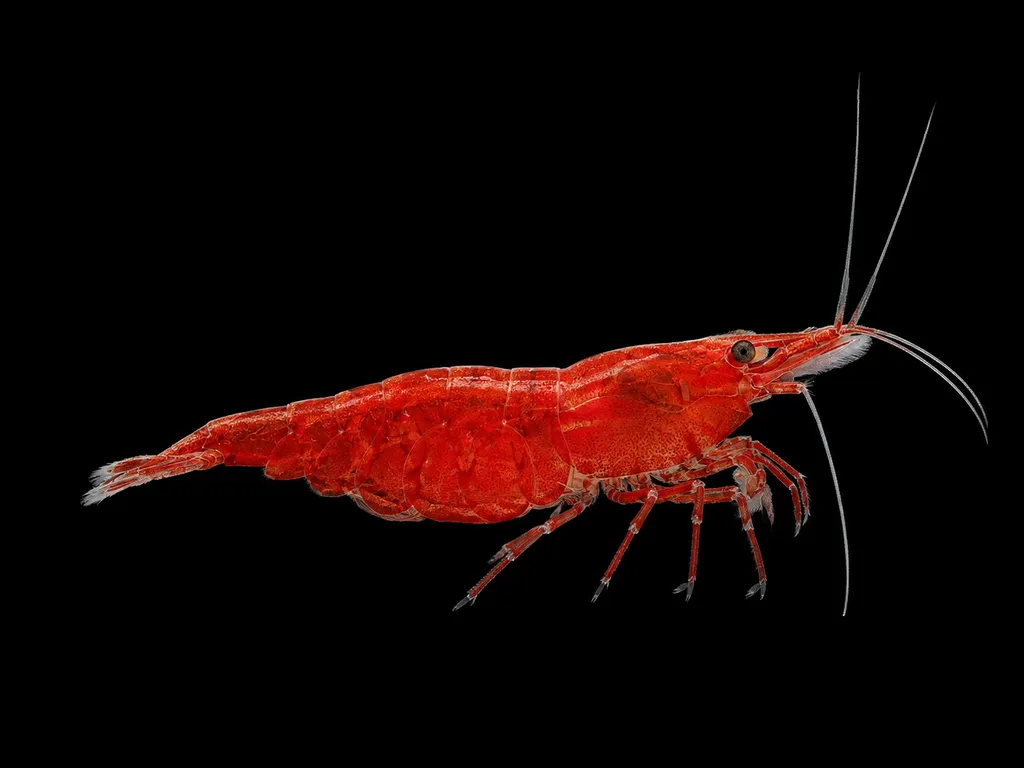
Neocaridina shrimp
Neocaridina davidi
Freshwater1.6 in (4 cm) · 5 gal (19 L)59–84°F (15–29°C)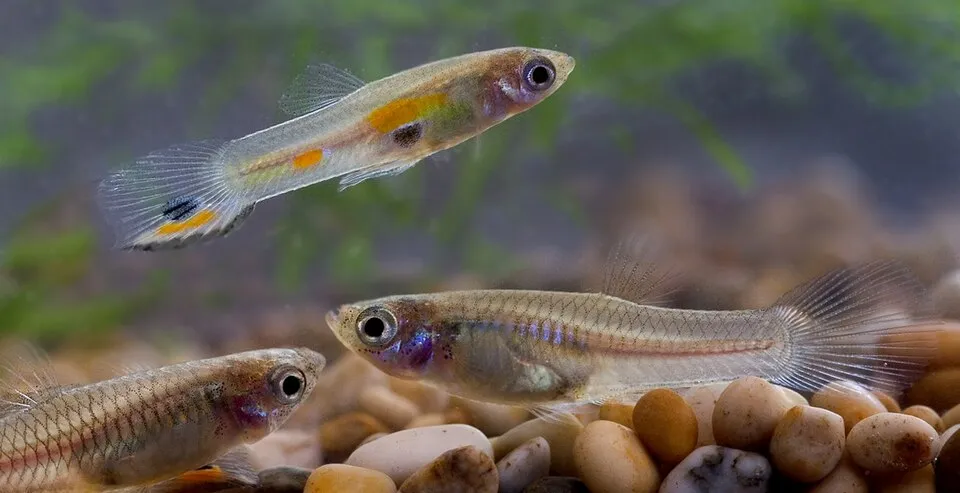
Guppy
Poecilia reticulata
FreshwaterBrackish2.4 in (6 cm) · 10 gal (38 L)64–82°F (18–28°C)
Neon tetra
Paracheirodon innesi
Freshwater1.5 in (3.8 cm) · 11 gal (40 L)70–77°F (21–25°C)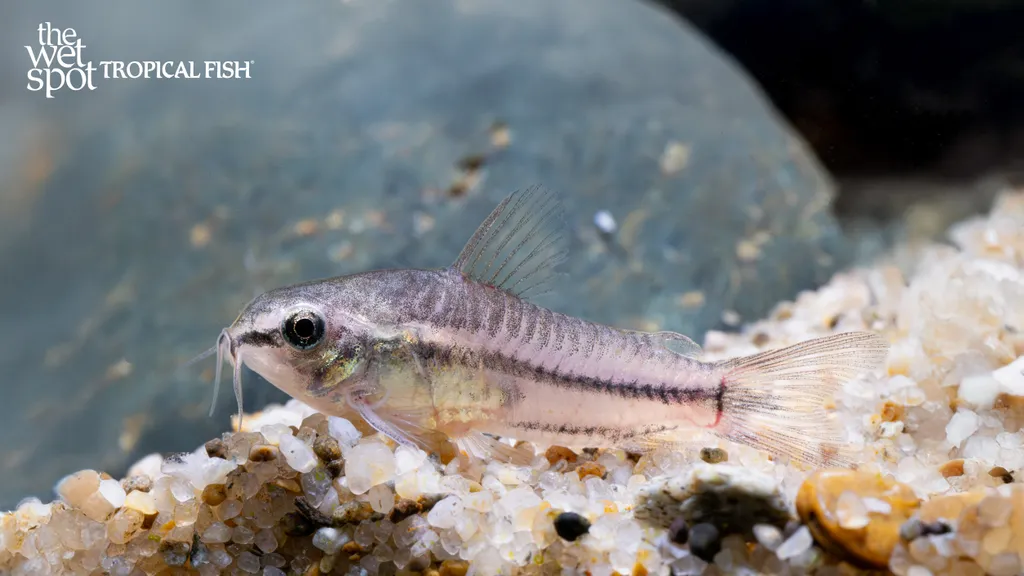
Pygmy cory
Gastrodermus pygmaeus
Freshwater1.3 in (3.3 cm) · 10 gal (38 L)72–79°F (22–26°C)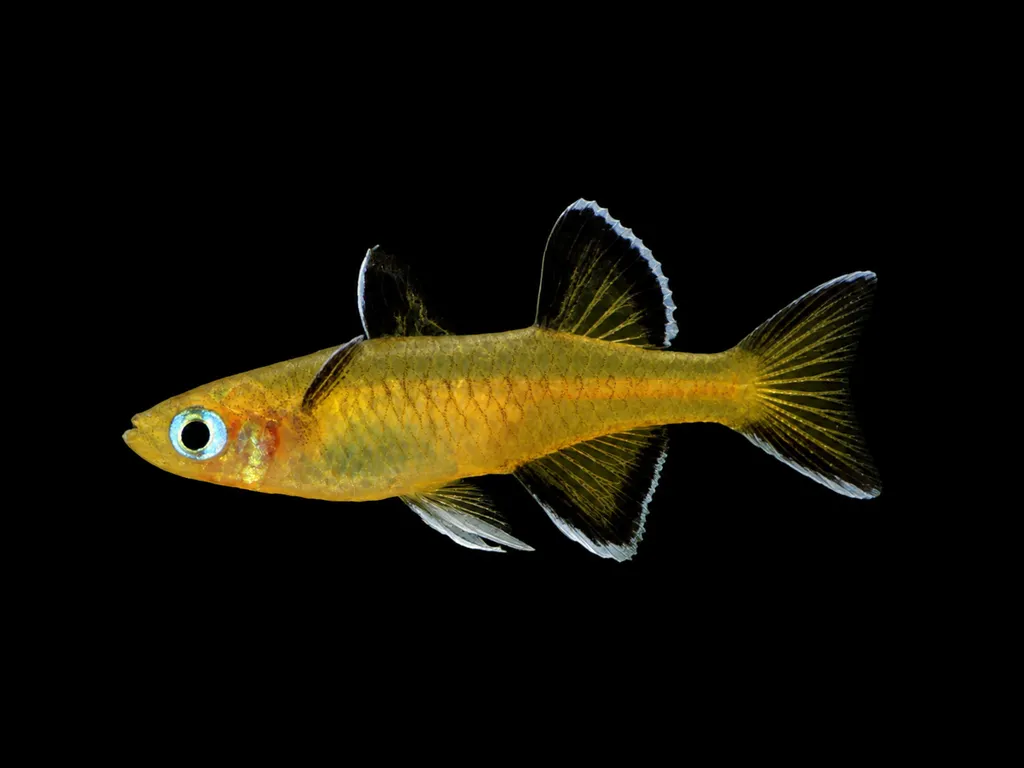
Honey blue-eye
Pseudomugil mellis
Freshwater1.4 in (3.5 cm) · 11 gal (40 L)68–82°F (20–28°C)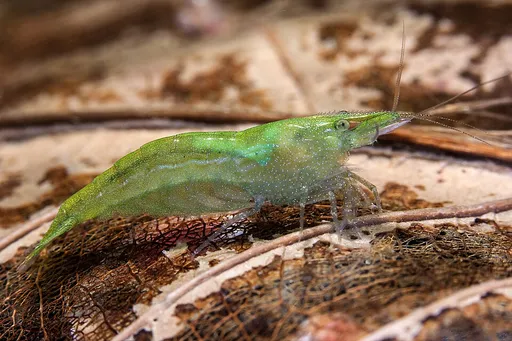
Green babaulti shrimp
Caridina babaulti
Freshwater1.2 in (3 cm) · 10 gal (38 L)72–82°F (22–28°C)
Common questions
What size tank does a glowlight tetra need?
A glowlight tetra needs at least 10 gal (38 L). It spends most of its time in the middle.
What temperature and pH does a glowlight tetra need?
A glowlight tetra is comfortable at 75–82°F (24–28°C) with a pH of 6.0–7.5.
What does a glowlight tetra eat?
A glowlight tetra takes small foods readily, such as quality flake or micro pellets with frozen daphnia or bloodworms mixed in.
How big does a glowlight tetra get?
An adult glowlight tetra reaches about 1.6 in (4 cm).
Does a glowlight tetra need a group?
Yes. A glowlight tetra is a schooling species and should be kept in a group, not singly.
How does a glowlight tetra breed?
Glowlight tetras are egg scatterers with no parental care, and the eggs hatch in roughly a day. Breeding is moderately achievable in soft, acidic water, though the parents will eat the eggs if they can.
Related species
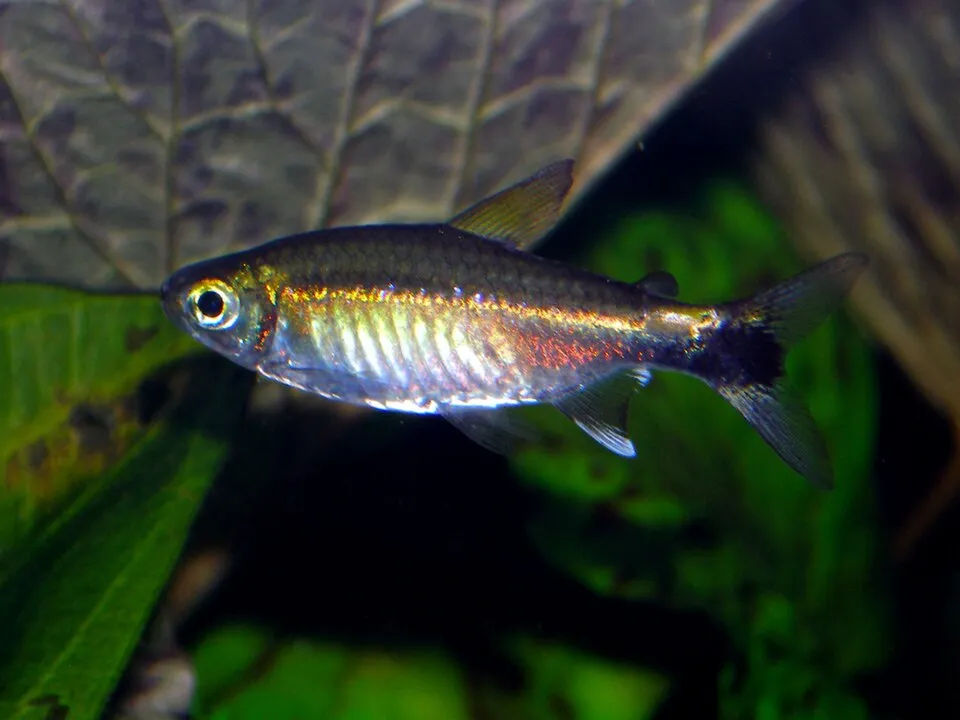 1.6 in (4 cm)17 gal (65 L)73–81°F (23–27°C)
January tetra
Hemigrammus hyanuary
1.6 in (4 cm) · 17 gal (65 L)
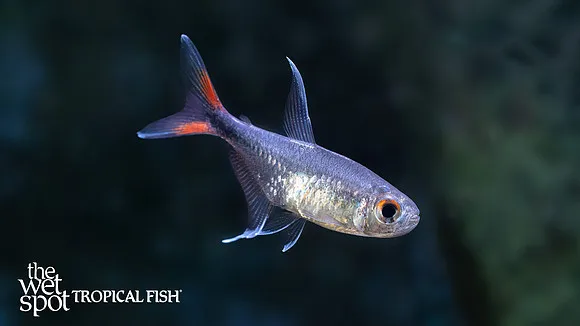 1.7 in (4.3 cm)20 gal (75 L)75–82°F (24–28°C)
Filament tetra
Hemigrammus filamentosus
1.7 in (4.3 cm) · 20 gal (75 L)
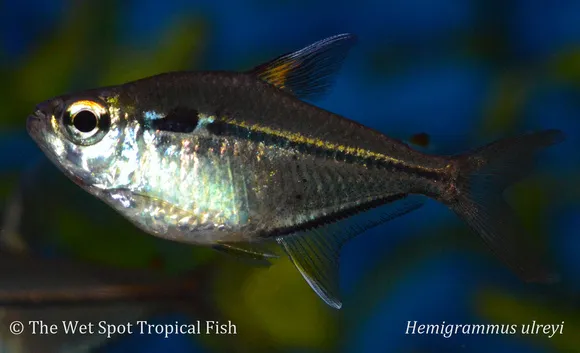 1.7 in (4.4 cm)20 gal (75 L)72–81°F (22–27°C)
Ulrey's tetra
Hemigrammus ulreyi
1.7 in (4.4 cm) · 20 gal (75 L)
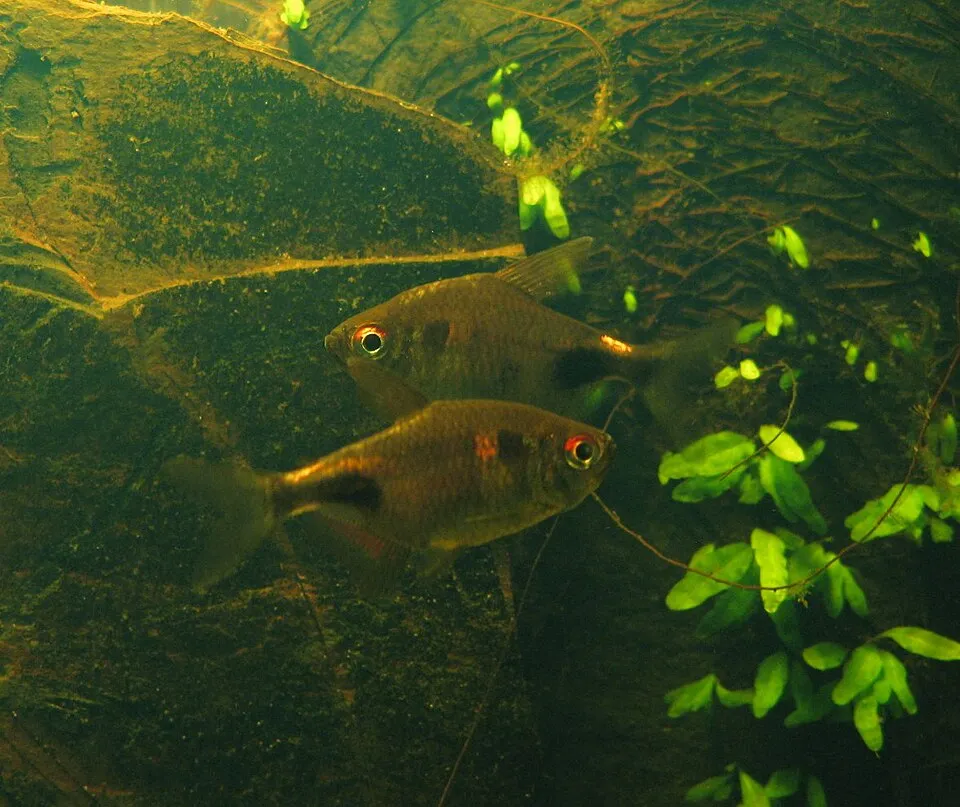 1.8 in (4.5 cm)20 gal (75 L)73–82°F (23–28°C)
Garnet tetra
Hemigrammus pulcher
1.8 in (4.5 cm) · 20 gal (75 L)
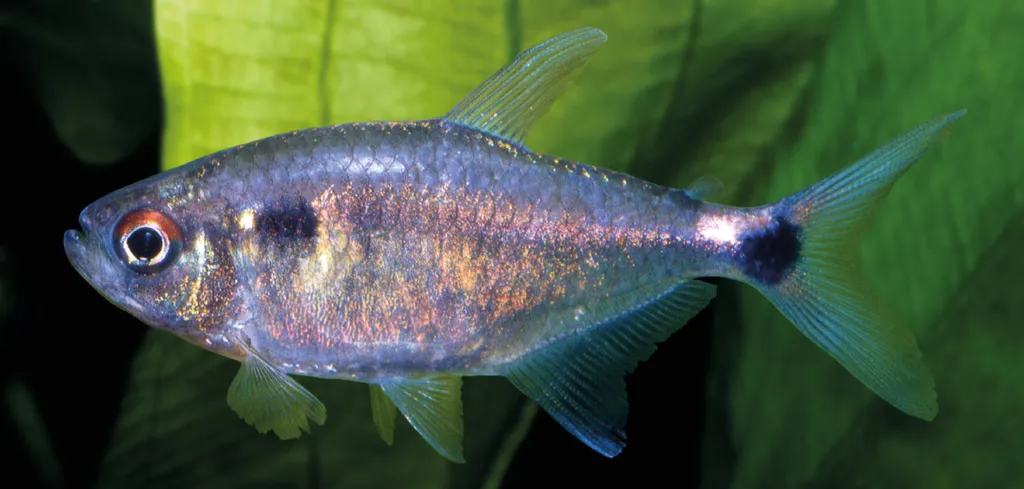 1.8 in (4.5 cm)17 gal (65 L)75–82°F (24–28°C)
Head-and-taillight tetra
Hemigrammus ocellifer
1.8 in (4.5 cm) · 17 gal (65 L)
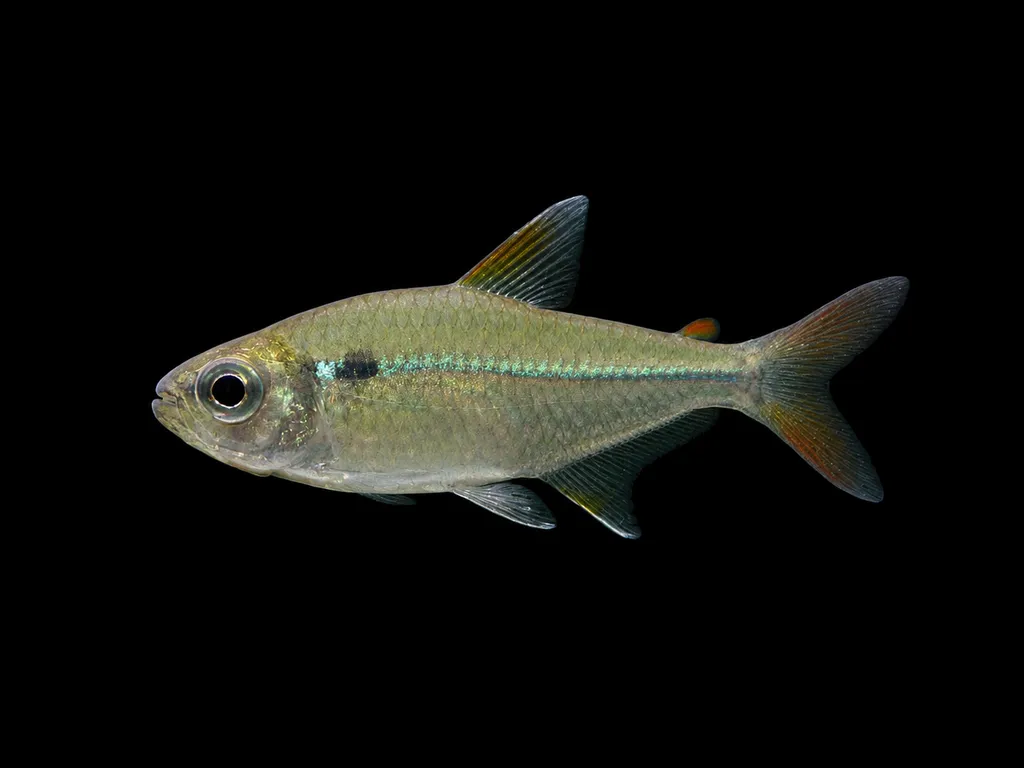 2 in (5 cm)20 gal (75 L)73–82°F (23–28°C)
Collett's tetra
Hemigrammus collettii
2 in (5 cm) · 20 gal (75 L)