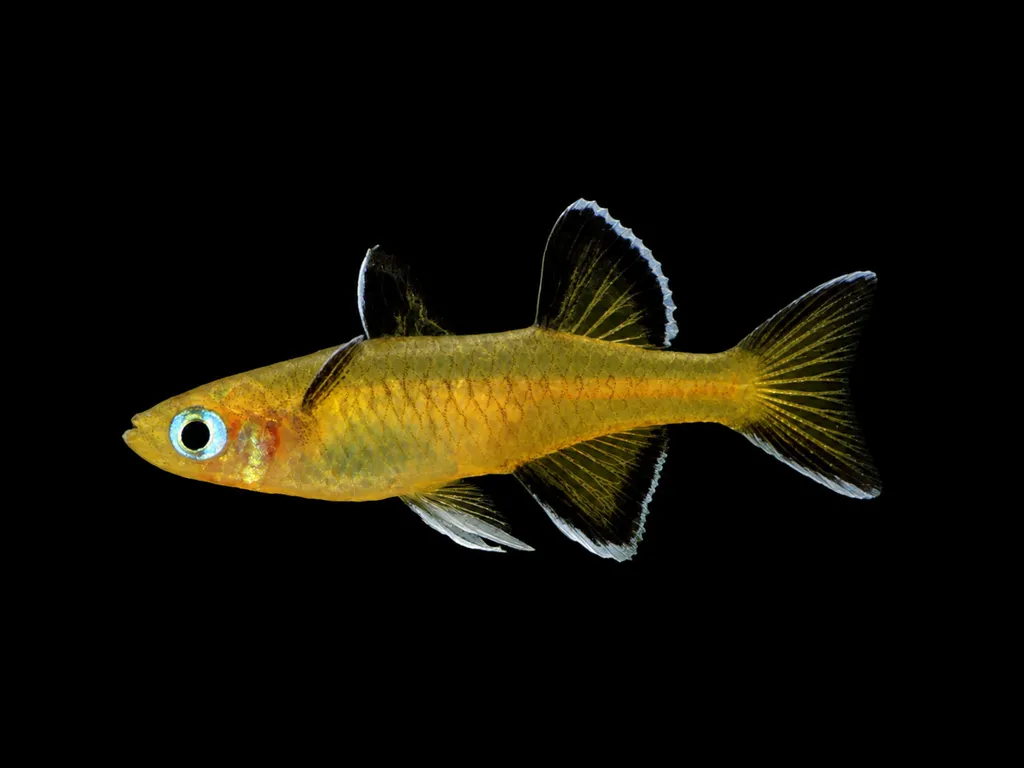
Honey blue-eye
Pseudomugil mellis
Also known as Honey blue-eye rainbowfish, Honey rainbowfish
FreshwaterFish
Care at a glance
- Temperature
- 68–82°F
- 20–28°C
- pH
- 5.0–7.5
- Adult size
- 1.4 in
- 3.5 cm
- Minimum tank
- 11 gal
- 40 L
- Temperament
- Peaceful
- Social behavior
- Schooling
- Swim level
- Top
- Difficulty
- Medium
- Breeding
- Medium
- Rarity
- Rare
- Family
- Pseudomugilidae
- Origin
- Endemic to the coastal wallum country of southeastern Queensland, Australia, between Brisbane and Fraser Island, in tea-colored, tannin-stained streams, swamps and ponds.
Overview
Keep a group of at least six to eight in a tank of 40 litres or more at 20 to 28 C, in soft water with a pH from 5.0 to 7.5. It adapts to harder water but colors and breeds best in soft, gently acidic conditions with tannins. Keep it only with tiny, peaceful tankmates or as a species tank, since it is easily outcompeted. Feed small live and frozen foods such as daphnia, cyclops, microworm and baby brine shrimp, with fine flake as a supplement.
In the wild
Honey blue-eyes live in soft, acidic, tannin-stained wallum waters over nutrient poor sandy soil, in slow moving or almost still creeks and swamps. The tea colored water and dense marginal plants shape their needs in captivity. A small planted tank of 40 litres with driftwood, leaf litter or botanicals, floating plants and very gentle flow suits them. Soft, slightly acidic water brings out the warm honey tones of the males.
Good to know
Pseudomugil mellis was described by Allen and Ivantsoff in 1982, with the species name mellis referring to its honey coloring. It is a small blue-eye in the family Pseudomugilidae with a very limited natural range. Wild populations are of conservation concern from habitat loss and introduced mosquitofish, so aquarium stock is almost entirely captive bred.
Did you know
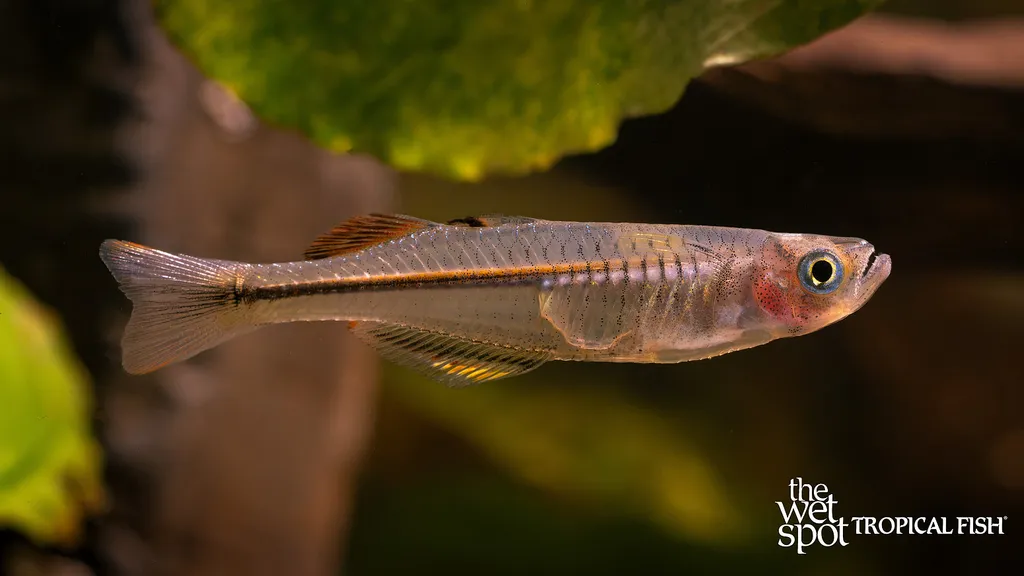
Males are honey to copper colored with bright blue eyes and stay under 4 cm, and because the wild fish are protected and threatened, keeping captive-bred lines going is a small conservation effort in itself.
Weekly picks
Tank mates
Honey blue-eye is a peaceful, schooling species that keeps to the top. These picks share a community profile with it, are safe together in both directions, and overlap on water type, temperature and pH.
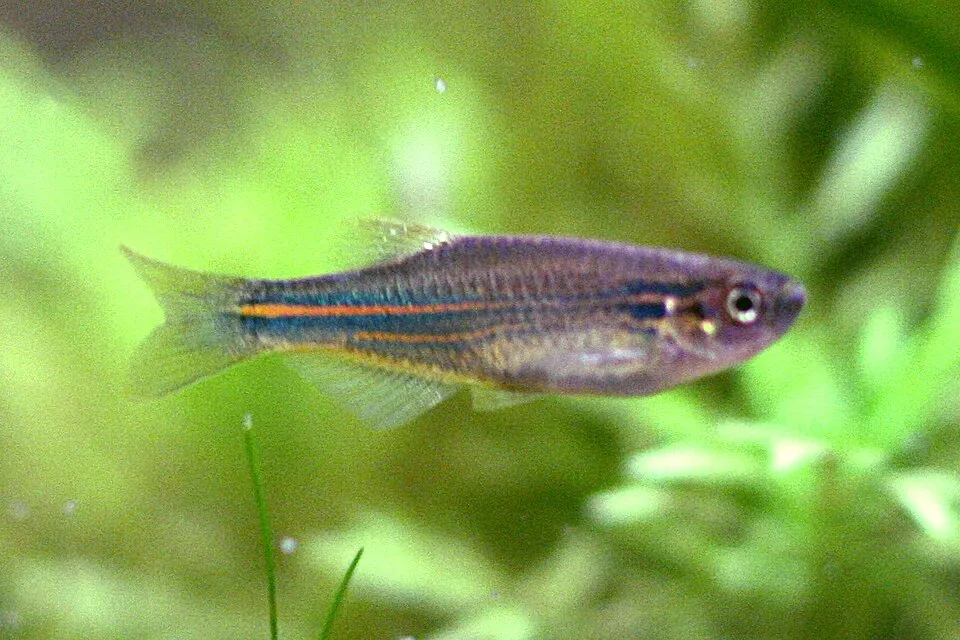
Blue danio
Danio kerri
Freshwater1.8 in (4.5 cm) · 11 gal (40 L)68–79°F (20–26°C)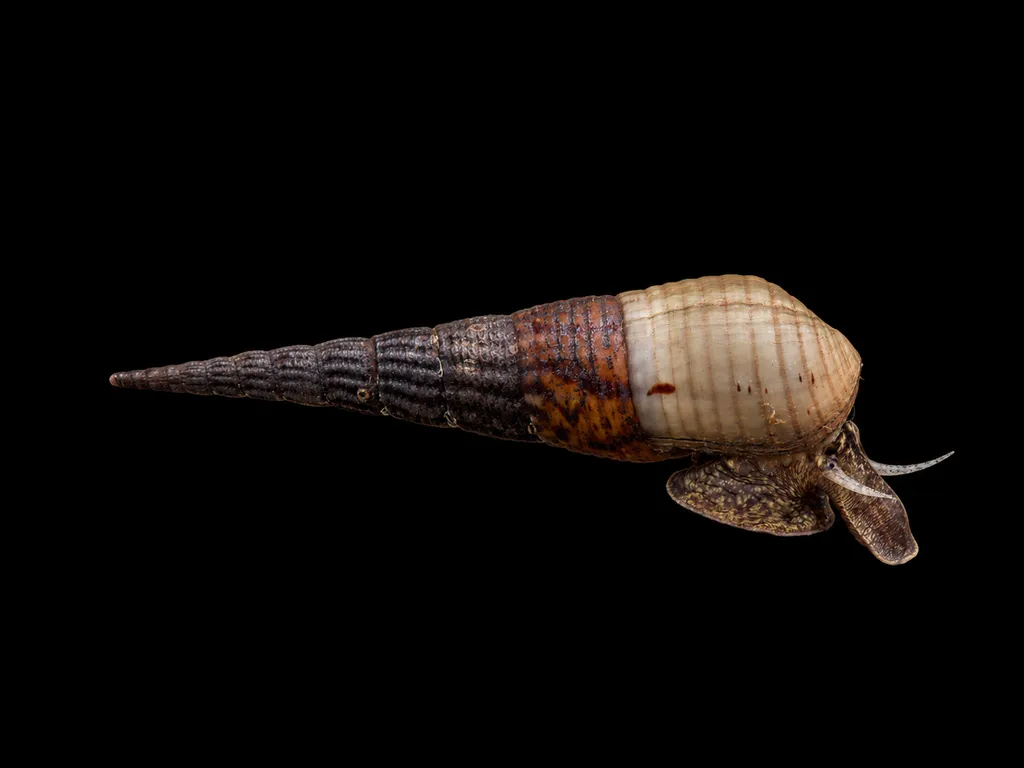
Chopstick snail
Stenomelania torulosa
Freshwater2 in (5 cm) · 11 gal (40 L)73–82°F (23–28°C)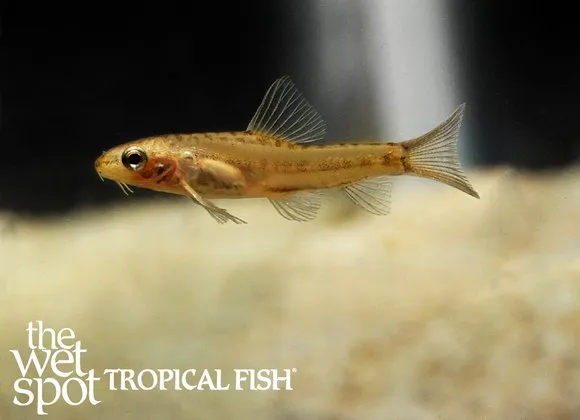
Mango loach
Physoschistura mango
Freshwater1 in (2.5 cm) · 11 gal (40 L)68–77°F (20–25°C)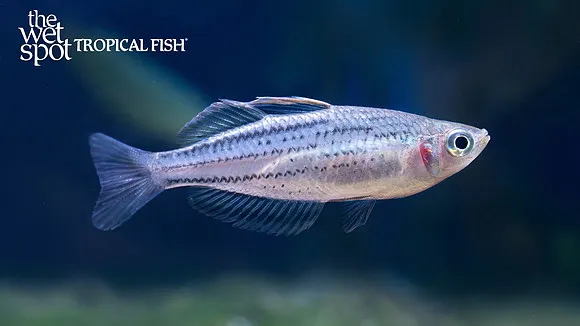
Green panchax
Aplocheilus blockii
Freshwater2 in (5 cm) · 11 gal (40 L)72–82°F (22–28°C)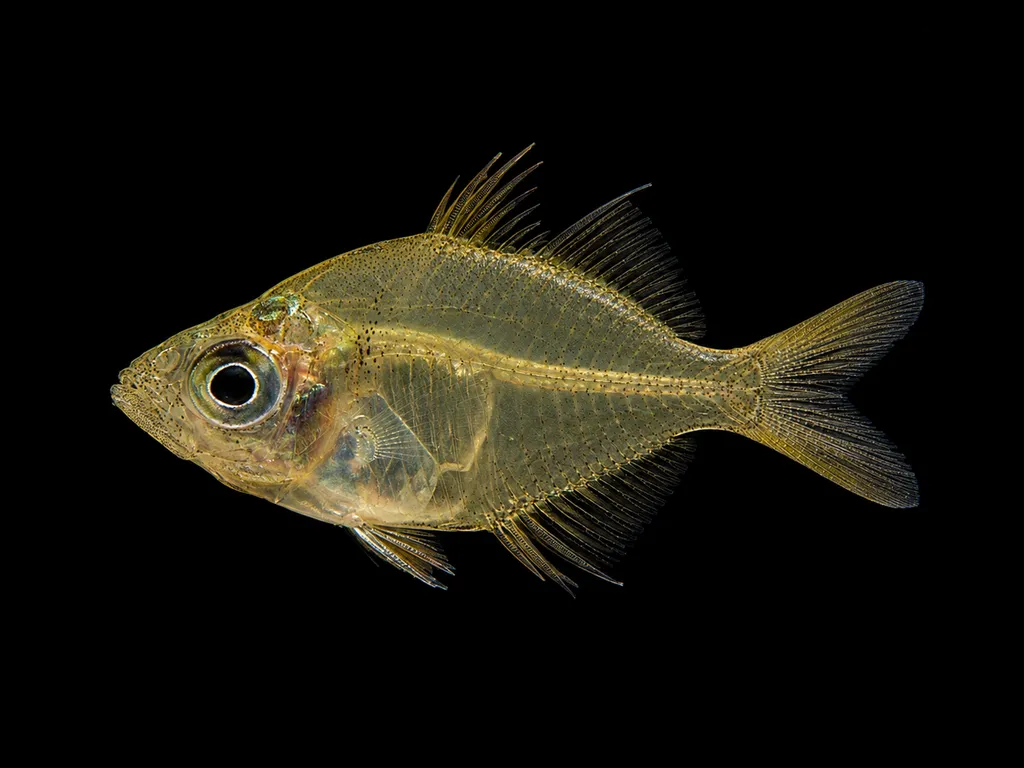
Indian amber glassfish
Parambassis lala
Freshwater1.2 in (3 cm) · 11 gal (40 L)72–82°F (22–28°C)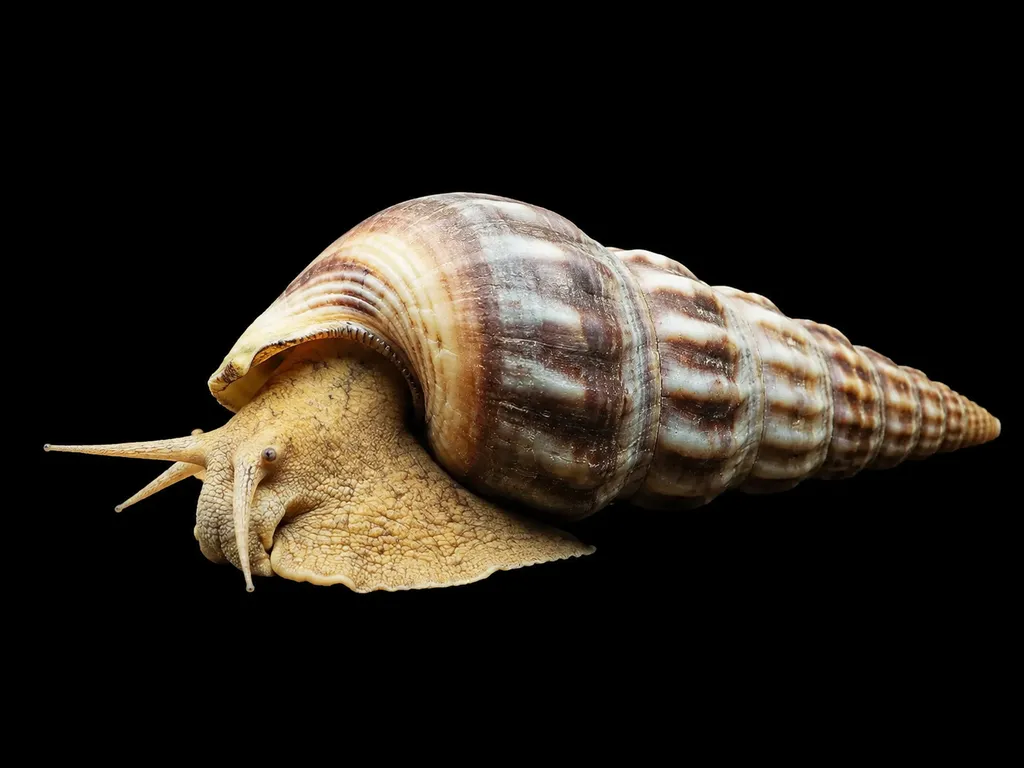
Hercules snail
Brotia herculea
Freshwater3.1 in (8 cm) · 11 gal (40 L)73–82°F (23–28°C)
Common questions
What size tank does a Honey blue-eye need?
A Honey blue-eye needs at least 11 gal (40 L). It spends most of its time in the top.
What temperature and pH does a Honey blue-eye need?
A Honey blue-eye is comfortable at 68–82°F (20–28°C) with a pH of 5.0–7.5.
How big does a Honey blue-eye get?
An adult Honey blue-eye reaches about 1.4 in (3.5 cm).
Does a Honey blue-eye need a group?
Yes. A Honey blue-eye is a schooling species and should be kept in a group, not singly.
Related species
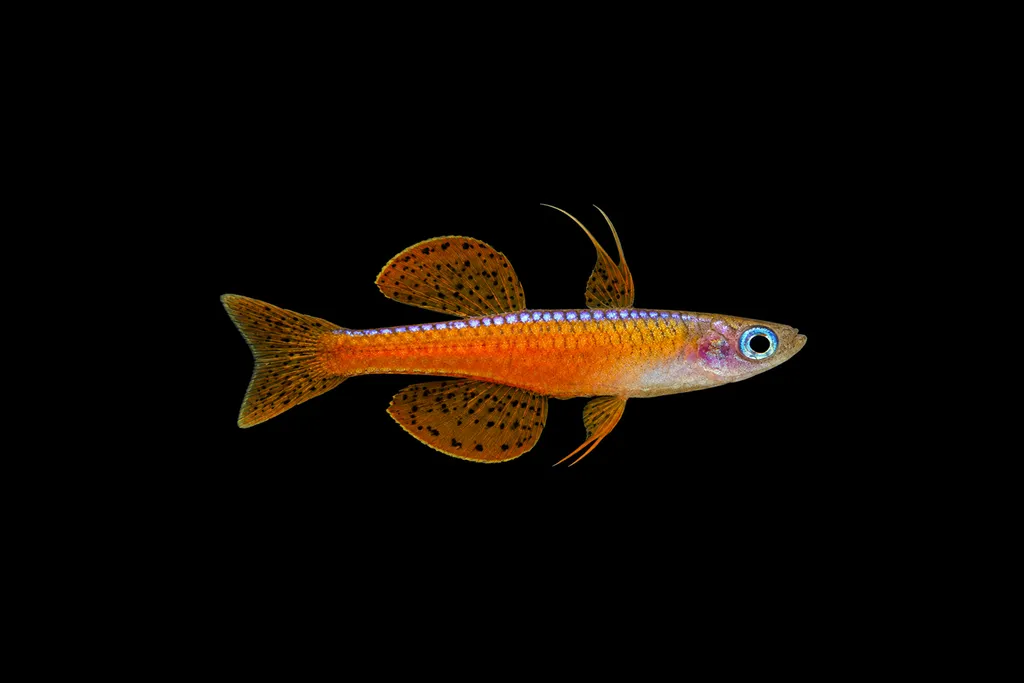 1.4 in (3.5 cm)11 gal (40 L)72–79°F (22–26°C)
Paska's blue-eye
Pseudomugil paskai
1.4 in (3.5 cm) · 11 gal (40 L)
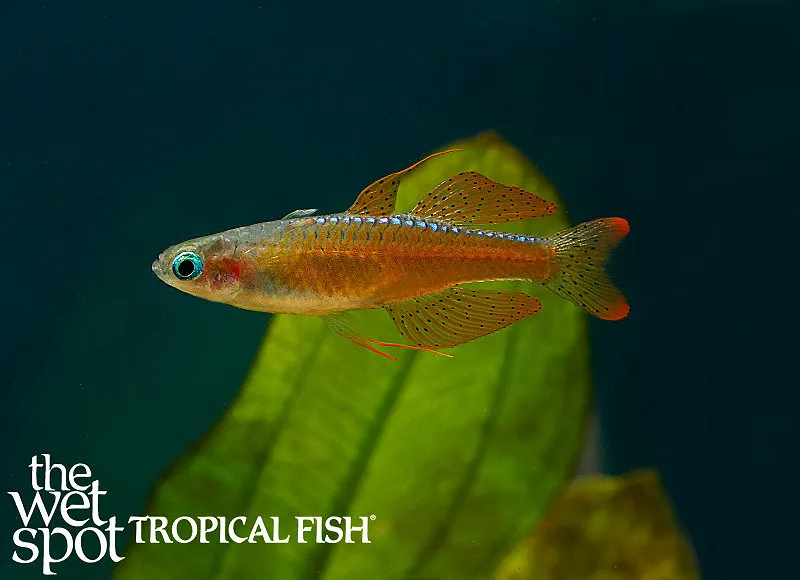 1.4 in (3.5 cm)11 gal (40 L)72–81°F (22–27°C)
Red neon blue-eye
Pseudomugil luminatus
1.4 in (3.5 cm) · 11 gal (40 L)
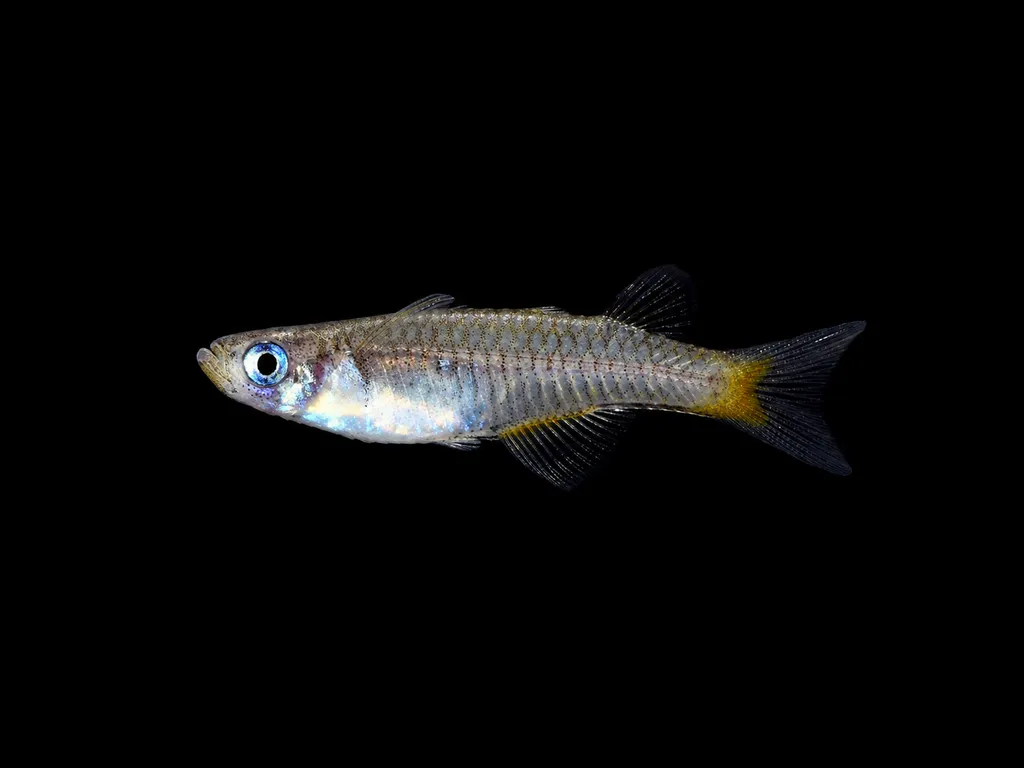 1.4 in (3.5 cm)11 gal (40 L)79–86°F (26–30°C)
Swamp blue-eye
Pseudomugil paludicola
1.4 in (3.5 cm) · 11 gal (40 L)
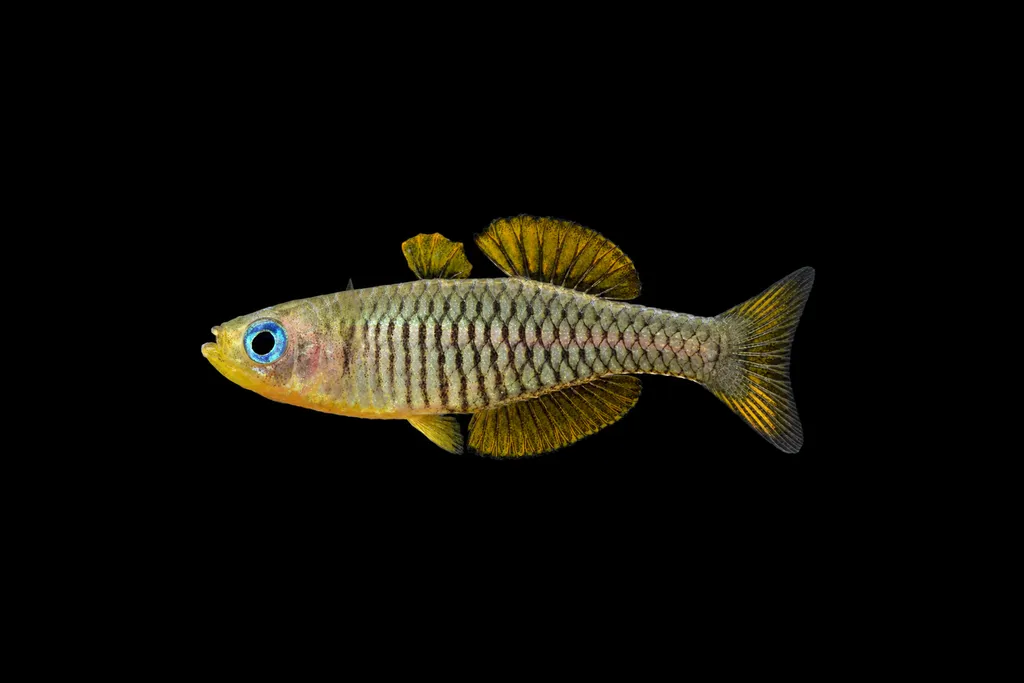 1.4 in (3.5 cm)11 gal (40 L)75–82°F (24–28°C)
Vogelkop blue-eye
Pseudomugil reticulatus
1.4 in (3.5 cm) · 11 gal (40 L)
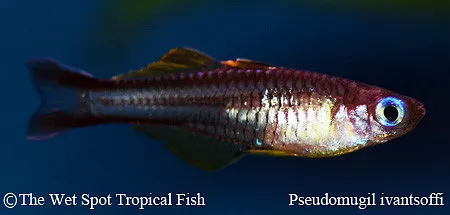 1.6 in (4 cm)11 gal (40 L)75–82°F (24–28°C)
Ivantsoff's blue-eye
Pseudomugil ivantsoffi
1.6 in (4 cm) · 11 gal (40 L)
 1.6 in (4 cm)11 gal (40 L)75–82°F (24–28°C)
Transparent blue-eye
Pseudomugil pellucidus
1.6 in (4 cm) · 11 gal (40 L)