Sharptooth tetra
Micralestes acutidens
Also known as Silver tetra, Sharptooth robber, True silver tetra
FreshwaterFish
Care at a glance
- Temperature
- 72–79°F
- 22–26°C
- pH
- 6.5–7.5
- Adult size
- 3.5 in
- 9 cm
- Minimum tank
- 32 gal
- 120 L
- Temperament
- Mostly peaceful
- Social behavior
- Schooling
- Swim level
- Middle
- Difficulty
- Easy
- Breeding
- No record
- Rarity
- Very rare
- Family
- Alestidae
- Origin
- Widespread across central and southern Africa, including the Congo, Zambezi, and Okavango systems.
Overview
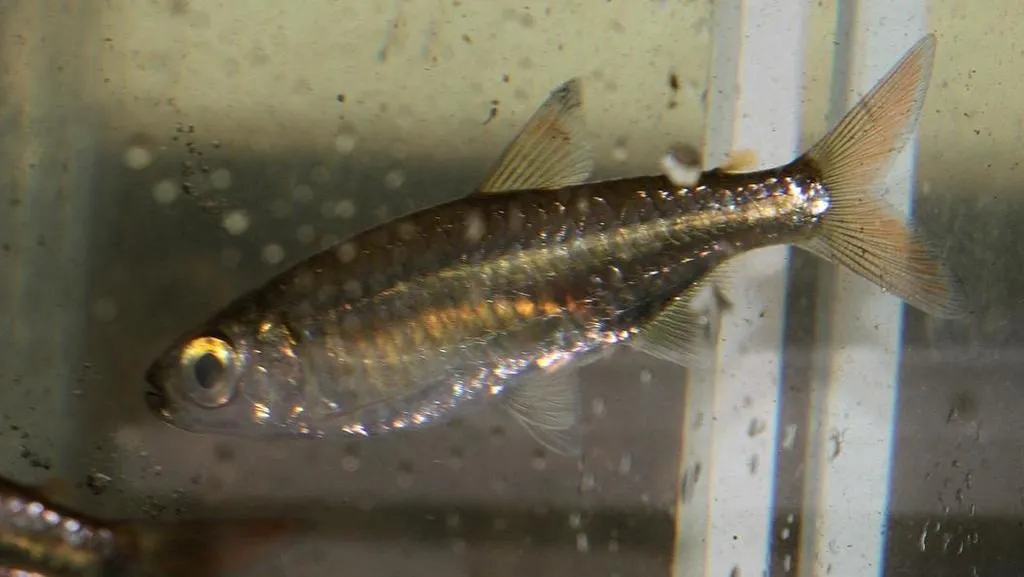
The sharptooth tetra is an active, silvery schooling fish for the middle of a long community tank. It is easy to keep.
Did you know
The sharptooth tetra feeds heavily on insects, hanging near the surface until one falls or lands on the water. Then it darts up to snatch it, gripping the slippery prey with its sharp teeth.
Caring for the sharptooth tetra
Keep sharptooth tetras in a group of at least six, in a long tank of 32 gal (120 L) or more. Leave plenty of open swimming space. They are strong, restless swimmers that like gentle flow, and the tank needs a secure lid.
Keep the water at 72 to 79°F (22 to 26°C), with a pH of 6.5 to 7.5. The sharptooth tetra is mostly peaceful and safe in a community, but it may nip long fins. Avoid slow tank mates with trailing fins.
Good to know
Micralestes acutidens is an African tetra in the family Alestidae, named for its conspicuous, pointed teeth. It is a gregarious, open-water schooler. In aquariums it often stays smaller than its full adult size.
In the wild
The sharptooth tetra is widespread across central and southern Africa, including the Congo, Zambezi and Okavango systems. It lives in the open, well-oxygenated surface waters of rivers and lakes, where it shoals near the top. The water ranges from soft to moderately hard and is usually flowing.
Weekly picks
Tank mates
The sharptooth tetra is a mostly peaceful, schooling species that keeps to the middle. These picks share a community profile with it, are safe together in both directions, and overlap on water type, temperature and pH.
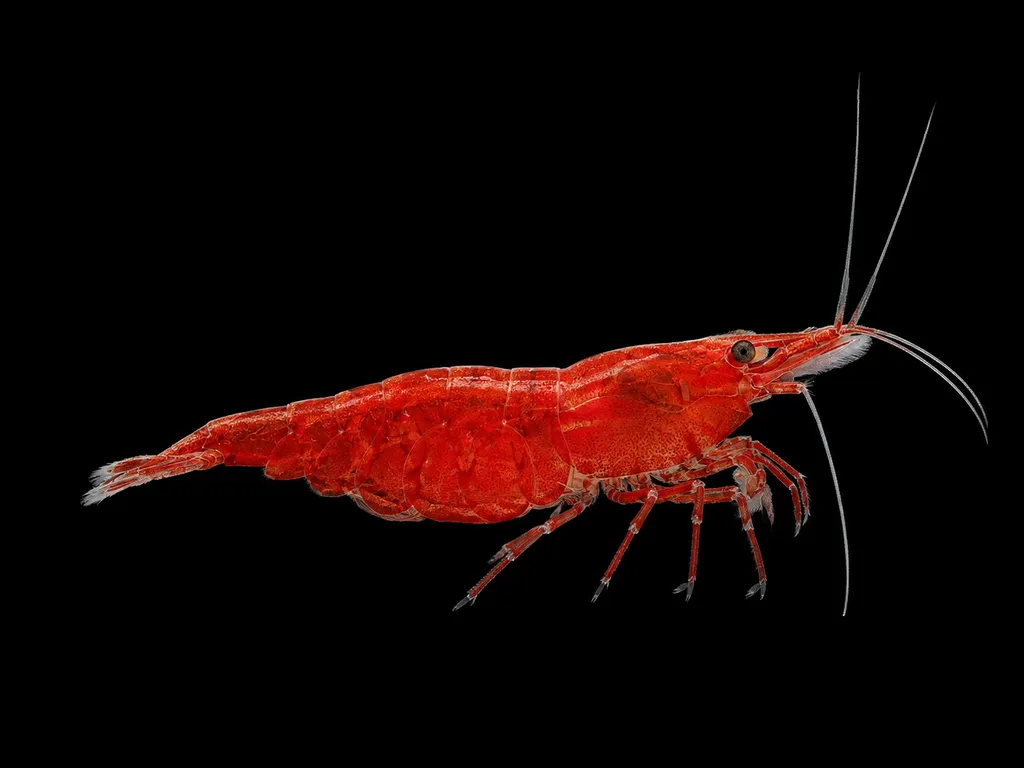
Neocaridina shrimp
Neocaridina davidi
Freshwater1.6 in (4 cm) · 5 gal (19 L)59–84°F (15–29°C)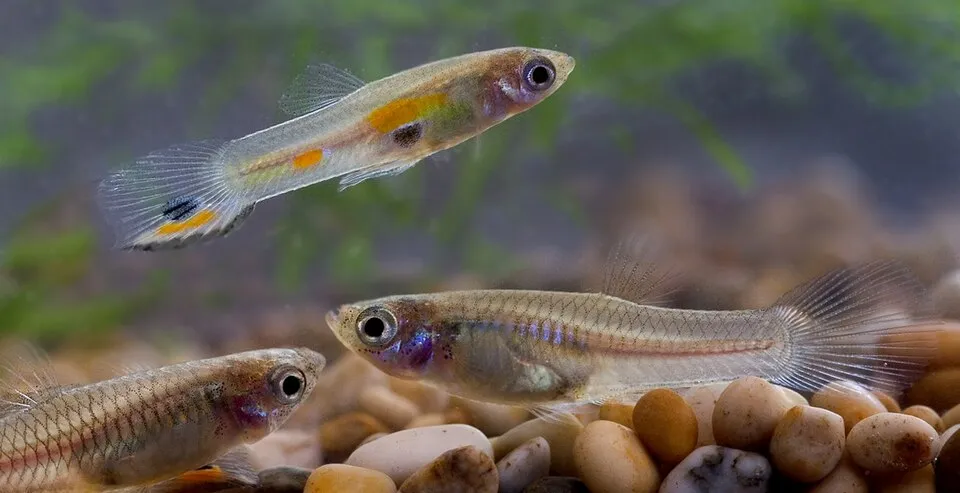
Guppy
Poecilia reticulata
FreshwaterBrackish2.4 in (6 cm) · 10 gal (38 L)64–82°F (18–28°C)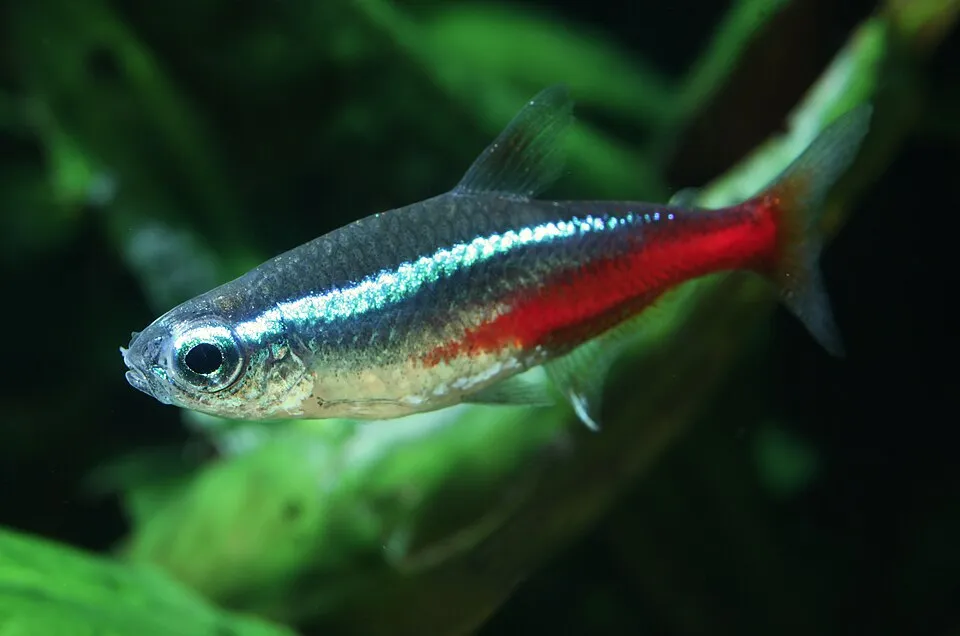
Neon tetra
Paracheirodon innesi
Freshwater1.5 in (3.8 cm) · 11 gal (40 L)70–77°F (21–25°C)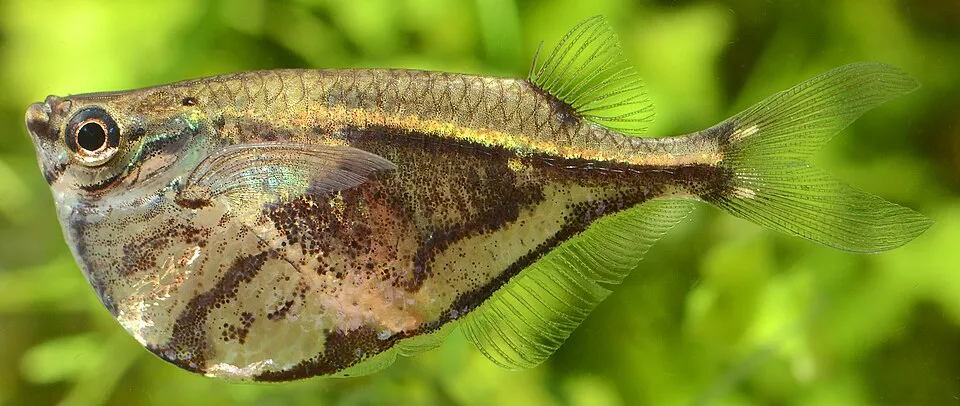
Marbled hatchetfish
Carnegiella strigata
Freshwater1.6 in (4 cm) · 32 gal (120 L)68–82°F (20–28°C)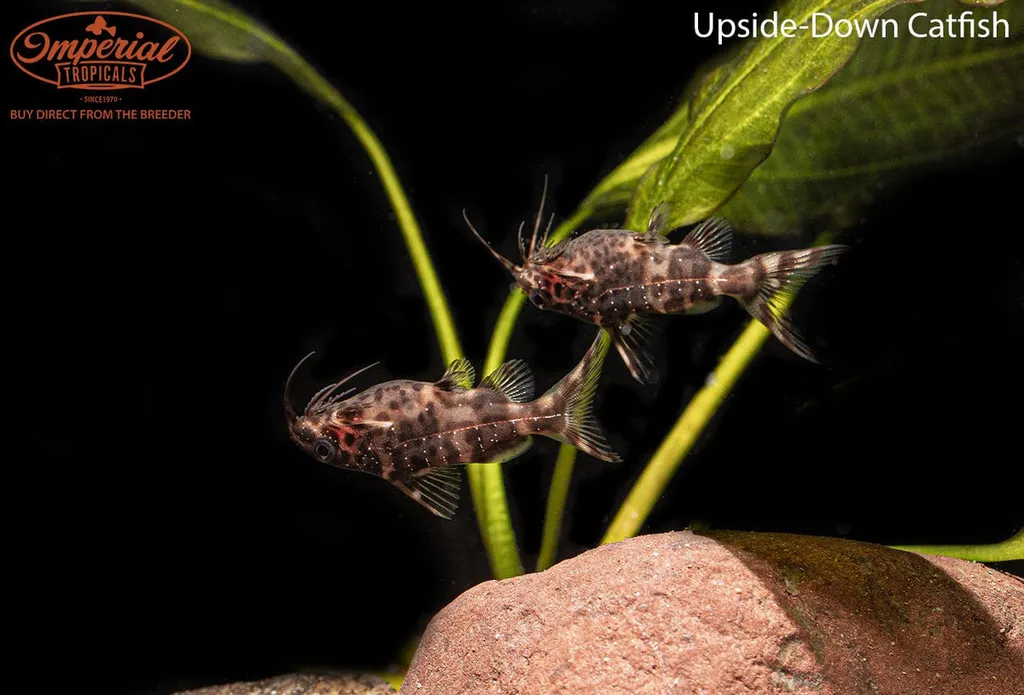
Upside-down catfish
Synodontis nigriventris
Freshwater3.9 in (10 cm) · 30 gal (115 L)75–82°F (24–28°C)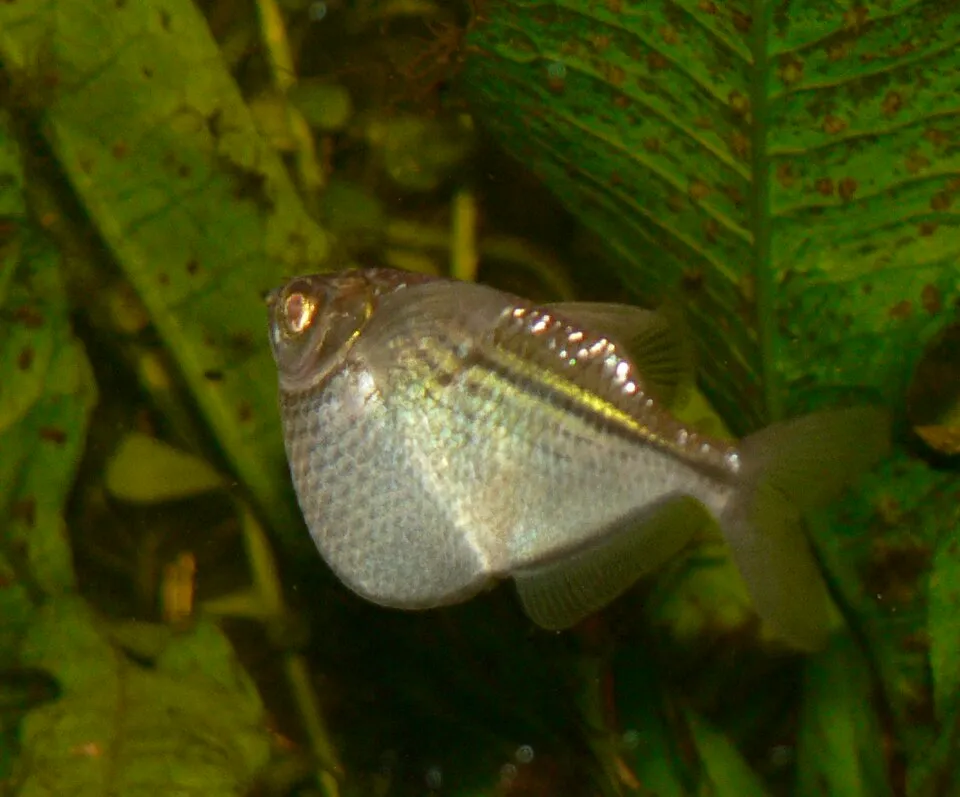
Common hatchetfish
Gasteropelecus sternicla
Freshwater1.6 in (4 cm) · 33 gal (125 L)68–82°F (20–28°C)
Common questions
What size tank does a sharptooth tetra need?
A sharptooth tetra needs at least 32 gal (120 L). It spends most of its time in the middle.
What temperature and pH does a sharptooth tetra need?
A sharptooth tetra is comfortable at 72–79°F (22–26°C) with a pH of 6.5–7.5.
How big does a sharptooth tetra get?
An adult sharptooth tetra reaches about 3.5 in (9 cm).
Does a sharptooth tetra need a group?
Yes. A sharptooth tetra is a schooling species and should be kept in a group, not singly.
Related species
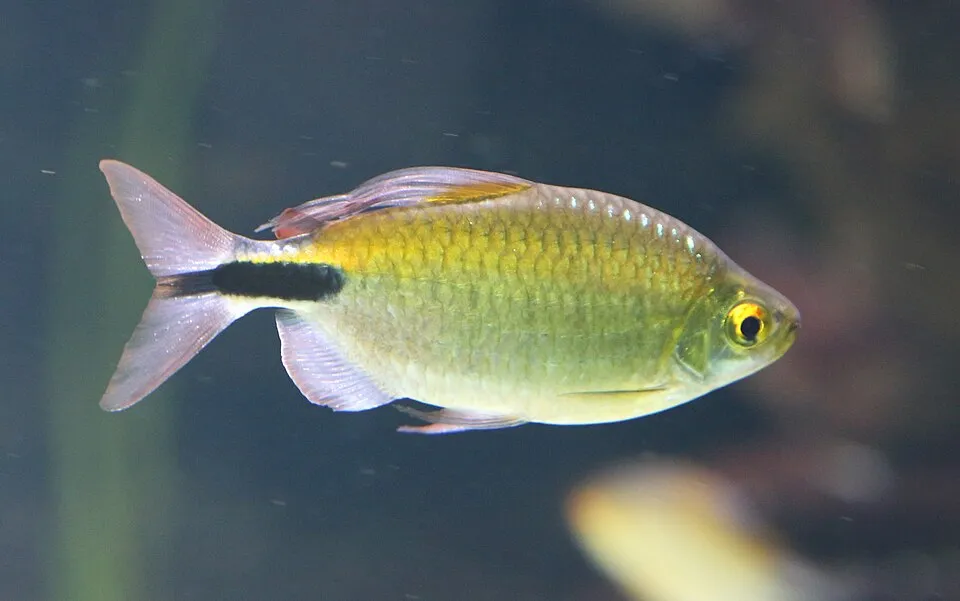 4.9 in (12.5 cm)50 gal (190 L)72–79°F (22–26°C)
Long-fin tetra
Brycinus longipinnis
4.9 in (12.5 cm) · 50 gal (190 L)
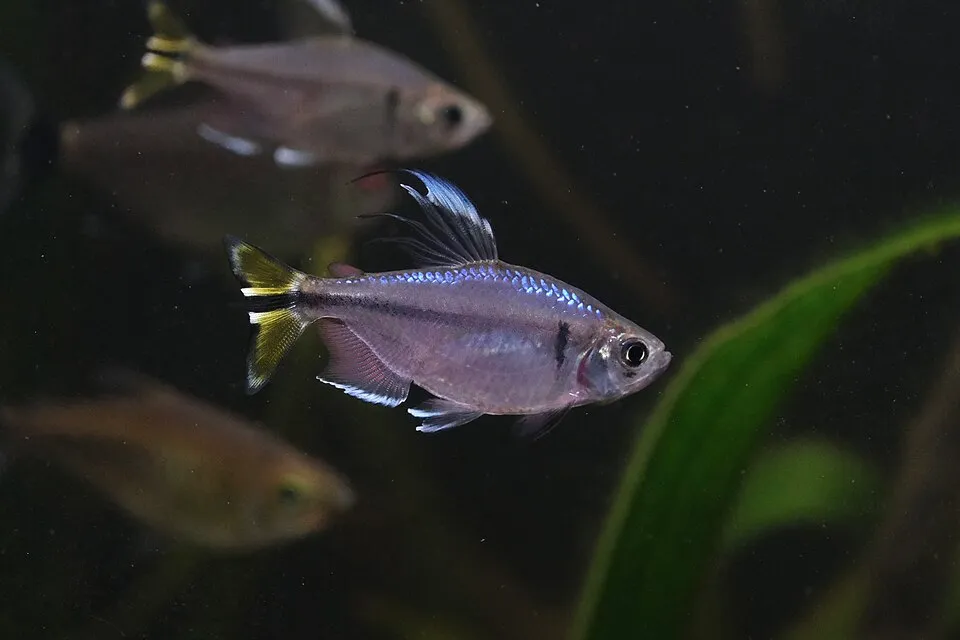 2.4 in (6 cm)20 gal (75 L)72–79°F (22–26°C)
Yellow-tailed Congo tetra
Alestopetersius caudalis
2.4 in (6 cm) · 20 gal (75 L)
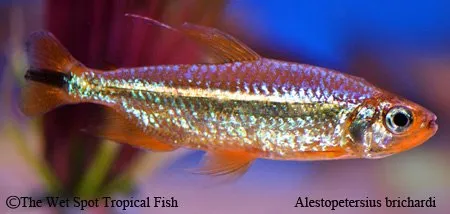 3.5 in (9 cm)29 gal (110 L)73–81°F (23–27°C)
Brichard's Congo tetra
Alestopetersius brichardi
3.5 in (9 cm) · 29 gal (110 L)
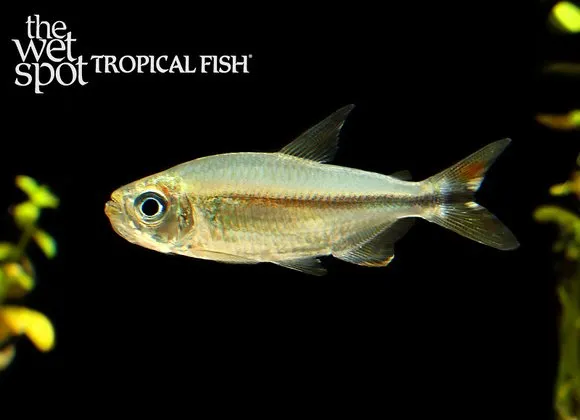 3.9 in (10 cm)42 gal (160 L)73–81°F (23–27°C)
Hilgendorf's Congo tetra
Alestopetersius hilgendorfi
3.9 in (10 cm) · 42 gal (160 L)
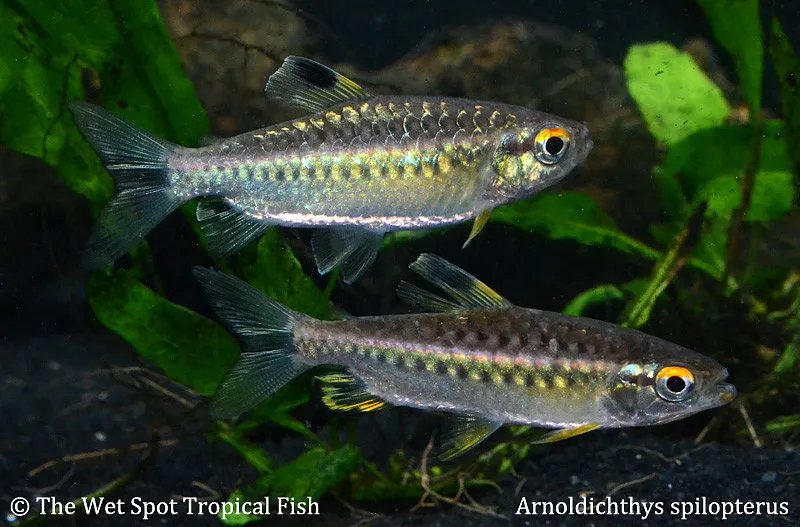 3.9 in (10 cm)50 gal (190 L)75–81°F (24–27°C)
Niger tetra
Arnoldichthys spilopterus
3.9 in (10 cm) · 50 gal (190 L)
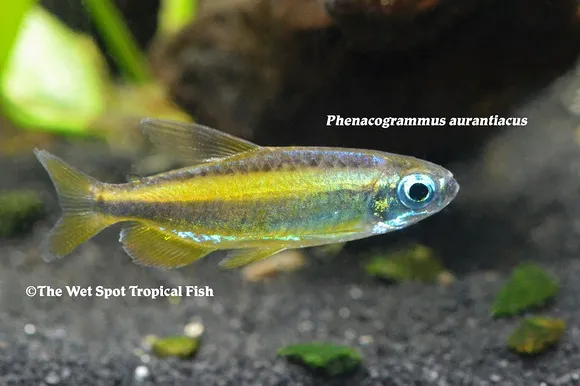 3.9 in (10 cm)42 gal (160 L)73–81°F (23–27°C)
Orange Congo tetra
Phenacogrammus aurantiacus
3.9 in (10 cm) · 42 gal (160 L)