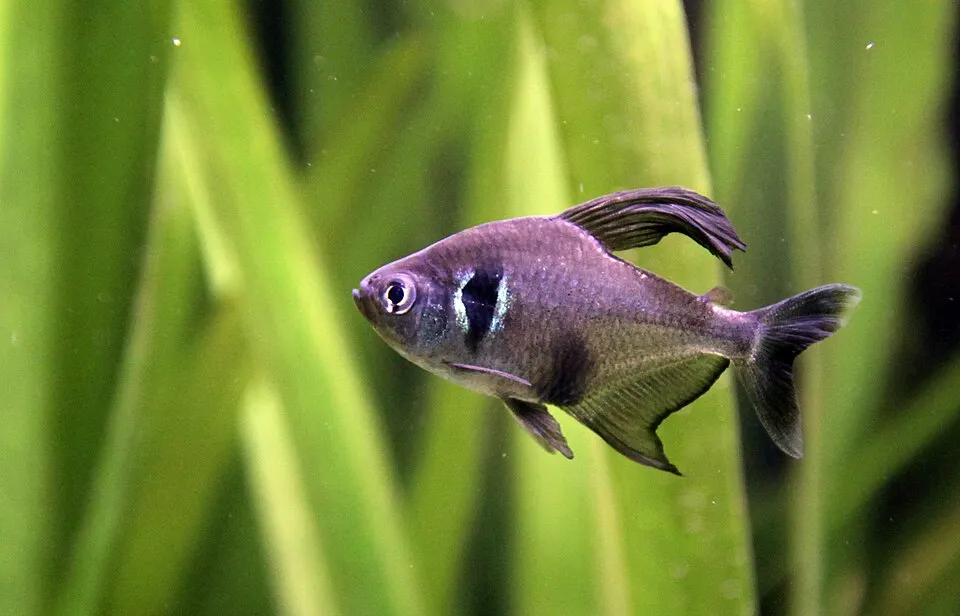
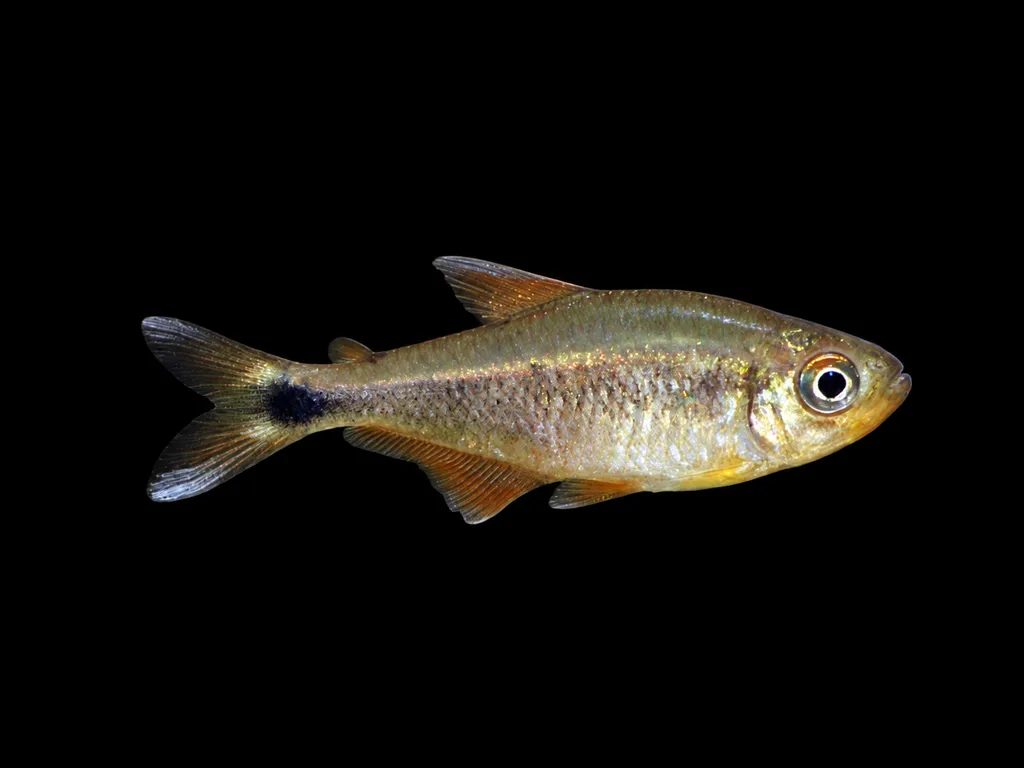
Black phantom tetra
Hyphessobrycon megalopterus
Also known as Megalamphodus megalopterus
FreshwaterFish
Care at a glance
- Temperature
- 70–82°F
- 21–28°C
- pH
- 6.0–7.5
- Adult size
- 1.4 in
- 3.6 cm
- Minimum tank
- 17 gal
- 65 L
- Temperament
- Peaceful
- Social behavior
- Schooling
- Swim level
- Middle
- Difficulty
- Easy
- Breeding
- Medium
- Rarity
- Common
- Family
- Characidae
- Origin
- Bolivia, Brazil
Overview
Keep six or more in a tank of around 65 liters and they'll hold the middle of the water column. They're peaceful but the males spar by flaring fins at each other, which is harmless posturing rather than real fighting. Aim for temperatures in the mid 20s C and a pH from slightly acidic to neutral. They eat small flake, micro pellets, and frozen foods like bloodworms or brine shrimp.
In the wild
Black phantom tetras live in slow, shaded streams of the Paraguay and Guaporé basins across Bolivia and Brazil. The water there is soft and acidic, with sand or fine gravel underfoot and tree cover keeping the light low. A planted setup with subdued lighting and open mid-water swimming room reads as home to them.
Good to know
It's a characid, family Characidae, reaching about 3.6 cm. Males and females are easy to tell apart. Males have taller dorsal fins, while females carry a rounder body and a reddish tinge to the fins. They breed by scattering eggs and offer no parental care. The IUCN lists the species as Least Concern.
Did you know
Keep a few males together and the fin-flaring displays happen daily, especially at feeding time or when a female is around. The mock duels sort out a loose pecking order without anyone getting hurt.
Weekly picks
Tank mates
Black phantom tetra is a peaceful, schooling species that keeps to the middle. These picks share a community profile with it, are safe together in both directions, and overlap on water type, temperature and pH.
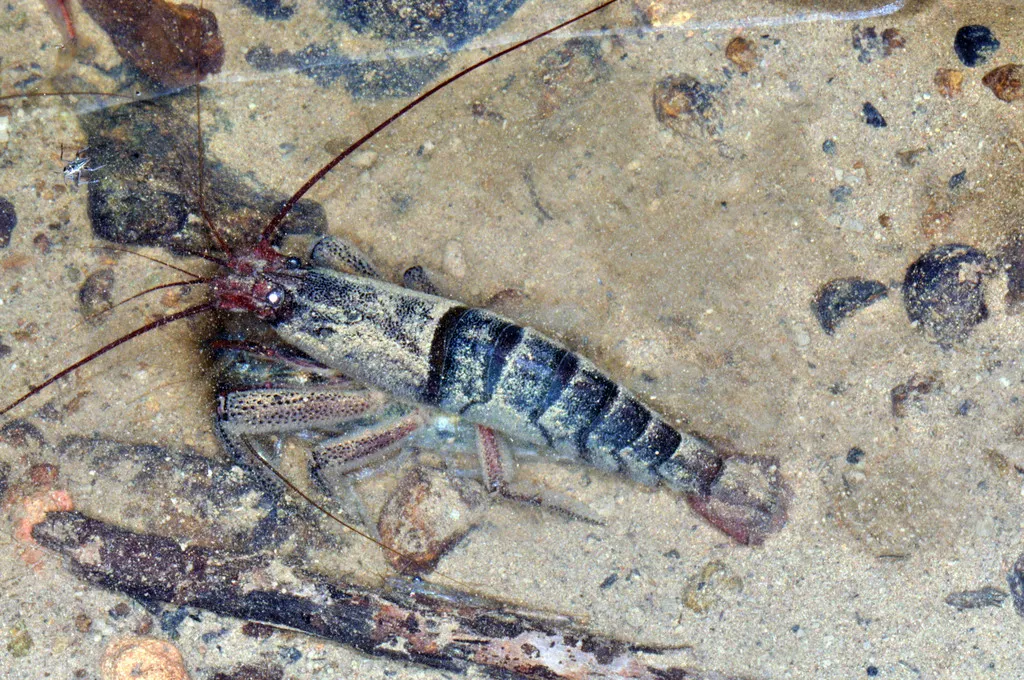
Marble wood shrimp
Atya scabra
Freshwater3.9 in (10 cm) · 20 gal (75 L)73–82°F (23–28°C)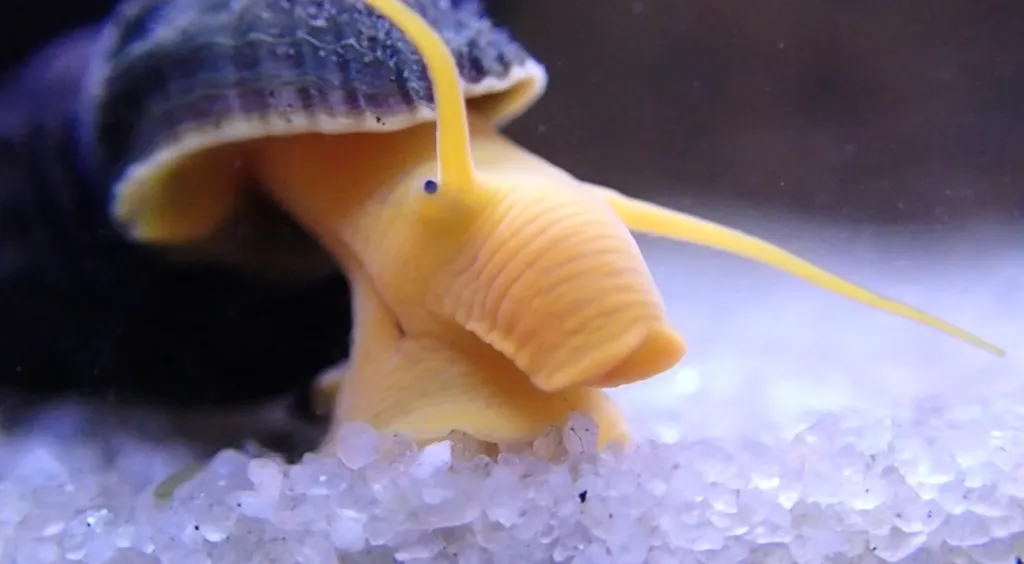
Gold rabbit snail
Tylomelania gemmifera
Freshwater2.8 in (7 cm) · 16 gal (60 L)75–82°F (24–28°C)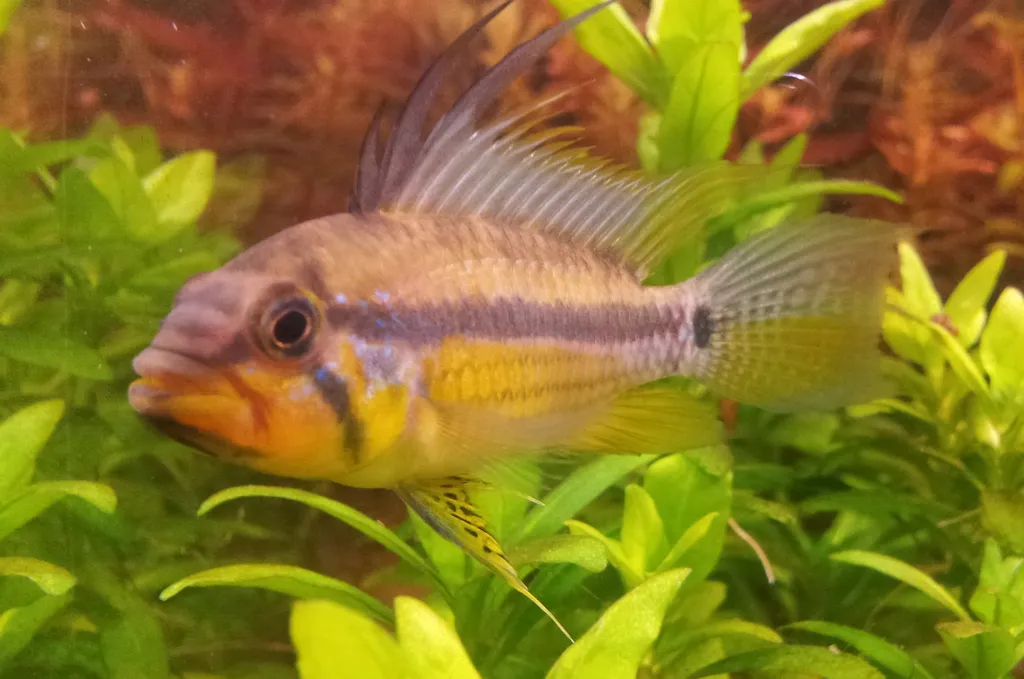
Allpahuayo dwarf cichlid
Apistogramma allpahuayo
Freshwater2 in (5 cm) · 16 gal (60 L)75–82°F (24–28°C)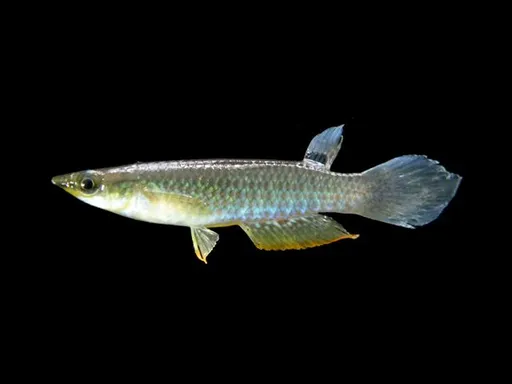
Blue panchax
Aplocheilus panchax
Freshwater3.5 in (9 cm) · 20 gal (75 L)72–82°F (22–28°C)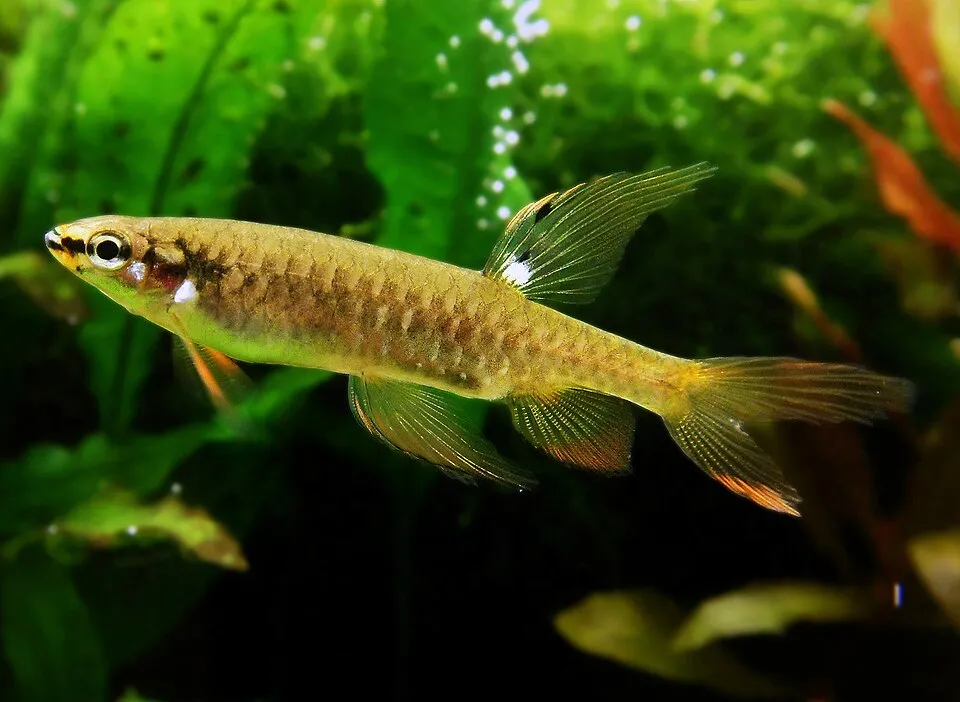
Splash tetra
Copella arnoldi
Freshwater2.2 in (5.5 cm) · 18 gal (70 L)68–82°F (20–28°C)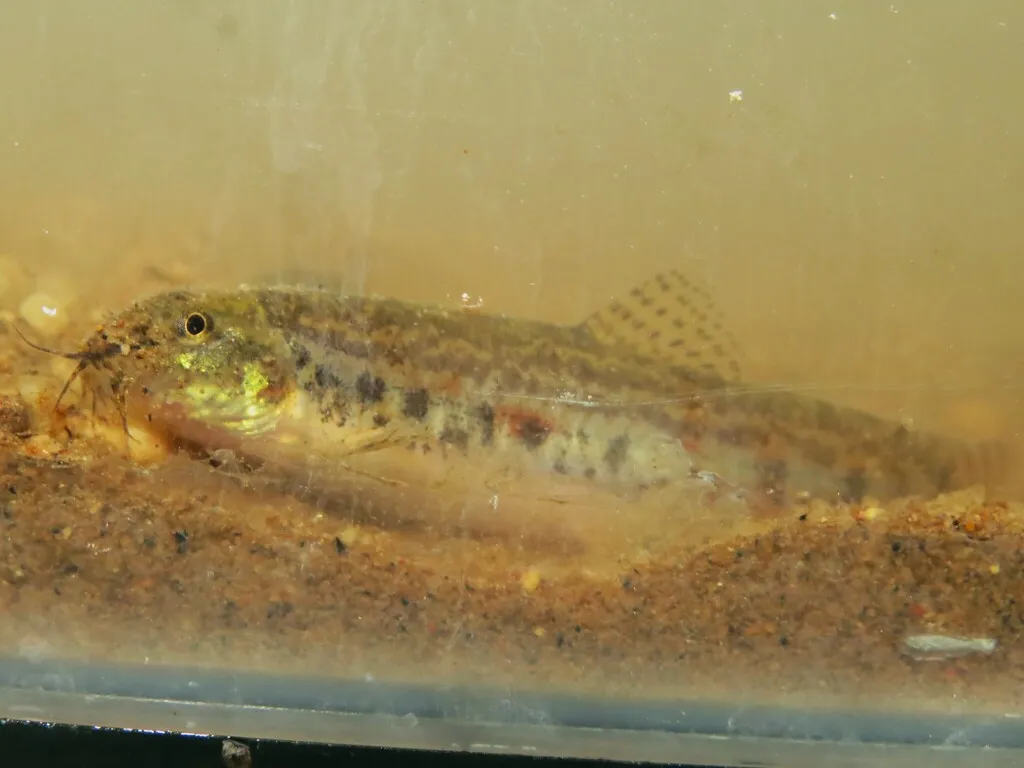
Common spiny loach
Lepidocephalichthys thermalis
Freshwater3.1 in (8 cm) · 20 gal (75 L)72–82°F (22–28°C)
Common questions
What size tank does a Black phantom tetra need?
A Black phantom tetra needs at least 17 gal (65 L). It spends most of its time in the middle.
What temperature and pH does a Black phantom tetra need?
A Black phantom tetra is comfortable at 70–82°F (21–28°C) with a pH of 6.0–7.5.
How big does a Black phantom tetra get?
An adult Black phantom tetra reaches about 1.4 in (3.6 cm).
Does a Black phantom tetra need a group?
Yes. A Black phantom tetra is a schooling species and should be kept in a group, not singly.
Related species
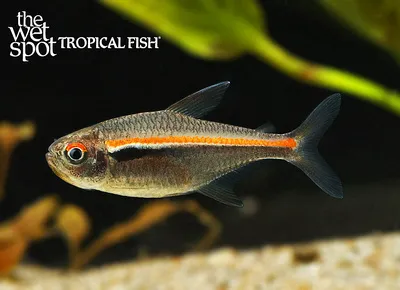 1.4 in (3.6 cm)15 gal (55 L)73–82°F (23–28°C)
Amapa tetra
Hyphessobrycon amapaensis
1.4 in (3.6 cm) · 15 gal (55 L)
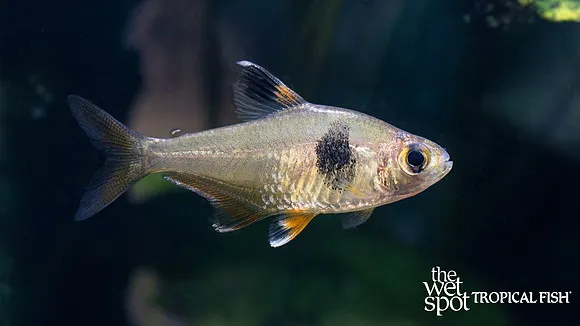 1.4 in (3.6 cm)15 gal (55 L)73–82°F (23–28°C)
Coffee bean tetra
Hyphessobrycon takasei
1.4 in (3.6 cm) · 15 gal (55 L)
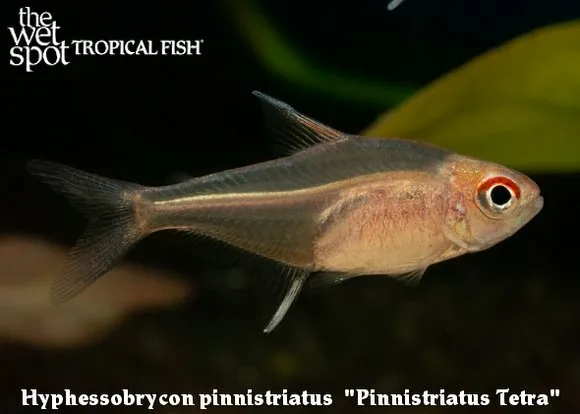 1.4 in (3.6 cm)15 gal (55 L)72–81°F (22–27°C)
Pinnistriatus tetra
Hyphessobrycon pinnistriatus
1.4 in (3.6 cm) · 15 gal (55 L)
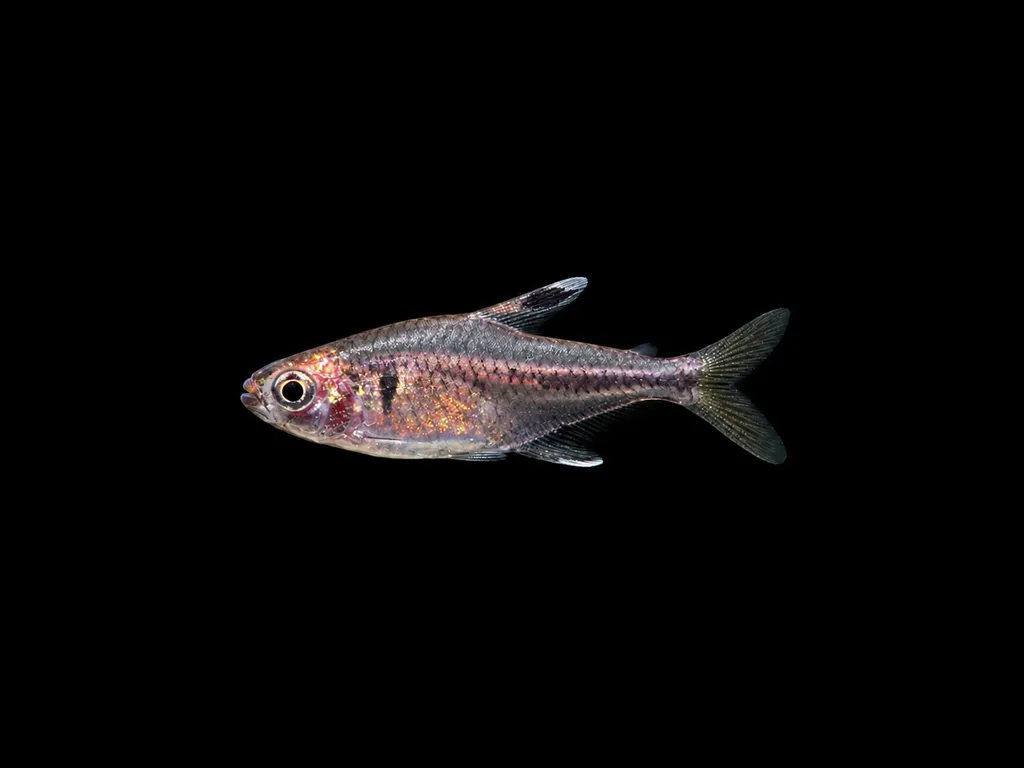 1.4 in (3.6 cm)15 gal (55 L)72–81°F (22–27°C)
Simulatus tetra
Hyphessobrycon simulatus
1.4 in (3.6 cm) · 15 gal (55 L)
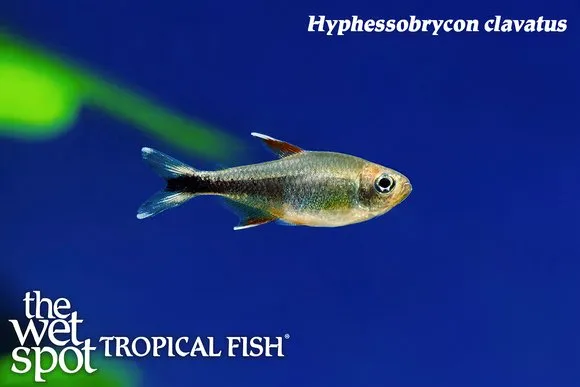 1.5 in (3.7 cm)15 gal (55 L)72–81°F (22–27°C)
Clavatus tetra
Hyphessobrycon clavatus
1.5 in (3.7 cm) · 15 gal (55 L)
 1.5 in (3.7 cm)15 gal (55 L)72–82°F (22–28°C)
Moniliger tetra
Hyphessobrycon moniliger
1.5 in (3.7 cm) · 15 gal (55 L)