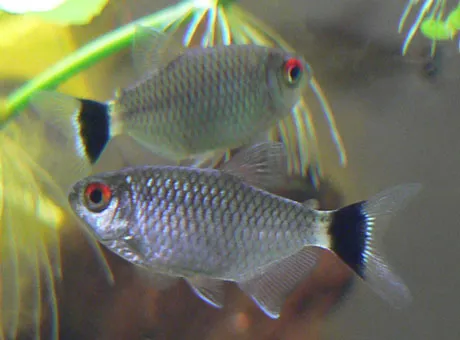
Red eye tetra
Moenkhausia sanctaefilomenae
FreshwaterFish
Care at a glance
- Temperature
- 72–79°F
- 22–26°C
- pH
- 6.0–7.5
- Adult size
- 2.8 in
- 7 cm
- Minimum tank
- 28 gal
- 105 L
- Temperament
- Mostly peaceful
- Social behavior
- Schooling
- Swim level
- Middle
- Difficulty
- Easy
- Breeding
- Hard
- Rarity
- Common
- Family
- Characidae
- Origin
- Brazil, Paraguay, Argentina
Overview
Keep them in a group of at least six, ideally more, since a proper school settles them down and brings out their best behavior. They are active mid-water swimmers and mostly peaceful, though a tight school can nip fins, so skip slow long-finned tankmates. A 105 liter tank or larger gives them room to move. Feed a mix of flake, small pellets, and occasional frozen or live foods like brine shrimp or bloodworms.
In the wild
Red eye tetras come from slow to moderate rivers and streams across Brazil, Paraguay, and Argentina, often over sand or mud with plants and submerged wood around. The water there runs clear to slightly cloudy and sits on the acidic to neutral side. A tank with open swimming room in the middle, some plants along the edges, and a bit of wood matches what they know. Aim for a pH between 6 and 7.5 and temps in the low to mid 20s C.
Good to know
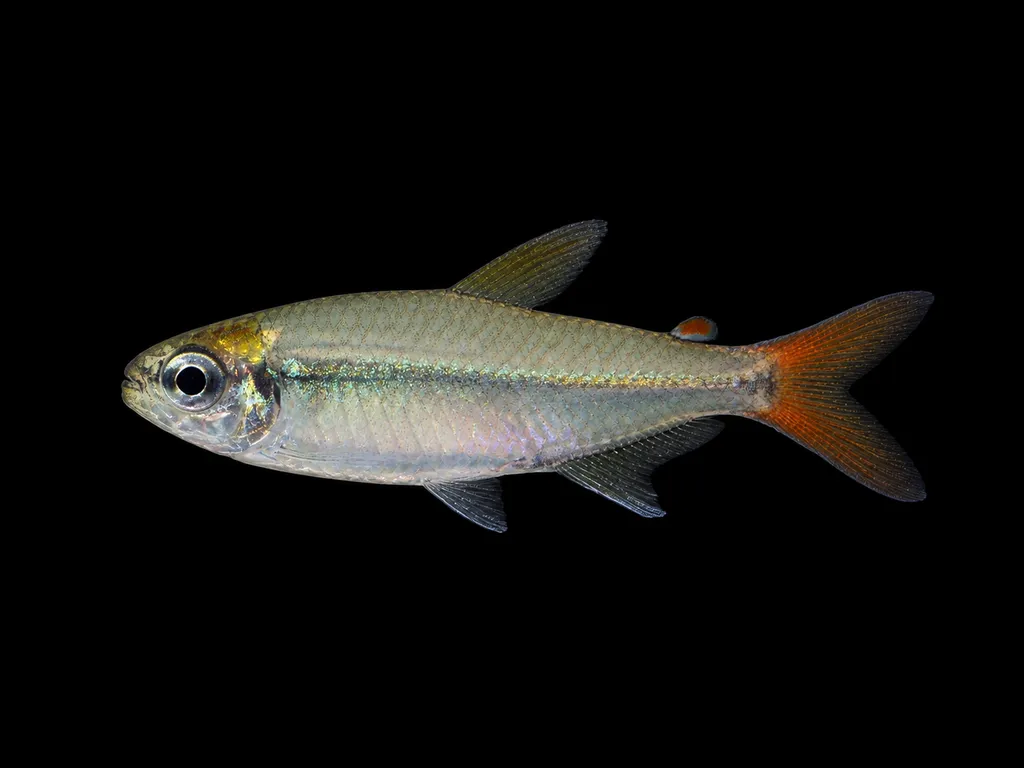
This is a characin in the family Characidae, named for the red ring around the top of its eye against a plain silver body. Adults reach about 7 cm. They are egg scatterers with no parental care, and the IUCN lists them as Least Concern. Healthy individuals commonly live around 3 to 5 years.
Did you know
They are hardy enough to handle a wide range of conditions, which is part of why they have been a steady community fish for decades. As they age, the silver scales pick up a darker edge, giving older fish a faintly chain-mail look across the body.
Weekly picks
Tank mates
Red eye tetra is a mostly peaceful, schooling species that keeps to the middle. These picks share a community profile with it, are safe together in both directions, and overlap on water type, temperature and pH.
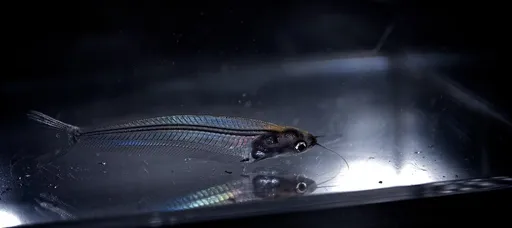
True glass catfish
Kryptopterus bicirrhis
Freshwater5.9 in (15 cm) · 26 gal (100 L)70–79°F (21–26°C)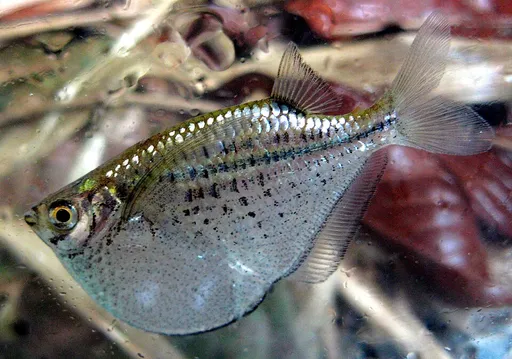
Spotted hatchetfish
Gasteropelecus maculatus
Freshwater3.5 in (9 cm) · 26 gal (100 L)73–82°F (23–28°C)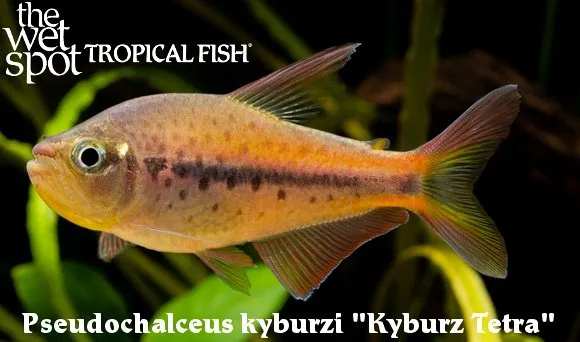
Kyburz tetra
Pseudochalceus kyburzi
Freshwater3.1 in (7.8 cm) · 29 gal (110 L)72–81°F (22–27°C)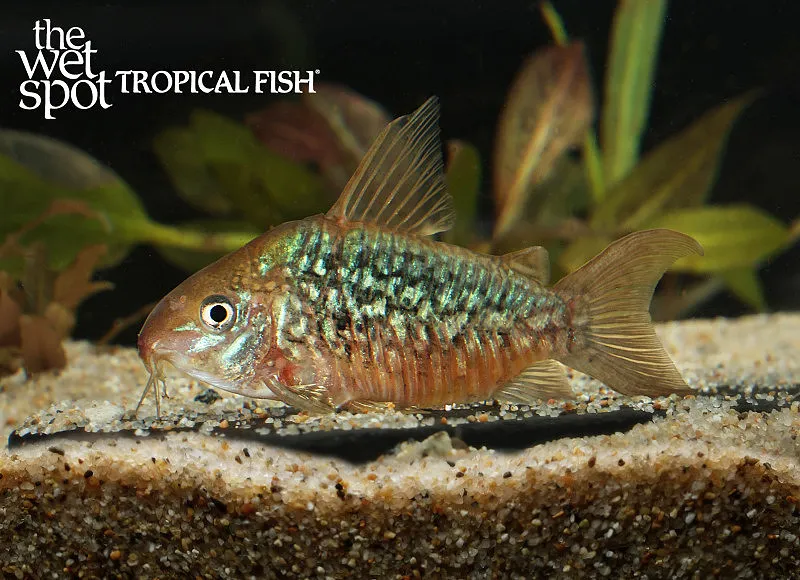
Pantanal cory
Brochis pantanalensis
Freshwater3 in (7.5 cm) · 26 gal (100 L)72–82°F (22–28°C)
Redfin halfbeak
Nomorhamphus ebrardtii
Freshwater3.5 in (9 cm) · 29 gal (110 L)75–81°F (24–27°C)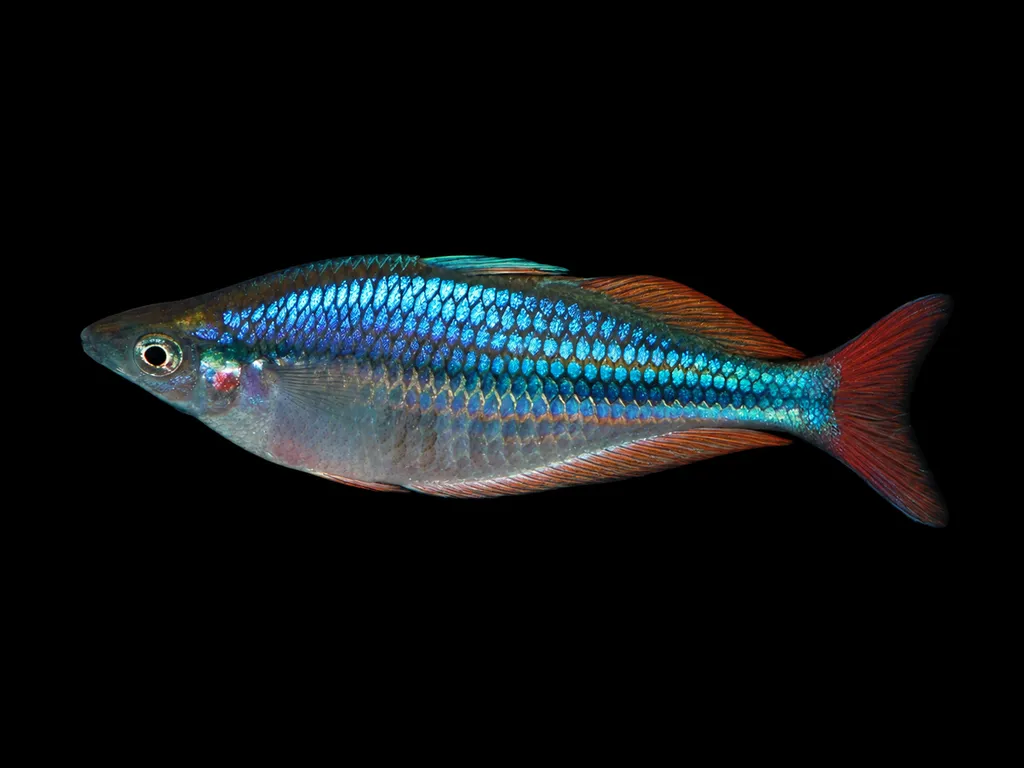
Highlands rainbowfish
Chilatherina campsi
Freshwater3.4 in (8.6 cm) · 29 gal (110 L)70–81°F (21–27°C)
Common questions
What size tank does a Red eye tetra need?
A Red eye tetra needs at least 28 gal (105 L). It spends most of its time in the middle.
What temperature and pH does a Red eye tetra need?
A Red eye tetra is comfortable at 72–79°F (22–26°C) with a pH of 6.0–7.5.
How big does a Red eye tetra get?
An adult Red eye tetra reaches about 2.8 in (7 cm).
Does a Red eye tetra need a group?
Yes. A Red eye tetra is a schooling species and should be kept in a group, not singly.
Related species
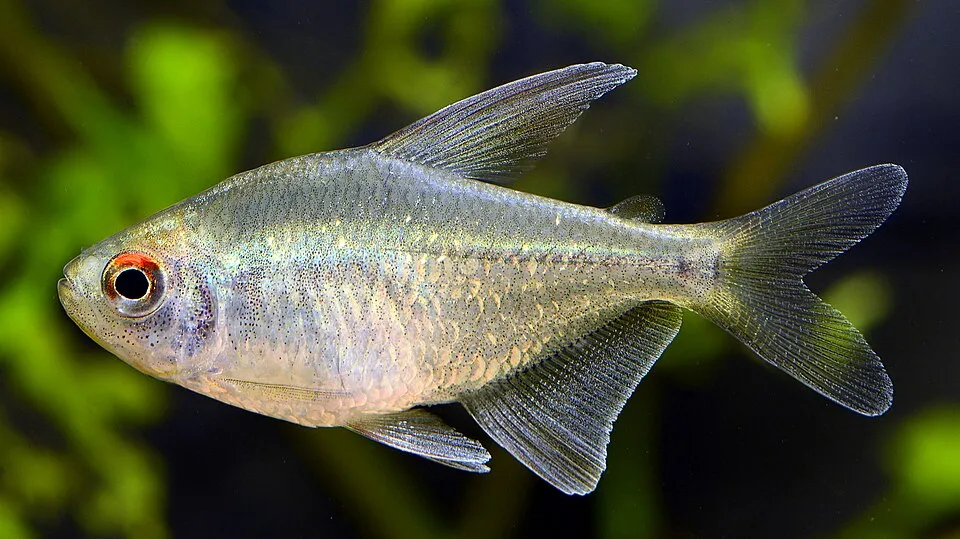 2.4 in (6 cm)20 gal (75 L)75–82°F (24–28°C)
Diamond tetra
Moenkhausia pittieri
2.4 in (6 cm) · 20 gal (75 L)
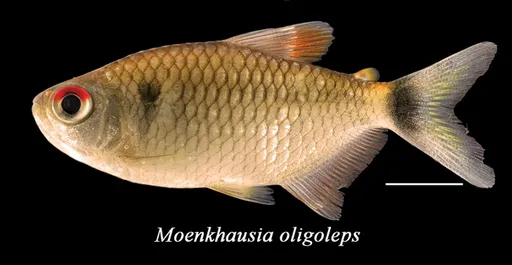 2 in (5 cm)18 gal (70 L)75–82°F (24–28°C)
Glass tetra
Moenkhausia oligolepis
2 in (5 cm) · 18 gal (70 L)
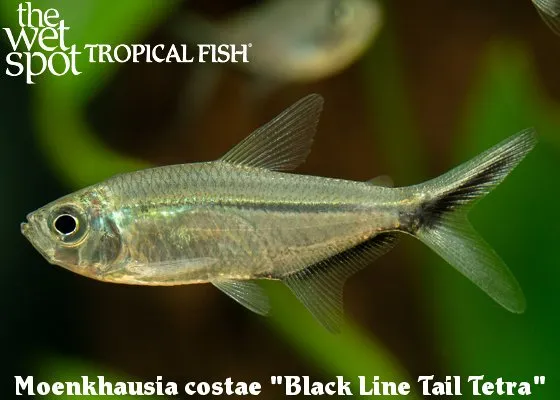 2.8 in (7 cm)29 gal (110 L)72–82°F (22–28°C)
Costae tetra
Moenkhausia costae
2.8 in (7 cm) · 29 gal (110 L)
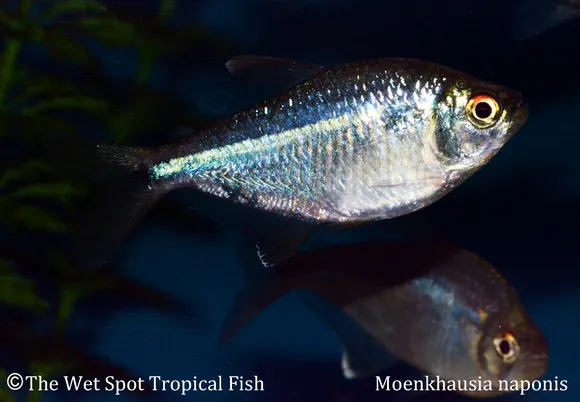 2.6 in (6.5 cm)20 gal (75 L)73–81°F (23–27°C)
Napo tetra
Moenkhausia naponis
2.6 in (6.5 cm) · 20 gal (75 L)
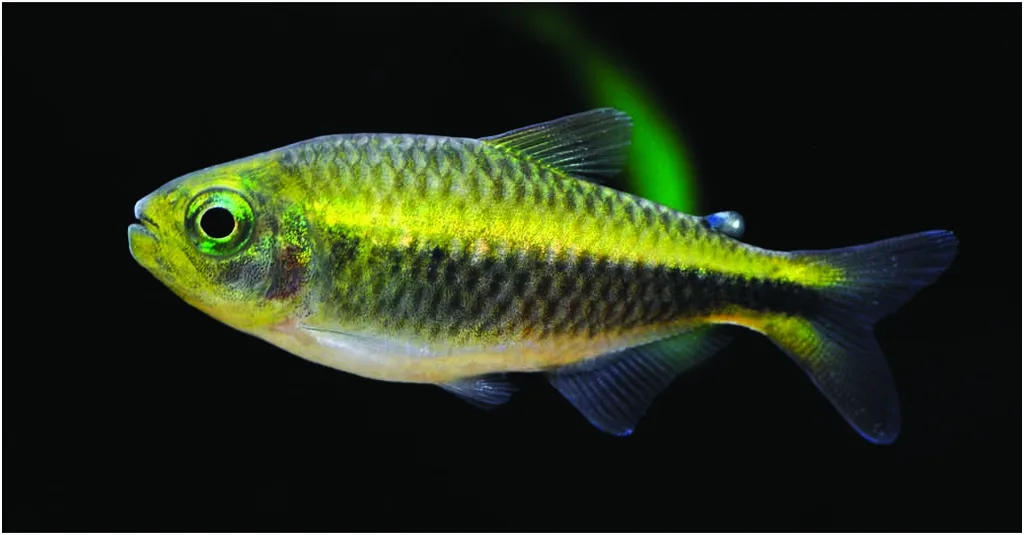 3.1 in (8 cm)24 gal (90 L)75–82°F (24–28°C)
Green-eye tetra
Moenkhausia chlorophthalma
3.1 in (8 cm) · 24 gal (90 L)
 2.4 in (6 cm)20 gal (75 L)73–82°F (23–28°C)
Cope's tetra
Moenkhausia copei
2.4 in (6 cm) · 20 gal (75 L)