Copper Congo tetra
Hemigrammopetersius pulcher
Also known as Phenacogrammus pulcher, Copper tetra
FreshwaterFish
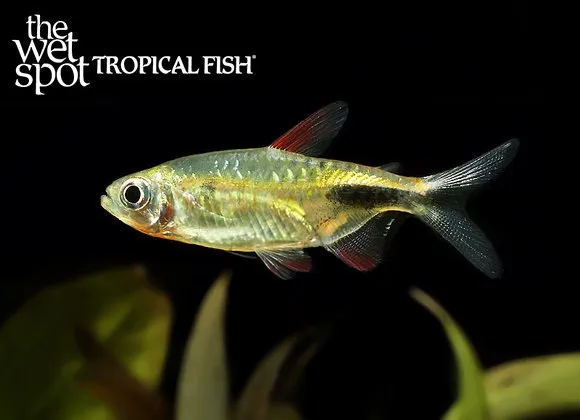
Care at a glance
- Temperature
- 73–81°F
- 23–27°C
- pH
- 6.0–7.2
- Adult size
- 2.4 in
- 6 cm
- Minimum tank
- 24 gal
- 90 L
- Temperament
- Peaceful
- Social behavior
- Schooling
- Swim level
- Middle
- Difficulty
- Medium
- Breeding
- No record
- Rarity
- Rare
- Family
- Alestidae
- Origin
- Dja River system, Cameroon
Overview
The copper Congo tetra is a peaceful schooling fish for open midwater in a community tank. It is a good fish for a keeper with some experience.
Did you know
The copper Congo tetra's species name, pulcher, is Latin for beautiful. It was chosen for the way a healthy fish takes on the glow of freshly minted copper.
Caring for the copper Congo tetra
Keep copper Congo tetras in a group of at least six. A group spreads out the lively sparring between rival males, so no one fish gets singled out. A good number of females helps too. A tank of 24 gal (90 L) or more will house a small, settled shoal.
Set it up with driftwood, a dark base, dim lighting and open midwater to swim in. Keep the water soft and slightly acidic, at 73 to 81°F (23 to 27°C) and a pH of 6.0 to 7.2. Give it gentle flow, good filtration and regular water changes to hold conditions steady.
Feed a varied diet of quality flake or micropellets, with regular small frozen and live foods such as daphnia, brine shrimp and bloodworm. The copper Congo tetra is peaceful toward its tank mates. Pair it with other calm community species that use different levels of the tank.
Males are the slimmer, brighter sex, while females are deeper-bodied with a yellow tail. Reliable aquarium breeding is not on record, though it is presumed to scatter eggs.
Good to know
Hemigrammopetersius pulcher is a small alestid, sometimes listed under Phenacogrammus as Phenacogrammus pulcher. Its warm, burnished copper sheen gives it its common name, and some sellers shorten it to copper tetra. It is rare in the trade.
In the wild
The copper Congo tetra is endemic to the Dja River drainage in southern Cameroon, part of the wider Congo basin. It lives in warm, soft, gently acidic forest water that flows over sand and leaf litter under heavy shade.
Weekly picks
Tank mates
The copper Congo tetra is a peaceful, schooling species that keeps to the middle. These picks share a community profile with it, are safe together in both directions, and overlap on water type, temperature and pH.
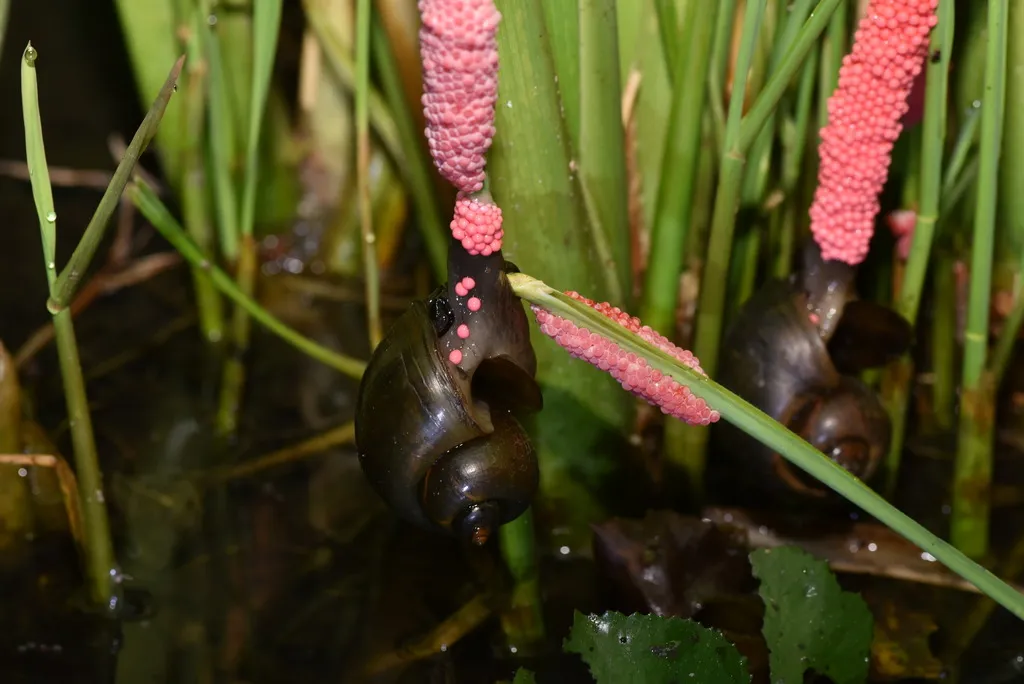
Apple snail
Pomacea canaliculata
Freshwater5.9 in (15 cm) · 21 gal (80 L)64–81°F (18–27°C)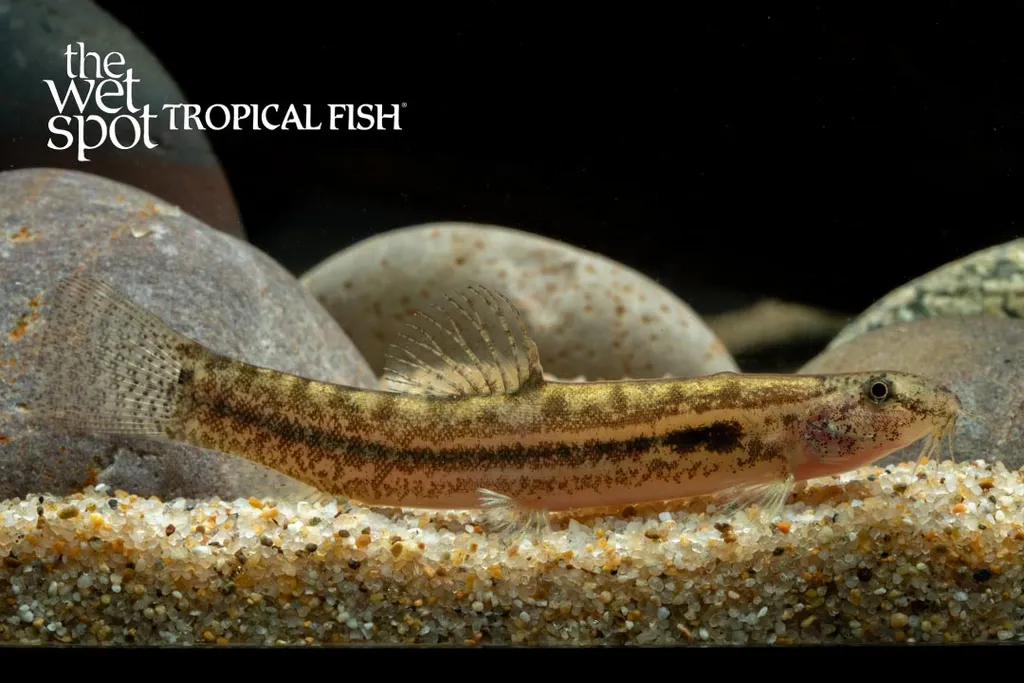
Guntea loach
Lepidocephalichthys guntea
Freshwater4.7 in (12 cm) · 24 gal (90 L)64–82°F (18–28°C)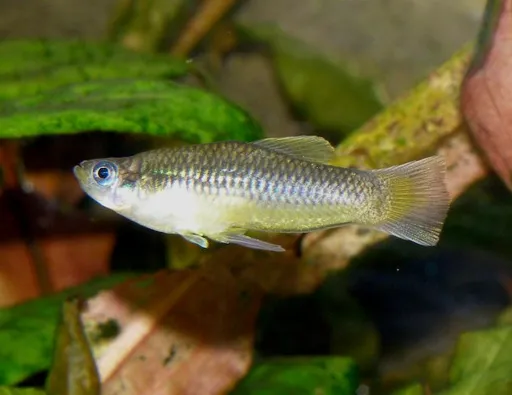
Blue-eyed livebearer
Priapella intermedia
Freshwater2.8 in (7 cm) · 24 gal (90 L)72–82°F (22–28°C)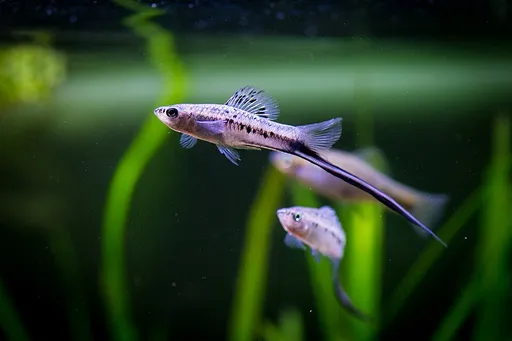
Sheepshead swordtail
Xiphophorus birchmanni
Freshwater2.8 in (7 cm) · 24 gal (90 L)68–81°F (20–27°C)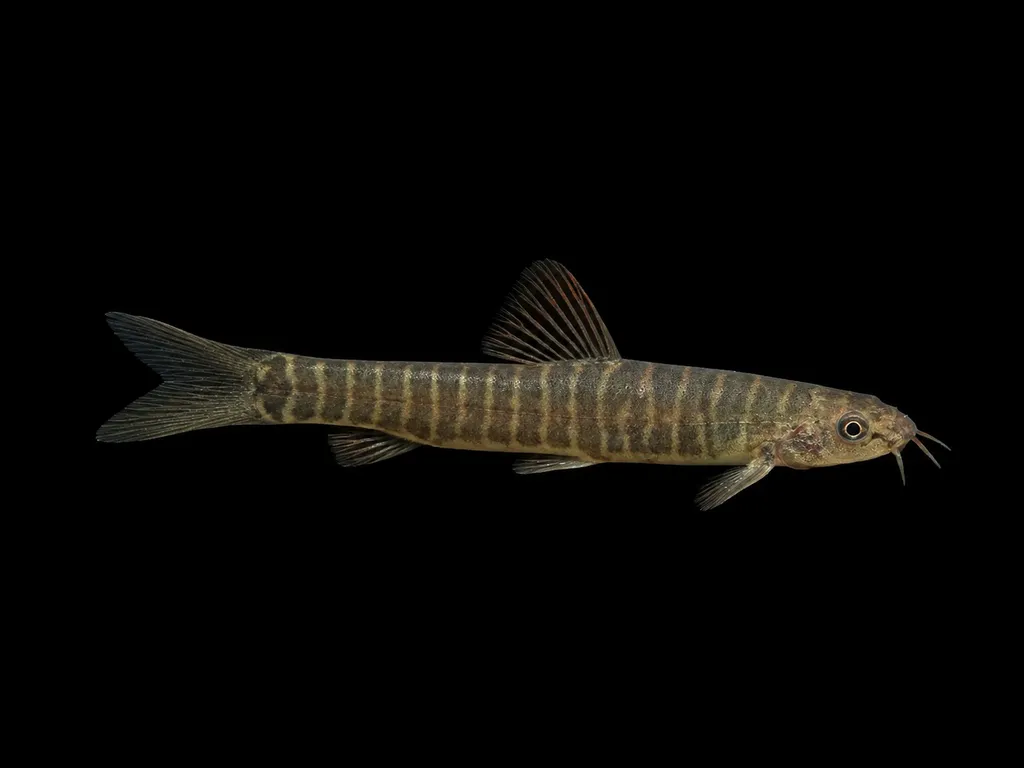
Flathead loach
Nemacheilus platiceps
Freshwater2.9 in (7.3 cm) · 24 gal (90 L)72–81°F (22–27°C)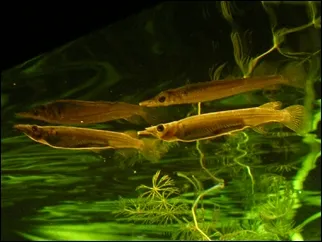
Wrestling halfbeak
Dermogenys pusilla
FreshwaterBrackish2.8 in (7 cm) · 25 gal (95 L)75–82°F (24–28°C)
Common questions
What size tank does a copper Congo tetra need?
A copper Congo tetra needs at least 24 gal (90 L). It spends most of its time in the middle.
What temperature and pH does a copper Congo tetra need?
A copper Congo tetra is comfortable at 73–81°F (23–27°C) with a pH of 6.0–7.2.
What does a copper Congo tetra eat?
A copper Congo tetra eats quality flake or micropellets. Add regular small frozen and live foods such as daphnia, brine shrimp and bloodworm for variety.
How big does a copper Congo tetra get?
An adult copper Congo tetra reaches about 2.4 in (6 cm).
Does a copper Congo tetra need a group?
Yes. A copper Congo tetra is a schooling species and should be kept in a group, not singly.
How can you tell a male copper Congo tetra from a female?
Males are the slimmer, brighter sex. Females are deeper-bodied and have a yellow tail.
How does a copper Congo tetra breed?
The copper Congo tetra has no reliable aquarium breeding record. It is presumed to scatter its eggs.
Related species
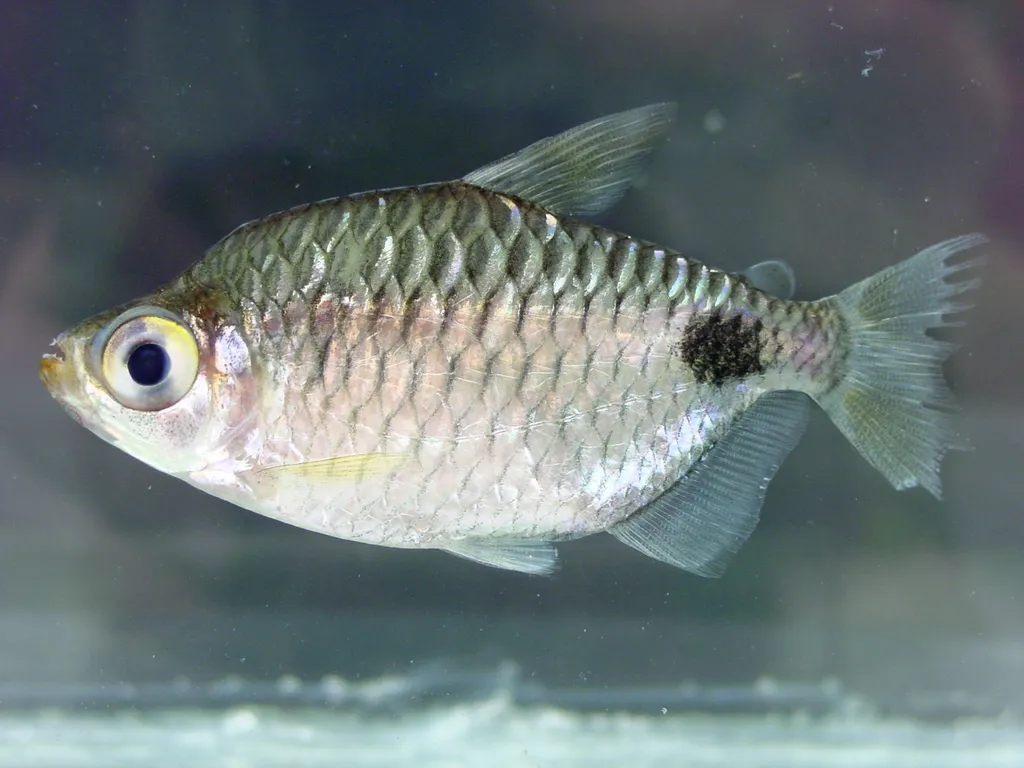 2.6 in (6.5 cm)30 gal (112 L)73–82°F (23–28°C)
Altus tetra
Brachypetersius altus
2.6 in (6.5 cm) · 30 gal (112 L)
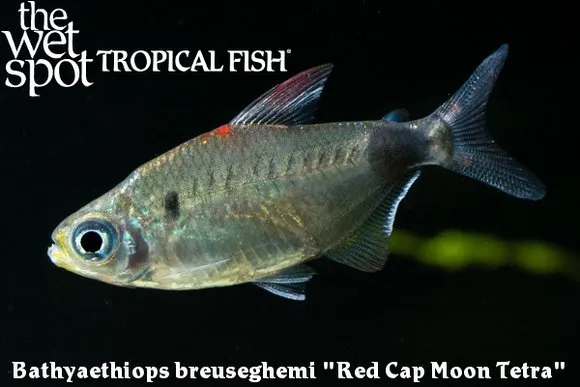 2.8 in (7 cm)29 gal (110 L)73–81°F (23–27°C)
Breuseghem's moon tetra
Bathyaethiops breuseghemi
2.8 in (7 cm) · 29 gal (110 L)
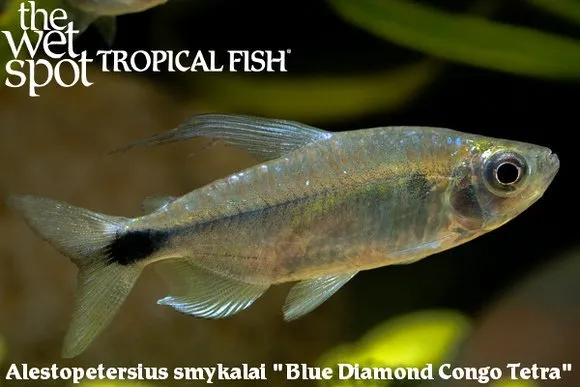 2.8 in (7 cm)29 gal (110 L)73–81°F (23–27°C)
Niger yellow Congo tetra
Alestopetersius smykalai
2.8 in (7 cm) · 29 gal (110 L)
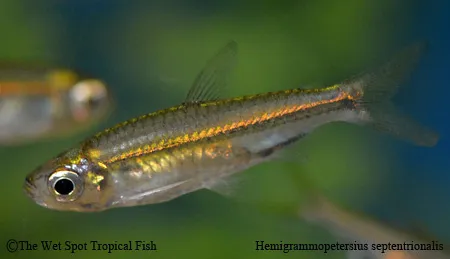 2.8 in (7 cm)21 gal (80 L)73–82°F (23–28°C)
Nigerian yellow line tetra
Rhabdalestes septentrionalis
2.8 in (7 cm) · 21 gal (80 L)
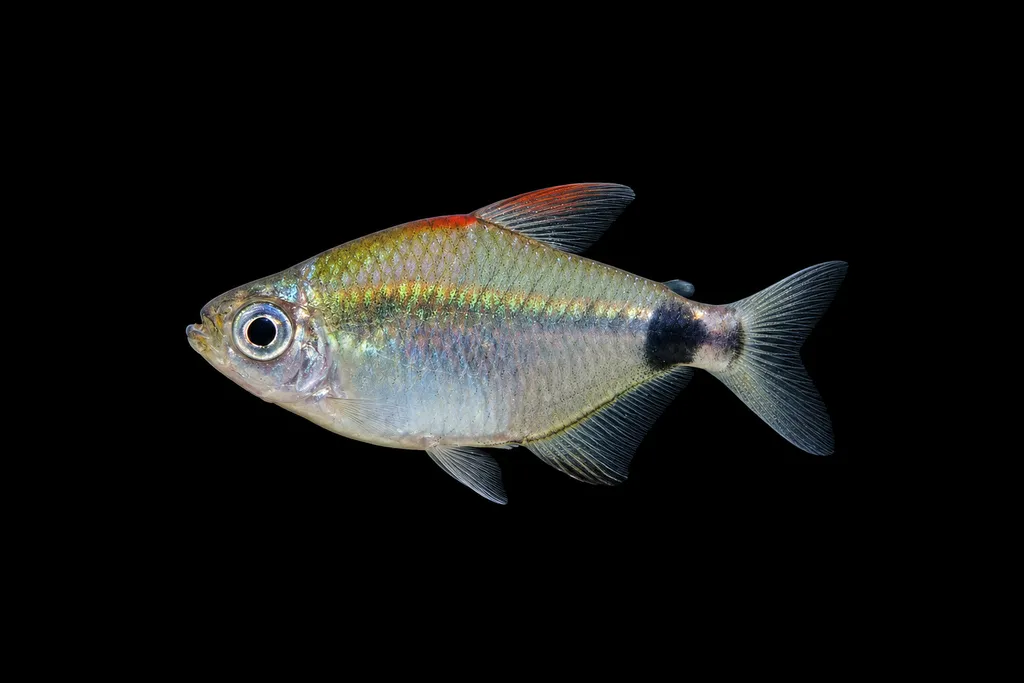
- 2 in (5 cm)24 gal (90 L)73–81°F (23–27°C)
Red-back moon tetra
Bathyaethiops flammeus
2 in (5 cm) · 24 gal (90 L)
 3.1 in (8 cm)22 gal (85 L)72–77°F (22–25°C)
African moon tetra
Bathyaethiops caudomaculatus
3.1 in (8 cm) · 22 gal (85 L)