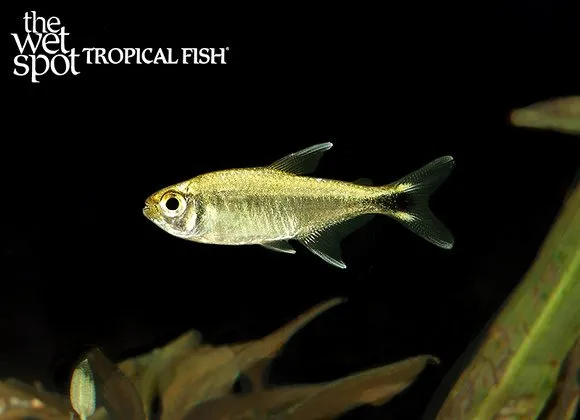
Colombian gold tetra
Hyphessobrycon saizi
Also known as Hyphessobrycon eos, Hemigrammus saizi
FreshwaterFish
Care at a glance
- Temperature
- 73–82°F
- 23–28°C
- pH
- 5.5–7.0
- Adult size
- 1.4 in
- 3.5 cm
- Minimum tank
- 14 gal
- 54 L
- Temperament
- Peaceful
- Social behavior
- Schooling
- Swim level
- Middle
- Difficulty
- Easy
- Breeding
- Egg scatterer · Medium
- Rarity
- Rare
- Family
- Characidae
- Origin
- Colombian Amazon near Leticia
Overview
The Colombian gold tetra is a peaceful schooling fish for the middle of a soft-water community tank. It is easy to keep.
Did you know
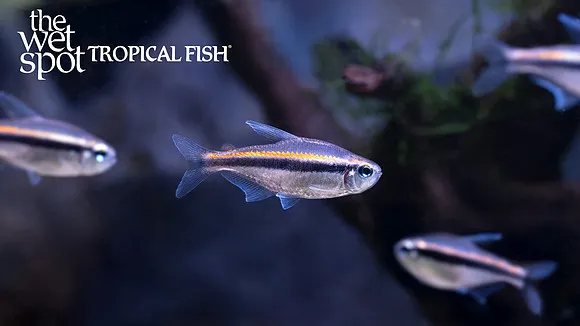
The gold on wild Colombian gold tetras is triggered by a harmless larval parasite. The parasite makes the skin lay down extra guanine crystals. Captive-bred offspring hatch out plain silver, so the golden fish are always wild-caught.
Caring for the Colombian gold tetra
Keep Colombian gold tetras in a group of at least eight to ten, in 14 gal (54 L) or larger. Their golden sheen shows well in a group that size. Give them some planting, open swimming room, and a dark substrate with driftwood and leaf litter. Dim light brings out their color.
They need soft, gently stained water with low hardness, at 73 to 82°F (23 to 28°C) and a pH of 5.5 to 7.0. Gentle flow and clean, well-filtered water keep the group healthy. Feed small foods, such as quality flake and micro pellets, with frequent frozen or live daphnia, cyclops and baby brine shrimp.
Colombian gold tetras are peaceful and suit calm tank mates of similar size. Other small tetras, pencilfish, dwarf cichlids and corydoras all work. They can be spawned as egg scatterers, but it takes some effort.
Good to know
Hyphessobrycon saizi is a characin of the family Characidae. It is traded under several names, including Hyphessobrycon eos and Hemigrammus saizi.
In the wild
The Colombian gold tetra comes from soft, gently acidic forest creeks of the Colombian Amazon near Leticia. These are the same clear and blackwater habitats that hold cardinal and red neon tetras.
Weekly picks
Tank mates
The Colombian gold tetra is a peaceful, schooling species that keeps to the middle. These picks share a community profile with it, are safe together in both directions, and overlap on water type, temperature and pH.
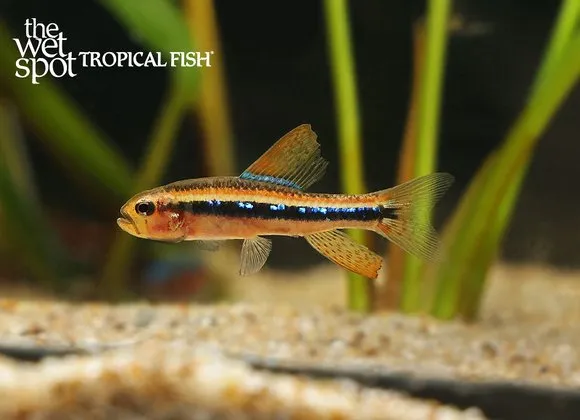
Black darter tetra
Poecilocharax weitzmani
Freshwater1.9 in (4.7 cm) · 14 gal (54 L)75–82°F (24–28°C)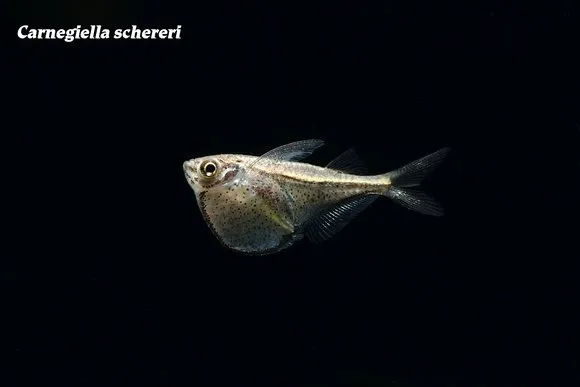
Scherer's hatchetfish
Carnegiella schereri
Freshwater1 in (2.6 cm) · 14 gal (54 L)73–82°F (23–28°C)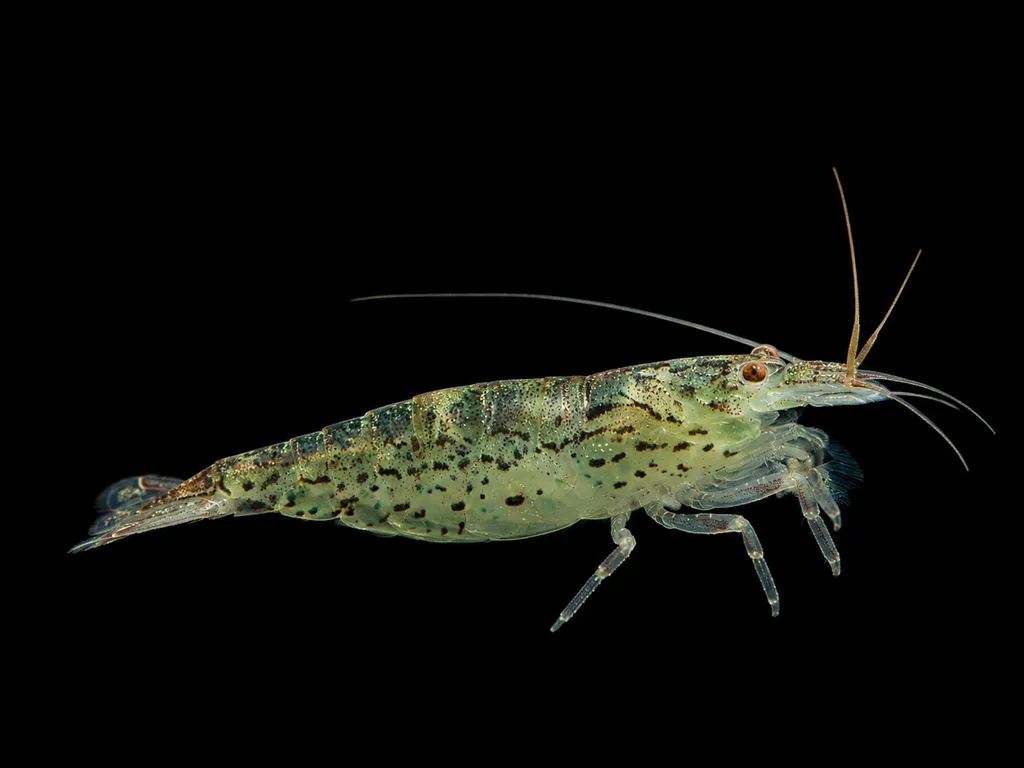
Green lace shrimp
Atyoida pilipes
Freshwater2.8 in (7 cm) · 14 gal (54 L)73–82°F (23–28°C)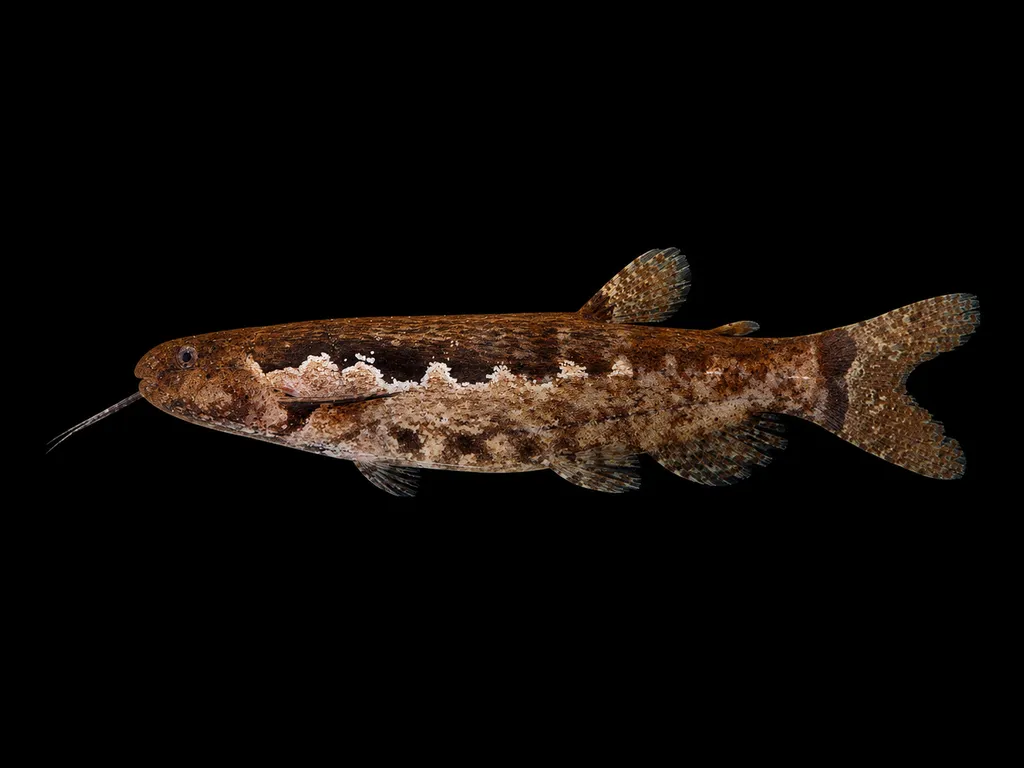
Marbled helogenes
Helogenes marmoratus
Freshwater3.1 in (8 cm) · 14 gal (54 L)73–82°F (23–28°C)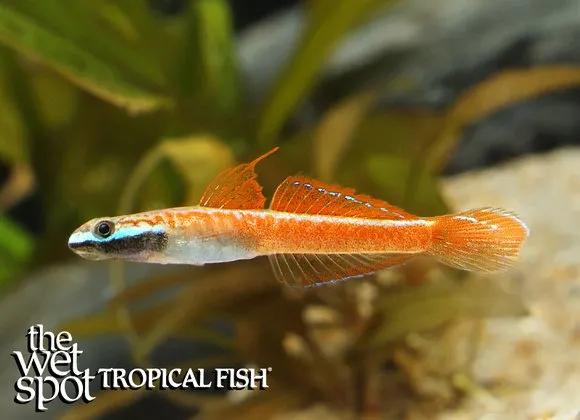
Annie's goby
Stiphodon annieae
Freshwater1.2 in (3 cm) · 14 gal (54 L)73–81°F (23–27°C)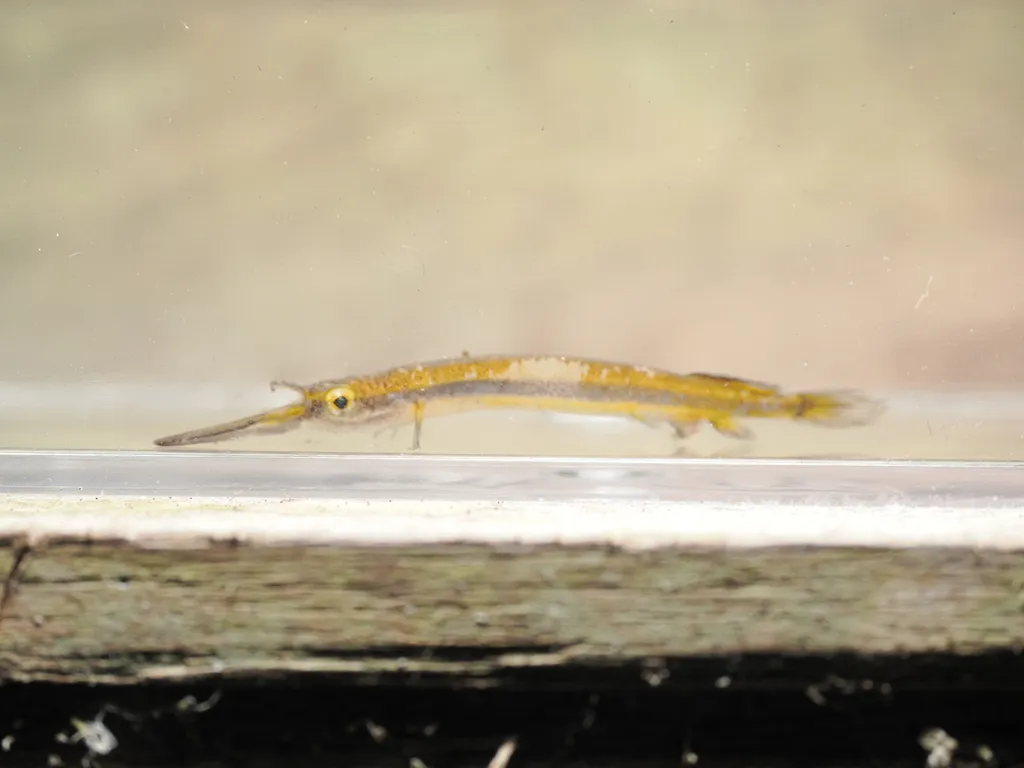
Gold-spotted halfbeak
Hemirhamphodon chrysopunctatus
Freshwater2.6 in (6.5 cm) · 14 gal (54 L)73–81°F (23–27°C)
Common questions
What size tank does a Colombian gold tetra need?
A Colombian gold tetra needs at least 14 gal (54 L). It spends most of its time in the middle.
What temperature and pH does a Colombian gold tetra need?
A Colombian gold tetra is comfortable at 73–82°F (23–28°C) with a pH of 5.5–7.0.
What does a Colombian gold tetra eat?
A Colombian gold tetra eats small foods, such as quality flake and micro pellets. Give it frequent frozen or live daphnia, cyclops and baby brine shrimp too.
How big does a Colombian gold tetra get?
An adult Colombian gold tetra reaches about 1.4 in (3.5 cm).
Does a Colombian gold tetra need a group?
Yes. A Colombian gold tetra is a schooling species and should be kept in a group, not singly.
How does a Colombian gold tetra breed?
The Colombian gold tetra can be spawned as an egg scatterer, but it takes some effort.
Related species
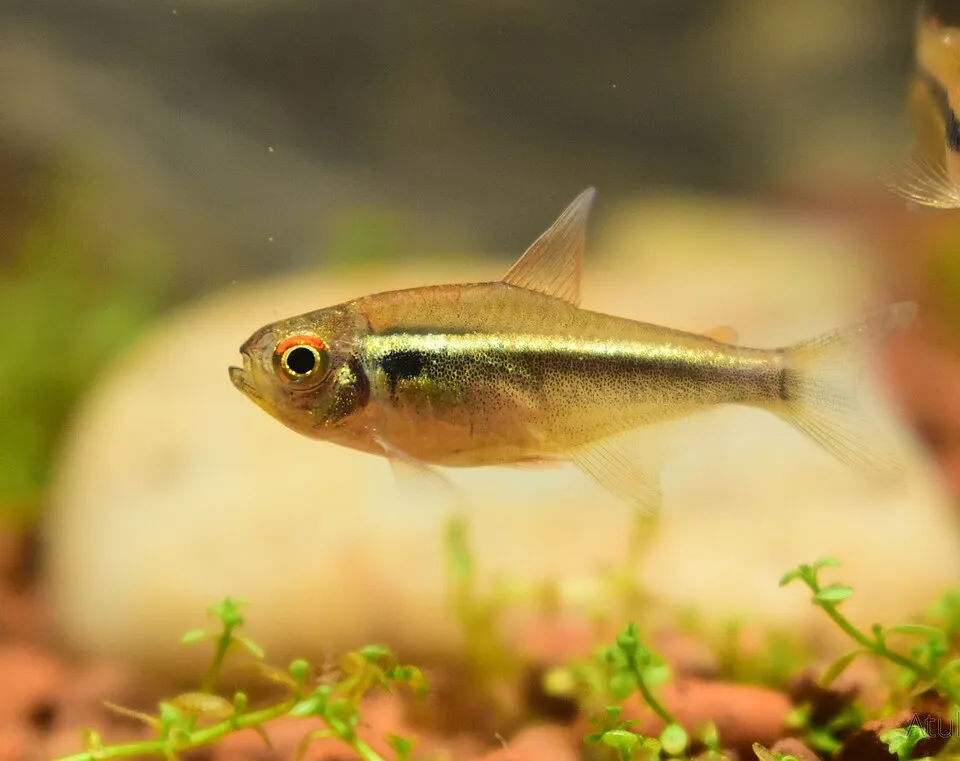 1.4 in (3.5 cm)10 gal (38 L)72–82°F (22–28°C)
Black neon tetra
Hyphessobrycon herbertaxelrodi
1.4 in (3.5 cm) · 10 gal (38 L)
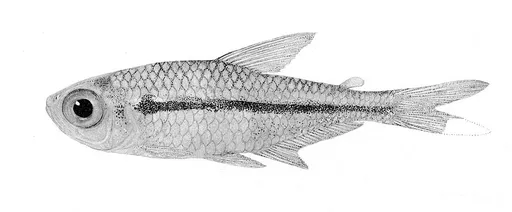 1.4 in (3.5 cm)16 gal (60 L)70–81°F (21–27°C)
Flag tetra
Hyphessobrycon heterorhabdus
1.4 in (3.5 cm) · 16 gal (60 L)
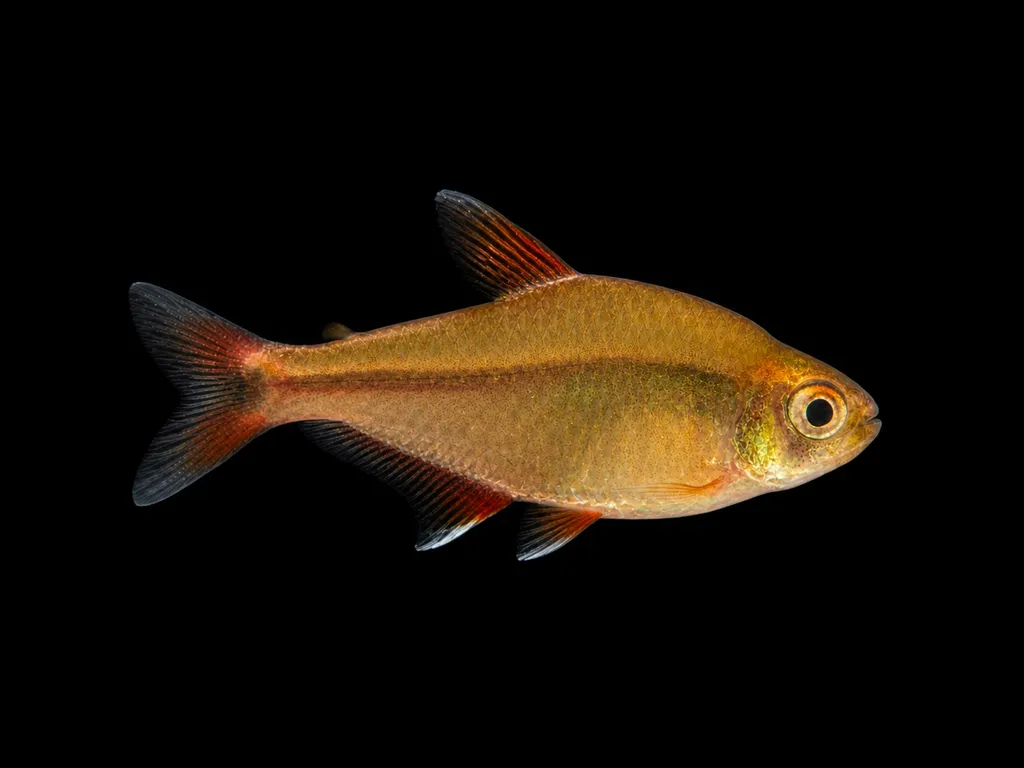 1.4 in (3.5 cm)15 gal (55 L)72–81°F (22–27°C)
Krenakore tetra
Hyphessobrycon krenakore
1.4 in (3.5 cm) · 15 gal (55 L)
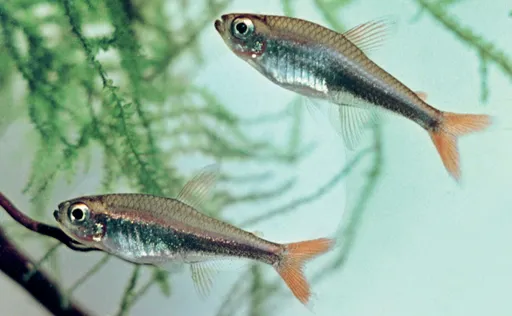 1.4 in (3.5 cm)16 gal (60 L)72–81°F (22–27°C)
Loreto tetra
Hyphessobrycon loretoensis
1.4 in (3.5 cm) · 16 gal (60 L)
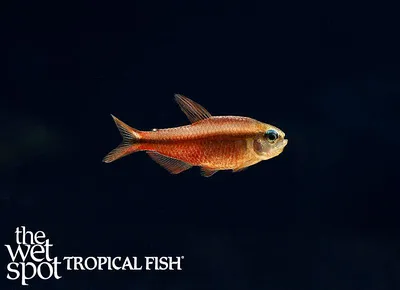 1.4 in (3.5 cm)15 gal (55 L)72–81°F (22–27°C)
Notidanos tetra
Hyphessobrycon notidanos
1.4 in (3.5 cm) · 15 gal (55 L)
 1.4 in (3.5 cm)15 gal (55 L)72–81°F (22–27°C)
Vilma's tetra
Hyphessobrycon vilmae
1.4 in (3.5 cm) · 15 gal (55 L)