Agulha tetra
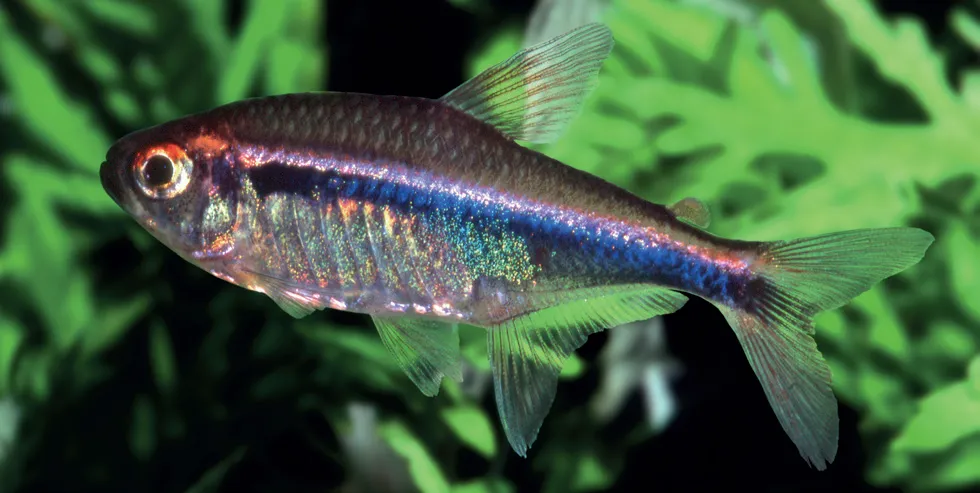
Hyphessobrycon agulha
Also known as Agulha flag tetra
FreshwaterFish
Care at a glance
- Temperature
- 72–81°F
- 22–27°C
- pH
- 5.0–7.0
- Adult size
- 2 in
- 5.2 cm
- Minimum tank
- 17 gal
- 65 L
- Temperament
- Peaceful
- Social behavior
- Schooling
- Swim level
- Middle
- Difficulty
- Medium
- Breeding
- Hard
- Rarity
- Rare
- Family
- Characidae
- Origin
- Madeira River basin, Brazil
Overview
The Agulha tetra is a peaceful schooling tetra for the middle of a blackwater tank. It is a step up from the easiest tetras.
Did you know
The Agulha tetra's name means needle in Portuguese. Ichthyologists still talk about the agulha lineage, a cluster of stripe-flanked tetras told apart by fine details. Most keepers never need to check those details.
Caring for the Agulha tetra
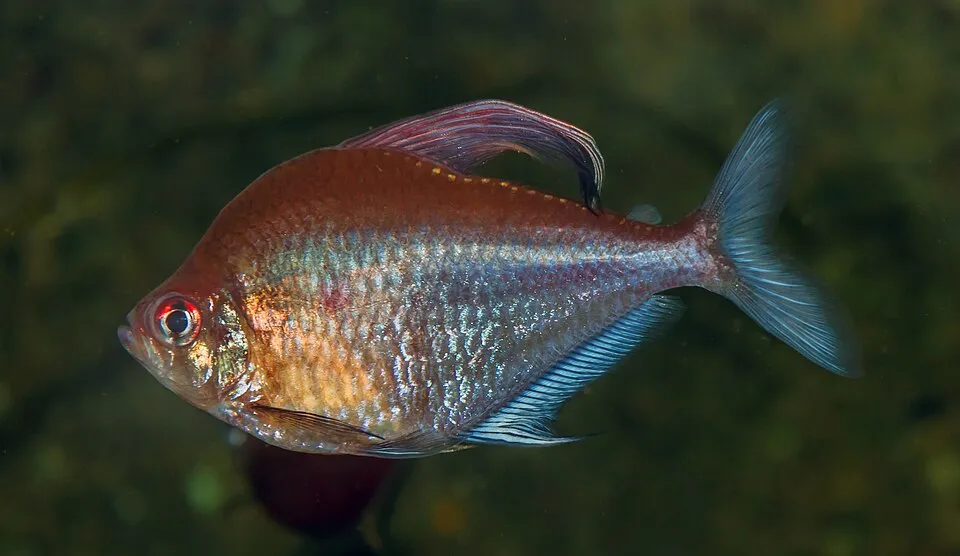
Keep Agulha tetras in a school of six or more, in 17 gal (65 L) or larger. Give the school open swimming length and shaded retreats. Dim light, wood and leaf litter suit them, and their colors deepen noticeably over a dark substrate.
Give them soft water at 72 to 81°F (22 to 27°C), with a pH of 5.0 to 7.0. They take flake, micro pellets and small frozen foods without fuss.
Agulha tetras are peaceful, so keep them with other calm blackwater fish such as pencilfish, dwarf cichlids or corys. Breeding them is hard.
Good to know
Hyphessobrycon agulha is a member of the family Characidae, described by Fowler in 1913. It is on the larger side for its genus. Its bold, dark flank stripe is shared by a group of look-alike tetras. Wild imports labeled agulha sometimes turn out to be one of those close relatives.
In the wild
The Agulha tetra comes from the Madeira River basin in Brazil, where tea-stained water slides through flooded margins and leaf drifts.
Weekly picks
Tank mates
The Agulha tetra is a peaceful, schooling species that keeps to the middle. These picks share a community profile with it, are safe together in both directions, and overlap on water type, temperature and pH.
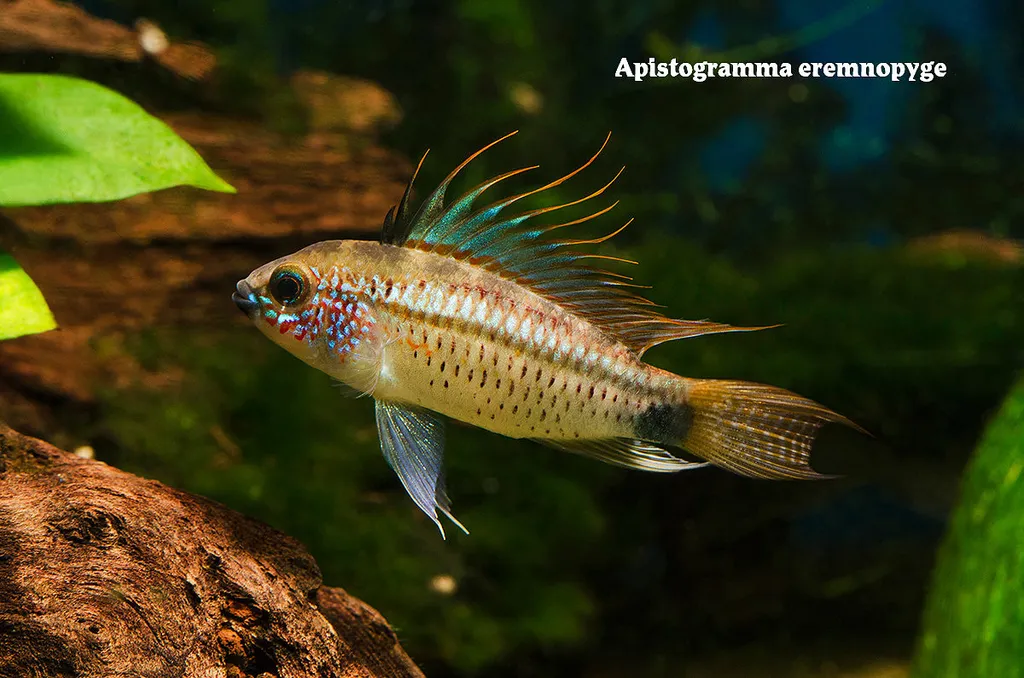
Fire-tail dwarf cichlid
Apistogramma eremnopyge
Freshwater1.8 in (4.5 cm) · 16 gal (60 L)73–81°F (23–27°C)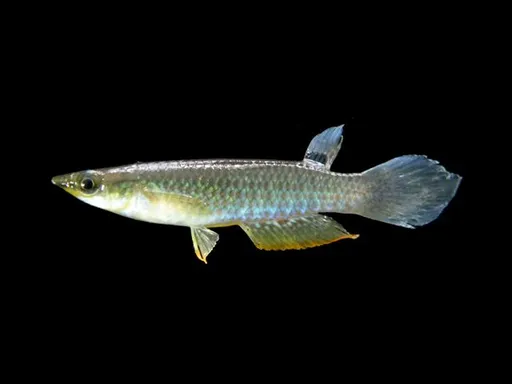
Blue panchax
Aplocheilus panchax
Freshwater3.5 in (9 cm) · 20 gal (75 L)72–82°F (22–28°C)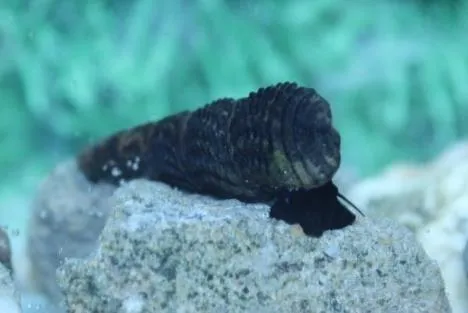
White spotted rabbit snail
Tylomelania towutica
Freshwater4.3 in (11 cm) · 16 gal (60 L)75–84°F (24–29°C)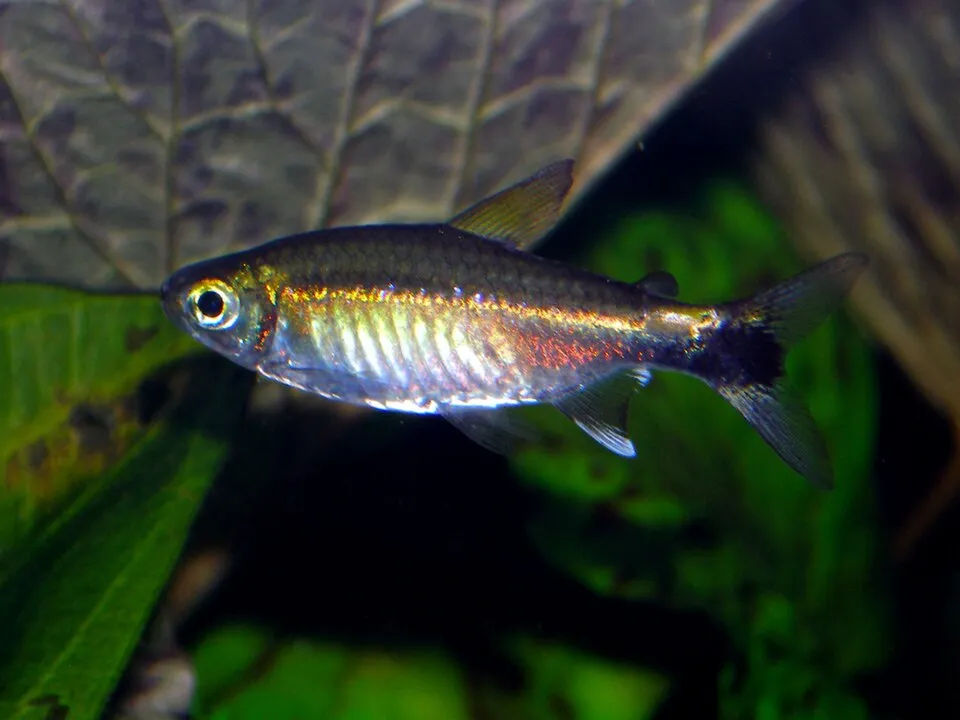
January tetra
Hemigrammus hyanuary
Freshwater1.6 in (4 cm) · 17 gal (65 L)73–81°F (23–27°C)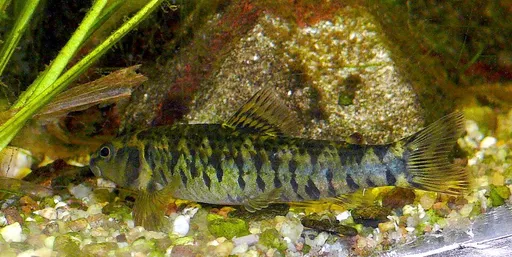
Darter tetra
Characidium fasciatum
Freshwater2.8 in (7 cm) · 16 gal (60 L)68–79°F (20–26°C)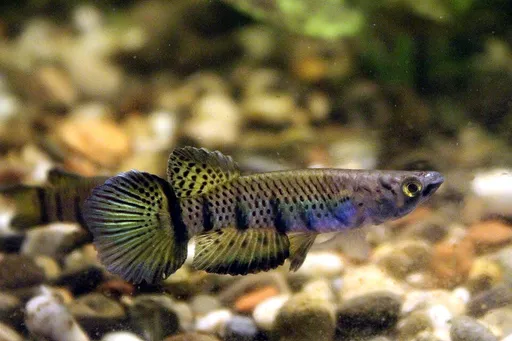
Six-barred panchax
Epiplatys sexfasciatus
Freshwater3.9 in (10 cm) · 20 gal (75 L)72–81°F (22–27°C)
Common questions
What size tank does an Agulha tetra need?
An Agulha tetra needs at least 17 gal (65 L). It spends most of its time in the middle.
What temperature and pH does an Agulha tetra need?
An Agulha tetra is comfortable at 72–81°F (22–27°C) with a pH of 5.0–7.0.
What does an Agulha tetra eat?
An Agulha tetra takes flake, micro pellets and small frozen foods without fuss.
How big does an Agulha tetra get?
An adult Agulha tetra reaches about 2 in (5.2 cm).
Does an Agulha tetra need a group?
Yes. An Agulha tetra is a schooling species and should be kept in a group, not singly.
Related species
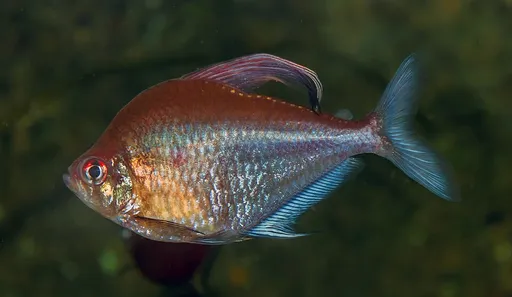
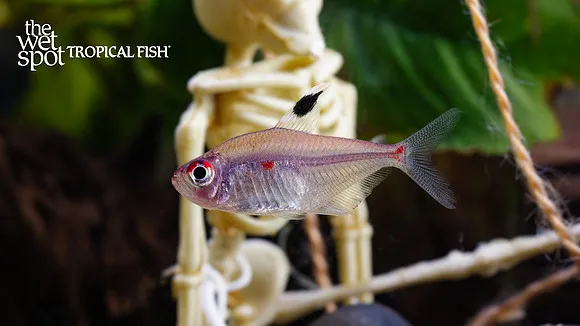 2.1 in (5.4 cm)20 gal (75 L)75–82°F (24–28°C)
Flameback bleeding heart tetra
Hyphessobrycon pyrrhonotus
2.1 in (5.4 cm) · 20 gal (75 L)
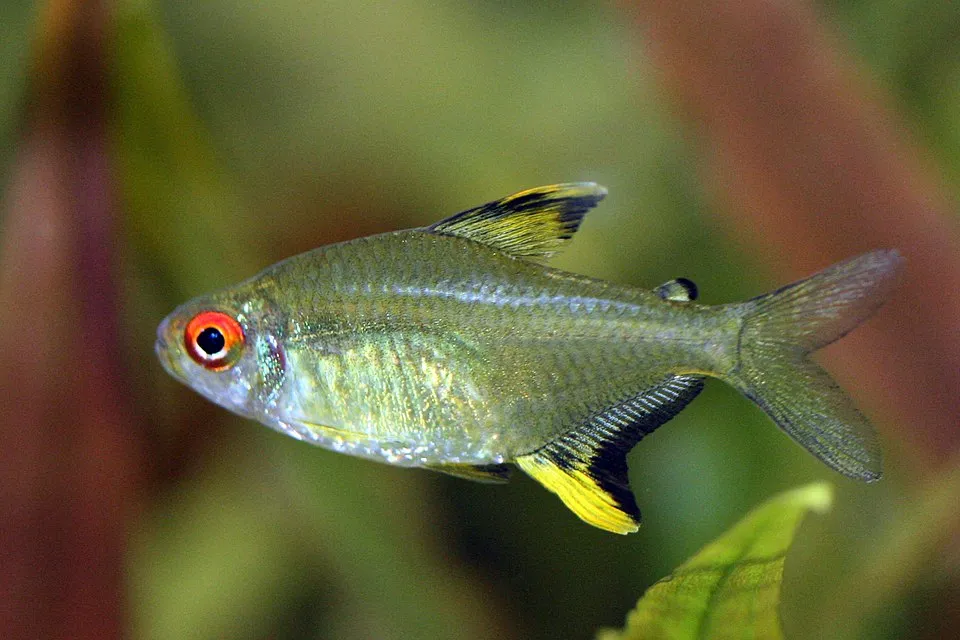 2 in (5 cm)17 gal (65 L)72–82°F (22–28°C)
Lemon tetra
Hyphessobrycon pulchripinnis
2 in (5 cm) · 17 gal (65 L)
 2.2 in (5.6 cm)24 gal (90 L)73–82°F (23–28°C)
Lesser bleeding heart tetra
Hyphessobrycon socolofi
2.2 in (5.6 cm) · 24 gal (90 L)
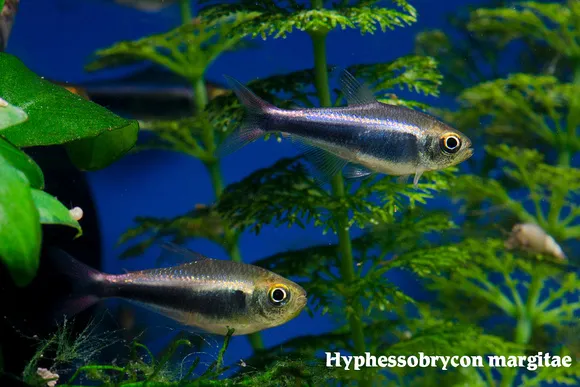 1.9 in (4.8 cm)16 gal (60 L)72–81°F (22–27°C)
Margitae tetra
Hyphessobrycon margitae
1.9 in (4.8 cm) · 16 gal (60 L)
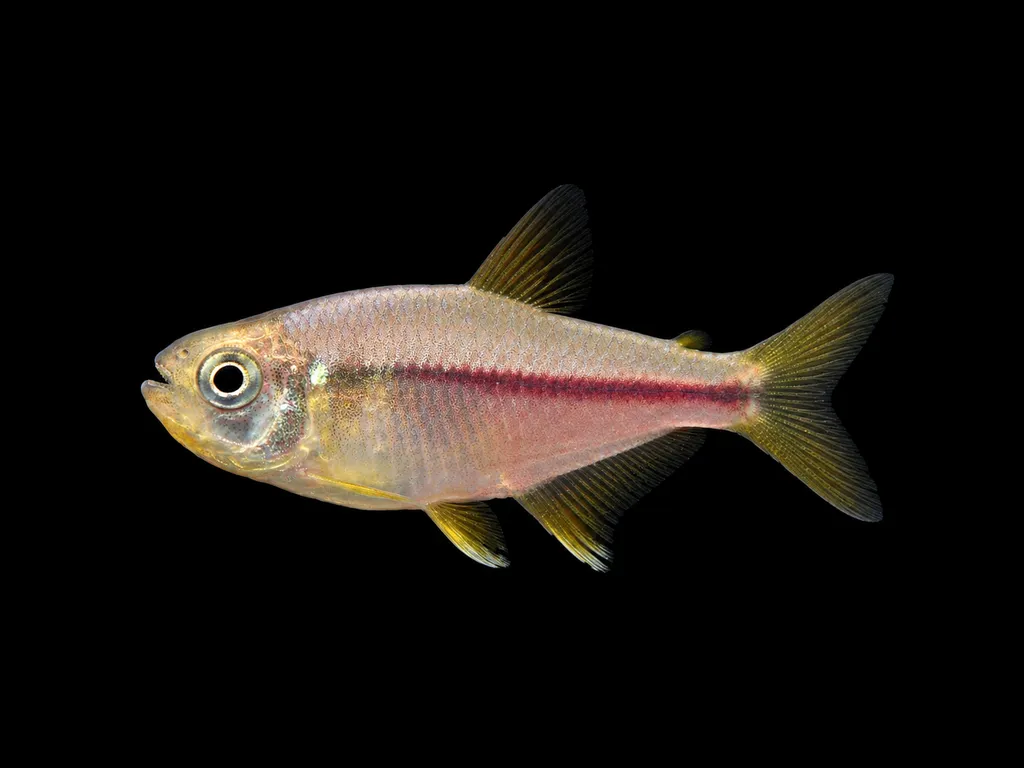 1.8 in (4.6 cm)16 gal (60 L)72–82°F (22–28°C)
Itaparica tetra
Hyphessobrycon itaparicensis
1.8 in (4.6 cm) · 16 gal (60 L)
 2.4 in (6 cm)20 gal (75 L)70–81°F (21–27°C)
Bleeding heart tetra
Hyphessobrycon erythrostigma
2.4 in (6 cm) · 20 gal (75 L)