Golden dwarf cichlid
Nannacara anomala
Also known as Goldeye dwarf cichlid, Golden-eyed dwarf cichlid, Golden dwarf acara
FreshwaterFish
Care at a glance
- Temperature
- 72–82°F
- 22–28°C
- pH
- 6.0–7.5
- Adult size
- 3.1 in
- 8 cm
- Minimum tank
- 16 gal
- 60 L
- Temperament
- Mostly peaceful
- Social behavior
- Solitary
- Swim level
- Bottom
- Difficulty
- Easy
- Breeding
- Easy
- Rarity
- Common
- Family
- Cichlidae
- Origin
- Coastal freshwater drainages of western Guyana and Suriname, in slow forest creeks, ditches, and swampy pools.
Overview
The golden dwarf cichlid is a small cichlid that lives near the bottom of a planted community tank. It is mostly peaceful and a good first cichlid.
Caring for the golden dwarf cichlid
A pair of golden dwarf cichlids does well in a tank of at least 16 gal (60 L). A well planted tank with driftwood and a few caves suits them best.
They tolerate a wider range of water than most dwarf cichlids. Keep the water at 72 to 82°F (22 to 28°C) and a pH of 6.0 to 7.5. Feed small live and frozen foods such as bloodworm, daphnia and brine shrimp, along with quality micro pellets.
Golden dwarf cichlids are mostly peaceful and can share a tank with small, calm fish such as pencilfish or tetras. Keep only one male unless the tank is large.
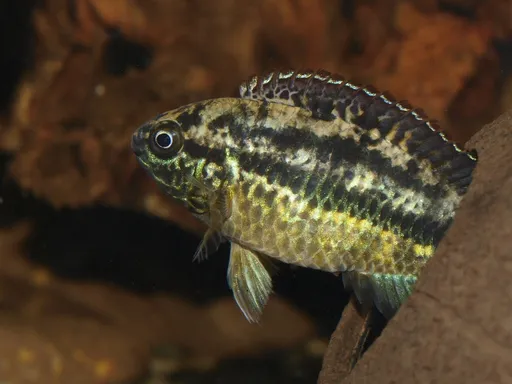
The species is strongly dimorphic. Males grow larger and turn iridescent blue-green, while females stay near 4 to 5 cm. Brooding females darken almost to black and show a bold checkerboard pattern. Breeding them is easy, and the female guards the fry.
Good to know
Nannacara anomala was described by Regan in 1905 and belongs to the family Cichlidae.
In the wild
Golden dwarf cichlids come from slow, shallow water in the coastal forests of Guyana and Suriname. They live among leaf litter, roots and dense marginal plants in creeks, ditches and swampy pools. The wild water is soft and slightly acidic.
Weekly picks
Tank mates
The golden dwarf cichlid is a mostly peaceful, solitary species that keeps to the bottom. These picks share a community profile with it, are safe together in both directions, and overlap on water type, temperature and pH.
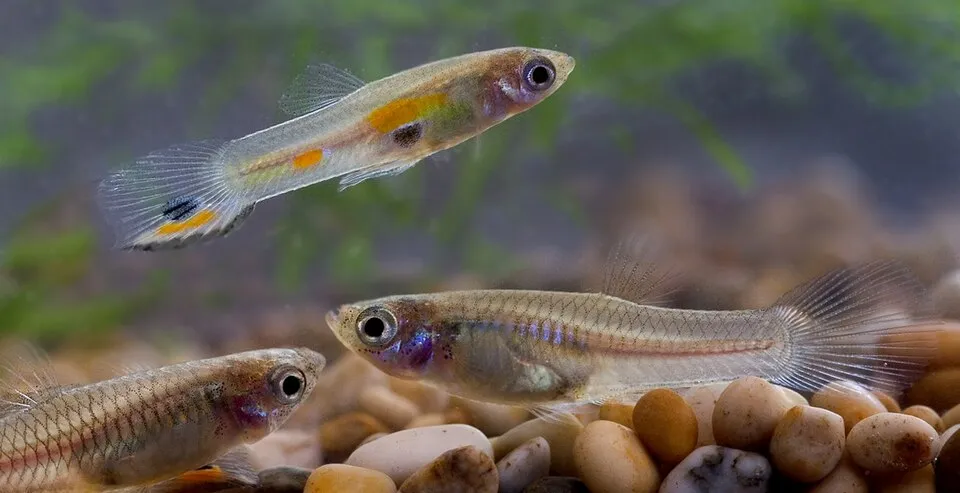
Guppy
Poecilia reticulata
FreshwaterBrackish2.4 in (6 cm) · 10 gal (38 L)64–82°F (18–28°C)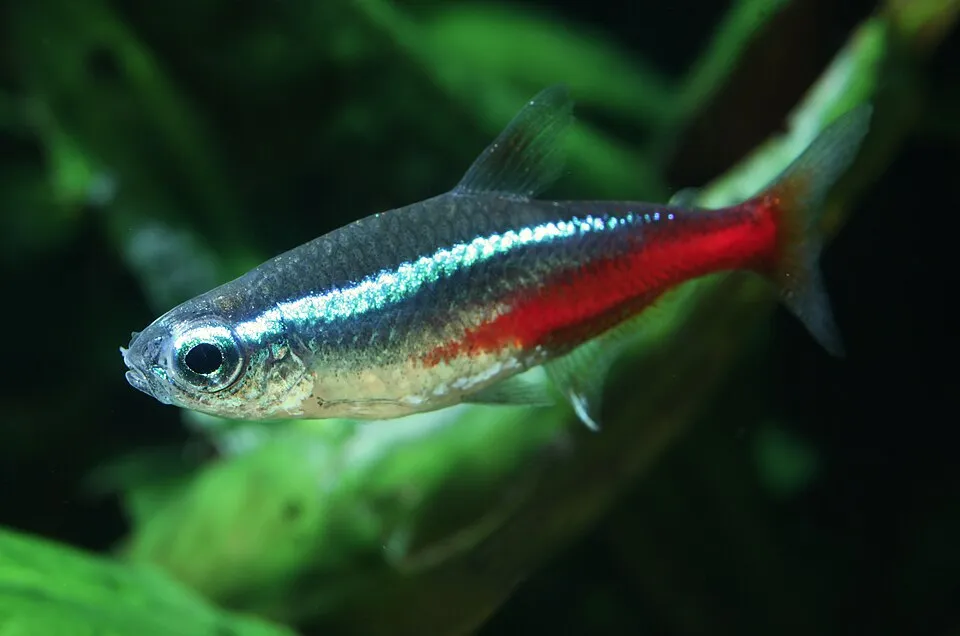
Neon tetra
Paracheirodon innesi
Freshwater1.5 in (3.8 cm) · 11 gal (40 L)70–77°F (21–25°C)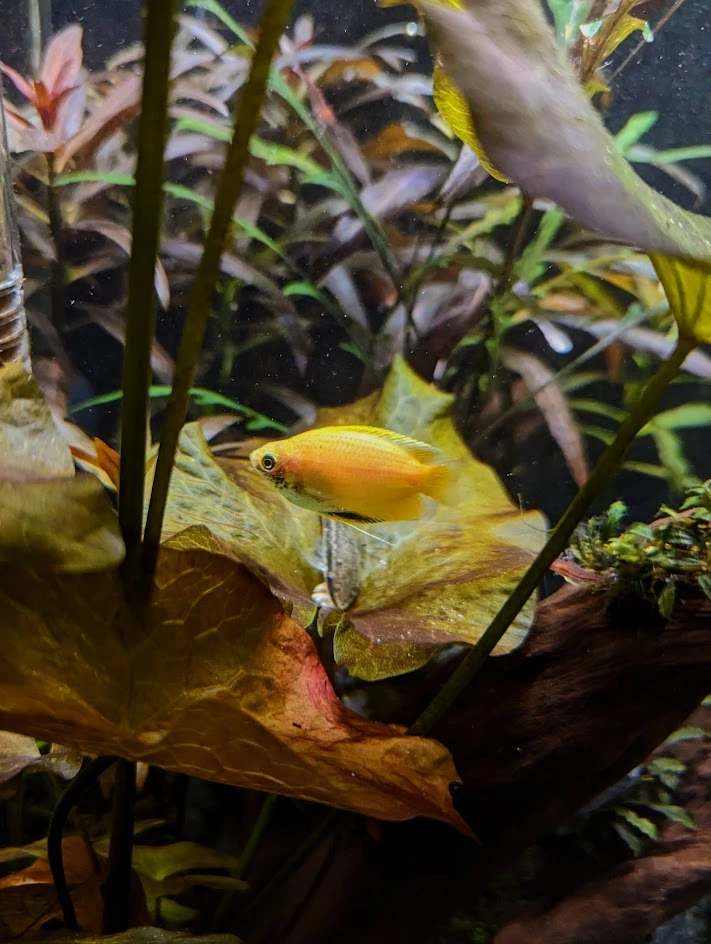
Honey gourami
Trichogaster chuna
Freshwater2 in (5 cm) · 14 gal (54 L)72–82°F (22–28°C)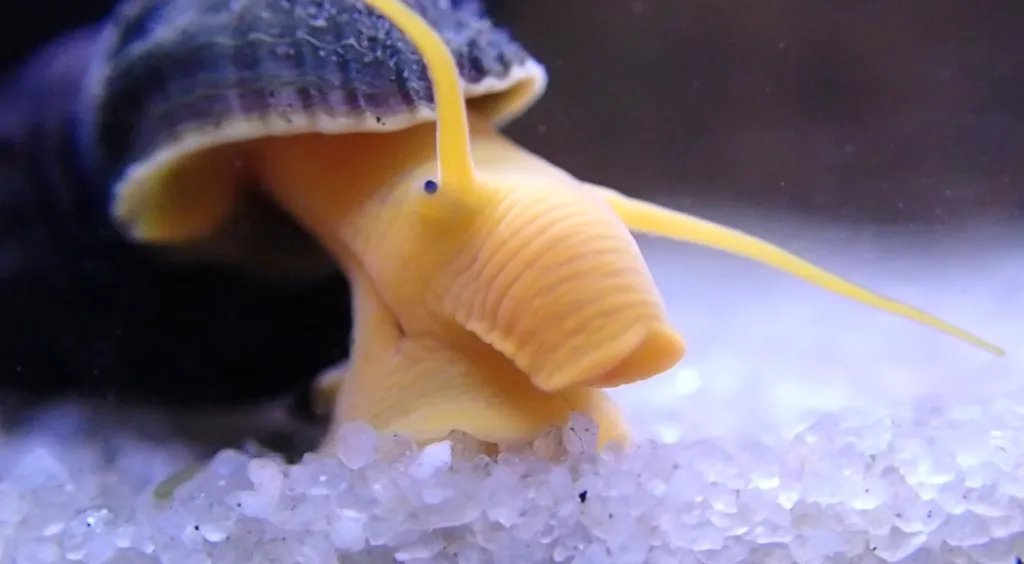
Gold rabbit snail
Tylomelania gemmifera
Freshwater2.8 in (7 cm) · 16 gal (60 L)75–82°F (24–28°C)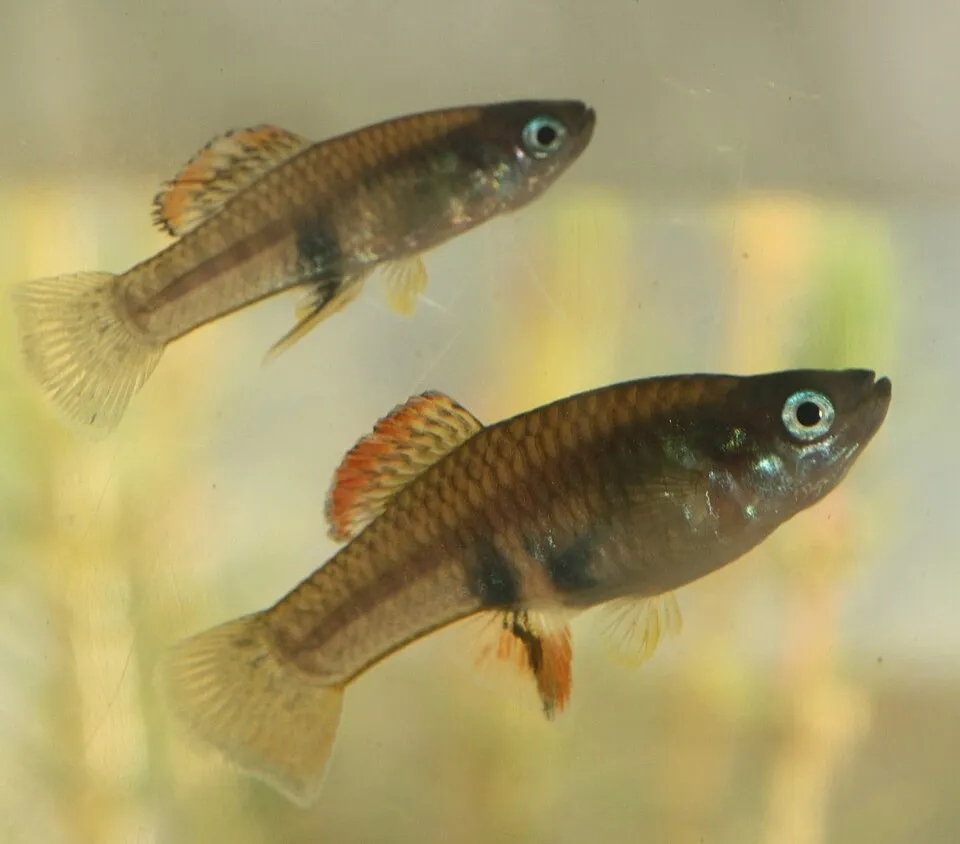
Cardinal toothcarp
Brachyrhaphis roseni
Freshwater2.4 in (6 cm) · 16 gal (60 L)72–86°F (22–30°C)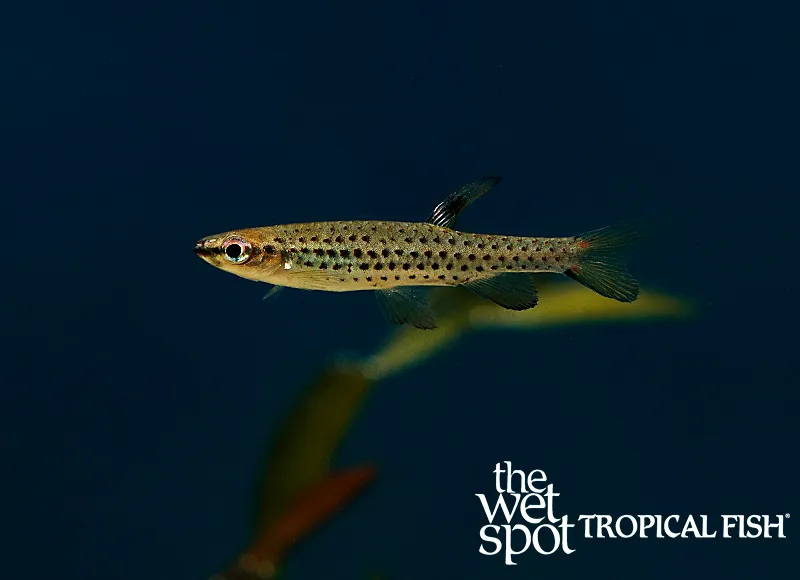
Spotted splash tetra
Copella nattereri
Freshwater2 in (5 cm) · 16 gal (60 L)75–82°F (24–28°C)
Common questions
What size tank does a golden dwarf cichlid need?
A golden dwarf cichlid needs at least 16 gal (60 L). It spends most of its time in the bottom.
What temperature and pH does a golden dwarf cichlid need?
A golden dwarf cichlid is comfortable at 72–82°F (22–28°C) with a pH of 6.0–7.5.
What does a golden dwarf cichlid eat?
A golden dwarf cichlid eats small live and frozen foods such as bloodworm, daphnia and brine shrimp. Quality micro pellets round out its diet.
How big does a golden dwarf cichlid get?
An adult golden dwarf cichlid reaches about 3.1 in (8 cm).
How can you tell a male golden dwarf cichlid from a female?
Males grow larger than females and turn iridescent blue-green. Females stay near 4 to 5 cm, and a brooding female darkens almost to black with a bold checkerboard pattern.
How does a golden dwarf cichlid breed?
Golden dwarf cichlids are easy to breed. The female guards the fry, and she darkens almost to black with a bold checkerboard pattern while brooding.
Related species
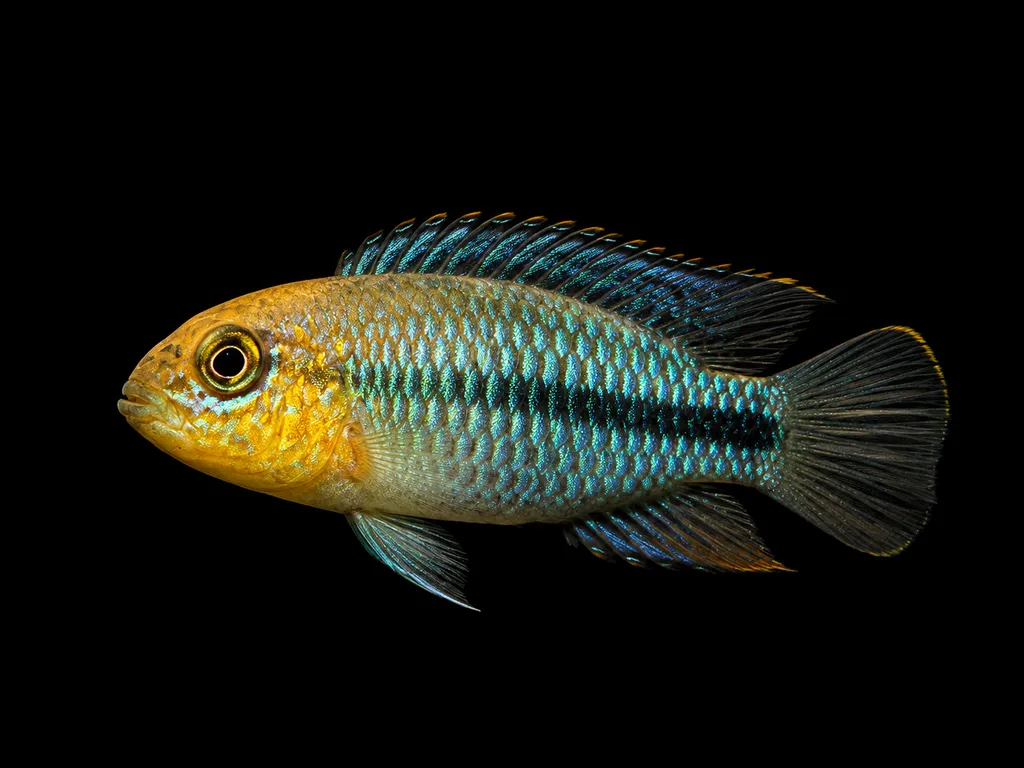 3.1 in (8 cm)14 gal (54 L)75–82°F (24–28°C)
Goldhead nannacara
Nannacara aureocephalus
3.1 in (8 cm) · 14 gal (54 L)
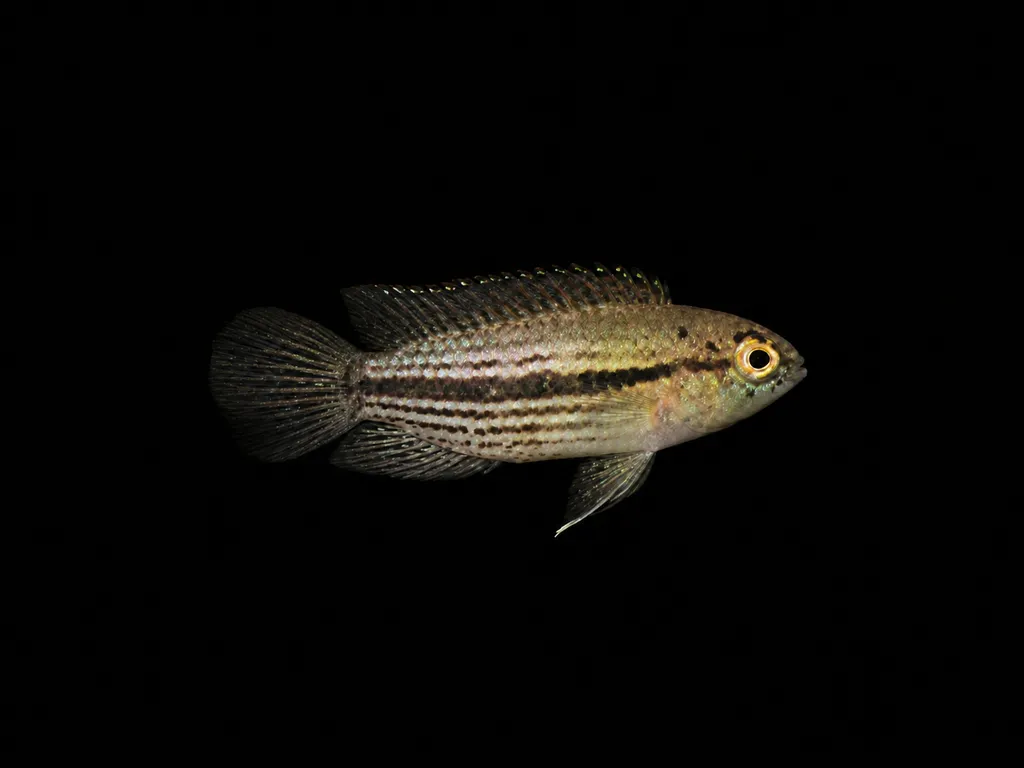 2.4 in (6 cm)18 gal (70 L)75–82°F (24–28°C)
Striped nannacara
Nannacara taenia
2.4 in (6 cm) · 18 gal (70 L)
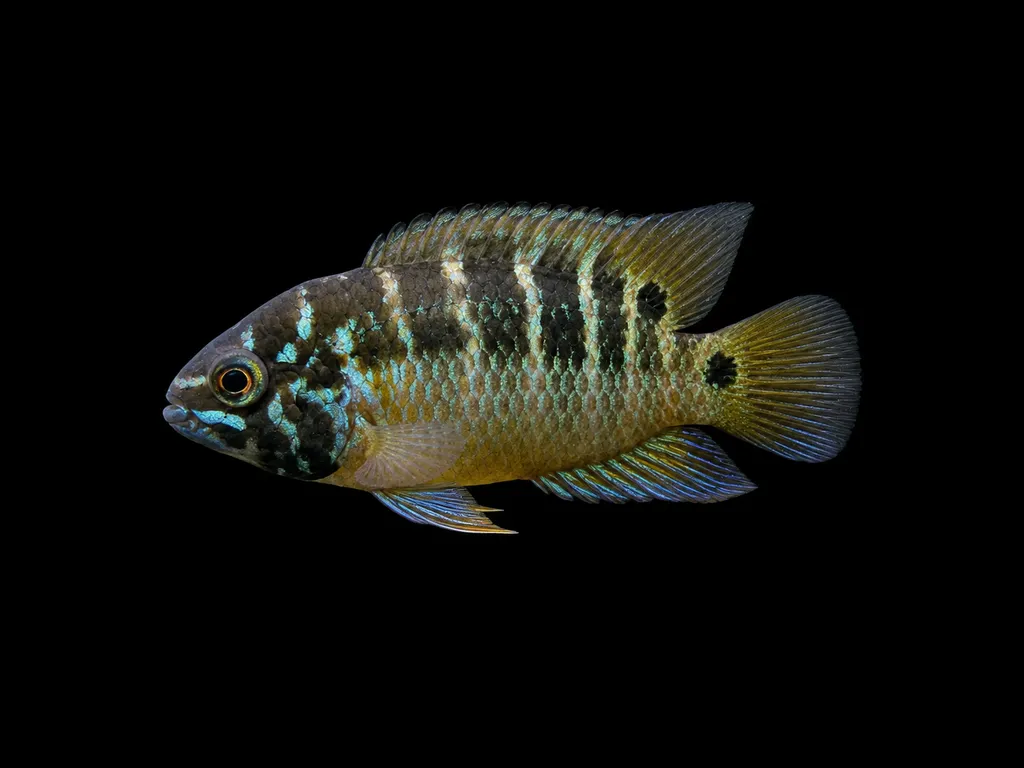 2.2 in (5.5 cm)14 gal (54 L)75–82°F (24–28°C)
Twospot dwarf acara
Nannacara bimaculata
2.2 in (5.5 cm) · 14 gal (54 L)
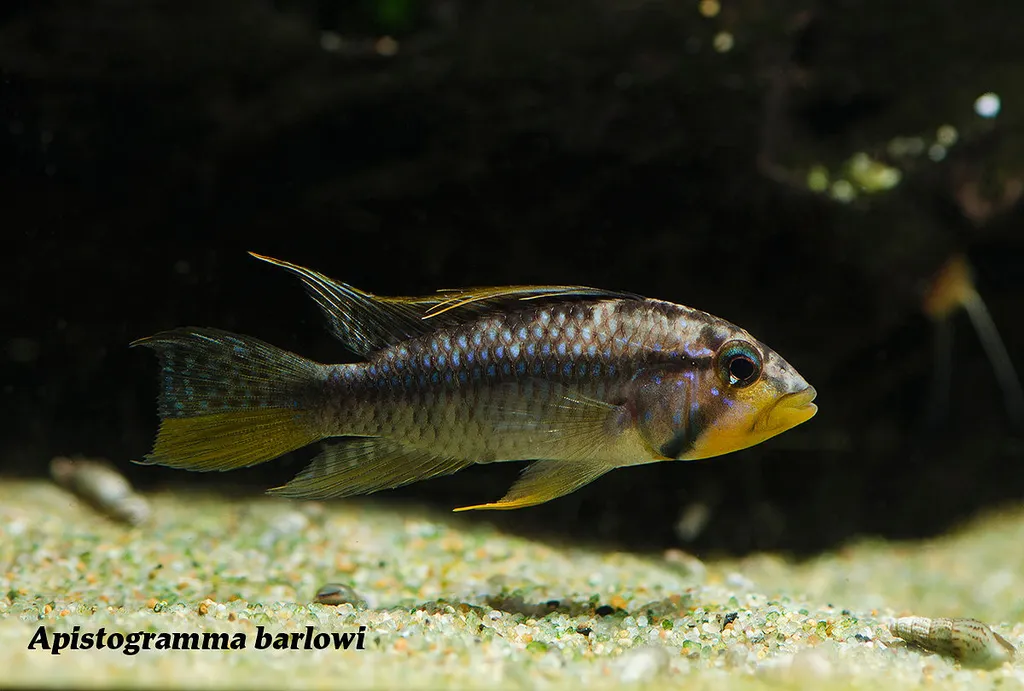 3.1 in (8 cm)20 gal (75 L)73–82°F (23–28°C)
Barlow's dwarf cichlid
Apistogramma barlowi
3.1 in (8 cm) · 20 gal (75 L)
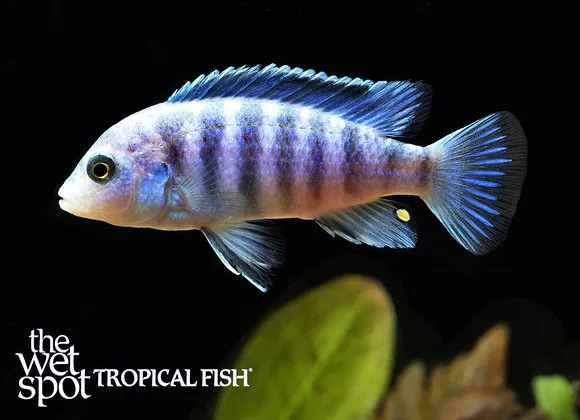 3.1 in (8 cm)42 gal (160 L)75–82°F (24–28°C)
Clown labidochromis
Labidochromis chisumulae
3.1 in (8 cm) · 42 gal (160 L)
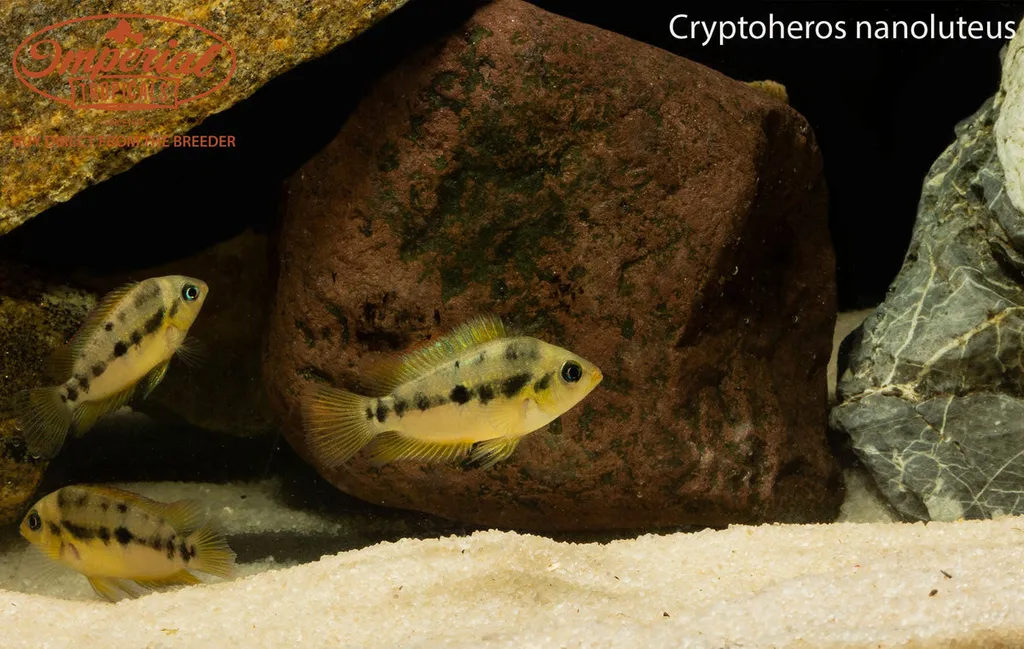 3.1 in (8 cm)29 gal (110 L)75–84°F (24–29°C)
Golden dwarf convict
Amatitlania nanolutea
3.1 in (8 cm) · 29 gal (110 L)