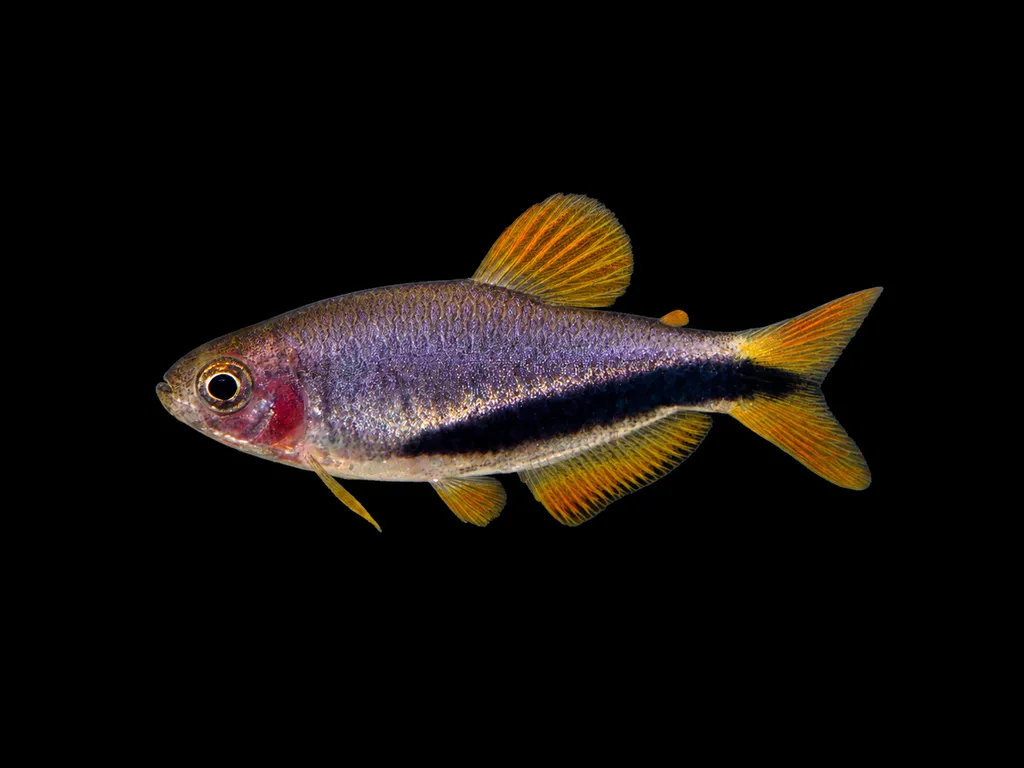
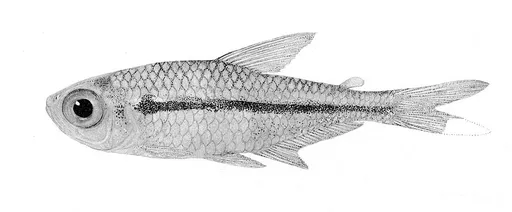
Black arrow tetra
Inpaichthys luizae
Also known as Luiza's tetra
FreshwaterFish
Care at a glance
- Temperature
- 72–81°F
- 22–27°C
- pH
- 5.5–7.2
- Adult size
- 1.4 in
- 3.5 cm
- Minimum tank
- 14 gal
- 54 L
- Temperament
- Peaceful
- Social behavior
- Schooling
- Swim level
- Middle
- Difficulty
- Medium
- Breeding
- Egg scatterer
- Rarity
- Rare
- Family
- Characidae
- Origin
- Upper Rio Juruena, Tapajos basin, Mato Grosso, Brazil
Overview
The black arrow tetra is a dwarf schooling tetra for a soft-water community tank. It is best kept with a little experience.
Did you know
The black arrow tetra was swimming in hobbyists' tanks under its trade name for a year or two. Scientists formally described and named it only in January 2025.
Caring for the black arrow tetra
Give a group of black arrow tetras 14 gal (54 L) or more. A dark sandy or leaf-strewn bottom and some driftwood suit them. Dim the lighting with overhead cover or floating plants. They show their best smoke-blue color and dark arrow stripe over a dark substrate in soft, gently stained water.
Give them warm water at 72 to 81°F (22 to 27°C), with a pH of 5.5 to 7.2. Gentle flow and clean, well-filtered water keep the group active and colored up. Feed small foods such as micro pellets and crushed flake, with regular frozen or live daphnia, cyclops and baby brine shrimp.
Keep at least eight to ten together. They are peaceful and suit other small, calm community fish such as pencilfish, small rasboras, corydoras and dwarf cichlids. Like the royal tetra, the black arrow tetra is an egg scatterer. Exporters report it breeds readily, though records from home tanks are still few.
Good to know
Inpaichthys luizae is a characin in the family Characidae. It sits in the same small genus as the royal tetra, Inpaichthys kerri, and behaves much like it.
In the wild
The black arrow tetra lives in clear, forested shield streams of the upper Rio Juruena, in Mato Grosso, central Brazil. The water there is shaded, soft and slightly acidic.
Weekly picks
Tank mates
The black arrow tetra is a peaceful, schooling species that keeps to the middle. These picks share a community profile with it, are safe together in both directions, and overlap on water type, temperature and pH.
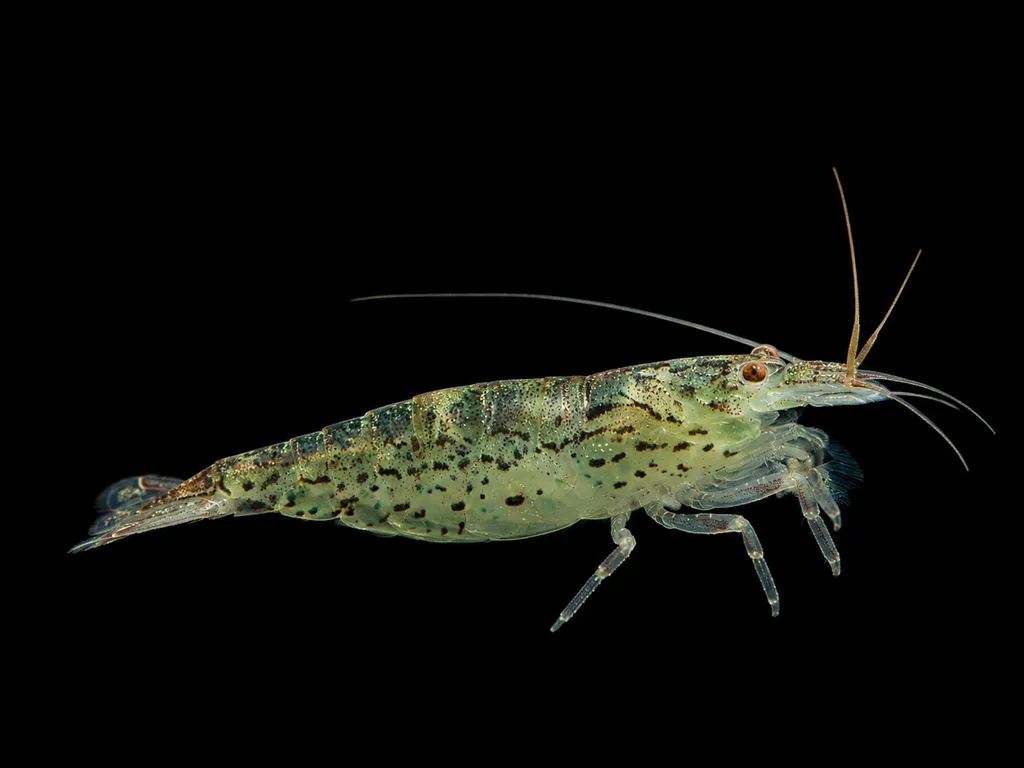
Green lace shrimp
Atyoida pilipes
Freshwater2.8 in (7 cm) · 14 gal (54 L)73–82°F (23–28°C)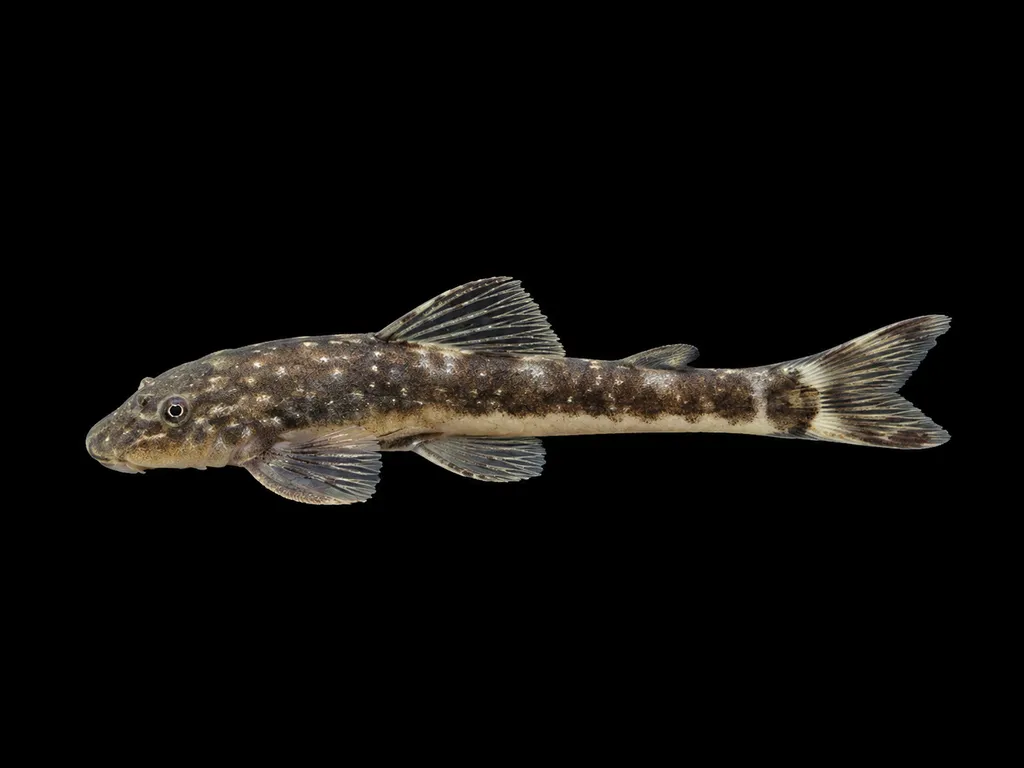
Ceará parotocinclus
Parotocinclus cearensis
Freshwater2 in (5 cm) · 14 gal (54 L)72–81°F (22–27°C)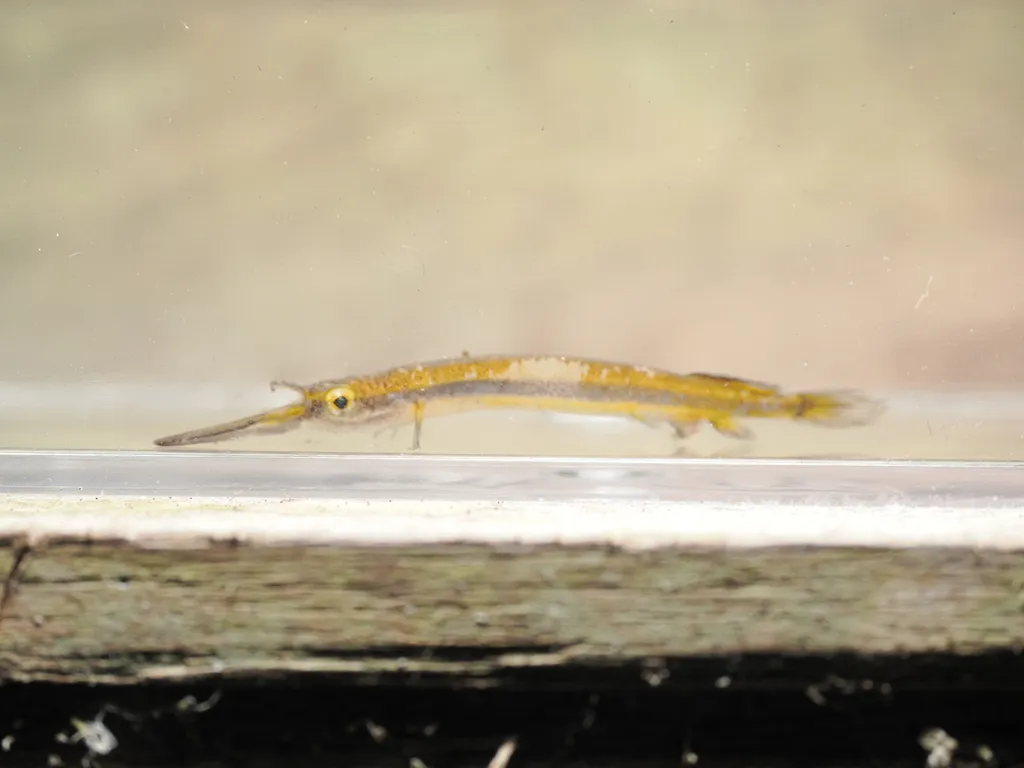
Gold-spotted halfbeak
Hemirhamphodon chrysopunctatus
Freshwater2.6 in (6.5 cm) · 14 gal (54 L)73–81°F (23–27°C)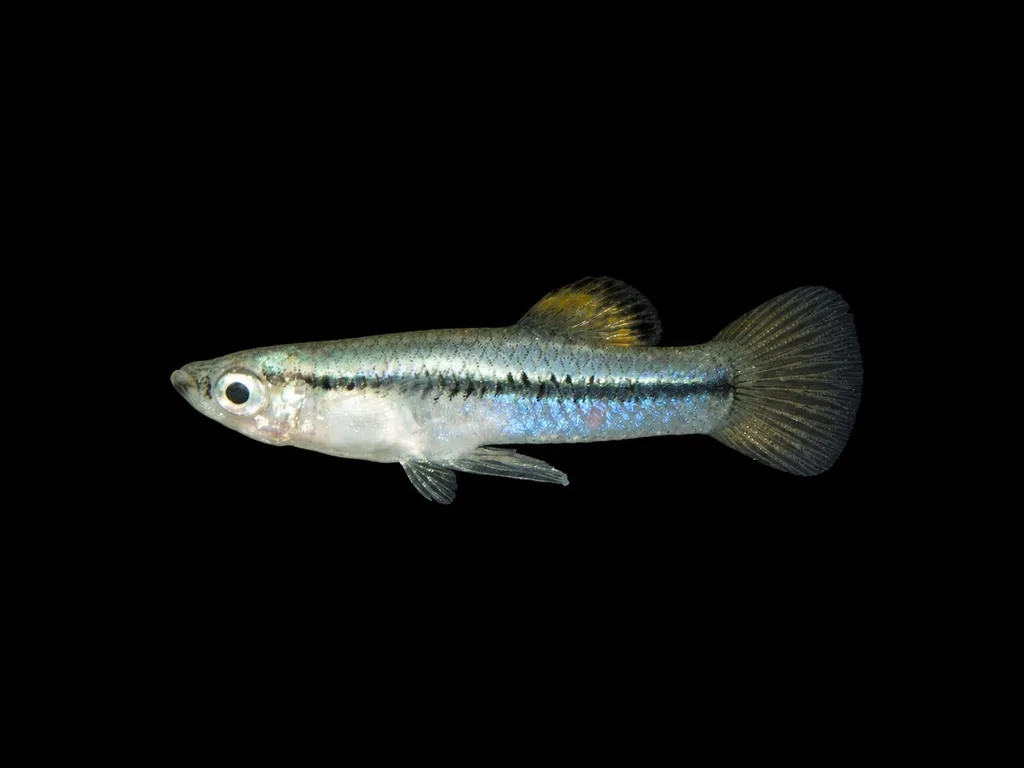
Blackline mosquitofish
Gambusia vittata
Freshwater1.8 in (4.5 cm) · 14 gal (54 L)72–81°F (22–27°C)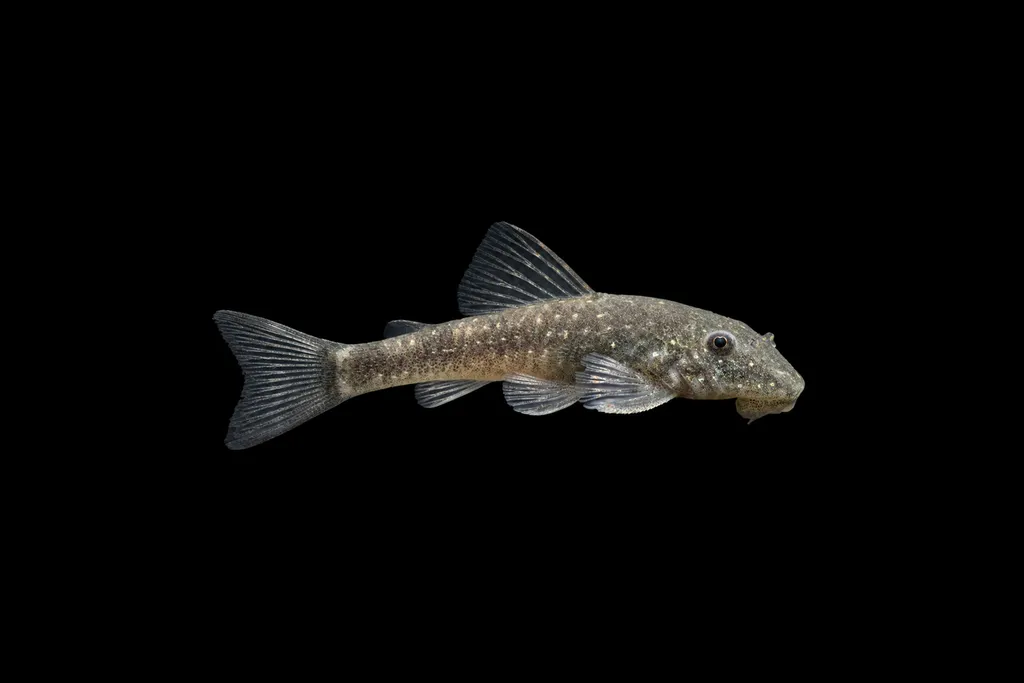
Bahia parotocinclus
Parotocinclus bahiensis
Freshwater1.6 in (4 cm) · 14 gal (54 L)72–81°F (22–27°C)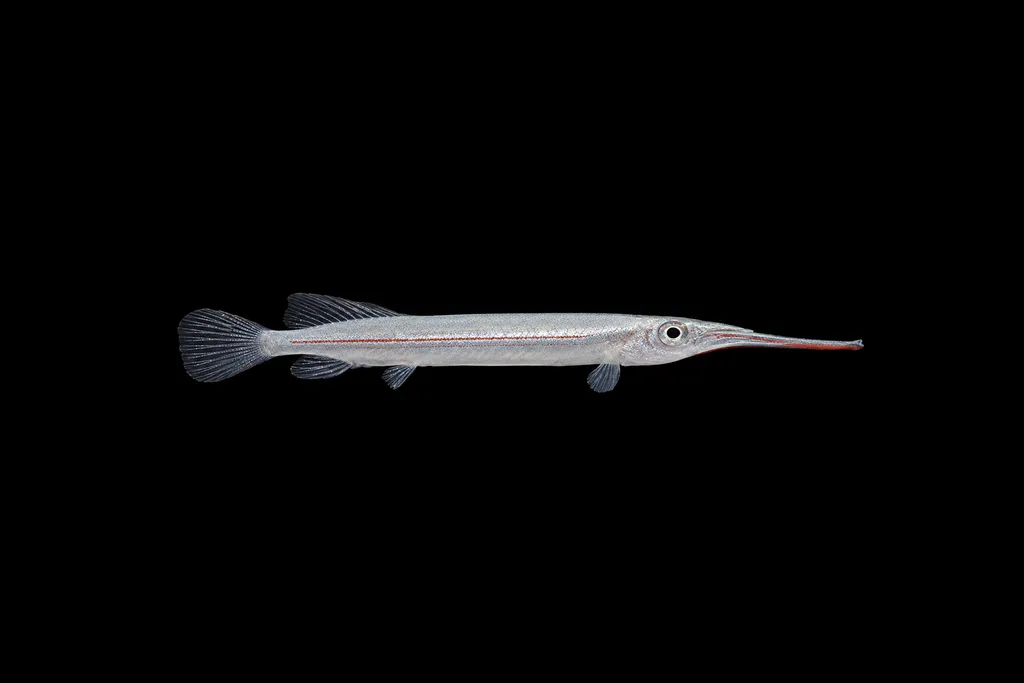
Fire halfbeak
Hemirhamphodon kapuasensis
Freshwater2.4 in (6 cm) · 14 gal (54 L)73–81°F (23–27°C)
Common questions
What size tank does a black arrow tetra need?
A black arrow tetra needs at least 14 gal (54 L). It spends most of its time in the middle.
What temperature and pH does a black arrow tetra need?
A black arrow tetra is comfortable at 72–81°F (22–27°C) with a pH of 5.5–7.2.
What does a black arrow tetra eat?
A black arrow tetra eats small foods such as micro pellets and crushed flake. Give it regular frozen or live daphnia, cyclops and baby brine shrimp as well.
How big does a black arrow tetra get?
An adult black arrow tetra reaches about 1.4 in (3.5 cm).
Does a black arrow tetra need a group?
Yes. A black arrow tetra is a schooling species and should be kept in a group, not singly.
How does a black arrow tetra breed?
The black arrow tetra scatters its eggs, as its relative the royal tetra does. Exporters report it breeds readily, but records from home tanks are still few.
Related species
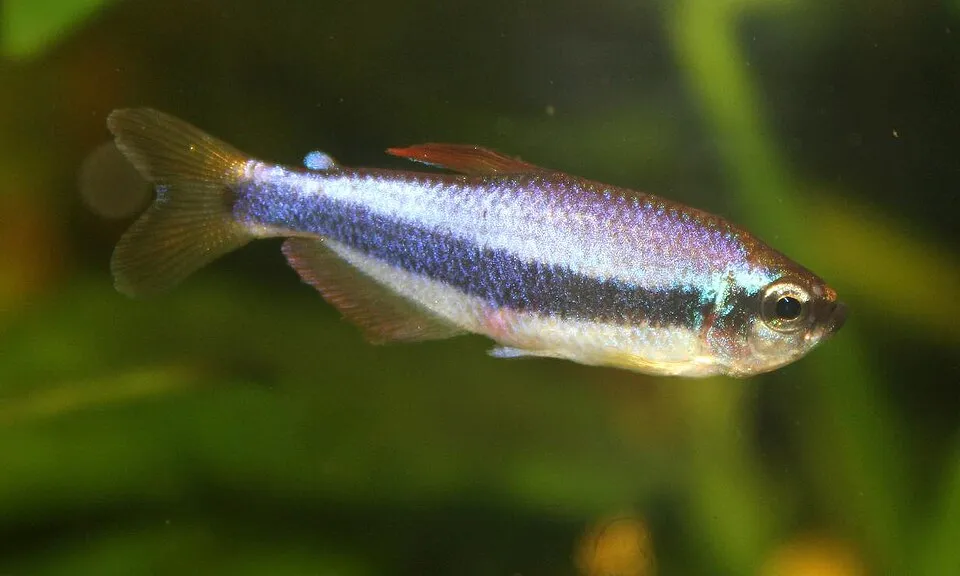 1.4 in (3.5 cm)15 gal (55 L)75–81°F (24–27°C)
Royal tetra
Inpaichthys kerri
1.4 in (3.5 cm) · 15 gal (55 L)
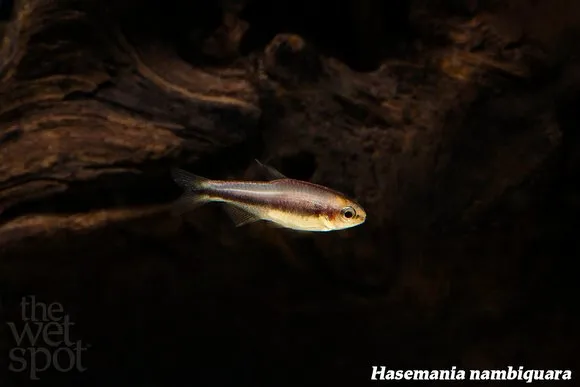 1.3 in (3.4 cm)14 gal (54 L)73–81°F (23–27°C)
Nambiquara royal tetra
Inpaichthys nambiquara
1.3 in (3.4 cm) · 14 gal (54 L)
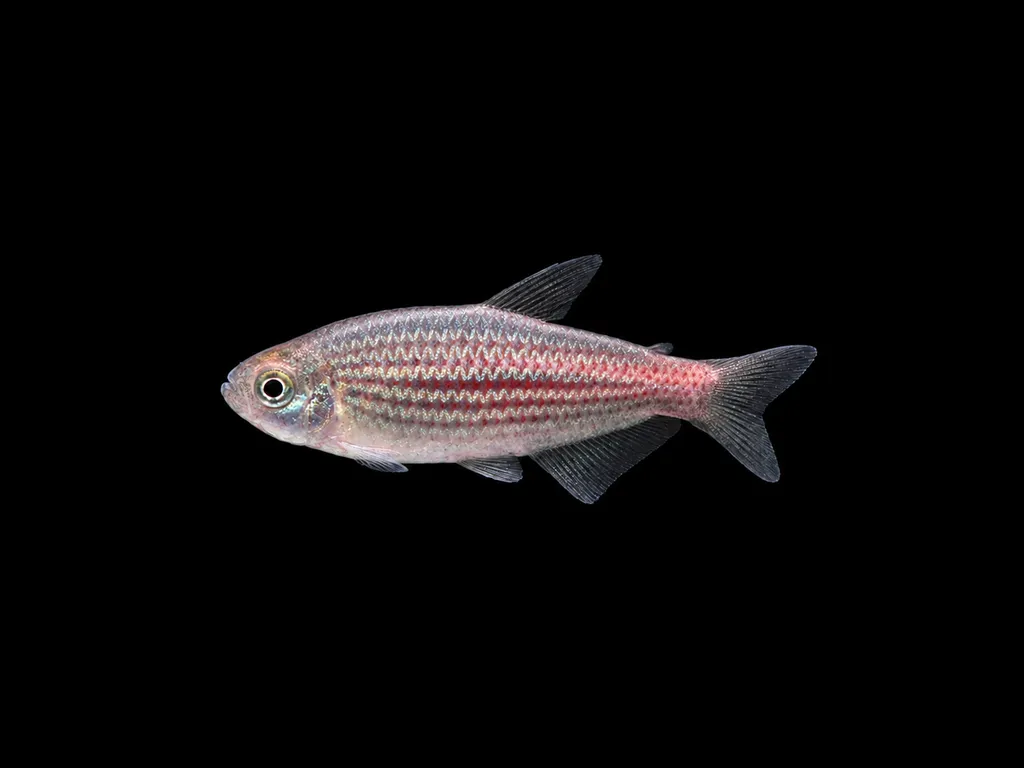 1.2 in (3 cm)14 gal (54 L)72–81°F (22–27°C)
Scratched inpa tetra
Inpaichthys parauapiranga
1.2 in (3 cm) · 14 gal (54 L)
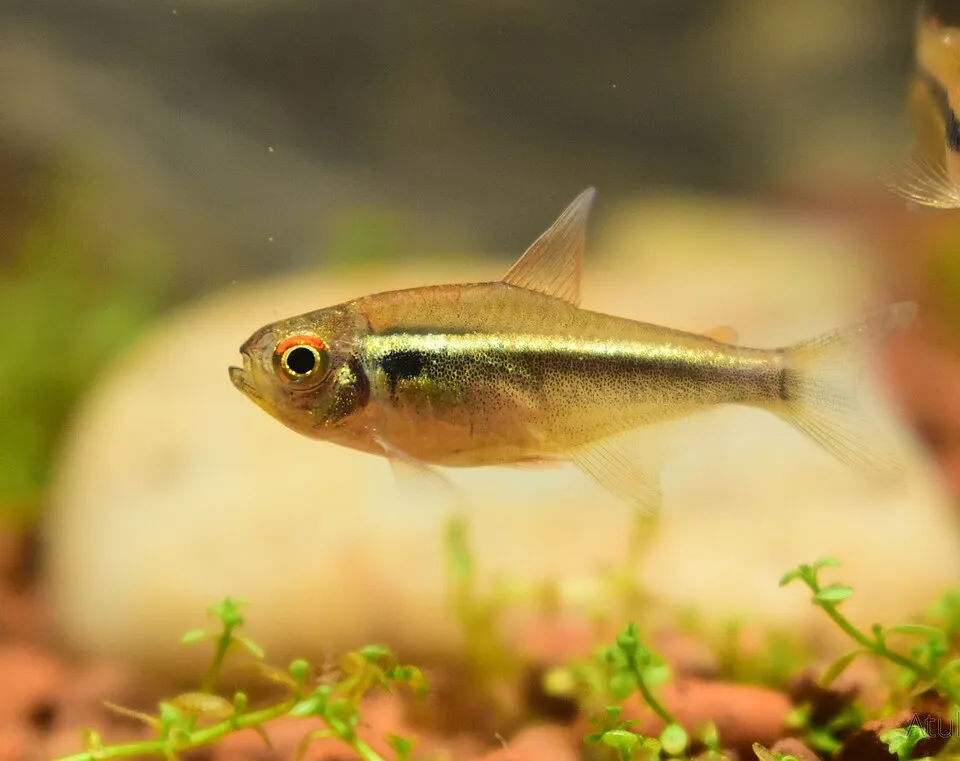 1.4 in (3.5 cm)10 gal (38 L)72–82°F (22–28°C)
Black neon tetra
Hyphessobrycon herbertaxelrodi
1.4 in (3.5 cm) · 10 gal (38 L)
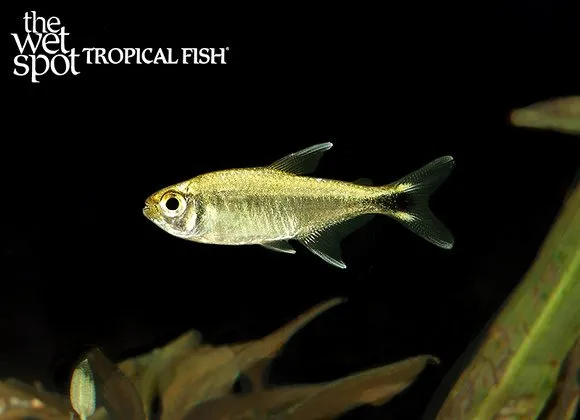 1.4 in (3.5 cm)14 gal (54 L)73–82°F (23–28°C)
Colombian gold tetra
Hyphessobrycon saizi
1.4 in (3.5 cm) · 14 gal (54 L)
 1.4 in (3.5 cm)16 gal (60 L)70–81°F (21–27°C)
Flag tetra
Hyphessobrycon heterorhabdus
1.4 in (3.5 cm) · 16 gal (60 L)