Penguin tetra
Thayeria boehlkei
Also known as blackline penguinfish
FreshwaterFish
Care at a glance
- Temperature
- 72–82°F
- 22–28°C
- pH
- 6.0–7.5
- Adult size
- 2.6 in
- 6.5 cm
- Minimum tank
- 20 gal
- 75 L
- Temperament
- Peaceful
- Social behavior
- Schooling
- Swim level
- Middle
- Difficulty
- Easy
- Breeding
- Egg scatterer · Medium
- Rarity
- Rare
- Family
- Characidae
- Origin
- Peru, Brazil
Overview
The penguin tetra is a peaceful, active schooling fish for a calm community tank. It is a good first fish.
Did you know
Penguin tetras rest and swim at a head-up tilt rather than level. It looks odd at first, but it is normal for the species and not a sign of illness or a swim bladder problem.
Caring for the penguin tetra
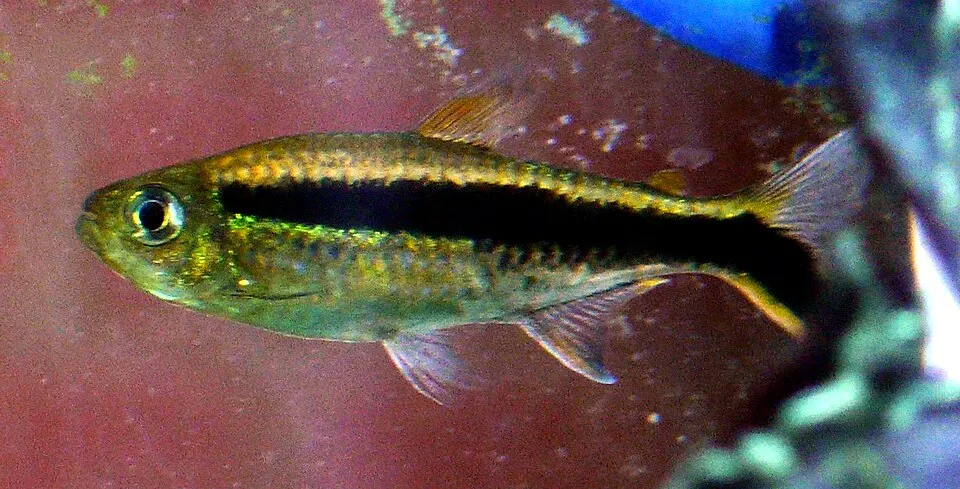
Keep penguin tetras in a group of at least six, and ideally more, in 20 gal (75 L) or larger. A tank with planting, some open swimming room and gentle flow suits them. A darker substrate shows off their stripe well.
Keep the water at 72 to 82°F (22 to 28°C) and a pH of 6.0 to 7.5. Feed flake, small pellets, and frozen foods such as daphnia and bloodworms.
Penguin tetras are peaceful and active, and they spend most of their time in the middle and upper water. They mix well in a calm community. They are egg scatterers with no parental care, and the eggs hatch in a day or two. Breeding them takes moderate effort.
Good to know
The penguin tetra belongs to the Characidae, the tetra family. It is named for the bold black stripe that runs back into the lower tail, which gives it a penguin look. The species is widespread and not considered at risk.
In the wild
Penguin tetras live in slow tributaries and streams of the Amazon basin in Peru and Brazil. They keep among leaf litter and submerged plants, in soft water that runs from slightly acidic to neutral.
Weekly picks
Tank mates
The penguin tetra is a peaceful, schooling species that keeps to the middle. These picks share a community profile with it, are safe together in both directions, and overlap on water type, temperature and pH.
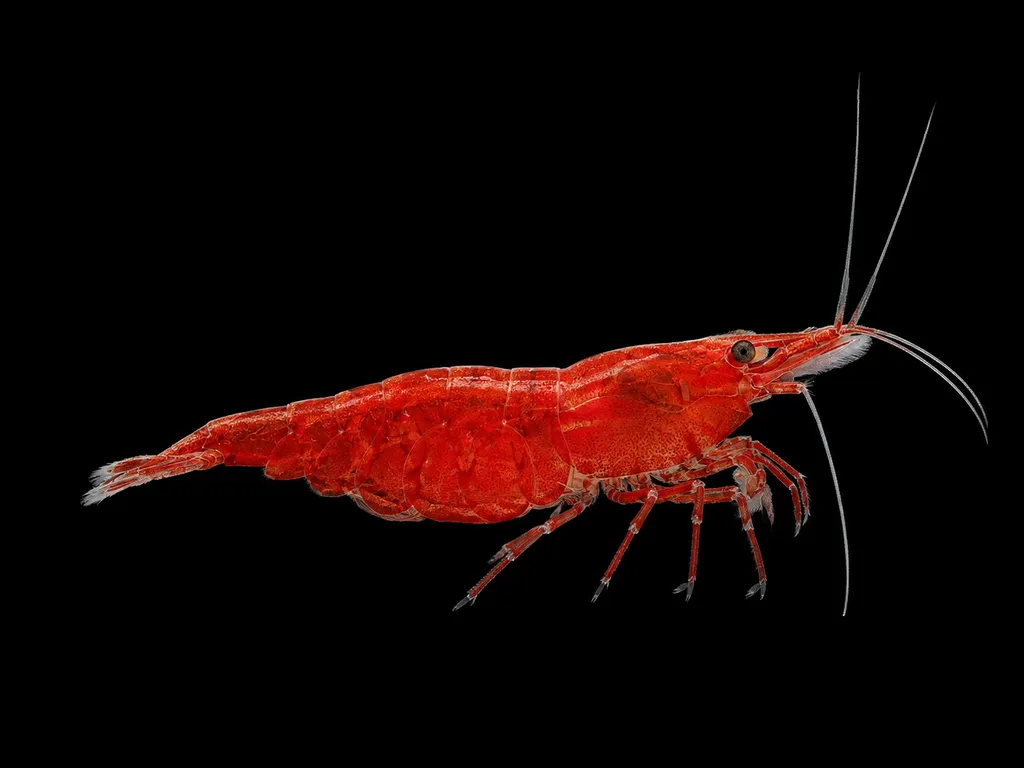
Neocaridina shrimp
Neocaridina davidi
Freshwater1.6 in (4 cm) · 5 gal (19 L)59–84°F (15–29°C)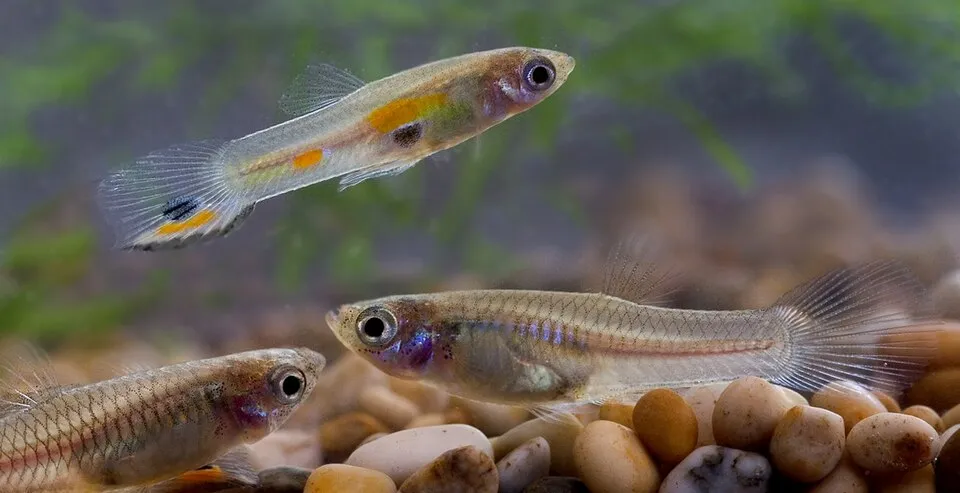
Guppy
Poecilia reticulata
FreshwaterBrackish2.4 in (6 cm) · 10 gal (38 L)64–82°F (18–28°C)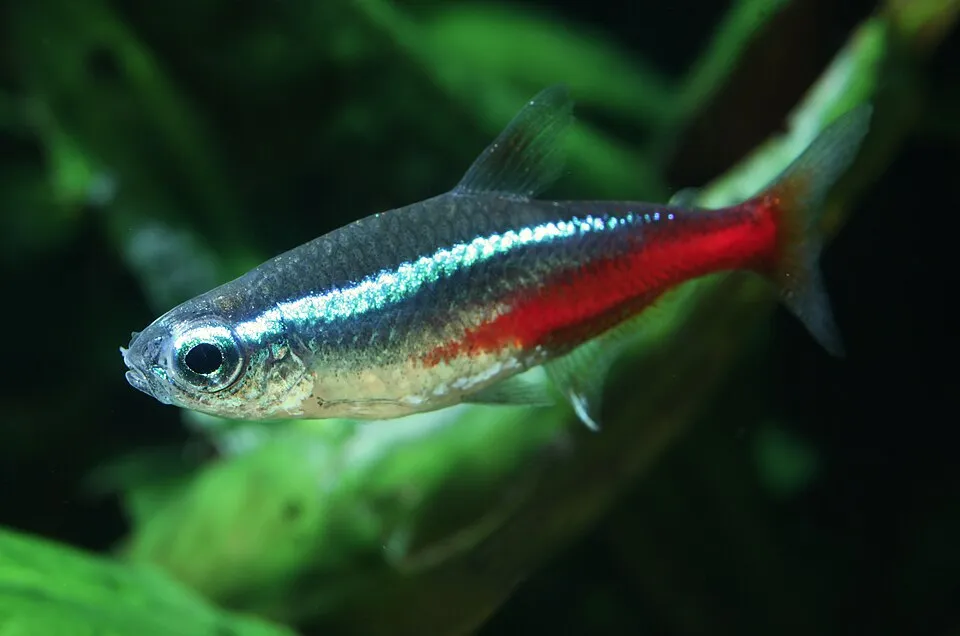
Neon tetra
Paracheirodon innesi
Freshwater1.5 in (3.8 cm) · 11 gal (40 L)70–77°F (21–25°C)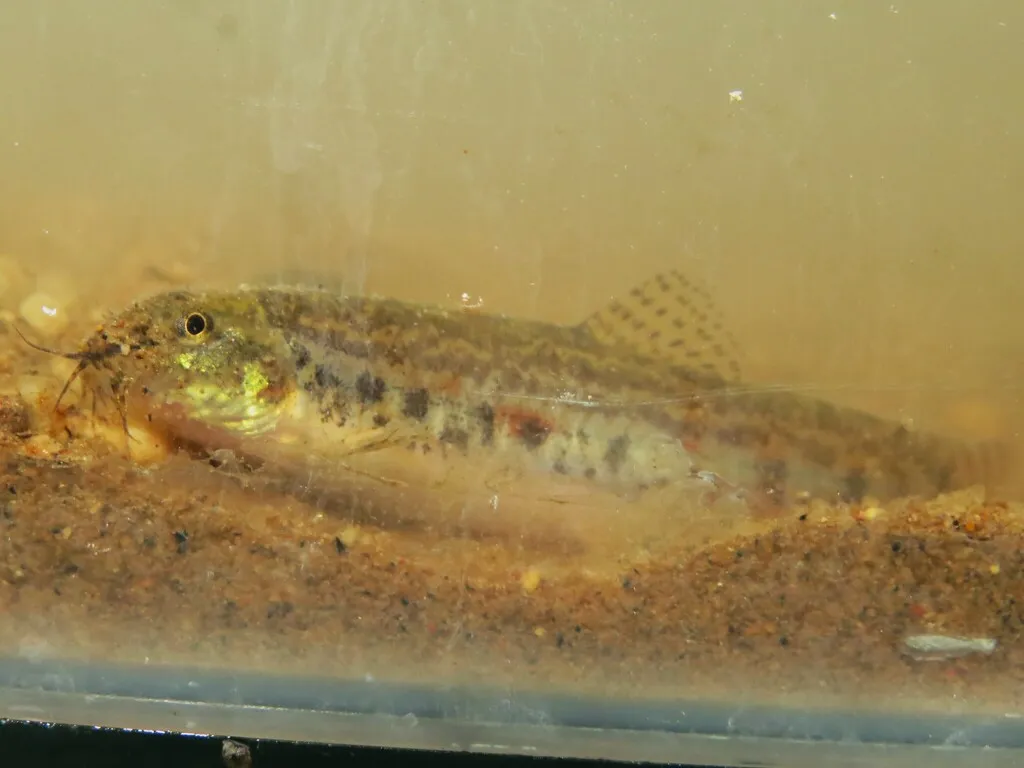
Common spiny loach
Lepidocephalichthys thermalis
Freshwater3.1 in (8 cm) · 20 gal (75 L)72–82°F (22–28°C)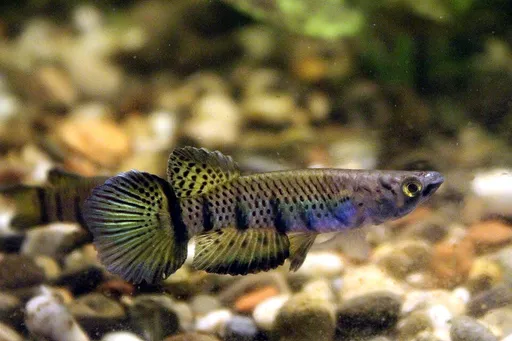
Six-barred panchax
Epiplatys sexfasciatus
Freshwater3.9 in (10 cm) · 20 gal (75 L)72–81°F (22–27°C)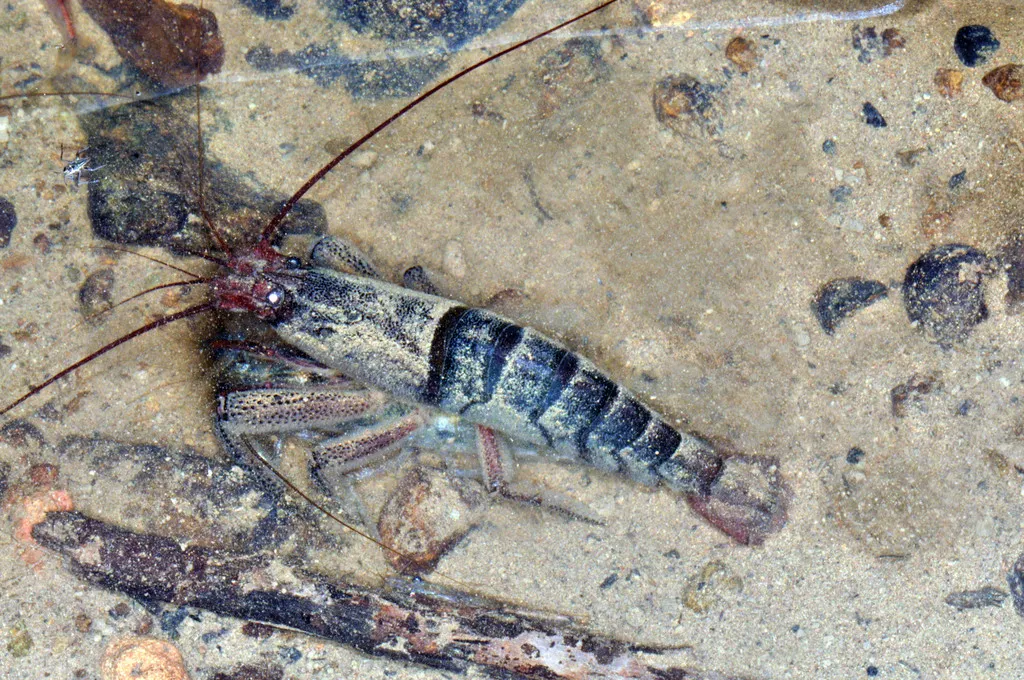
Marble wood shrimp
Atya scabra
Freshwater3.9 in (10 cm) · 20 gal (75 L)73–82°F (23–28°C)
Common questions
What size tank does a penguin tetra need?
A penguin tetra needs at least 20 gal (75 L). It spends most of its time in the middle.
What temperature and pH does a penguin tetra need?
A penguin tetra is comfortable at 72–82°F (22–28°C) with a pH of 6.0–7.5.
What does a penguin tetra eat?
A penguin tetra eats flake, small pellets and frozen foods such as daphnia and bloodworms.
How big does a penguin tetra get?
An adult penguin tetra reaches about 2.6 in (6.5 cm).
Does a penguin tetra need a group?
Yes. A penguin tetra is a schooling species and should be kept in a group, not singly.
How does a penguin tetra breed?
Penguin tetras are egg scatterers with no parental care, and their eggs hatch in a day or two. Breeding them takes moderate effort.
Related species
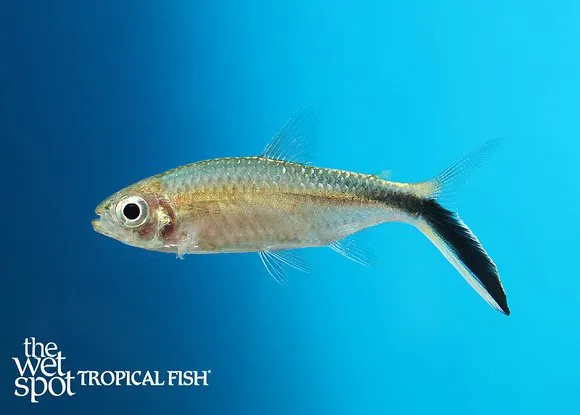 3 in (7.6 cm)29 gal (110 L)73–82°F (23–28°C)
True penguin tetra
Thayeria obliqua
3 in (7.6 cm) · 29 gal (110 L)
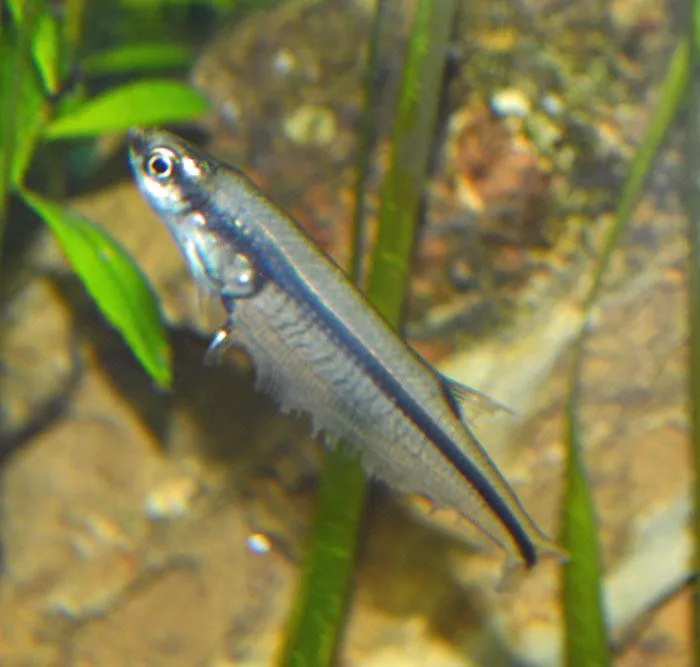 2.6 in (6.5 cm)21 gal (80 L)73–82°F (23–28°C)
Bond's glass tetra
Xenagoniates bondi
2.6 in (6.5 cm) · 21 gal (80 L)
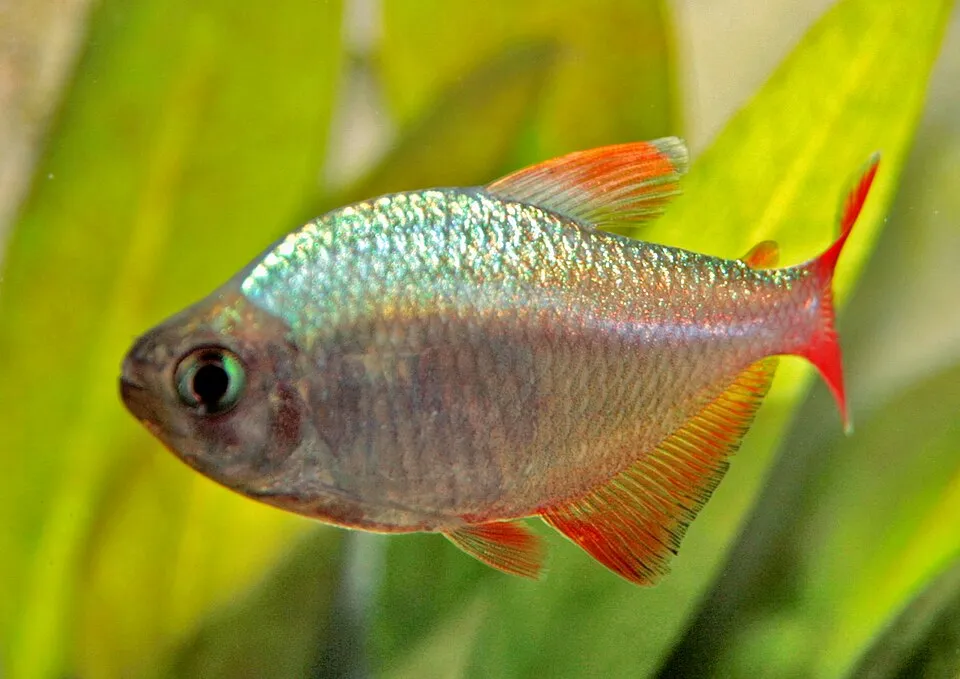 2.6 in (6.5 cm)20 gal (75 L)73–82°F (23–28°C)
Colombian tetra
Hyphessobrycon columbianus
2.6 in (6.5 cm) · 20 gal (75 L)
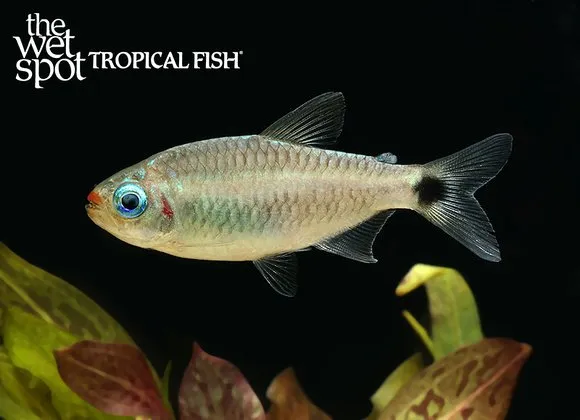 2.6 in (6.5 cm)24 gal (90 L)73–82°F (23–28°C)
Cosmops tetra
Bario cosmops
2.6 in (6.5 cm) · 24 gal (90 L)
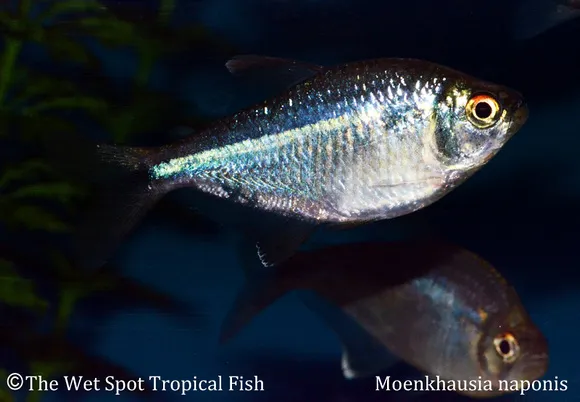 2.6 in (6.5 cm)20 gal (75 L)73–81°F (23–27°C)
Napo tetra
Moenkhausia naponis
2.6 in (6.5 cm) · 20 gal (75 L)
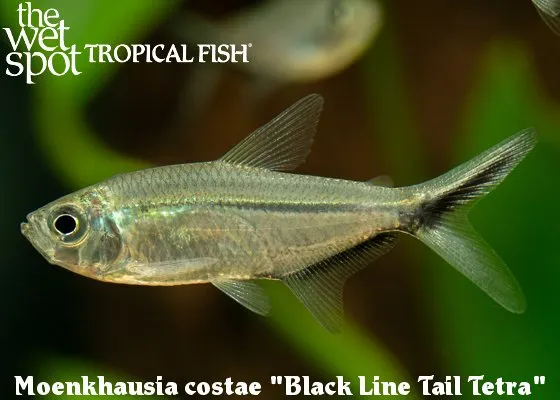 2.8 in (7 cm)29 gal (110 L)72–82°F (22–28°C)
Costae tetra
Moenkhausia costae
2.8 in (7 cm) · 29 gal (110 L)