Cultivar of Echinodorus
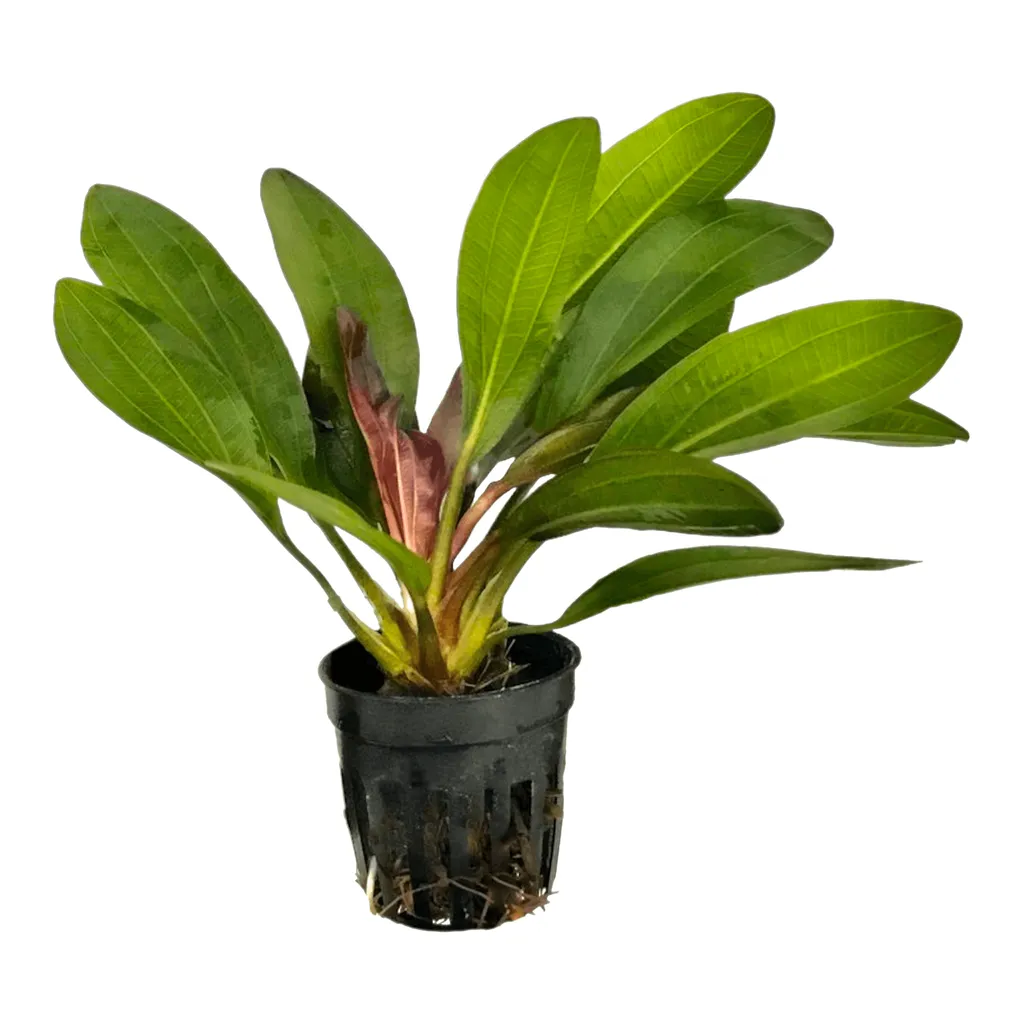
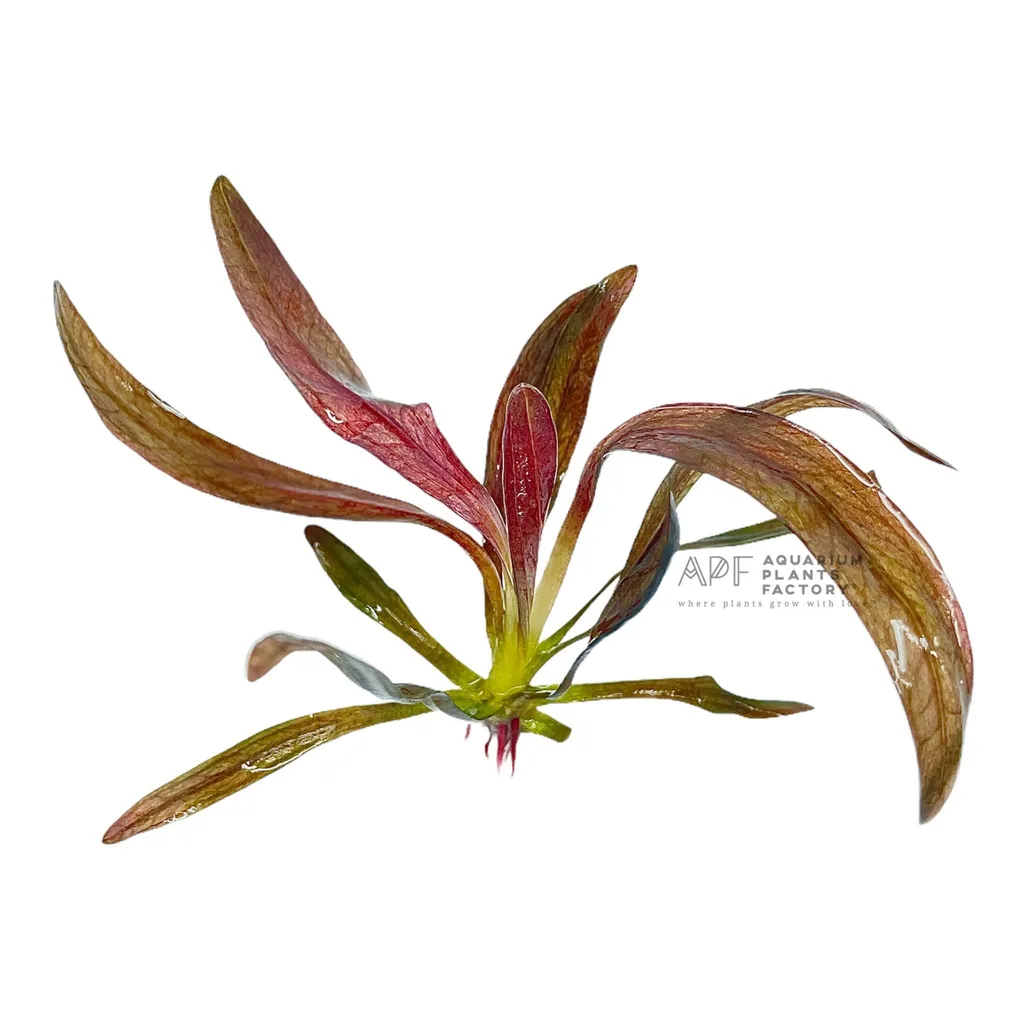
Red rubin sword
Echinodorus 'Red Rubin'
One of 21 cultivars of Echinodorus · See all cultivars →
Also known as Echinodorus 'Rubin', Echinodorus horemanii x barthii, Rubin sword
FreshwaterRosetteRhizome divisionPlantlets
Cultivars · Echinodorus
See all 21 →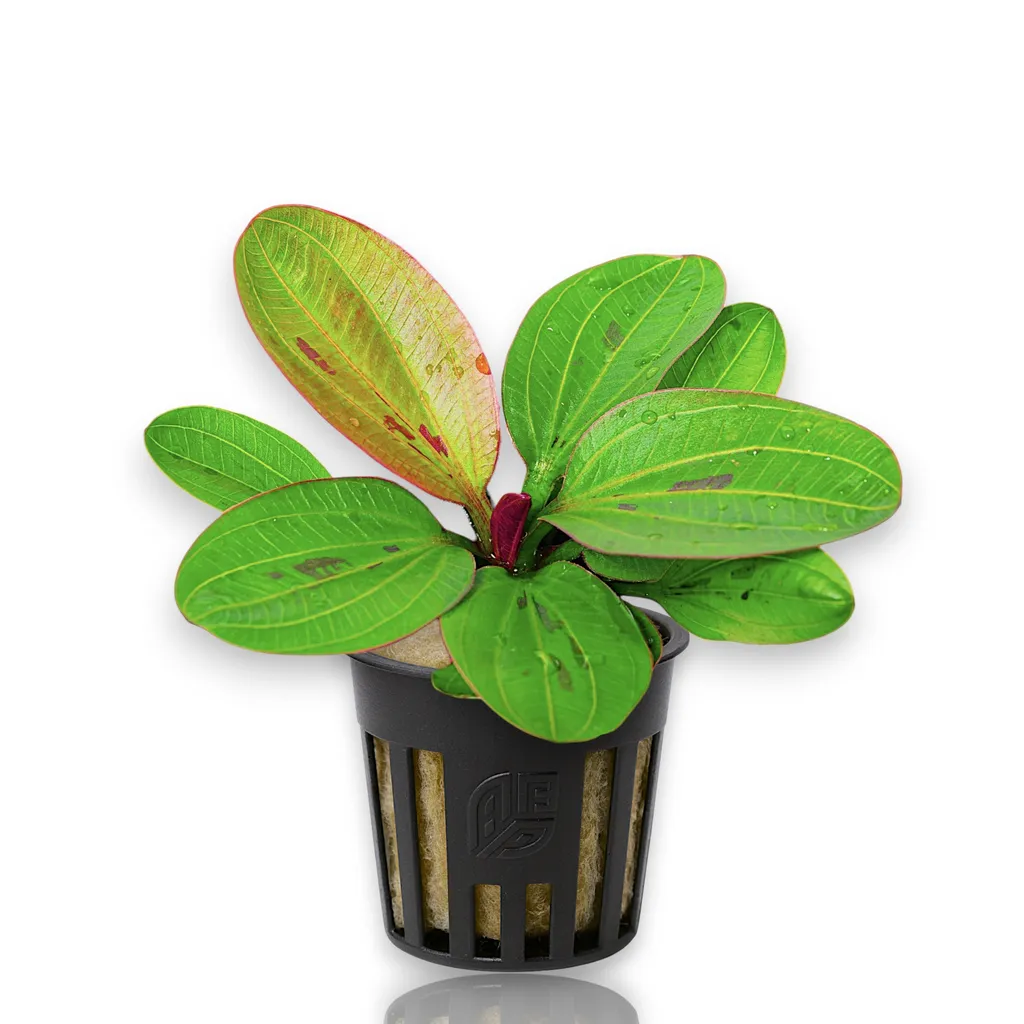
Care at a glance
- Light
- Medium light
- CO2
- CO₂ beneficial
- Temperature
- 63–82°F
- 17–28°C
- Max height
- 19.7 in
- 50 cm
- Growth rate
- Medium
- Placement
- Midground
- Type
- Rosette
- pH
- 6.5–7.5
- Hardness
- 4–18 dGH
- Spread
- 9.8 in (25 cm)
- Nutrient uptake
- Root + water column
- Growth region
- Submersed or emersed
- Difficulty
- Easy
- Family
- Alismataceae
- Origin
- Cultivated hybrid (no wild range); bred in Germany
Overview
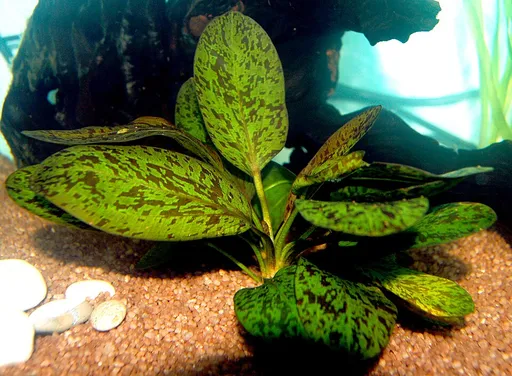
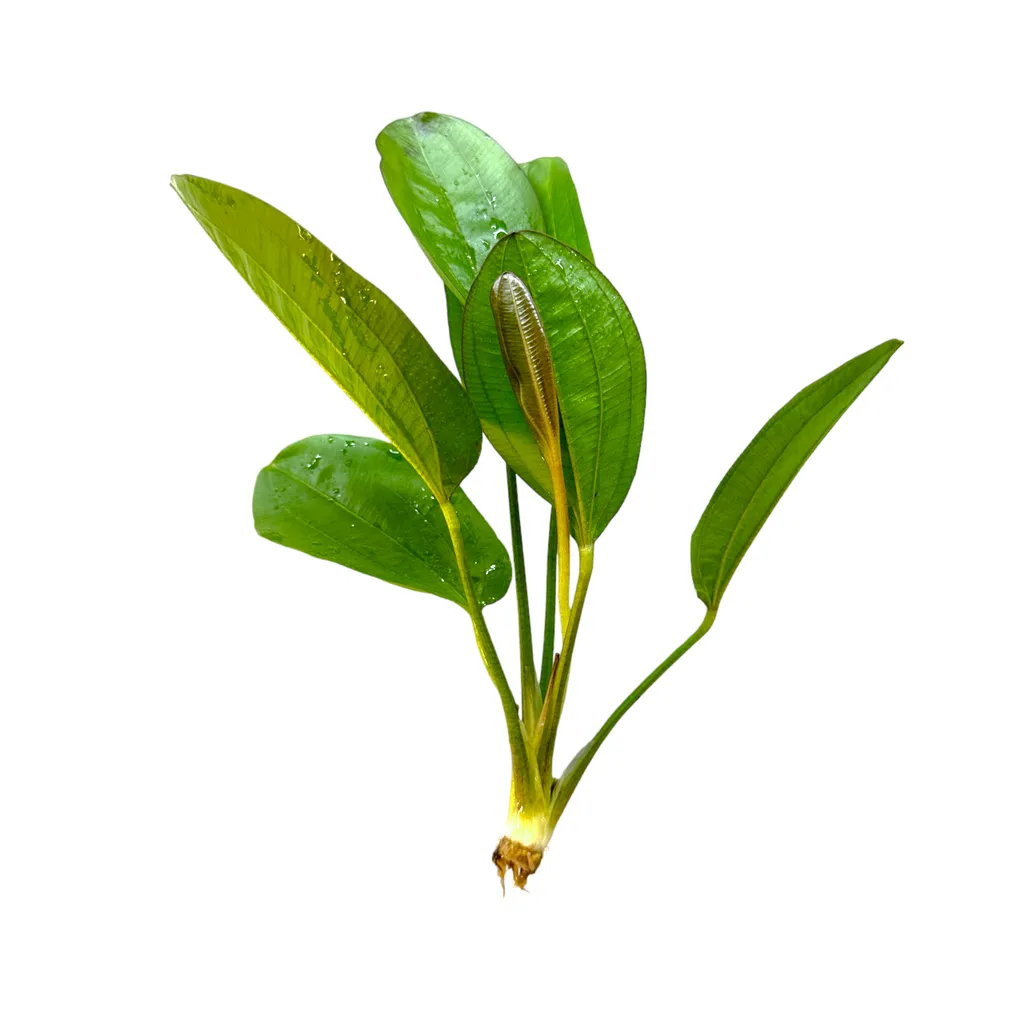
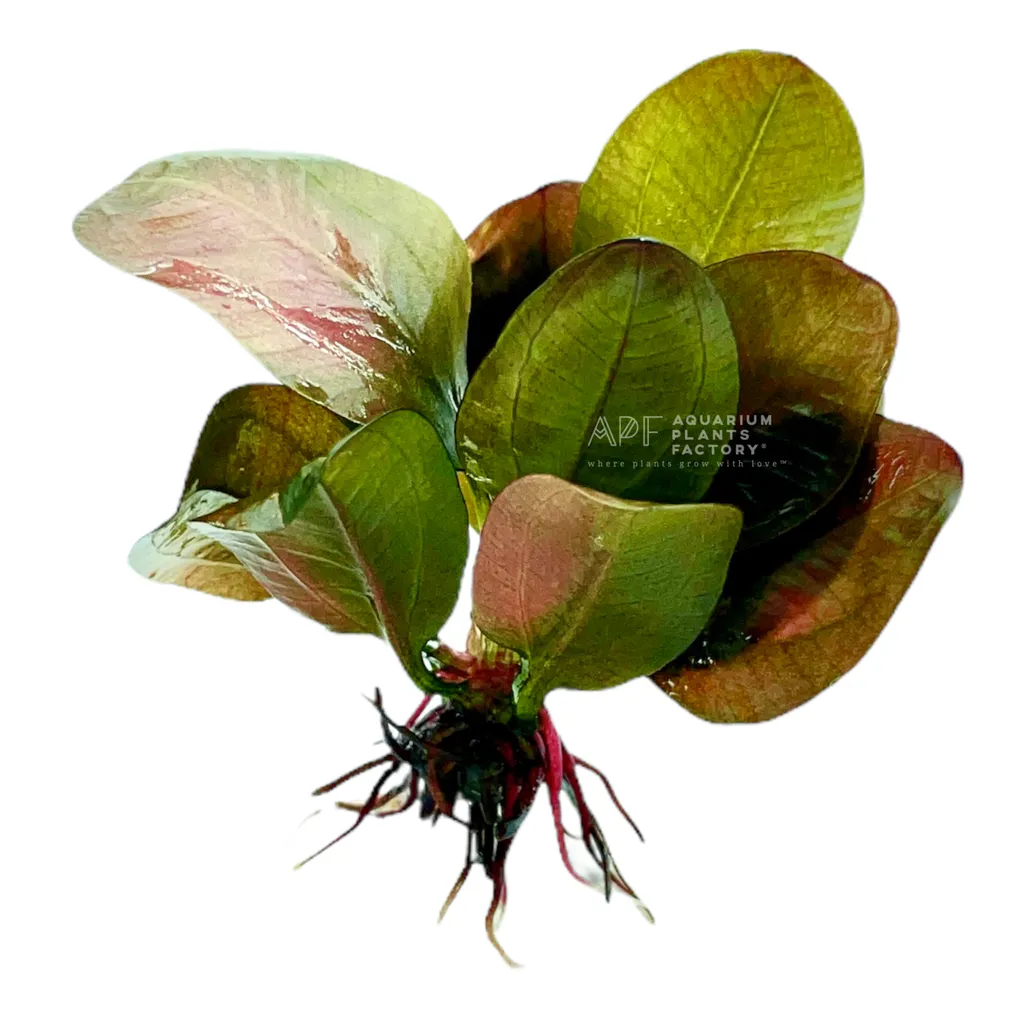
Use it as a single midground or background specimen in a larger tank where the broad wine-red leaves have room to spread. It is a heavy root feeder, so plant it in nutrient-rich substrate or push root tabs under the crown and keep the rhizome itself above the substrate so it does not rot. CO2 is not required but darkens the red and speeds growth, and brighter light brings out deeper color. New plants form on flower stalks (adventitious plantlets) and the crown can be split; trim old outer leaves at the base as they tatter.
In the wild
Red Rubin does not exist in the wild. It is a man-made cross between Echinodorus horemanii 'Red' and Echinodorus 'Barthii', so there is no natural range to speak of. The parent species come from the slow-moving and standing fresh waters of South America, where swords grow rooted in soft mud and spend part of the year submersed and part of it emersed along the bank.
Good to know
It belongs to the family Alismataceae. The cultivar was raised by Hans Barth of Dessau, Germany and has been in the trade since the early 1990s. Like most cultivated Echinodorus it is sterile or near-sterile in the usual sense and is propagated vegetatively rather than from seed. A narrow-leaf form of 'Rubin' is also sold.
Did you know
Did you know the deep red color is actually the plant protecting itself? The wine-red pigments are anthocyanins, the same compounds that redden autumn maple leaves, and they show up strongest under bright light where they help shield the leaf tissue.
Related plants
- Medium lightMidground13.8 in (35 cm)
Echinodorus horizontalis
Medium light · Midground
 Medium lightBackground19.7 in (50 cm)
Amazon sword
Echinodorus grisebachii
Medium light · Background
 High lightBackground19.7 in (50 cm)
Horemanii sword
Echinodorus horemanii
High light · Background
 Medium lightBackground19.7 in (50 cm)
Marble queen sword
Echinodorus cordifolius
Medium light · Background
 Medium lightBackground19.7 in (50 cm)
Melon sword
Echinodorus osiris
Medium light · Background
- Medium lightBackground19.7 in (50 cm)
Echinodorus decumbens
Medium light · Background