Twin-stripe lizard loach
Homaloptera bilineata
Also known as Two-lined lizard loach, Double line lizard loach
FreshwaterFish
Care at a glance
- Temperature
- 68–79°F
- 20–26°C
- pH
- 6.5–7.5
- Adult size
- 3.1 in
- 8 cm
- Minimum tank
- 24 gal
- 90 L
- Temperament
- Peaceful
- Social behavior
- Social
- Swim level
- Bottom
- Difficulty
- Difficult
- Breeding
- No record
- Rarity
- Rare
- Family
- Balitoridae
- Origin
- Myanmar
Overview
The twin-stripe lizard loach is a peaceful, rock-dwelling loach for a hillstream tank. It is a fish for experienced keepers.
Did you know
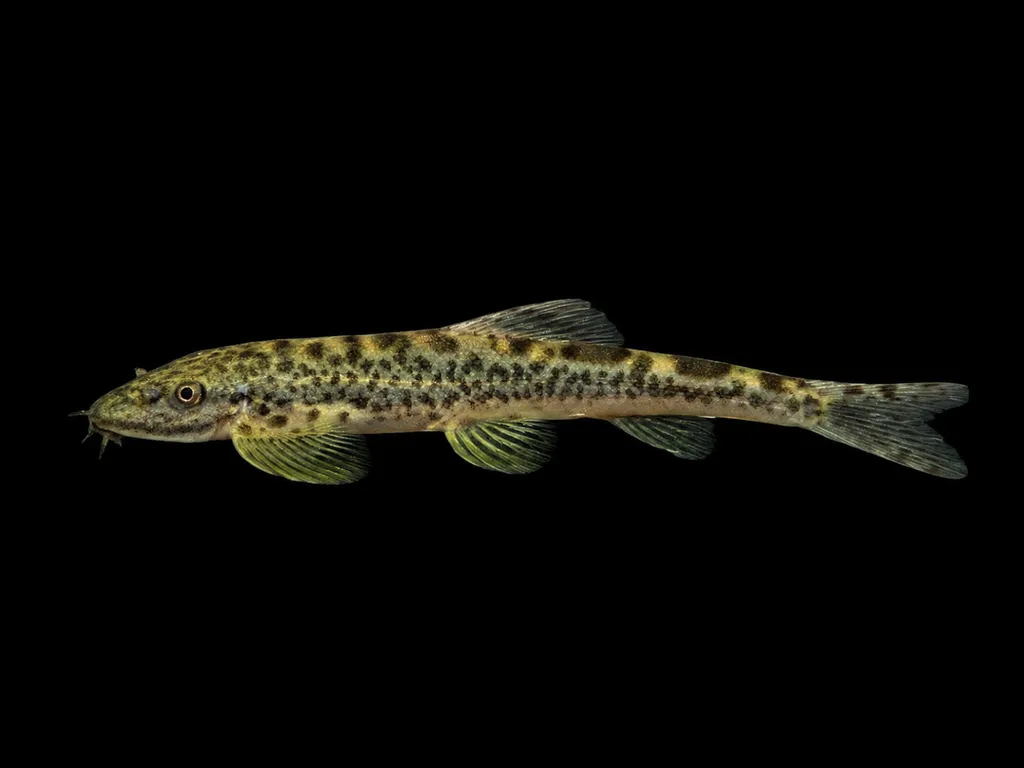
The twin-stripe lizard loach, like other lizard loaches, barely swims in the ordinary sense. It moves across the stones in short, scuttling hops, its stiff paired fins catching the rock like the soles of climbing shoes.
Caring for the twin-stripe lizard loach
Give a small group of twin-stripe lizard loaches a mature, flow-heavy tank of at least 24 gal (90 L). They want strong flow, high oxygen and plenty of smooth stone to graze and perch on. A tight-fitting lid guards against fish leaving the water in fast flow.
Make no compromise on temperature. Keep the water cool, at 68 to 79°F (20 to 26°C), with a pH of 6.5 to 7.5. Bright light over mature stone grows the film this loach grazes.
It holds station on the stones along the bottom, grazing biofilm and taking small sinking foods between times. Combine well-grown surfaces with sinking pellets and frozen daphnia or bloodworm.
The twin-stripe lizard loach is peaceful. It belongs with tank mates that also want cool, fast, oxygen-rich water, such as other hillstream loaches. Breeding in aquariums has not been recorded.
Good to know
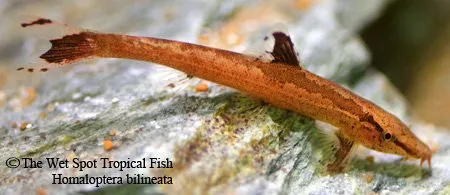
The twin-stripe lizard loach, Homaloptera bilineata, is a river loach in the family Balitoridae, described by Edward Blyth in 1860. Its name means two-lined. A narrow stripe runs from the snout through the eye and continues as a broad, ragged, zig-zag band. A fainter second band runs lower on the body.
In the wild
The twin-stripe lizard loach comes from clear, flowing streams in Myanmar, over stone kept clean by the current.
Weekly picks
Tank mates
The twin-stripe lizard loach is a peaceful, social species that keeps to the bottom. These picks share a community profile with it, are safe together in both directions, and overlap on water type, temperature and pH.
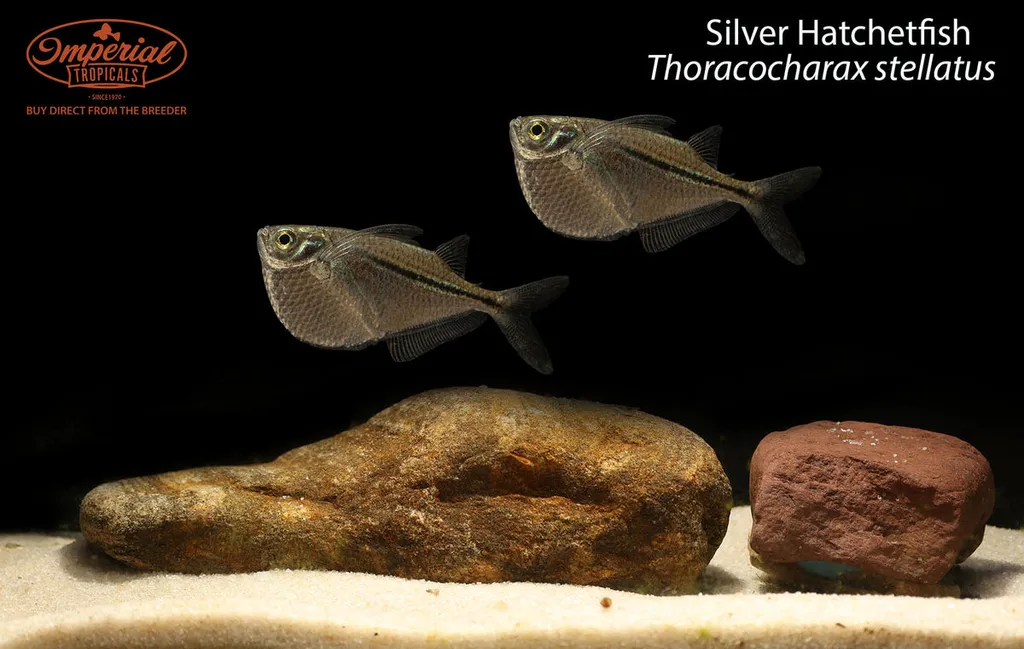
Spotfin hatchetfish
Thoracocharax stellatus
Freshwater3.5 in (9 cm) · 26 gal (100 L)73–82°F (23–28°C)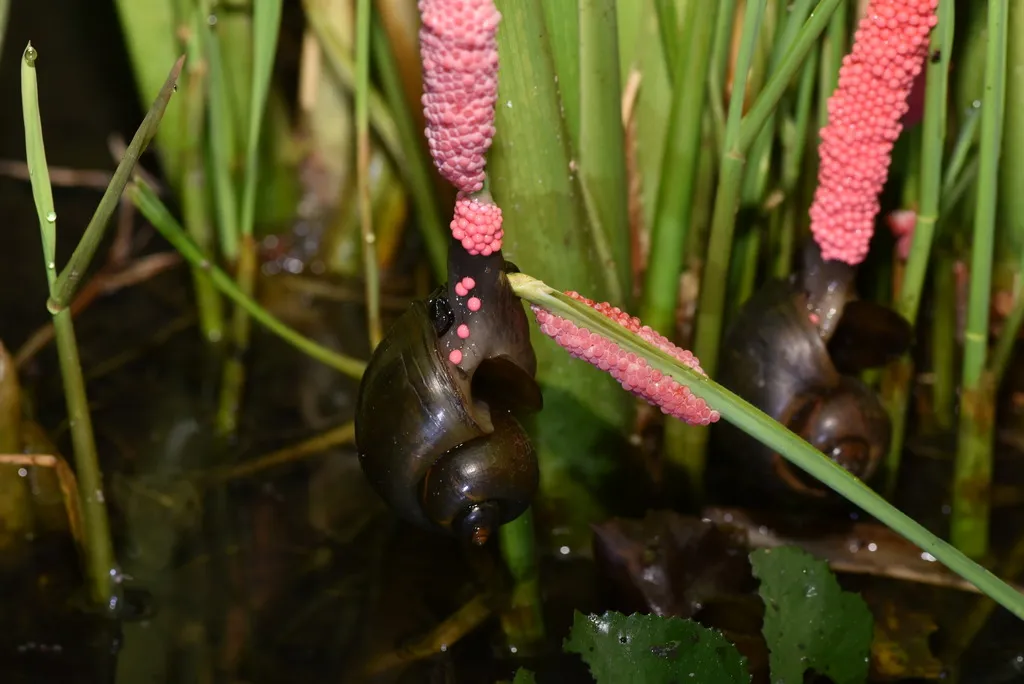
Apple snail
Pomacea canaliculata
Freshwater5.9 in (15 cm) · 21 gal (80 L)64–81°F (18–27°C)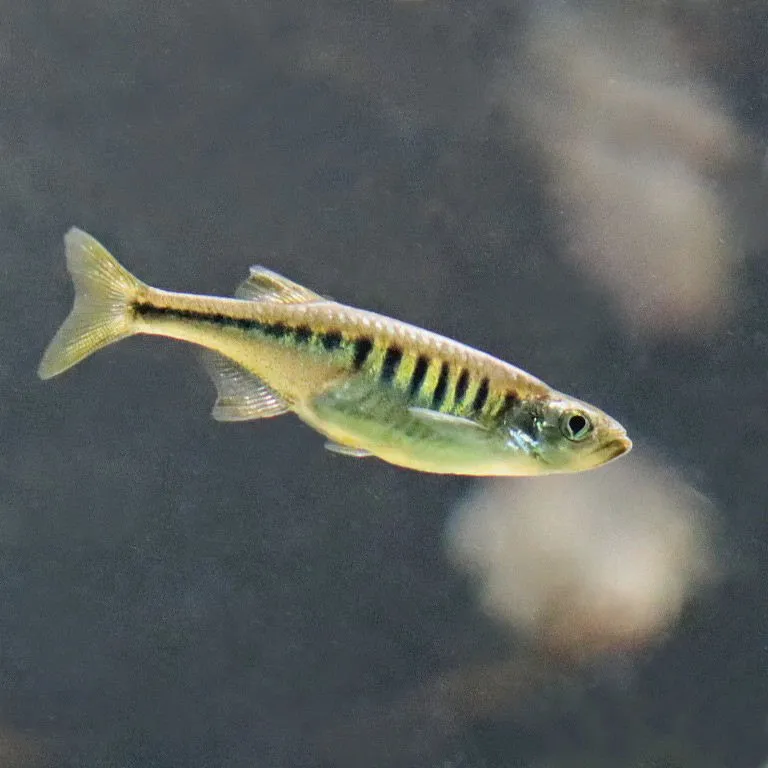
Lake Inle danio
Devario auropurpureus
Freshwater3.1 in (8 cm) · 24 gal (90 L)64–77°F (18–25°C)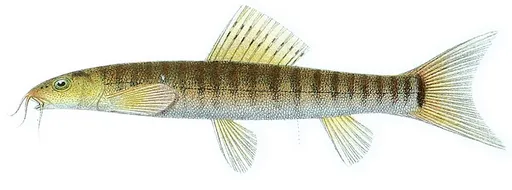
Barred loach
Nemacheilus fasciatus
Freshwater3.1 in (8 cm) · 24 gal (90 L)68–77°F (20–25°C)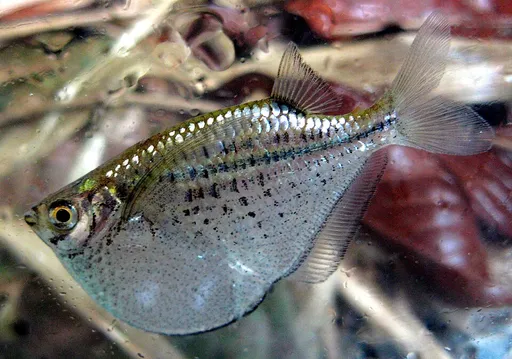
Spotted hatchetfish
Gasteropelecus maculatus
Freshwater3.5 in (9 cm) · 26 gal (100 L)73–82°F (23–28°C)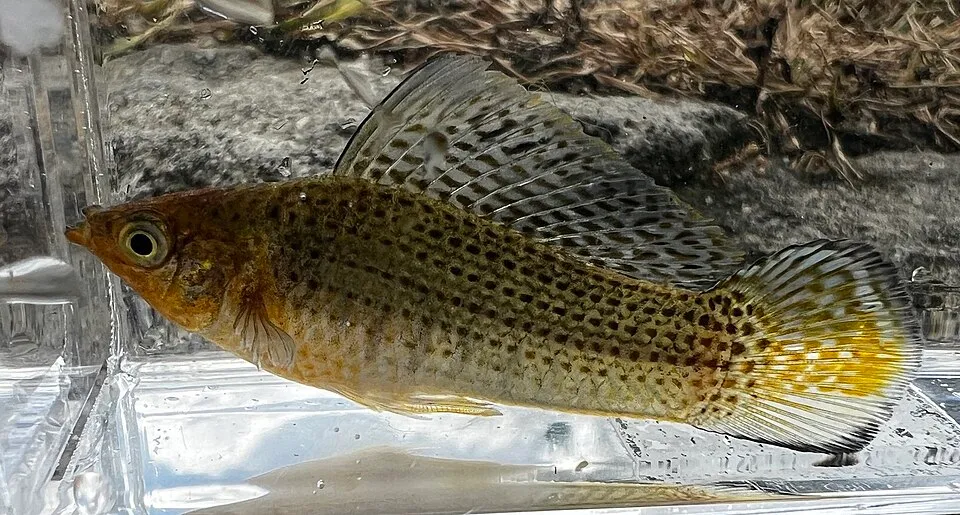
Sailfin molly
Poecilia latipinna
FreshwaterBrackish4.7 in (12 cm) · 24 gal (90 L)70–79°F (21–26°C)
Common questions
What size tank does a twin-stripe lizard loach need?
A twin-stripe lizard loach needs at least 24 gal (90 L). It spends most of its time in the bottom.
What temperature and pH does a twin-stripe lizard loach need?
A twin-stripe lizard loach is comfortable at 68–79°F (20–26°C) with a pH of 6.5–7.5.
What does a twin-stripe lizard loach eat?
A twin-stripe lizard loach grazes biofilm and takes small sinking foods. Feed it sinking pellets and frozen daphnia or bloodworm alongside well-grown surfaces.
How big does a twin-stripe lizard loach get?
An adult twin-stripe lizard loach reaches about 3.1 in (8 cm).
Related species
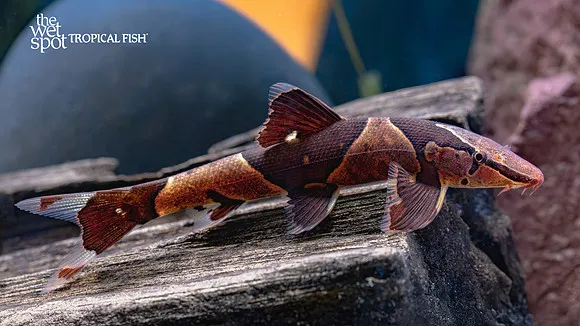 3.2 in (8.2 cm)24 gal (90 L)70–81°F (21–27°C)
Mekong lizard loach
Homaloptera confuzona
3.2 in (8.2 cm) · 24 gal (90 L)
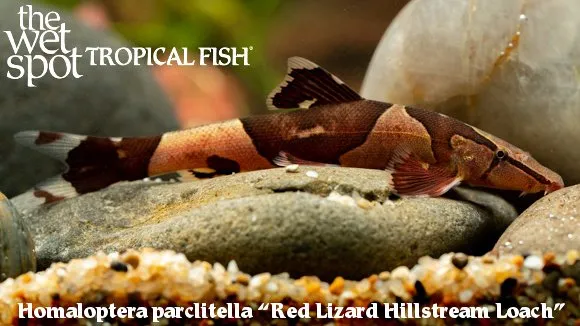 3.9 in (10 cm)29 gal (110 L)70–79°F (21–26°C)
Malayan lizard loach
Homaloptera parclitella
3.9 in (10 cm) · 29 gal (110 L)
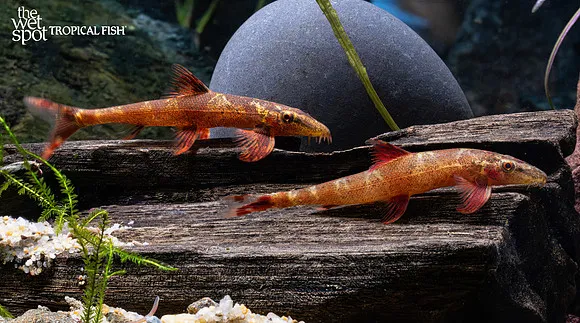 2.4 in (6 cm)20 gal (75 L)70–79°F (21–26°C)
Ogilvie's lizard loach
Homaloptera ogilviei
2.4 in (6 cm) · 20 gal (75 L)
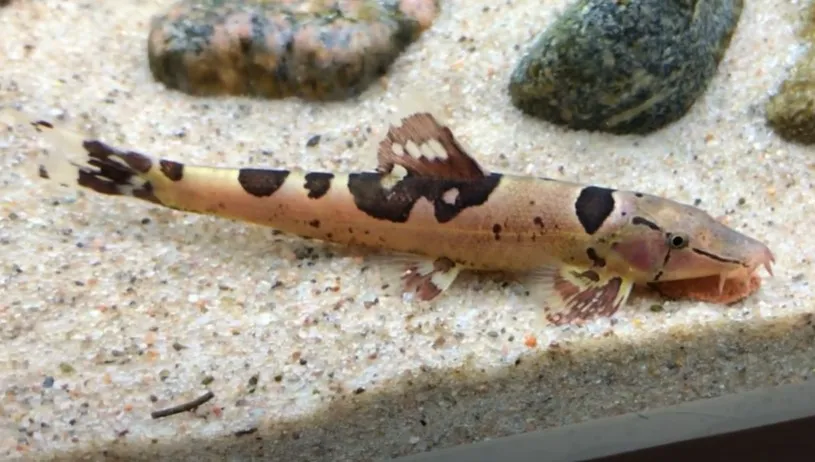 4.3 in (11 cm)45 gal (170 L)68–77°F (20–25°C)
Saddle-back loach
Homaloptera orthogoniata
4.3 in (11 cm) · 45 gal (170 L)
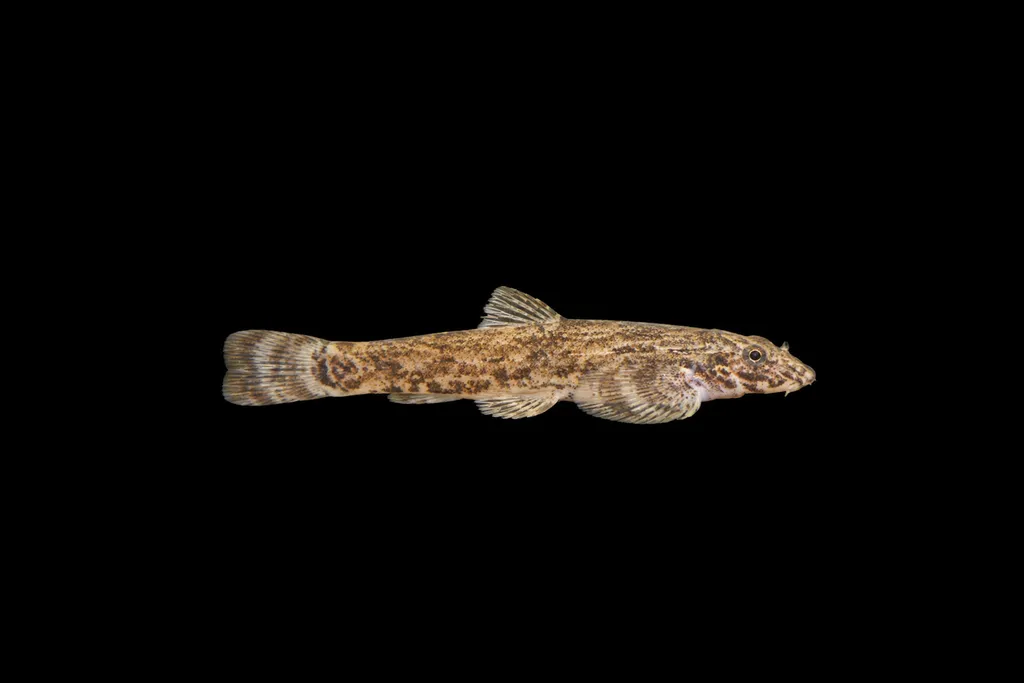 3.1 in (8 cm)24 gal (90 L)70–79°F (21–26°C)
Zollinger's lizard loach
Balitoropsis zollingeri
3.1 in (8 cm) · 24 gal (90 L)
 2.8 in (7 cm)24 gal (90 L)64–75°F (18–24°C)
Nan River loach
Hemimyzon nanensis
2.8 in (7 cm) · 24 gal (90 L)