Nan River loach
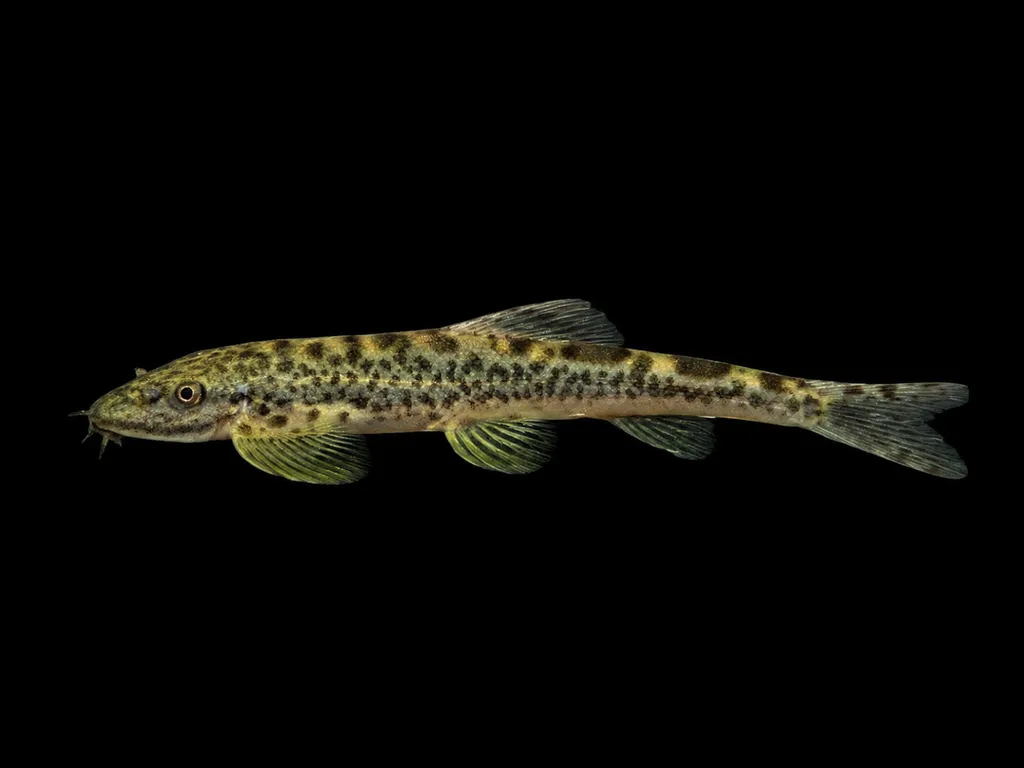
Hemimyzon nanensis
Also known as Nan hillstream loach, Royal butterfly loach
FreshwaterFish
Care at a glance
- Temperature
- 64–75°F
- 18–24°C
- pH
- 6.5–7.5
- Adult size
- 2.8 in
- 7 cm
- Minimum tank
- 24 gal
- 90 L
- Temperament
- Peaceful
- Social behavior
- Social
- Swim level
- Bottom
- Difficulty
- Difficult
- Breeding
- No record
- Rarity
- Rare
- Family
- Balitoridae
- Origin
- Nan River basin, northern Thailand
Overview
The Nan River loach is a fish for a dedicated river tank, not an ordinary aquarium. It is one of the harder loaches to satisfy, so it suits experienced keepers.
Did you know
Until the Nan River loach was found, its genus was known only from China and Taiwan. Its description from northern Thailand stretched the known range of Hemimyzon well down into Southeast Asia.
Caring for the Nan River loach
Keep a small group of Nan River loaches in a dedicated river tank of about 24 gal (90 L), driven by heavy pumps. They need torrent-grade flow and constant, very high oxygen. Shallow, brisk, well-lit water over smooth stone comes closest to their native stretch.
Keep the water cool, or even unheated, at 64 to 75°F (18 to 24°C) and a pH of 6.5 to 7.5. In the right current they graze the film on stone and take tiny sinking foods. In a warm, still tank they slowly starve of oxygen and current.
Feed micro sinking pellets and small frozen foods, worked down among the rocks. Nan River loaches are peaceful and belong only with other cool, fast-water specialists. They have not been bred in aquariums.
Good to know
The Nan River loach, Hemimyzon nanensis, was described by Doi and Kottelat in 1998. Hemimyzon are among the most current-adapted river loaches in the family Balitoridae. Their bodies are flattened almost to a pancake, and their paired fins broaden into fans that grip wet stone. It is also sold as the Nan hillstream loach or royal butterfly loach.
In the wild
The Nan River loach comes from cool, fast riffles in the upper Nan basin of northern Thailand, a headwater of the Chao Phraya. It lives over rock, gravel and sand filmed with algae.
Weekly picks
Tank mates
The Nan River loach is a peaceful, social species that keeps to the bottom. These picks share a community profile with it, are safe together in both directions, and overlap on water type, temperature and pH.
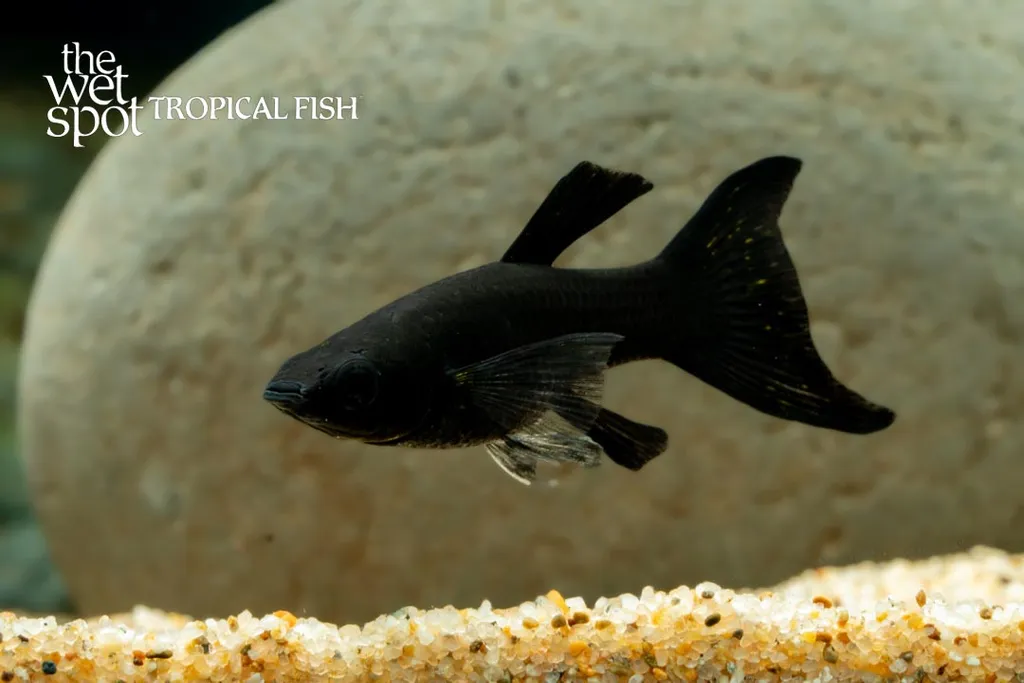
Black molly
Poecilia sphenops
FreshwaterBrackish4.7 in (12 cm) · 24 gal (90 L)70–82°F (21–28°C)
Wrestling halfbeak
Dermogenys pusilla
FreshwaterBrackish2.8 in (7 cm) · 25 gal (95 L)75–82°F (24–28°C)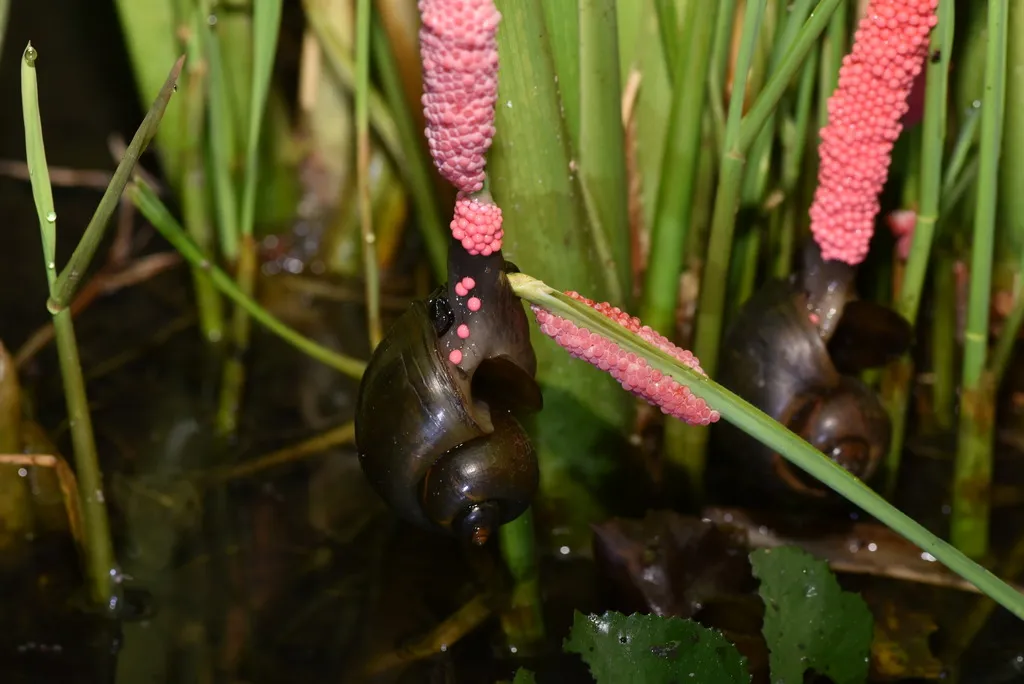
Apple snail
Pomacea canaliculata
Freshwater5.9 in (15 cm) · 21 gal (80 L)64–81°F (18–27°C)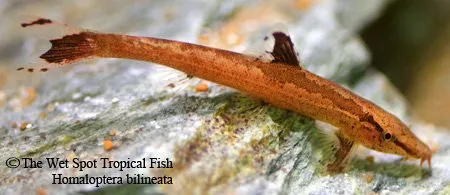
Twin-stripe lizard loach
Homaloptera bilineata
Freshwater3.1 in (8 cm) · 24 gal (90 L)68–79°F (20–26°C)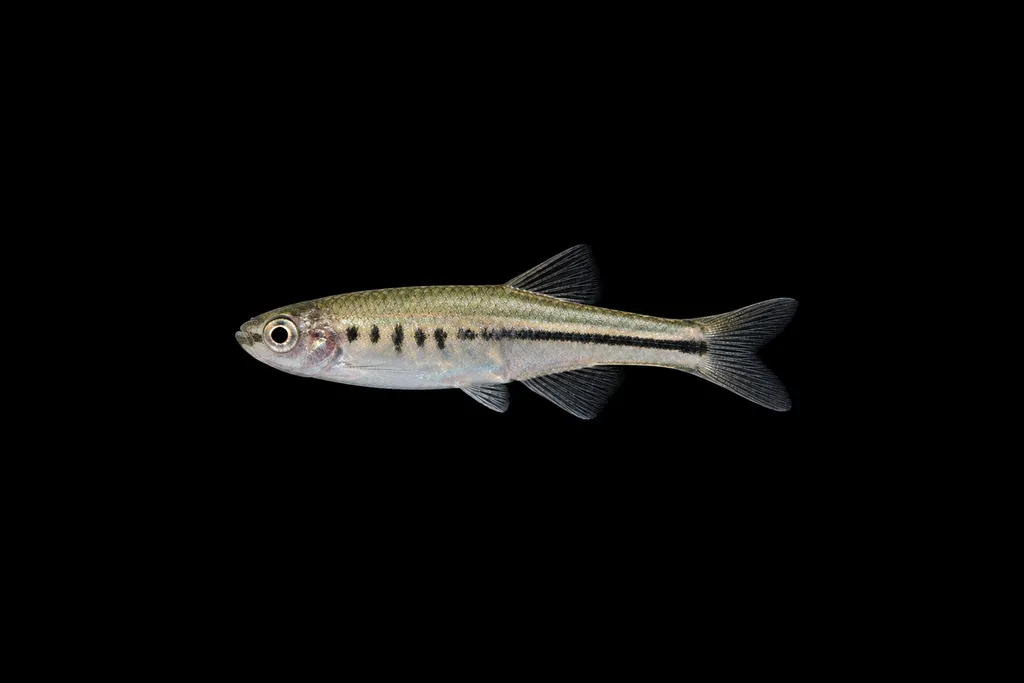
Interrupted danio
Devario interruptus
Freshwater2.8 in (7 cm) · 24 gal (90 L)64–77°F (18–25°C)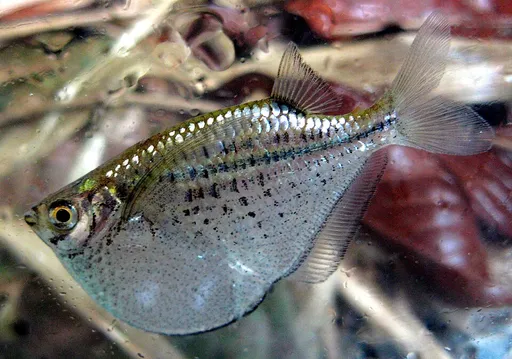
Spotted hatchetfish
Gasteropelecus maculatus
Freshwater3.5 in (9 cm) · 26 gal (100 L)73–82°F (23–28°C)
Common questions
What size tank does a Nan River loach need?
A Nan River loach needs at least 24 gal (90 L). It spends most of its time in the bottom.
What temperature and pH does a Nan River loach need?
A Nan River loach is comfortable at 64–75°F (18–24°C) with a pH of 6.5–7.5.
What does a Nan River loach eat?
A Nan River loach grazes the film on stone and takes tiny sinking foods. Feed it micro sinking pellets and small frozen foods, worked down among the rocks.
How big does a Nan River loach get?
An adult Nan River loach reaches about 2.8 in (7 cm).
Related species
- 3.1 in (8 cm)24 gal (90 L)68–79°F (20–26°C)
Twin-stripe lizard loach
Homaloptera bilineata
3.1 in (8 cm) · 24 gal (90 L)
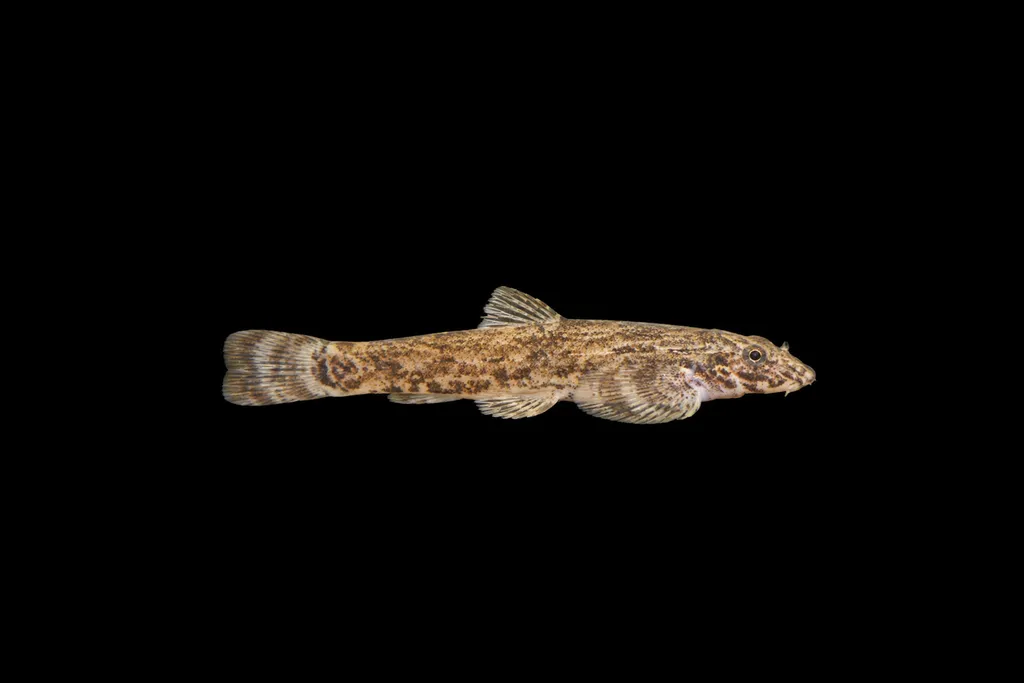 3.1 in (8 cm)24 gal (90 L)70–79°F (21–26°C)
Zollinger's lizard loach
Balitoropsis zollingeri
3.1 in (8 cm) · 24 gal (90 L)
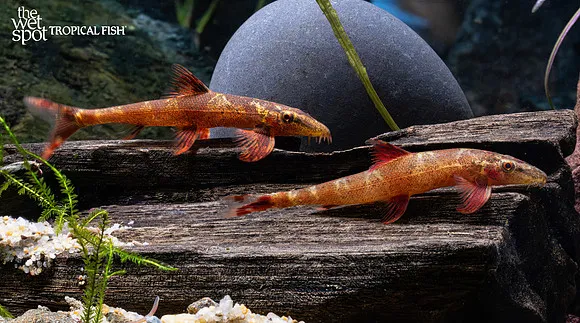 2.4 in (6 cm)20 gal (75 L)70–79°F (21–26°C)
Ogilvie's lizard loach
Homaloptera ogilviei
2.4 in (6 cm) · 20 gal (75 L)
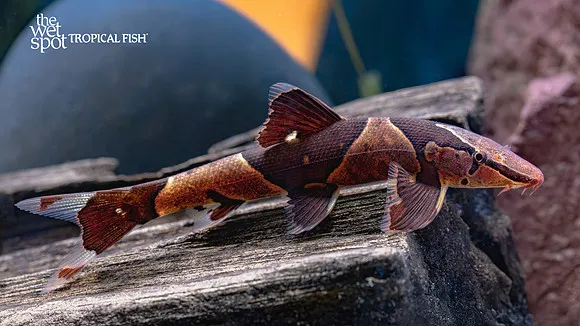 3.2 in (8.2 cm)24 gal (90 L)70–81°F (21–27°C)
Mekong lizard loach
Homaloptera confuzona
3.2 in (8.2 cm) · 24 gal (90 L)
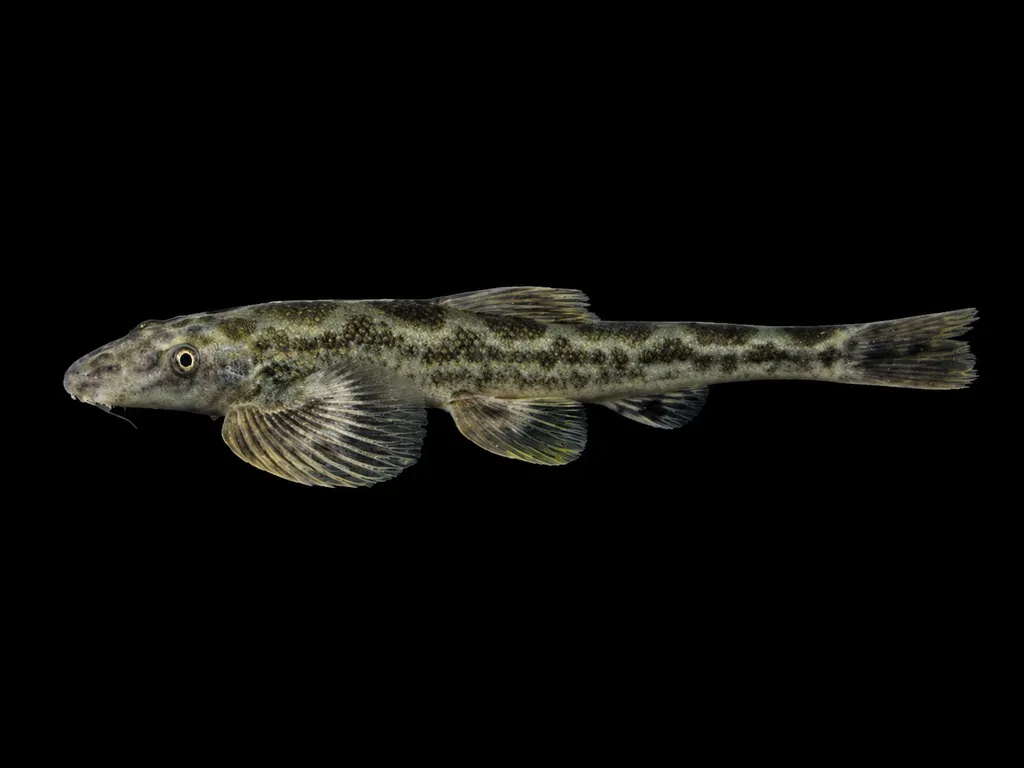 3.9 in (10 cm)25 gal (95 L)68–79°F (20–26°C)
Burmese stone loach
Balitora burmanica
3.9 in (10 cm) · 25 gal (95 L)
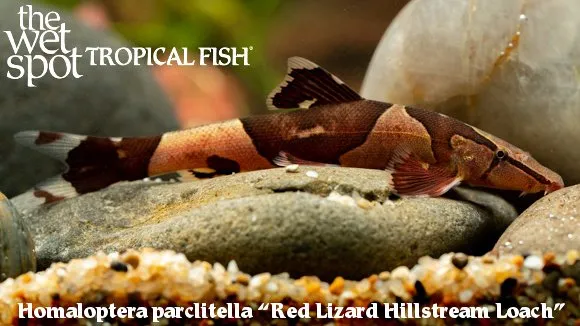 3.9 in (10 cm)29 gal (110 L)70–79°F (21–26°C)
Malayan lizard loach
Homaloptera parclitella
3.9 in (10 cm) · 29 gal (110 L)