Variety of Green swordtail
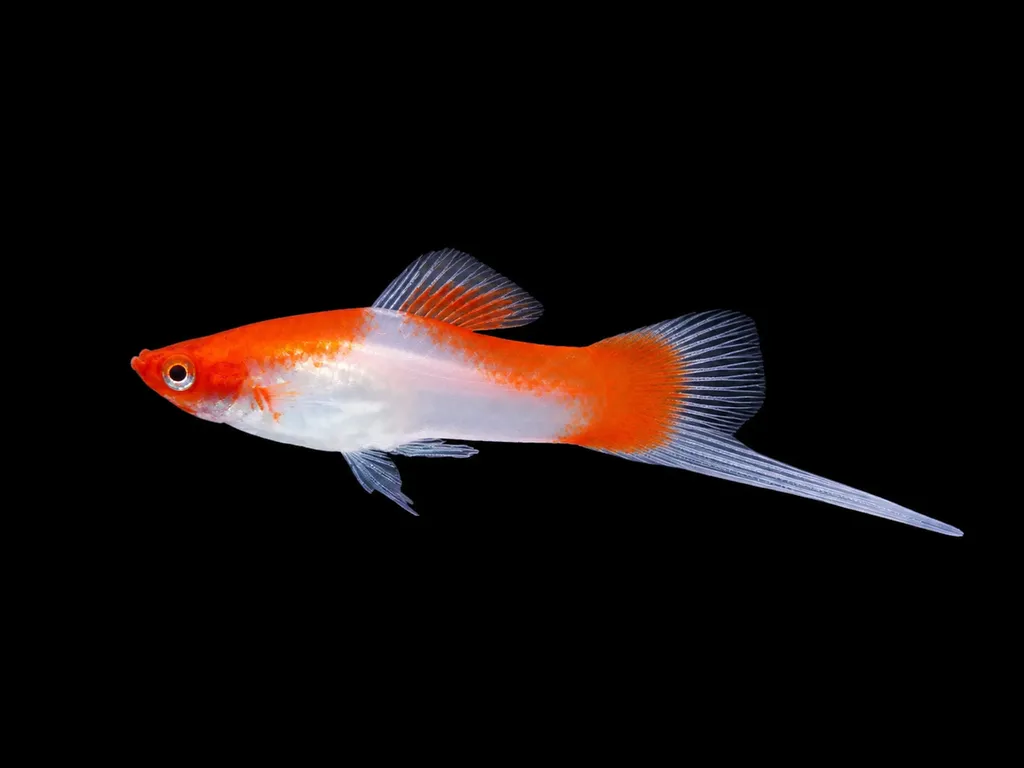
Koi swordtail
Xiphophorus hellerii
One of 6 varieties of Xiphophorus hellerii · See all varieties →
Also known as Sanke Koi Swordtail
FreshwaterFish
Varieties · Xiphophorus hellerii
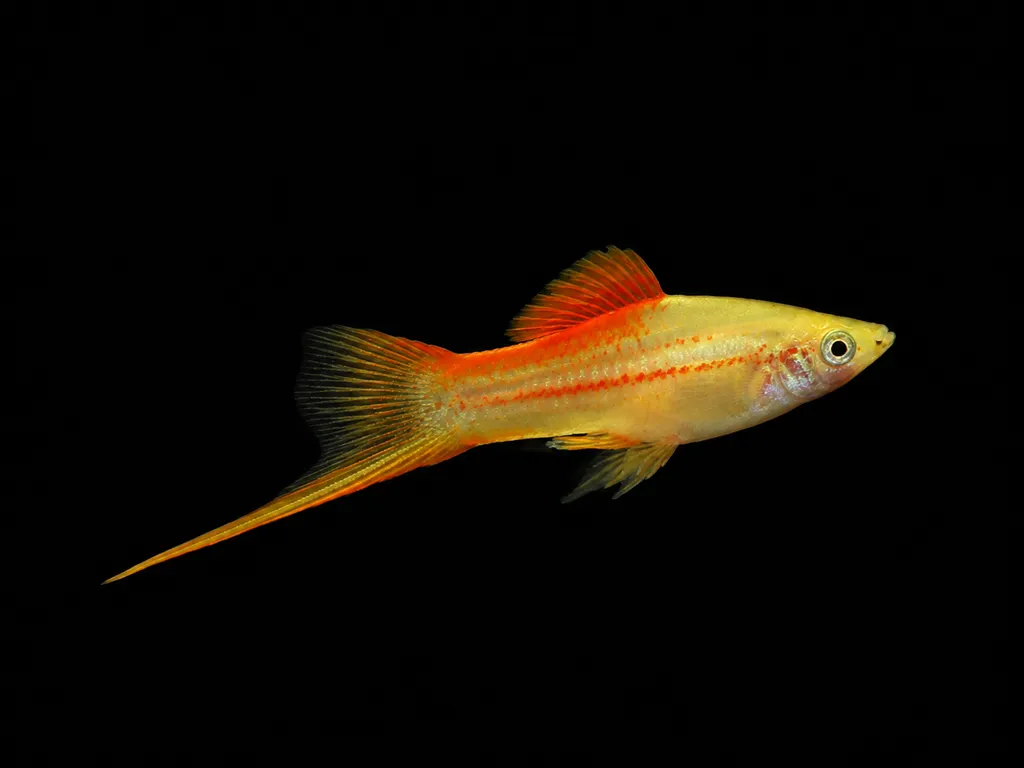
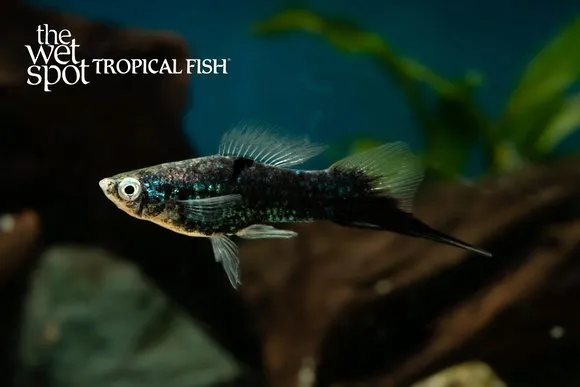
See all 6 →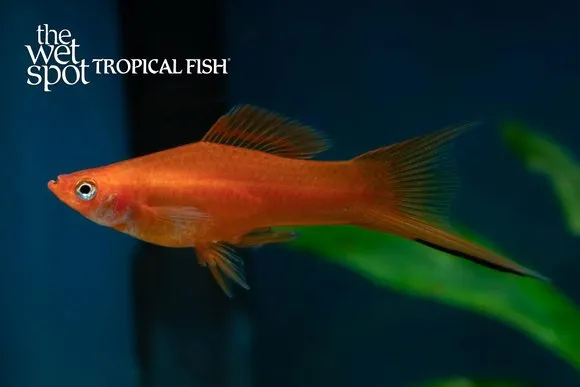
Care at a glance
- Temperature
- 68–82°F
- 20–28°C
- pH
- 7.0–8.0
- Adult size
- 5.9 in
- 15 cm
- Minimum tank
- 24 gal
- 90 L
- Temperament
- Peaceful
- Social behavior
- Social
- Swim level
- Middle
- Difficulty
- Beginner
- Breeding
- Easy
- Rarity
- Very common
- Family
- Poeciliidae
Overview
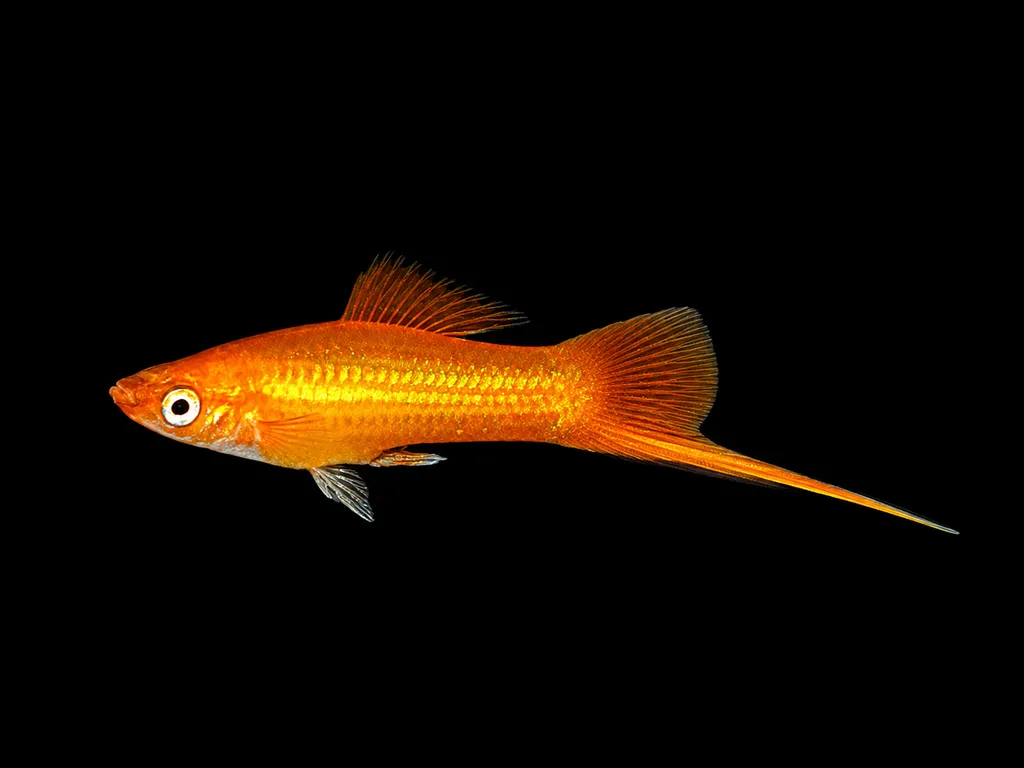
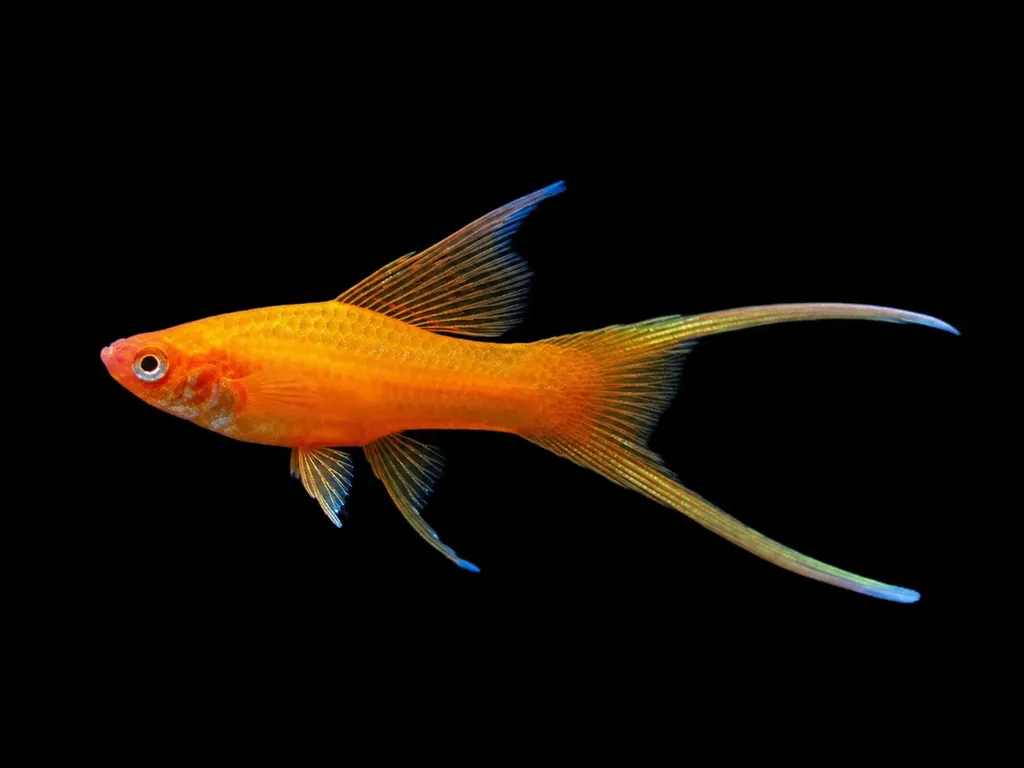
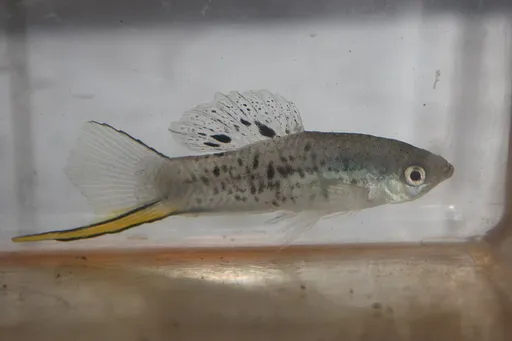
Red and white blocks on a pale body, named after kohaku pond koi. Shops split it further: kohaku or Santa Claus for red on white, sanke or tricolor once black is added. Blocks are never identical between fish, so pick individuals rather than ordering by name.
In the wild
A koi-patterned swordtail is farm stock, much of it bred in Asia and sold under Japanese koi names borrowed by the aquarium trade. Retailers describe the sanke as a white or silver fish with reddish-orange patches plus black blotches and spots, and the kohaku or Santa Claus as red on white with no black. No breeder or year is documented for the original koi line, so its origin is unclear. Wild green swordtails carry no blocked red and white.
Good to know
The white is unpigmented skin rather than a white pigment, so the pattern is really red patches over a pale ground. Block placement is not fixed by any single gene, and spawns give a range from nearly all white to mostly red. Sanke and tricolor fish add black on top of the red and white, which is why shops list them apart from plain kohaku. Nothing about the pattern breeds true block for block.
Did you know
The names are borrowed wholesale from Japanese pond koi: kohaku is red on white, sanke adds black on top. Neither term says anything about the fish's genetics, only about how the blocks happen to fall.
Weekly picks
Tank mates
Koi swordtail is a peaceful, social species that keeps to the middle. These picks share a community profile with it, are safe together in both directions, and overlap on water type, temperature and pH.
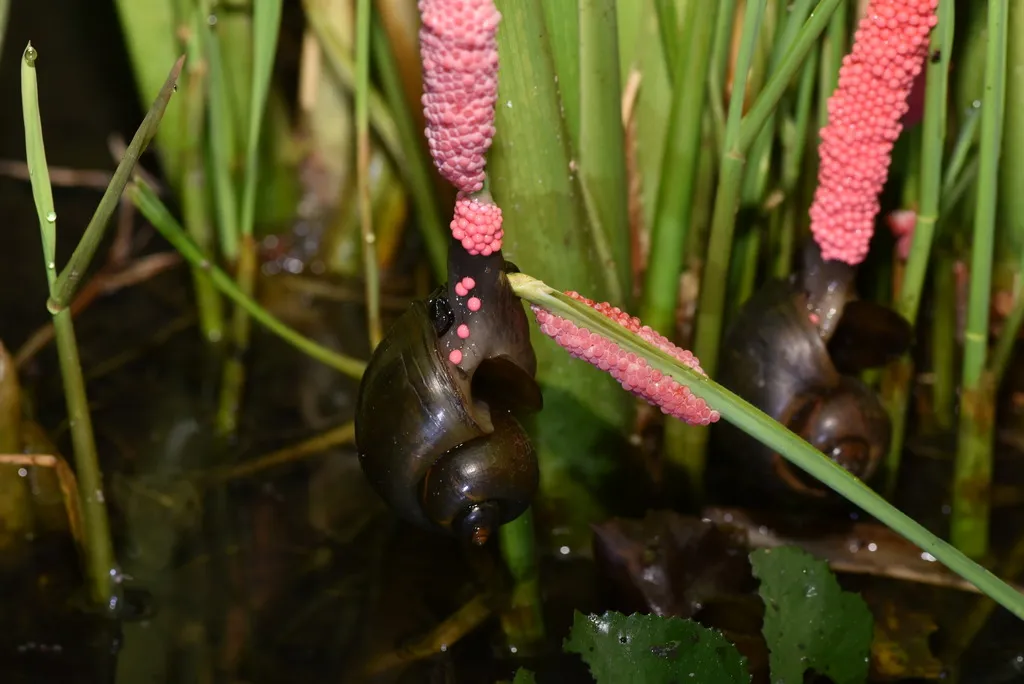
Apple snail
Pomacea canaliculata
Freshwater5.9 in (15 cm) · 21 gal (80 L)64–81°F (18–27°C)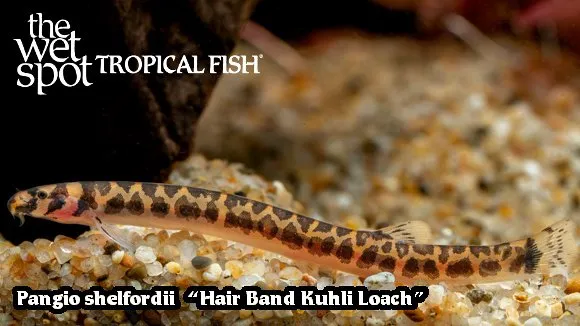
Shelford's kuhli loach
Pangio shelfordii
Freshwater3.1 in (8 cm) · 24 gal (90 L)72–81°F (22–27°C)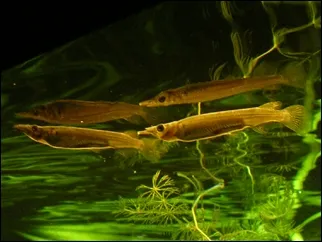
Wrestling halfbeak
Dermogenys pusilla
FreshwaterBrackish2.8 in (7 cm) · 25 gal (95 L)75–82°F (24–28°C)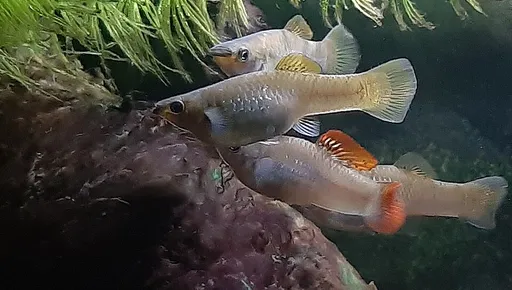
Liberty molly
Poecilia salvatoris
FreshwaterBrackish3.9 in (10 cm) · 24 gal (90 L)72–82°F (22–28°C)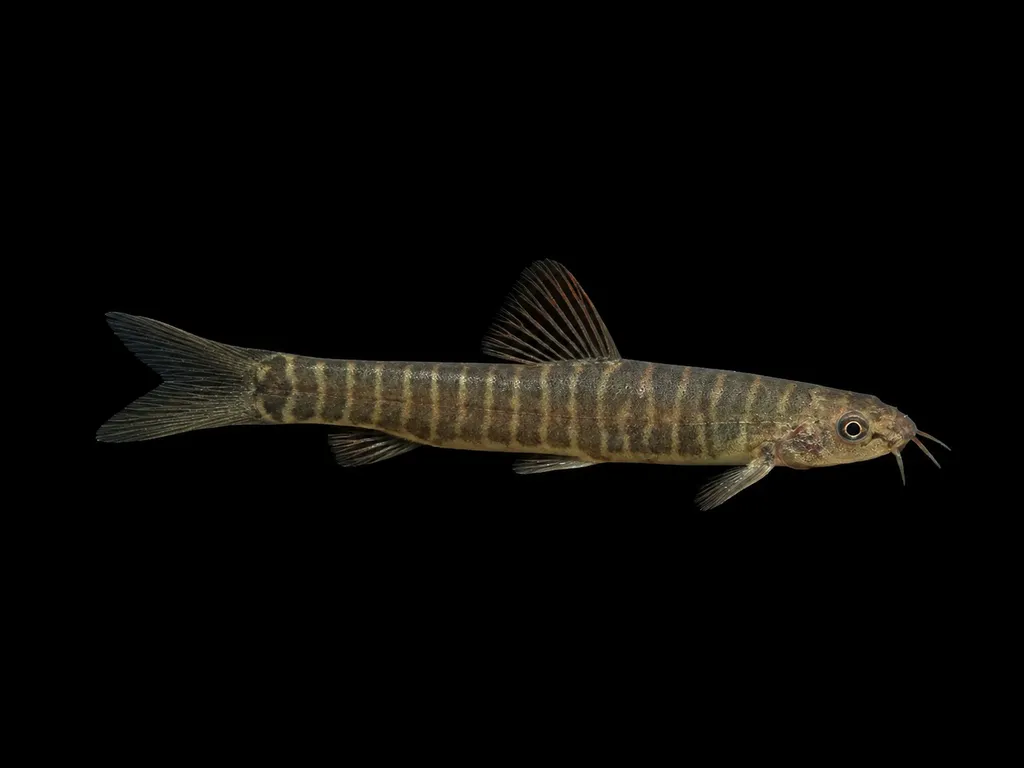
Flathead loach
Nemacheilus platiceps
Freshwater2.9 in (7.3 cm) · 24 gal (90 L)72–81°F (22–27°C)Siamese flying barb
Laubuka siamensis
Freshwater2.6 in (6.5 cm) · 24 gal (90 L)72–81°F (22–27°C)
Common questions
Is a Koi swordtail a different species from the Green swordtail?
No. A Koi swordtail is a variety of the Green swordtail, Xiphophorus hellerii, and it wants the same tank, water and food as the species.
What size tank does a Koi swordtail need?
A Koi swordtail needs at least 24 gal (90 L). It spends most of its time in the middle.
How big does a Koi swordtail get?
An adult Koi swordtail reaches about 5.9 in (15 cm).
Related species
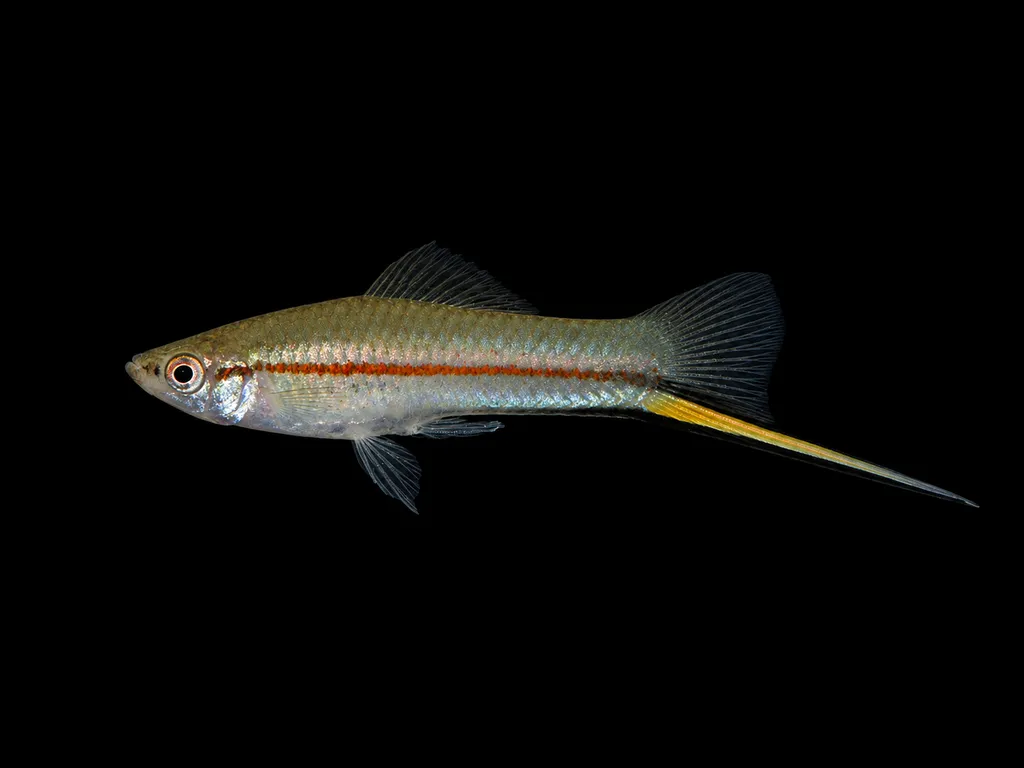 4.1 in (10.5 cm)29 gal (110 L)73–82°F (23–28°C)
Kallman's swordtail
Xiphophorus kallmani
4.1 in (10.5 cm) · 29 gal (110 L)
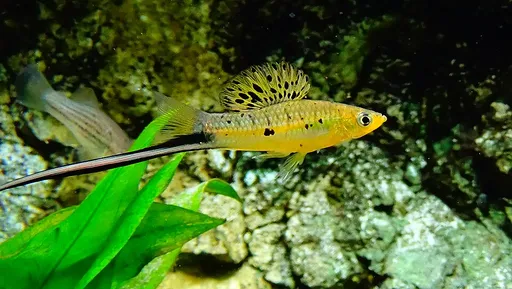 5.5 in (14 cm)32 gal (120 L)68–79°F (20–26°C)
Montezuma swordtail
Xiphophorus montezumae
5.5 in (14 cm) · 32 gal (120 L)
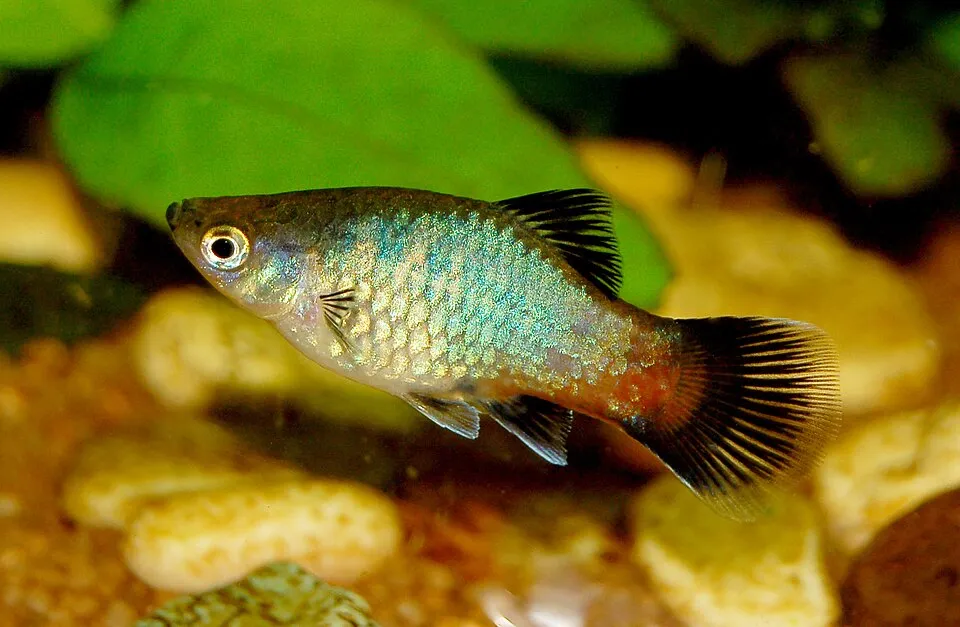 2.8 in (7 cm)15 gal (55 L)68–79°F (20–26°C)
Southern platy
Xiphophorus maculatus
2.8 in (7 cm) · 15 gal (55 L)
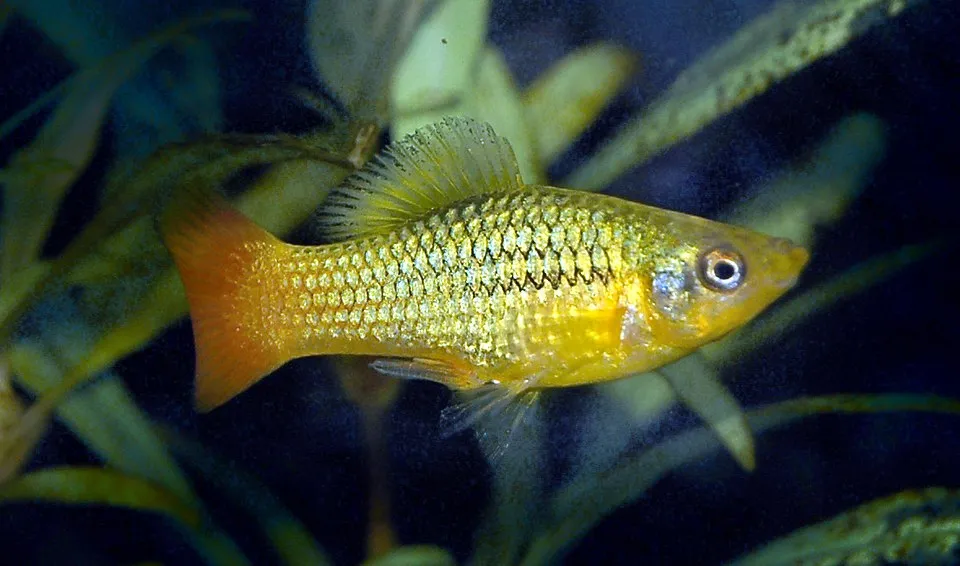 2.8 in (7 cm)15 gal (55 L)68–79°F (20–26°C)
Variable platy
Xiphophorus variatus
2.8 in (7 cm) · 15 gal (55 L)
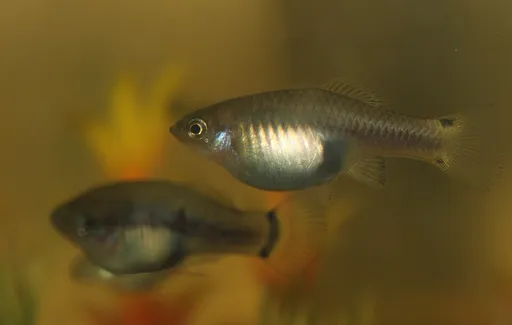 2 in (5 cm)16 gal (60 L)68–79°F (20–26°C)
Spiketail platy
Xiphophorus xiphidium
2 in (5 cm) · 16 gal (60 L)
 3.5 in (9 cm)29 gal (110 L)68–79°F (20–26°C)
Northern mountain swordtail
Xiphophorus nezahualcoyotl
3.5 in (9 cm) · 29 gal (110 L)