Variety of Green swordtail
Marigold swordtail
Xiphophorus hellerii
One of 6 varieties of Xiphophorus hellerii · See all varieties →
FreshwaterFish
Varieties · Xiphophorus hellerii
See all 6 →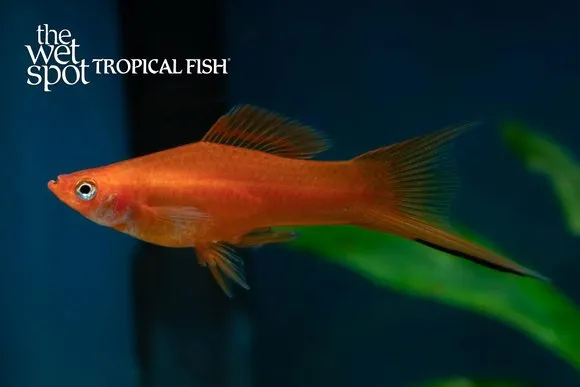
Care at a glance
- Temperature
- 68–82°F
- 20–28°C
- pH
- 7.0–8.0
- Adult size
- 5.9 in
- 15 cm
- Minimum tank
- 24 gal
- 90 L
- Temperament
- Peaceful
- Social behavior
- Social
- Swim level
- Middle
- Difficulty
- Beginner
- Breeding
- Easy
- Rarity
- Very common
- Family
- Poeciliidae
Overview
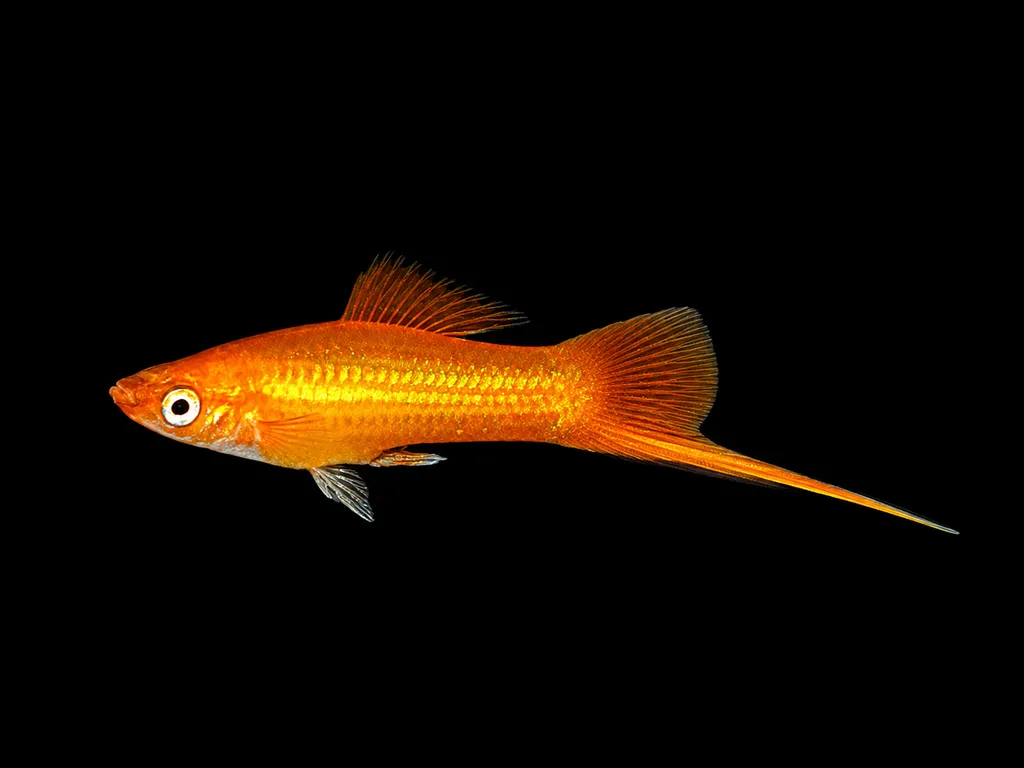
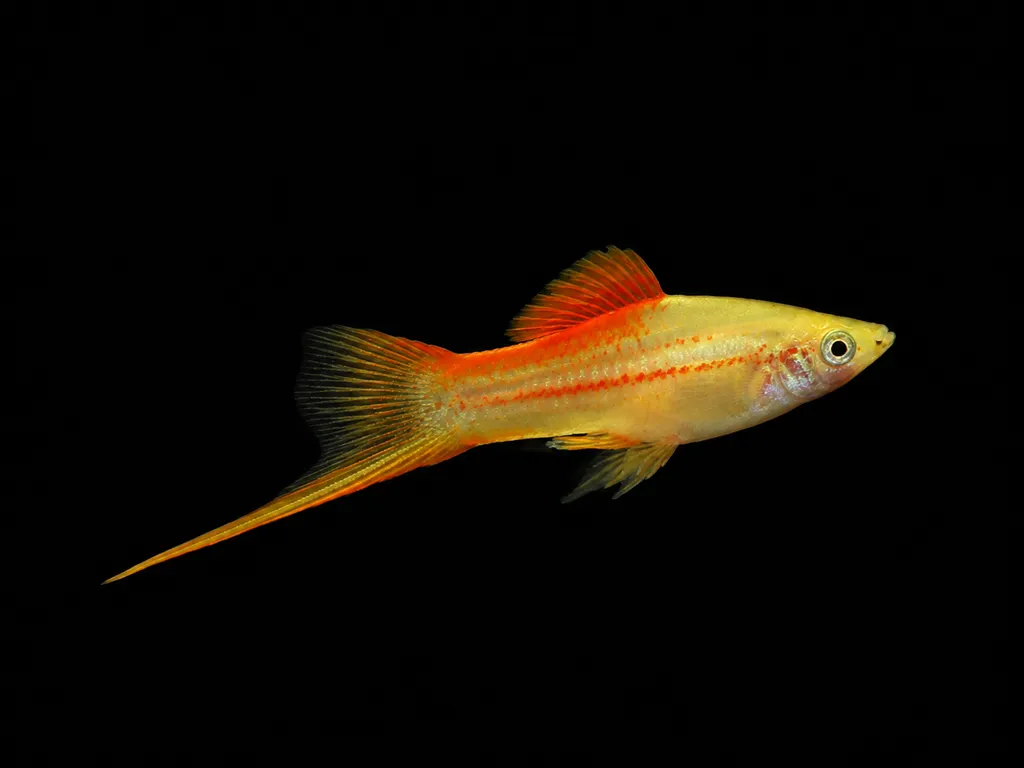
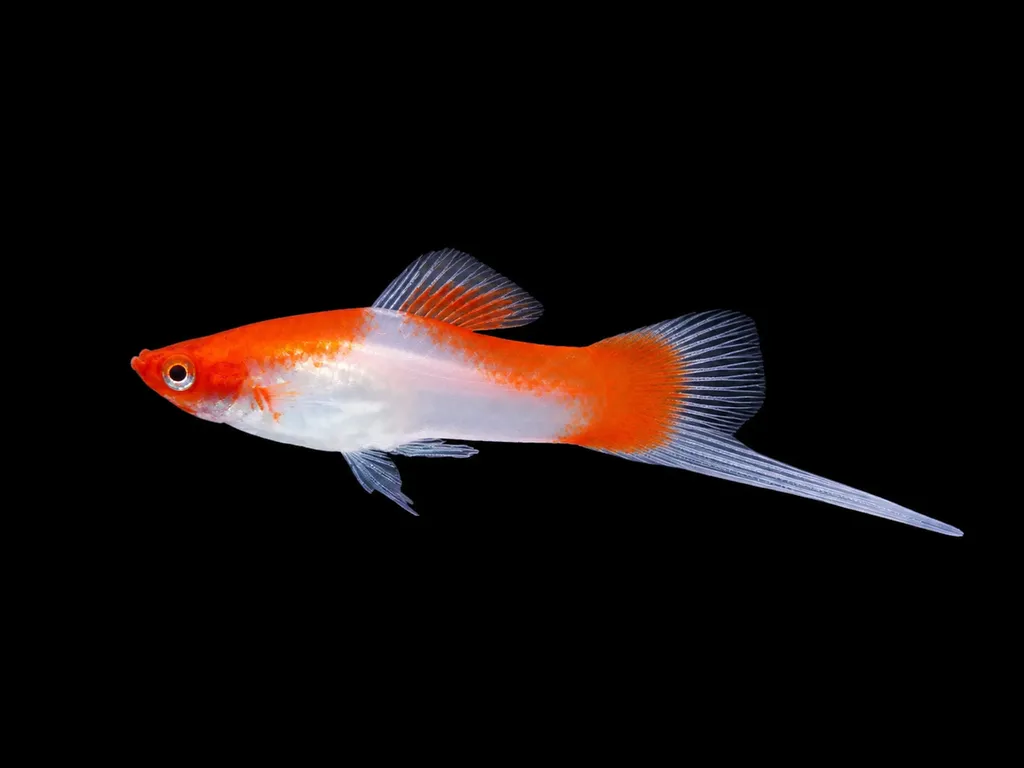
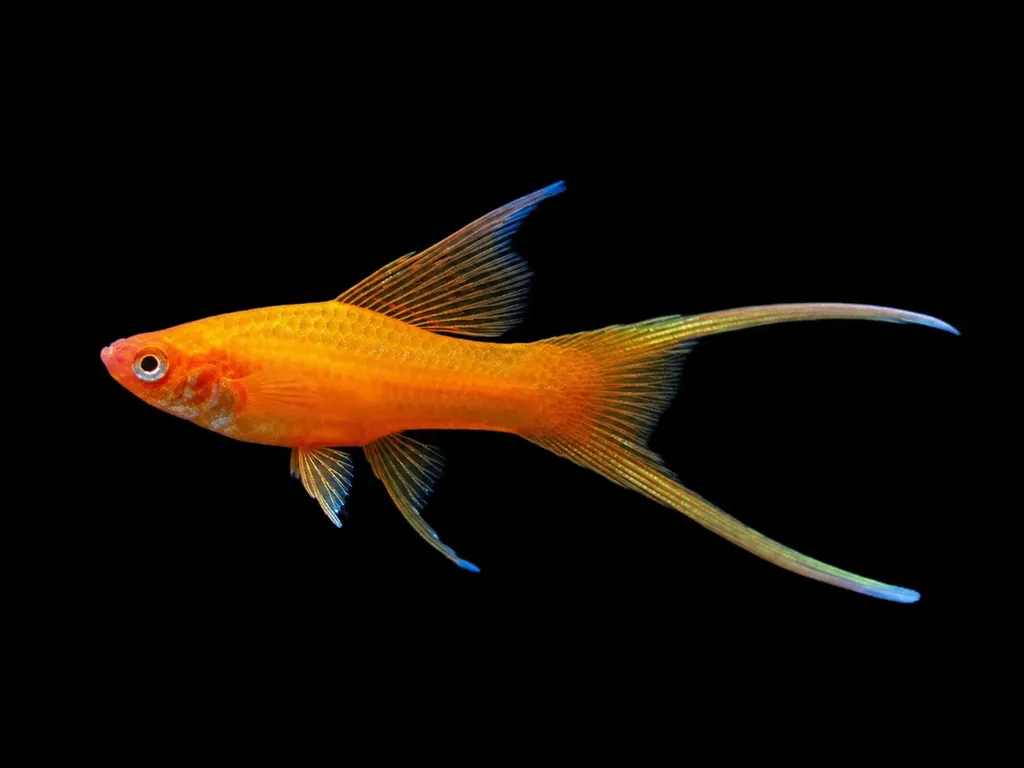
Orange over a yellow ground, deepest along the back and fading toward the belly. Sold as marigold and marigold wag by mainstream online retailers, and close enough to pineapple and sunset that shops sometimes swap the labels. Judge the fish rather than the name: look for an even gradient with no muddy gray wash over it. Grading is by eye, with no standard behind it.
In the wild
A farm color from the same yellow and red selection that produced the pineapple and sunset swordtails. No breeder, country or year is documented for the marigold line, so it is a hobby line of uncertain origin. As with every non-green swordtail color, the pigment came in through generations of swordtail and platy crossing. Nothing like it exists in the wild population.
Good to know
The gradient comes from two pigment cell types layered over one another: xanthophores carrying yellow and erythrophores carrying orange to red. Neither behaves as a clean single gene here, so intensity and the position of the color break vary within one spawn. Breeders hold the look by picking parents each generation rather than by fixing a gene.
Did you know
Fish cannot synthesize carotenoids and have to take them in from food, and much of the orange in these lines is carotenoid. That is one reason the same line can look brighter in one shop's tank than another's.
Weekly picks
Tank mates
Marigold swordtail is a peaceful, social species that keeps to the middle. These picks share a community profile with it, are safe together in both directions, and overlap on water type, temperature and pH.
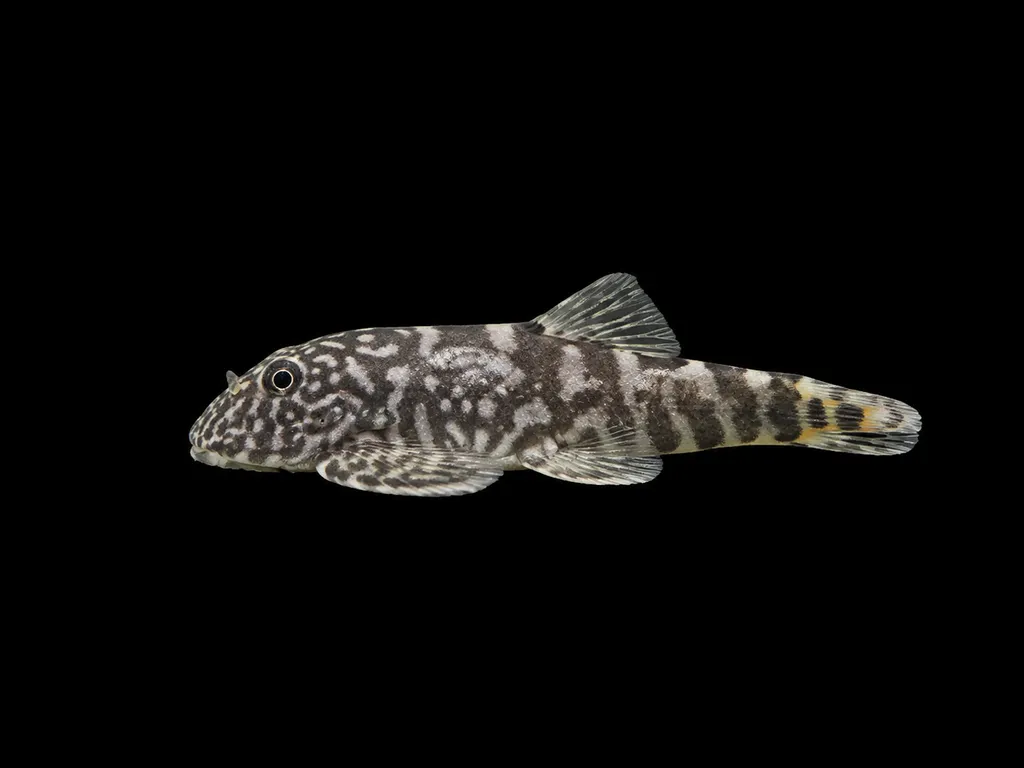
Ornate-tail Borneo sucker
Gastromyzon ornaticauda
Freshwater3.3 in (8.4 cm) · 24 gal (90 L)68–77°F (20–25°C)Siamese flying barb
Laubuka siamensis
Freshwater2.6 in (6.5 cm) · 24 gal (90 L)72–81°F (22–27°C)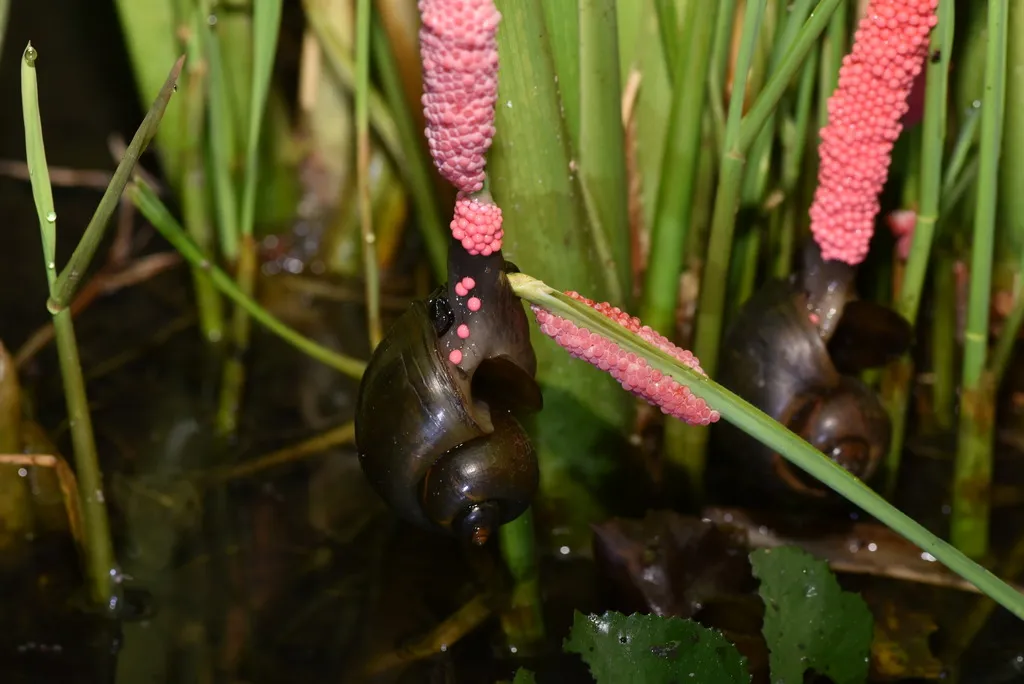
Apple snail
Pomacea canaliculata
Freshwater5.9 in (15 cm) · 21 gal (80 L)64–81°F (18–27°C)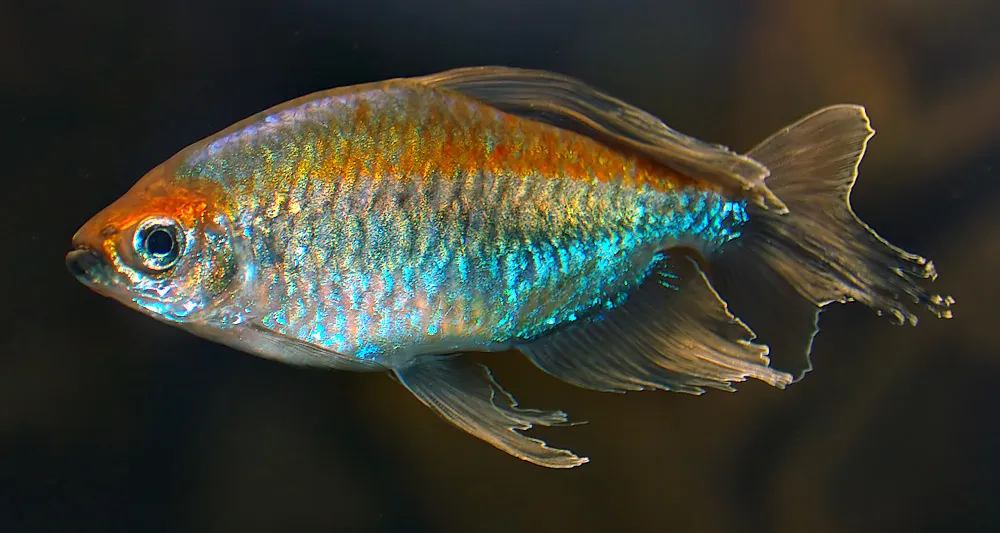
Congo tetra
Phenacogrammus interruptus
Freshwater3.1 in (8 cm) · 24 gal (90 L)73–82°F (23–28°C)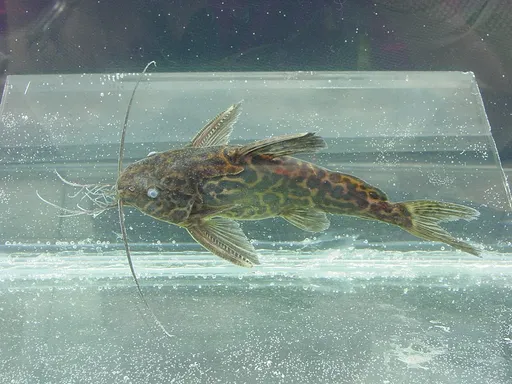
Vermiculated squeaker
Synodontis schoutedeni
Freshwater5.9 in (15 cm) · 24 gal (90 L)72–81°F (22–27°C)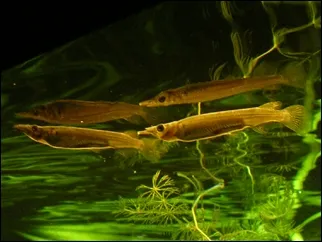
Wrestling halfbeak
Dermogenys pusilla
FreshwaterBrackish2.8 in (7 cm) · 25 gal (95 L)75–82°F (24–28°C)
Common questions
Is a Marigold swordtail a different species from the Green swordtail?
No. A Marigold swordtail is a variety of the Green swordtail, Xiphophorus hellerii, and it wants the same tank, water and food as the species.
What size tank does a Marigold swordtail need?
A Marigold swordtail needs at least 24 gal (90 L). It spends most of its time in the middle.
How big does a Marigold swordtail get?
An adult Marigold swordtail reaches about 5.9 in (15 cm).
Related species
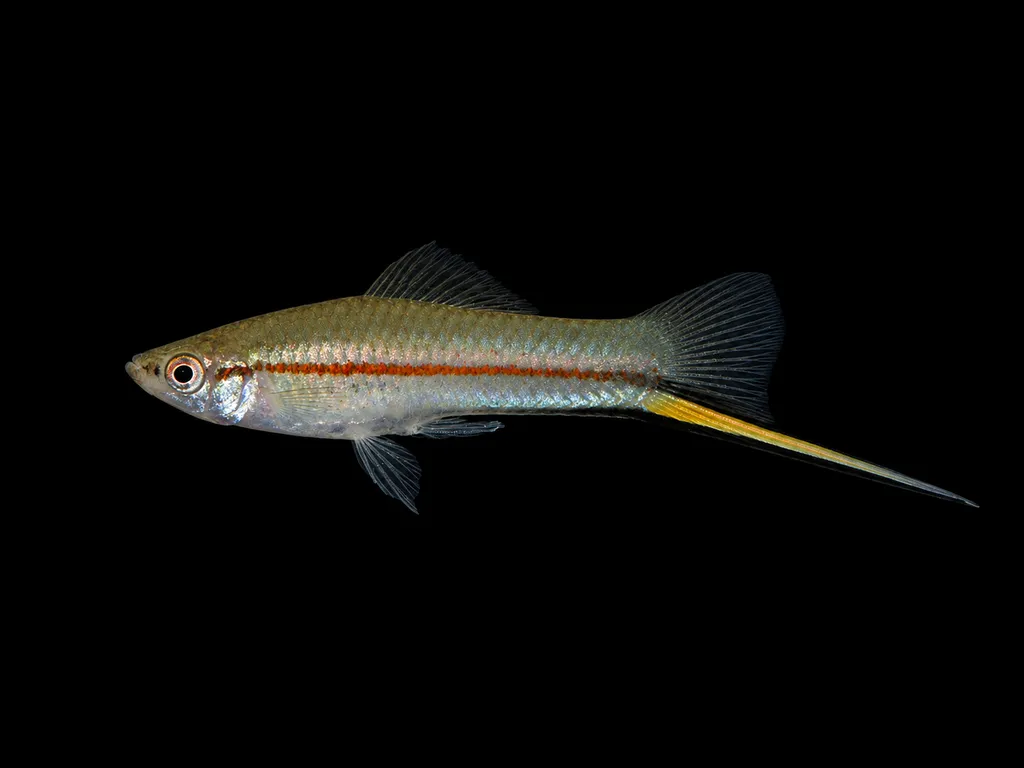 4.1 in (10.5 cm)29 gal (110 L)73–82°F (23–28°C)
Kallman's swordtail
Xiphophorus kallmani
4.1 in (10.5 cm) · 29 gal (110 L)
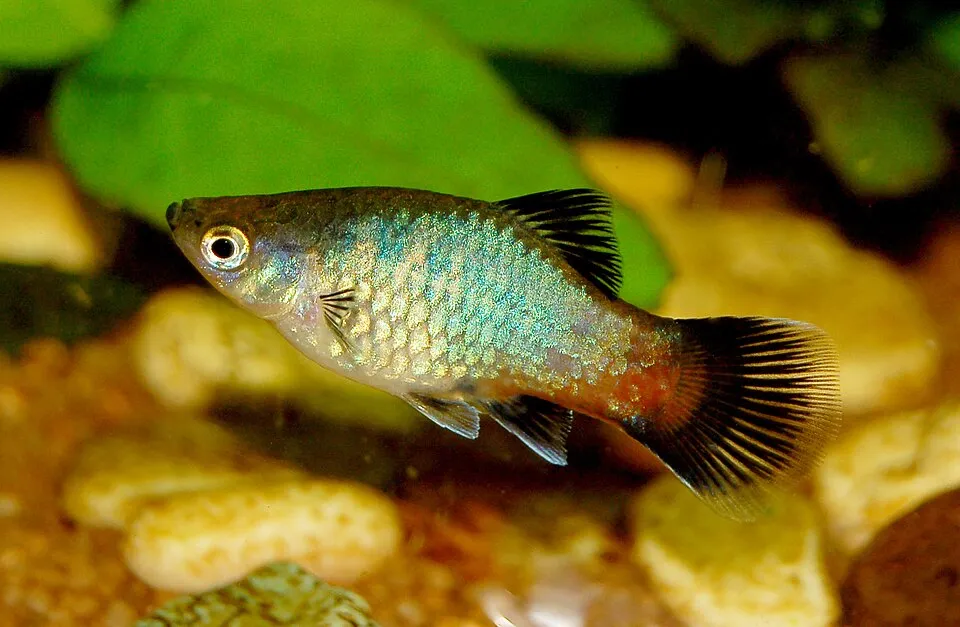
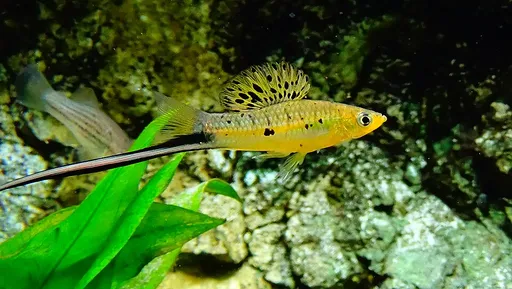 5.5 in (14 cm)32 gal (120 L)68–79°F (20–26°C)
Montezuma swordtail
Xiphophorus montezumae
5.5 in (14 cm) · 32 gal (120 L)
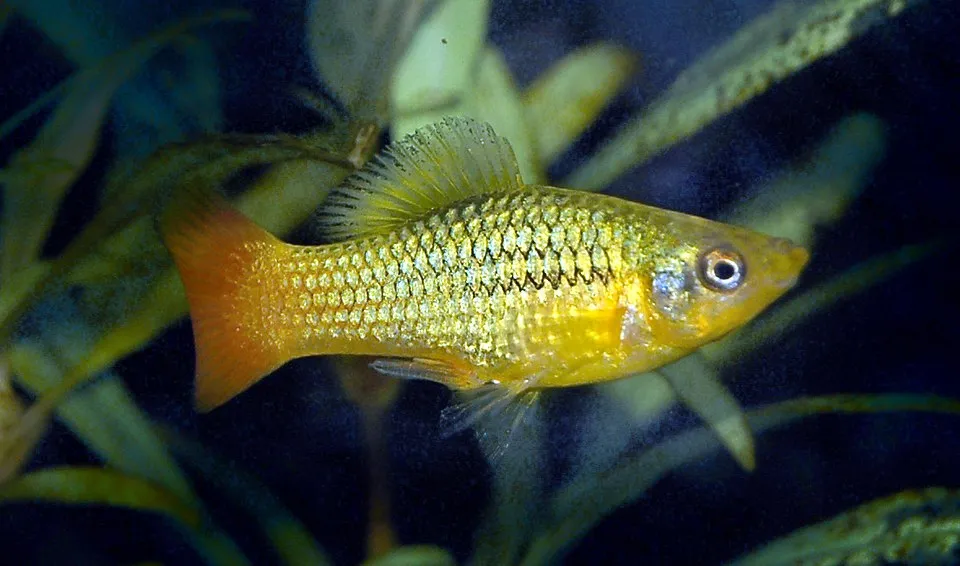
 2.8 in (7 cm)15 gal (55 L)68–79°F (20–26°C)
Southern platy
Xiphophorus maculatus
2.8 in (7 cm) · 15 gal (55 L)
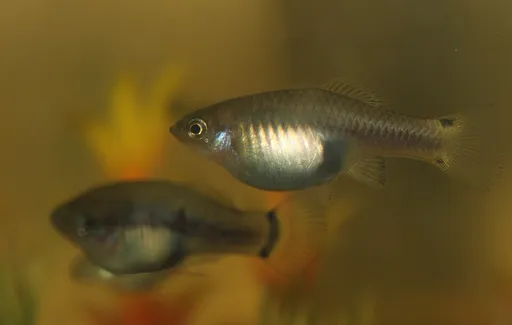
 2.8 in (7 cm)15 gal (55 L)68–79°F (20–26°C)
Variable platy
Xiphophorus variatus
2.8 in (7 cm) · 15 gal (55 L)
 2 in (5 cm)16 gal (60 L)68–79°F (20–26°C)
Spiketail platy
Xiphophorus xiphidium
2 in (5 cm) · 16 gal (60 L)
 3.5 in (9 cm)29 gal (110 L)68–79°F (20–26°C)
Northern mountain swordtail
Xiphophorus nezahualcoyotl
3.5 in (9 cm) · 29 gal (110 L)