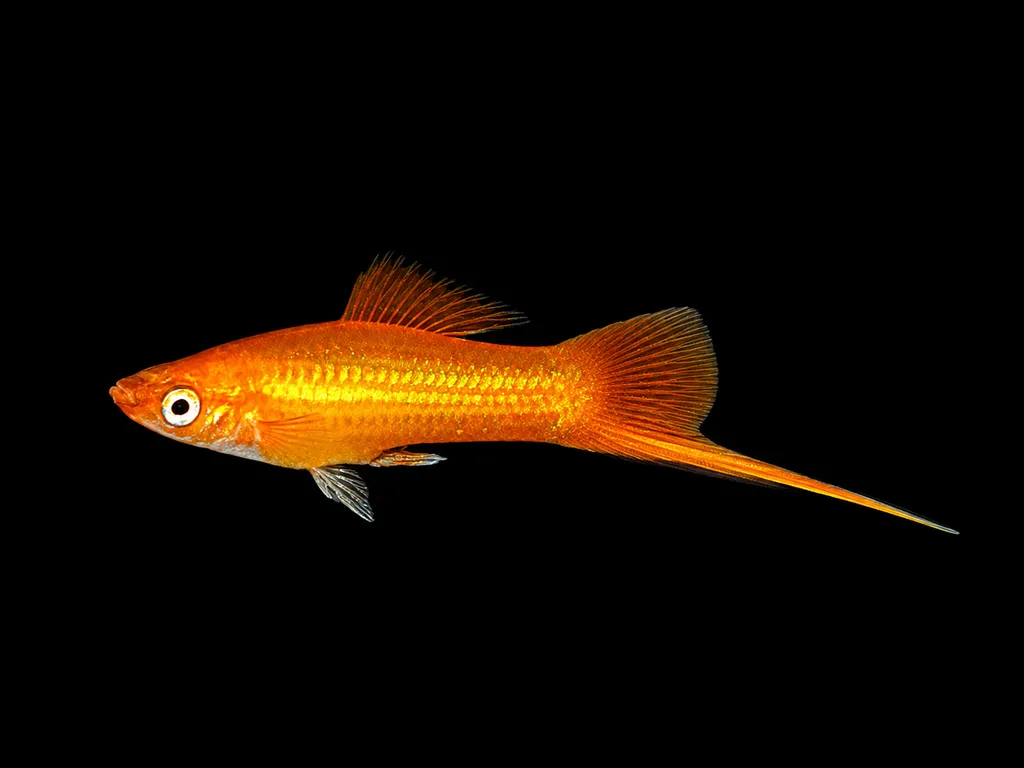
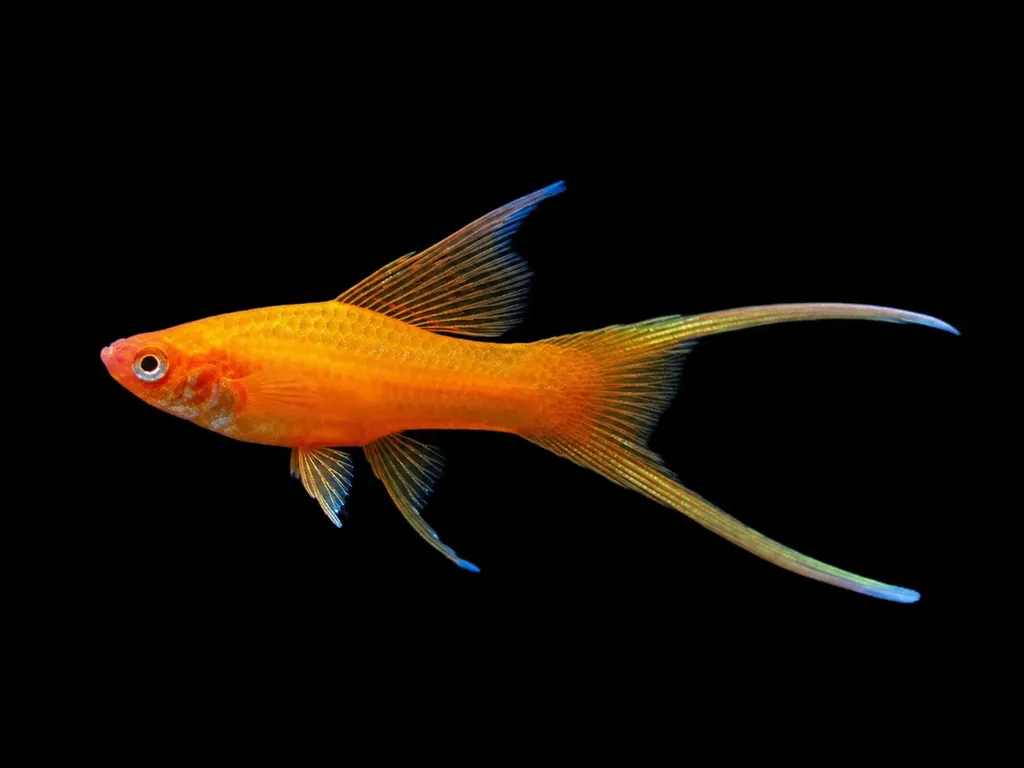
Variety of Green swordtail
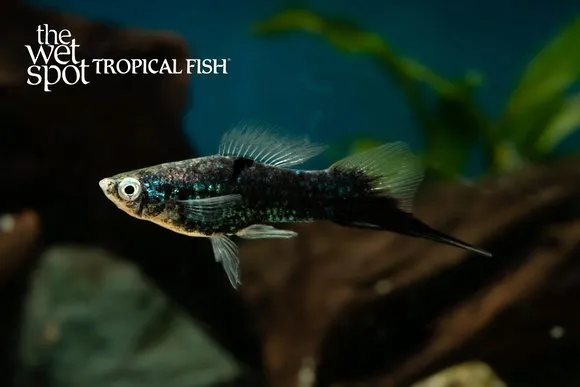
Black swordtail
Xiphophorus hellerii
One of 6 varieties of Xiphophorus hellerii · See all varieties →
FreshwaterFish
Varieties · Xiphophorus hellerii
See all 6 →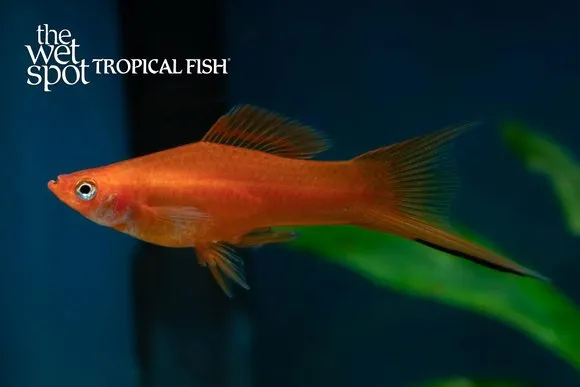
Care at a glance
- Temperature
- 68–82°F
- 20–28°C
- pH
- 7.0–8.0
- Adult size
- 5.9 in
- 15 cm
- Minimum tank
- 24 gal
- 90 L
- Temperament
- Peaceful
- Social behavior
- Social
- Swim level
- Middle
- Difficulty
- Beginner
- Breeding
- Easy
- Rarity
- Very common
- Family
- Poeciliidae
Overview
A dense black fish that usually throws a green sheen in good light. Coverage varies between suppliers: some are solid to the fin edges, others keep a paler belly or a red sword. Worth checking black fish over as they grow, since raised or spreading dark lumps are a known problem in melanistic Xiphophorus. Reject any fish already showing one.
In the wild
Black is a farm color built by crossing swordtails with black-patterned platies. The heavy melanin patterning in domestic Xiphophorus traces to macromelanophore genes carried by the southern platy, Xiphophorus maculatus. No breeder is credited with the black swordtail, so it reads as a farm line of uncertain origin. Wild green swordtails carry no black body pigment like it.
Good to know
Macromelanophores are oversized black pigment cells, and in pure platies their growth is held in check by a repressor carried on a separate linkage group. Crossing platy with swordtail can break that control, letting the Xmrk oncogene run unchecked. That cross, the Gordon-Kosswig cross, has served as a laboratory melanoma model since work in the 1920s and 1930s. Melanistic hybrid lines are the ones that develop black skin tumors.
Did you know
The black swordtail in a shop tank is a close relative of a laboratory cancer model. Melanoma in platy and swordtail hybrids has been studied for about a century. The Xiphophorus Genetic Stock Center at Texas State University still maintains pedigreed lines for that research.
Weekly picks
Tank mates
Black swordtail is a peaceful, social species that keeps to the middle. These picks share a community profile with it, are safe together in both directions, and overlap on water type, temperature and pH.
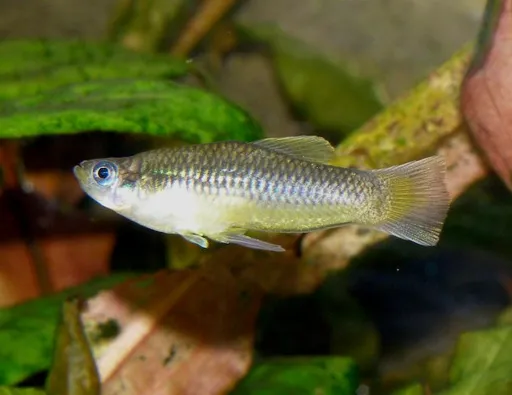
Blue-eyed livebearer
Priapella intermedia
Freshwater2.8 in (7 cm) · 24 gal (90 L)72–82°F (22–28°C)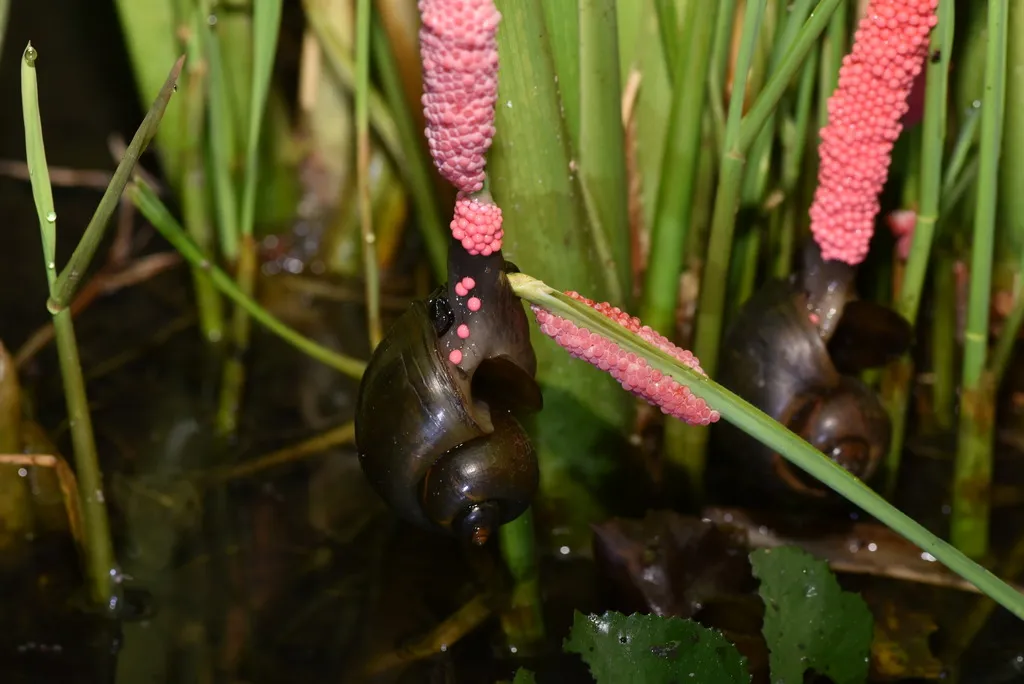
Apple snail
Pomacea canaliculata
Freshwater5.9 in (15 cm) · 21 gal (80 L)64–81°F (18–27°C)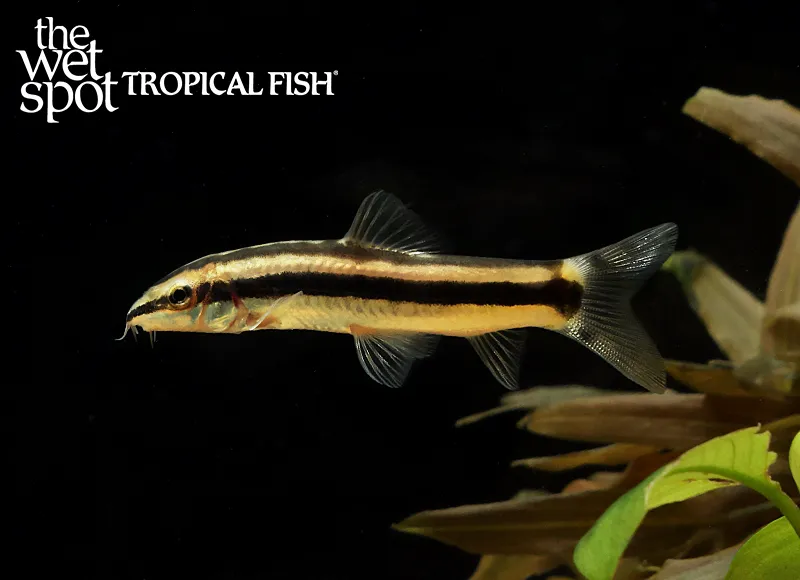
Black-lined loach
Ambastaia nigrolineata
Freshwater3.1 in (8 cm) · 24 gal (90 L)72–81°F (22–27°C)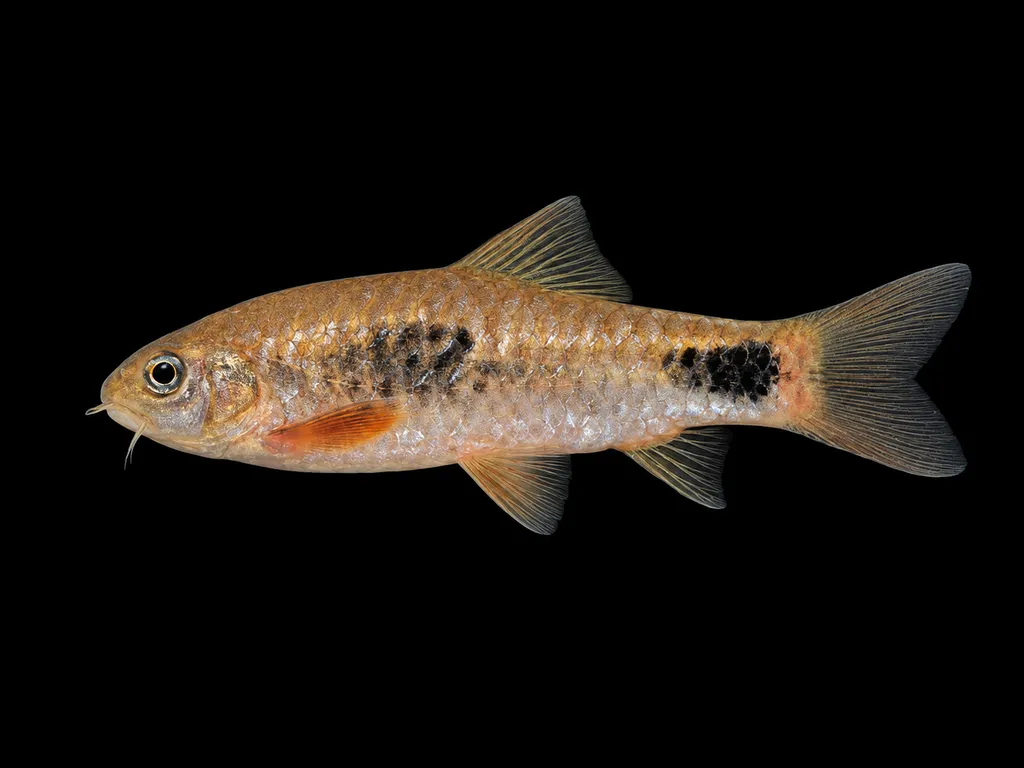
Cameroon barb
Enteromius camptacanthus
Freshwater3.9 in (10 cm) · 24 gal (90 L)72–81°F (22–27°C)Siamese flying barb
Laubuka siamensis
Freshwater2.6 in (6.5 cm) · 24 gal (90 L)72–81°F (22–27°C)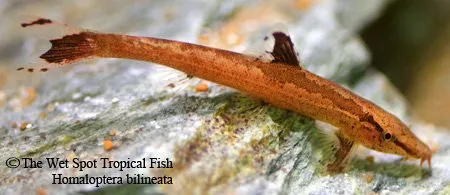
Twin-stripe lizard loach
Homaloptera bilineata
Freshwater3.1 in (8 cm) · 24 gal (90 L)68–79°F (20–26°C)
Common questions
Is a Black swordtail a different species from the Green swordtail?
No. A Black swordtail is a variety of the Green swordtail, Xiphophorus hellerii, and it wants the same tank, water and food as the species.
What size tank does a Black swordtail need?
A Black swordtail needs at least 24 gal (90 L). It spends most of its time in the middle.
How big does a Black swordtail get?
An adult Black swordtail reaches about 5.9 in (15 cm).
Related species
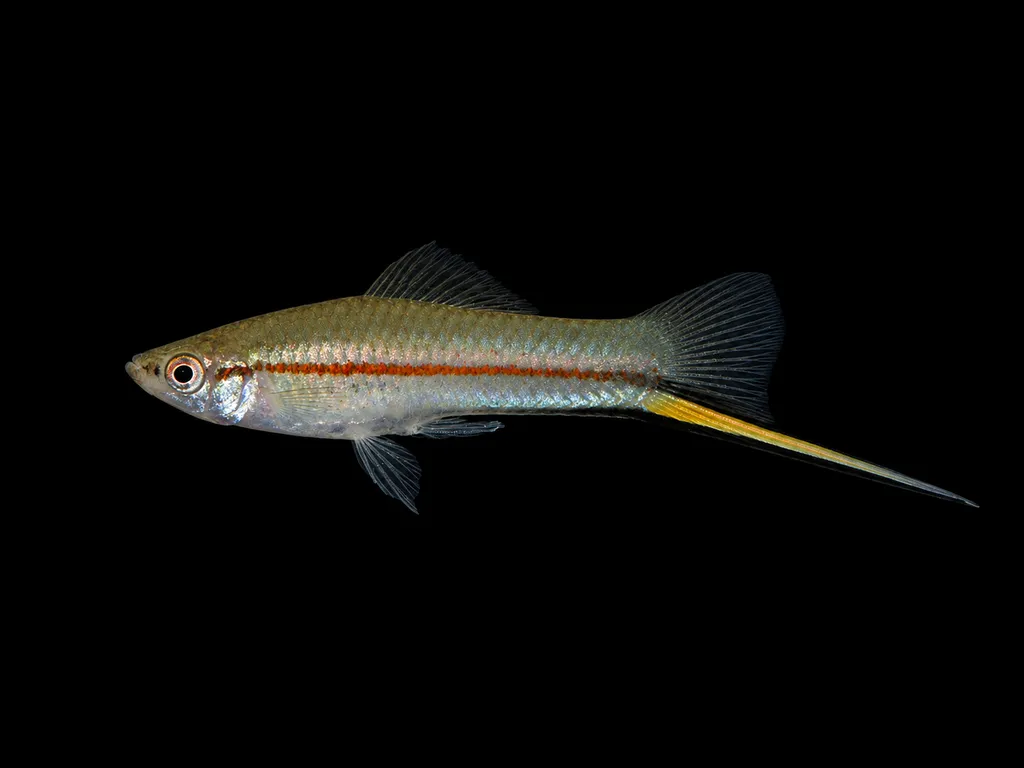 4.1 in (10.5 cm)29 gal (110 L)73–82°F (23–28°C)
Kallman's swordtail
Xiphophorus kallmani
4.1 in (10.5 cm) · 29 gal (110 L)
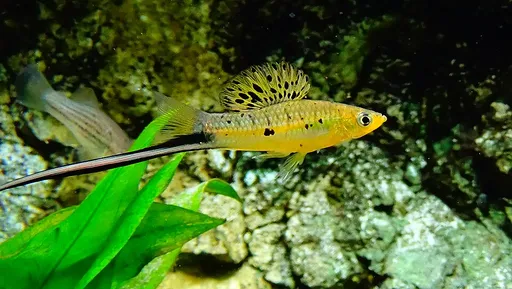 5.5 in (14 cm)32 gal (120 L)68–79°F (20–26°C)
Montezuma swordtail
Xiphophorus montezumae
5.5 in (14 cm) · 32 gal (120 L)
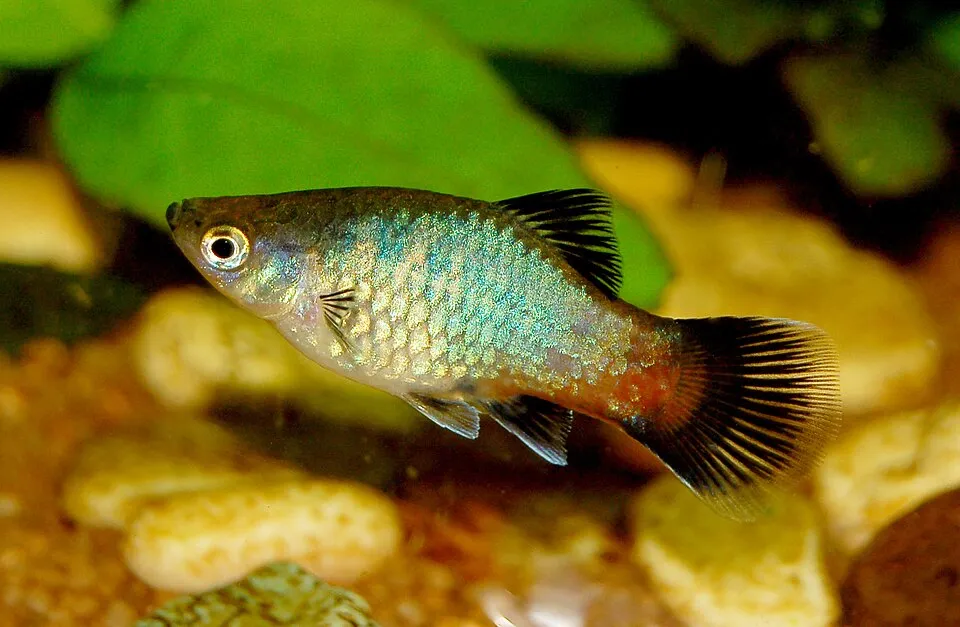 2.8 in (7 cm)15 gal (55 L)68–79°F (20–26°C)
Southern platy
Xiphophorus maculatus
2.8 in (7 cm) · 15 gal (55 L)
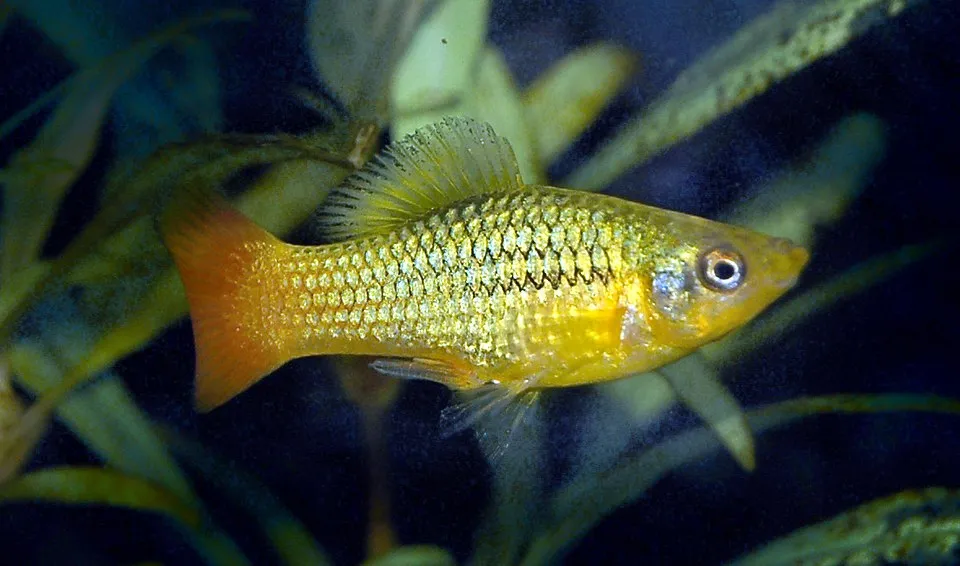 2.8 in (7 cm)15 gal (55 L)68–79°F (20–26°C)
Variable platy
Xiphophorus variatus
2.8 in (7 cm) · 15 gal (55 L)
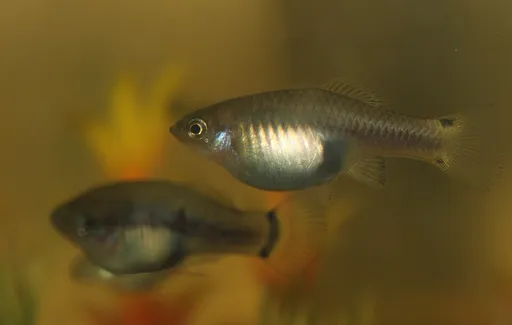 2 in (5 cm)16 gal (60 L)68–79°F (20–26°C)
Spiketail platy
Xiphophorus xiphidium
2 in (5 cm) · 16 gal (60 L)
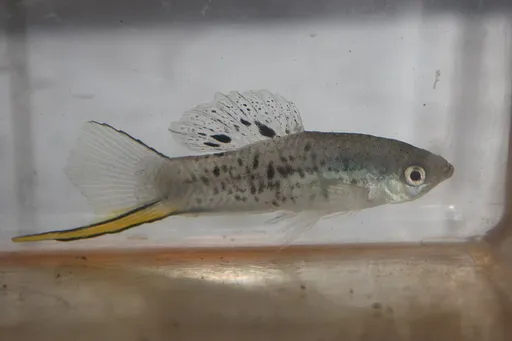 3.5 in (9 cm)29 gal (110 L)68–79°F (20–26°C)
Northern mountain swordtail
Xiphophorus nezahualcoyotl
3.5 in (9 cm) · 29 gal (110 L)