Variety of Green swordtail
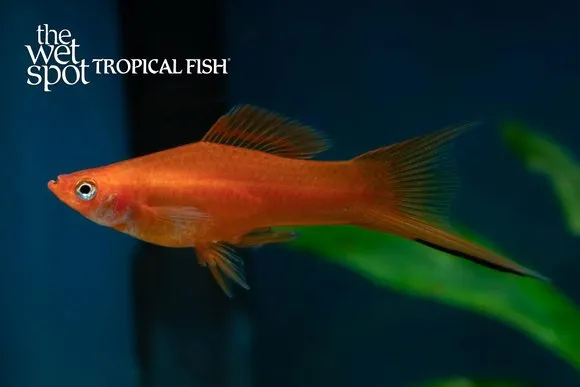
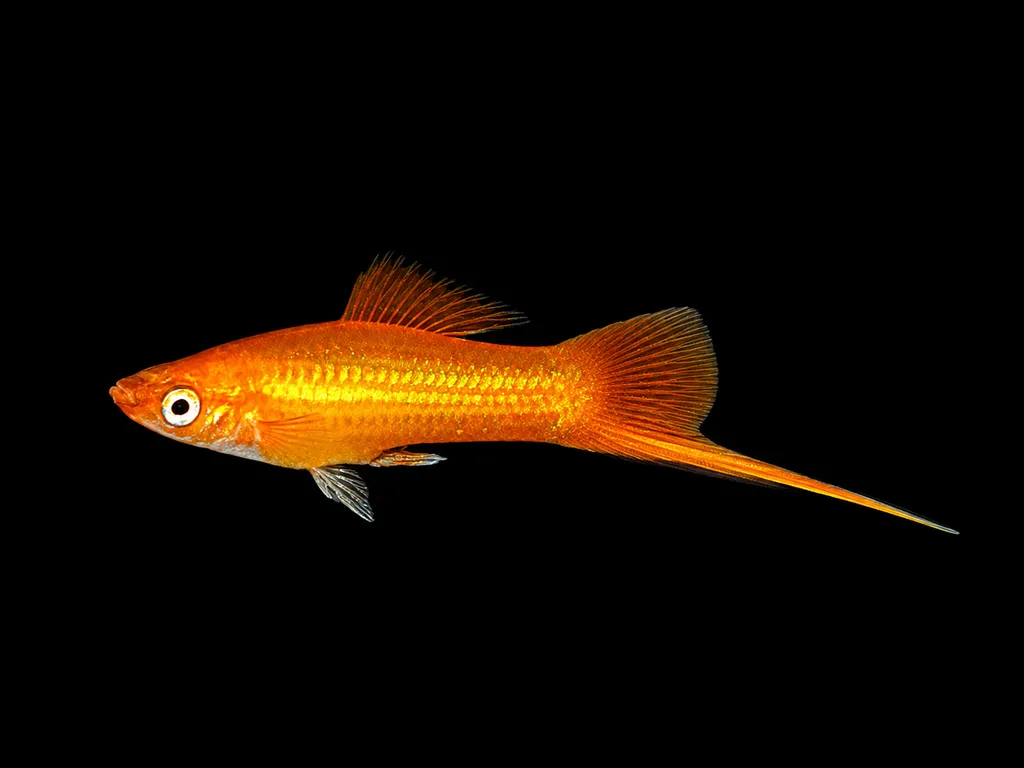
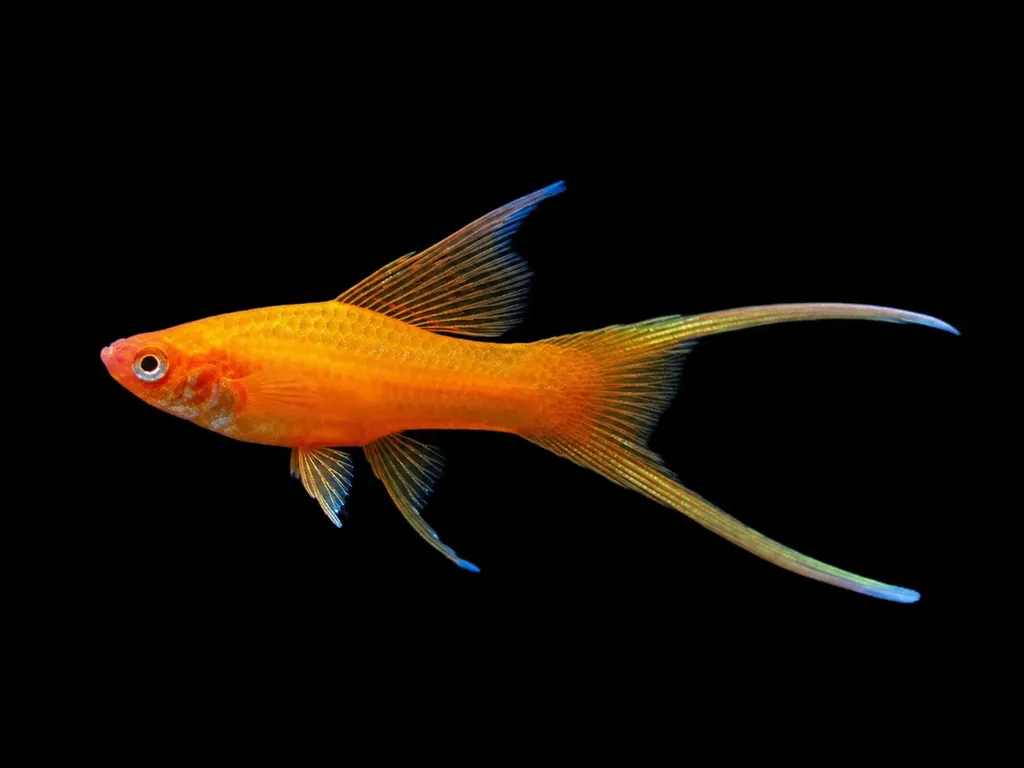
Red swordtail
Xiphophorus hellerii
One of 6 varieties of Xiphophorus hellerii · See all varieties →
FreshwaterFish
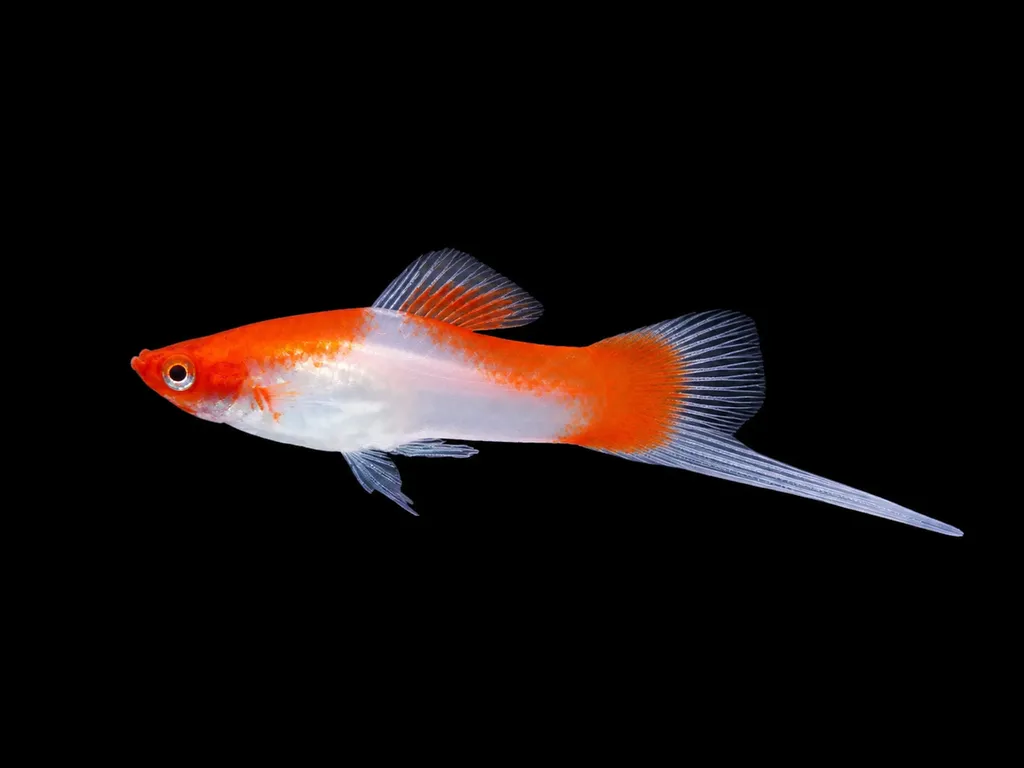
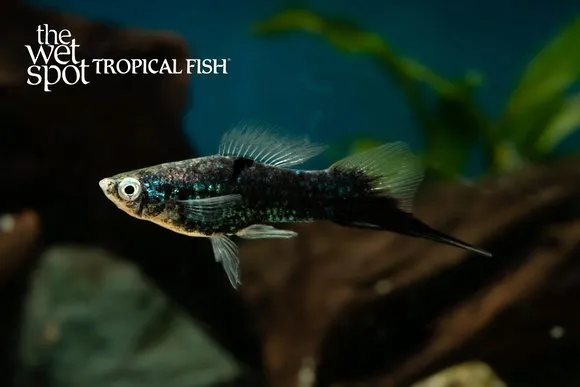
Varieties · Xiphophorus hellerii
See all 6 →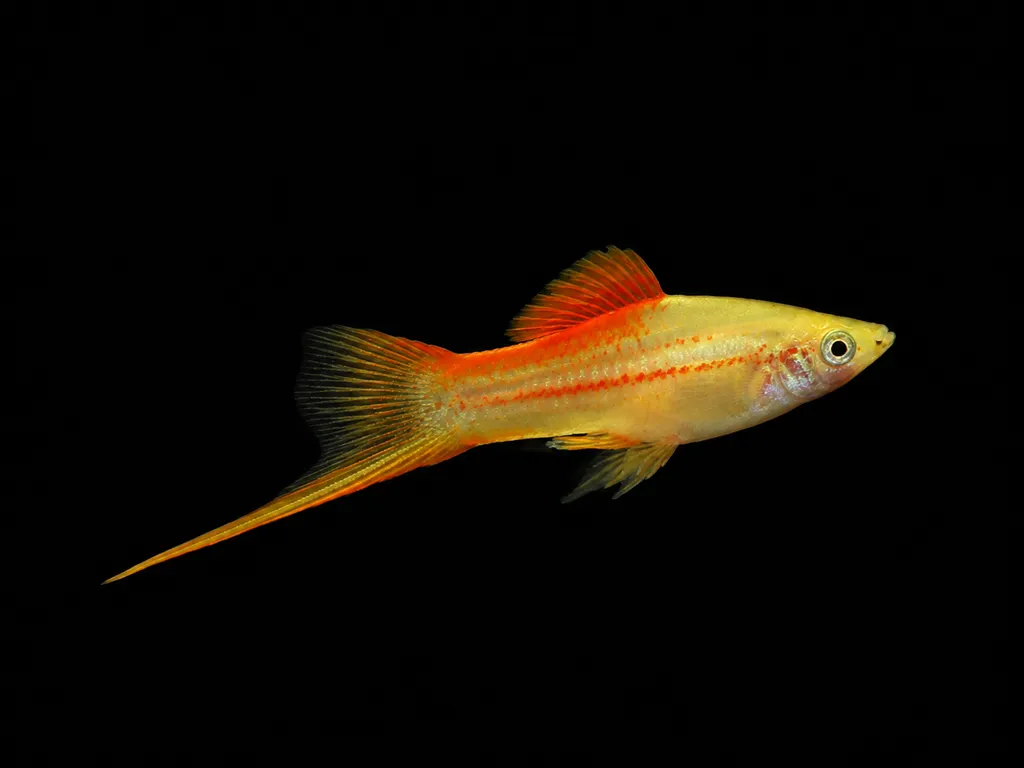
Care at a glance
- Temperature
- 68–82°F
- 20–28°C
- pH
- 7.0–8.0
- Adult size
- 5.9 in
- 15 cm
- Minimum tank
- 24 gal
- 90 L
- Temperament
- Peaceful
- Social behavior
- Social
- Swim level
- Middle
- Difficulty
- Beginner
- Breeding
- Easy
- Rarity
- Very common
- Family
- Poeciliidae
Overview
The default shop swordtail, sold plain red or as a wagtail with black fins. Color quality varies between farms: some fish are an even deep red, others patchy orange with dark flecking. Pick individuals if the shop will let you, since a tank of red swordtails is rarely uniform. Males show a sword and a narrow rod-shaped anal fin, so sexing adults is easy.
In the wild
Red is a farm color, not a wild one. The USGS nonindigenous species database lists the red swordtail as a hybrid of Xiphophorus hellerii and the platy Xiphophorus maculatus, and notes that the two are often crossbred in captivity. Hobby accounts trace the red back to red platy stock, and farms have worked that cross for roughly a century. No fish this color swims in the wild streams the species comes from.
Good to know
Red sits in erythrophores, the red pigment cells, and domestic red lines stack far more of them than a wild green fish carries. Because the color arrived by hybridizing with platies, shop red swordtails are hybrids rather than pure Xiphophorus hellerii. The color breeds mostly true, though off-colored culls turn up in most spawns. Wagtail black on the fins came out of those same platy crosses, and hobby genetics accounts put two of the three alleles behind it in Xiphophorus maculatus.
Did you know
A red male's sword is shorter than a wild green male's. That is a side effect of the platy blood in the line. Platies have no sword at all, and the crossing that brought in the red also trimmed it.
Weekly picks
Tank mates
Red swordtail is a peaceful, social species that keeps to the middle. These picks share a community profile with it, are safe together in both directions, and overlap on water type, temperature and pH.
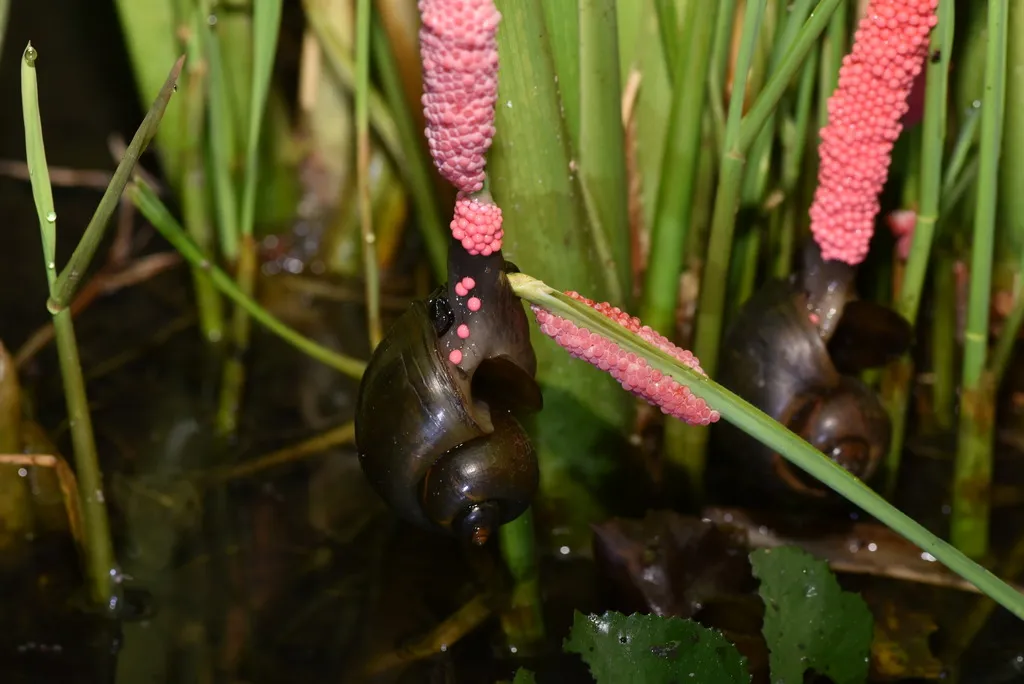
Apple snail
Pomacea canaliculata
Freshwater5.9 in (15 cm) · 21 gal (80 L)64–81°F (18–27°C)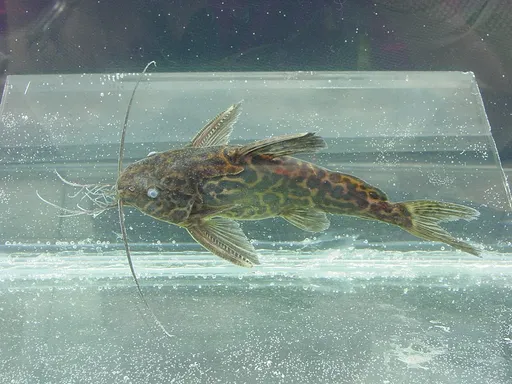
Vermiculated squeaker
Synodontis schoutedeni
Freshwater5.9 in (15 cm) · 24 gal (90 L)72–81°F (22–27°C)Siamese flying barb
Laubuka siamensis
Freshwater2.6 in (6.5 cm) · 24 gal (90 L)72–81°F (22–27°C)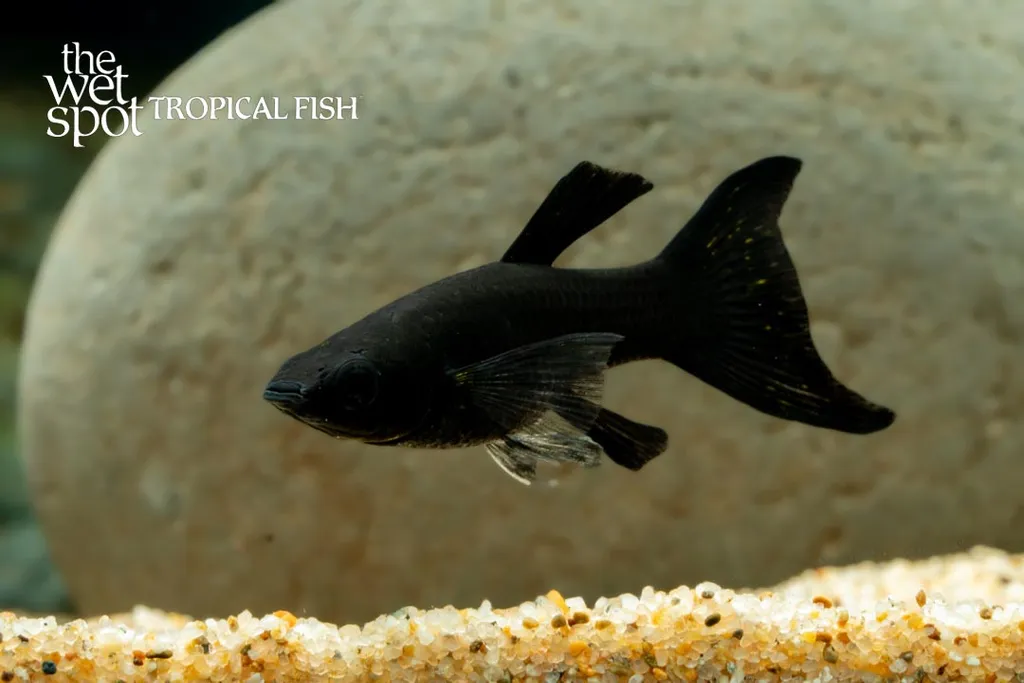
Black molly
Poecilia sphenops
FreshwaterBrackish4.7 in (12 cm) · 24 gal (90 L)70–82°F (21–28°C)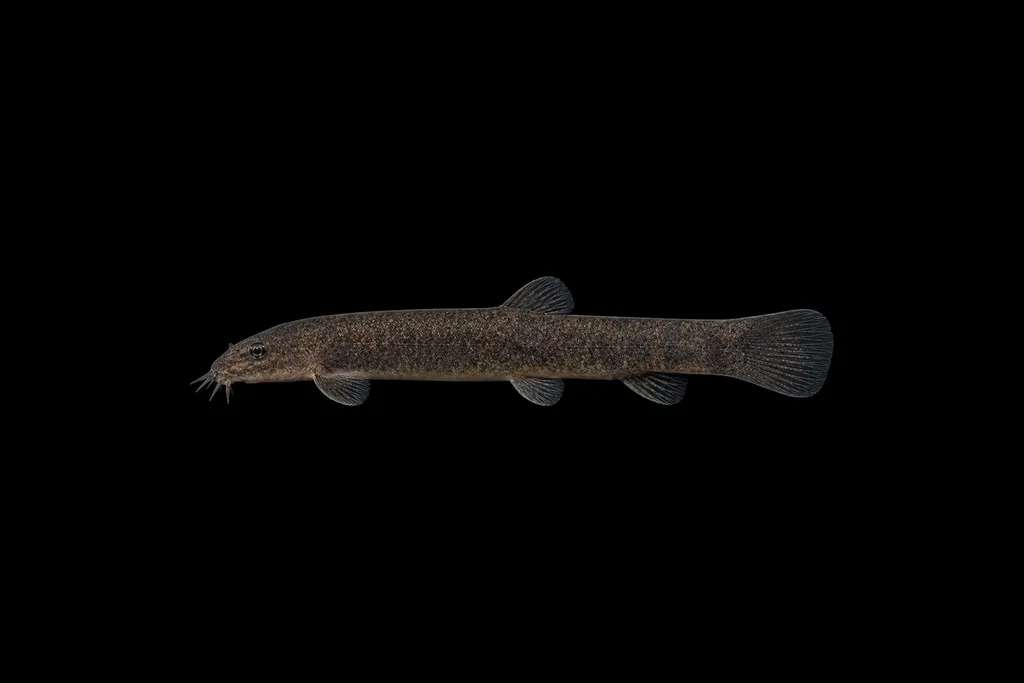
Charcoal loach
Schistura carbonaria
Freshwater3.4 in (8.6 cm) · 24 gal (90 L)70–79°F (21–26°C)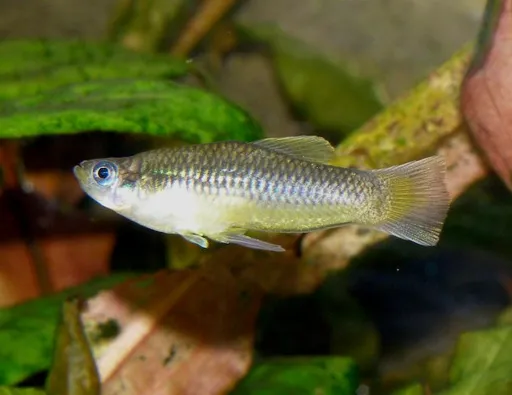
Blue-eyed livebearer
Priapella intermedia
Freshwater2.8 in (7 cm) · 24 gal (90 L)72–82°F (22–28°C)
Common questions
Is a Red swordtail a different species from the Green swordtail?
No. A Red swordtail is a variety of the Green swordtail, Xiphophorus hellerii, and it wants the same tank, water and food as the species.
What size tank does a Red swordtail need?
A Red swordtail needs at least 24 gal (90 L). It spends most of its time in the middle.
How big does a Red swordtail get?
An adult Red swordtail reaches about 5.9 in (15 cm).
Related species
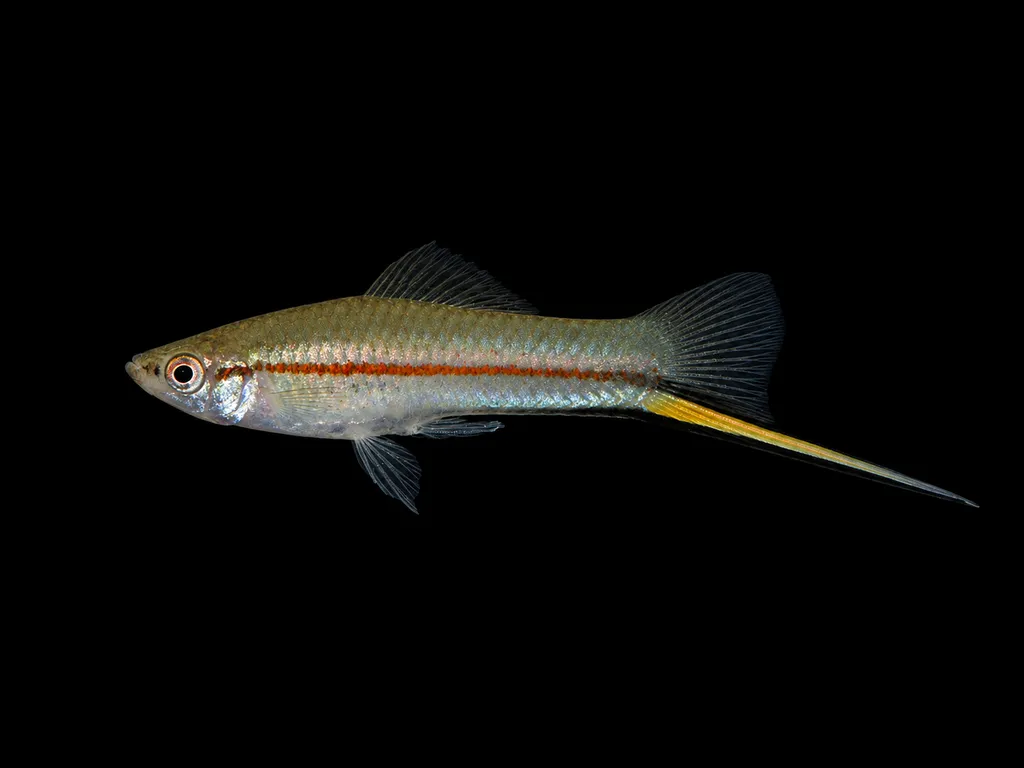 4.1 in (10.5 cm)29 gal (110 L)73–82°F (23–28°C)
Kallman's swordtail
Xiphophorus kallmani
4.1 in (10.5 cm) · 29 gal (110 L)
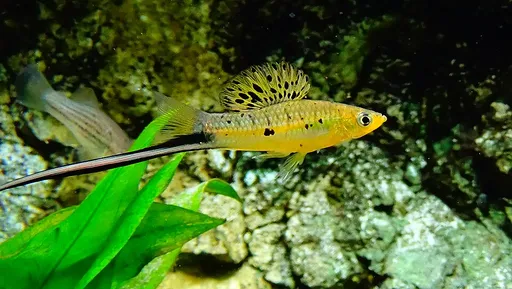 5.5 in (14 cm)32 gal (120 L)68–79°F (20–26°C)
Montezuma swordtail
Xiphophorus montezumae
5.5 in (14 cm) · 32 gal (120 L)
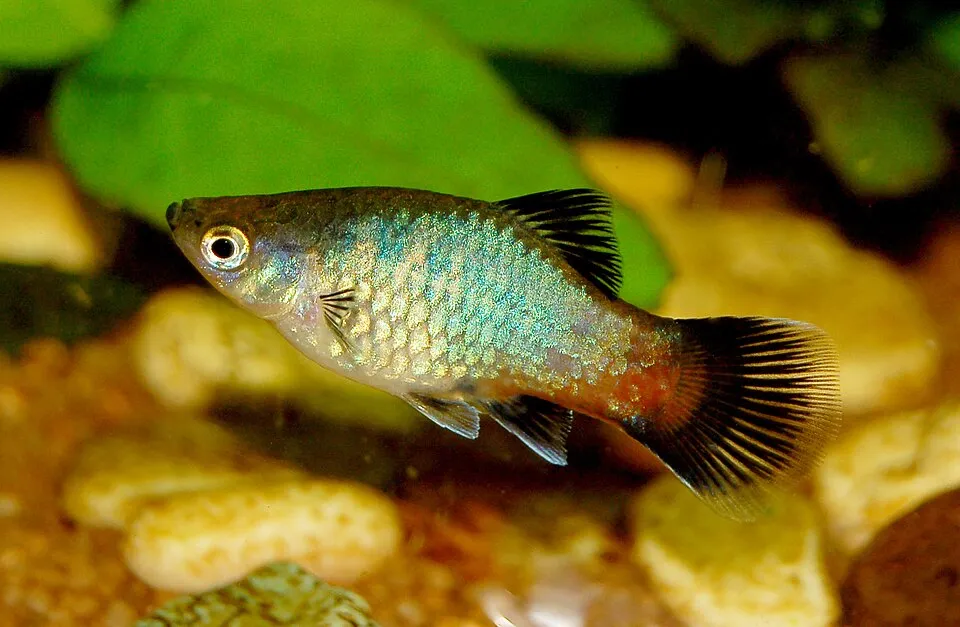 2.8 in (7 cm)15 gal (55 L)68–79°F (20–26°C)
Southern platy
Xiphophorus maculatus
2.8 in (7 cm) · 15 gal (55 L)
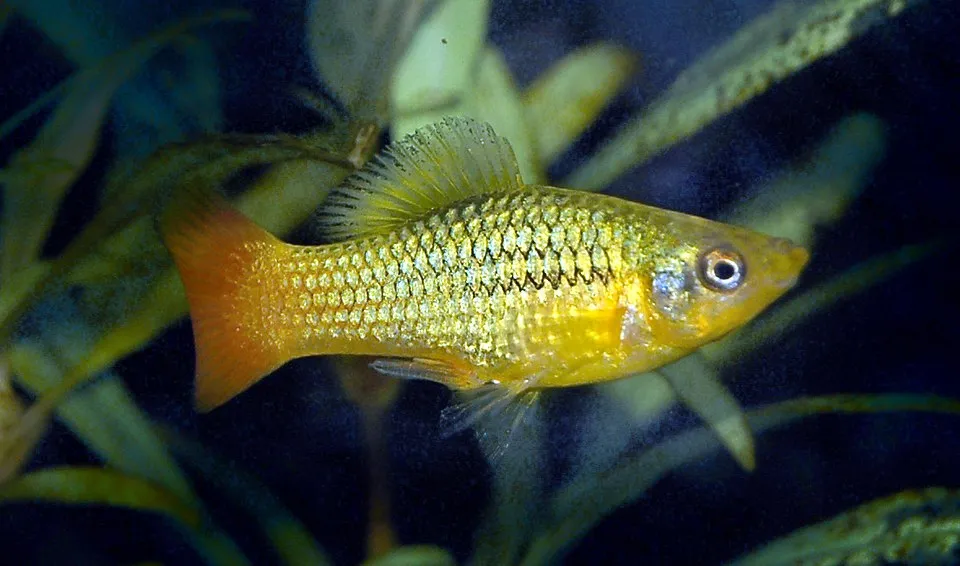 2.8 in (7 cm)15 gal (55 L)68–79°F (20–26°C)
Variable platy
Xiphophorus variatus
2.8 in (7 cm) · 15 gal (55 L)
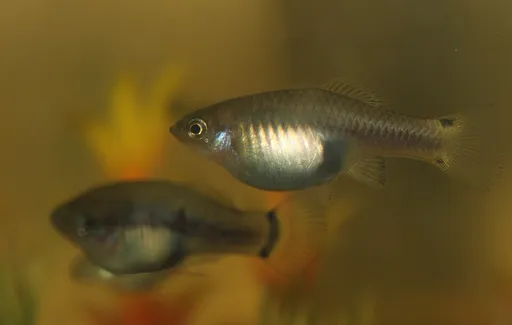 2 in (5 cm)16 gal (60 L)68–79°F (20–26°C)
Spiketail platy
Xiphophorus xiphidium
2 in (5 cm) · 16 gal (60 L)
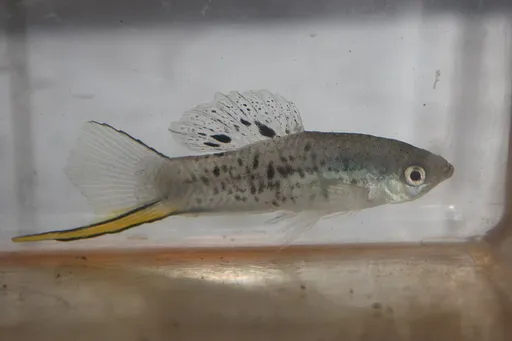 3.5 in (9 cm)29 gal (110 L)68–79°F (20–26°C)
Northern mountain swordtail
Xiphophorus nezahualcoyotl
3.5 in (9 cm) · 29 gal (110 L)