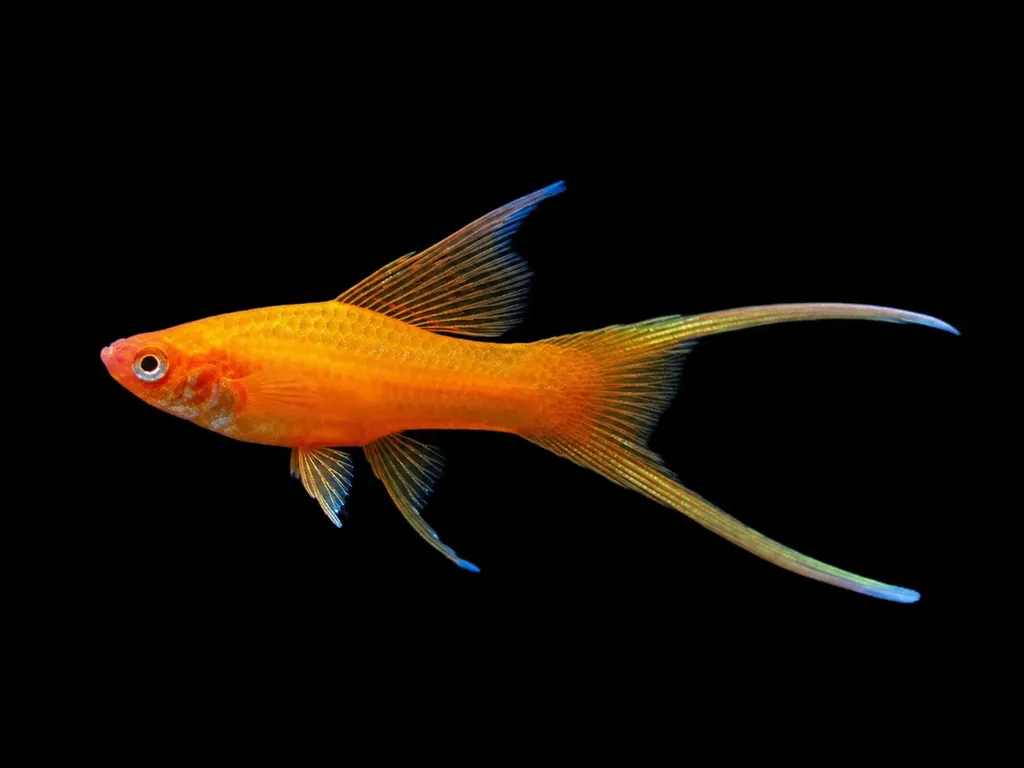
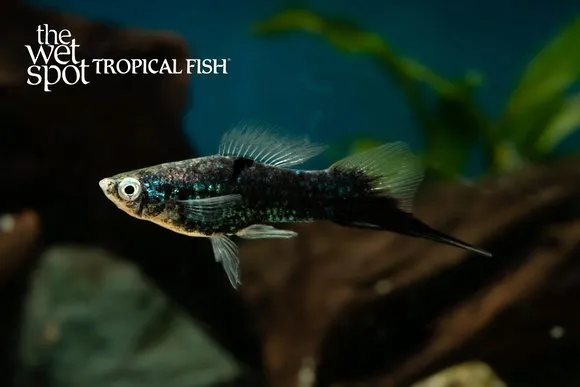
Variety of Green swordtail
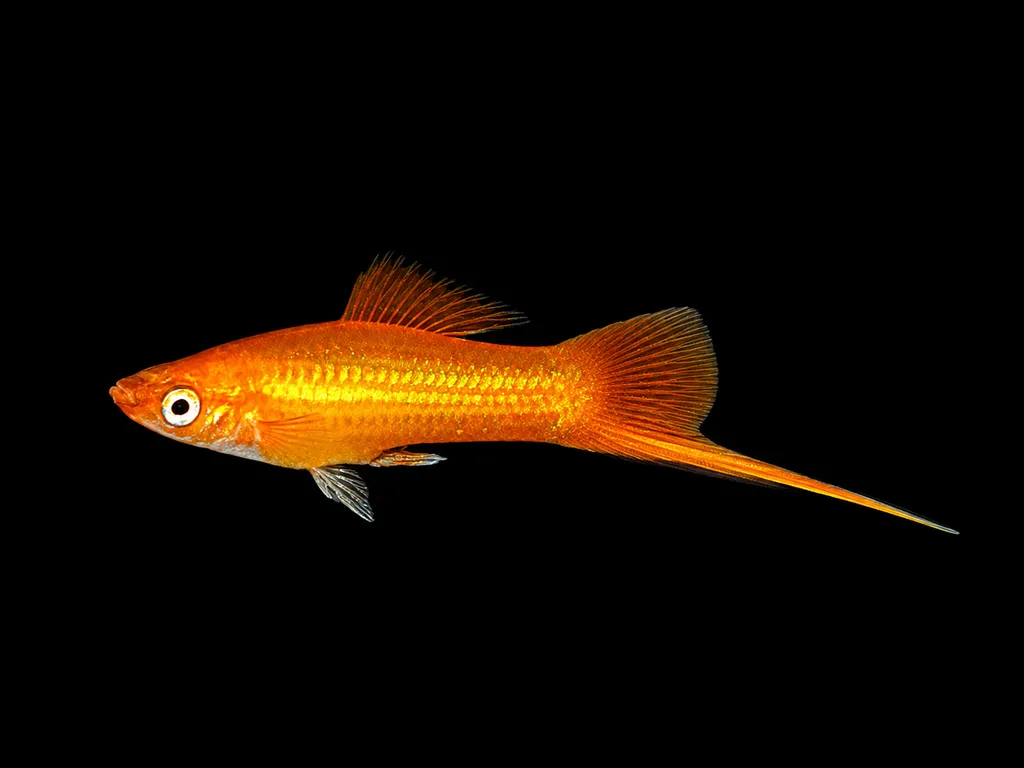
Lyretail swordtail
Xiphophorus hellerii
One of 6 varieties of Xiphophorus hellerii · See all varieties →
Also known as Red Lyretail Swordtail
FreshwaterFish
Varieties · Xiphophorus hellerii
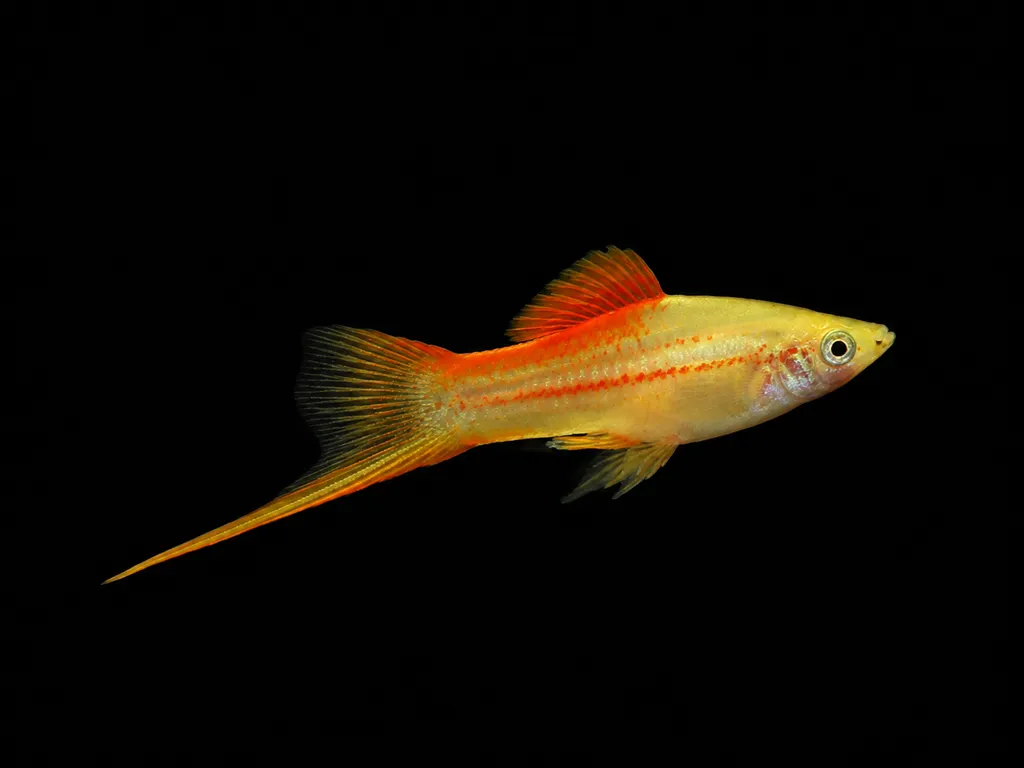
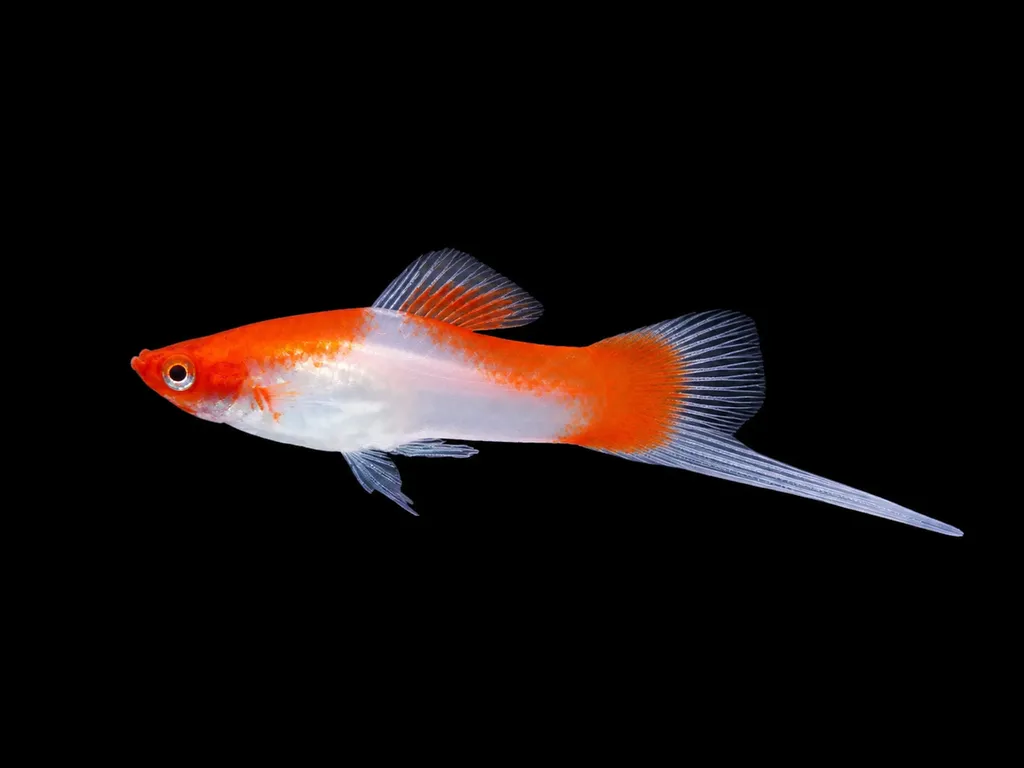
See all 6 →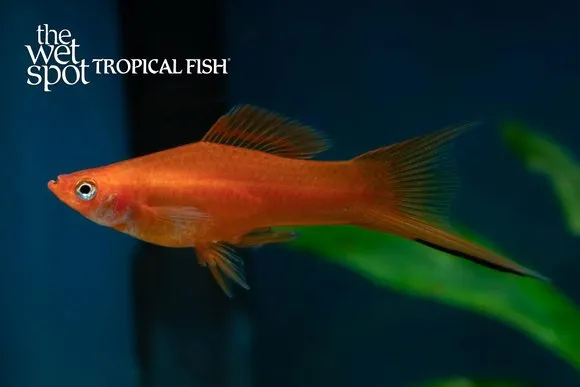
Care at a glance
- Temperature
- 68–82°F
- 20–28°C
- pH
- 7.0–8.0
- Adult size
- 5.9 in
- 15 cm
- Minimum tank
- 24 gal
- 90 L
- Temperament
- Peaceful
- Social behavior
- Social
- Swim level
- Middle
- Difficulty
- Beginner
- Breeding
- Easy
- Rarity
- Very common
- Family
- Poeciliidae
Overview
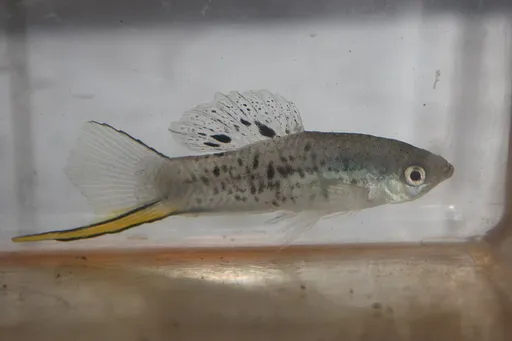
Every fin is extended, the sword included, splitting and trailing into the lyre shape. Most stock is sold on a red body as the red lyretail. The finnage catches on rough decor and drags in strong current, so keep the layout smooth and the flow gentle. Lyretail males often cannot breed unaided, which changes how a group behaves.
In the wild
A fin mutation maintained by aquarium breeders, not a wild form. Hobby genetics references treat lyretail as a simple autosomal dominant in Xiphophorus. No source consulted names the breeder, country or decade behind it, so call it a hobby line of uncertain origin. Lyretail platies and lyretail variatus are sold as well.
Good to know
Lyretail is a simple autosomal dominant, so one copy from either parent gives the finnage. The gene that stretches the fins also lengthens the gonopodium, the male's rod-shaped anal fin. Most lyretail males cannot inseminate a female with an over-long gonopodium, so lines are held by crossing a normal-finned male to a lyretail female. Males that do turn up with a normal gonopodium are called king lyretails.
Did you know
Because lyretail males usually cannot breed naturally, hatcheries keep the line going through normal-finned males or by artificial insemination. There is a published procedural guide for artificially inseminating lyretail swordtails, written in 2003 for aquaculture producers.
Weekly picks
Tank mates
Lyretail swordtail is a peaceful, social species that keeps to the middle. These picks share a community profile with it, are safe together in both directions, and overlap on water type, temperature and pH.
Siamese flying barb
Laubuka siamensis
Freshwater2.6 in (6.5 cm) · 24 gal (90 L)72–81°F (22–27°C)
Apple snail
Pomacea canaliculata
Freshwater5.9 in (15 cm) · 21 gal (80 L)64–81°F (18–27°C)
Guntea loach
Lepidocephalichthys guntea
Freshwater4.7 in (12 cm) · 24 gal (90 L)64–82°F (18–28°C)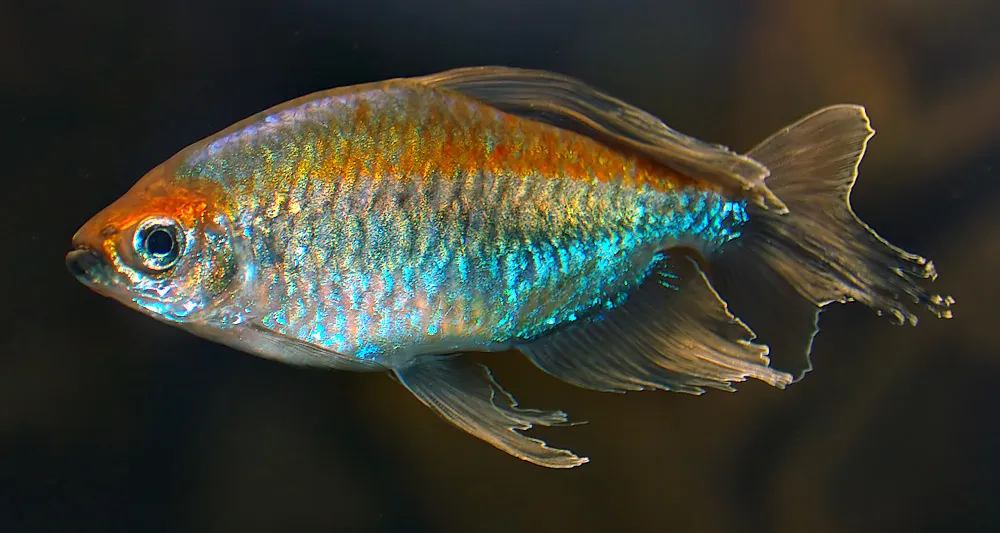
Congo tetra
Phenacogrammus interruptus
Freshwater3.1 in (8 cm) · 24 gal (90 L)73–82°F (23–28°C)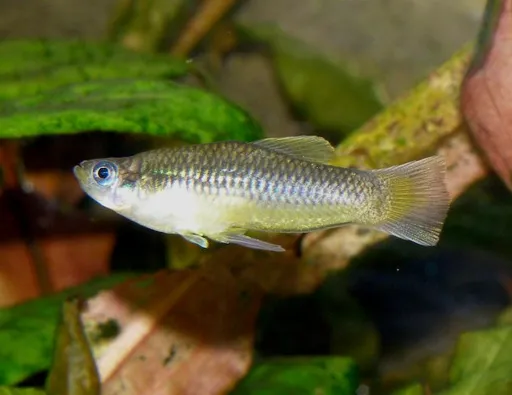
Blue-eyed livebearer
Priapella intermedia
Freshwater2.8 in (7 cm) · 24 gal (90 L)72–82°F (22–28°C)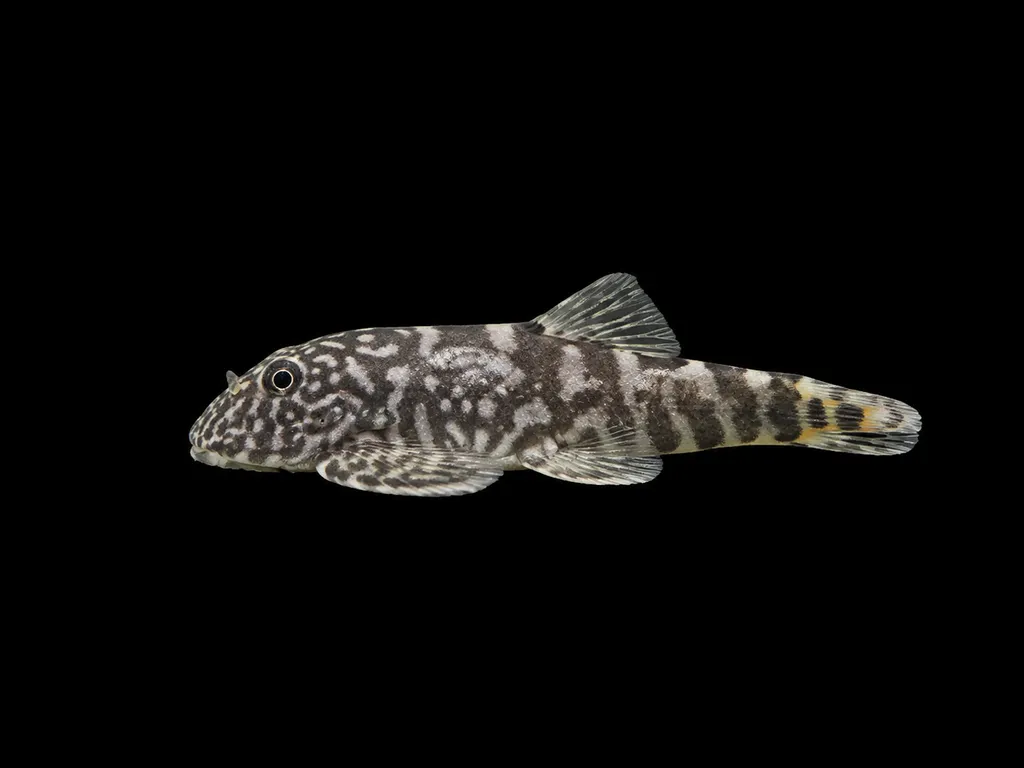
Ornate-tail Borneo sucker
Gastromyzon ornaticauda
Freshwater3.3 in (8.4 cm) · 24 gal (90 L)68–77°F (20–25°C)
Common questions
Is a Lyretail swordtail a different species from the Green swordtail?
No. A Lyretail swordtail is a variety of the Green swordtail, Xiphophorus hellerii, and it wants the same tank, water and food as the species.
What size tank does a Lyretail swordtail need?
A Lyretail swordtail needs at least 24 gal (90 L). It spends most of its time in the middle.
How big does a Lyretail swordtail get?
An adult Lyretail swordtail reaches about 5.9 in (15 cm).
Related species
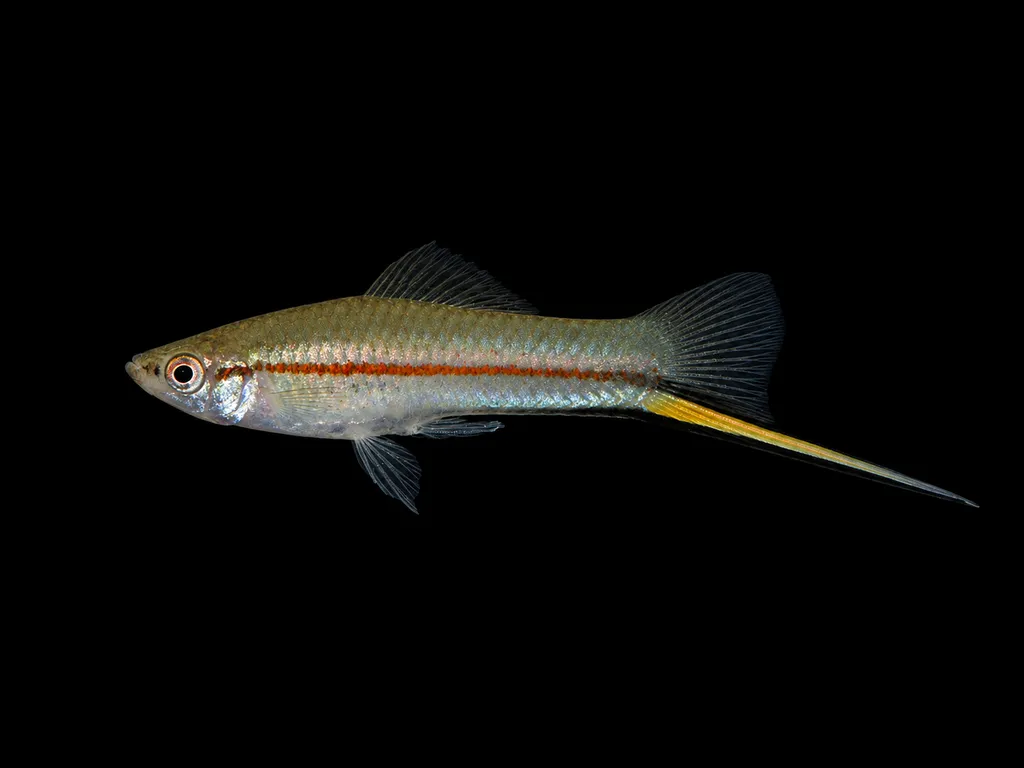 4.1 in (10.5 cm)29 gal (110 L)73–82°F (23–28°C)
Kallman's swordtail
Xiphophorus kallmani
4.1 in (10.5 cm) · 29 gal (110 L)
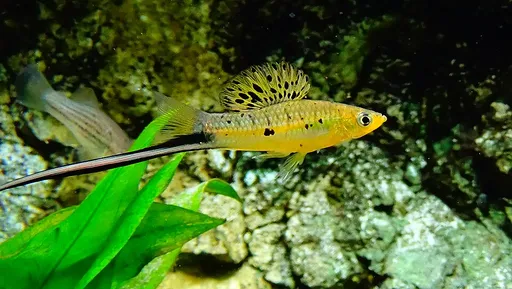 5.5 in (14 cm)32 gal (120 L)68–79°F (20–26°C)
Montezuma swordtail
Xiphophorus montezumae
5.5 in (14 cm) · 32 gal (120 L)
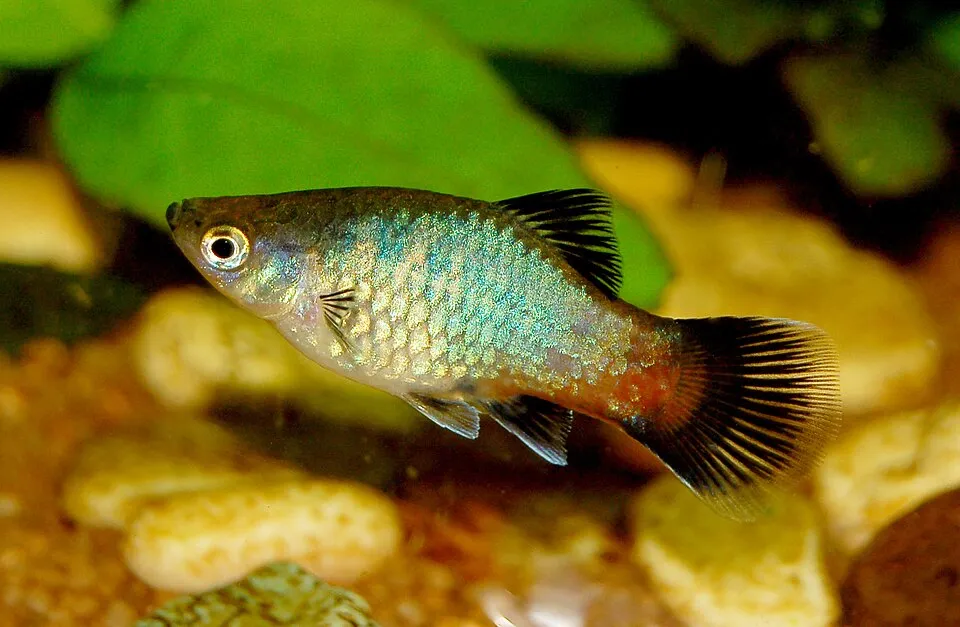 2.8 in (7 cm)15 gal (55 L)68–79°F (20–26°C)
Southern platy
Xiphophorus maculatus
2.8 in (7 cm) · 15 gal (55 L)
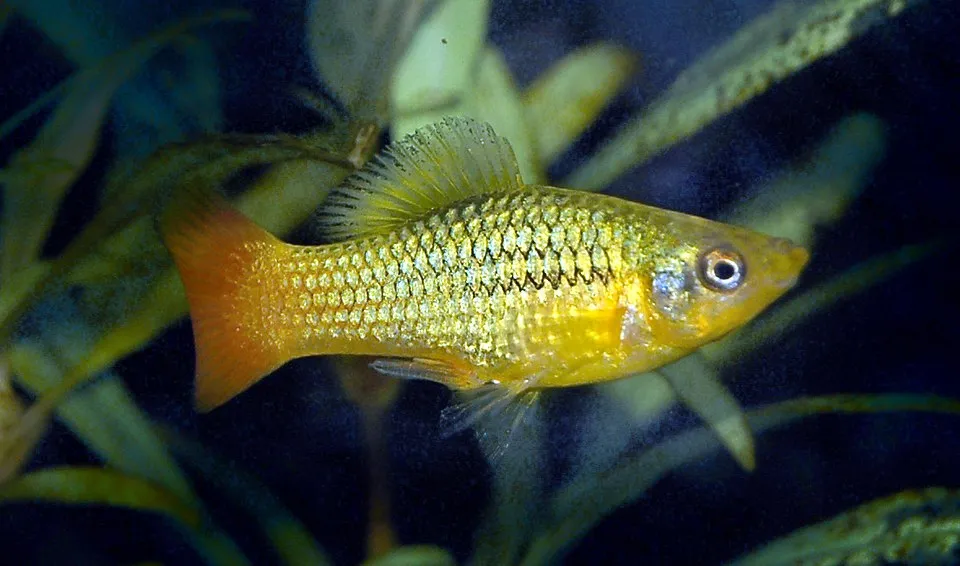 2.8 in (7 cm)15 gal (55 L)68–79°F (20–26°C)
Variable platy
Xiphophorus variatus
2.8 in (7 cm) · 15 gal (55 L)
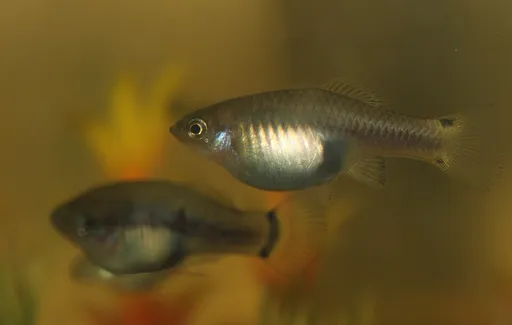 2 in (5 cm)16 gal (60 L)68–79°F (20–26°C)
Spiketail platy
Xiphophorus xiphidium
2 in (5 cm) · 16 gal (60 L)
 3.5 in (9 cm)29 gal (110 L)68–79°F (20–26°C)
Northern mountain swordtail
Xiphophorus nezahualcoyotl
3.5 in (9 cm) · 29 gal (110 L)