Tailspot cory
Hoplisoma caudimaculatum
Also known as Corydoras caudimaculatus, Tail spot cory
FreshwaterFish
Care at a glance
- Temperature
- 68–81°F
- 20–27°C
- pH
- 6.0–7.5
- Adult size
- 2 in
- 5 cm
- Minimum tank
- 20 gal
- 75 L
- Temperament
- Peaceful
- Social behavior
- Shoaling
- Swim level
- Bottom
- Difficulty
- Easy
- Breeding
- Hard
- Rarity
- Common
- Family
- Callichthyidae
- Origin
- Bolivia, Brazil
Overview
Keep it in a school of six or more on the bottom of a tank around 75 liters or larger; it gets nervous and inactive in small numbers. Water should be soft to neutral, pH 6 to 7.5, at 20 to 27 C. Feed sinking pellets, frozen foods like bloodworms and daphnia, and the occasional algae wafer. It is fully peaceful and a solid choice for a calm community tank.
In the wild
The tailspot cory comes from the upper Amazon drainage in Bolivia and Brazil, living over soft, sandy bottoms in warm, slow streams. It spends its time sifting the substrate for bits of food. Set up a fine sand bottom so it can dig without wearing down its barbels, and add wood, plants, or leaf litter for shade and cover. Keep the water on the warm side, roughly 20 to 27 C.
Good to know
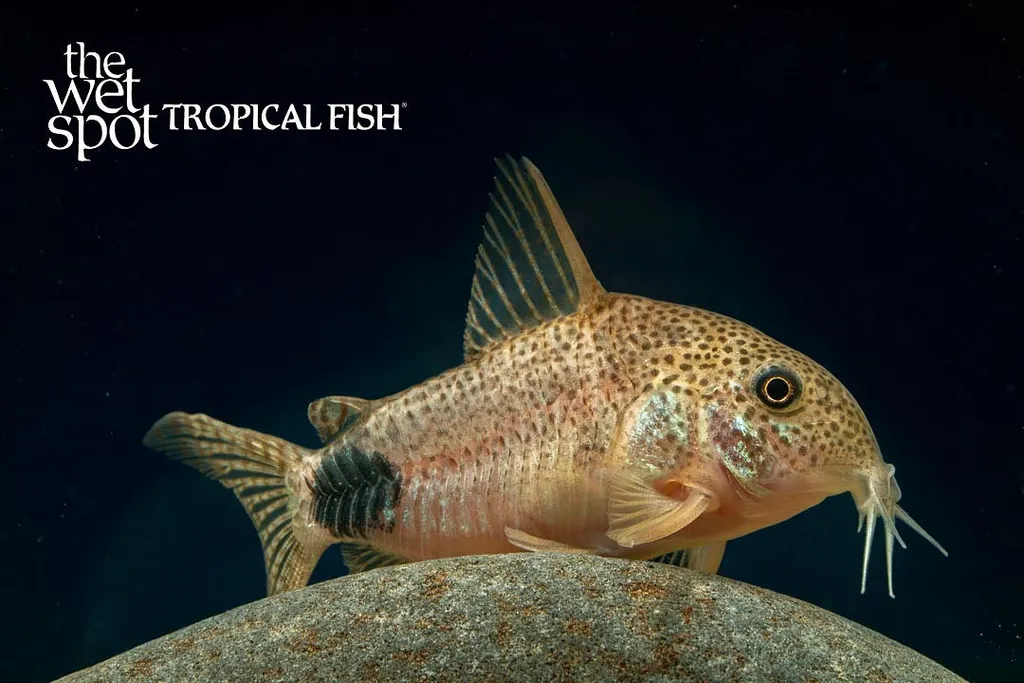
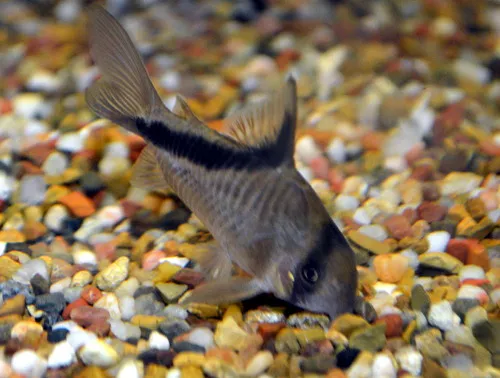
This is a small armored catfish in the family Callichthyidae, reaching about 5 cm, which makes it one of the smaller corys. Its body is covered in overlapping bony plates and it carries fine speckling with the dark tail-base mark that gives it its name. It is an egg-layer, but it is on the harder side to breed at home compared with other corys.
Did you know
Like other corys it has the odd habit of dashing to the surface to gulp a mouthful of air, which it absorbs through its gut. This is normal behavior, not a sign of bad water, though if the whole group is doing it constantly it's worth checking your oxygen and surface flow.
Weekly picks
Tank mates
Tailspot cory is a peaceful, shoaling species that keeps to the bottom. These picks share a community profile with it, are safe together in both directions, and overlap on water type, temperature and pH.
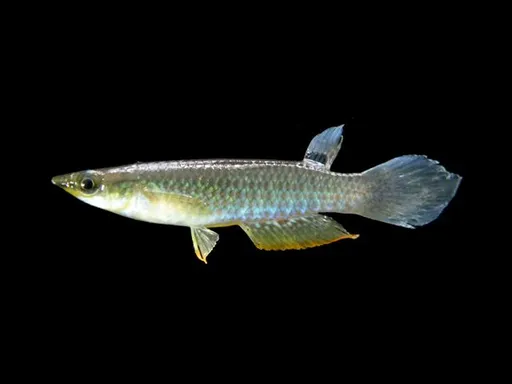
Blue panchax
Aplocheilus panchax
Freshwater3.5 in (9 cm) · 20 gal (75 L)72–82°F (22–28°C)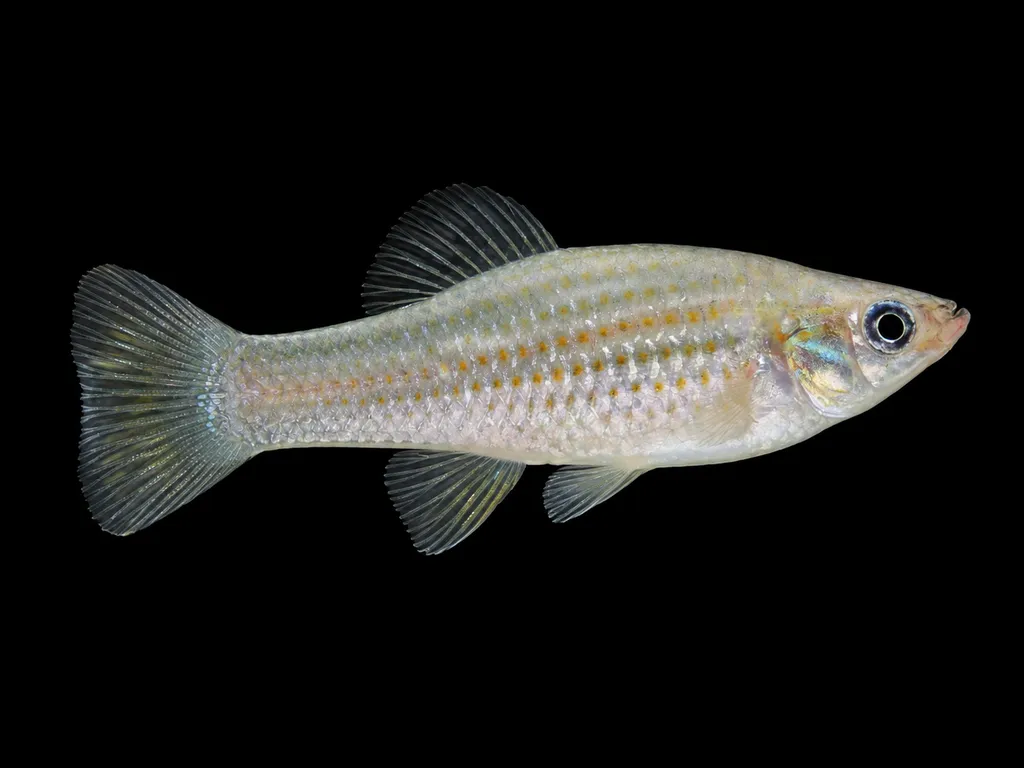
Amazon molly
Poecilia formosa
Freshwater3.5 in (9 cm) · 20 gal (75 L)68–82°F (20–28°C)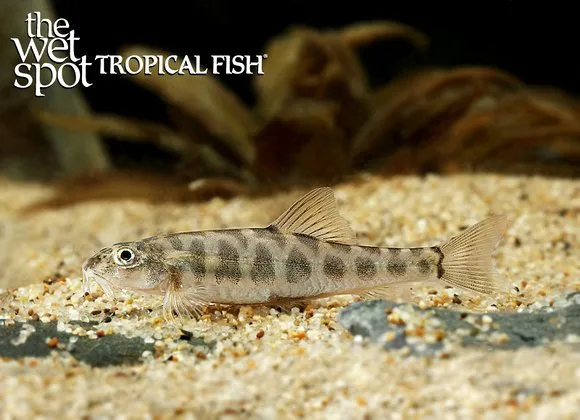
Corica loach
Nemacheilus corica
Freshwater2 in (5 cm) · 20 gal (75 L)68–79°F (20–26°C)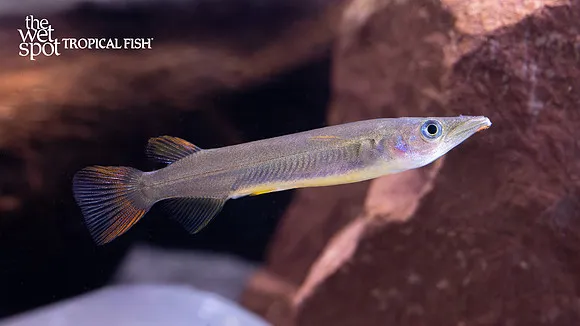
Rex halfbeak
Nomorhamphus rex
Freshwater2.2 in (5.5 cm) · 20 gal (75 L)72–79°F (22–26°C)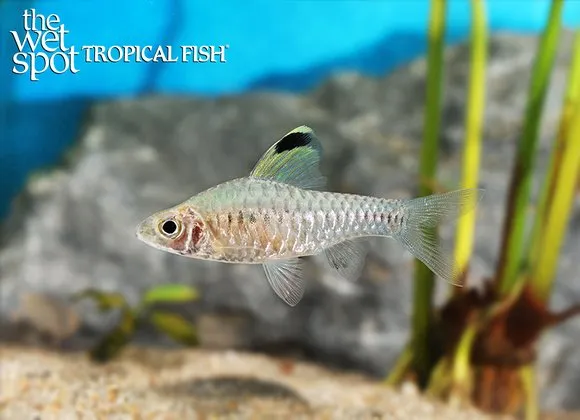
Cosuatis barb
Oreichthys cosuatis
Freshwater3.1 in (8 cm) · 20 gal (75 L)68–79°F (20–26°C)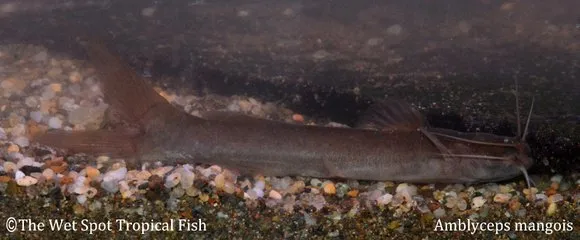
Crevice catfish
Amblyceps mangois
Freshwater5.1 in (13 cm) · 20 gal (75 L)68–79°F (20–26°C)
Common questions
What size tank does a Tailspot cory need?
A Tailspot cory needs at least 20 gal (75 L). It spends most of its time in the bottom.
What temperature and pH does a Tailspot cory need?
A Tailspot cory is comfortable at 68–81°F (20–27°C) with a pH of 6.0–7.5.
How big does a Tailspot cory get?
An adult Tailspot cory reaches about 2 in (5 cm).
Does a Tailspot cory need a group?
Yes. A Tailspot cory is a shoaling species and should be kept in a group, not singly.
Related species
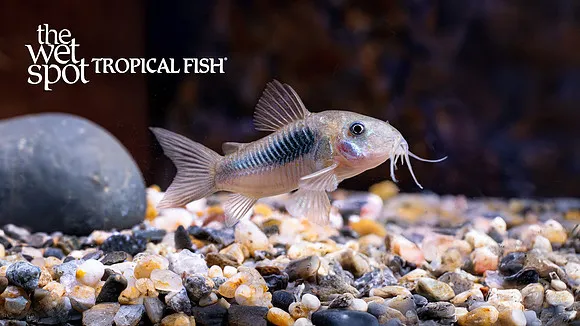 2 in (5 cm)15 gal (55 L)70–79°F (21–26°C)
Blackstripe cory
Hoplisoma bondi
2 in (5 cm) · 15 gal (55 L)
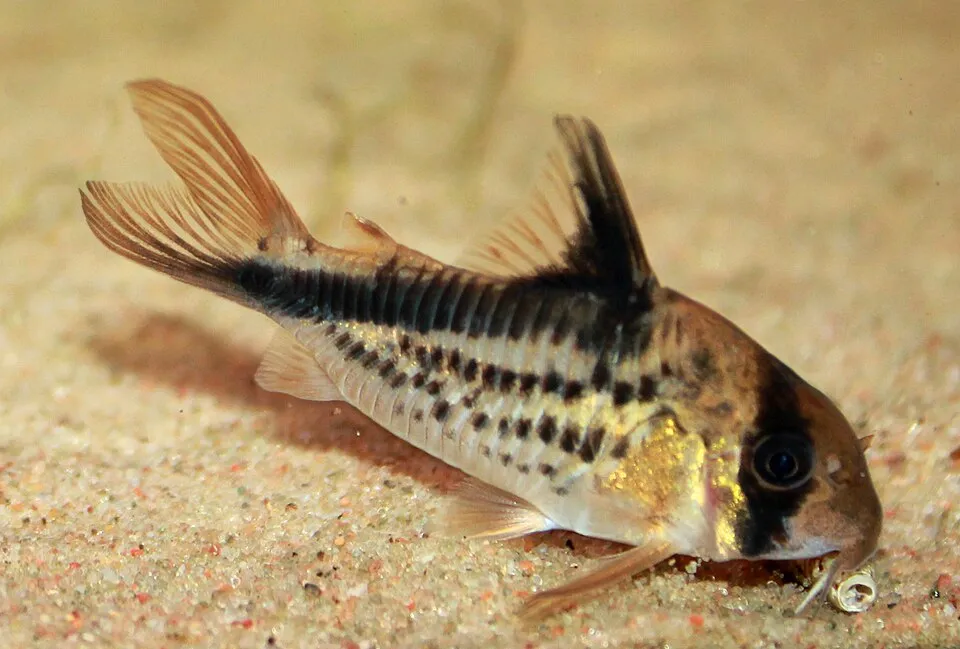 2 in (5 cm)16 gal (60 L)70–75°F (21–24°C)
Dirty bandit cory
Hoplisoma loxozonum
2 in (5 cm) · 16 gal (60 L)
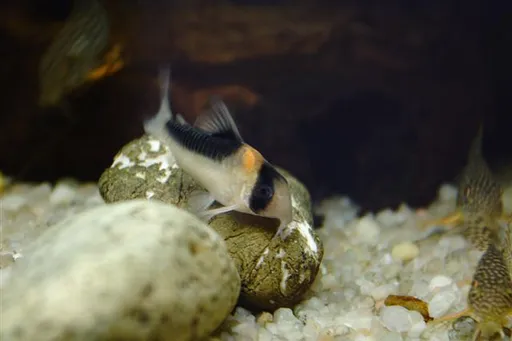 2 in (5 cm)20 gal (75 L)72–79°F (22–26°C)
Duplicate cory
Hoplisoma duplicareum
2 in (5 cm) · 20 gal (75 L)
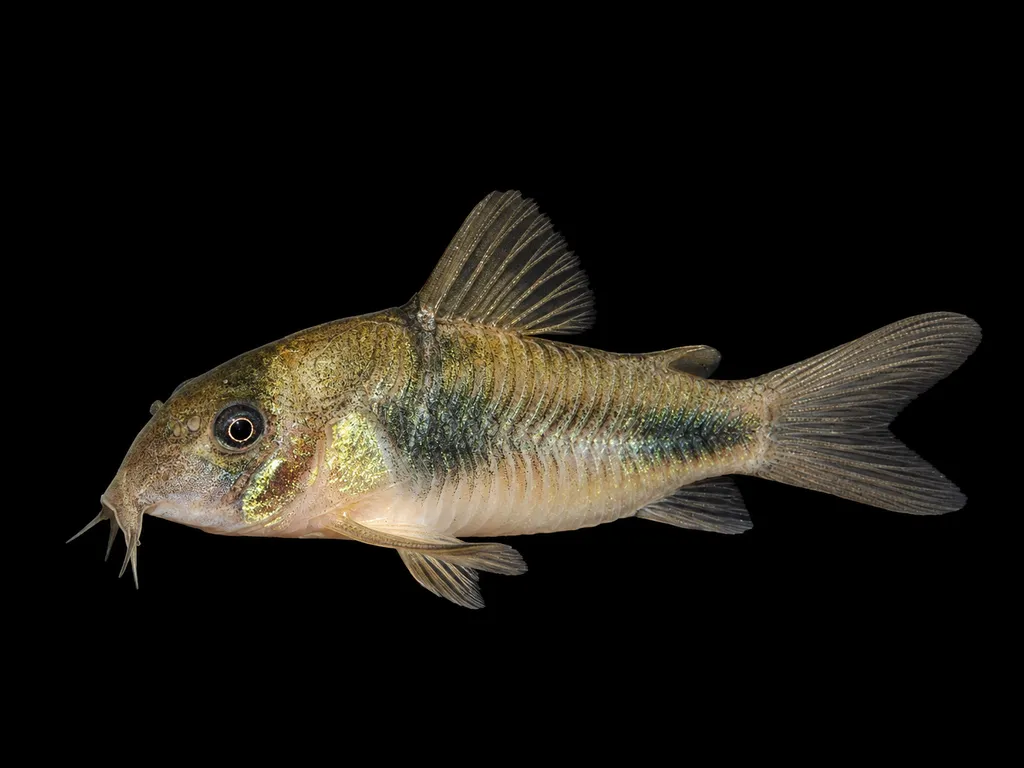 2 in (5 cm)16 gal (60 L)66–77°F (19–25°C)
Ehrhardt's cory
Hoplisoma ehrhardti
2 in (5 cm) · 16 gal (60 L)
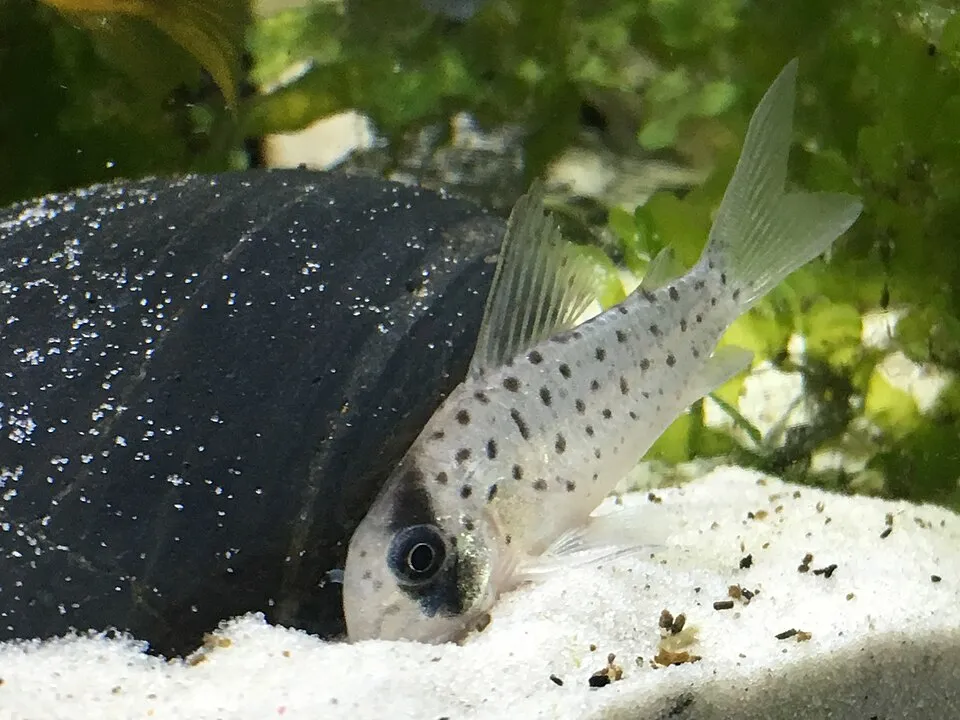 2 in (5 cm)16 gal (60 L)70–81°F (21–27°C)
Fairy cory
Hoplisoma atropersonatum
2 in (5 cm) · 16 gal (60 L)
 2 in (5 cm)16 gal (60 L)72–79°F (22–26°C)
False bandit cory
Hoplisoma melini
2 in (5 cm) · 16 gal (60 L)