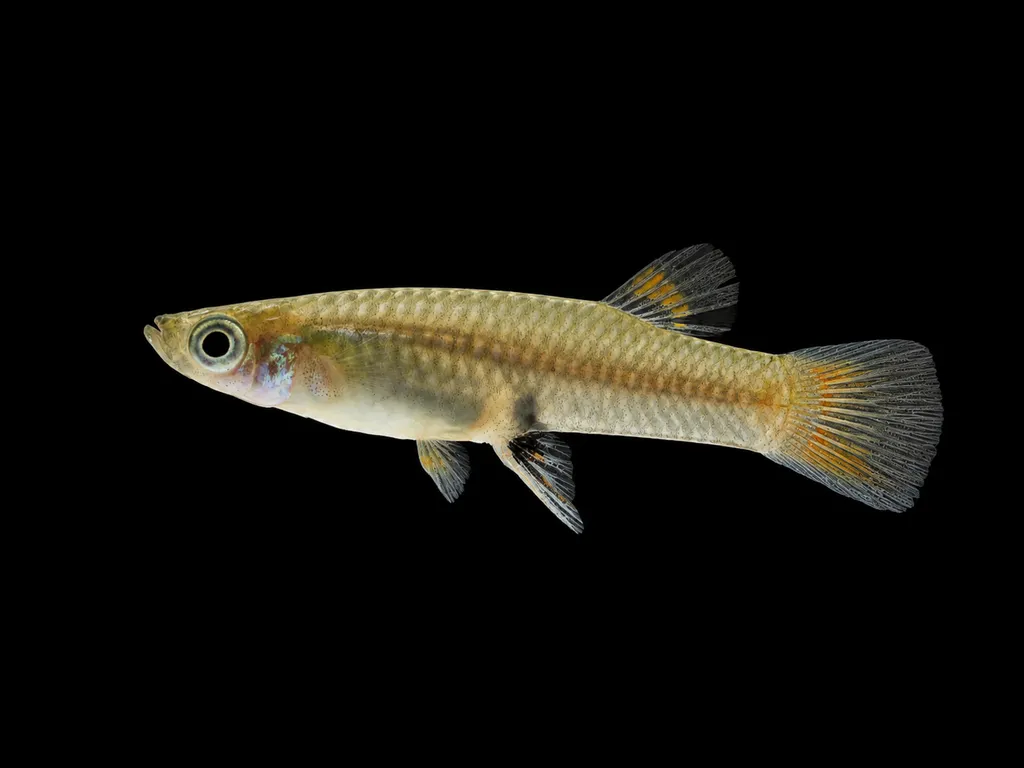
Metallic livebearer
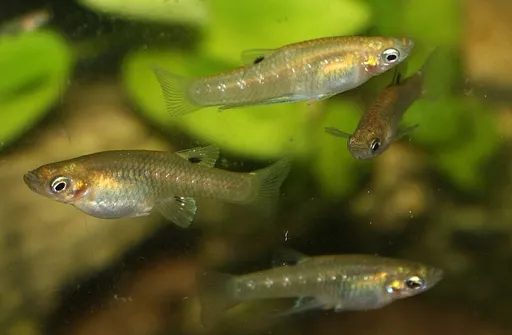
Girardinus metallicus
Also known as Black chin livebearer
FreshwaterFish
Care at a glance
- Temperature
- 72–81°F
- 22–27°C
- pH
- 6.5–8.0
- Adult size
- 2.4 in
- 6 cm
- Minimum tank
- 11 gal
- 40 L
- Temperament
- Mostly peaceful
- Social behavior
- Social
- Swim level
- Middle
- Difficulty
- Easy
- Breeding
- Livebearer · Easy
- Rarity
- Common
- Family
- Poeciliidae
- Origin
- Cuba (endemic; Caribbean freshwater)
Overview
The metallic livebearer is a mostly peaceful livebearer for a planted tank with hard water. It is easy to keep.
Did you know
The metallic livebearer's other name, black chin livebearer, comes from the male's dark throat stripe. He flashes it during courtship, shimmying in front of females.
Caring for the metallic livebearer
Keep metallic livebearers in a group with several females per male, in a tank of 11 gal (40 L) or more. Males chase females hard, and the extra females spread that attention out. Plant densely and add some floating cover, since plants break up sightlines and give females places to rest.
Keep the water medium hard and on the alkaline side, within a pH of 6.5 to 8.0, at 72 to 81°F (22 to 27°C). Skip soft, acidic blackwater setups. Stay on top of weekly water changes, because they handle nitrogenous waste worse than most livebearers.
Feed flakes, small pellets and frozen treats such as daphnia or brine shrimp. Metallic livebearers are mostly peaceful and spend most of their time in the middle of the tank. Pick tank mates that also like hard or lightly brackish water.
Females grow larger than males, and males carry a dark stripe running from the throat down the belly. Females give birth to live young after a gestation of roughly 24 days, dropping broods of about 15 to 30 relatively large fry.
In a planted tank they breed readily on their own, with no help from you. The fry grow quickly, so a stable group keeps a small colony going year after year. Never release surplus fish into local waterways, and check your local rules before rehoming.
Good to know
The metallic livebearer, Girardinus metallicus, is a livebearer in the family Poeciliidae. Healthy adults live a couple of years.
In the wild
Metallic livebearers are endemic to Cuba. They live in hard, alkaline freshwater that can run slightly brackish near the coast.
Weekly picks
Tank mates
The metallic livebearer is a mostly peaceful, social species that keeps to the middle. These picks share a community profile with it, are safe together in both directions, and overlap on water type, temperature and pH.
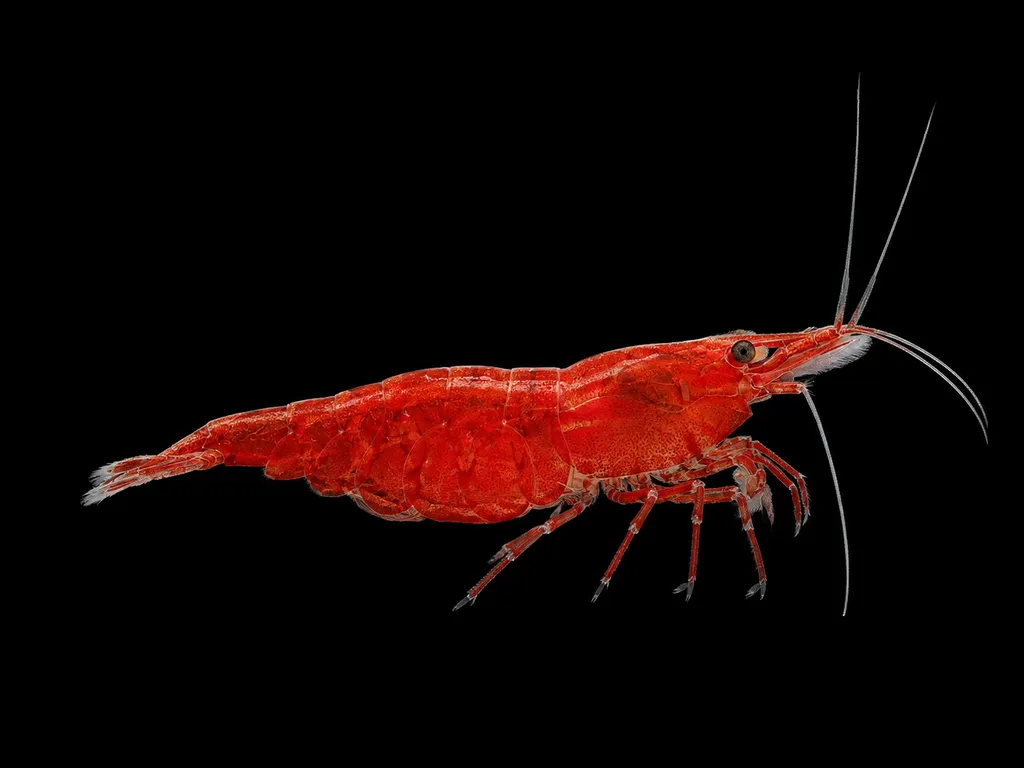
Neocaridina shrimp
Neocaridina davidi
Freshwater1.6 in (4 cm) · 5 gal (19 L)59–84°F (15–29°C)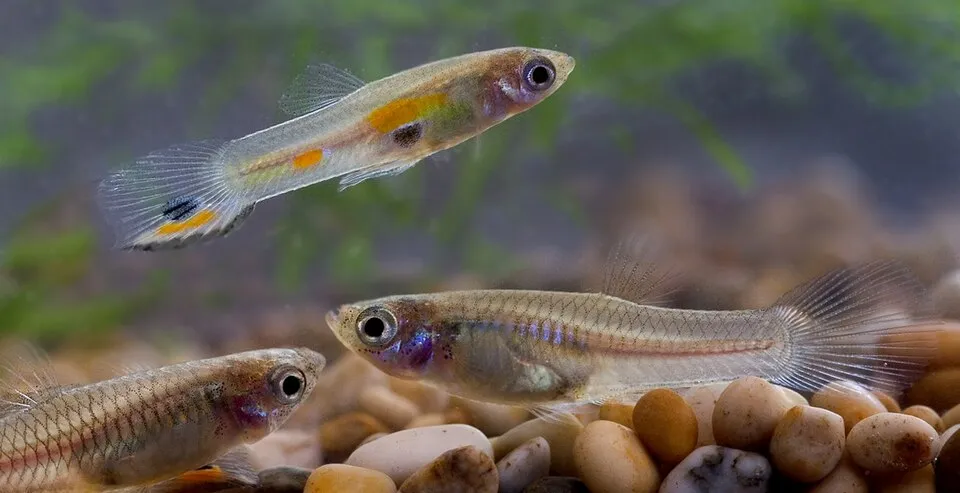
Guppy
Poecilia reticulata
FreshwaterBrackish2.4 in (6 cm) · 10 gal (38 L)64–82°F (18–28°C)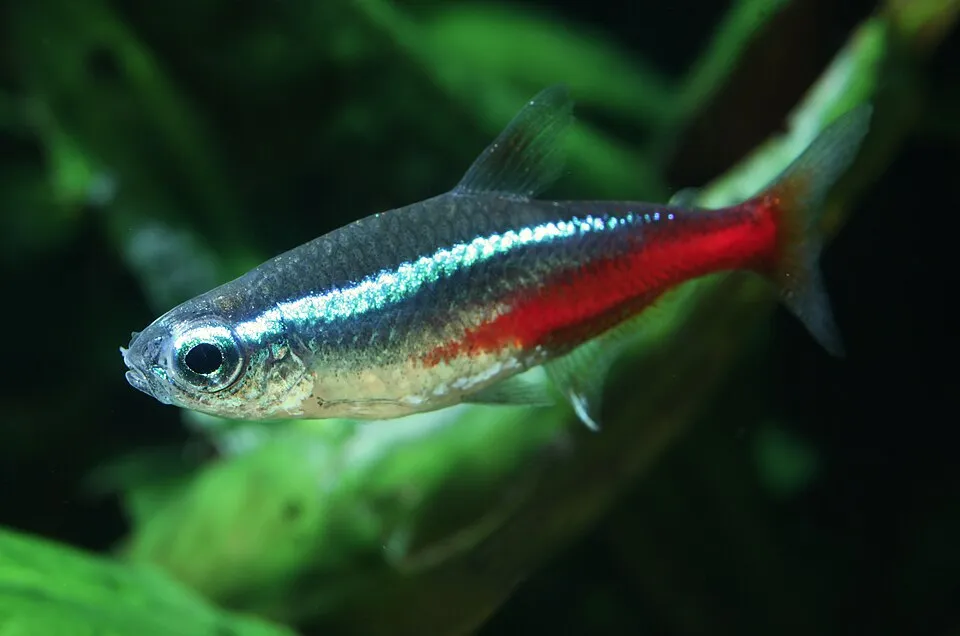
Neon tetra
Paracheirodon innesi
Freshwater1.5 in (3.8 cm) · 11 gal (40 L)70–77°F (21–25°C)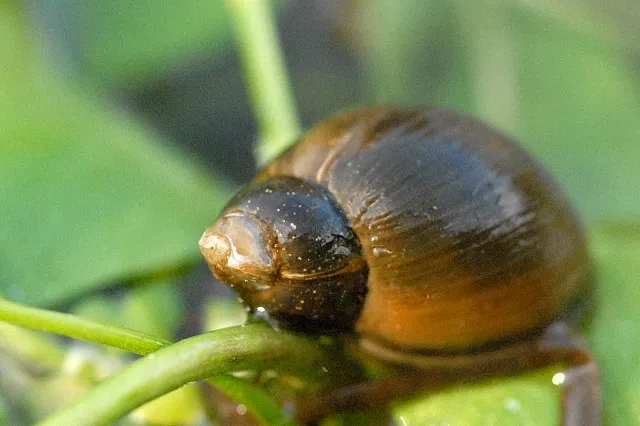
Wandering snail
Ampullaceana balthica
Freshwater0.8 in (2 cm) · 11 gal (40 L)50–84°F (10–29°C)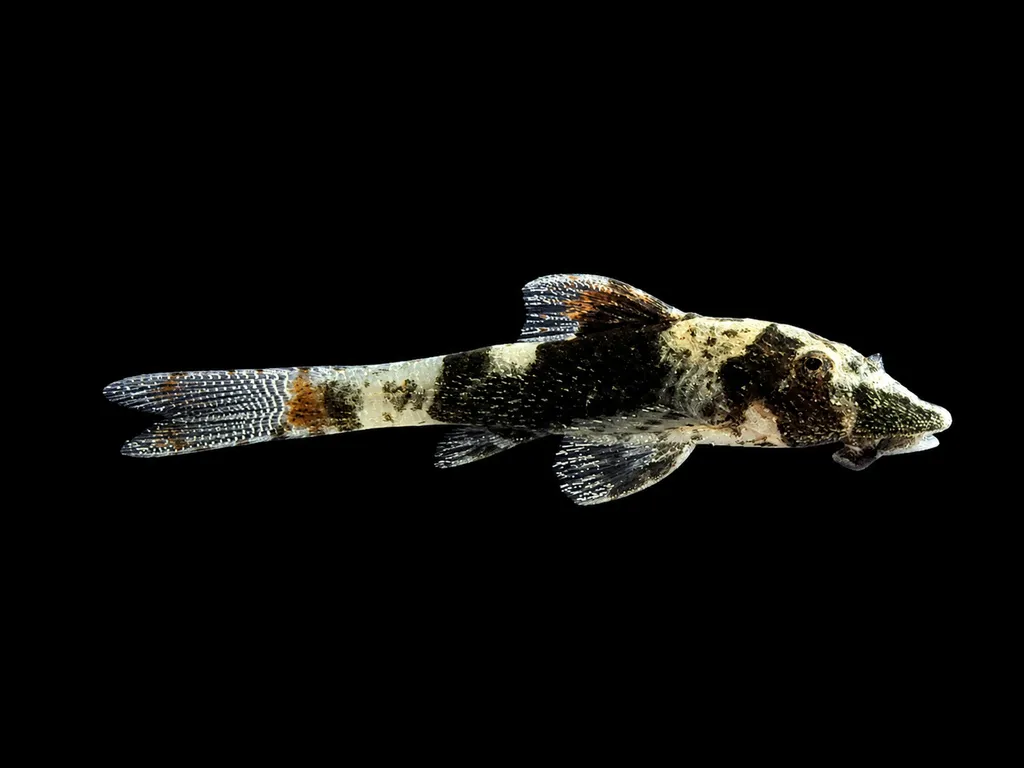
Bumblebee otocinclus
Rhinotocinclus isabelae
Freshwater0.8 in (2 cm) · 11 gal (40 L)73–82°F (23–28°C)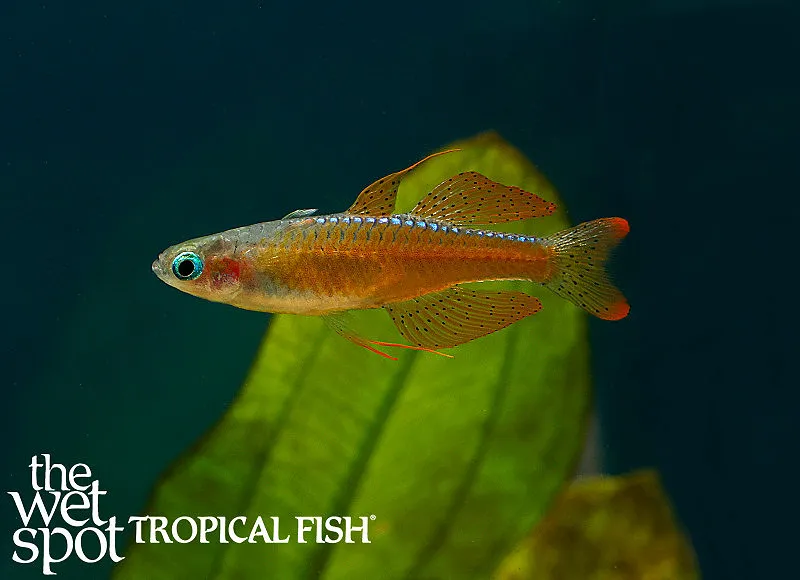
Red neon blue-eye
Pseudomugil luminatus
Freshwater1.4 in (3.5 cm) · 11 gal (40 L)72–81°F (22–27°C)
Common questions
What size tank does a metallic livebearer need?
A metallic livebearer needs at least 11 gal (40 L). It spends most of its time in the middle.
What temperature and pH does a metallic livebearer need?
A metallic livebearer is comfortable at 72–81°F (22–27°C) with a pH of 6.5–8.0.
What does a metallic livebearer eat?
A metallic livebearer eats flakes, small pellets and frozen treats such as daphnia or brine shrimp.
How big does a metallic livebearer get?
An adult metallic livebearer reaches about 2.4 in (6 cm).
How can you tell a male metallic livebearer from a female?
Males stay smaller than females, and they carry a dark stripe running from the throat down the belly.
How does a metallic livebearer breed?
A metallic livebearer gives birth to live young after roughly 24 days, in broods of about 15 to 30 relatively large fry. In a planted tank it breeds readily on its own.
Related species
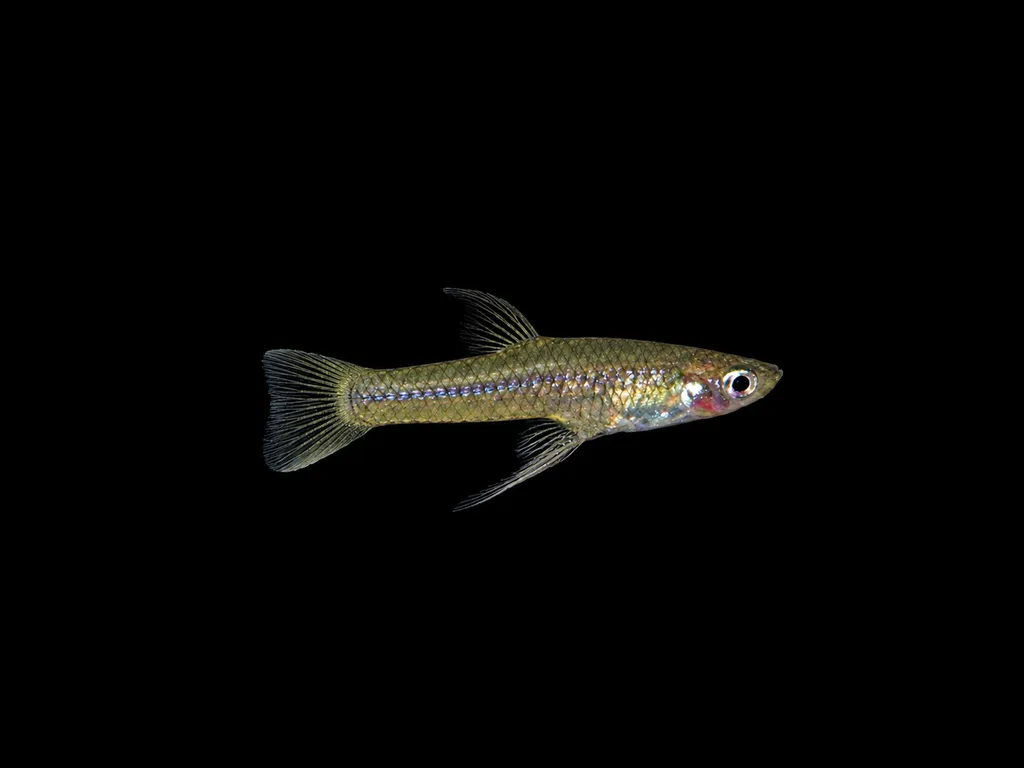 2.6 in (6.5 cm)11 gal (40 L)68–82°F (20–28°C)
Sicklefin livebearer
Girardinus falcatus
2.6 in (6.5 cm) · 11 gal (40 L)
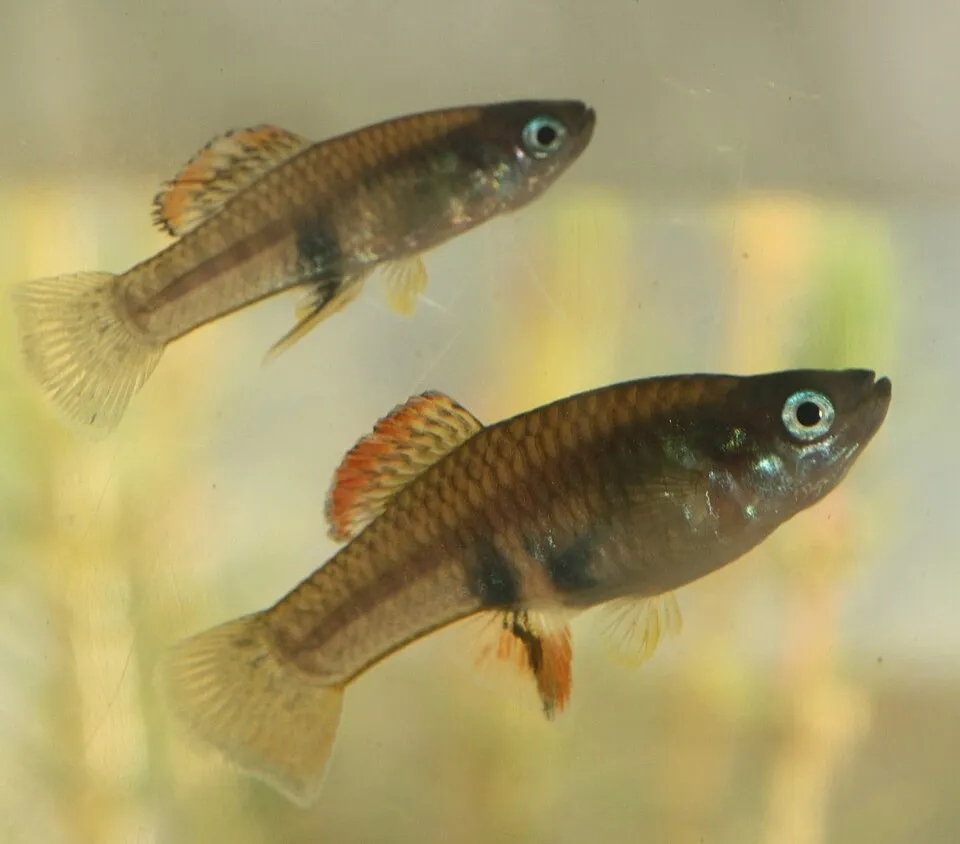 2.4 in (6 cm)16 gal (60 L)72–86°F (22–30°C)
Cardinal toothcarp
Brachyrhaphis roseni
2.4 in (6 cm) · 16 gal (60 L)
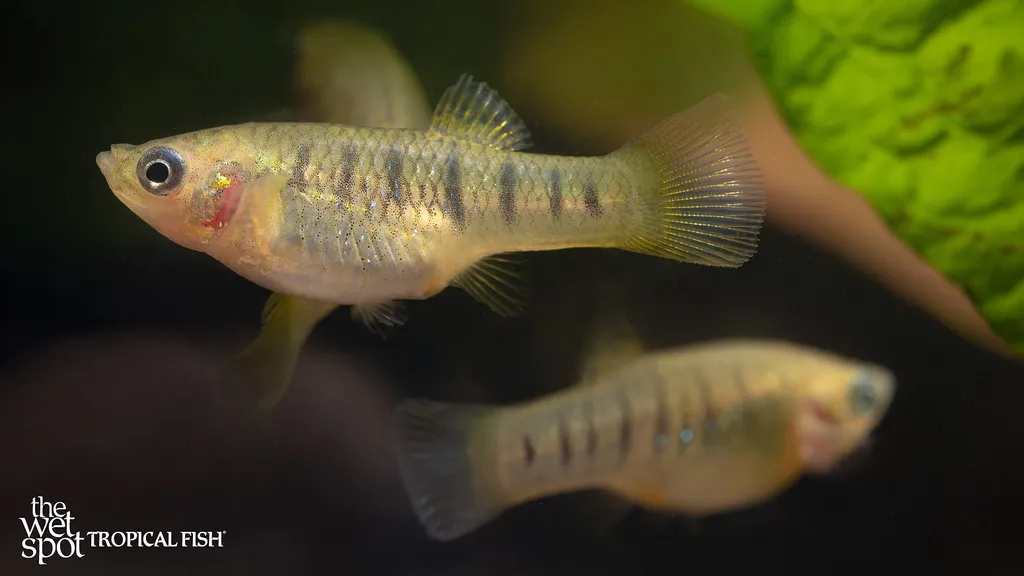 2.4 in (6 cm)20 gal (75 L)72–82°F (22–28°C)
Humpbacked limia
Limia nigrofasciata
2.4 in (6 cm) · 20 gal (75 L)
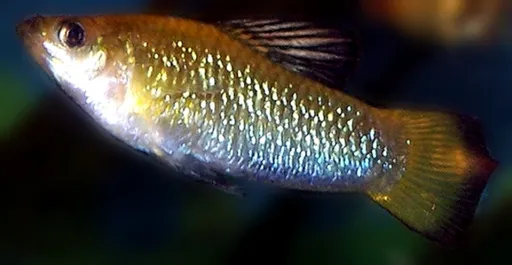 2.8 in (7 cm)20 gal (75 L)72–82°F (22–28°C)
Perugia's limia
Limia perugiae
2.8 in (7 cm) · 20 gal (75 L)
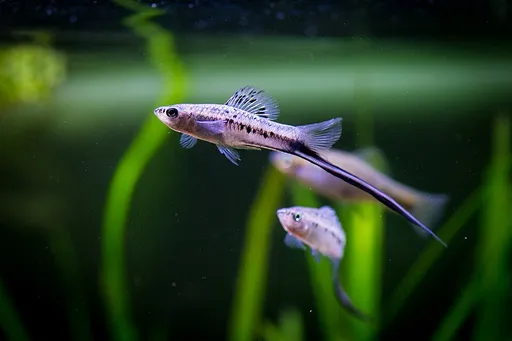 2.8 in (7 cm)24 gal (90 L)68–81°F (20–27°C)
Sheepshead swordtail
Xiphophorus birchmanni
2.8 in (7 cm) · 24 gal (90 L)
 3 in (7.5 cm)11 gal (40 L)75–82°F (24–28°C)
Cascajal toothcarp
Brachyrhaphis cascajalensis
3 in (7.5 cm) · 11 gal (40 L)