Western mosquitofish
Gambusia affinis
FreshwaterFish
Care at a glance
- Temperature
- 64–81°F
- 18–27°C
- pH
- 6.0–8.0
- Adult size
- 3 in
- 7.5 cm
- Minimum tank
- 7 gal
- 25 L
- Temperament
- Aggressive
- Social behavior
- Social
- Tankmates
- With caution
- Swim level
- Middle
- Difficulty
- Easy
- Breeding
- Easy
- Rarity
- Rare
- Family
- Poeciliidae
- Origin
- United States, Mexico
Overview
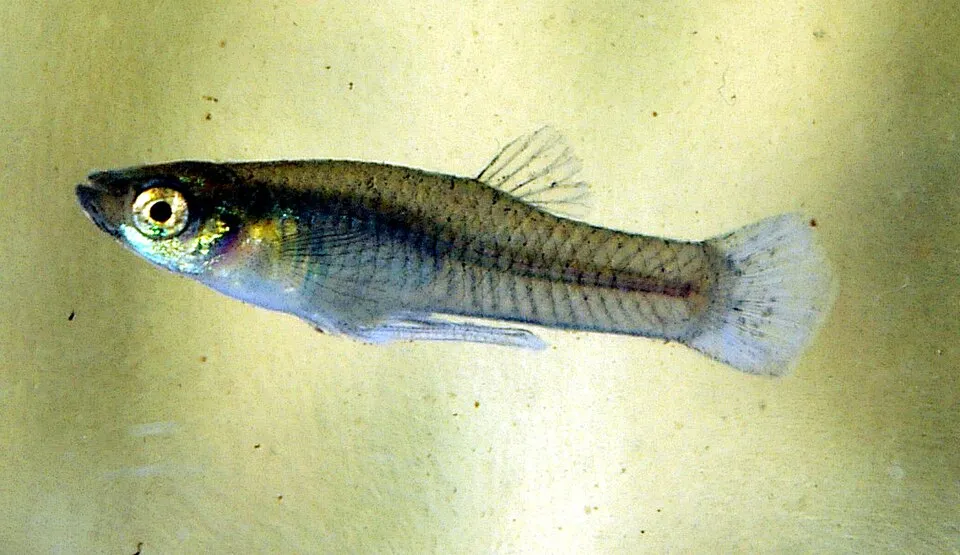
The western mosquitofish is a tough, adaptable livebearer, but it has a real aggressive streak and is a persistent fin-nipper. It is best kept on its own in a species group, or with fast, robust fish that can keep clear of it, rather than in a gentle community. Keep more females than males and give plenty of plants and cover to spread out aggression. It eats almost anything, from flake and small pellets to frozen and live foods, and it grazes readily. It handles a wide range of hard water and cooler temperatures. Even a group is small-bodied, so a tank of 25 liters or larger will do, though more space eases squabbling.
In the wild
Gambusia affinis is native to the fresh waters of the southern United States and Mexico, living in warm, still and slow-moving waters such as ponds, ditches and stream margins. It is very hardy and copes with a wide range, so a temperature between 18 and 27 C and a pH from about 6 to 8 all suit it. A tank with plants, open water and simple filtration is plenty. It tolerates cooler water than most tropical fish and does not need heating in a warm room.
Good to know
The western mosquitofish is a small livebearer in the family Poeciliidae. Females reach about 7 cm and are much larger than the slim males, which fertilize them internally using a gonopodium. Females give birth to live young and can produce brood after brood through the warmer months, so populations build quickly, which is why the species is rated as easy to breed. This fast breeding is exactly what made it useful for mosquito control.
Did you know
Gambusia affinis has been introduced around the world to eat mosquito larvae, but it is such an aggressive competitor that it now harms native fish and amphibians in many places and is considered invasive.
Common questions
What size tank does a Western mosquitofish need?
A Western mosquitofish needs at least 7 gal (25 L). It spends most of its time in the middle.
What temperature and pH does a Western mosquitofish need?
A Western mosquitofish is comfortable at 64–81°F (18–27°C) with a pH of 6.0–8.0.
How big does a Western mosquitofish get?
An adult Western mosquitofish reaches about 3 in (7.5 cm).
Related species
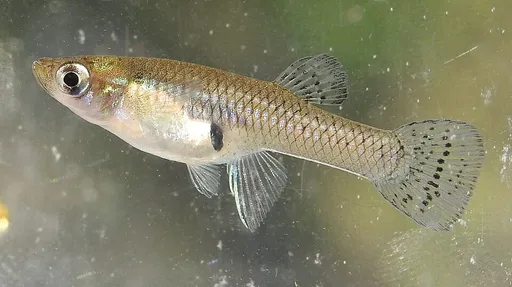 3.1 in (8 cm)11 gal (40 L)59–84°F (15–29°C)
Eastern mosquitofish
Gambusia holbrooki
3.1 in (8 cm) · 11 gal (40 L)
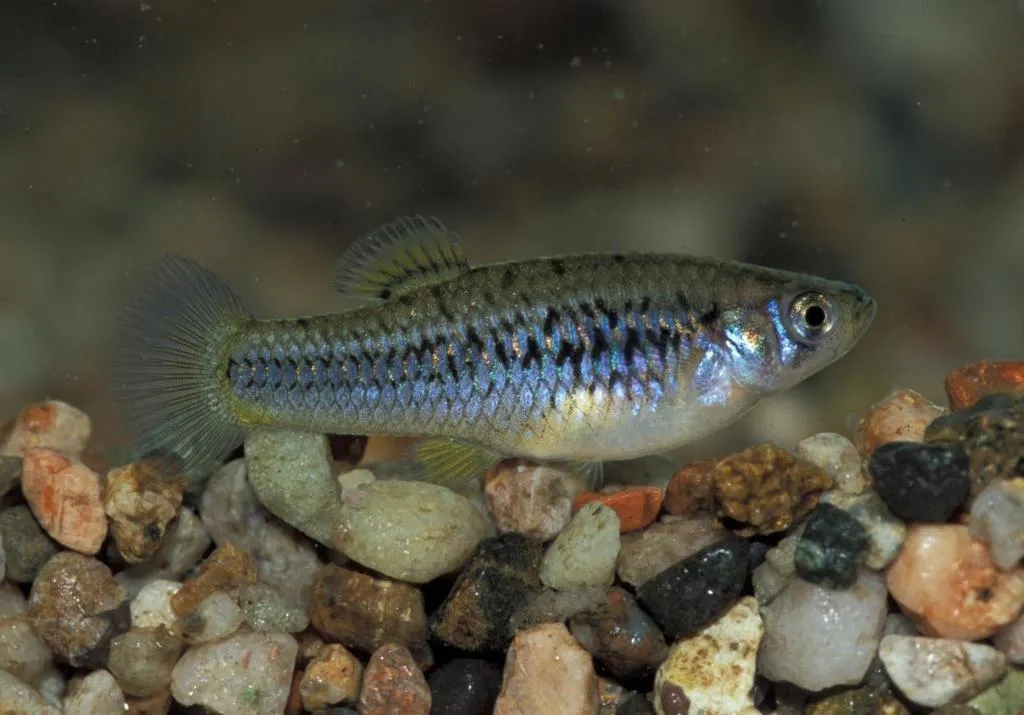 2 in (5 cm)14 gal (54 L)68–79°F (20–26°C)
Crescent gambusia
Gambusia hurtadoi
2 in (5 cm) · 14 gal (54 L)
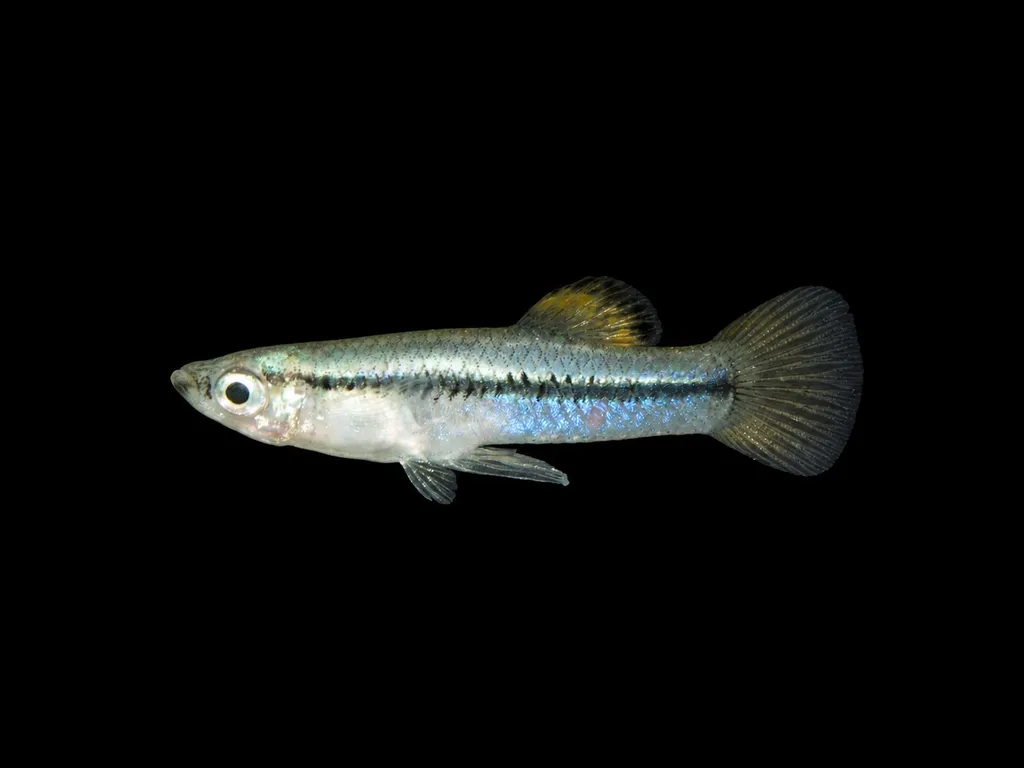 1.8 in (4.5 cm)14 gal (54 L)72–81°F (22–27°C)
Blackline mosquitofish
Gambusia vittata
1.8 in (4.5 cm) · 14 gal (54 L)
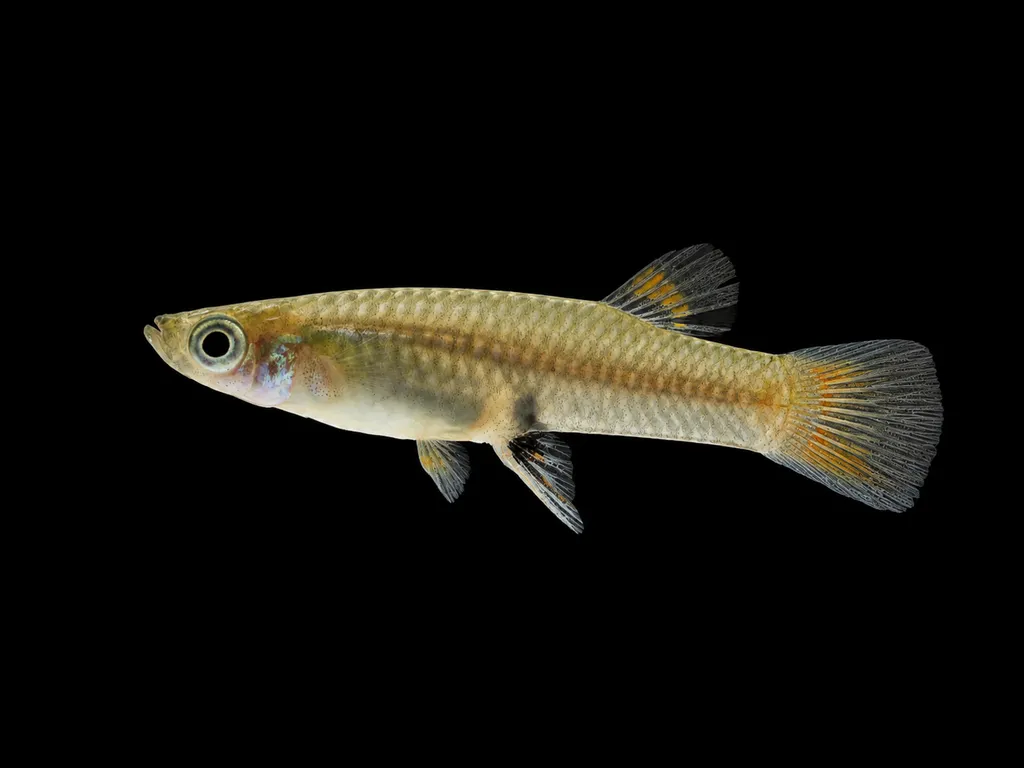 3 in (7.5 cm)11 gal (40 L)75–82°F (24–28°C)
Cascajal toothcarp
Brachyrhaphis cascajalensis
3 in (7.5 cm) · 11 gal (40 L)
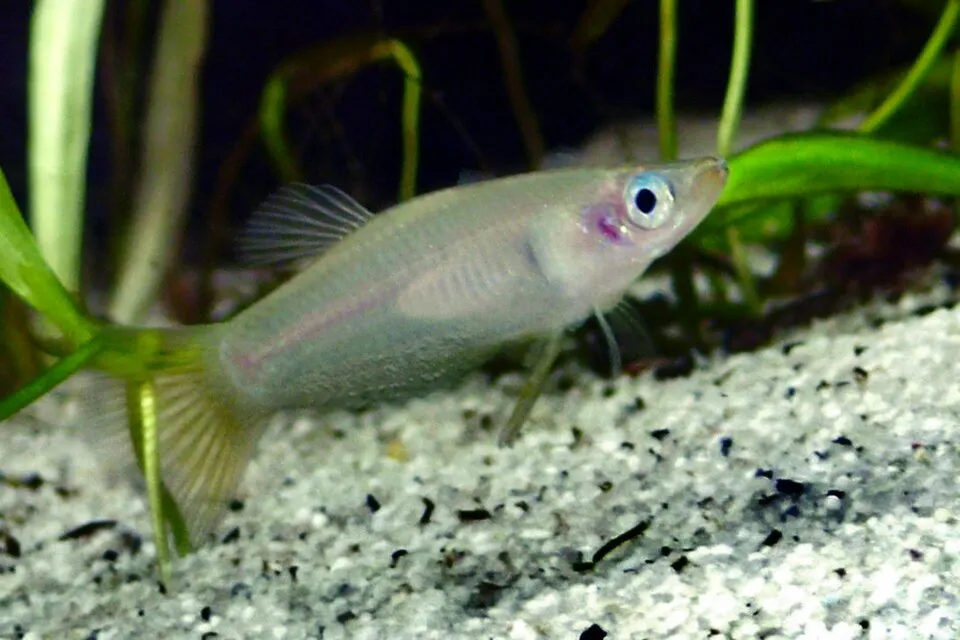 3 in (7.6 cm)32 gal (120 L)75–82°F (24–28°C)
Knife livebearer
Alfaro cultratus
3 in (7.6 cm) · 32 gal (120 L)
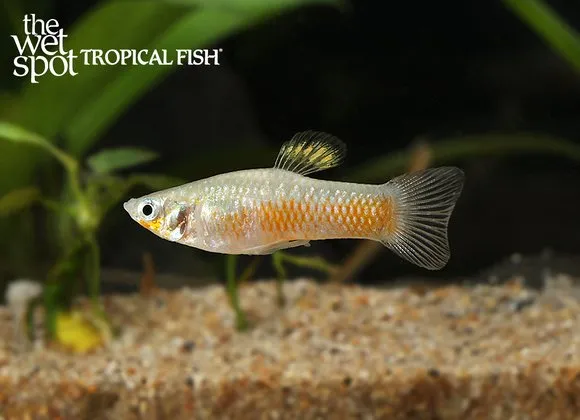 3.1 in (8 cm)20 gal (75 L)72–81°F (22–27°C)
Southern molly
Poecilia vivipara
3.1 in (8 cm) · 20 gal (75 L)