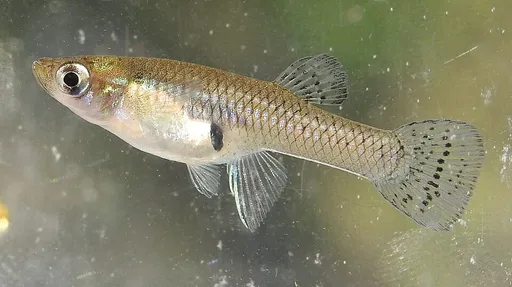
Eastern mosquitofish
Gambusia holbrooki
Also known as Mosquitofish
FreshwaterFish
Care at a glance
- Temperature
- 59–84°F
- 15–29°C
- pH
- 6.5–8.5
- Adult size
- 3.1 in
- 8 cm
- Minimum tank
- 11 gal
- 40 L
- Temperament
- Aggressive
- Social behavior
- Social
- Tankmates
- With caution
- Swim level
- Top
- Difficulty
- Beginner
- Breeding
- Easy
- Rarity
- Common
- Family
- Poeciliidae
- Origin
- Atlantic and Gulf Slope drainages, eastern USA (New Jersey to Alabama)
Overview
Keep them in a group with a female-skewed ratio, around one male to three females, in a tank of 40 liters or larger to spread out male harassment. They are aggressive fin-nippers and active near the surface, so this is not a peaceful community fish. Keep them away from long-finned or slow tankmates like fancy guppies, bettas, and goldfish. Water can run cool to warm, anywhere from 15 to 29 C, with a pH from 6.5 to 8.5. Feed flakes, small pellets, and frozen foods like daphnia or brine shrimp. They breed on their own with no effort, so expect fry fast. This species is aggressively invasive and is banned or restricted in many places, so check your local rules before keeping it and never release it into the wild.
In the wild
Eastern mosquitofish come from slow streams, ponds, and marsh edges along the Atlantic and Gulf Slope of the eastern USA, from New Jersey down to Alabama. They hang near the surface in warm, weedy shallows. Give them a tank of at least 40 liters with dense planting around the edges and plenty of cover near the top, since that is where they spend their time. They sit anywhere from 15 to 29 C and handle a pH from 6.5 to 8.5, so a heater is optional and room temperature is fine.
Good to know
This is a livebearer in the family Poeciliidae. Most stay around 4 to 6 cm, with large females reaching 8 cm and males ending up smaller at roughly 4.7 cm. Females give birth to live fry rather than laying eggs, dropping anywhere from 5 to 100 fry per brood with no parental care. They also tolerate brackish water and cool temperatures down to about 15 C.
Did you know
The name comes from their appetite for mosquito larvae, which got them shipped around the world for mosquito control. That same hardiness made them one of the most damaging invasive fish on the planet, since they outcompete and nip at native species wherever they get loose.
Common questions
What size tank does an Eastern mosquitofish need?
An Eastern mosquitofish needs at least 11 gal (40 L). It spends most of its time in the top.
What temperature and pH does an Eastern mosquitofish need?
An Eastern mosquitofish is comfortable at 59–84°F (15–29°C) with a pH of 6.5–8.5.
How big does an Eastern mosquitofish get?
An adult Eastern mosquitofish reaches about 3.1 in (8 cm).
Related species
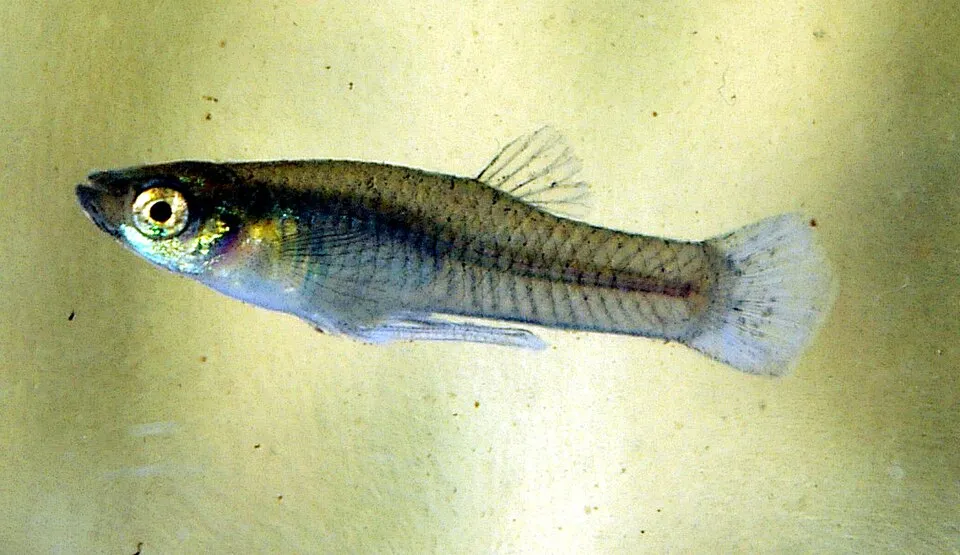 3 in (7.5 cm)7 gal (25 L)64–81°F (18–27°C)
Western mosquitofish
Gambusia affinis
3 in (7.5 cm) · 7 gal (25 L)
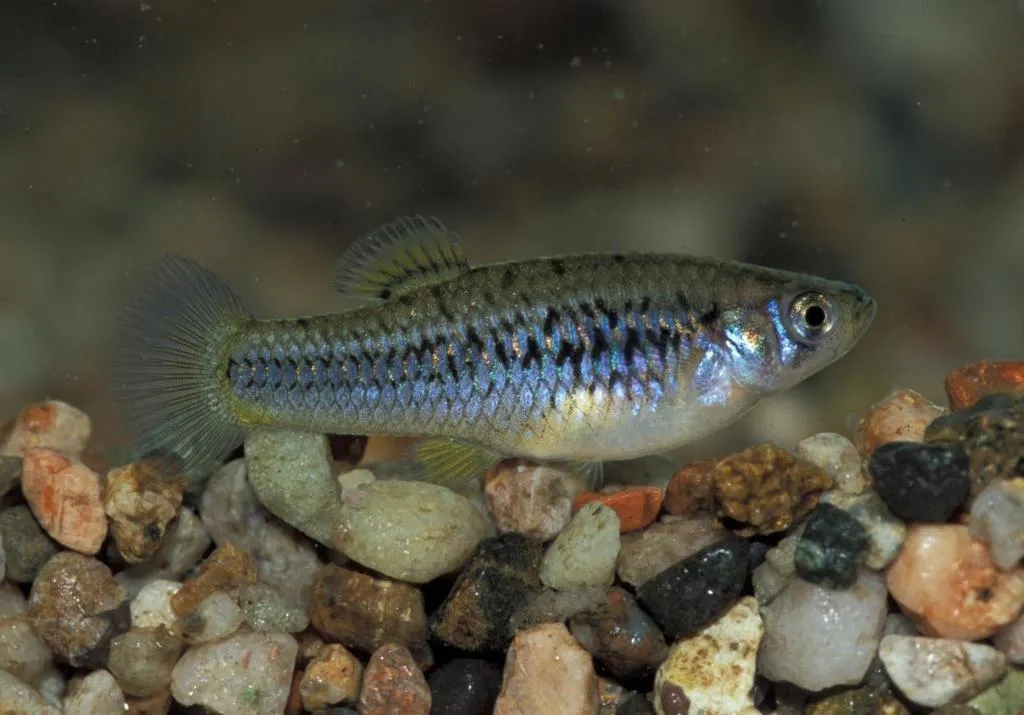 2 in (5 cm)14 gal (54 L)68–79°F (20–26°C)
Crescent gambusia
Gambusia hurtadoi
2 in (5 cm) · 14 gal (54 L)
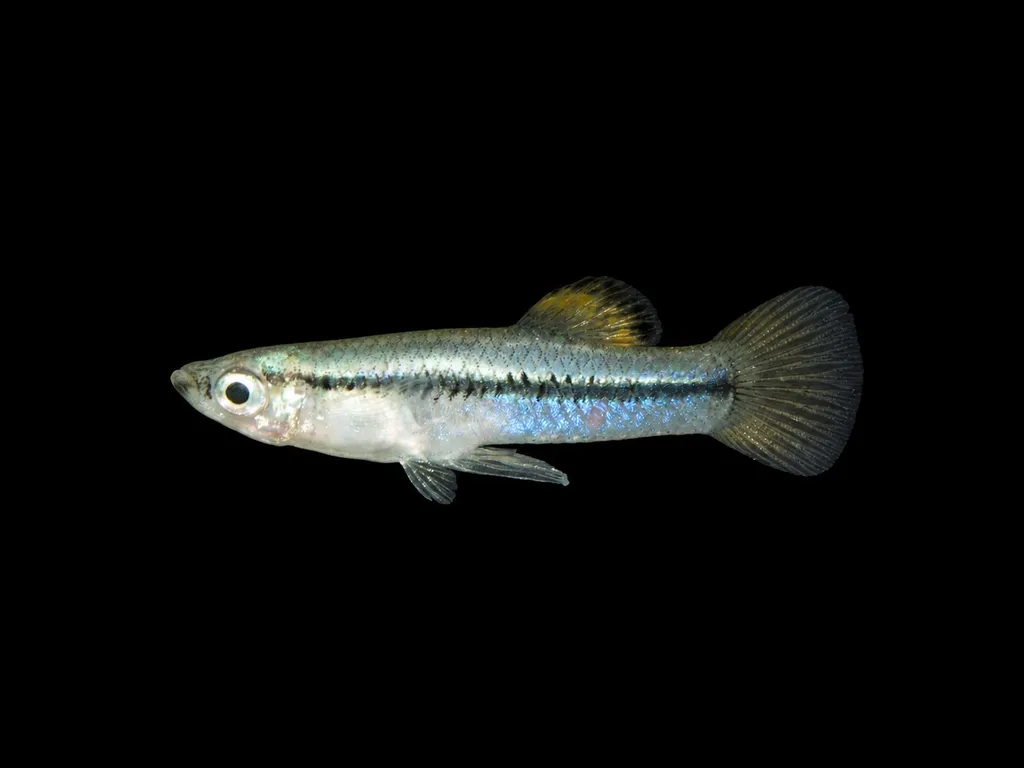 1.8 in (4.5 cm)14 gal (54 L)72–81°F (22–27°C)
Blackline mosquitofish
Gambusia vittata
1.8 in (4.5 cm) · 14 gal (54 L)
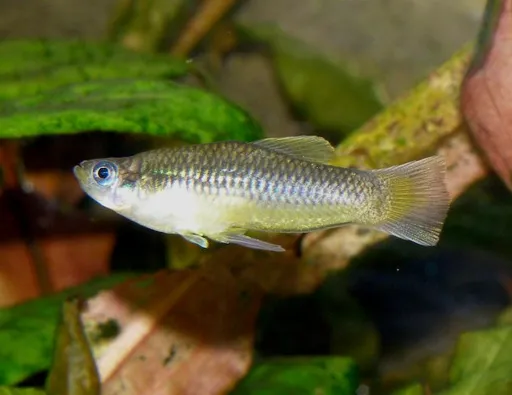 2.8 in (7 cm)24 gal (90 L)72–82°F (22–28°C)
Blue-eyed livebearer
Priapella intermedia
2.8 in (7 cm) · 24 gal (90 L)
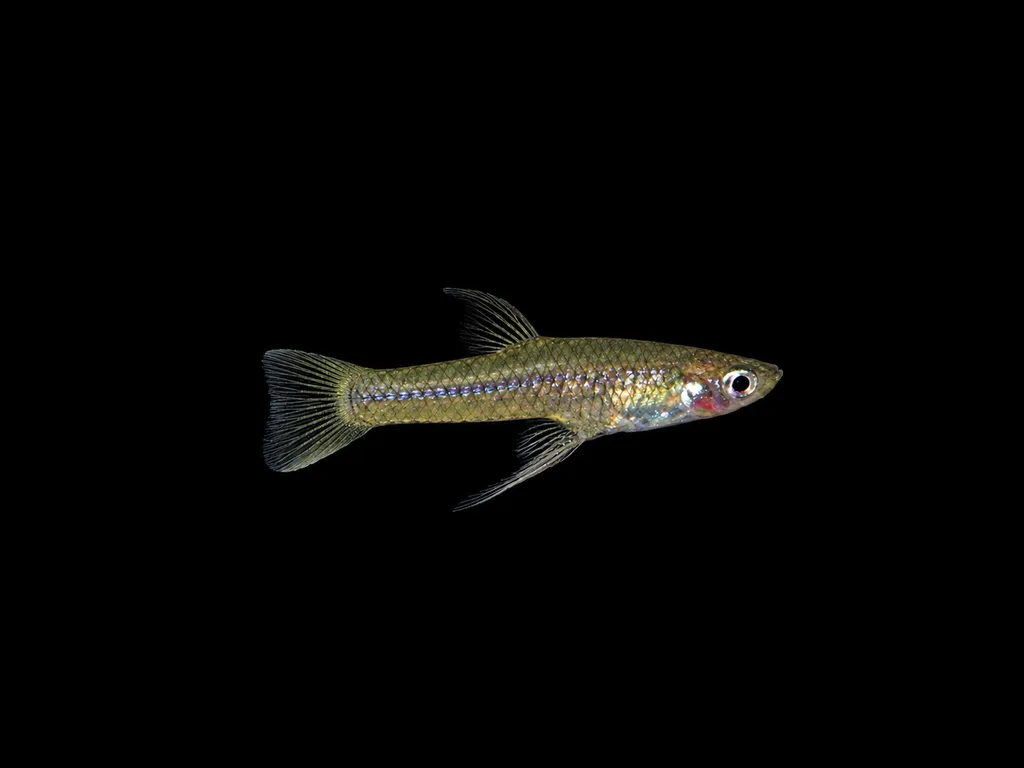 2.6 in (6.5 cm)11 gal (40 L)68–82°F (20–28°C)
Sicklefin livebearer
Girardinus falcatus
2.6 in (6.5 cm) · 11 gal (40 L)
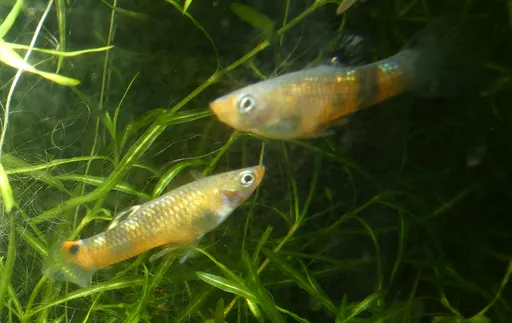 1.6 in (4 cm)16 gal (60 L)72–82°F (22–28°C)
Scarlet livebearer
Micropoecilia picta
1.6 in (4 cm) · 16 gal (60 L)