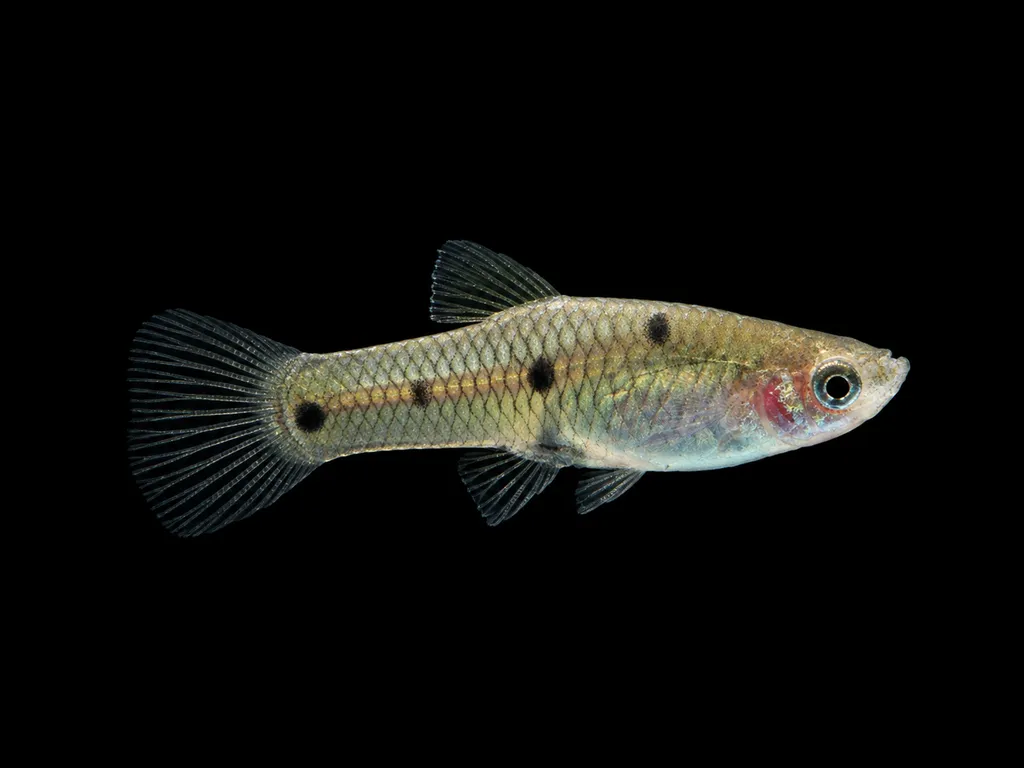
Scarlet livebearer
Micropoecilia picta
Also known as Swamp guppy, Painted guppy, Poecilia picta, Scarlet guppy, Red Picta Guppy
FreshwaterBrackishFish
Care at a glance
- Temperature
- 72–82°F
- 22–28°C
- pH
- 7.5–8.2
- Adult size
- 1.6 in
- 4 cm
- Minimum tank
- 16 gal
- 60 L
- Temperament
- Peaceful
- Social behavior
- Social
- Swim level
- Top
- Difficulty
- Medium
- Breeding
- Medium
- Rarity
- Rare
- Family
- Poeciliidae
- Origin
- Native to coastal swamps and slow streams of the Guianas, Venezuela, Trinidad, and the lower Amazon, often in slightly brackish water.
Overview
Keep a group in 60 liters or larger at 22 to 28 C, pH 7.5 to 8.2, in hard water, with slightly brackish conditions if possible. Feed small foods such as crushed flake, micro pellets, baby brine shrimp, and daphnia. Males constantly court females, so keep two or three females per male to spread the attention. Peaceful and best in a species tank or with other small, hard water fish.
In the wild
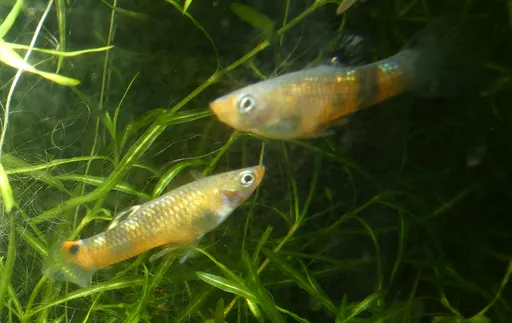
A tiny guppy relative whose males are splashed with scarlet, orange, and black over a stocky body. They come from coastal, often brackish swamps, so they want hard, alkaline water and do well with a little marine salt added. Keep them warm in a densely planted tank with fine substrate. Clean, stable water is the key to holding their color.
Good to know
Micropoecilia picta, long known as Poecilia picta, is a small livebearer closely related to the guppy. Males stay tiny at around 2.5 to 3 cm while females reach about 4 cm. Wild males vary widely in pattern, and selective breeding has produced bright red strains sold as scarlet or painted livebearers.
Did you know
Wild scarlet livebearers show a range of inherited male color patterns that geneticists study much like the color genetics of common guppies.
Weekly picks
Tank mates
Scarlet livebearer is a peaceful, social species that keeps to the top. These picks share a community profile with it, are safe together in both directions, and overlap on water type, temperature and pH.
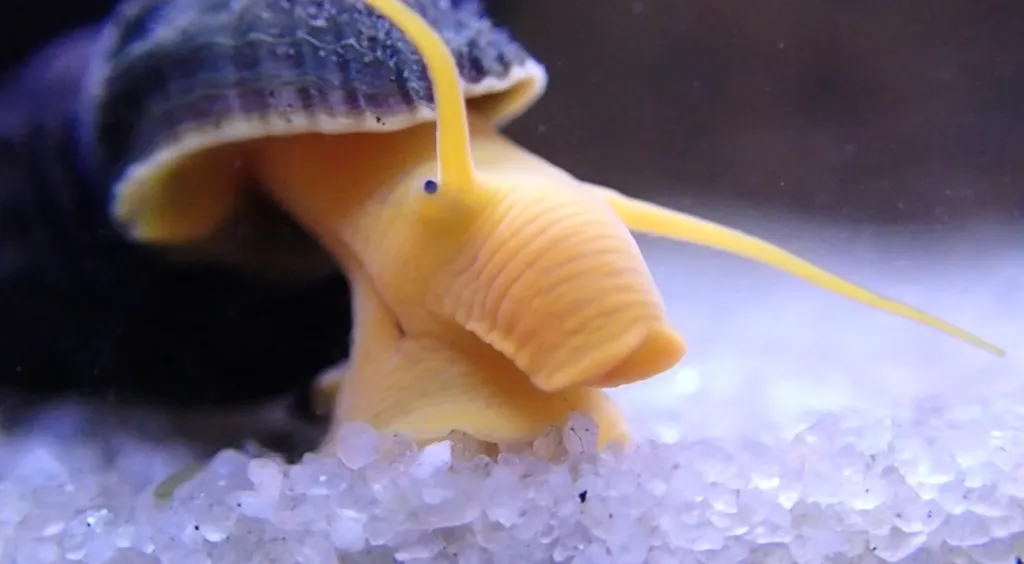
Gold rabbit snail
Tylomelania gemmifera
Freshwater2.8 in (7 cm) · 16 gal (60 L)75–82°F (24–28°C)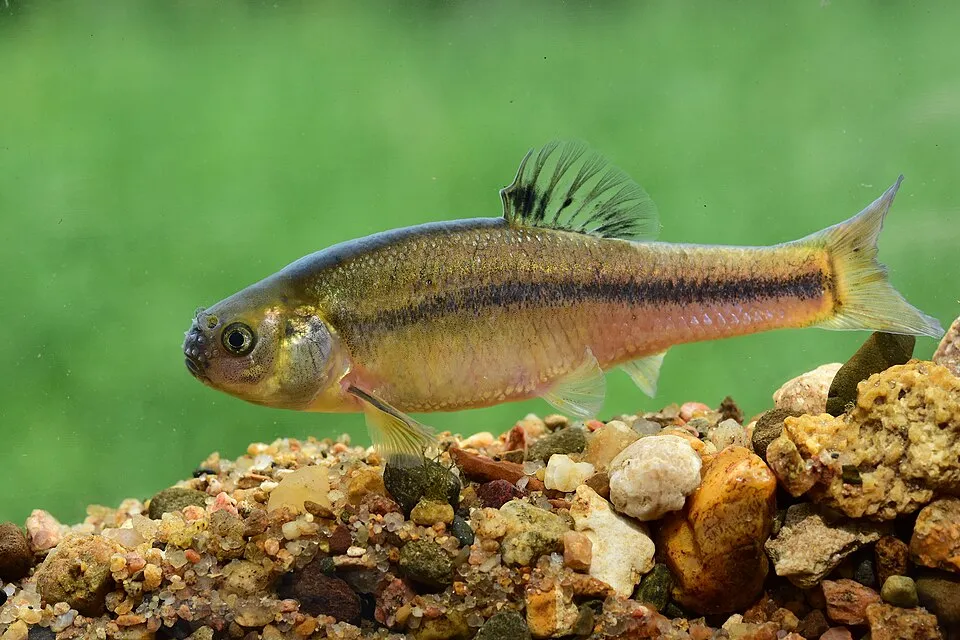
Fathead minnow
Pimephales promelas
Freshwater3 in (7.5 cm) · 20 gal (75 L)50–72°F (10–22°C)
Blackbelly limia
Limia melanogaster
Freshwater2.4 in (6 cm) · 16 gal (60 L)72–82°F (22–28°C)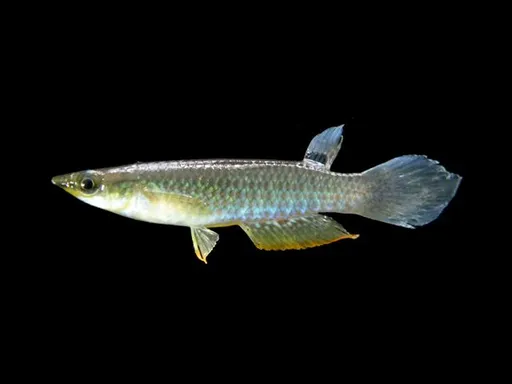
Blue panchax
Aplocheilus panchax
Freshwater3.5 in (9 cm) · 20 gal (75 L)72–82°F (22–28°C)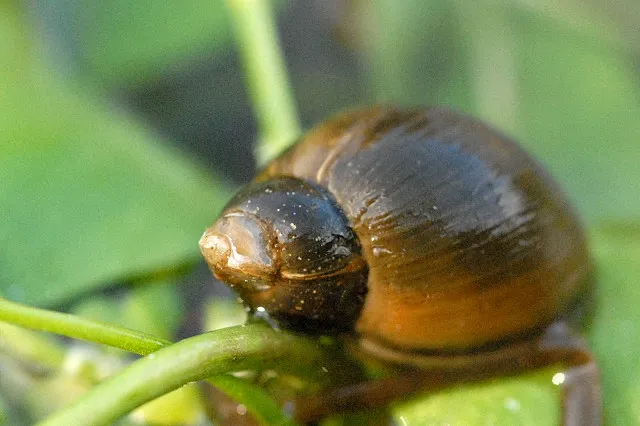
Wandering snail
Ampullaceana balthica
Freshwater0.8 in (2 cm) · 11 gal (40 L)50–84°F (10–29°C)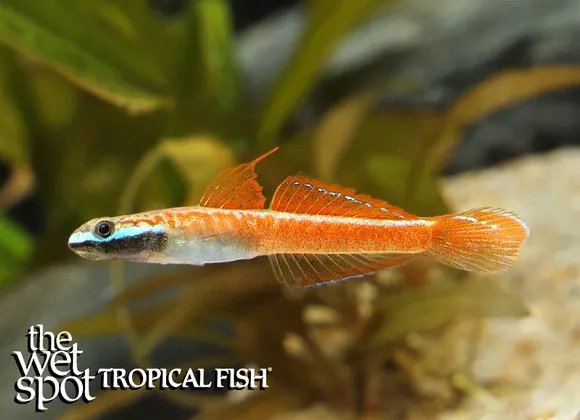
Annie's goby
Stiphodon annieae
Freshwater1.2 in (3 cm) · 14 gal (54 L)73–81°F (23–27°C)
Common questions
What size tank does a Scarlet livebearer need?
A Scarlet livebearer needs at least 16 gal (60 L). It spends most of its time in the top.
What temperature and pH does a Scarlet livebearer need?
A Scarlet livebearer is comfortable at 72–82°F (22–28°C) with a pH of 7.5–8.2.
How big does a Scarlet livebearer get?
An adult Scarlet livebearer reaches about 1.6 in (4 cm).
Related species
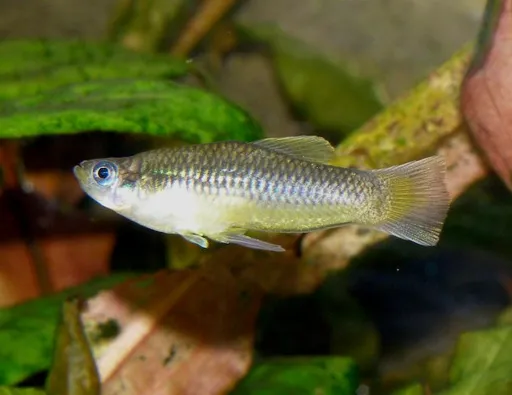 2.8 in (7 cm)24 gal (90 L)72–82°F (22–28°C)
Blue-eyed livebearer
Priapella intermedia
2.8 in (7 cm) · 24 gal (90 L)
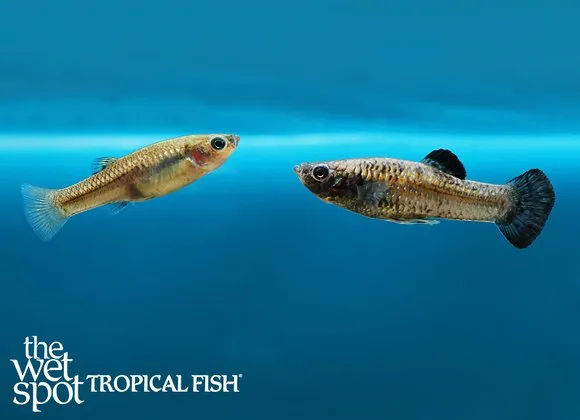 1.6 in (4 cm)11 gal (40 L)72–81°F (22–27°C)
Dwarf molly
Poecilia chica
1.6 in (4 cm) · 11 gal (40 L)
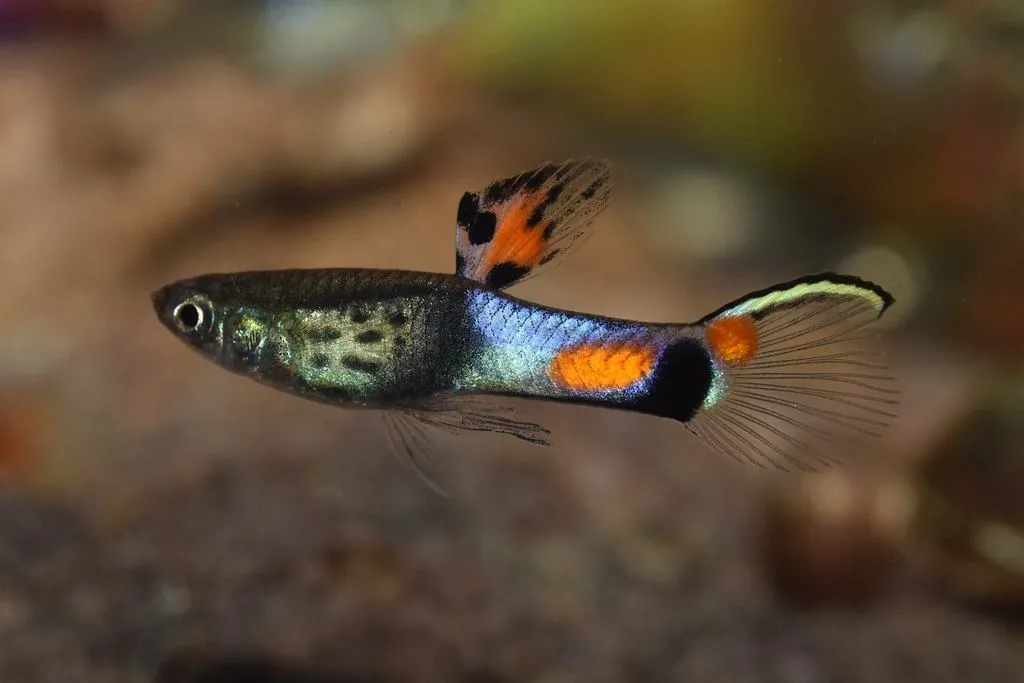 1.6 in (4 cm)5 gal (20 L)72–86°F (22–30°C)
Endler's livebearer
Poecilia wingei
1.6 in (4 cm) · 5 gal (20 L)
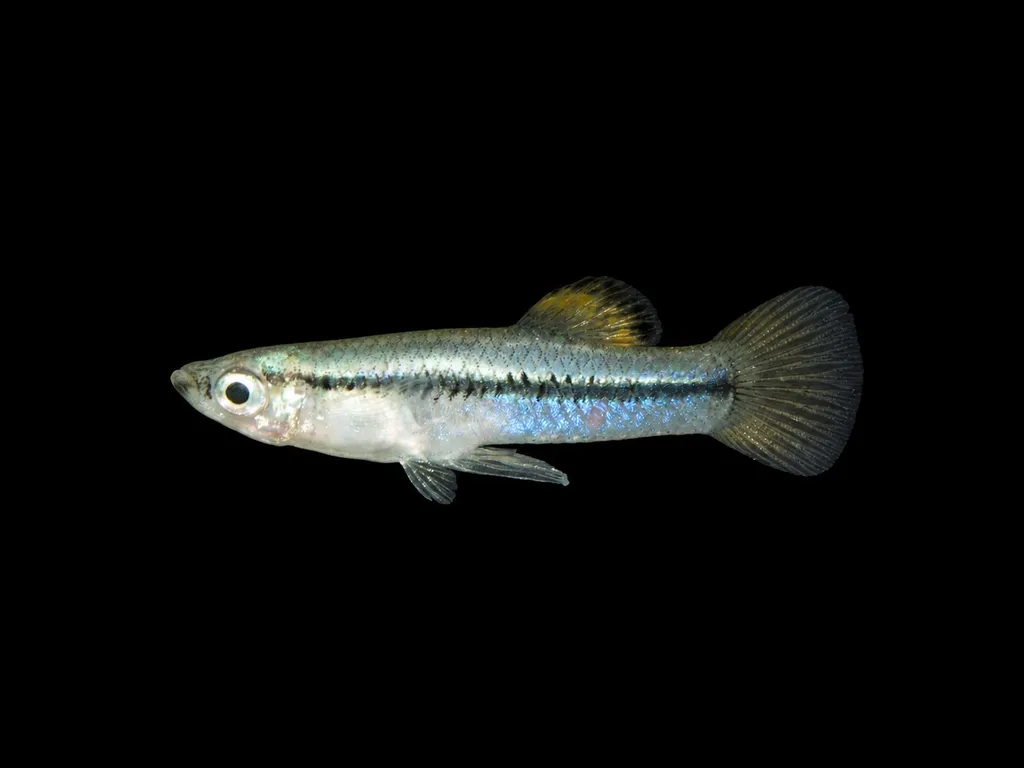 1.8 in (4.5 cm)14 gal (54 L)72–81°F (22–27°C)
Blackline mosquitofish
Gambusia vittata
1.8 in (4.5 cm) · 14 gal (54 L)
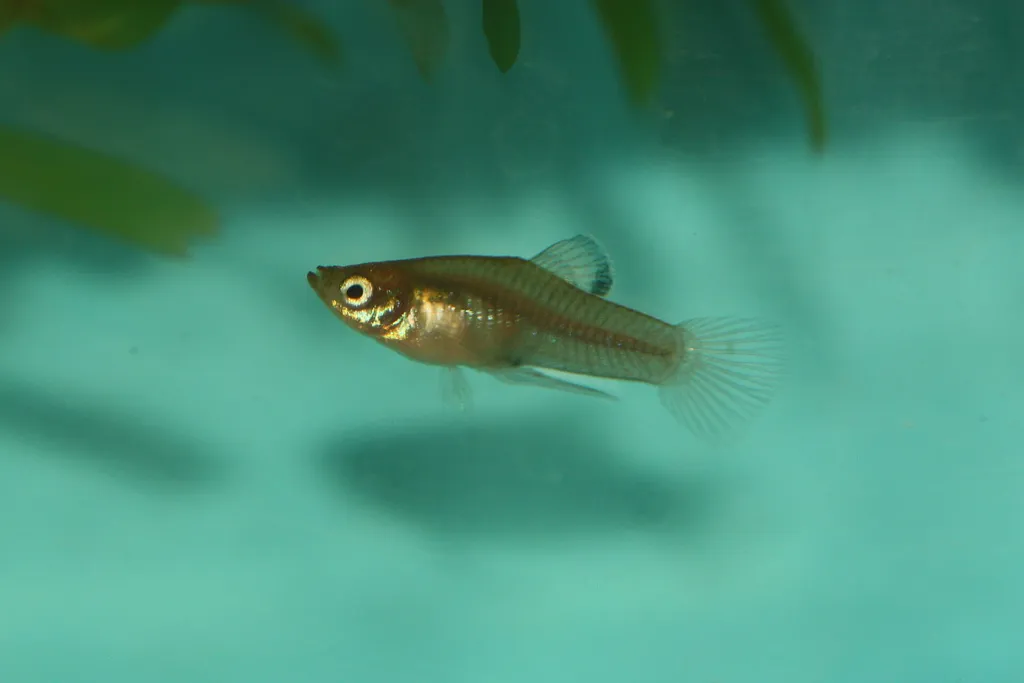 1.4 in (3.5 cm)11 gal (40 L)72–81°F (22–27°C)
Dwarf merry widow
Phallichthys tico
1.4 in (3.5 cm) · 11 gal (40 L)
 1.4 in (3.5 cm)11 gal (40 L)68–86°F (20–30°C)
Fourspotted toothcarp
Phallichthys quadripunctatus
1.4 in (3.5 cm) · 11 gal (40 L)