Variety of Guppy
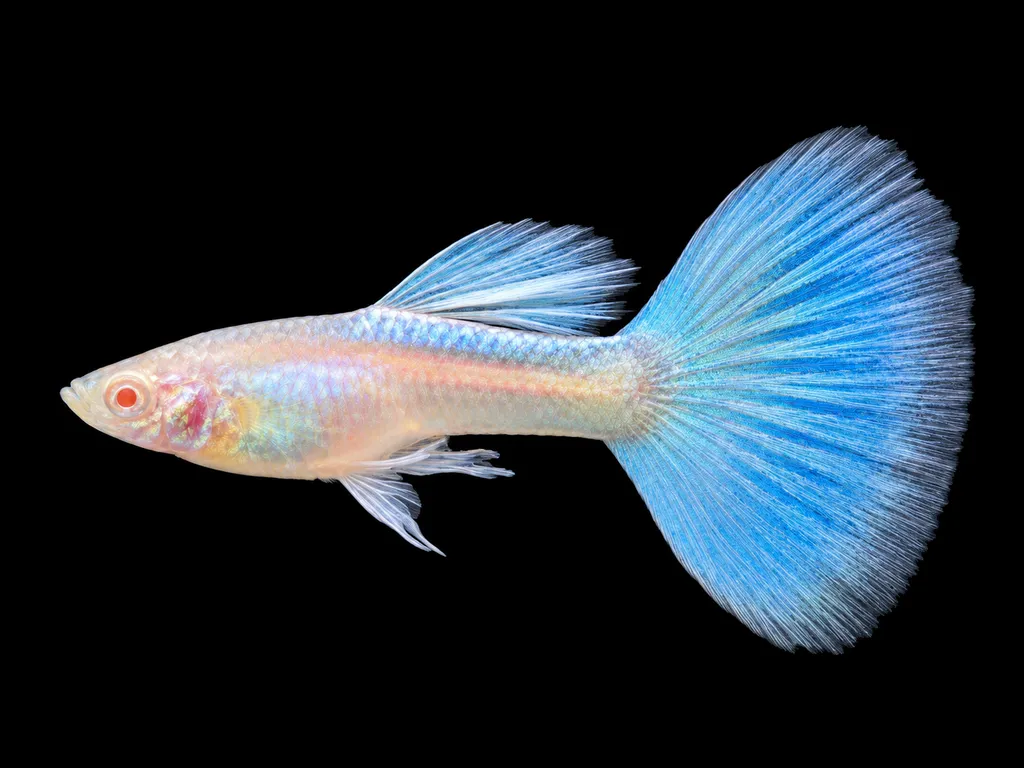
Tuxedo guppy
Poecilia reticulata
One of 9 varieties of Poecilia reticulata · See all varieties →
Also known as Blonde Tuxedo Guppy, Pink Tuxedo Guppy, Golden Tuxedo Guppy
FreshwaterBrackishFish
Varieties · Poecilia reticulata
See all 9 →
Care at a glance
- Temperature
- 64–82°F
- 18–28°C
- pH
- 6.8–7.8
- Adult size
- 2.4 in
- 6 cm
- Minimum tank
- 13 gal
- 50 L
- Temperament
- Peaceful
- Social behavior
- Social
- Swim level
- Middle
- Difficulty
- Beginner
- Breeding
- Easy
- Rarity
- Very common
- Family
- Poeciliidae
Overview
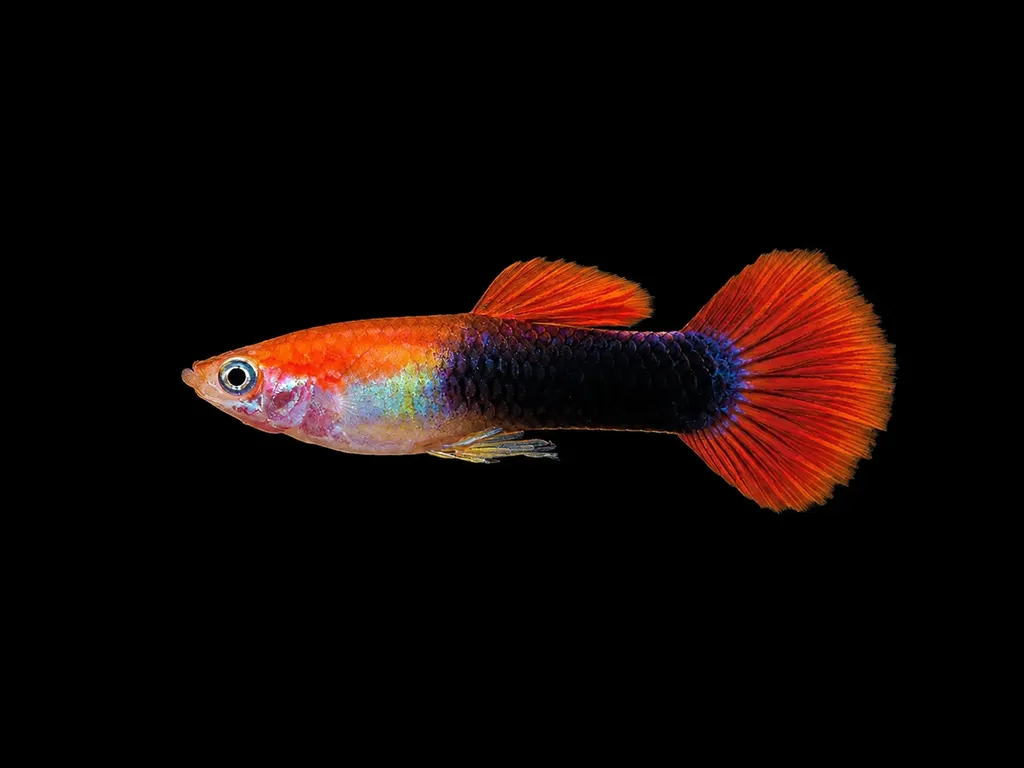
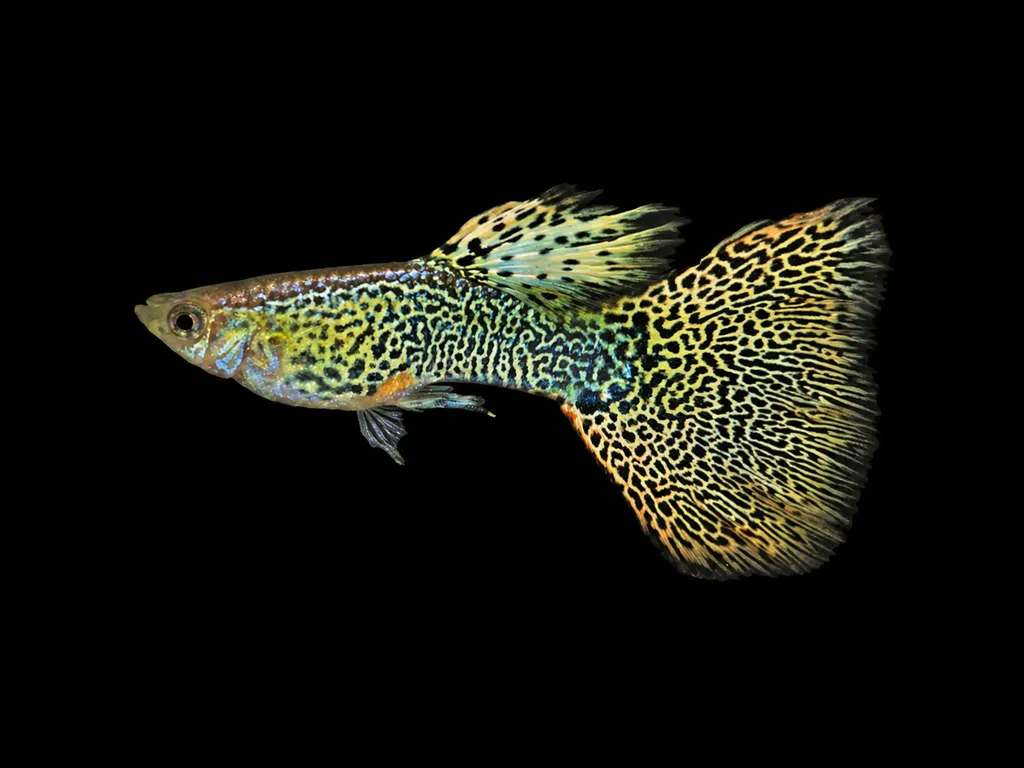
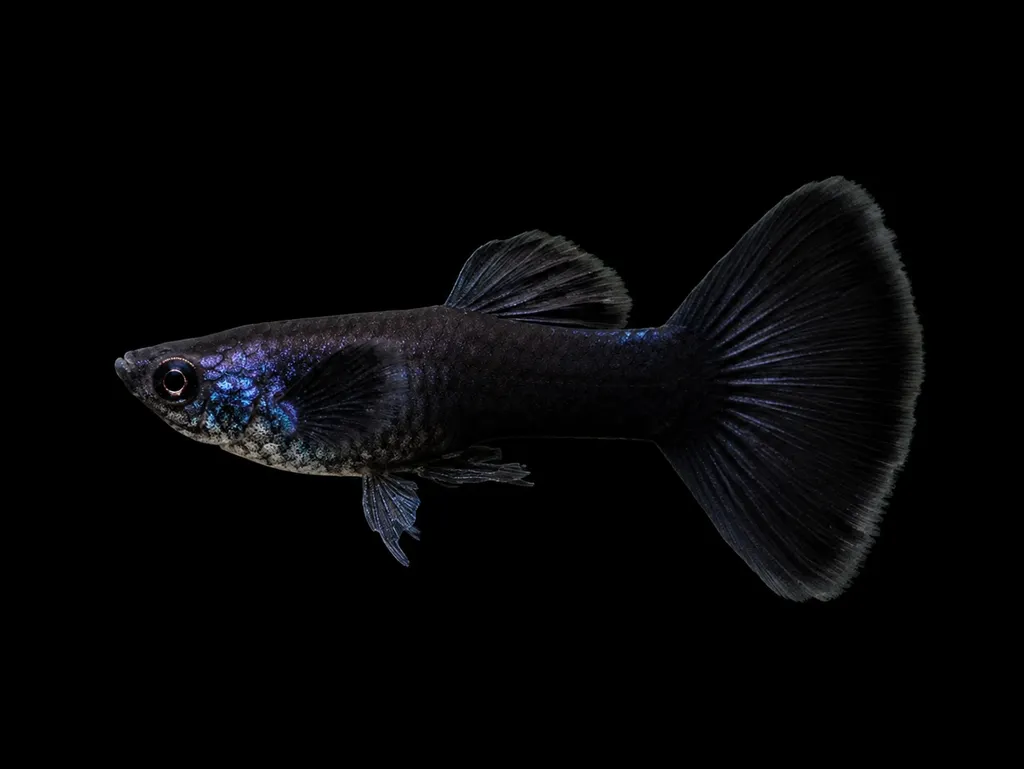
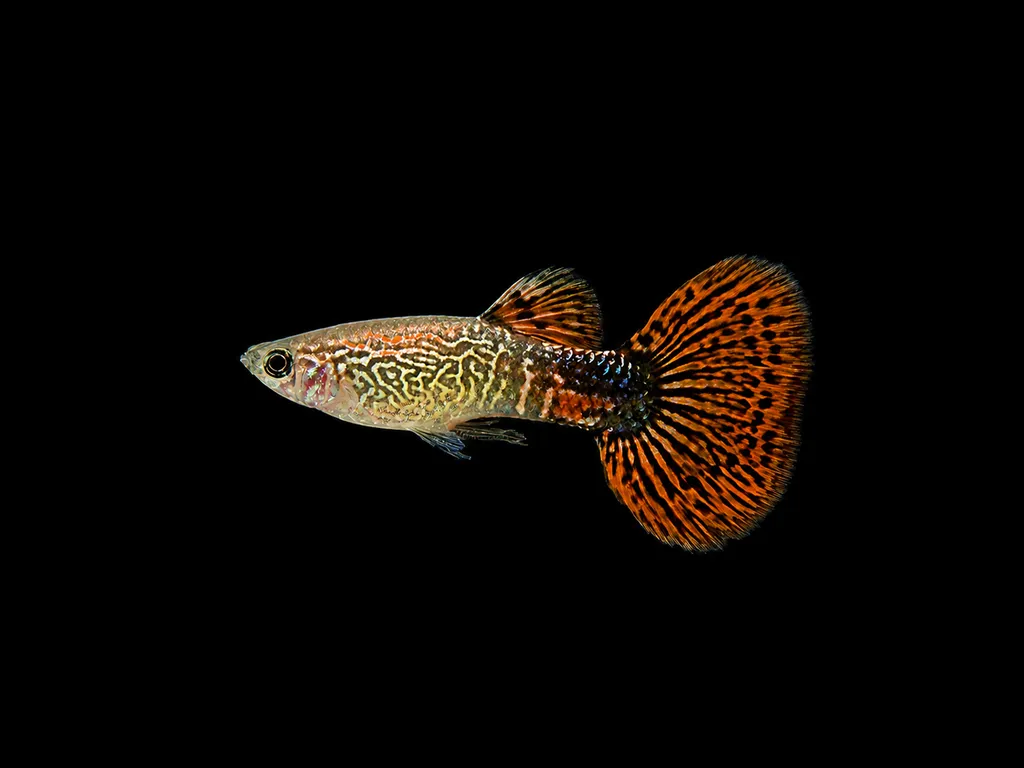
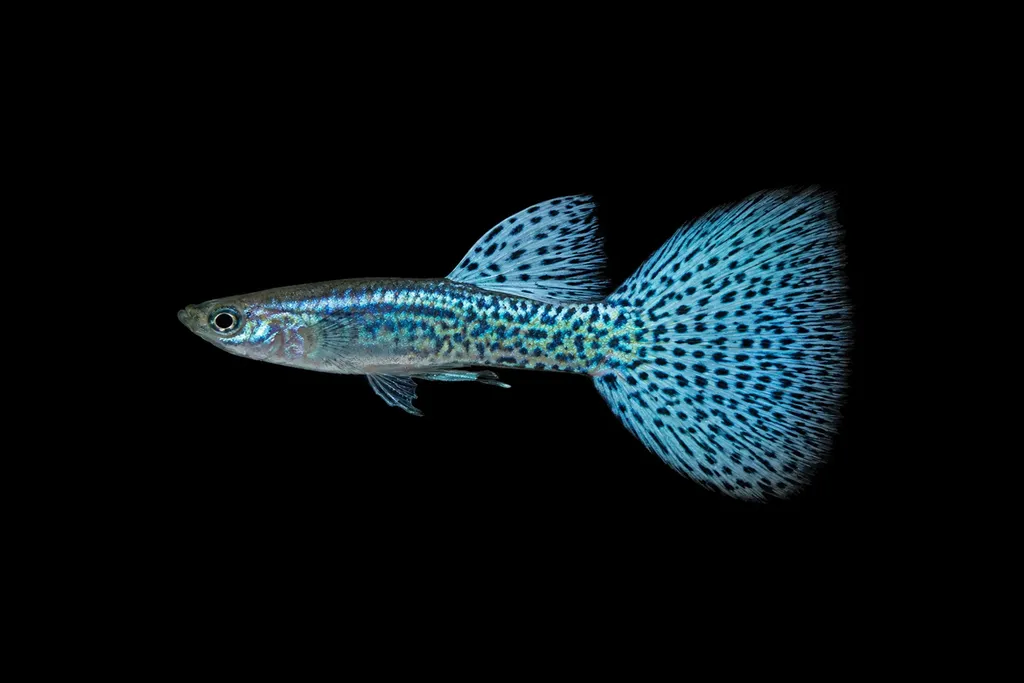
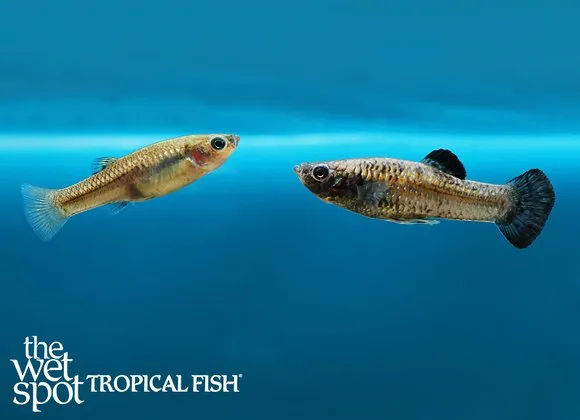
Tuxedo means the rear half of the body is dark, roughly from the dorsal back, with the front end and the tail carrying the color. Shops stack the label with those colors: Blonde Tuxedo, Pink Tuxedo, Golden Tuxedo. How far forward the dark block runs varies between suppliers. It is one of the easier patterns to grade through a bag before you buy.
In the wild
The dark block is a domestic trait, not a wild guppy marking. It comes from the half-black stock that guppy genetics has long called Nigrocaudatus II, kept distinct from full black Nigrocaudatus I. No breeder, country or decade is documented for the Tuxedo label itself. Read it as a trade name sitting over that older half-black line.
Good to know
Hobby sources disagree on how half-black is inherited, calling it an autosomal recessive in some strains and Y-linked in others. A 1999 study in Zoological Science looked at one Tuxedo strain and found the black caudal peduncle behaving as a single sex-linked dominant gene. It sat at a different locus from the red tail gene in the same fish. That study reported both patterns expressed in males and females rather than in males alone.
Did you know
The dark block and the tail color travel separately. In that 1999 Tuxedo study, the black caudal peduncle and the red tail sat at different loci across the X and Y chromosomes. That is why breeders can move new tail colors onto the same tuxedo body.
Weekly picks
Tank mates
Tuxedo guppy is a peaceful, social species that keeps to the middle. These picks share a community profile with it, are safe together in both directions, and overlap on water type, temperature and pH.
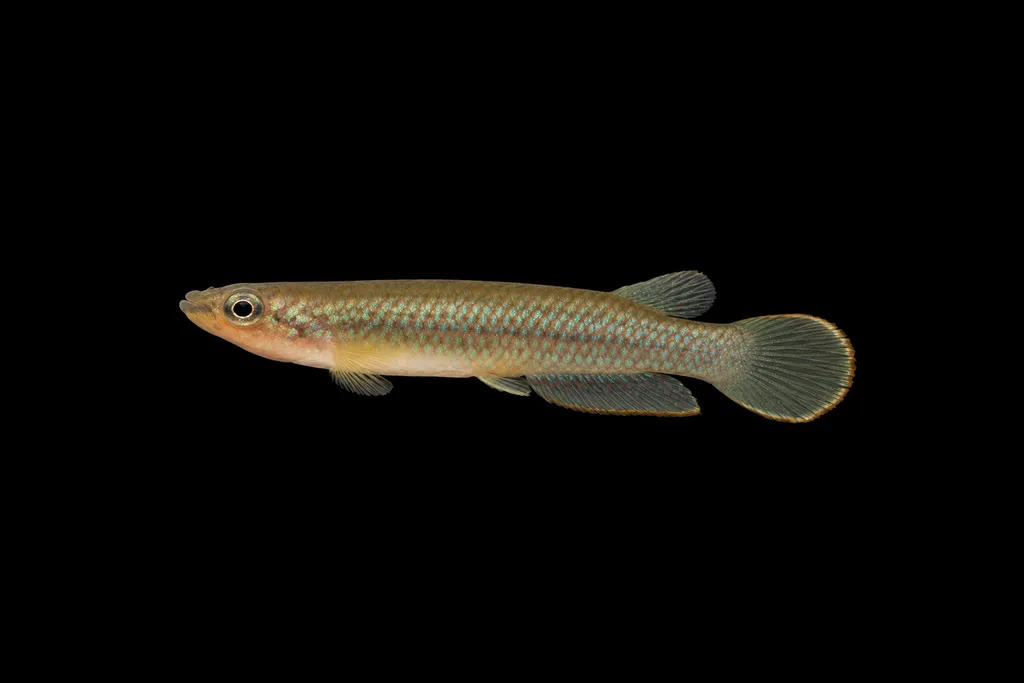
Guinean panchax
Epiplatys guineensis
Freshwater2.8 in (7 cm) · 14 gal (54 L)68–77°F (20–25°C)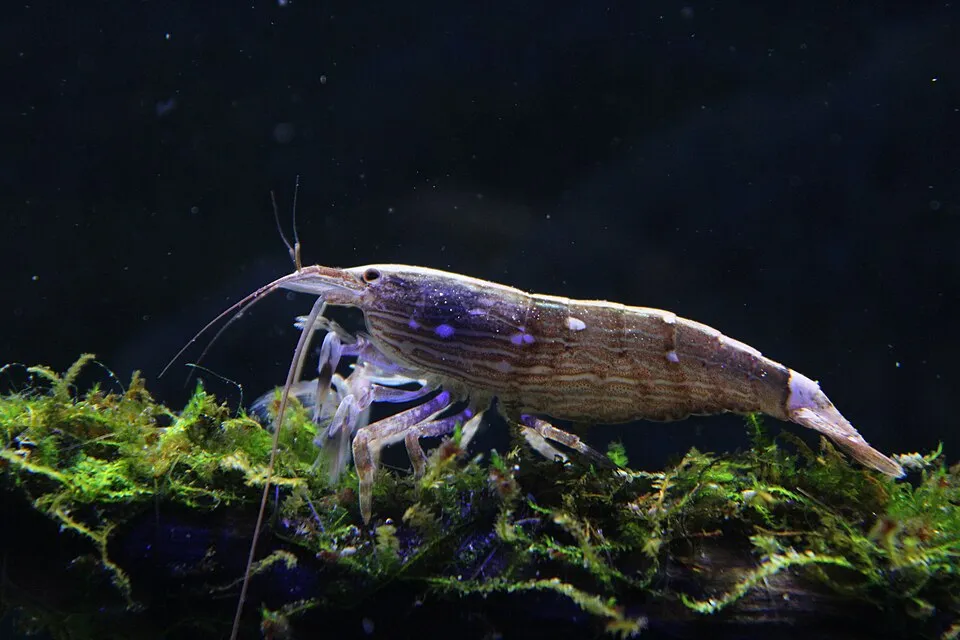
Bamboo shrimp
Atyopsis moluccensis
Freshwater3.9 in (10 cm) · 13 gal (50 L)72–84°F (22–29°C)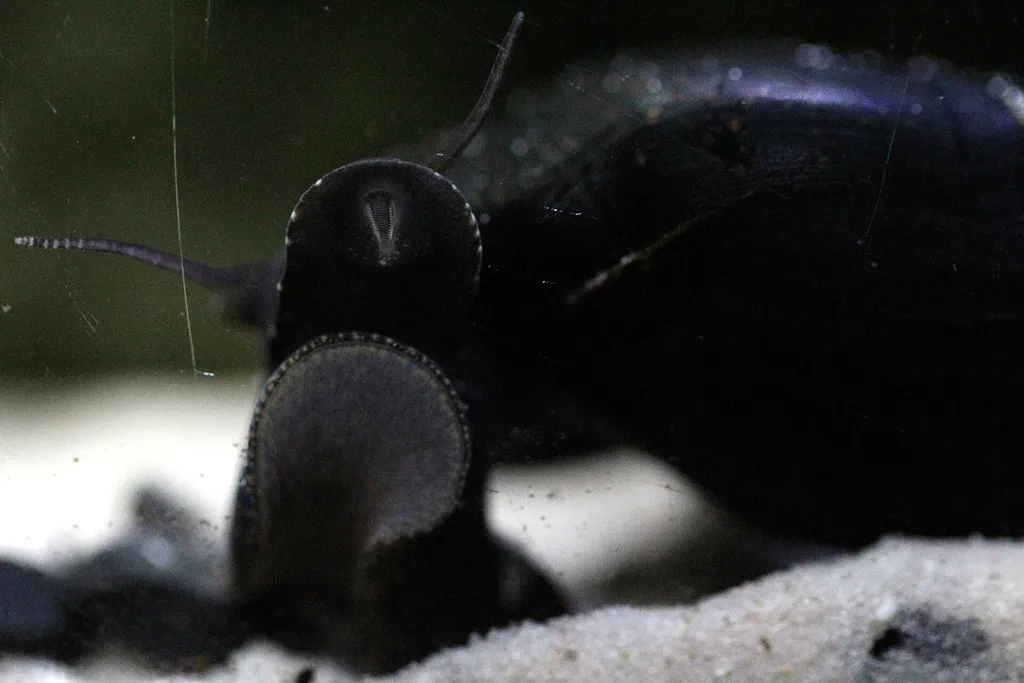
Black devil snail
Faunus ater
Freshwater3.9 in (10 cm) · 13 gal (50 L)72–86°F (22–30°C)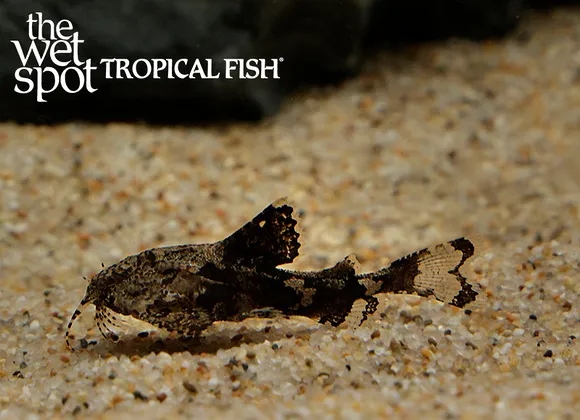
Butterfly hara catfish
Hara hara
Freshwater3.1 in (8 cm) · 14 gal (54 L)68–79°F (20–26°C)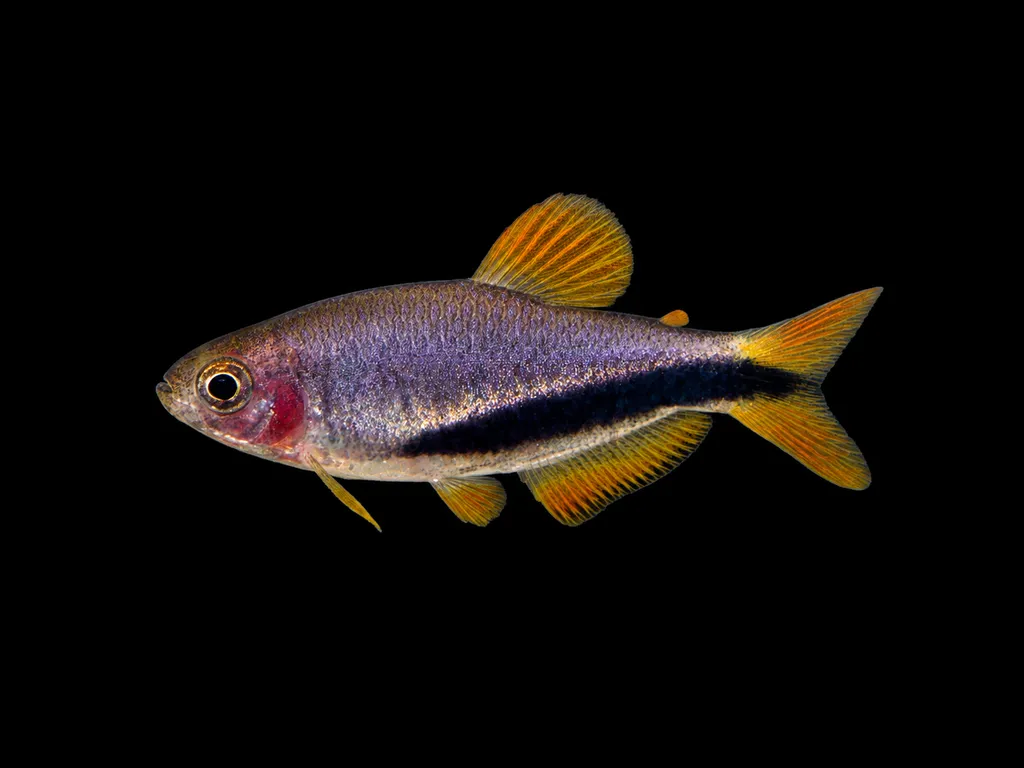
Black arrow tetra
Inpaichthys luizae
Freshwater1.4 in (3.5 cm) · 14 gal (54 L)72–81°F (22–27°C)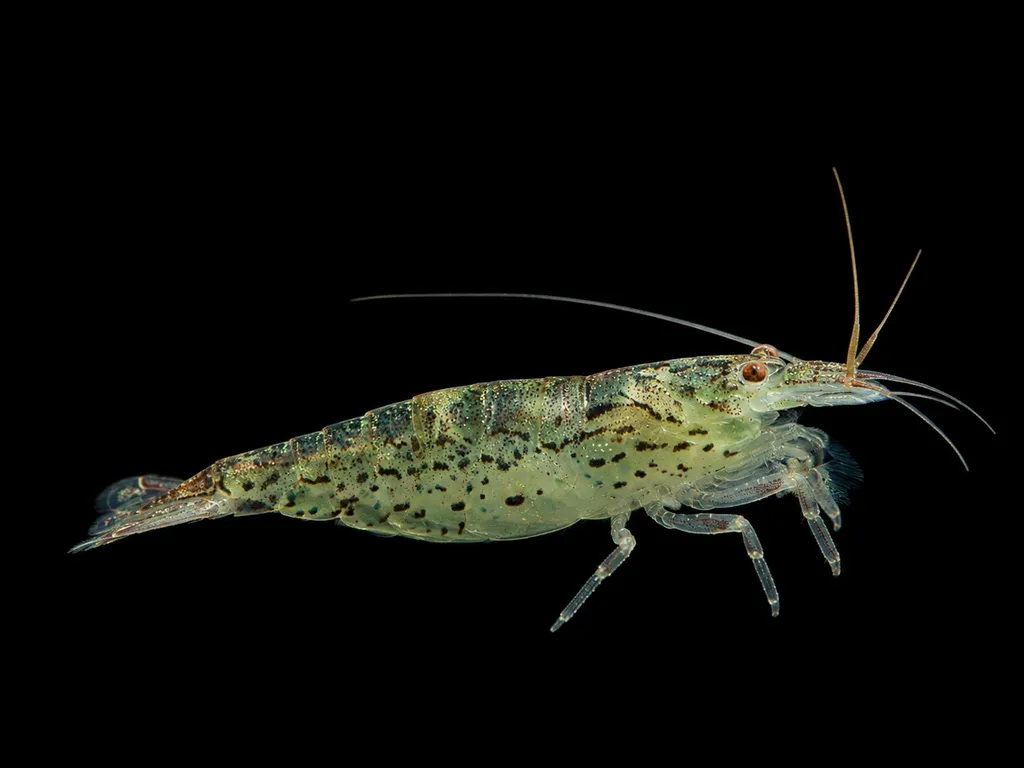
Green lace shrimp
Atyoida pilipes
Freshwater2.8 in (7 cm) · 14 gal (54 L)73–82°F (23–28°C)
Common questions
Is a Tuxedo guppy a different species from the Guppy?
No. A Tuxedo guppy is a variety of the Guppy, Poecilia reticulata, and it wants the same tank, water and food as the species.
What size tank does a Tuxedo guppy need?
A Tuxedo guppy needs at least 13 gal (50 L). It spends most of its time in the middle.
How big does a Tuxedo guppy get?
An adult Tuxedo guppy reaches about 2.4 in (6 cm).
Related species
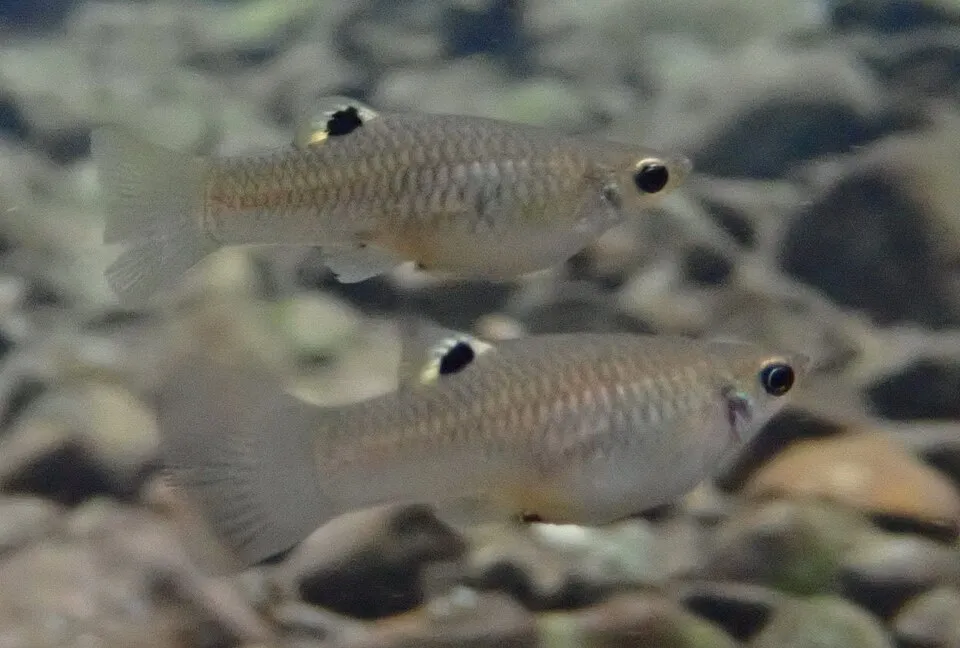 2.4 in (6 cm)16 gal (60 L)77–86°F (25–30°C)
Cauca molly
Poecilia caucana
2.4 in (6 cm) · 16 gal (60 L)
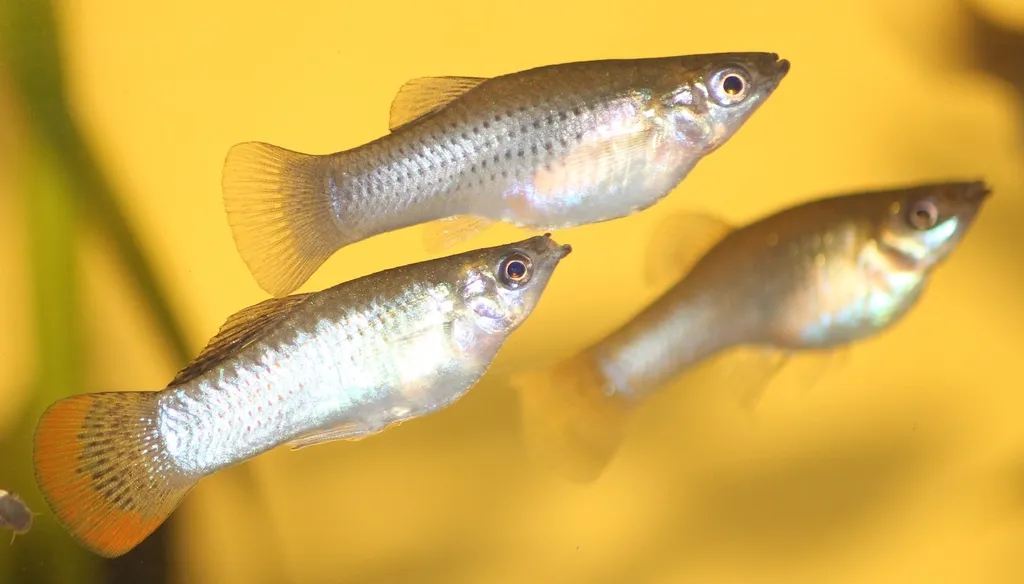 2.8 in (7 cm)29 gal (110 L)72–81°F (22–27°C)
Pacific molly
Poecilia butleri
2.8 in (7 cm) · 29 gal (110 L)
 2 in (5 cm)15 gal (55 L)75–82°F (24–28°C)
Melanzona guppy
Poecilia parae
2 in (5 cm) · 15 gal (55 L)
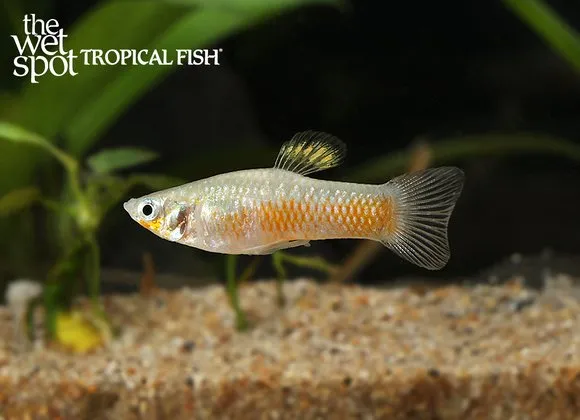 3.1 in (8 cm)20 gal (75 L)72–81°F (22–27°C)
Southern molly
Poecilia vivipara
3.1 in (8 cm) · 20 gal (75 L)
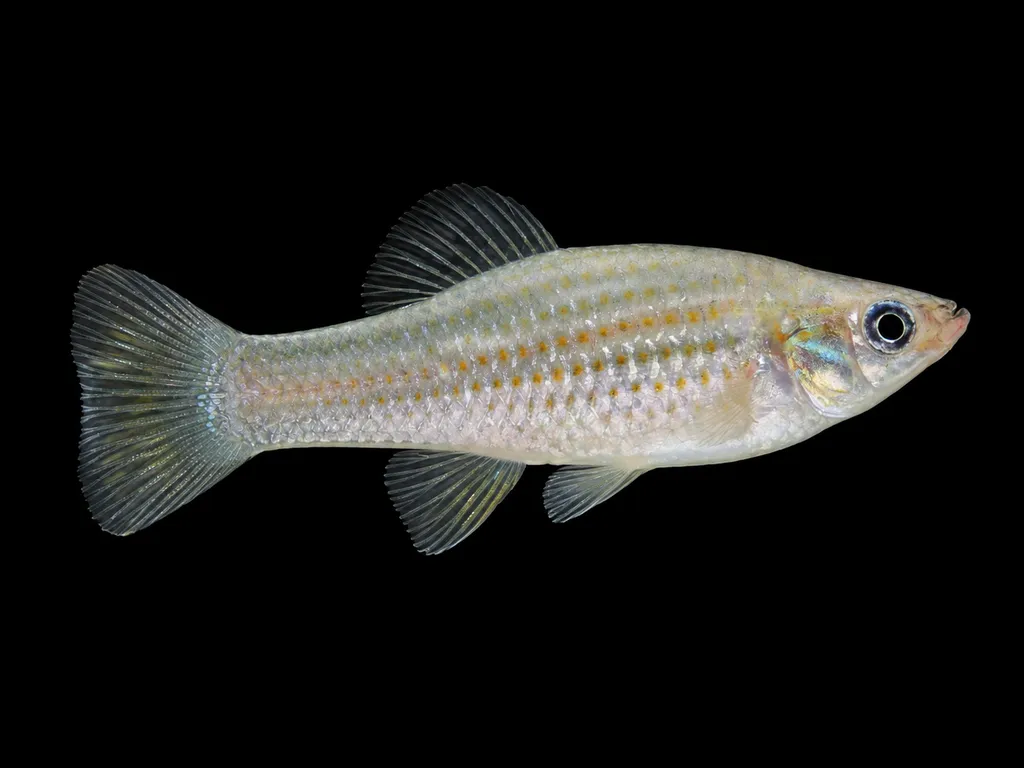 3.5 in (9 cm)20 gal (75 L)68–82°F (20–28°C)
Amazon molly
Poecilia formosa
3.5 in (9 cm) · 20 gal (75 L)
 1.6 in (4 cm)11 gal (40 L)72–81°F (22–27°C)
Dwarf molly
Poecilia chica
1.6 in (4 cm) · 11 gal (40 L)