Variety of Guppy
Delta guppy
Poecilia reticulata
One of 9 varieties of Poecilia reticulata · See all varieties →
Also known as Green Delta Guppy, Blue Delta Guppy, Purple Delta Guppy
FreshwaterBrackishFish
Varieties · Poecilia reticulata
See all 9 →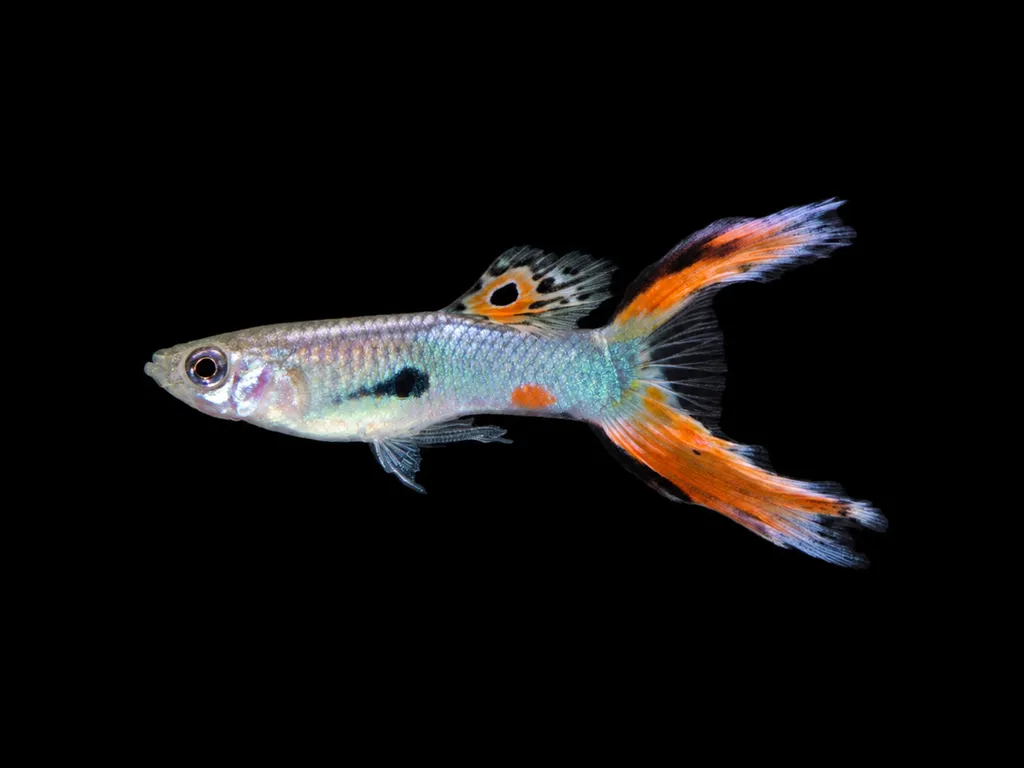
Care at a glance
- Temperature
- 64–82°F
- 18–28°C
- pH
- 6.8–7.8
- Adult size
- 2.4 in
- 6 cm
- Minimum tank
- 10 gal
- 38 L
- Temperament
- Peaceful
- Social behavior
- Social
- Swim level
- Middle
- Difficulty
- Beginner
- Breeding
- Livebearer · Easy
- Rarity
- Very common
- Family
- Poeciliidae
Overview
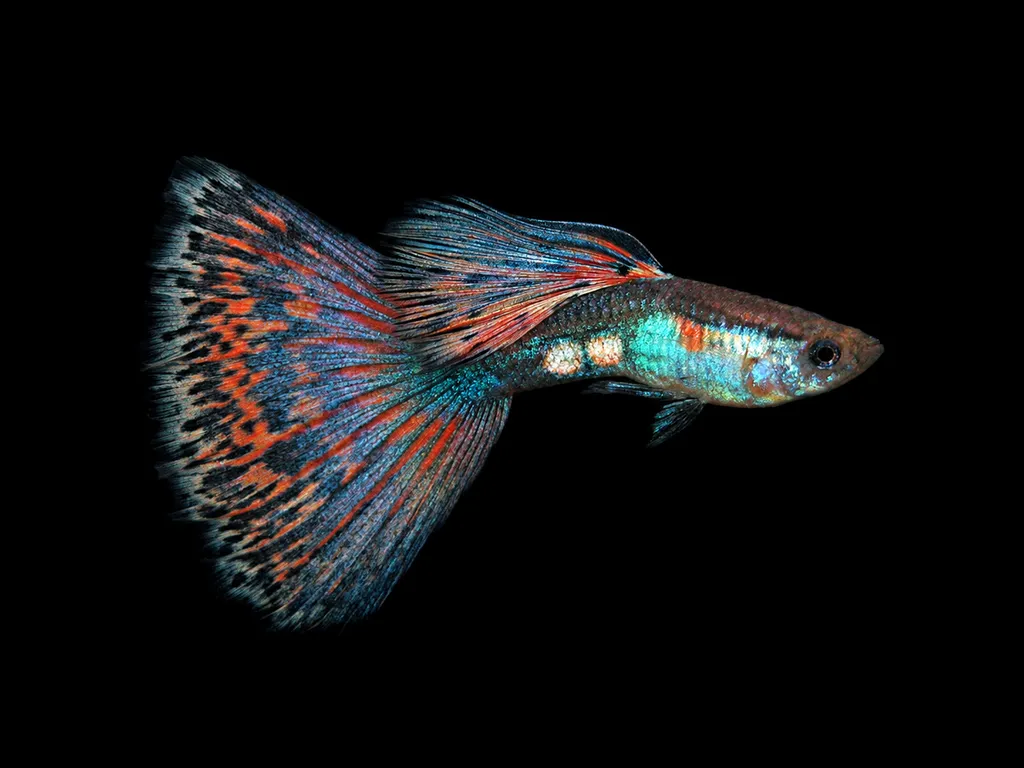
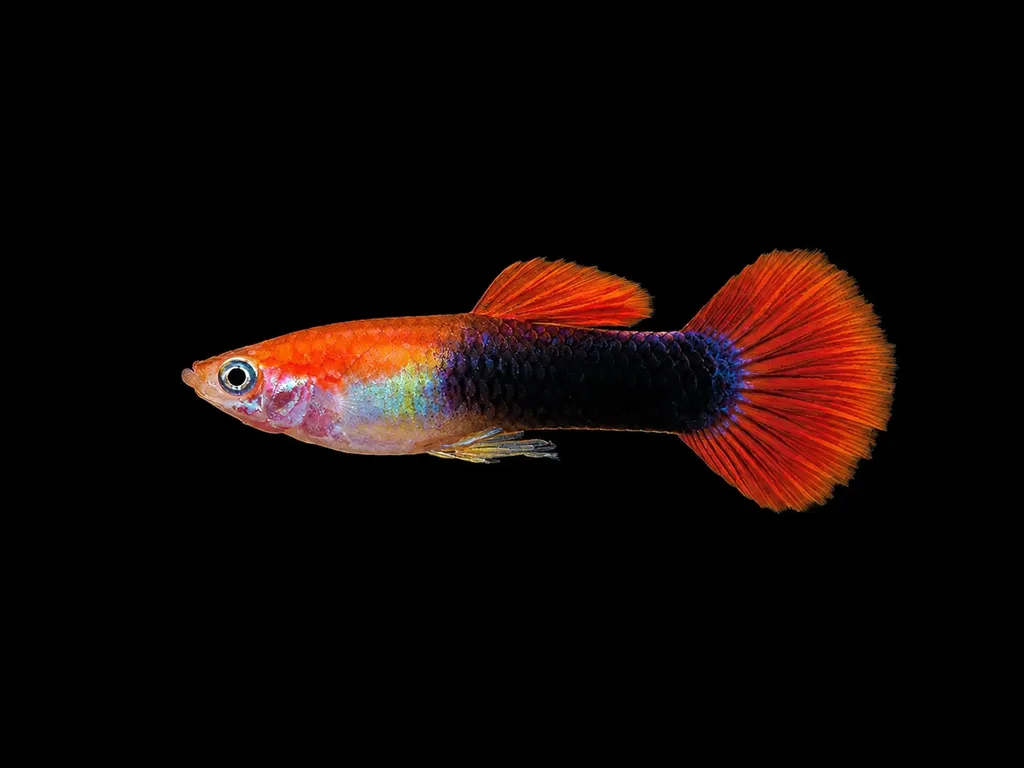
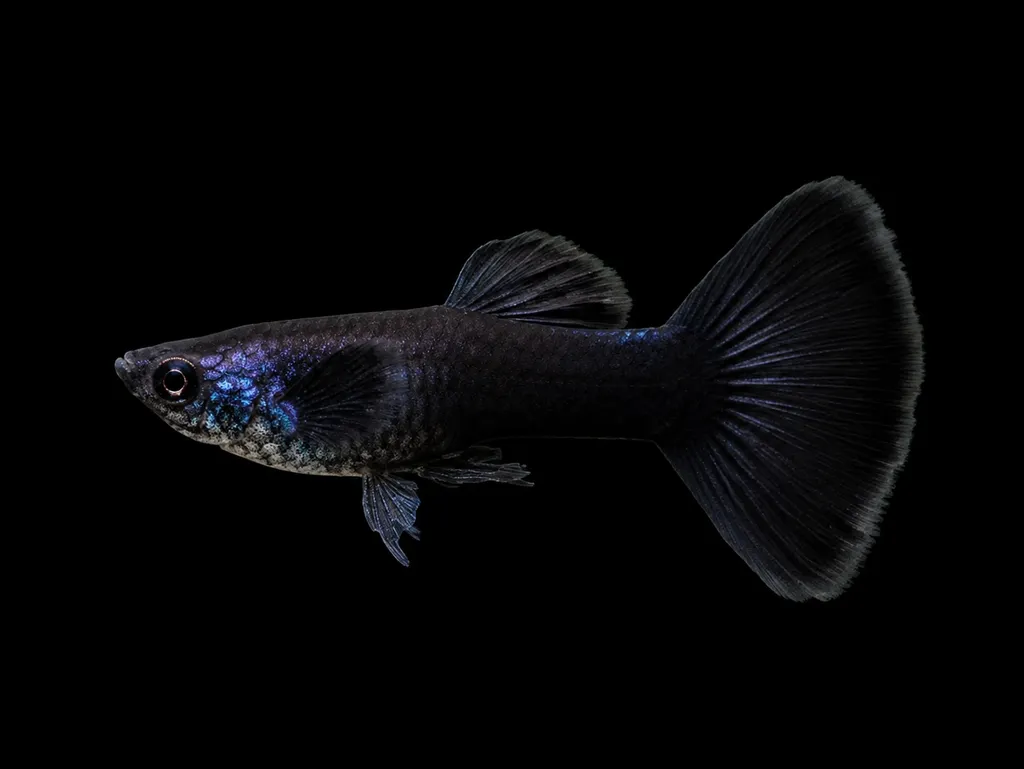
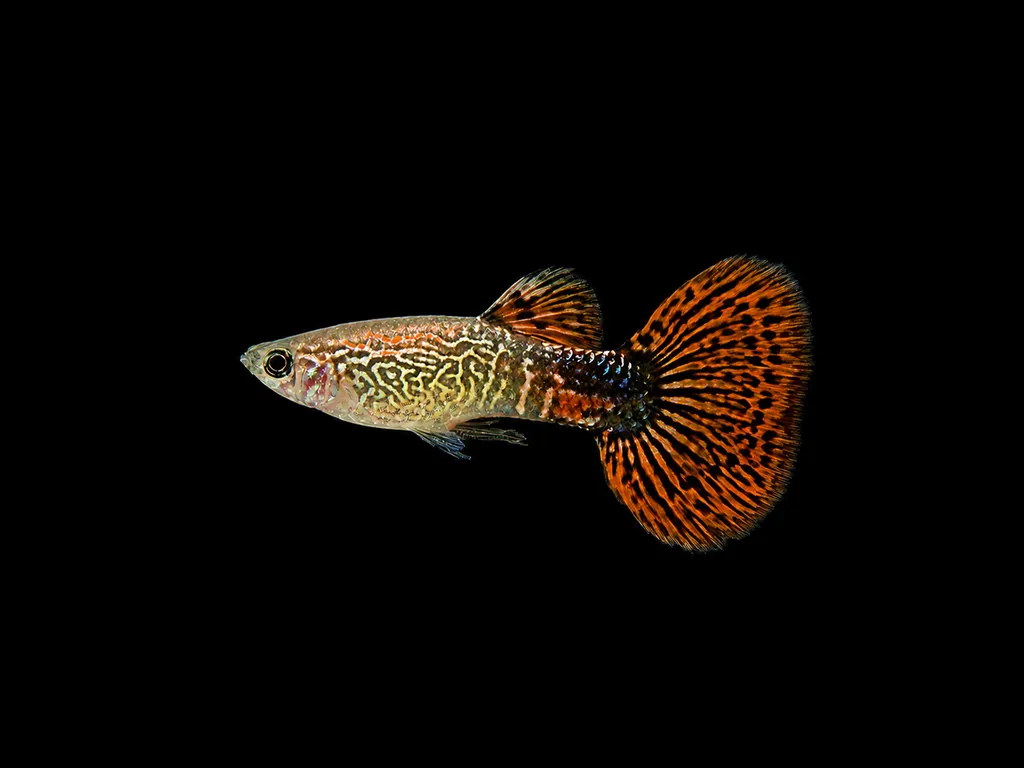
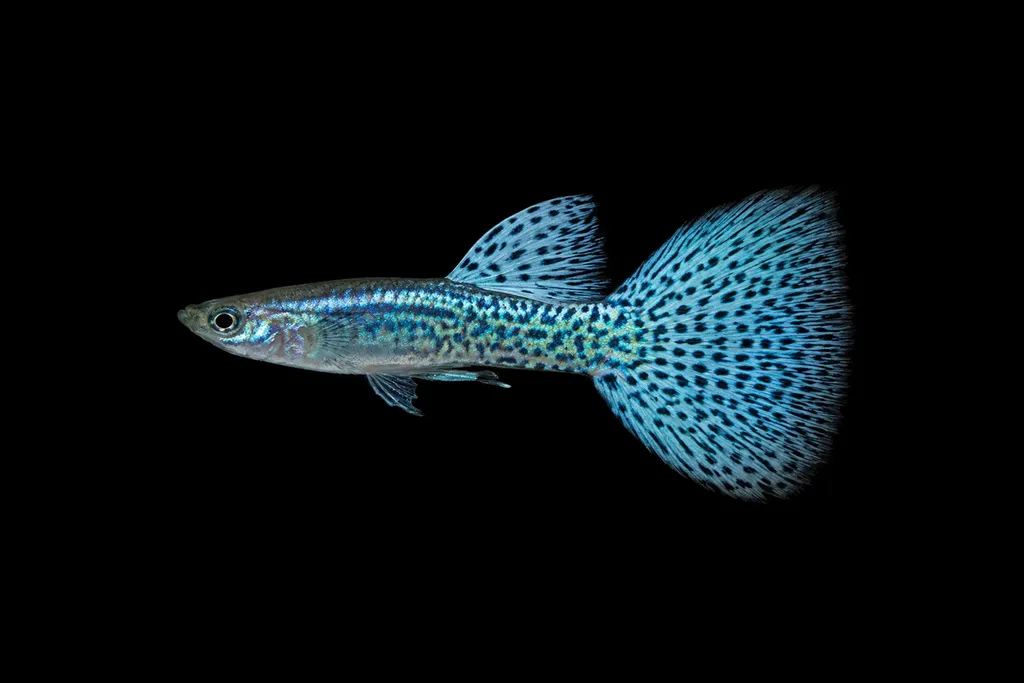
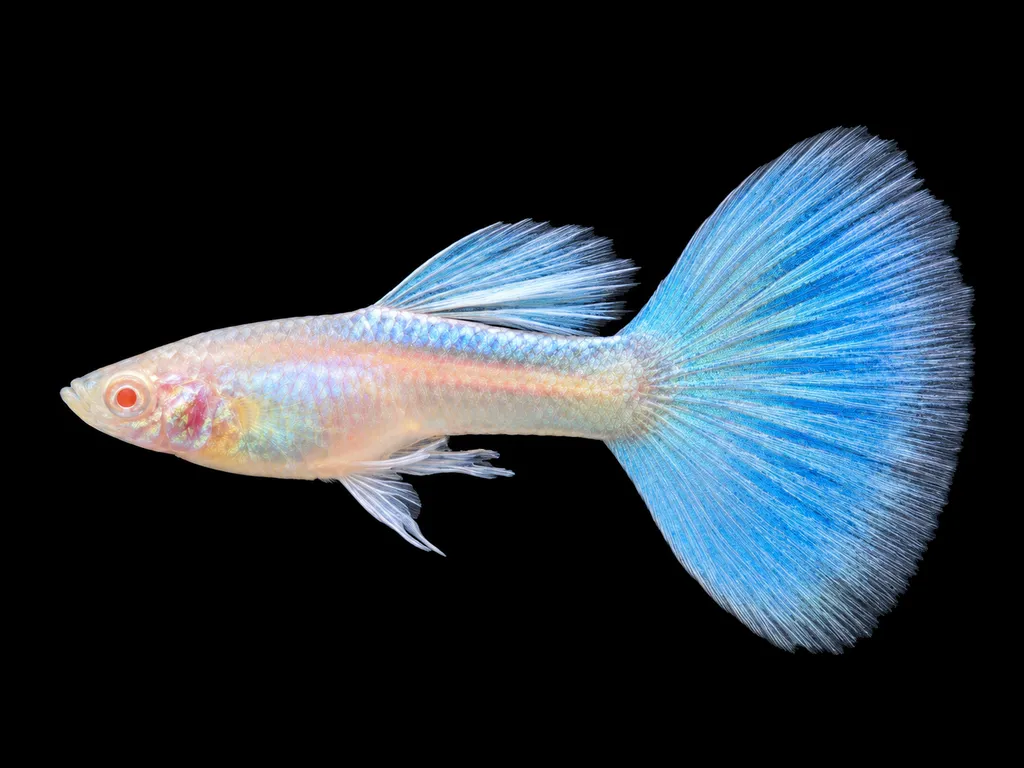
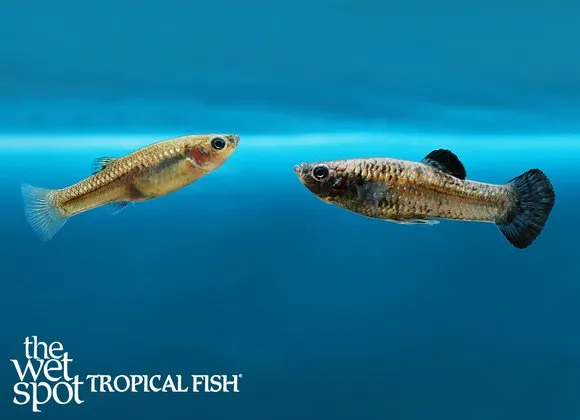
The delta guppy is a show guppy bred for a wide tail spread. It is peaceful, easy to keep and suits a calm community tank.
Did you know
The delta guppy's class is drawn by an angle, 55 to 75 degrees off the caudal peduncle in the IFGA standard. Veiltails sit at 40 to 50, so the two shapes are told apart by spread alone. A tail that opens past the top of the range sits outside the class rather than scoring above it.
Caring for the delta guppy
Keep delta guppies in a group in a tank of 10 gal (38 L) or more, since guppies look their best in numbers. A planted tank suits them, and they spend most of their time in the middle. A large delta tail drags in strong flow, so aim the filter return along the glass.
Delta guppies are very adaptable. Give them neutral to slightly hard water at 64 to 82°F (18 to 28°C) and a pH of 6.8 to 7.8. They can live in brackish water as well as fresh.
Delta guppies eat almost anything, including quality flake, micro pellets and frozen daphnia or brine shrimp. They are peaceful and social, and they settle well in a calm community tank.
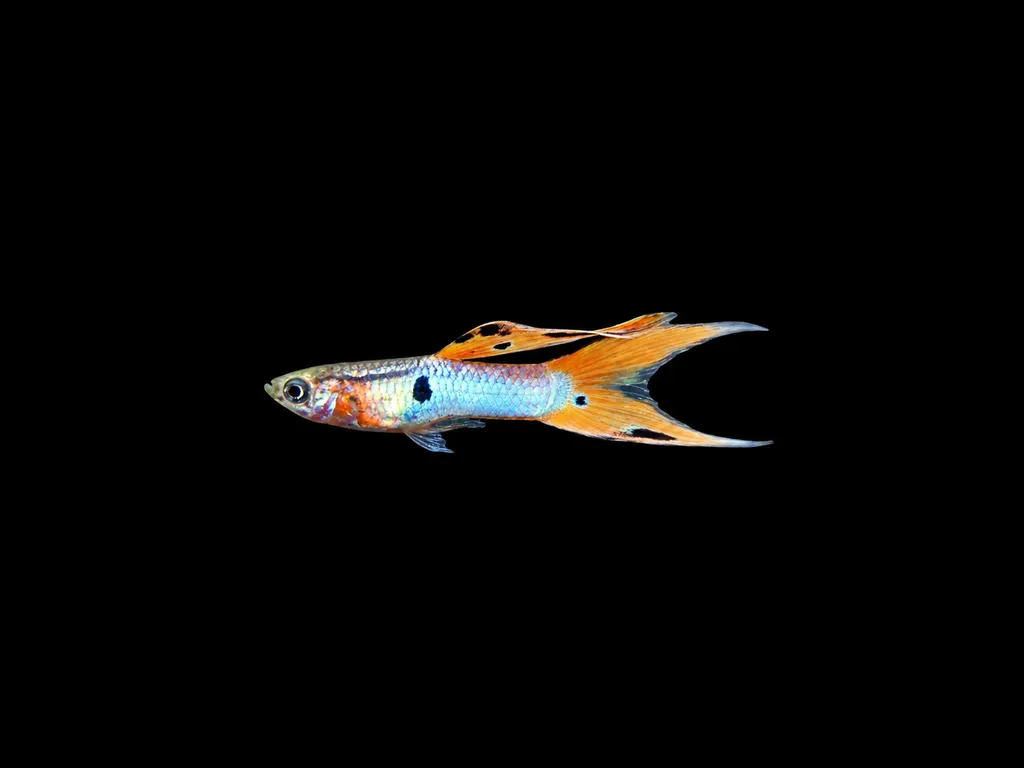
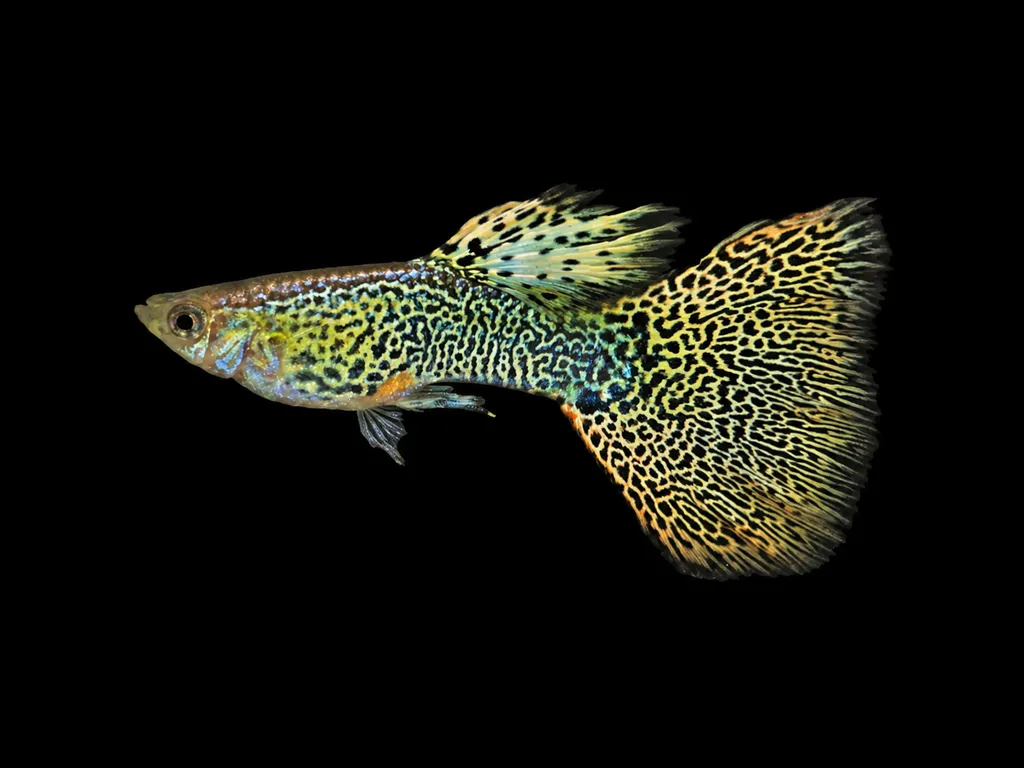
Males carry the big finnage, which is why stores list delta stock as males and sell females plain. Females carry a much smaller caudal fin, and males are smaller than females but more colorful. Keep more females than males to cut down on pestering.
Delta guppies are livebearers that give birth to free-swimming young. They breed so easily that a mixed group produces fry constantly. Females can store sperm and deliver several broods from one mating, so plan for the numbers or keep males only.
Good to know
The delta guppy is named for its tail shape, not a color. Shops stack the name with a color word, as in Blue, Purple or Green Delta, and fin size varies between farms. Tail spread is a selected, many-gene trait rather than a simple recessive. Fry from good parents show a range of spreads, and only the best hold the shape. The fin is enlarged by longer caudal rays with more membrane between them, and the body is unchanged. The IFGA runs females in their own classes rather than against the males.
In the wild
The delta tail is a show shape rather than a wild one, since wild male guppies carry a small rounded tail. Fancy breeders selected for tail spread over decades, and the International Fancy Guppy Association fixed the class in a standard. No single breeder or country owns the shape, because farms everywhere work the same class.
Weekly picks
Tank mates
The delta guppy is a peaceful, social species that keeps to the middle. These picks share a community profile with it, are safe together in both directions, and overlap on water type, temperature and pH.
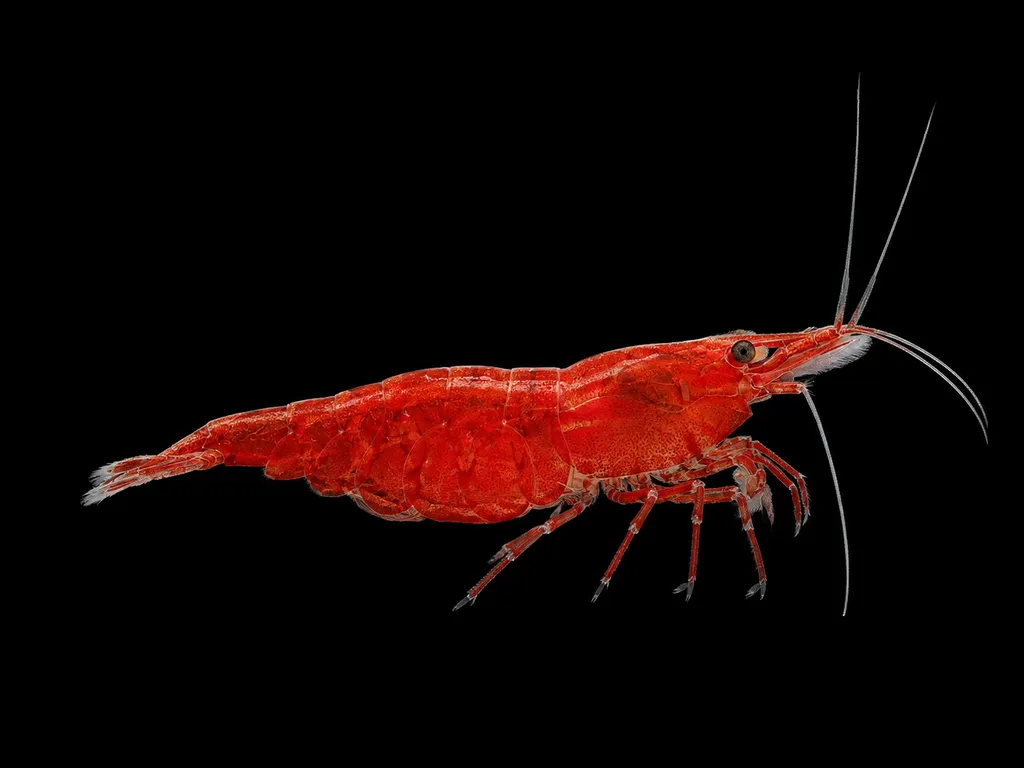
Neocaridina shrimp
Neocaridina davidi
Freshwater1.6 in (4 cm) · 5 gal (19 L)59–84°F (15–29°C)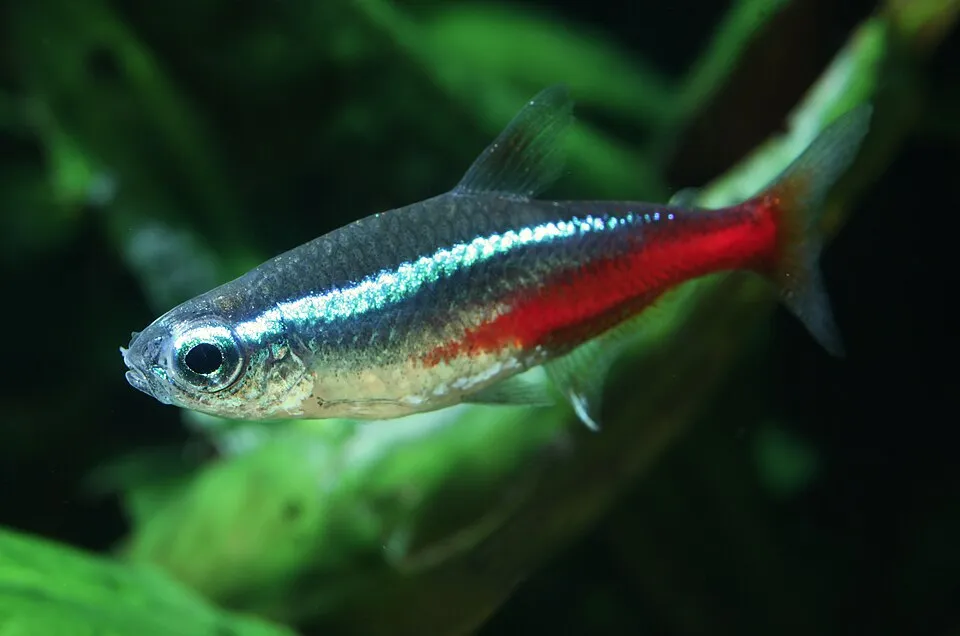
Neon tetra
Paracheirodon innesi
Freshwater1.5 in (3.8 cm) · 11 gal (40 L)70–77°F (21–25°C)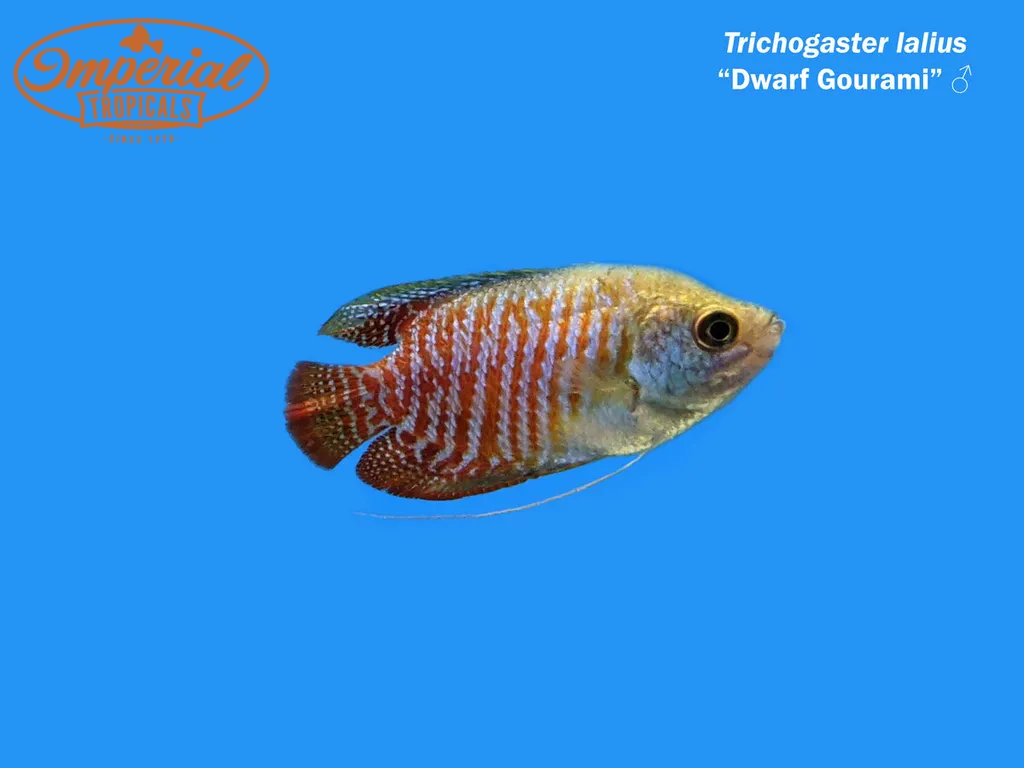
Dwarf gourami
Trichogaster lalius
Freshwater3 in (7.5 cm) · 10 gal (38 L)72–81°F (22–27°C)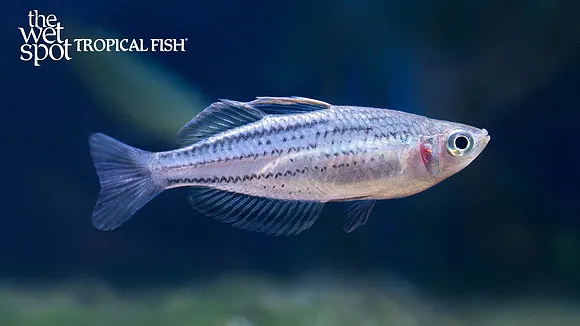
Green panchax
Aplocheilus blockii
Freshwater2 in (5 cm) · 11 gal (40 L)72–82°F (22–28°C)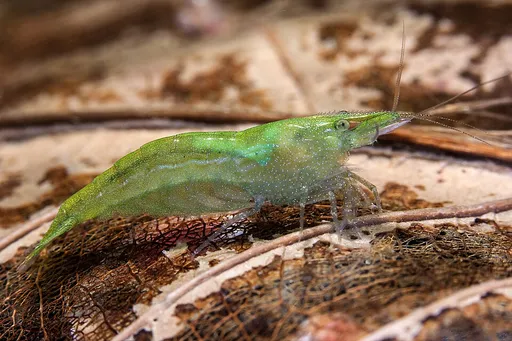
Green babaulti shrimp
Caridina babaulti
Freshwater1.2 in (3 cm) · 10 gal (38 L)72–82°F (22–28°C)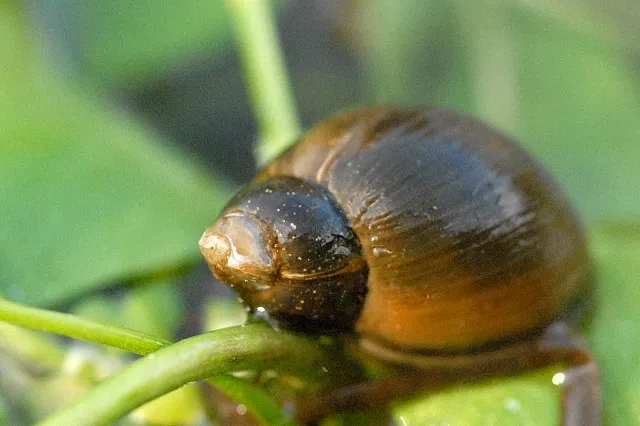
Wandering snail
Ampullaceana balthica
Freshwater0.8 in (2 cm) · 11 gal (40 L)50–84°F (10–29°C)
Common questions
Is a delta guppy a different species from the guppy?
No. A delta guppy is a variety of the guppy, Poecilia reticulata, and it wants the same tank, water and food as the species.
What size tank does a delta guppy need?
A delta guppy needs at least 10 gal (38 L). It spends most of its time in the middle.
What does a delta guppy eat?
A delta guppy eats almost anything. Feed it quality flake and micro pellets, with frozen daphnia or brine shrimp.
How big does a delta guppy get?
An adult delta guppy reaches about 2.4 in (6 cm).
How can you tell a male delta guppy from a female?
Males carry the big delta tail, so stores list delta stock as males and sell females plain. Females have a much smaller caudal fin, and they are larger but less colorful than males.
How does a delta guppy breed?
Delta guppies are livebearers that give birth to free-swimming young, and a mixed group produces fry constantly. Females store sperm, so one mating can give several broods.
Related species
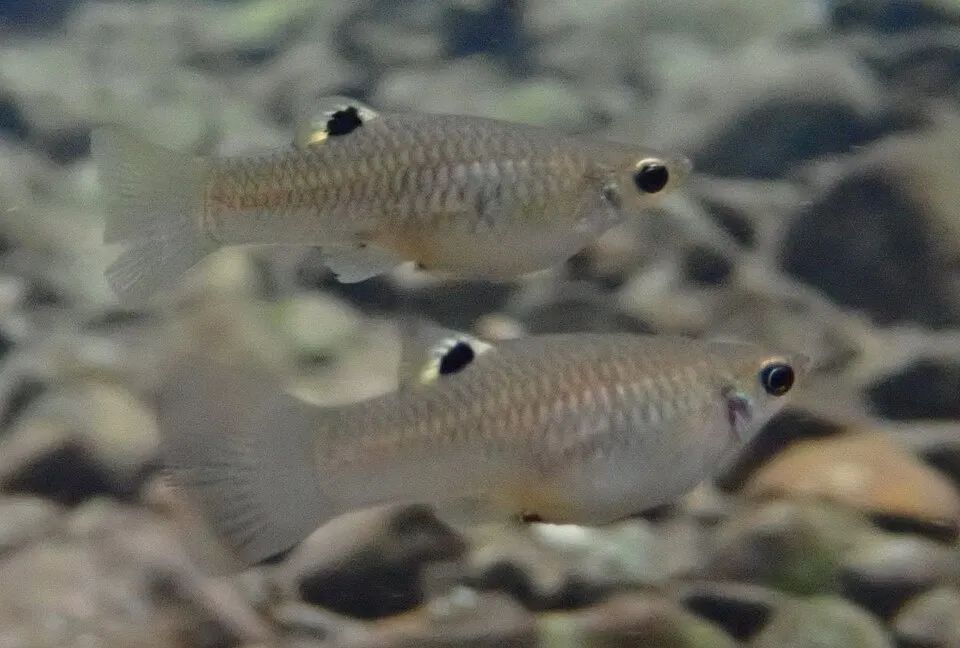 2.4 in (6 cm)16 gal (60 L)77–86°F (25–30°C)
Cauca molly
Poecilia caucana
2.4 in (6 cm) · 16 gal (60 L)
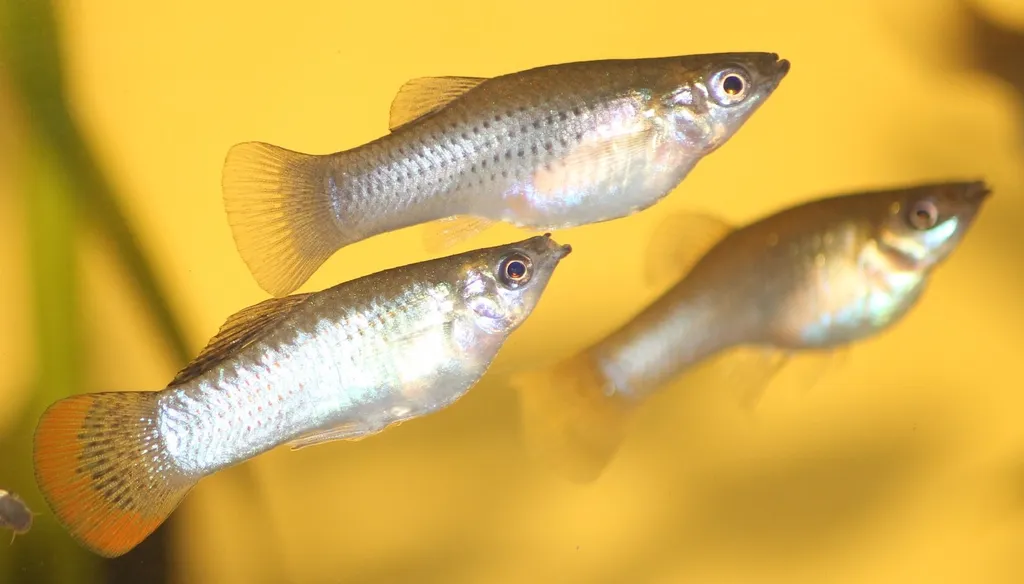 2.8 in (7 cm)29 gal (110 L)72–81°F (22–27°C)
Pacific molly
Poecilia butleri
2.8 in (7 cm) · 29 gal (110 L)
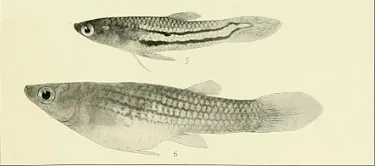 2 in (5 cm)15 gal (55 L)75–82°F (24–28°C)
Melanzona guppy
Poecilia parae
2 in (5 cm) · 15 gal (55 L)
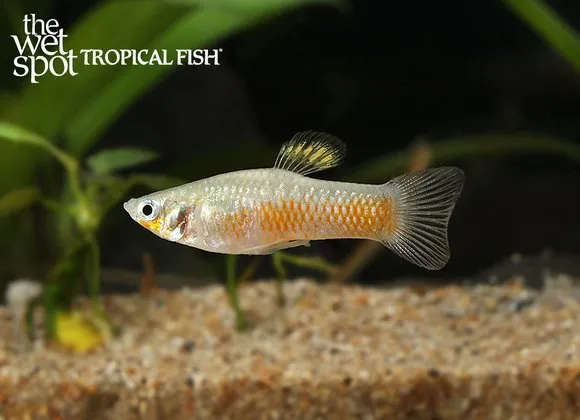 3.1 in (8 cm)20 gal (75 L)72–81°F (22–27°C)
Southern molly
Poecilia vivipara
3.1 in (8 cm) · 20 gal (75 L)
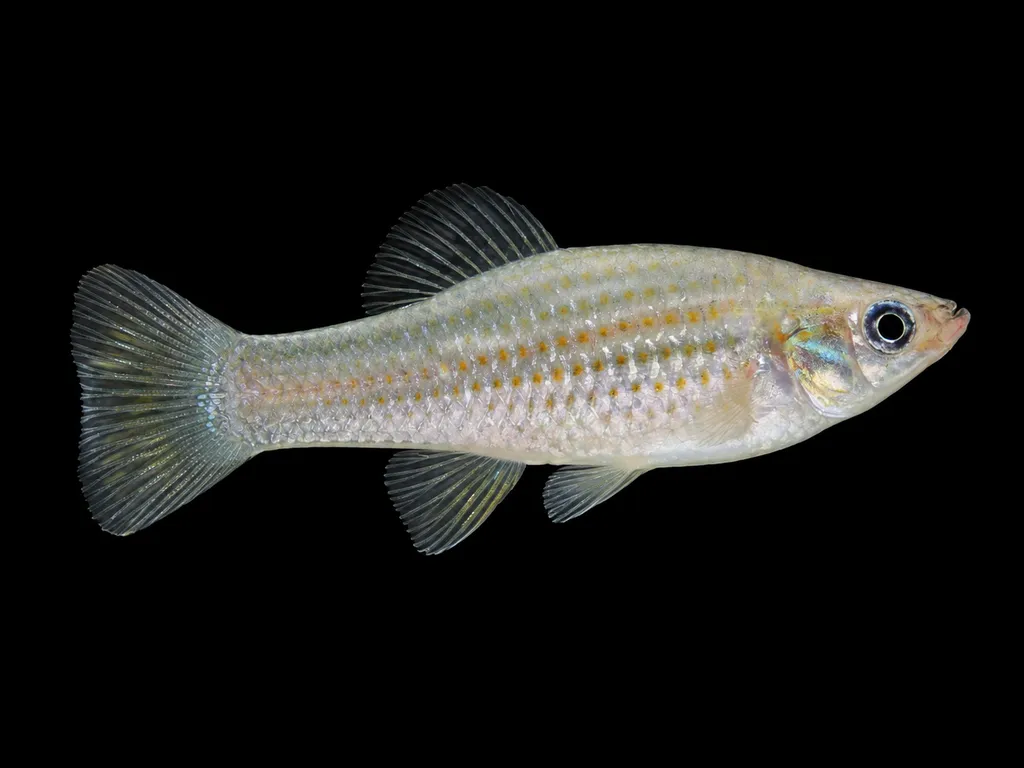 3.5 in (9 cm)20 gal (75 L)68–82°F (20–28°C)
Amazon molly
Poecilia formosa
3.5 in (9 cm) · 20 gal (75 L)
 1.6 in (4 cm)11 gal (40 L)72–81°F (22–27°C)
Dwarf molly
Poecilia chica
1.6 in (4 cm) · 11 gal (40 L)