Variety of Guppy
Grass guppy
Poecilia reticulata
One of 9 varieties of Poecilia reticulata · See all varieties →
Also known as Pink Grass Guppy, Blue Grass Guppy
FreshwaterBrackishFish
Varieties · Poecilia reticulata
See all 9 →
Care at a glance
- Temperature
- 64–82°F
- 18–28°C
- pH
- 6.8–7.8
- Adult size
- 2.4 in
- 6 cm
- Minimum tank
- 10 gal
- 38 L
- Temperament
- Peaceful
- Social behavior
- Social
- Swim level
- Middle
- Difficulty
- Beginner
- Breeding
- Livebearer · Easy
- Rarity
- Very common
- Family
- Poeciliidae
Overview
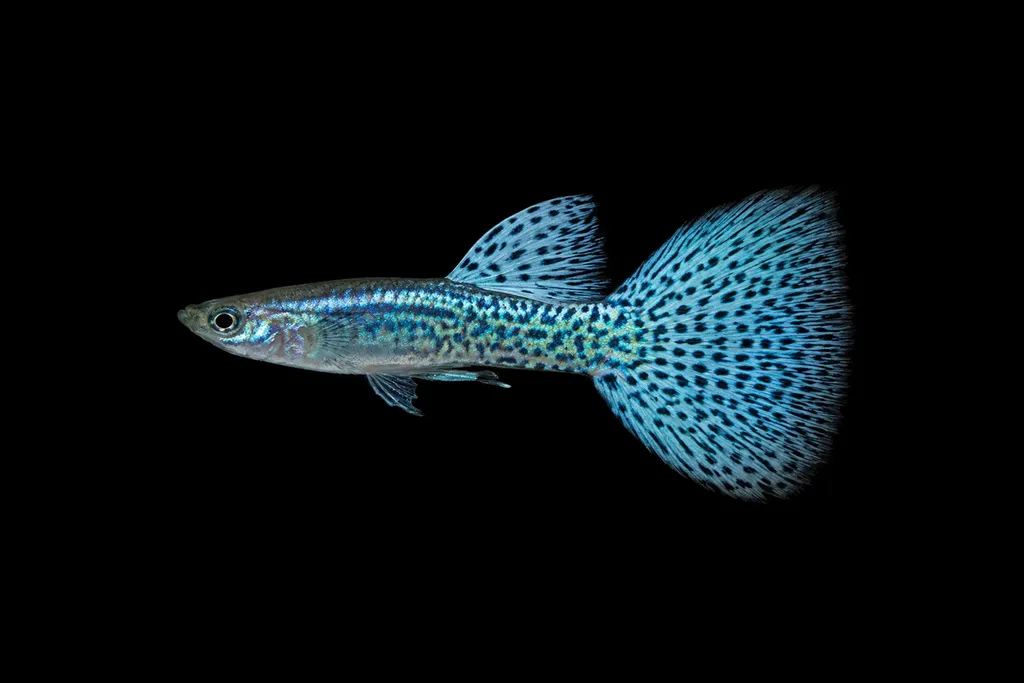
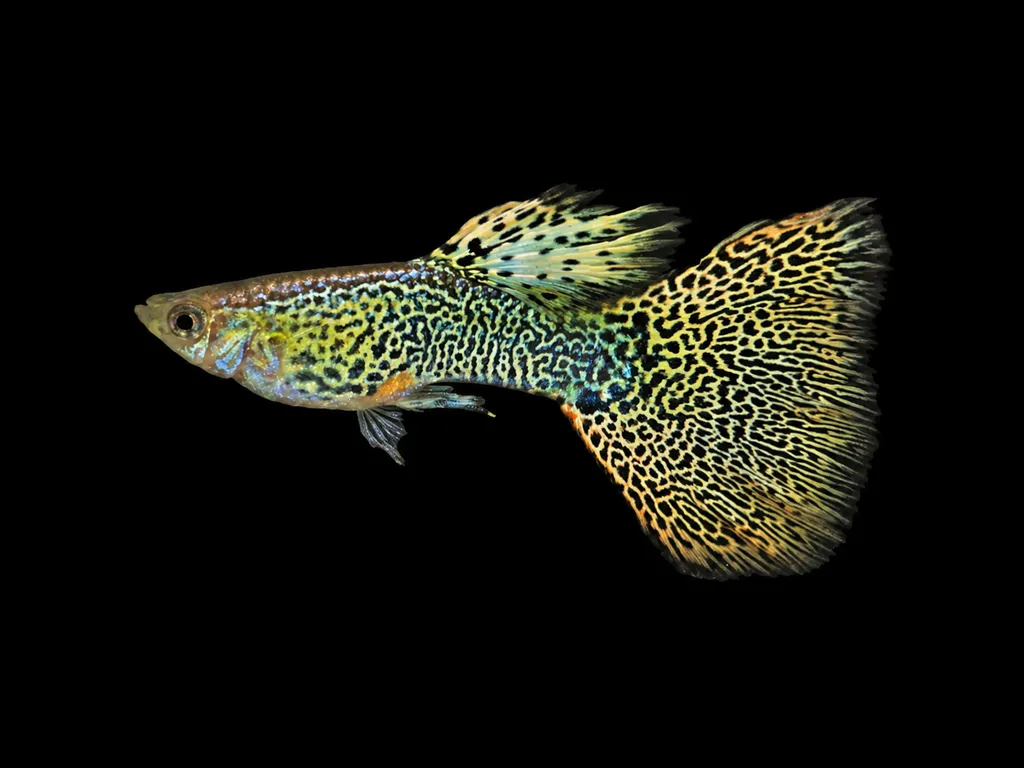
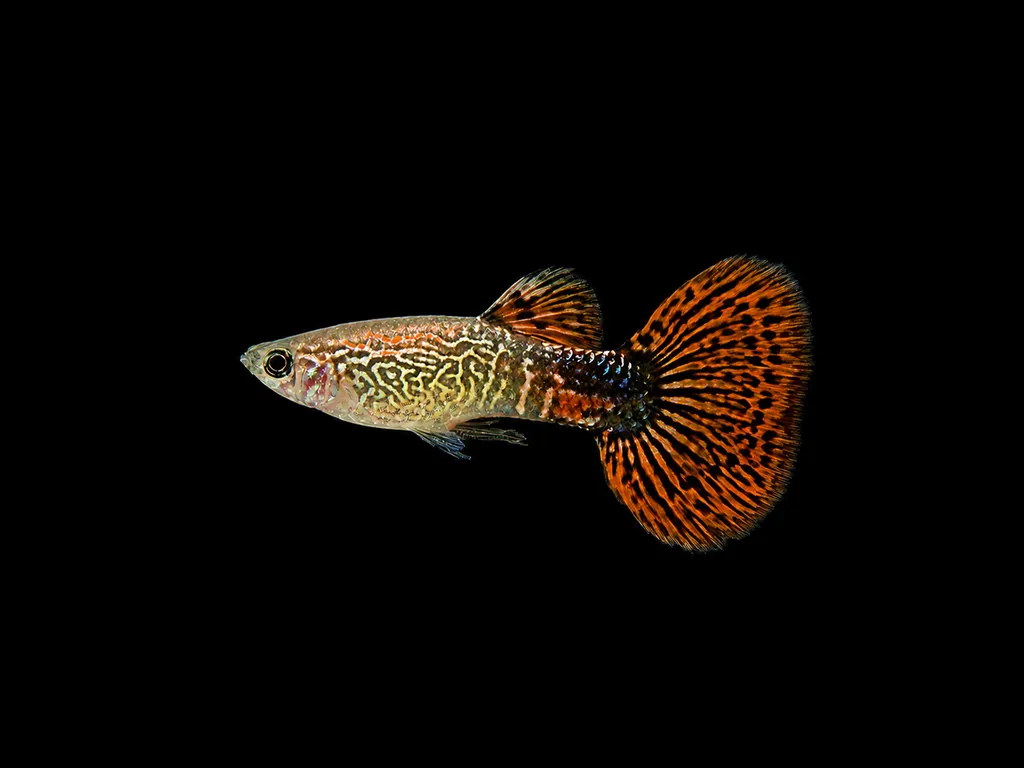
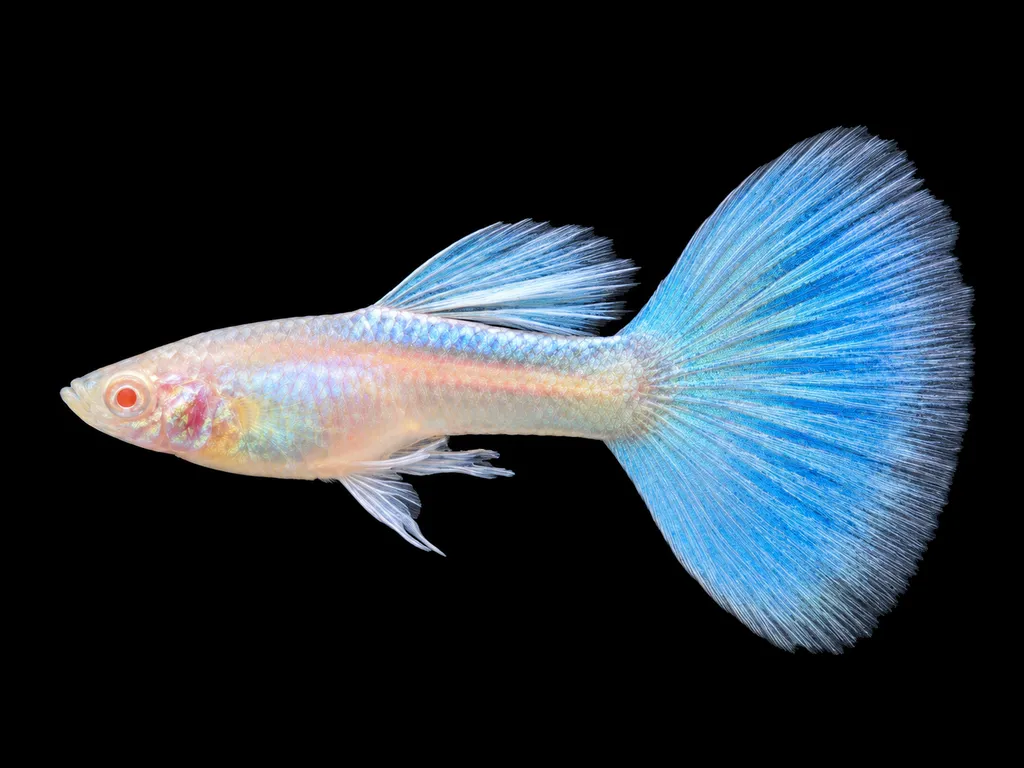
The grass guppy is a guppy strain with a speckled tail, peaceful and easy to keep. It suits a calm community tank.
Did you know
Grass and glass guppies are not separate lines. Hobby breeding notes report that a sibling cross inside a grass strain still throws both types. The two names describe fish that come out of the same spawn.
Caring for the grass guppy
Grass guppies suit a planted tank of 10 gal (38 L) or more. Keep them in a group, since guppies look their best in numbers. They spend most of their time in the middle of the tank.
Grass guppies are very adaptable, and they can live in brackish water as well as fresh. Keep the water neutral to slightly hard, at 64 to 82°F (18 to 28°C) and a pH of 6.8 to 7.8.
Feed quality flake and micro pellets, with frozen daphnia or brine shrimp, since grass guppies eat almost anything. They are peaceful and social, and they settle well in a calm community tank.
Males are smaller than females but more colorful, and keeping more females than males cuts down on pestering. Grass guppies are livebearers that give birth to free-swimming young. They breed so easily that a mixed group produces fry constantly, and females can store sperm and deliver several broods from one mating. Plan for the numbers or keep males only.
Good to know
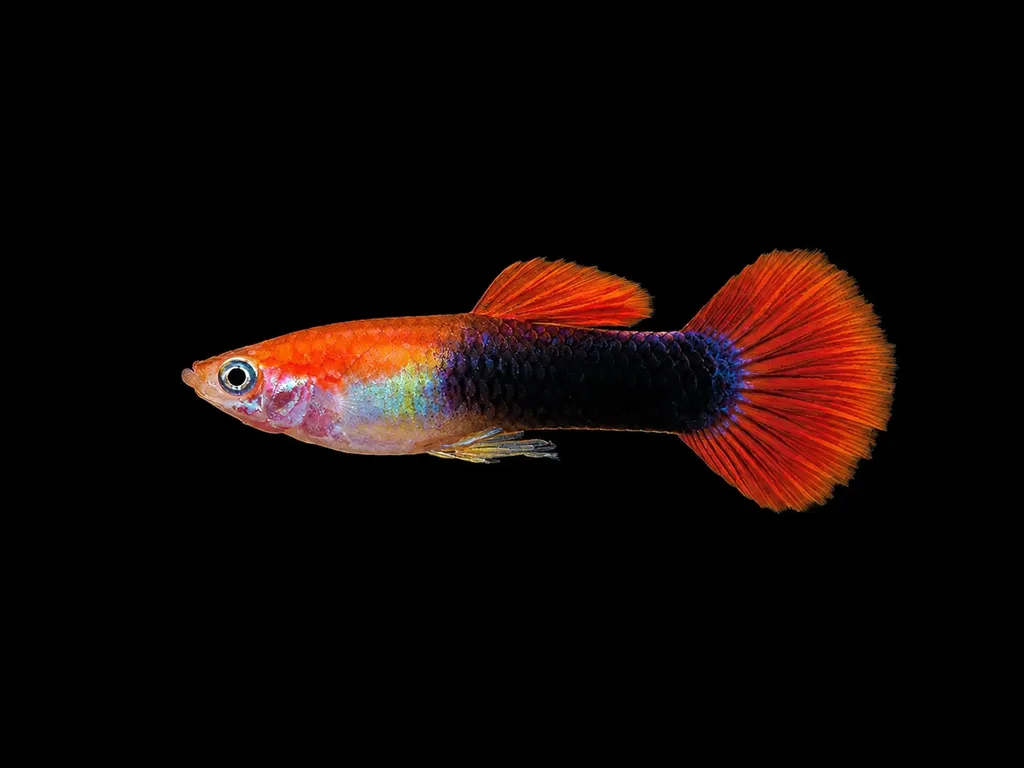
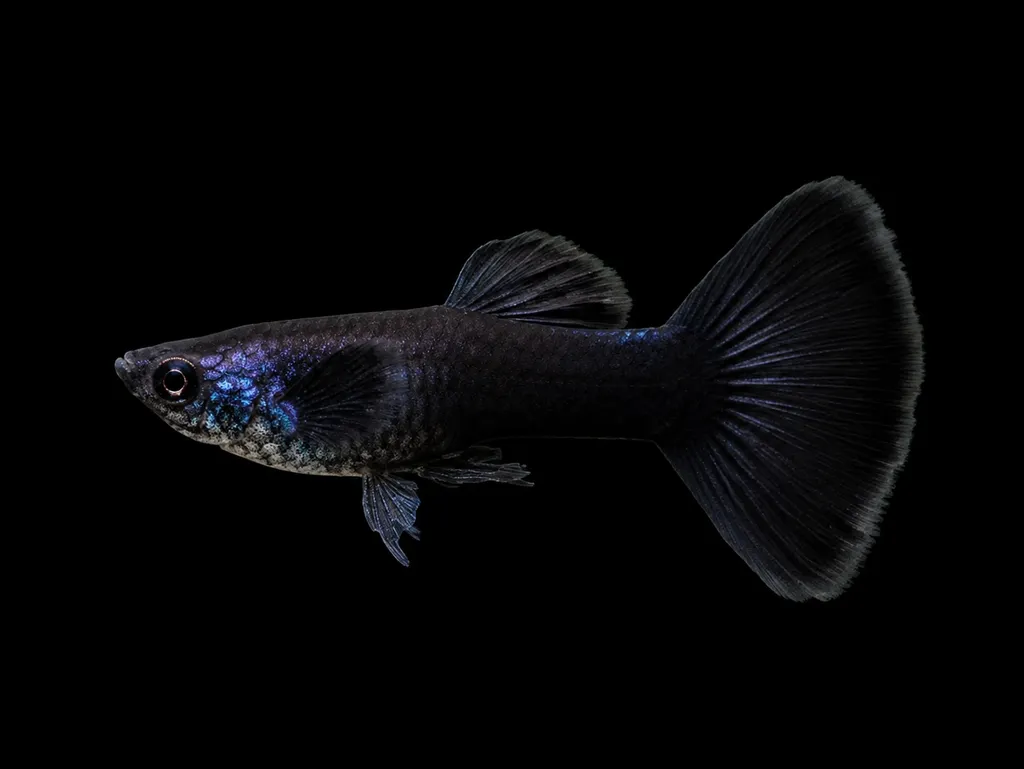
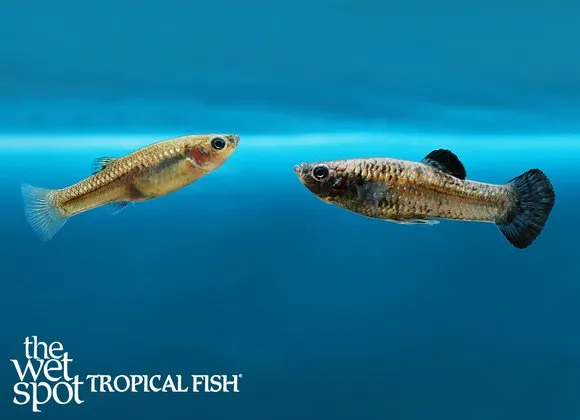
The grass factor works on the caudal and the dorsal together, scattering fine dark speckling across both. A correct fish shows the same speckling in both fins rather than only in the tail. Two looks sell under the grass name, a solid tail color behind the dots or a glass type with a clearer fin and finer speckling. Match the photo to the fish in the tank. Shops sell it by base color, most often Blue Grass, with Red Grass and Pink Grass on the same plan. Breeders cross grass onto other lines to give full metal blue grass or tiger grass. Dot size and spread drift between generations, so the pattern needs steady selection.
In the wild
The grass pattern came out of Japanese breeding in the late 1970s and early 1980s, by hobby accounts. It began as a variation on the mosaic strain. One account has Japanese breeders crossing glass guppies imported from Singapore into mosaic stock. Another has it appearing as a byproduct of a long inbreeding project on tuxedo mosaics, run over roughly 25 generations. Either way it is a domestic pattern with no wild equivalent.
Weekly picks
Tank mates
The grass guppy is a peaceful, social species that keeps to the middle. These picks share a community profile with it, are safe together in both directions, and overlap on water type, temperature and pH.
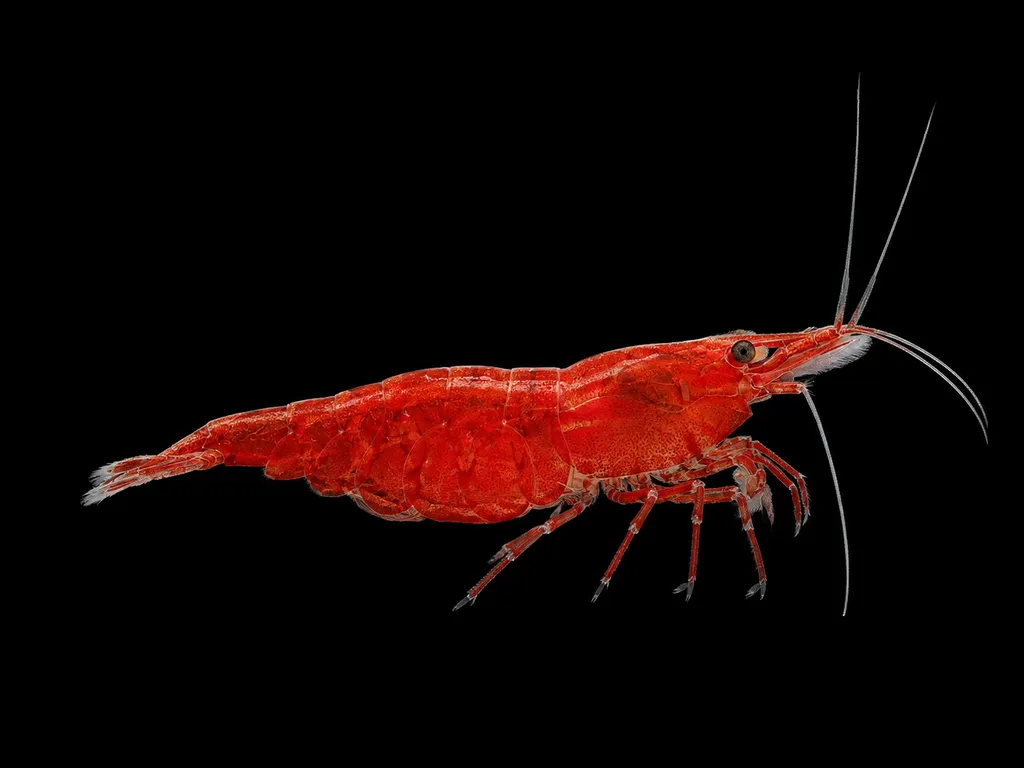
Neocaridina shrimp
Neocaridina davidi
Freshwater1.6 in (4 cm) · 5 gal (19 L)59–84°F (15–29°C)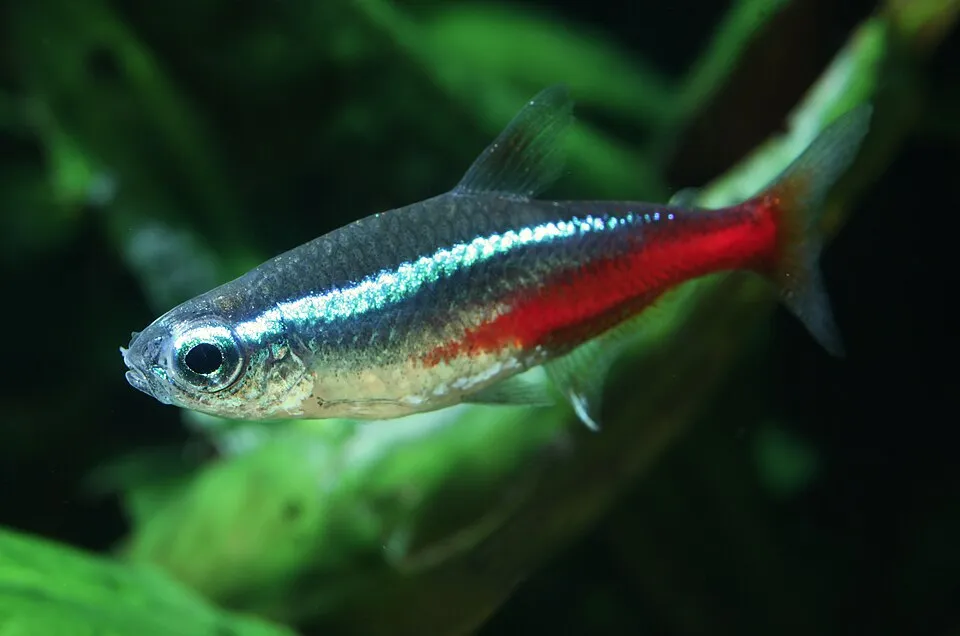
Neon tetra
Paracheirodon innesi
Freshwater1.5 in (3.8 cm) · 11 gal (40 L)70–77°F (21–25°C)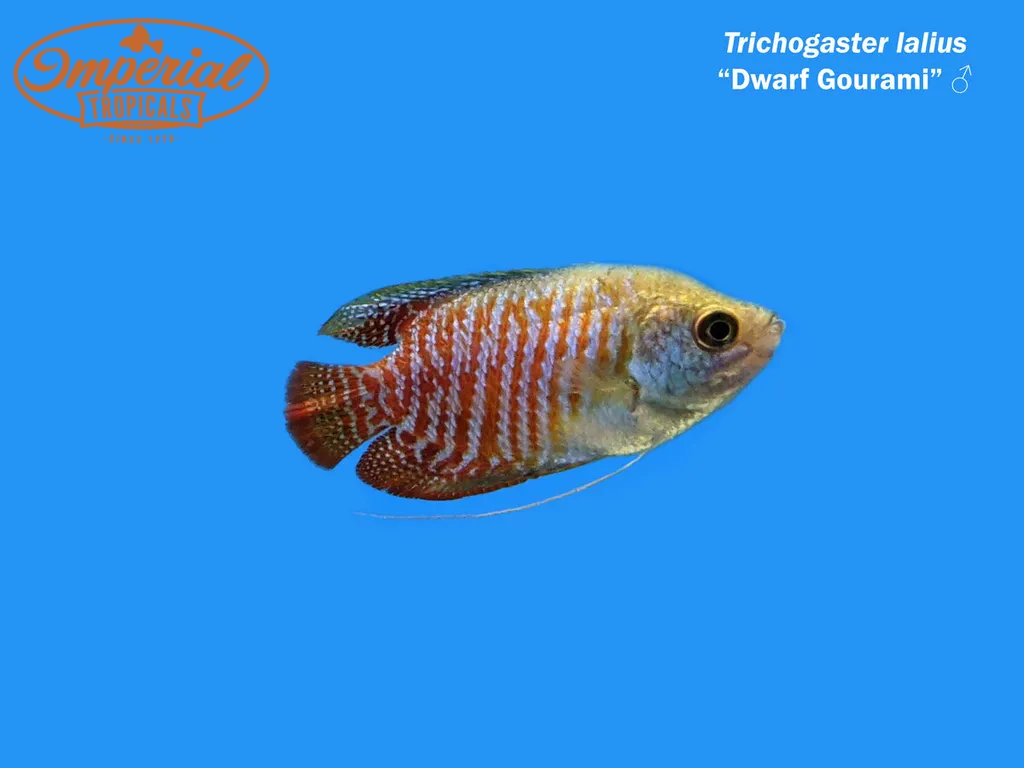
Dwarf gourami
Trichogaster lalius
Freshwater3 in (7.5 cm) · 10 gal (38 L)72–81°F (22–27°C)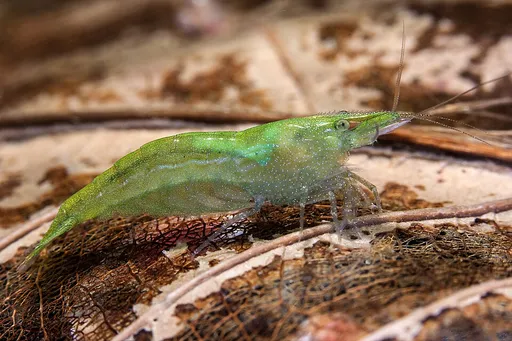
Green babaulti shrimp
Caridina babaulti
Freshwater1.2 in (3 cm) · 10 gal (38 L)72–82°F (22–28°C)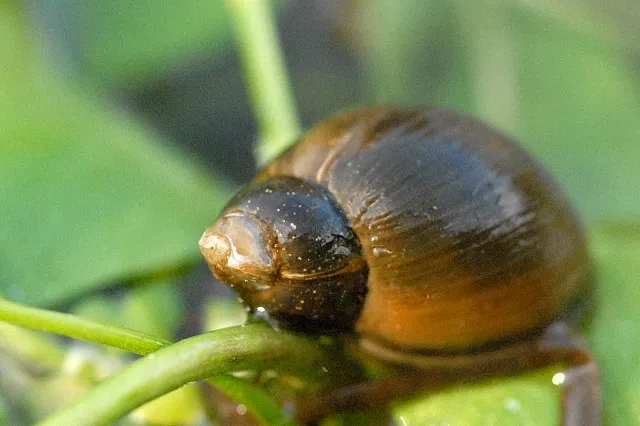
Wandering snail
Ampullaceana balthica
Freshwater0.8 in (2 cm) · 11 gal (40 L)50–84°F (10–29°C)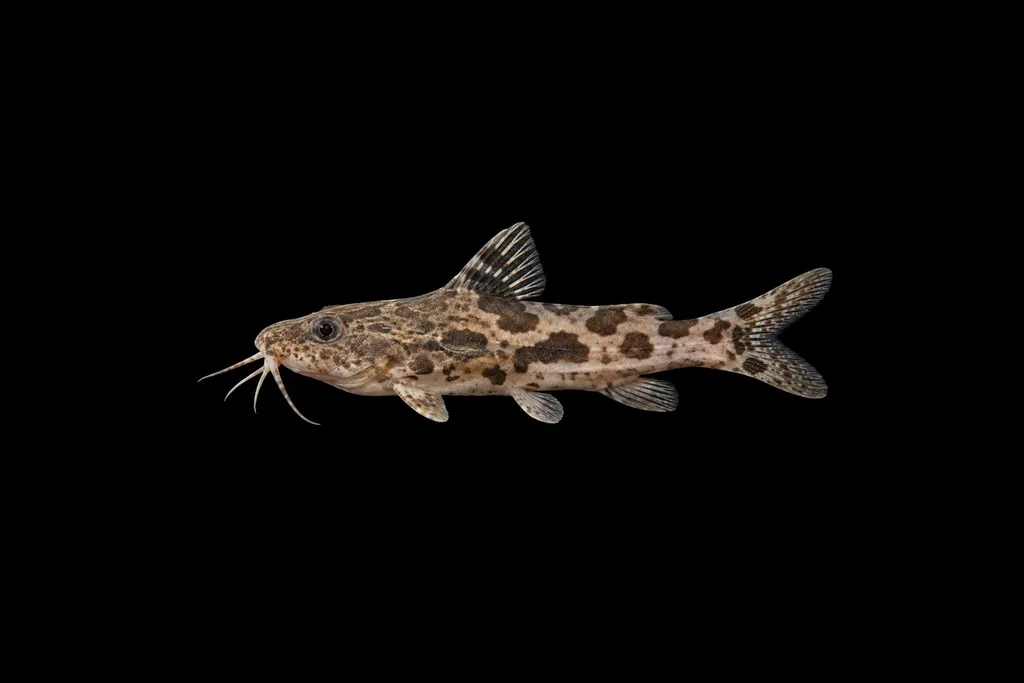
Harlequin moth catfish
Pseudolaguvia ribeiroi
Freshwater1.6 in (4 cm) · 11 gal (40 L)68–79°F (20–26°C)
Common questions
Is a grass guppy a different species from the guppy?
No. A grass guppy is a variety of the guppy, Poecilia reticulata, and it wants the same tank, water and food as the species.
What size tank does a grass guppy need?
A grass guppy needs at least 10 gal (38 L). It spends most of its time in the middle.
What does a grass guppy eat?
A grass guppy eats almost anything, including quality flake, micro pellets and frozen daphnia or brine shrimp.
How big does a grass guppy get?
An adult grass guppy reaches about 2.4 in (6 cm).
How can you tell a male grass guppy from a female?
Males are smaller than females but more colorful.
How does a grass guppy breed?
A grass guppy is a livebearer and gives birth to free-swimming young. It breeds so easily that a mixed group produces fry constantly, and one mating can give several broods.
Related species
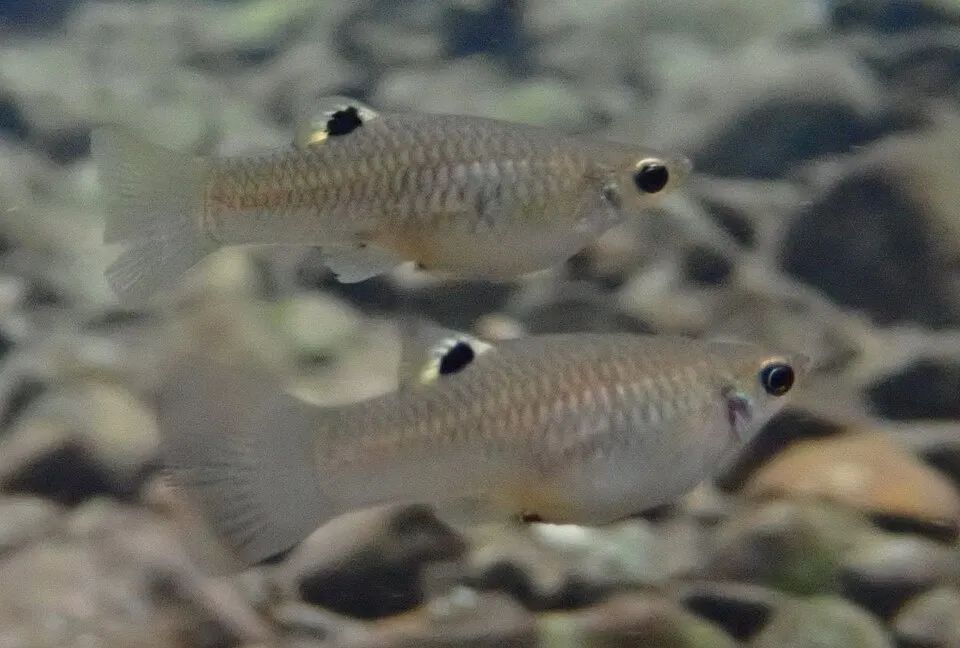 2.4 in (6 cm)16 gal (60 L)77–86°F (25–30°C)
Cauca molly
Poecilia caucana
2.4 in (6 cm) · 16 gal (60 L)
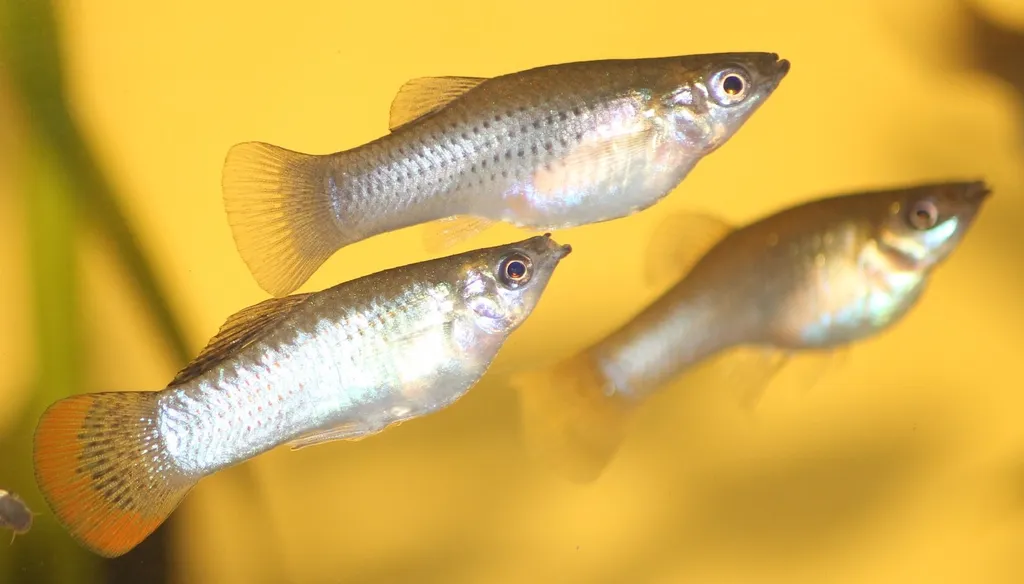 2.8 in (7 cm)29 gal (110 L)72–81°F (22–27°C)
Pacific molly
Poecilia butleri
2.8 in (7 cm) · 29 gal (110 L)
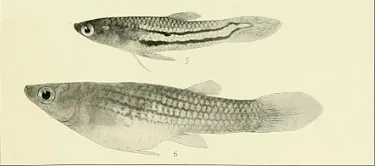 2 in (5 cm)15 gal (55 L)75–82°F (24–28°C)
Melanzona guppy
Poecilia parae
2 in (5 cm) · 15 gal (55 L)
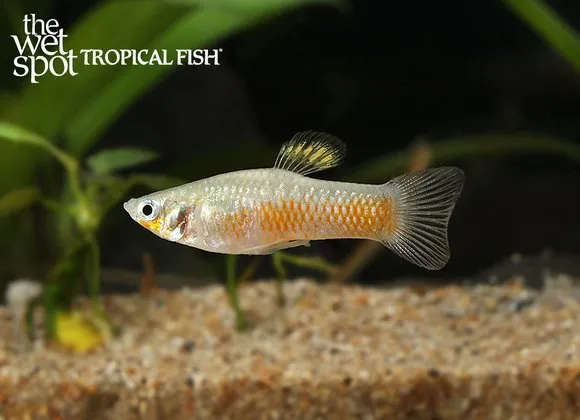 3.1 in (8 cm)20 gal (75 L)72–81°F (22–27°C)
Southern molly
Poecilia vivipara
3.1 in (8 cm) · 20 gal (75 L)
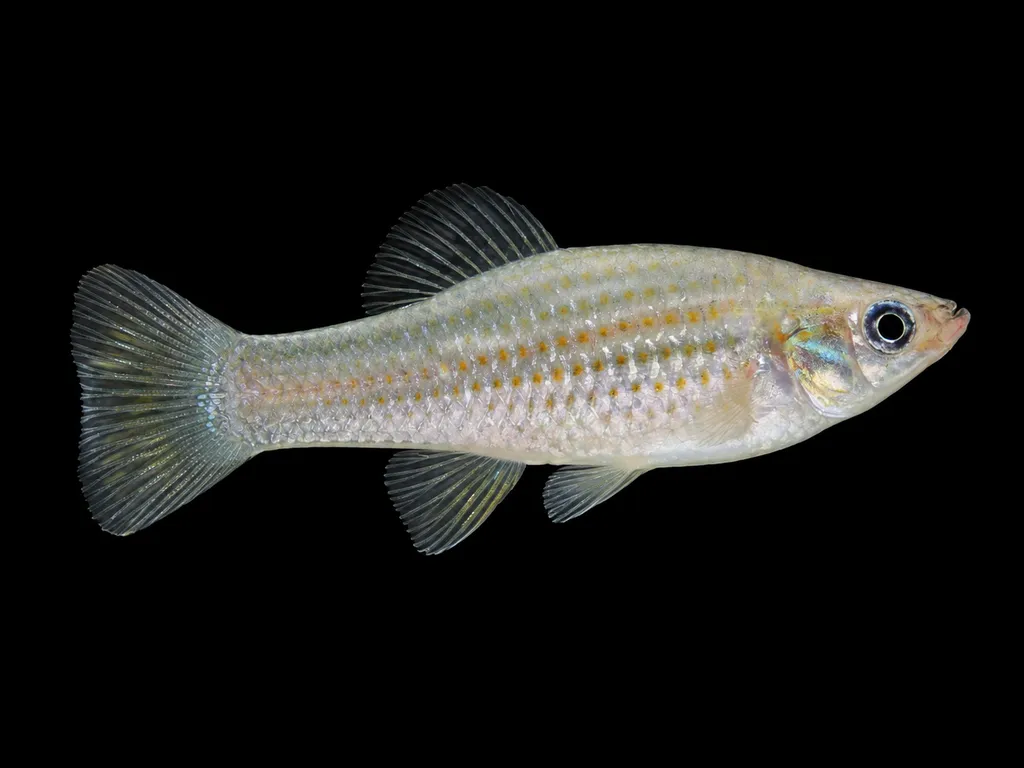 3.5 in (9 cm)20 gal (75 L)68–82°F (20–28°C)
Amazon molly
Poecilia formosa
3.5 in (9 cm) · 20 gal (75 L)
 1.6 in (4 cm)11 gal (40 L)72–81°F (22–27°C)
Dwarf molly
Poecilia chica
1.6 in (4 cm) · 11 gal (40 L)