Variety of Guppy
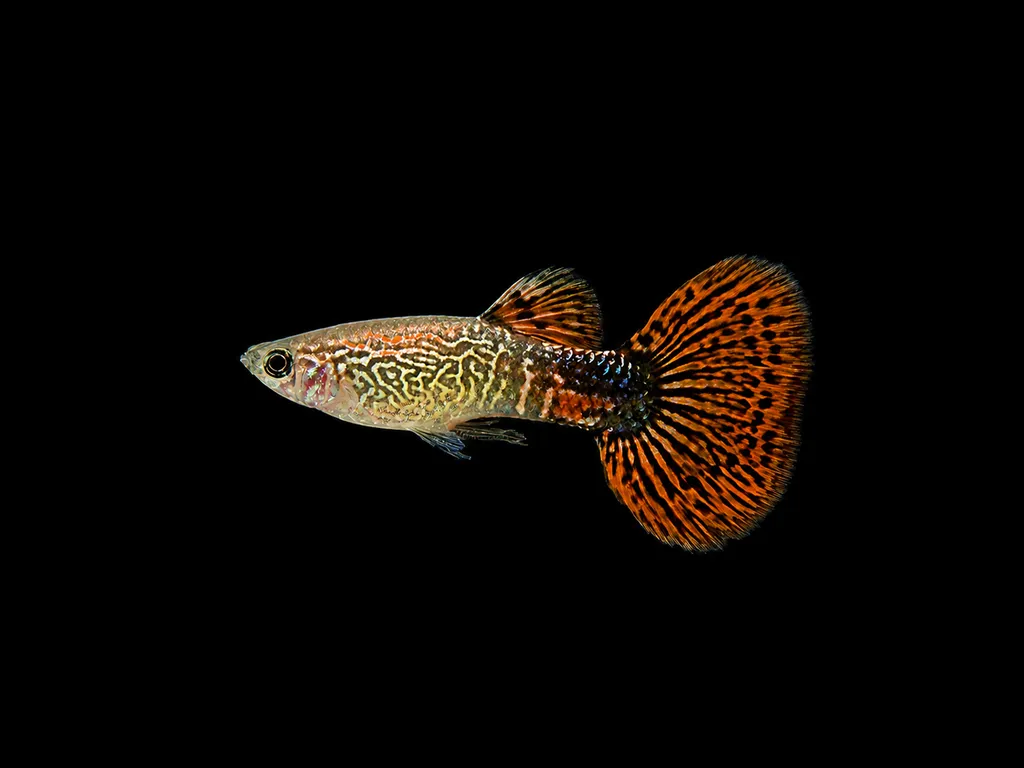
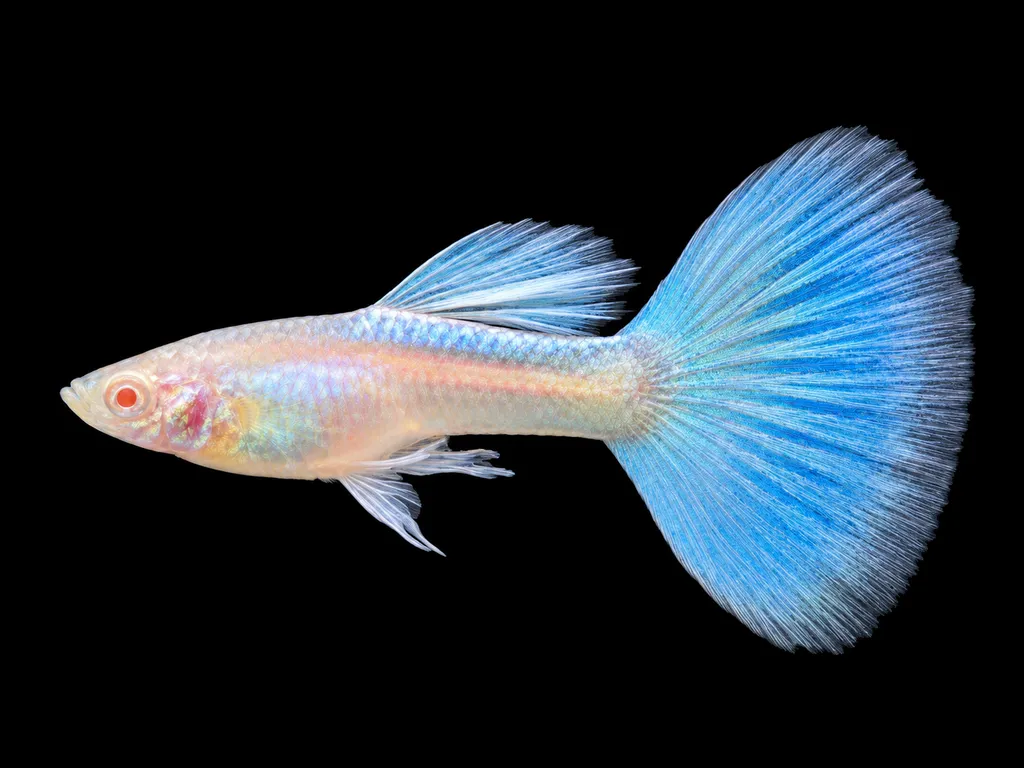
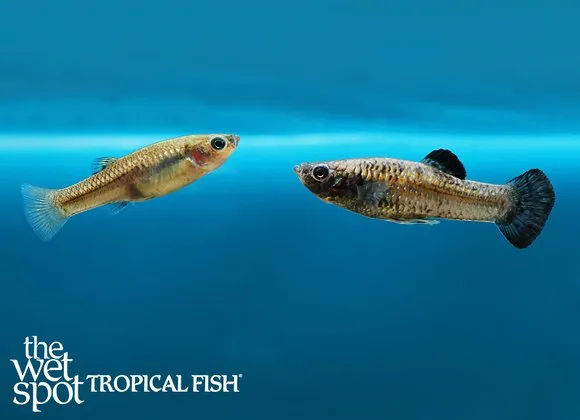
Snakeskin guppy
Poecilia reticulata
One of 9 varieties of Poecilia reticulata · See all varieties →
Also known as Red Snakeskin Platinum Guppy
FreshwaterBrackishFish
Varieties · Poecilia reticulata
See all 9 →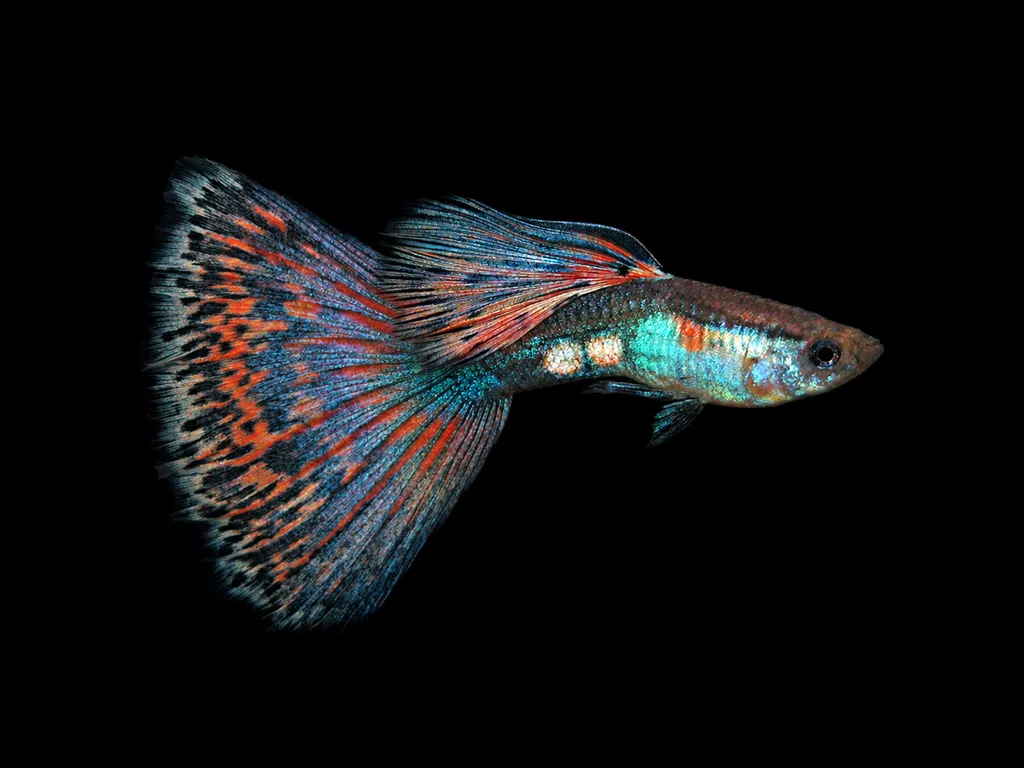
Care at a glance
- Temperature
- 64–82°F
- 18–28°C
- pH
- 6.8–7.8
- Adult size
- 2.4 in
- 6 cm
- Minimum tank
- 13 gal
- 50 L
- Temperament
- Peaceful
- Social behavior
- Social
- Swim level
- Middle
- Difficulty
- Beginner
- Breeding
- Easy
- Rarity
- Very common
- Family
- Poeciliidae
Overview
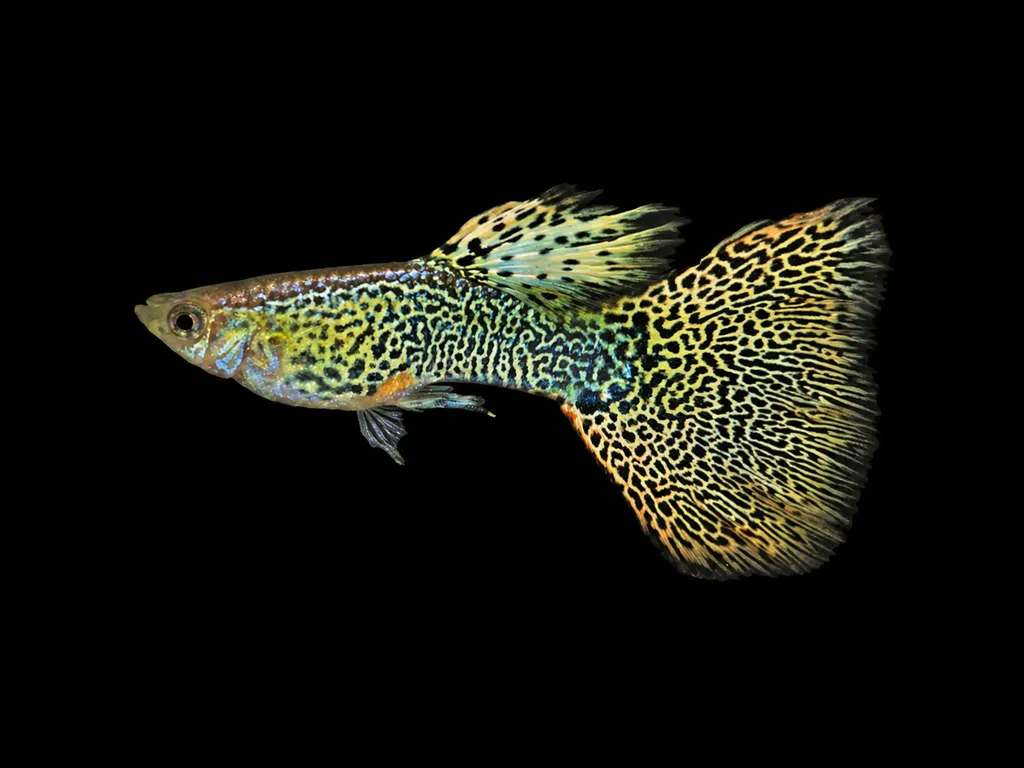
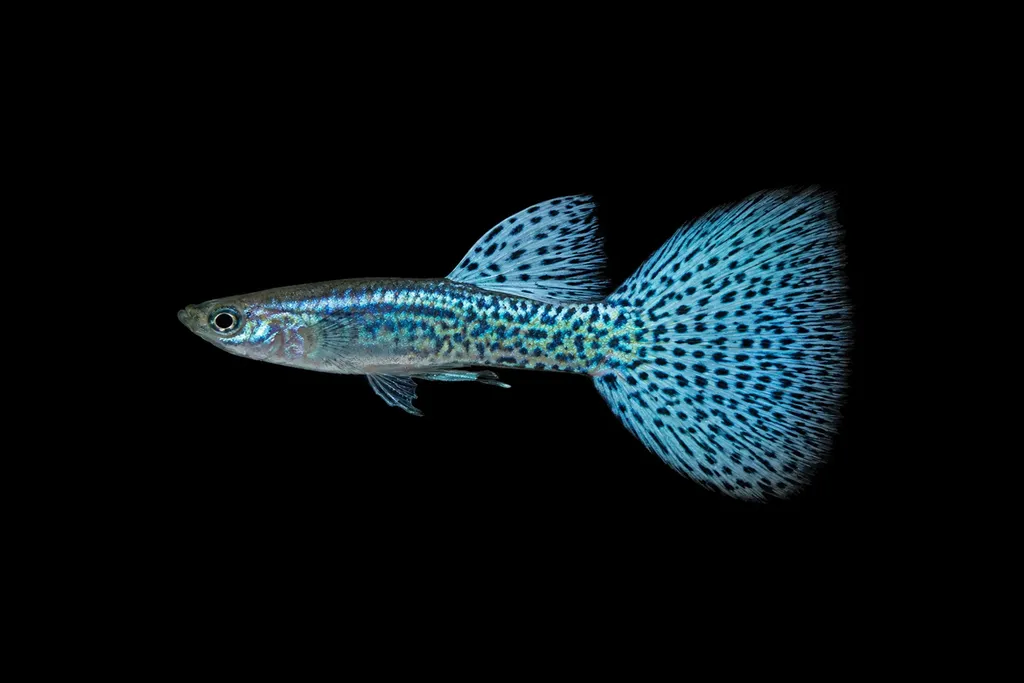
Snakeskin is the fine chain-link or rosette mesh over the body. It is sold with a color and often a metallic word attached, as in Red Snakeskin Platinum. Only males carry the pattern, so females from the line look plain beside them. Coverage varies between farms, from gill plate to peduncle on some fish and only the back half on others.
In the wild
The pattern turns up occasionally in wild guppies but was fixed and named in domestic stock. M. Dzwillo worked out its genetics in 1959 and named the gene filigran, German for filigree. Hobby accounts say his stock likely traced to the German breeder Eduard Schmidt-Focke. The strains sold today are domestic lines built on that gene rather than wild fish.
Good to know
The snakeskin body gene sits on the Y chromosome in ordinary snakeskins. A male passes it to every son, so the line holds with little work. Lace-patterned snakeskins are reported as X-linked instead, though crossing-over makes that hard to pin down. Show standards ask for a continuous chain-link or rosette pattern covering at least 60 percent of the body.
Did you know
Snakeskin is one of the few fancy guppy patterns with a wild counterpart. The fine mesh shows up now and then in wild fish, which is why it drew breeder attention through the 1950s. The genetic work that followed at the end of that decade gave the pattern its formal name.
Weekly picks
Tank mates
Snakeskin guppy is a peaceful, social species that keeps to the middle. These picks share a community profile with it, are safe together in both directions, and overlap on water type, temperature and pH.
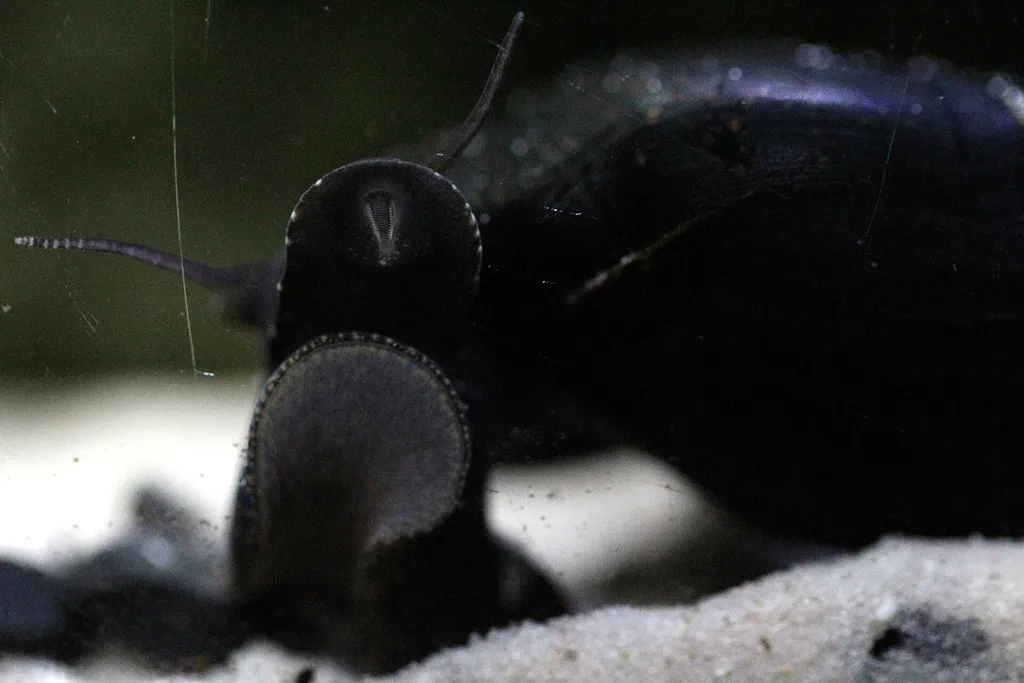
Black devil snail
Faunus ater
Freshwater3.9 in (10 cm) · 13 gal (50 L)72–86°F (22–30°C)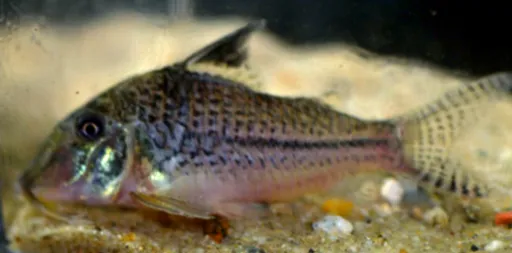
Blacktop cory
Corydoras acutus
Freshwater1.7 in (4.4 cm) · 13 gal (50 L)72–82°F (22–28°C)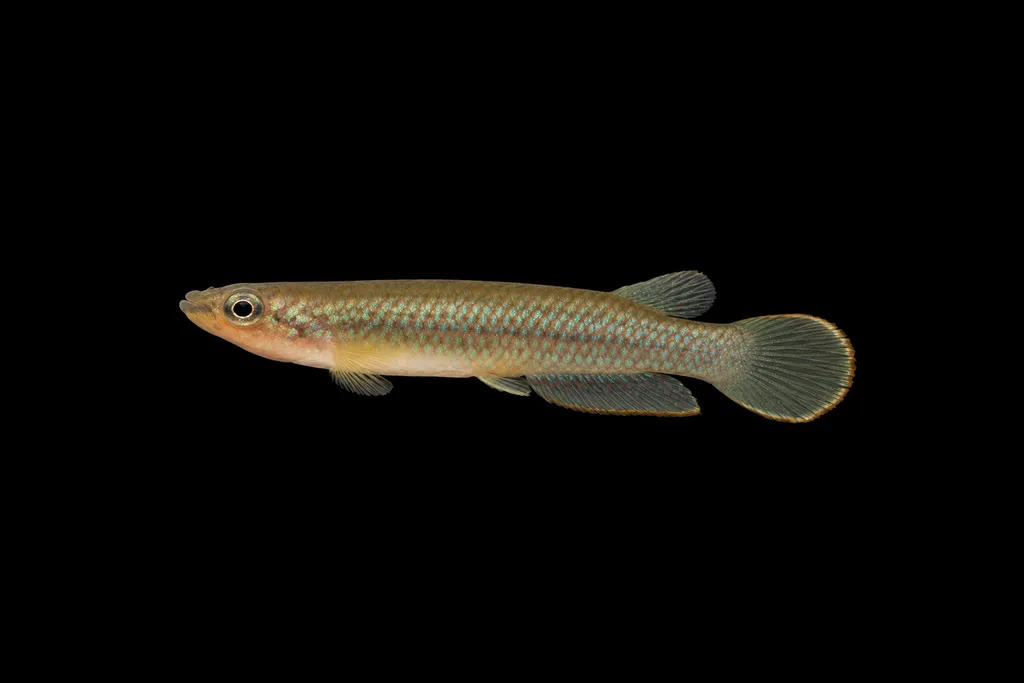
Guinean panchax
Epiplatys guineensis
Freshwater2.8 in (7 cm) · 14 gal (54 L)68–77°F (20–25°C)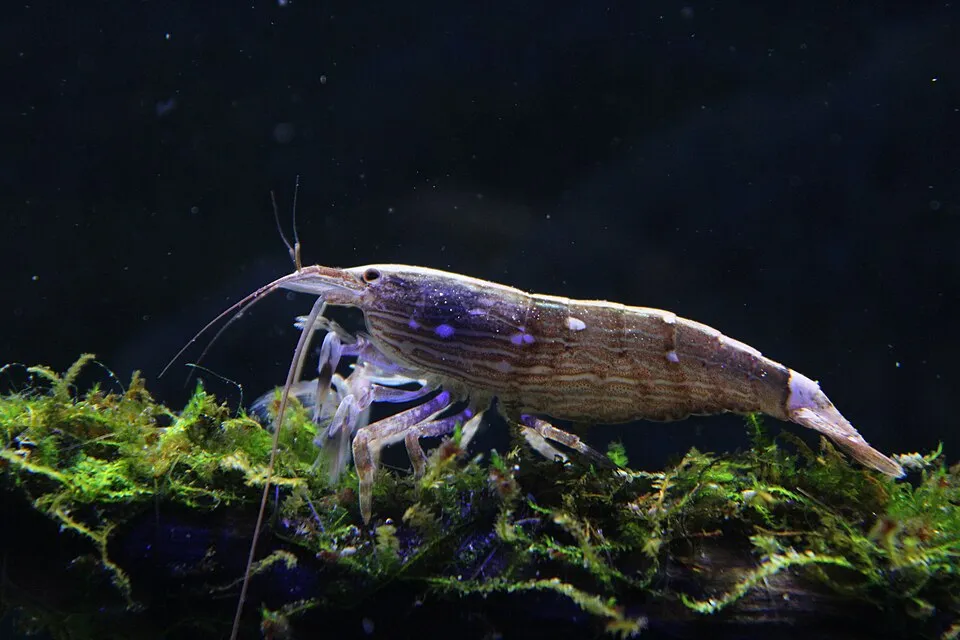
Bamboo shrimp
Atyopsis moluccensis
Freshwater3.9 in (10 cm) · 13 gal (50 L)72–84°F (22–29°C)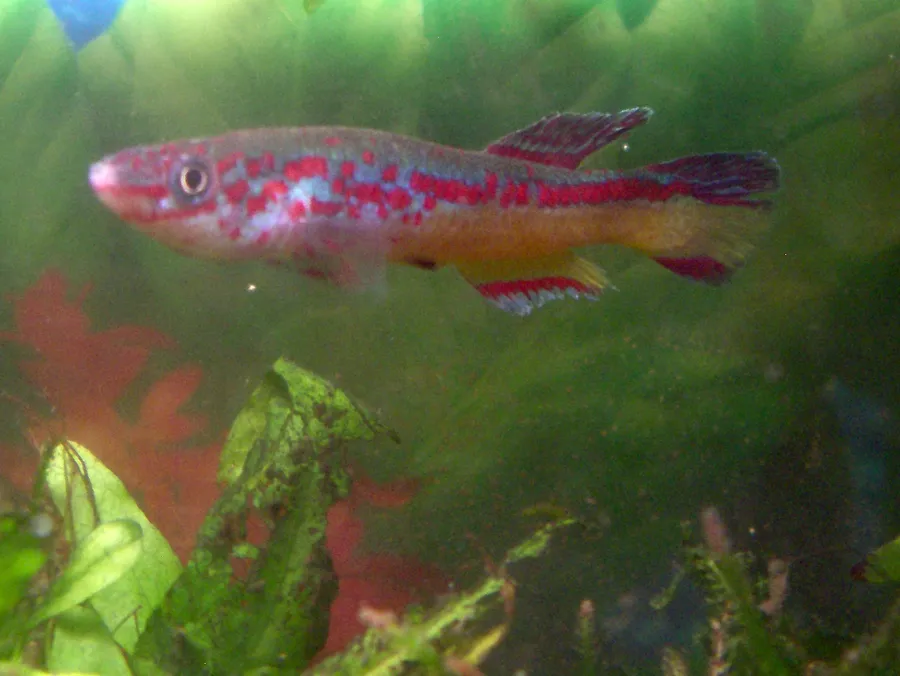
Amiet's lyretail
Fundulopanchax amieti
Freshwater2.8 in (7 cm) · 14 gal (54 L)68–77°F (20–25°C)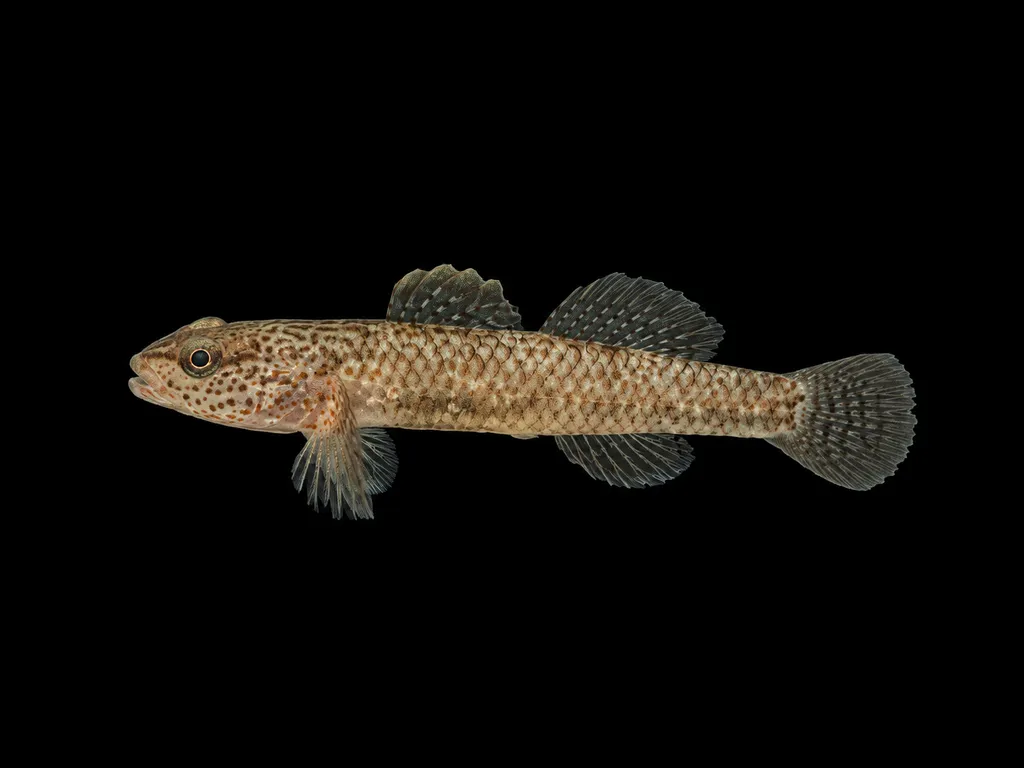
Chiangmai stream goby
Rhinogobius chiengmaiensis
Freshwater2 in (5 cm) · 14 gal (54 L)64–75°F (18–24°C)
Common questions
Is a Snakeskin guppy a different species from the Guppy?
No. A Snakeskin guppy is a variety of the Guppy, Poecilia reticulata, and it wants the same tank, water and food as the species.
What size tank does a Snakeskin guppy need?
A Snakeskin guppy needs at least 13 gal (50 L). It spends most of its time in the middle.
How big does a Snakeskin guppy get?
An adult Snakeskin guppy reaches about 2.4 in (6 cm).
Related species
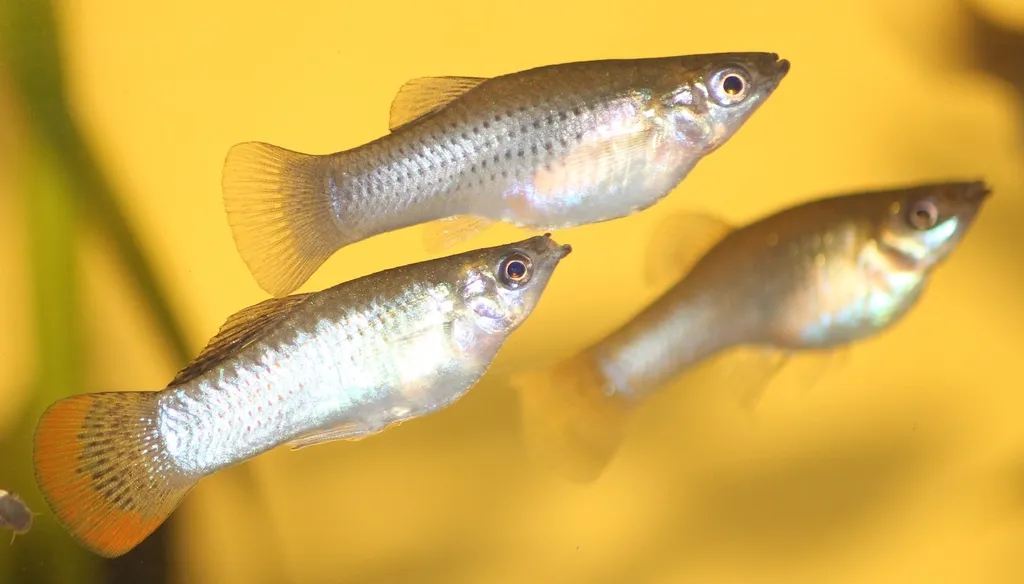
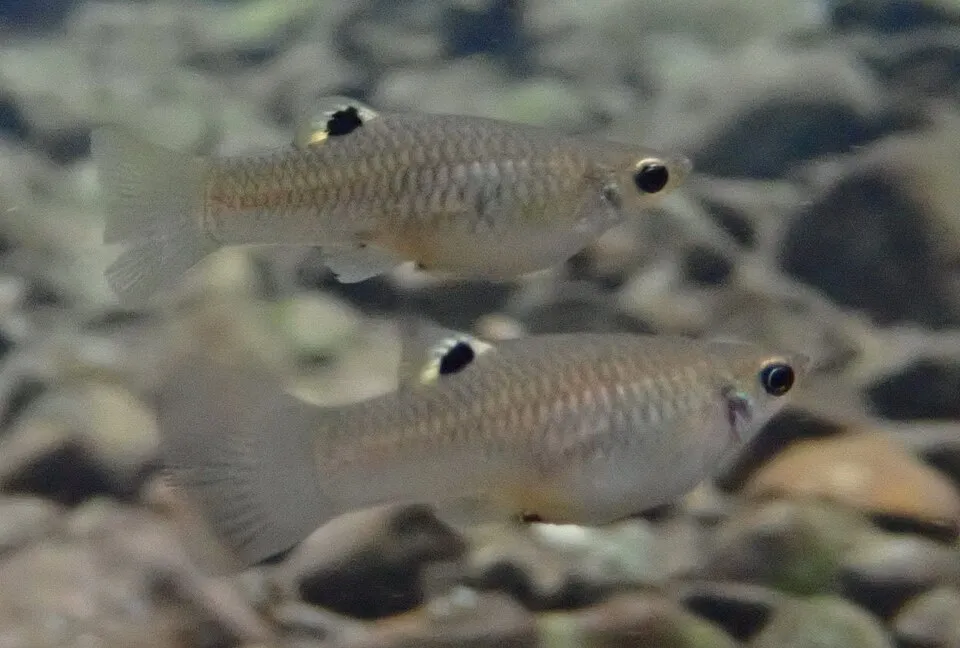 2.4 in (6 cm)16 gal (60 L)77–86°F (25–30°C)
Cauca molly
Poecilia caucana
2.4 in (6 cm) · 16 gal (60 L)
 2.8 in (7 cm)29 gal (110 L)72–81°F (22–27°C)
Pacific molly
Poecilia butleri
2.8 in (7 cm) · 29 gal (110 L)
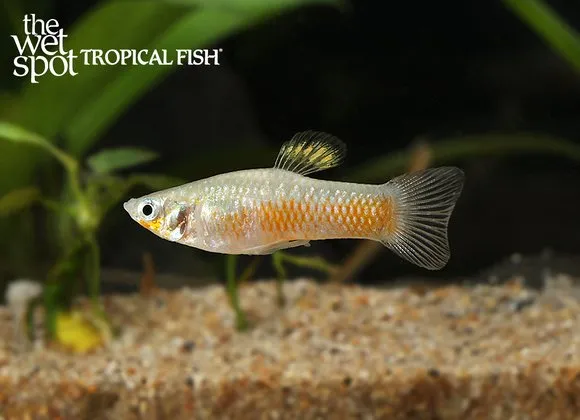
 2 in (5 cm)15 gal (55 L)75–82°F (24–28°C)
Melanzona guppy
Poecilia parae
2 in (5 cm) · 15 gal (55 L)
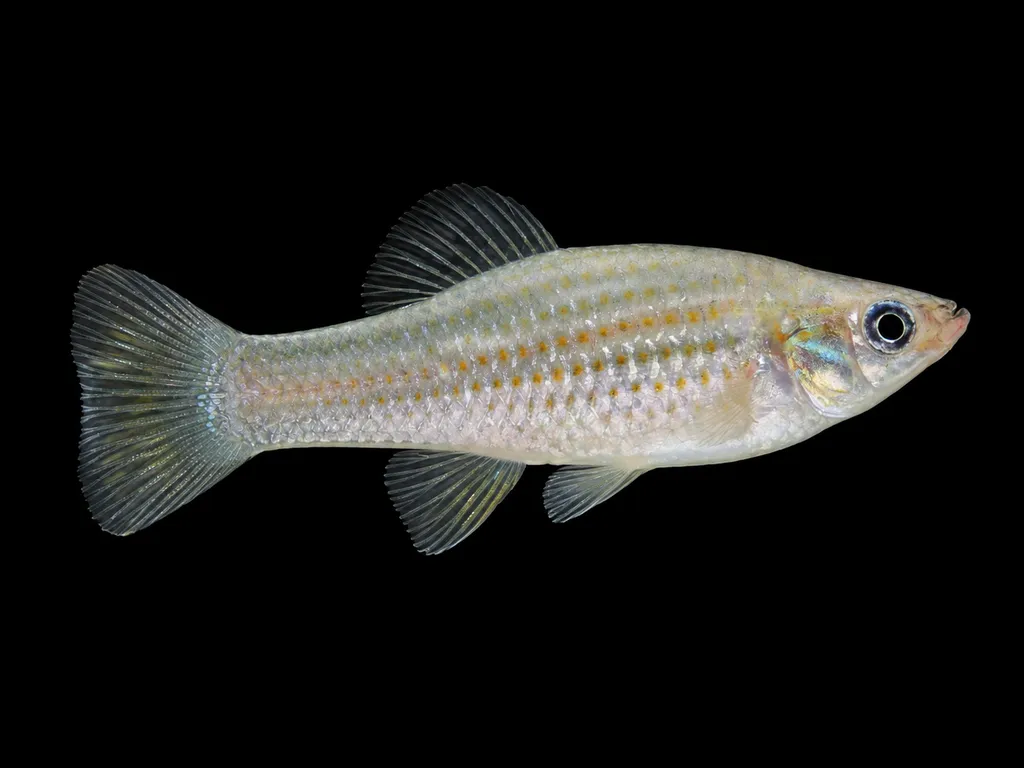
 3.1 in (8 cm)20 gal (75 L)72–81°F (22–27°C)
Southern molly
Poecilia vivipara
3.1 in (8 cm) · 20 gal (75 L)
 3.5 in (9 cm)20 gal (75 L)68–82°F (20–28°C)
Amazon molly
Poecilia formosa
3.5 in (9 cm) · 20 gal (75 L)
 1.6 in (4 cm)11 gal (40 L)72–81°F (22–27°C)
Dwarf molly
Poecilia chica
1.6 in (4 cm) · 11 gal (40 L)