Variety of Guppy
Albino guppy
Poecilia reticulata
One of 9 varieties of Poecilia reticulata · See all varieties →
Also known as Albino Full Platinum Guppy
FreshwaterBrackishFish
Varieties · Poecilia reticulata
See all 9 →
Care at a glance
- Temperature
- 64–82°F
- 18–28°C
- pH
- 6.8–7.8
- Adult size
- 2.4 in
- 6 cm
- Minimum tank
- 13 gal
- 50 L
- Temperament
- Peaceful
- Social behavior
- Social
- Swim level
- Middle
- Difficulty
- Beginner
- Breeding
- Easy
- Rarity
- Very common
- Family
- Poeciliidae
Overview
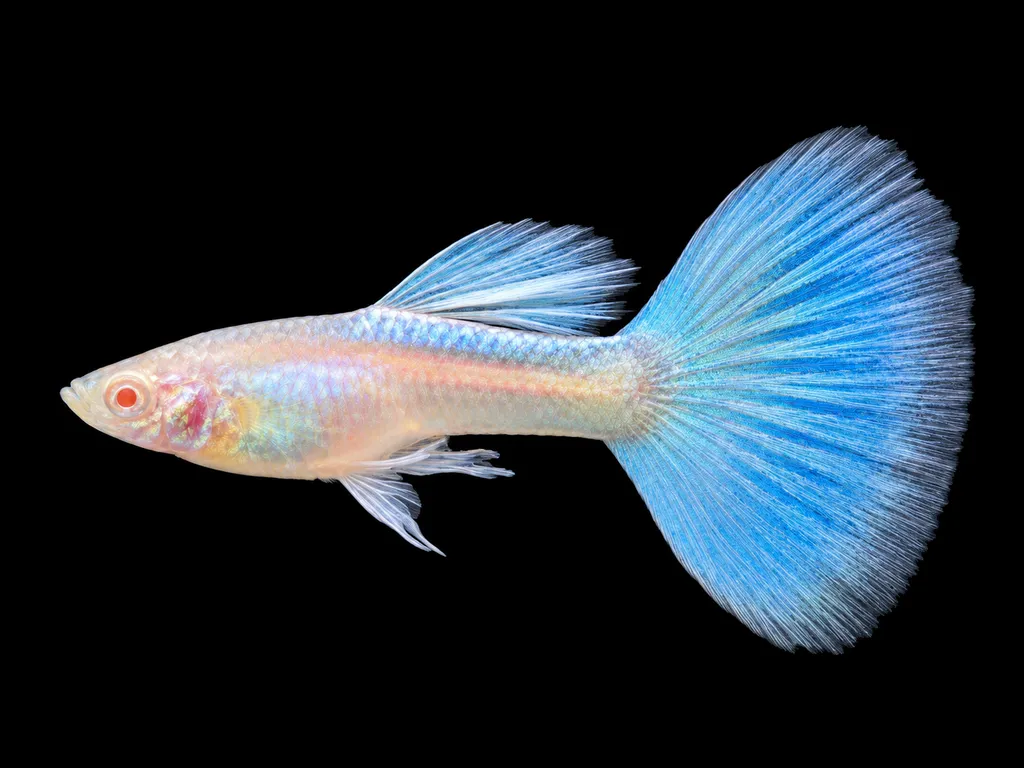
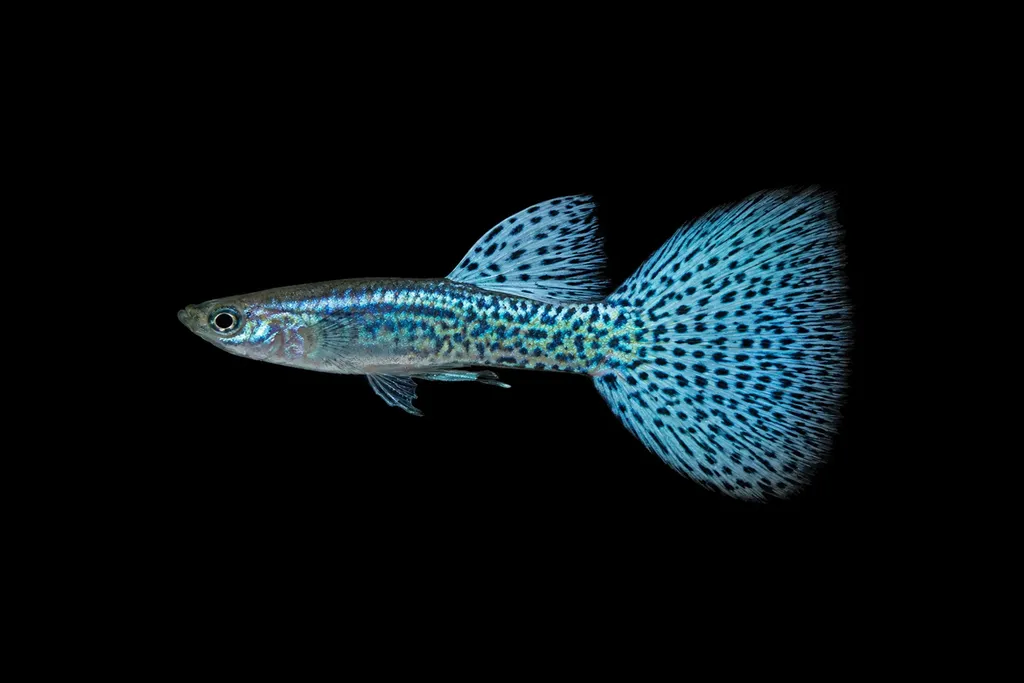
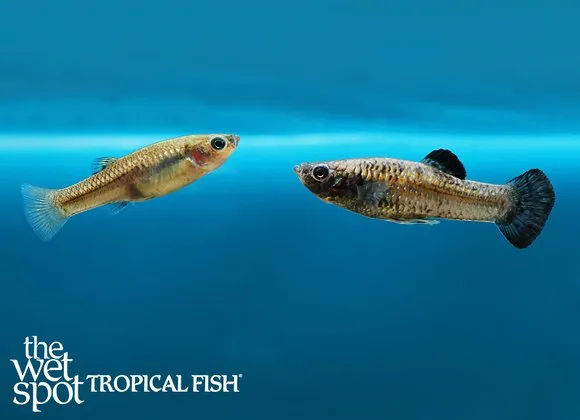
Albino strips the black pigment, leaving a pale body and red or pink eyes under whatever pattern the line carries. The eyes are the check in a shop tank, since a pale fish with dark eyes is a blond or a golden, not an albino. Albinos look washed out under bright lighting, and keepers report they are slower than their black-eyed siblings to spot food.
In the wild
Albino guppies are a mutation kept going only in tanks. The base has been crossed into most of the pattern strains, which is why the word fronts so many other strain names. No breeder, country or decade is documented for the guppy albino. Treat it as a hobby line of uncertain origin.
Good to know
Red eye in guppies is recessive to black eye, and an F2 cross published in 2025 gave the 3:1 split expected from a single gene. Genome-wide work on red-eyed guppies points at OCA2 as the leading candidate for the reduced melanin. The same work reads HERC2 as a regulator whose mutation can lower OCA2 expression, and it checked TYR, SLC45A2 and SLC24A5 alongside them.
Did you know
Albino and blond are two different genes doing similar-looking jobs. A blond guppy has less black pigment but keeps dark eyes, while an albino loses the melanin in the eye too. Eye color is the only reliable way to tell them apart.
Weekly picks
Tank mates
Albino guppy is a peaceful, social species that keeps to the middle. These picks share a community profile with it, are safe together in both directions, and overlap on water type, temperature and pH.
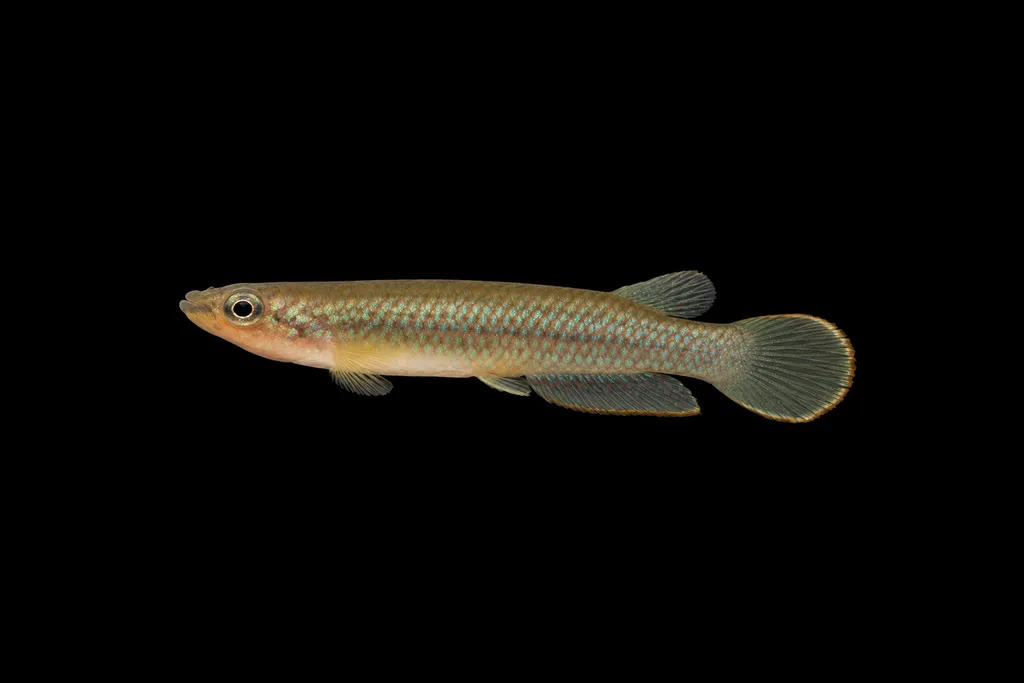
Guinean panchax
Epiplatys guineensis
Freshwater2.8 in (7 cm) · 14 gal (54 L)68–77°F (20–25°C)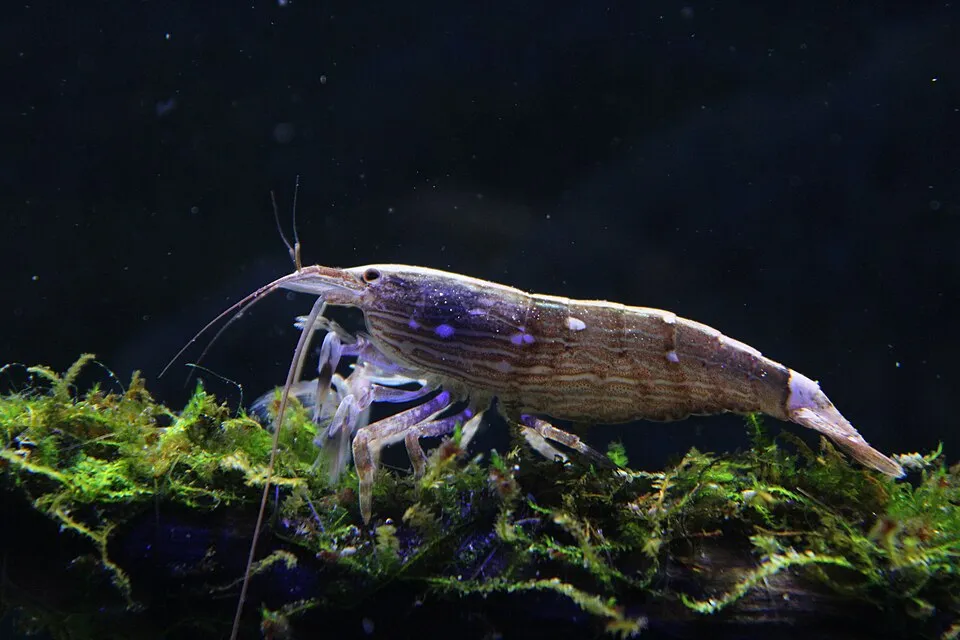
Bamboo shrimp
Atyopsis moluccensis
Freshwater3.9 in (10 cm) · 13 gal (50 L)72–84°F (22–29°C)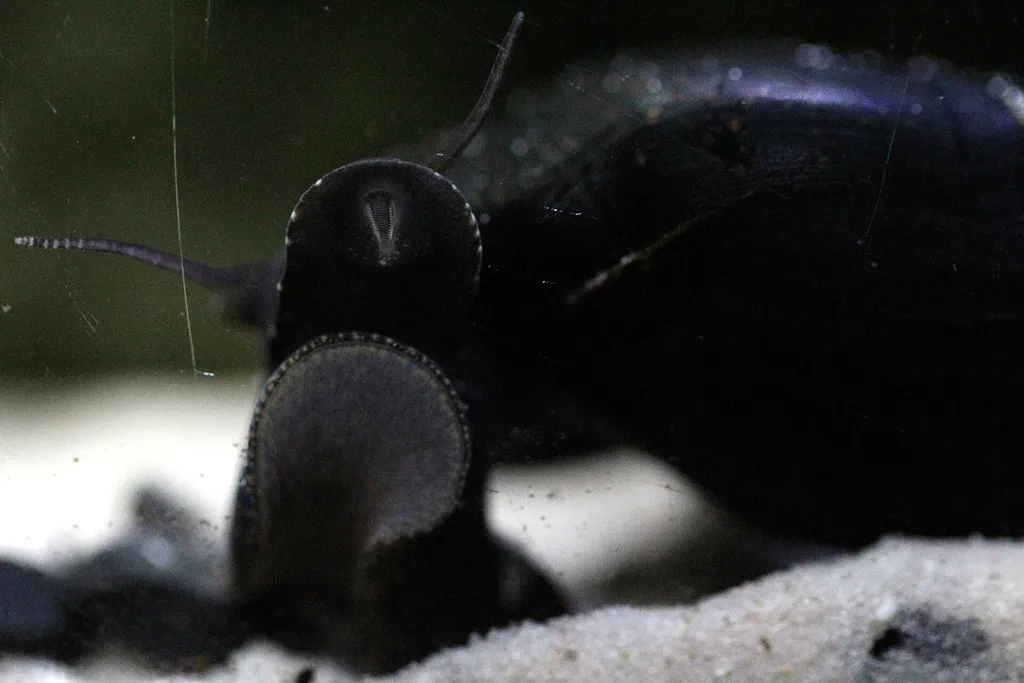
Black devil snail
Faunus ater
Freshwater3.9 in (10 cm) · 13 gal (50 L)72–86°F (22–30°C)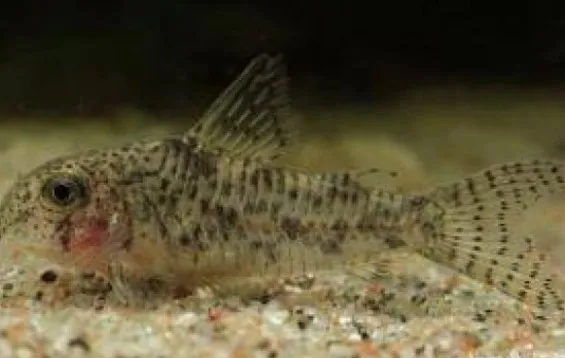
Barred-tail cory
Hoplisoma cochui
Freshwater1.4 in (3.5 cm) · 13 gal (50 L)70–82°F (21–28°C)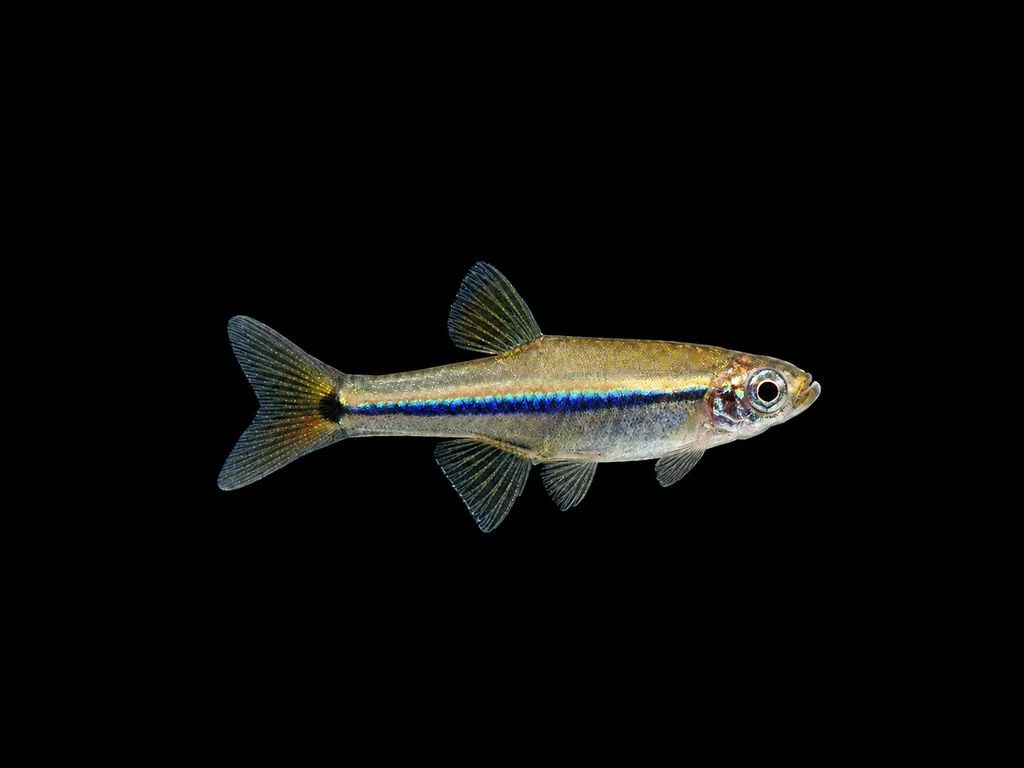
Thac Ba minnow
Tanichthys thacbaensis
Freshwater1.4 in (3.5 cm) · 14 gal (54 L)64–75°F (18–24°C)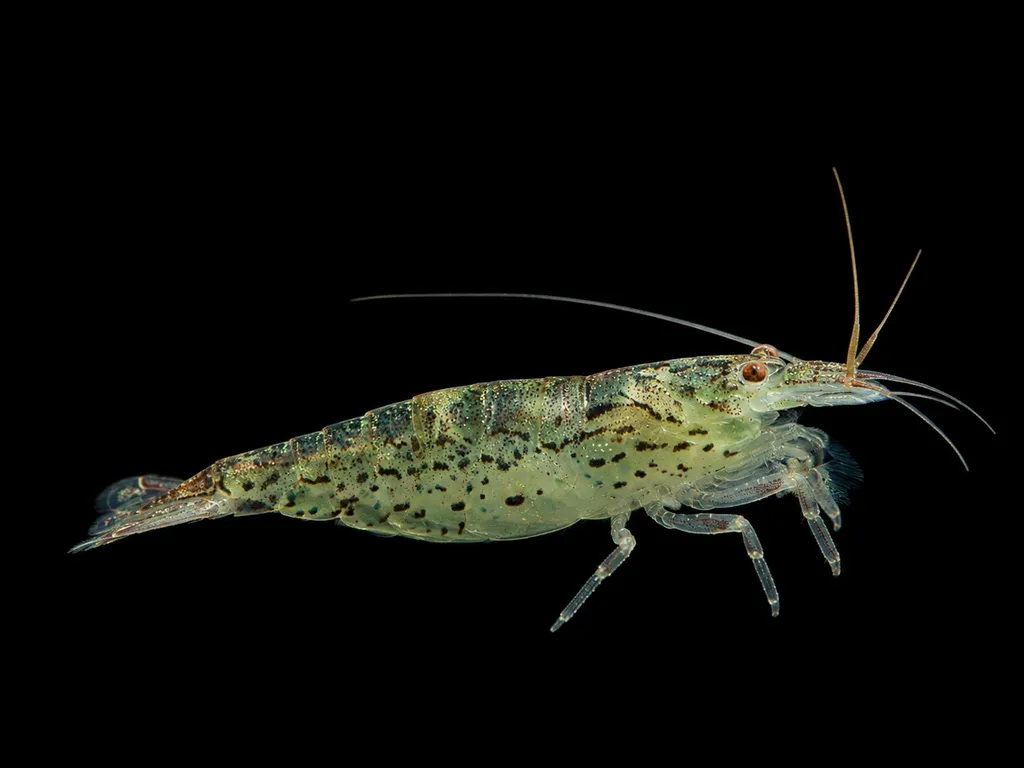
Green lace shrimp
Atyoida pilipes
Freshwater2.8 in (7 cm) · 14 gal (54 L)73–82°F (23–28°C)
Common questions
Is an Albino guppy a different species from the Guppy?
No. An Albino guppy is a variety of the Guppy, Poecilia reticulata, and it wants the same tank, water and food as the species.
What size tank does an Albino guppy need?
An Albino guppy needs at least 13 gal (50 L). It spends most of its time in the middle.
How big does an Albino guppy get?
An adult Albino guppy reaches about 2.4 in (6 cm).
Related species
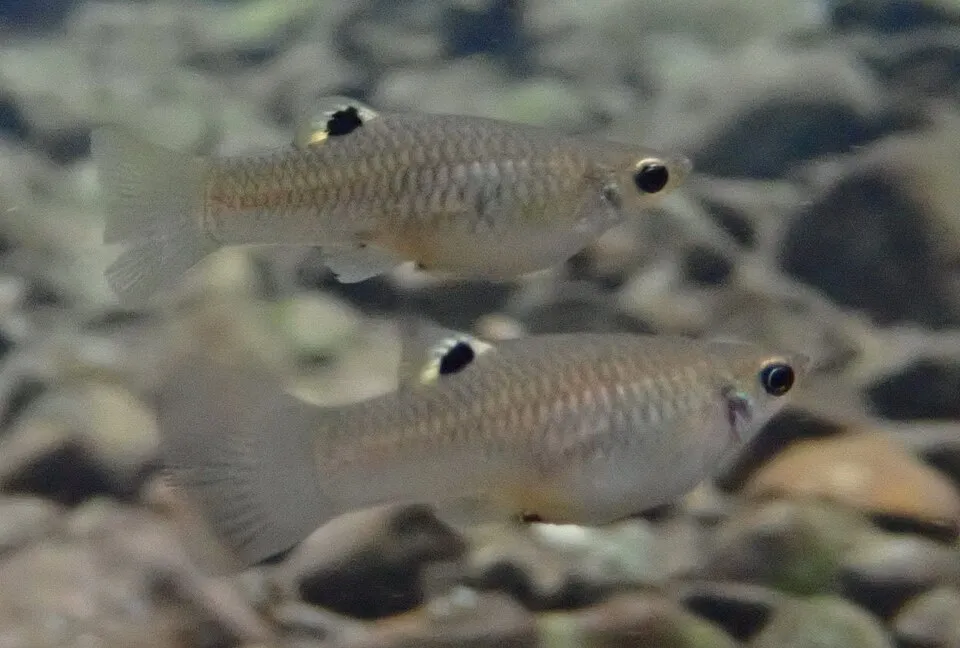 2.4 in (6 cm)16 gal (60 L)77–86°F (25–30°C)
Cauca molly
Poecilia caucana
2.4 in (6 cm) · 16 gal (60 L)
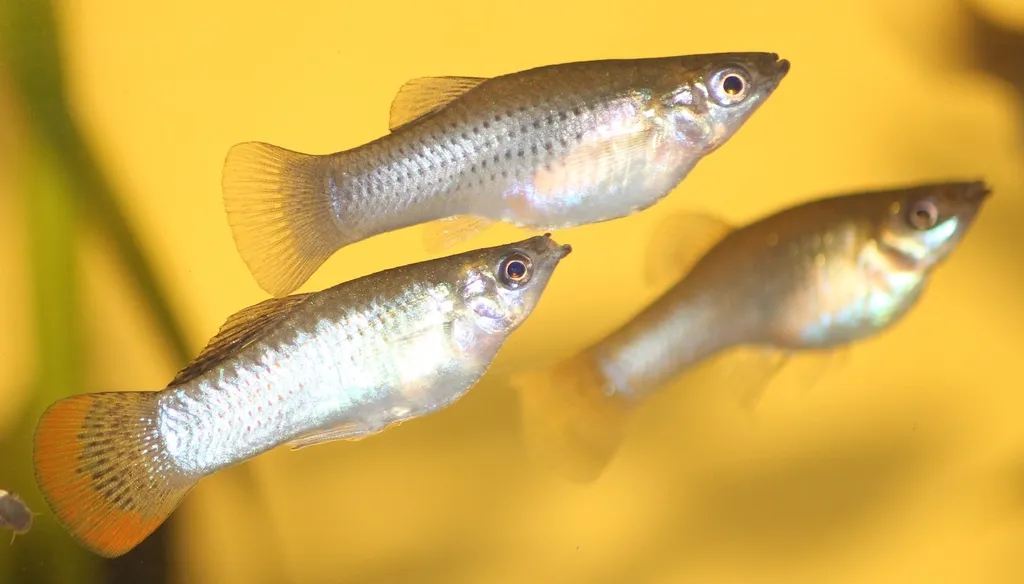 2.8 in (7 cm)29 gal (110 L)72–81°F (22–27°C)
Pacific molly
Poecilia butleri
2.8 in (7 cm) · 29 gal (110 L)
 2 in (5 cm)15 gal (55 L)75–82°F (24–28°C)
Melanzona guppy
Poecilia parae
2 in (5 cm) · 15 gal (55 L)
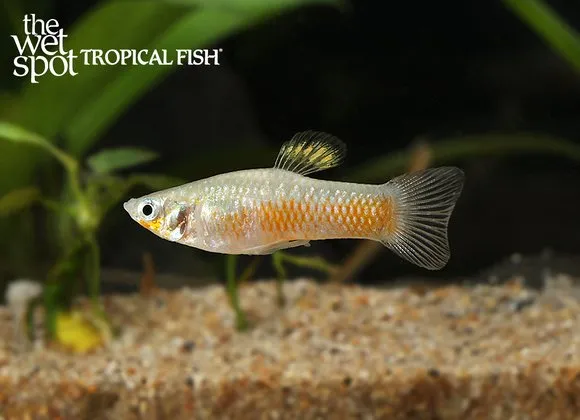 3.1 in (8 cm)20 gal (75 L)72–81°F (22–27°C)
Southern molly
Poecilia vivipara
3.1 in (8 cm) · 20 gal (75 L)
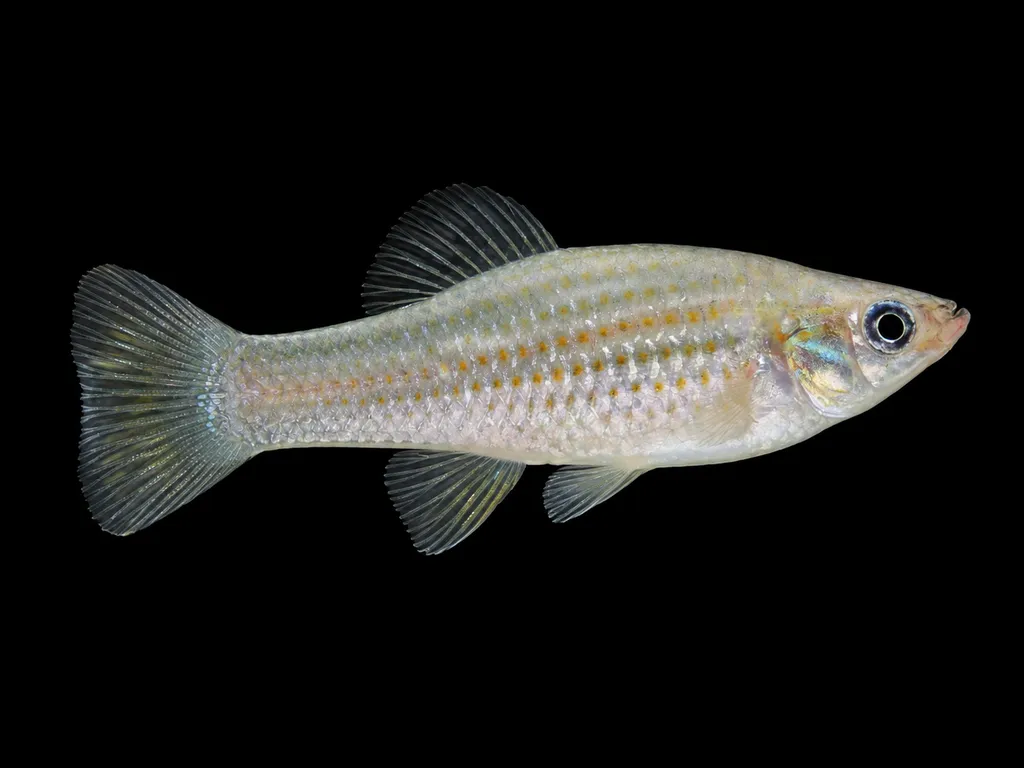 3.5 in (9 cm)20 gal (75 L)68–82°F (20–28°C)
Amazon molly
Poecilia formosa
3.5 in (9 cm) · 20 gal (75 L)
 1.6 in (4 cm)11 gal (40 L)72–81°F (22–27°C)
Dwarf molly
Poecilia chica
1.6 in (4 cm) · 11 gal (40 L)