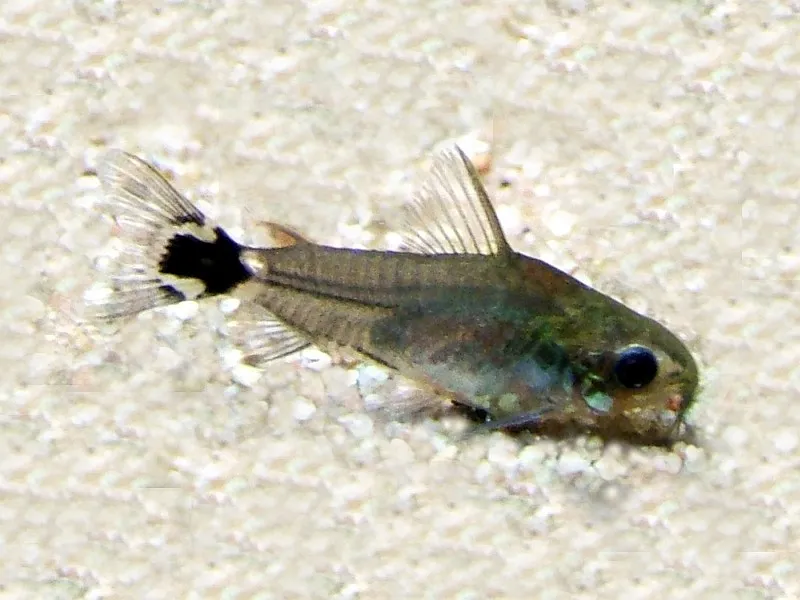
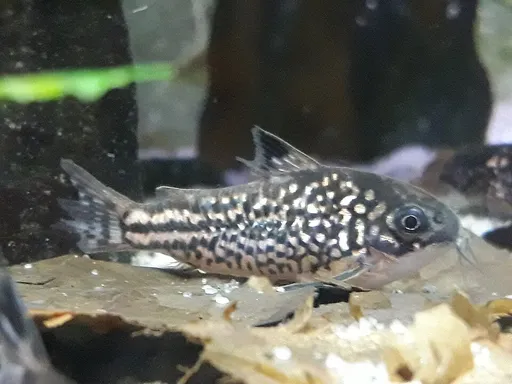
Dwarf cory
Gastrodermus hastatus
Also known as Corydoras hastatus, Black Diamond Cory
FreshwaterFish
Care at a glance
- Temperature
- 68–79°F
- 20–26°C
- pH
- 6.0–7.5
- Adult size
- 1.3 in
- 3.2 cm
- Minimum tank
- 12 gal
- 45 L
- Temperament
- Peaceful
- Social behavior
- Schooling
- Swim level
- Bottom
- Difficulty
- Easy
- Breeding
- Hard
- Rarity
- Rare
- Family
- Callichthyidae
- Origin
- Bolivia, Argentina, Paraguay
Overview
Keep them in groups of at least six, and more is better since they school tightly. Unlike typical bottom-sitting cories, they often hover and swim in midwater like tiny tetras. Feed sinking pellets and wafers, with the occasional frozen or live brine shrimp and bloodworms. They are peaceful and small enough to pair only with calm, similarly tiny tankmates.
In the wild
Dwarf corys live in slow, shallow waters across Bolivia, Argentina, and Paraguay, in spots thick with plants and soft, sandy or silty bottoms. Sand or fine smooth gravel matters here, since they dig and sift with their barbels and sharp grit wears those down. Plant the tank well and leave open swimming room, because this species spends more time off the bottom than most cories.
Good to know
This is an armored catfish in the family Callichthyidae and one of the smallest in the genus, topping out around 3 cm. The body is covered in bony plates rather than scales. It is an egg layer that scatters eggs onto plants and surfaces, and breeding is tricky in the home tank. It prefers cooler water, roughly low to mid 20s C.
Did you know
Dwarf cories often shoal alongside other small fish like tetras, joining a mixed group for safety rather than sticking to their own kind. In the wild they have been seen mixed in with much larger schools, using numbers as cover.
Weekly picks
Tank mates
Dwarf cory is a peaceful, schooling species that keeps to the bottom. These picks share a community profile with it, are safe together in both directions, and overlap on water type, temperature and pH.
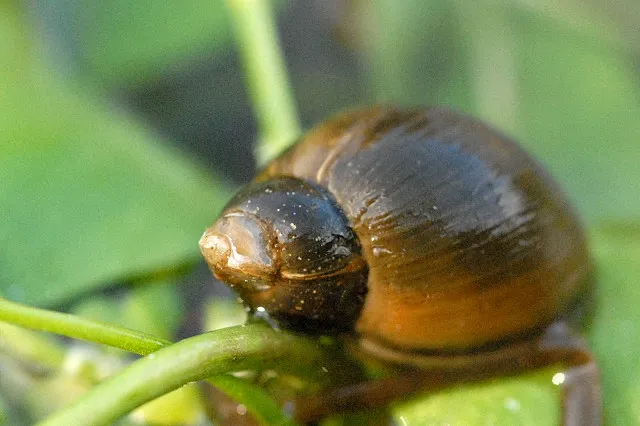
Wandering snail
Ampullaceana balthica
Freshwater0.8 in (2 cm) · 11 gal (40 L)50–84°F (10–29°C)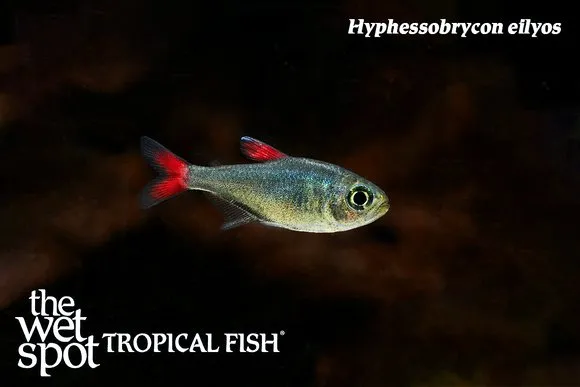
Eilyos tetra
Hyphessobrycon eilyos
Freshwater1.2 in (3 cm) · 12 gal (45 L)72–81°F (22–27°C)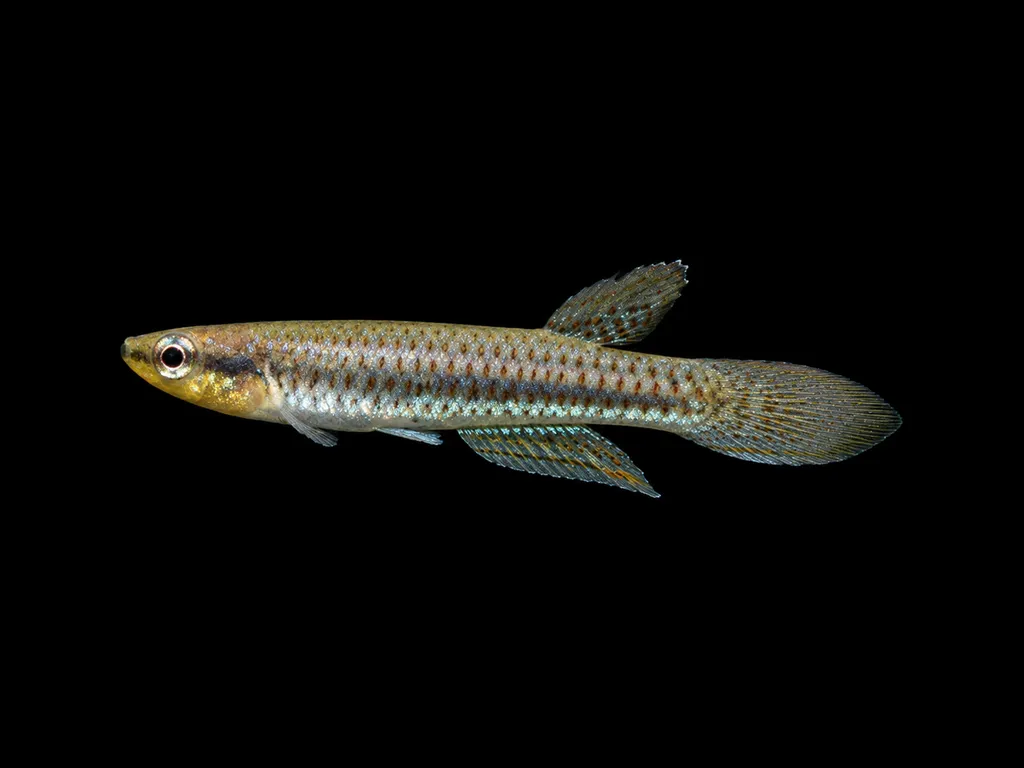
Dubois' panchax
Epiplatys duboisi
Freshwater1.4 in (3.5 cm) · 11 gal (40 L)68–77°F (20–25°C)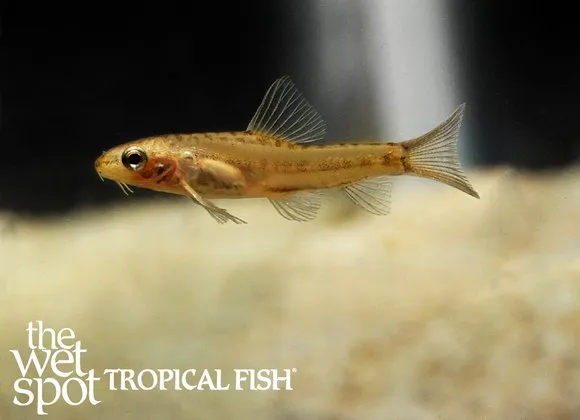
Mango loach
Physoschistura mango
Freshwater1 in (2.5 cm) · 11 gal (40 L)68–77°F (20–25°C)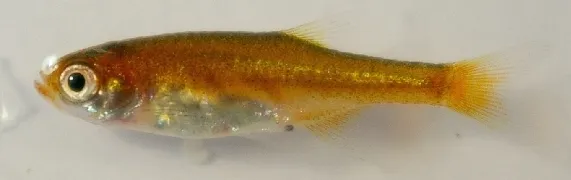
Red dwarf rasbora
Microrasbora rubescens
Freshwater1.2 in (3 cm) · 12 gal (45 L)68–77°F (20–25°C)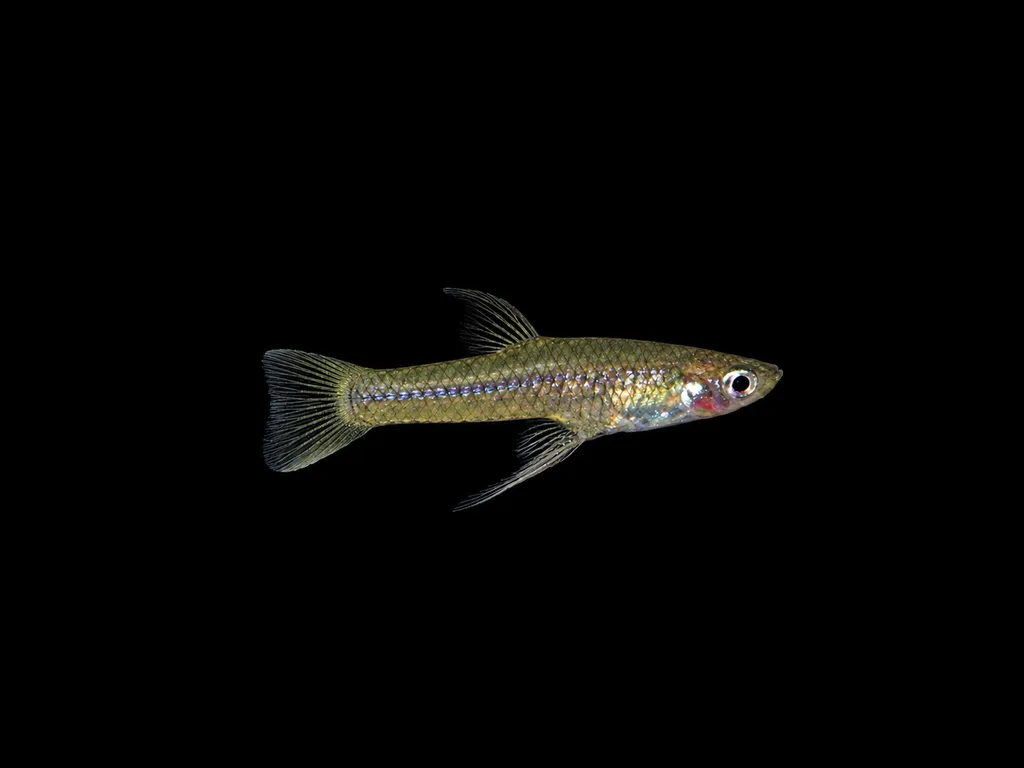
Sicklefin livebearer
Girardinus falcatus
Freshwater2.6 in (6.5 cm) · 11 gal (40 L)68–82°F (20–28°C)
Common questions
What size tank does a Dwarf cory need?
A Dwarf cory needs at least 12 gal (45 L). It spends most of its time in the bottom.
What temperature and pH does a Dwarf cory need?
A Dwarf cory is comfortable at 68–79°F (20–26°C) with a pH of 6.0–7.5.
How big does a Dwarf cory get?
An adult Dwarf cory reaches about 1.3 in (3.2 cm).
Does a Dwarf cory need a group?
Yes. A Dwarf cory is a schooling species and should be kept in a group, not singly.
Related species
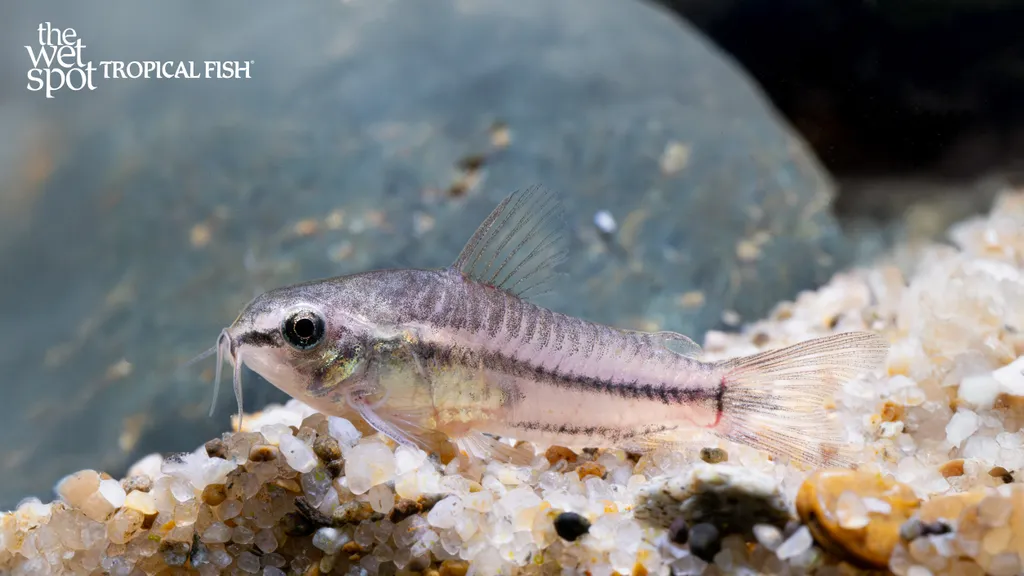 1.3 in (3.3 cm)13 gal (50 L)72–79°F (22–26°C)
Pygmy cory
Gastrodermus pygmaeus
1.3 in (3.3 cm) · 13 gal (50 L)
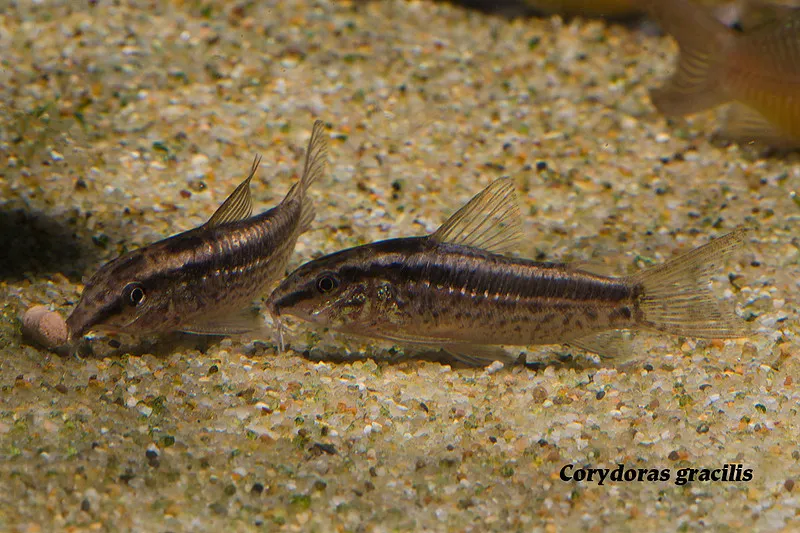 1.4 in (3.5 cm)12 gal (45 L)72–79°F (22–26°C)
Nano cory
Gastrodermus gracilis
1.4 in (3.5 cm) · 12 gal (45 L)
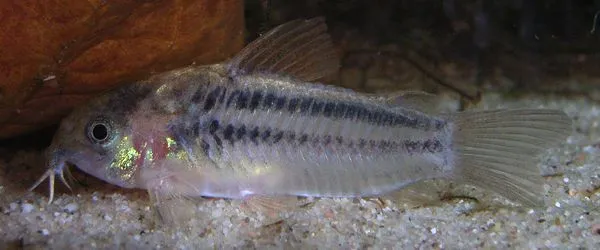 1.8 in (4.5 cm)16 gal (60 L)72–79°F (22–26°C)
Nain dwarf cory
Gastrodermus nanus
1.8 in (4.5 cm) · 16 gal (60 L)
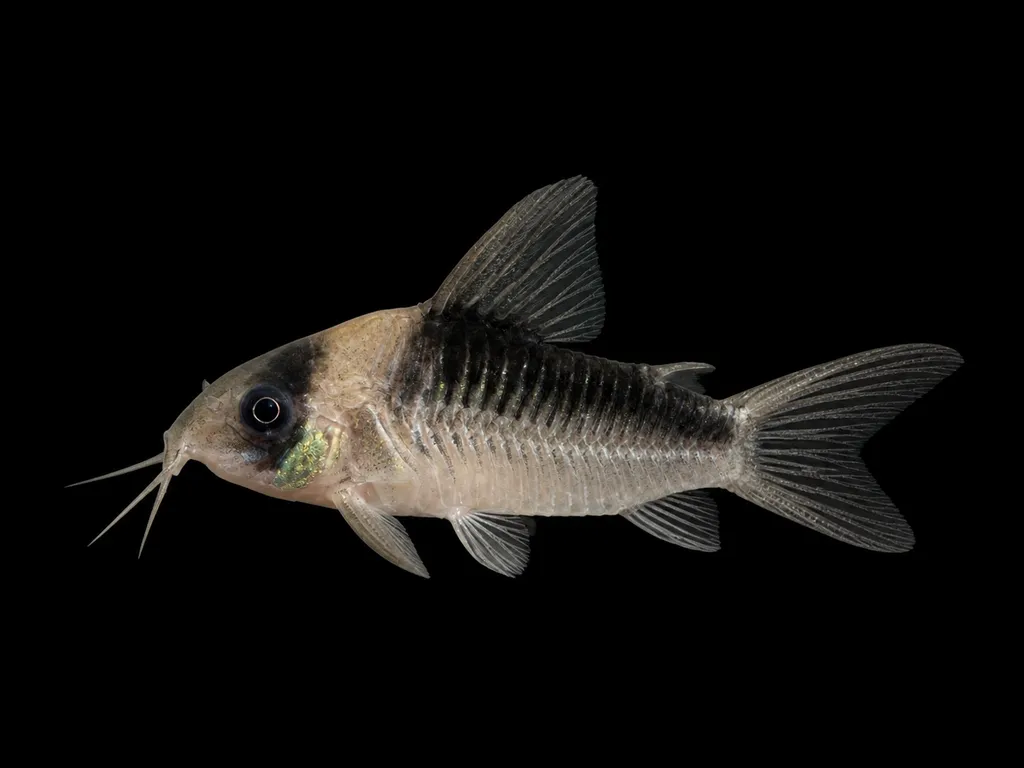 1.8 in (4.5 cm)16 gal (60 L)72–79°F (22–26°C)
Nijssen's cory
Gastrodermus nijsseni
1.8 in (4.5 cm) · 16 gal (60 L)
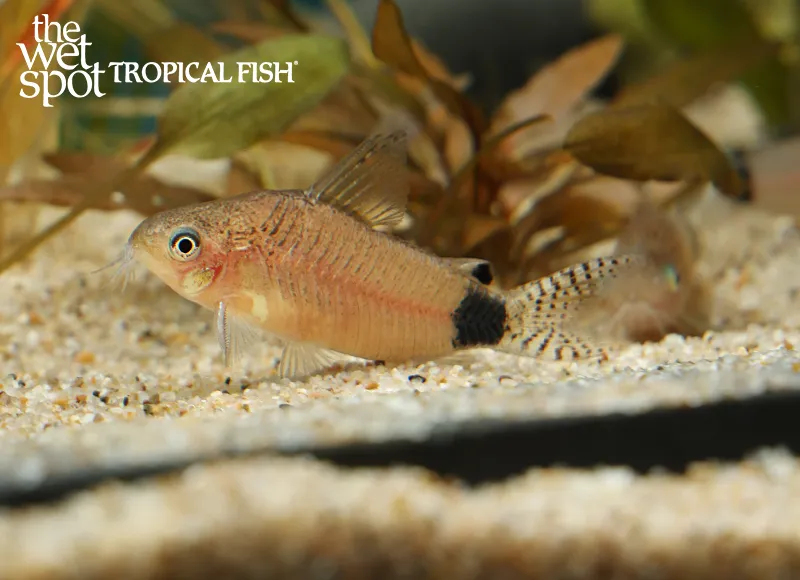 2 in (5 cm)16 gal (60 L)72–82°F (22–28°C)
Guapore cory
Gastrodermus guapore
2 in (5 cm) · 16 gal (60 L)
 2 in (5 cm)16 gal (60 L)72–79°F (22–26°C)
Napo cory
Gastrodermus napoensis
2 in (5 cm) · 16 gal (60 L)