Dragon's Breath
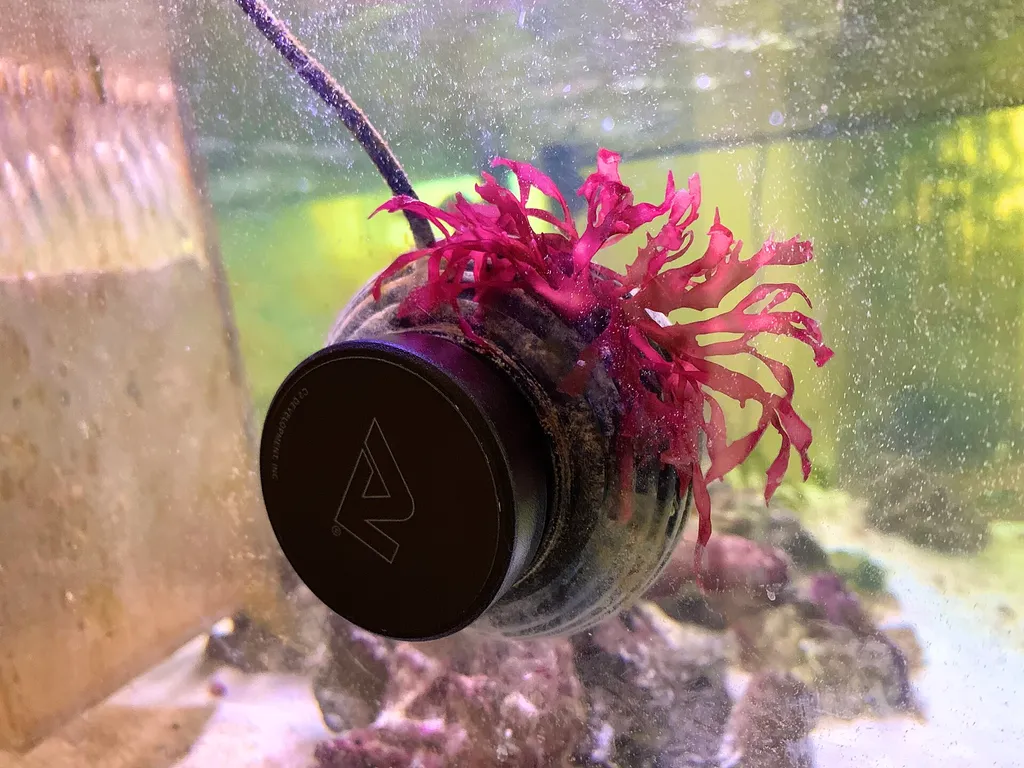
Halymenia durvillei
Also known as Halymenia, Red Dragon's Breath, Red sea lettuce
SaltwaterMacroalgaeCuttings
Care at a glance
- Light
- High light
- CO2
- No CO₂ needed
- Temperature
- 73–81°F
- 23–27°C
- Max height
- 11.8 in
- 30 cm
- Growth rate
- Medium
- Placement
- Midground
- Type
- Macroalgae
- pH
- 8.0–8.4
- Spread
- 11.8 in (30 cm)
- Nutrient uptake
- Water column
- Growth region
- Submersed
- Difficulty
- Medium
- Family
- Halymeniaceae
- Origin
- Indo-Pacific reefs; commercially cultured for carrageenan
Overview
Unlike the refugium workhorses, Dragon's Breath is usually grown as an ornamental centerpiece in the display for its glowing color, though it still exports nutrients. It wants moderate to high light with plenty of blue, and moderate to high flow that keeps the blades gently moving and prevents bacterial die-off at the base. It is not a fully sterile-tank plant; it needs some residual nitrate and phosphate or it can starve out. Trim it back periodically since it branches vigorously in every direction.
In the wild
A fiery red, fleshy macroalgae from Indo-Pacific reefs, growing at moderate depths where light is partly filtered to blue. Its flame-like blades branch out in all directions from a central fleshy stalk and can reach around a foot tall and wide.
Good to know
Halymenia durvillei is a red alga in the family Halymeniaceae, prized in aquaria as a display macro for its iridescent red to orange coloration. Because it evolved at depth, it favors light with strong blue content around 450 to 490 nm. It is cultured commercially as a source of lambda carrageenan and spreads in captivity by fragmentation.
Did you know
The same species that lights up reef tanks is farmed on ropes in Southeast Asia for carrageenan, a gelling agent used in foods and toothpaste.
Related plants
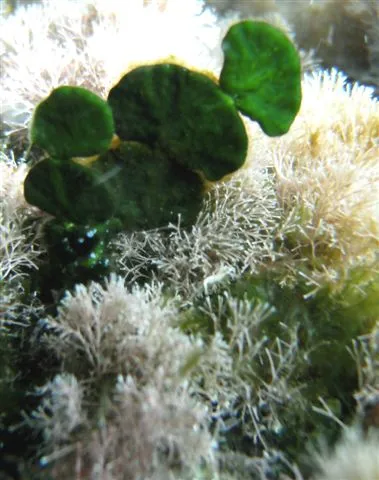 Medium lightMidground5.9 in (15 cm)
Money Plant
Halimeda
Medium light · Midground
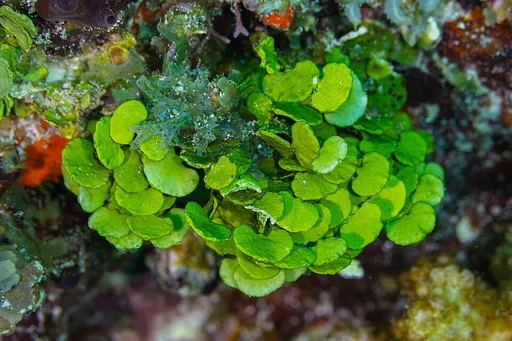 Medium lightMidground5.9 in (15 cm)
Watercress algae
Halimeda tuna
Medium light · Midground
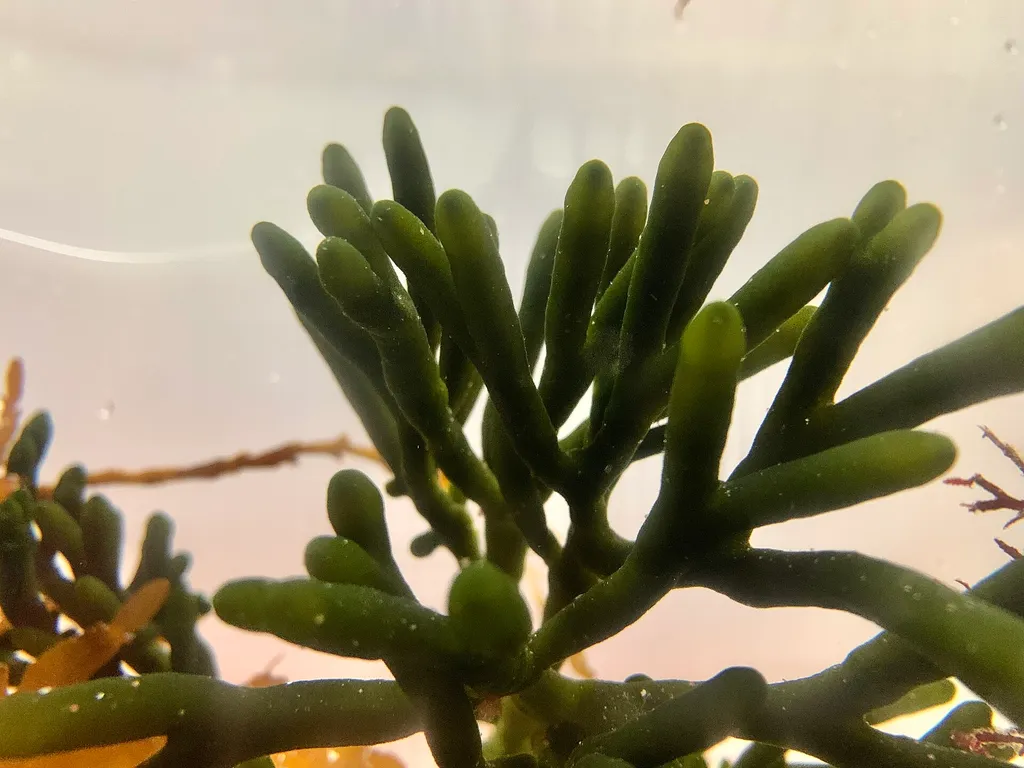 Medium lightBackground9.8 in (25 cm)
Dead Man's Fingers
Codium fragile
Medium light · Background
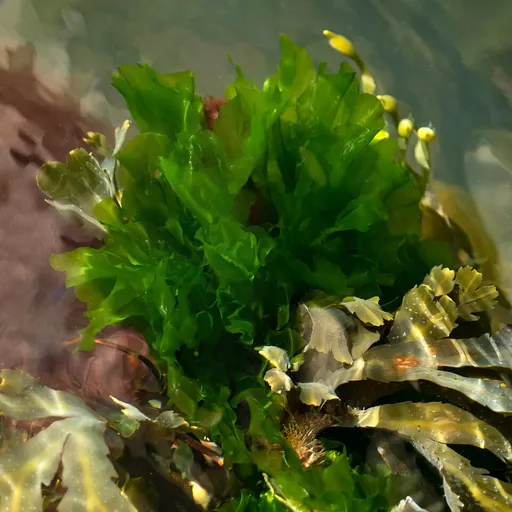 High lightFloating9.8 in (25 cm)
Sea Lettuce
Ulva lactuca
High light · Floating
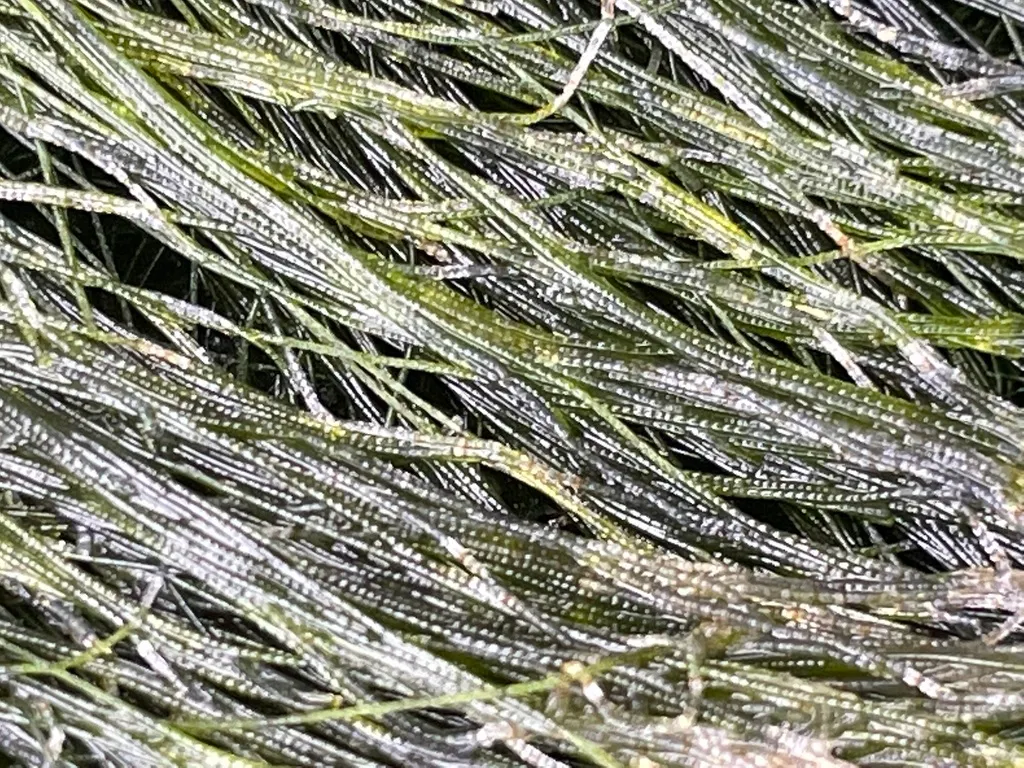 Medium lightFloating7.9 in (20 cm)
Chaetomorpha
Chaetomorpha linum
Medium light · Floating
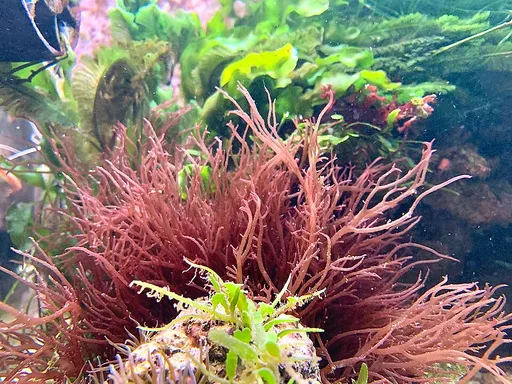 Medium lightBackground7.9 in (20 cm)
Red Gracilaria
Gracilaria parvispora
Medium light · Background