Christmas moss
Vesicularia montagnei
Also known as Xmas moss, Vesicularia dubyana var. abbreviata, Vesicularia sp. 'Christmas'
FreshwaterMossCuttingsSide shoots
Care at a glance
- Light
- Low light
- CO2
- CO₂ beneficial
- Temperature
- 59–86°F
- 15–30°C
- Max height
- 2 in
- 5 cm
- Growth rate
- Slow
- Placement
- Epiphyte
- Type
- Moss
- pH
- 5.0–7.5
- Hardness
- 0–20 dGH
- Spread
- 11.8 in (30 cm)
- Nutrient uptake
- Water column
- Growth region
- Submersed or emersed
- Difficulty
- Easy
- Family
- Hypnaceae
- Origin
- Tropical Asia (South and Southeast Asia)
Overview
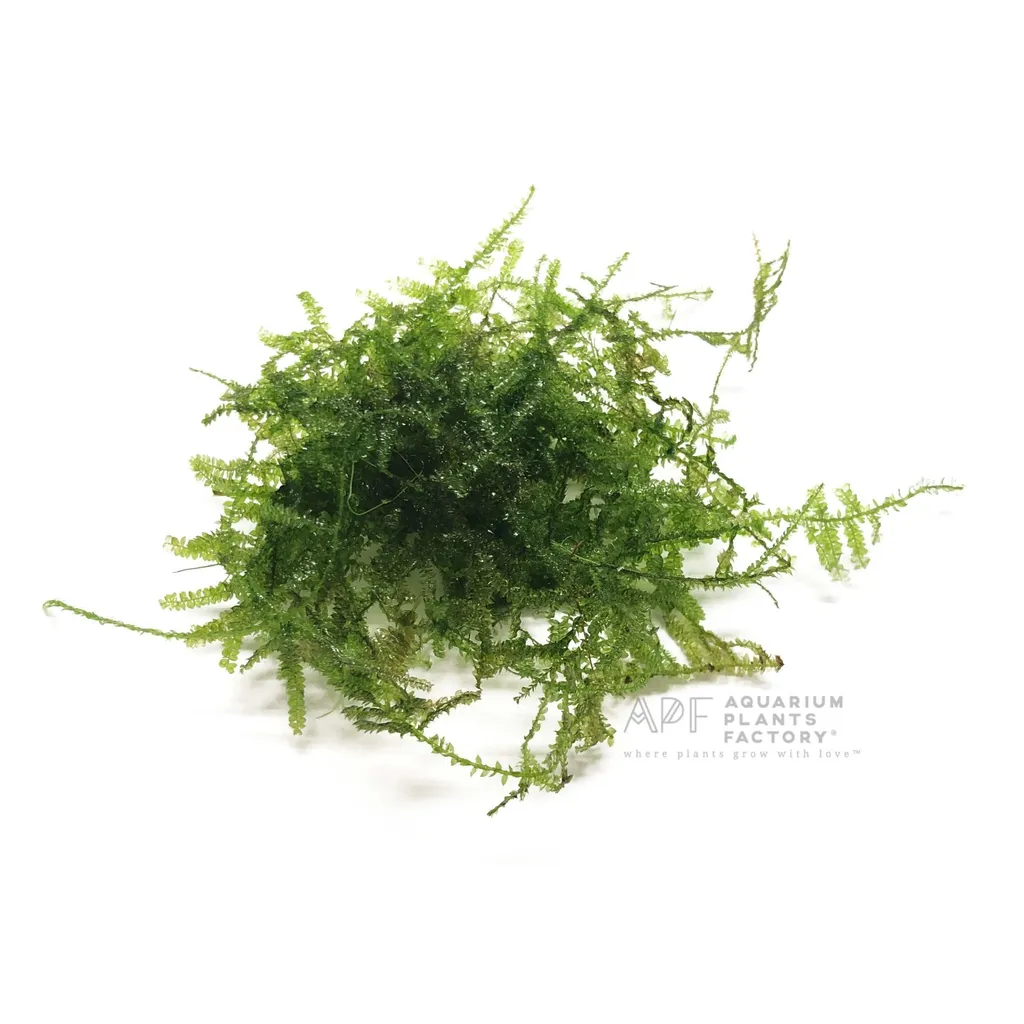
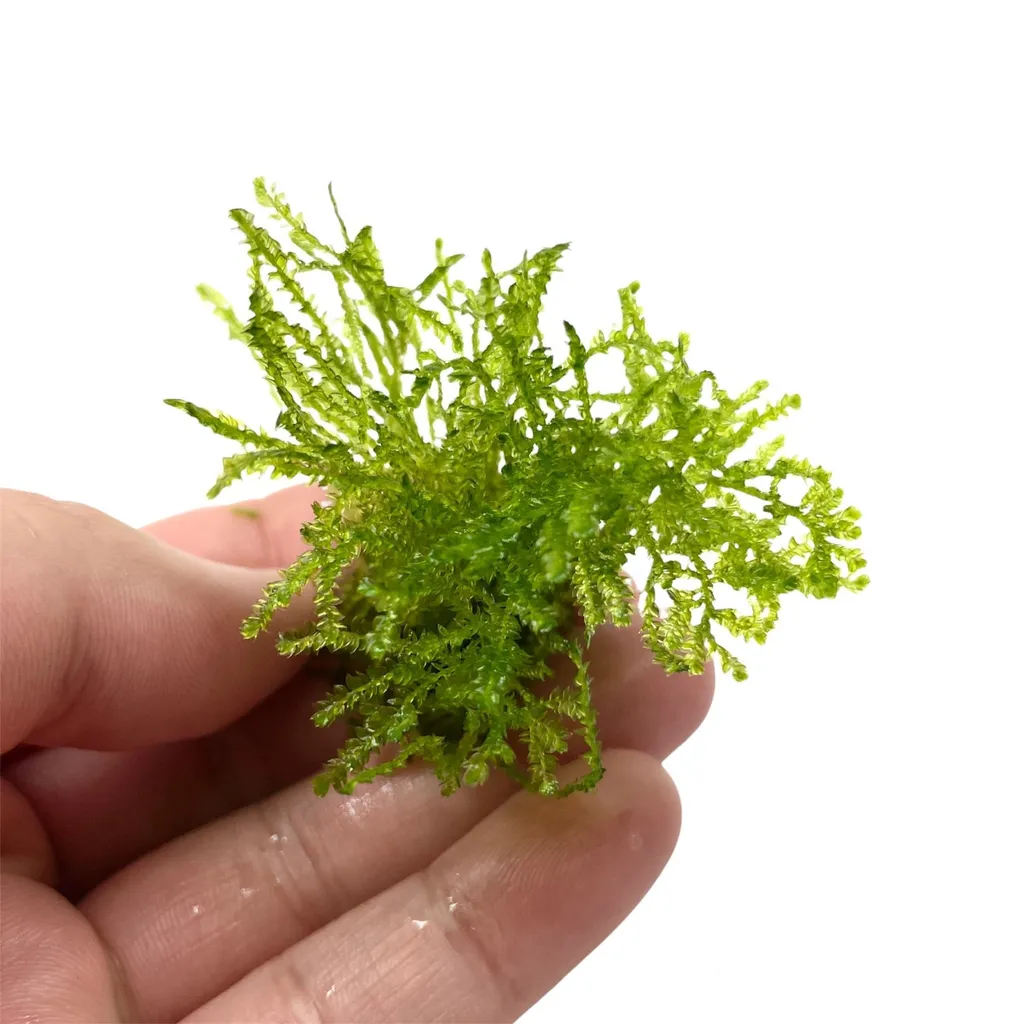
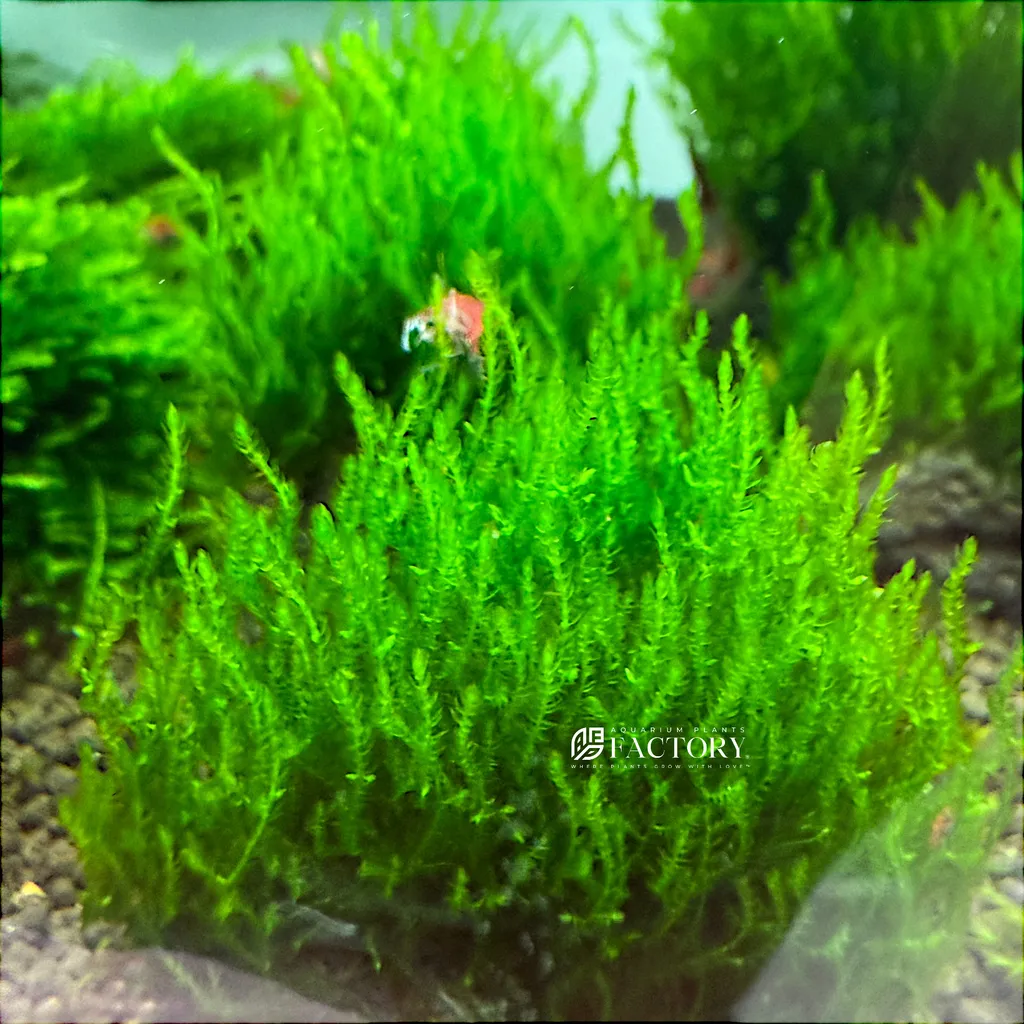
Tie or glue it to wood, rock, or mesh and it will grip on its own within a few weeks, since it has no real roots. It does fine in low light with no CO2, but added CO2 and moderate light produce the dense, layered triangular fronds it is known for. Growth is slow, so trim occasionally to keep airflow through the mat and rinse out trapped debris, which is the main cause of browning and algae deep inside the cushion.
In the wild
A creeping moss widely spread through the Asian tropics, where it grows mostly emersed on moist, shaded riverbanks and damp forest soil. It tolerates being fully submersed in soft, slightly acidic to neutral freshwater, which is how it is used in the hobby.
Good to know
Vesicularia montagnei is a true moss (Bryophyta) in the family Hypnaceae, not a liverwort. The 'Christmas' name comes from its regular, drooping side branches that resemble fir or Christmas tree fronds. It is frequently confused with and sold as Vesicularia dubyana (the old name long applied to Java moss); V. dubyana branches more loosely and irregularly with shorter, narrower leaves.
Did you know
Because its fronds branch in a flat, overlapping plane, Christmas moss is a favorite for moss walls and 'tree' scapes, where the layered branches read as miniature foliage from across the room.
Related plants
 Low lightEpiphyte2 in (5 cm)
Singapore moss
Vesicularia dubyana
Low light · Epiphyte
 Low lightEpiphyte2 in (5 cm)
Weeping moss
Vesicularia ferriei
Low light · Epiphyte
- Medium lightEpiphyte2 in (5 cm)
Erect moss
Vesicularia reticulata
Medium light · Epiphyte
 Low lightEpiphyte2 in (5 cm)
Peacock moss
Taxiphyllum sp. 'Peacock'
Low light · Epiphyte
 Low lightEpiphyte2 in (5 cm)
Spiky moss
Taxiphyllum sp. 'Spiky'
Low light · Epiphyte
 Low lightEpiphyte3.1 in (8 cm)
Flame moss
Taxiphyllum sp. 'Flame'
Low light · Epiphyte