Weeping moss
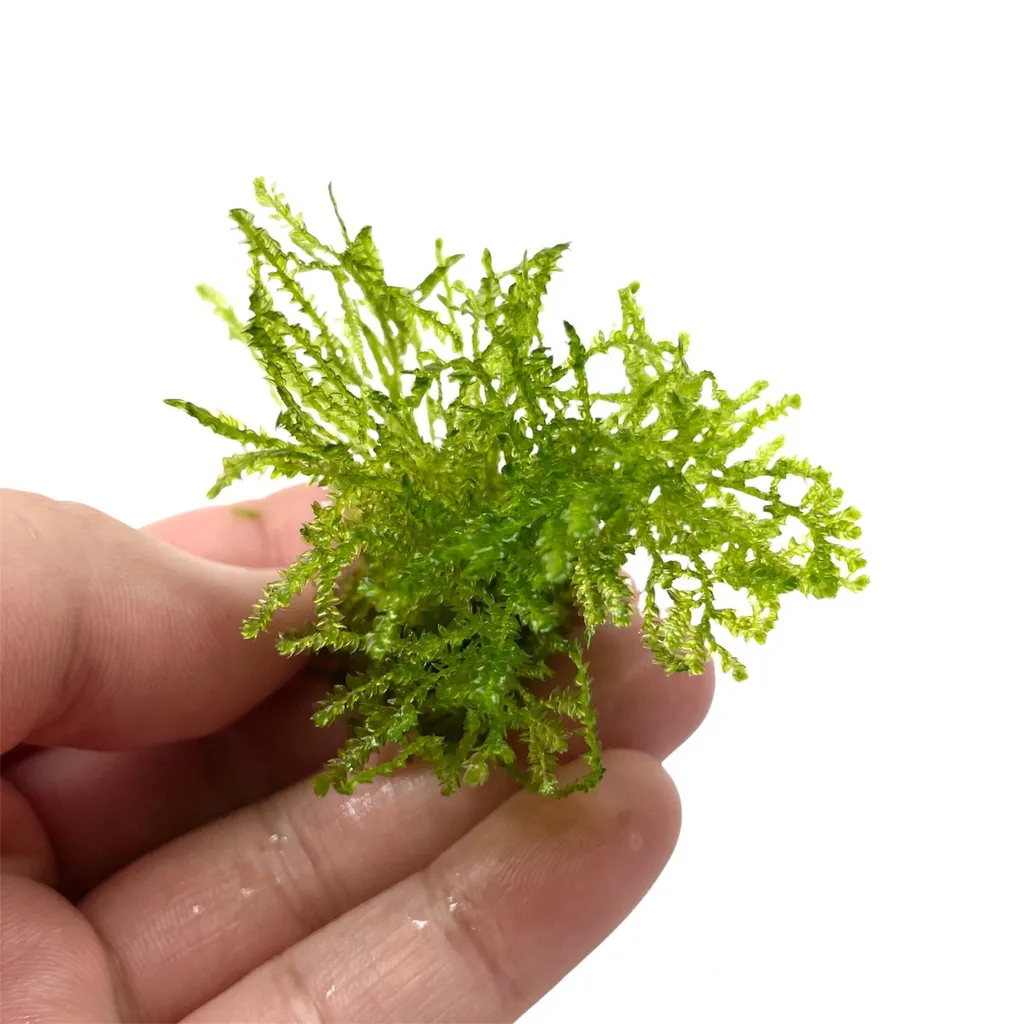
Vesicularia ferriei
Also known as Weeping willow moss, Vesicularia sp. 'Weeping'
FreshwaterMossCuttingsSide shoots
Care at a glance
- Light
- Low light
- CO2
- CO₂ beneficial
- Temperature
- 59–86°F
- 15–30°C
- Max height
- 2 in
- 5 cm
- Growth rate
- Slow
- Placement
- Epiphyte
- Type
- Moss
- pH
- 5.0–7.5
- Hardness
- 0–20 dGH
- Spread
- 9.8 in (25 cm)
- Nutrient uptake
- Water column
- Growth region
- Submersed or emersed
- Difficulty
- Easy
- Family
- Hypnaceae
- Origin
- China and southern Japan
Overview
Attach it to driftwood, branches, or stone with thread or glue and let the shoots cascade, which shows off the weeping habit best on raised or overhanging hardscape. It grows slowly and feeds from the water column, so steady liquid fertilization matters more than substrate; CO2 is optional but tightens and speeds growth. Keep flow moving past it and thin the mat occasionally so the inner shoots do not rot or trap mulm.
In the wild
Originally imported from China and also found in southern Japan, where it grows on wet rocks covered in sandy soil and along moist riverbanks. It adapts well to permanent submersion in soft, slightly acidic to neutral aquarium water.
Good to know
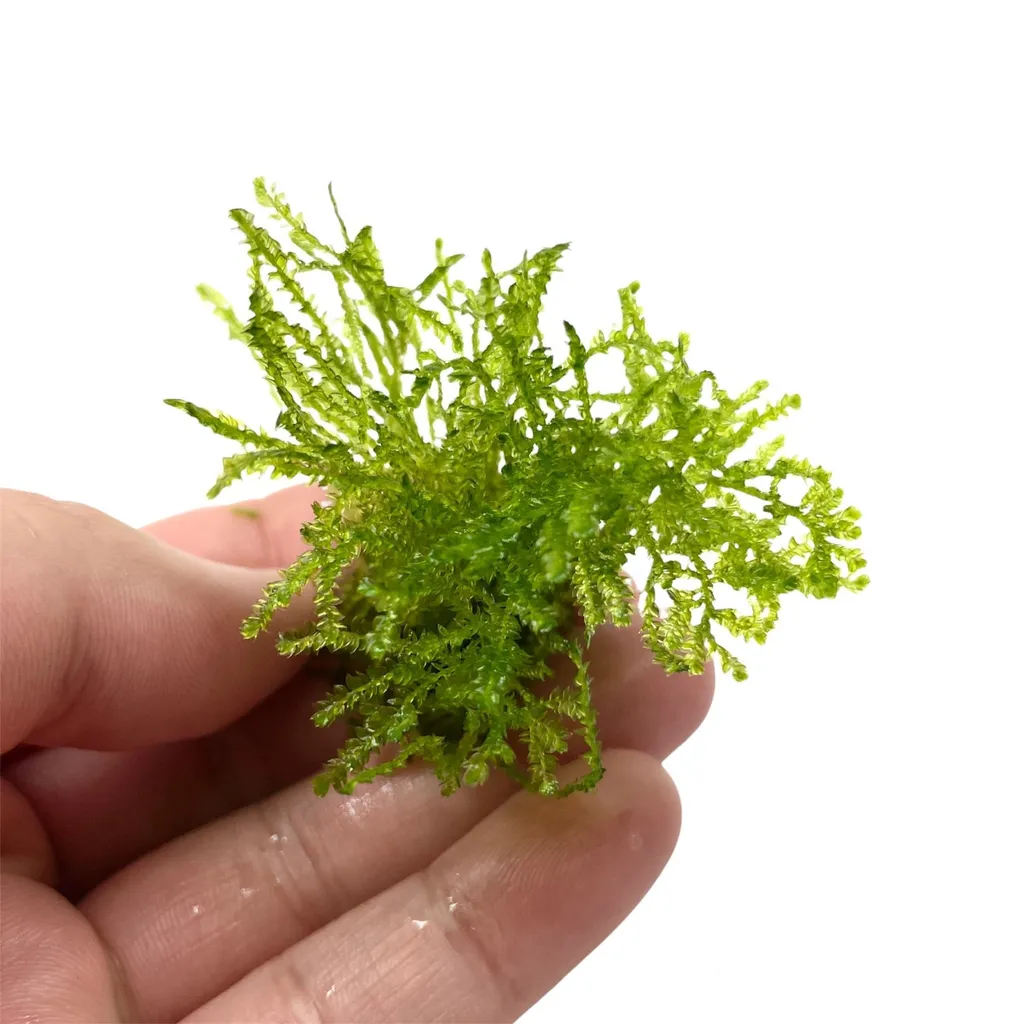
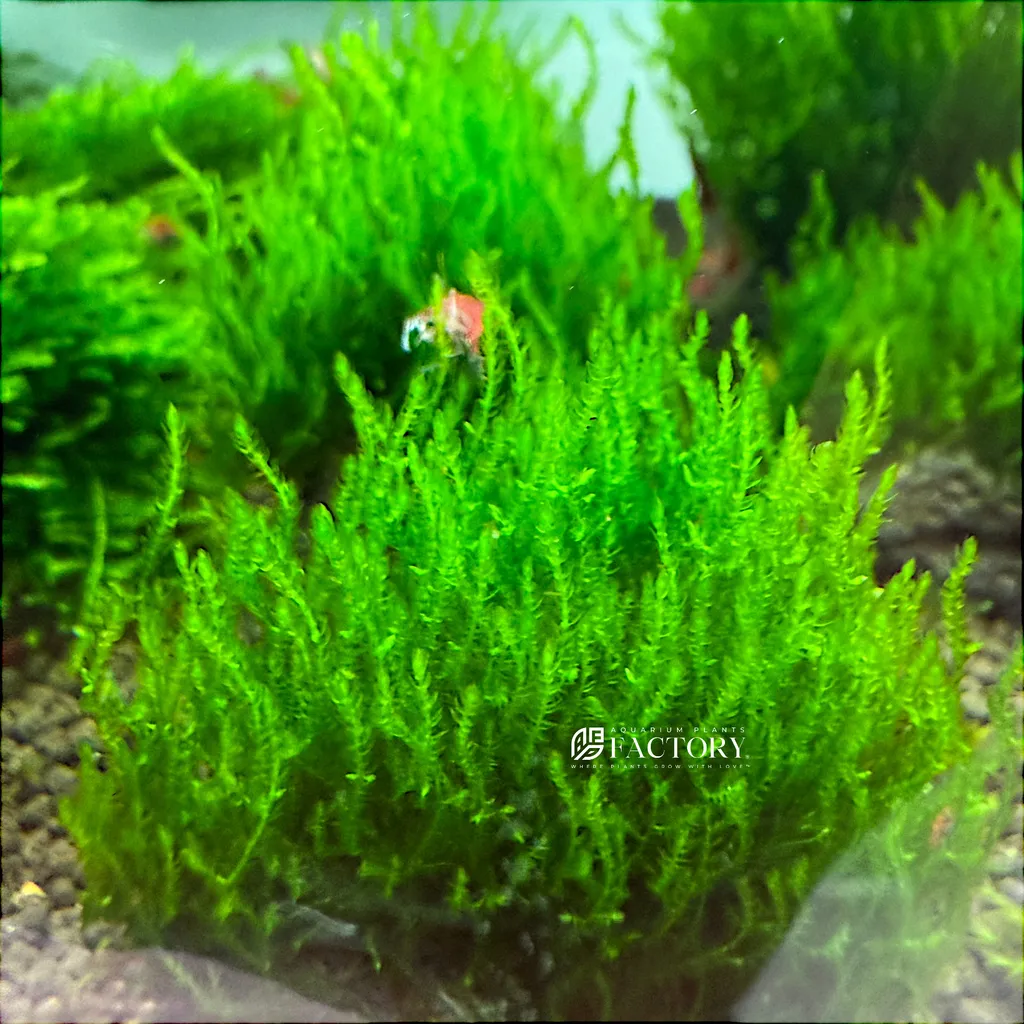
Vesicularia ferriei is a true moss in the family Hypnaceae, named (Cardot & Thér.) Broth. Its defining trait is overhanging, frond-shaped shoots that droop downward like a weeping willow, with leaves that are more obtuse and rounded than the pointed tips of related Vesicularia species.
Did you know
Unlike most aquarium mosses that grow upward or outward, weeping moss naturally points its new growth downward, so it is often planted high on hardscape specifically to create a dripping, willow-like curtain.
Related plants
 Low lightEpiphyte2 in (5 cm)
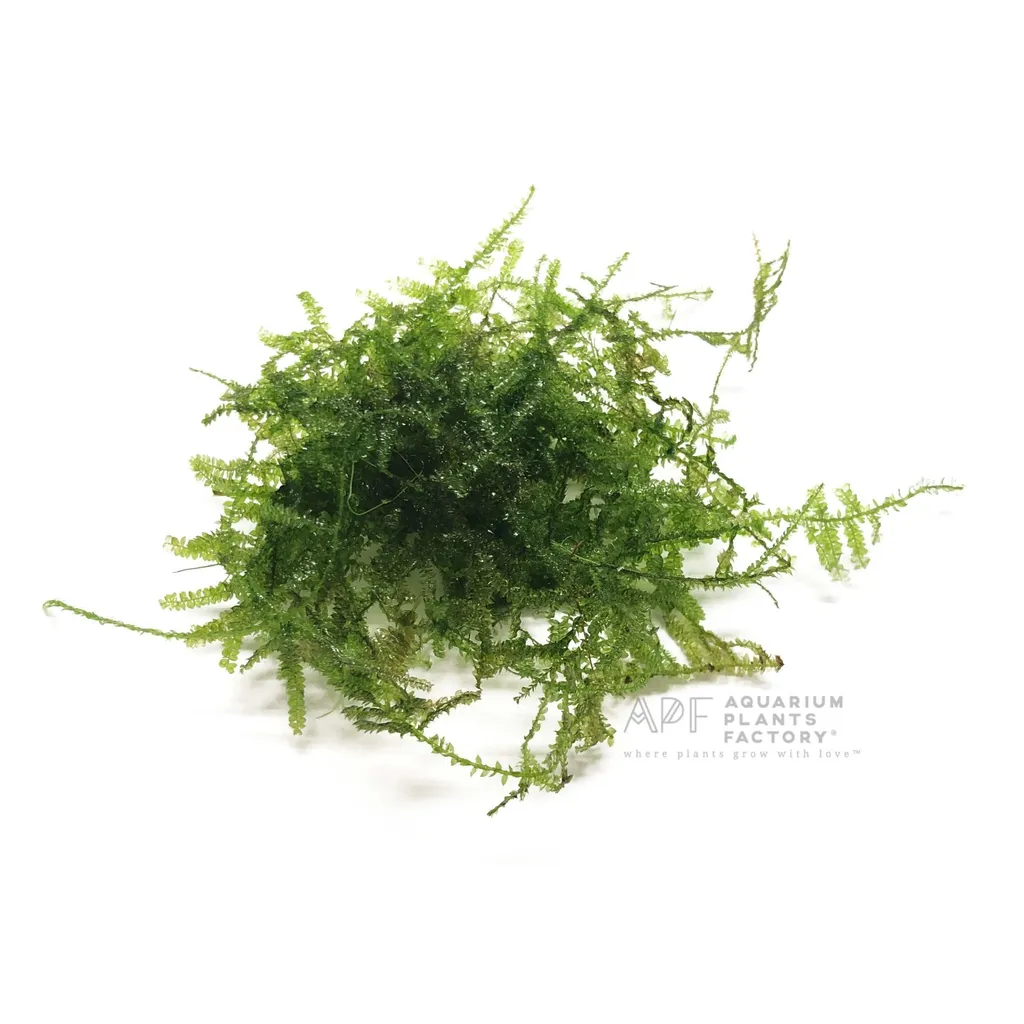
Christmas moss
Vesicularia montagnei
Low light · Epiphyte
 Low lightEpiphyte2 in (5 cm)
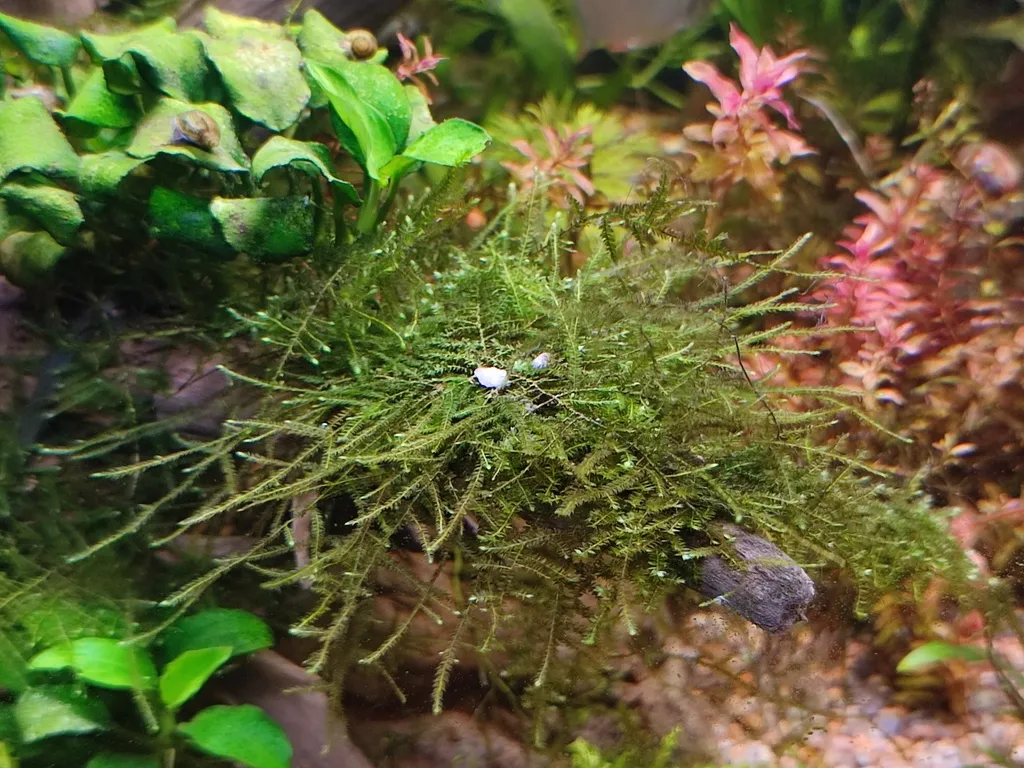
Singapore moss
Vesicularia dubyana
Low light · Epiphyte
- Medium lightEpiphyte2 in (5 cm)
Erect moss
Vesicularia reticulata
Medium light · Epiphyte
 Low lightEpiphyte2 in (5 cm)
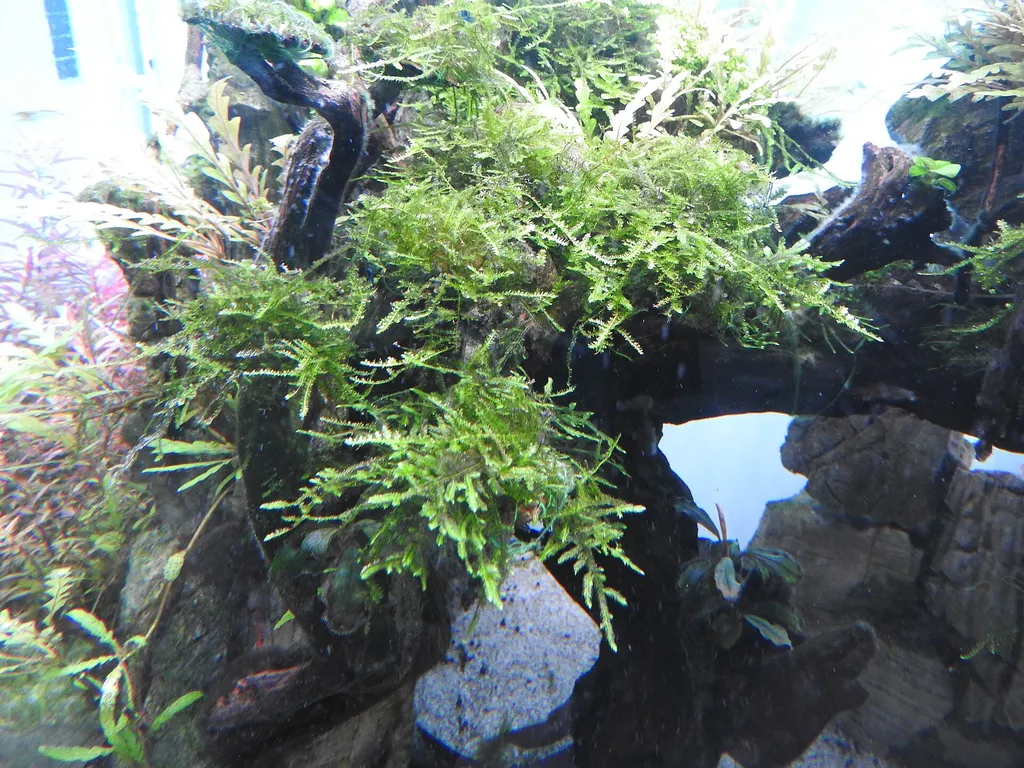
Peacock moss
Taxiphyllum sp. 'Peacock'
Low light · Epiphyte
 Low lightEpiphyte2 in (5 cm)
Spiky moss
Taxiphyllum sp. 'Spiky'
Low light · Epiphyte
 Low lightEpiphyte3.1 in (8 cm)
Flame moss
Taxiphyllum sp. 'Flame'
Low light · Epiphyte