Peacock moss
Taxiphyllum sp. 'Peacock'
Also known as Taxiphyllum sp. Peacock
FreshwaterMossDivisionFragmentation
Care at a glance
- Light
- Low light
- CO2
- CO₂ beneficial
- Temperature
- 64–82°F
- 18–28°C
- Max height
- 2 in
- 5 cm
- Growth rate
- Medium
- Placement
- Epiphyte
- Type
- Moss
- pH
- 5.0–7.5
- Hardness
- 3–20 dGH
- Spread
- 5.9 in (15 cm)
- Nutrient uptake
- Water column
- Growth region
- Submersed
- Difficulty
- Easy
- Family
- Hypnaceae
- Origin
- Southeast Asia
Overview
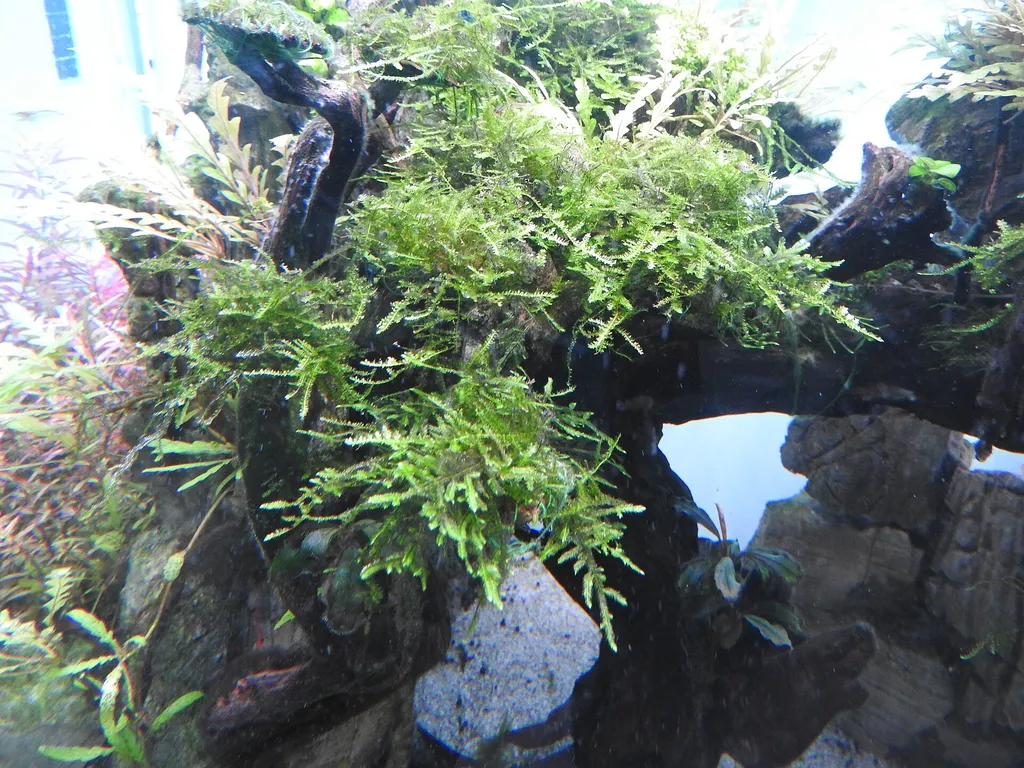
Peacock moss is an easy, undemanding moss for wood and rock, with defined, triangular fronds. It works well in shrimp tanks.
Did you know
Peacock moss and Spiky moss are so often mixed up in the trade that many bags sold as one are actually the other. Both are undescribed Taxiphyllum forms with similar tight, layered fronds.
Caring for Peacock moss
Tie or glue small portions of Peacock moss to wood or rock. It attaches on its own within a few weeks.
Peacock moss needs only low light and stays compact under it. More light plus CO2 pushes denser, tidier growth, though it grows without injected CO2. It feeds from the water column, so dose a liquid fertilizer. It takes a wide temperature range, from 64 to 82°F (18 to 28°C).
It grows at a medium pace. Trim it back now and then to keep the shape and to stop old inner growth from trapping detritus. To spread it, pull a clump apart and tie each piece down.
Good to know
Peacock moss is an undescribed Taxiphyllum species sold under the cultivar name 'Peacock', so it has no formally accepted binomial. Taxiphyllum sits in the family Hypnaceae, the same group that includes true java moss, Taxiphyllum barbieri. The name refers to its tight, overlapping fronds, shaped like fans or triangles. Under good light they give it a feathered look like a peacock's tail.
In the wild
Peacock moss comes from Southeast Asia. It encrusts rocks, driftwood and other submerged surfaces in slow-moving or still streams and shaded pools. It clings to them with rhizoids rather than rooting into the substrate, forming low, creeping mats. The water there is soft to moderately hard and slightly acidic to neutral.
Common questions
Does Peacock moss need to be planted in the substrate?
No. Peacock moss grows on rock or wood rather than in the substrate. Tie it on with cotton thread or fishing line, or use gel superglue, until it anchors itself.
Does Peacock moss need CO2?
No, but it helps. Peacock moss can grow without injected CO2, and added CO2 makes it grow faster.
How much light does Peacock moss need?
Peacock moss is a low-light plant, and the light that comes with a standard tank kit is enough for it.
How do you propagate Peacock moss?
Peacock moss propagates by division and fragmentation. Pull a clump apart into smaller pieces and tie each one down. Pieces that break off keep growing, so pulling a clump apart spreads it.
How tall does Peacock moss grow?
Peacock moss grows to about 2 in (5 cm) tall. It grows at a moderate pace.
Related plants
 Low lightEpiphyte2 in (5 cm)
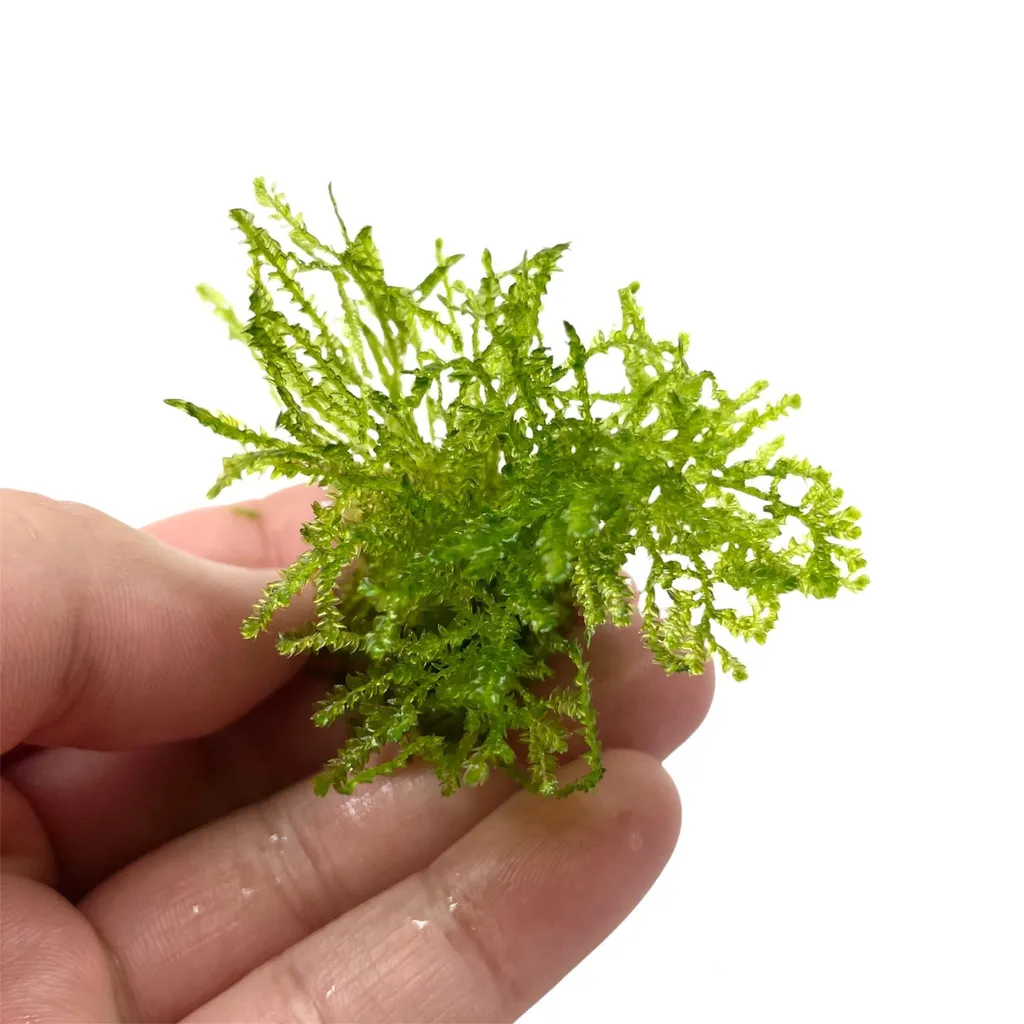
Spiky moss
Taxiphyllum sp. 'Spiky'
Low light · Epiphyte
 Low lightEpiphyte3.1 in (8 cm)
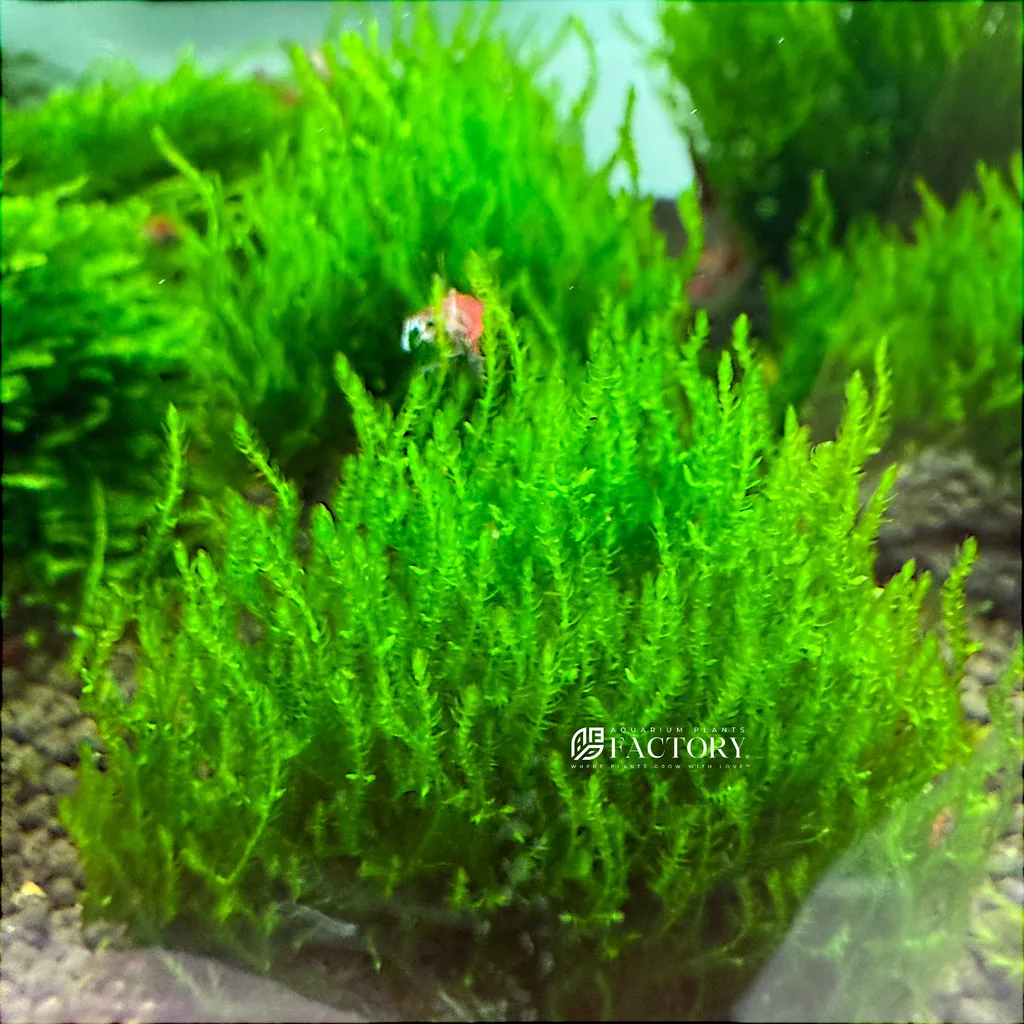
Flame moss
Taxiphyllum sp. 'Flame'
Low light · Epiphyte
 Low lightEpiphyte3.9 in (10 cm)
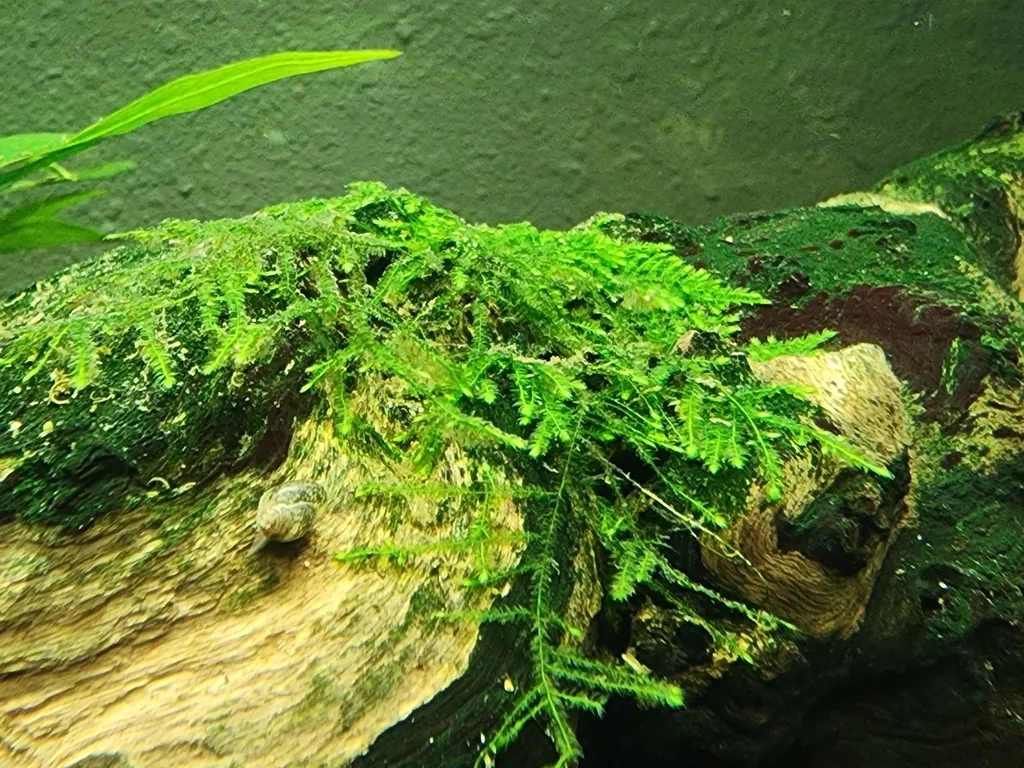
Java moss
Taxiphyllum barbieri
Low light · Epiphyte
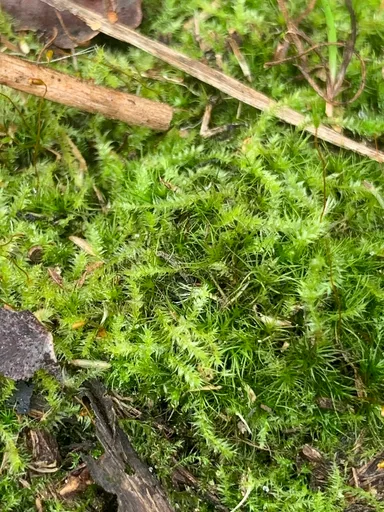 Low lightEpiphyte3.9 in (10 cm)
Taiwan moss
Taxiphyllum alternans
Low light · Epiphyte
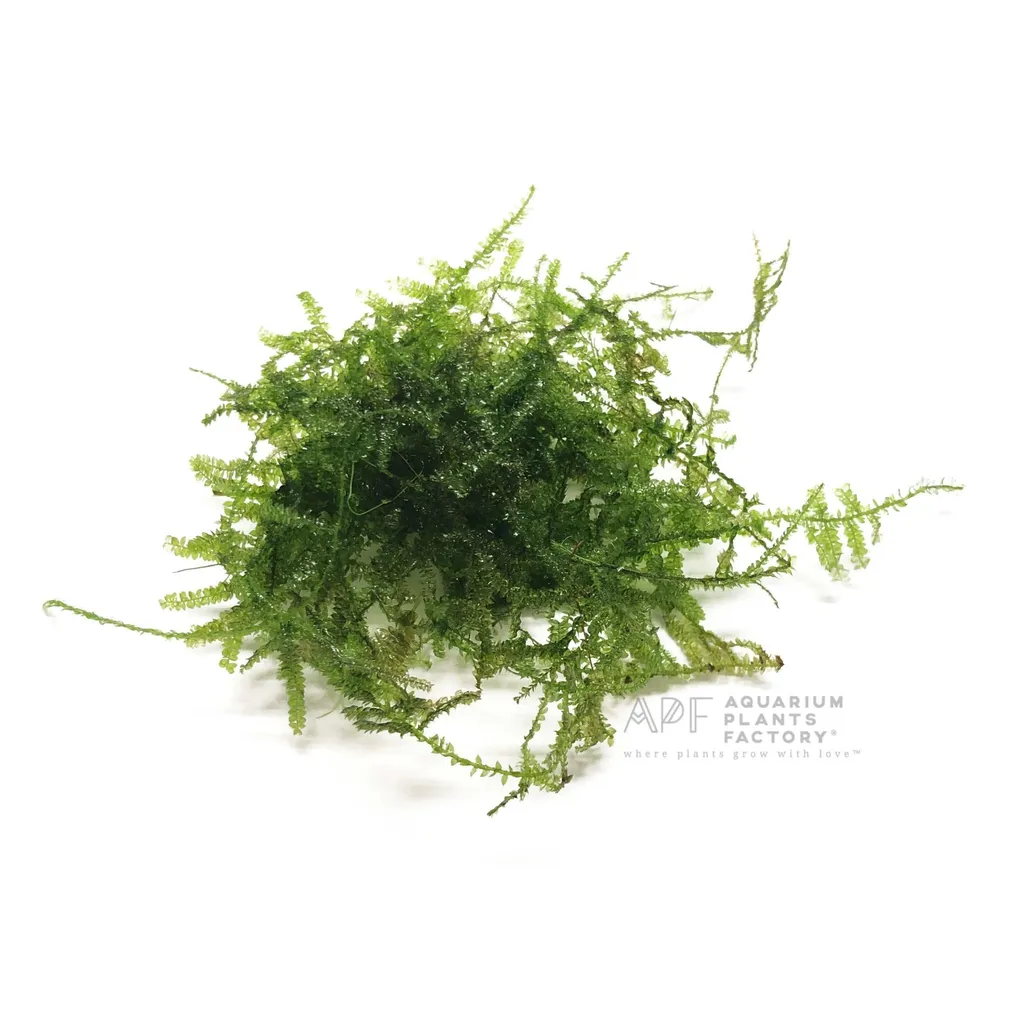 Low lightEpiphyte2 in (5 cm)
Christmas moss
Vesicularia montagnei
Low light · Epiphyte
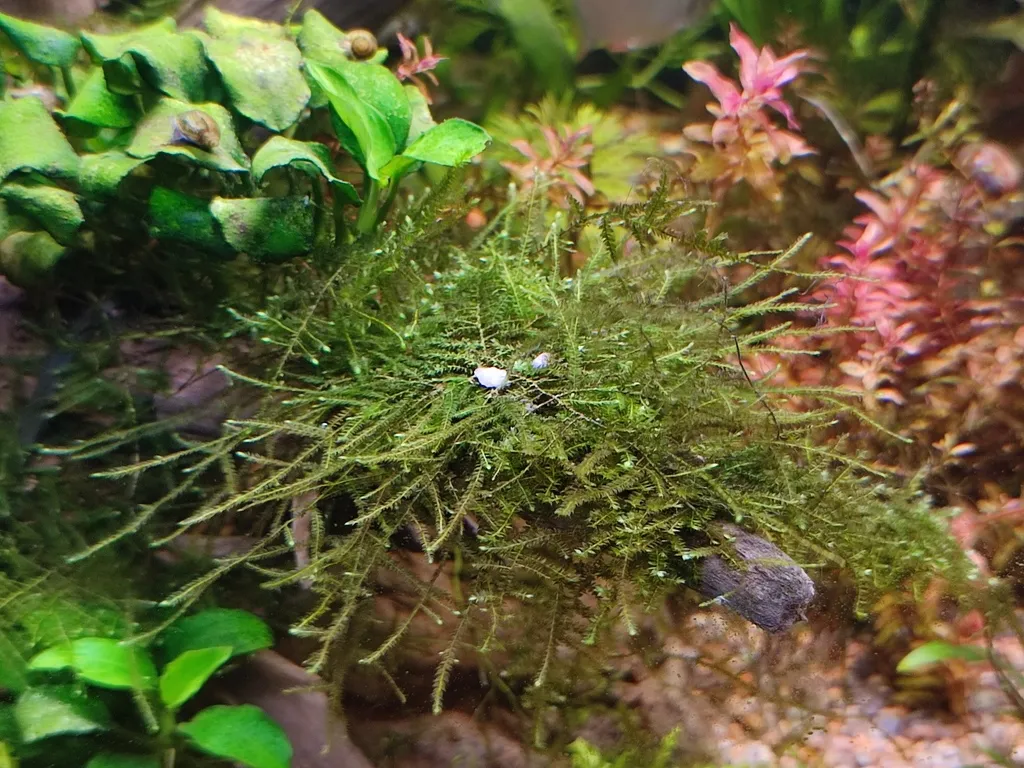 Low lightEpiphyte2 in (5 cm)
Singapore moss
Vesicularia dubyana
Low light · Epiphyte