Flame moss
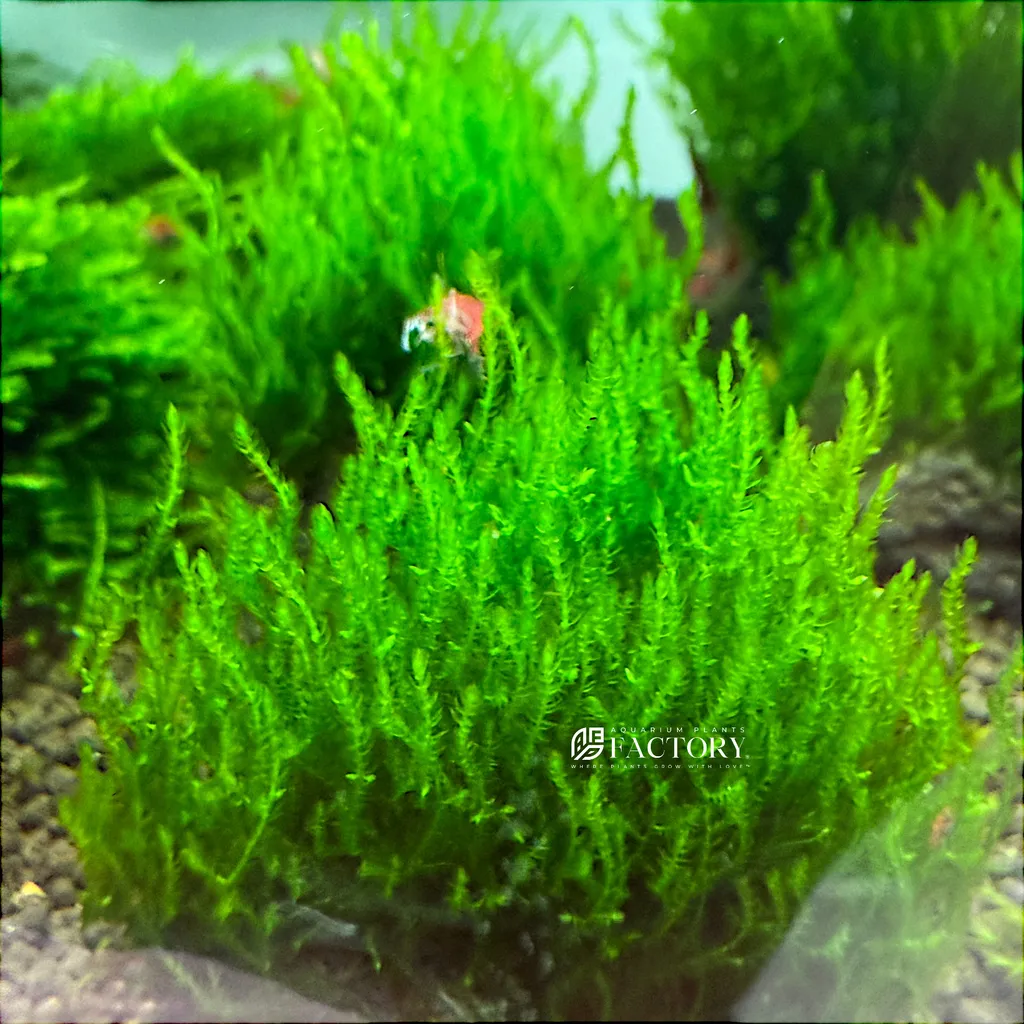
Taxiphyllum sp. 'Flame'
Also known as Taxiphyllum 'Flame', Taxiphyllum sp. 'Flame Moss'
FreshwaterMossCuttingsSide shoots
Care at a glance
- Light
- Low light
- CO2
- CO₂ beneficial
- Temperature
- 68–82°F
- 20–28°C
- Max height
- 3.1 in
- 8 cm
- Growth rate
- Medium
- Placement
- Epiphyte
- Type
- Moss
- pH
- 5.5–8.0
- Hardness
- 2–15 dGH
- Spread
- 5.9 in (15 cm)
- Nutrient uptake
- Water column
- Growth region
- Submersed or emersed
- Difficulty
- Easy
- Family
- Hypnaceae
- Origin
- East or Southeast Asia (exact species undescribed)
Overview
Glue or tie a thin layer to rock or wood and let the spires climb upward, since a thick starting pad just shades and rots underneath. It grows slowly to moderately in low light with no CO2, but even overhead lighting matters: side-lit or dim spots make the flames flop sideways and lose their shape. Trim spires back to about 3 cm with curved scissors once they pass 6 to 8 cm to keep them tight and branching.
In the wild
An as-yet undescribed Taxiphyllum species believed to originate in East or Southeast Asia, where Taxiphyllum mosses grow emersed and submersed on rocks, wood, and stream margins. It thrives fully submersed across a wide range of soft to moderately hard freshwater.
Good to know
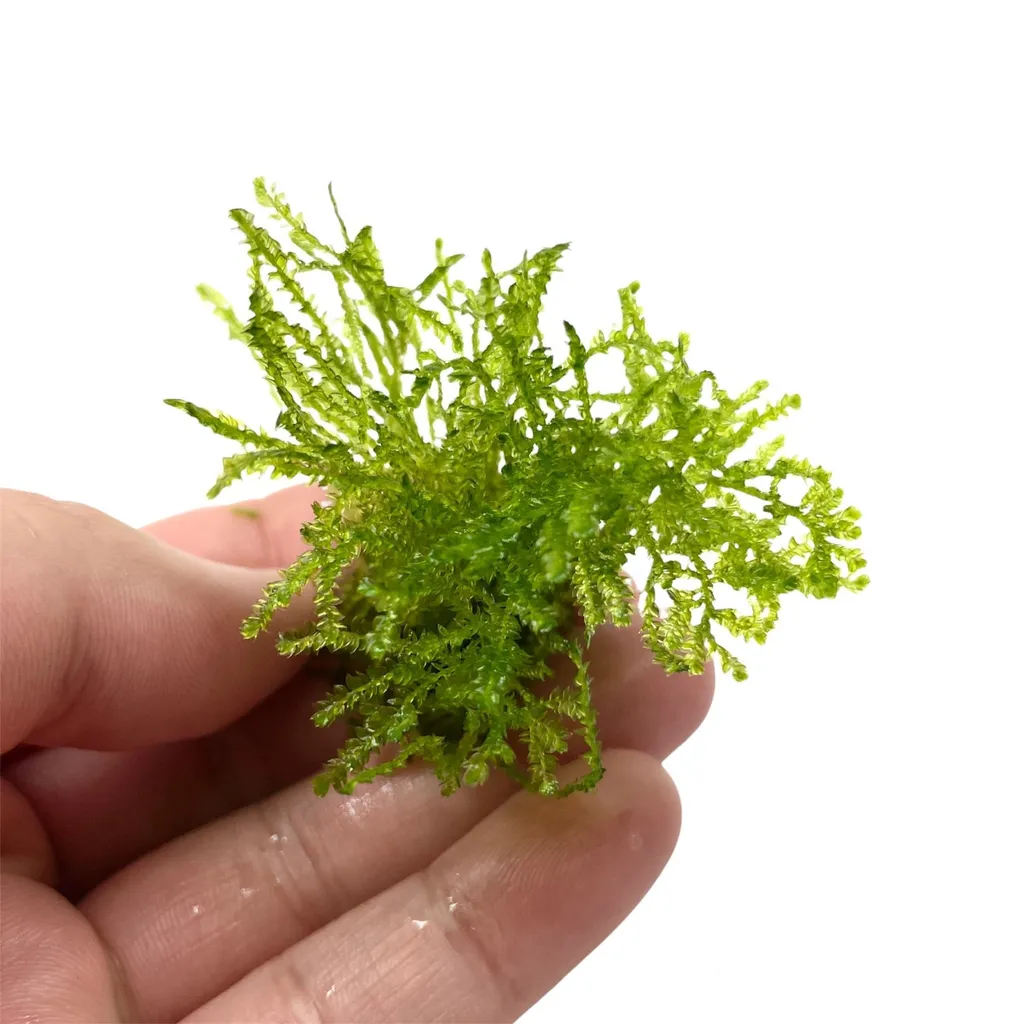
Flame moss is a not-yet-formally-identified species of the genus Taxiphyllum in the family Hypnaceae, sold purely under the trade name 'Flame'. Its hallmark is sparsely branching shoots that grow in upright, twisting spirals, an unusual strictly vertical habit among aquarium mosses, in a notably deep green.
Did you know
The twisting, upward spires really do look like a standing flame, which is why aquascapers plant it in tight clusters to mimic a crackling green campfire or a row of cypress trees.
Related plants
 Low lightEpiphyte3.9 in (10 cm)
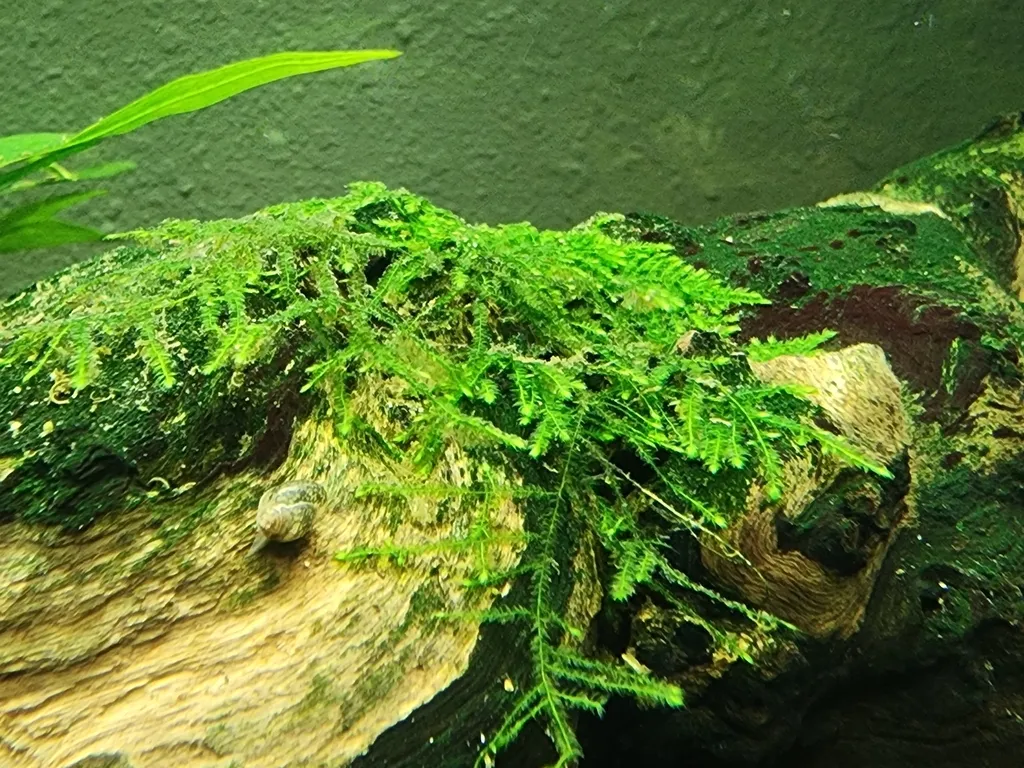
Java moss
Taxiphyllum barbieri
Low light · Epiphyte
 Low lightEpiphyte3.9 in (10 cm)
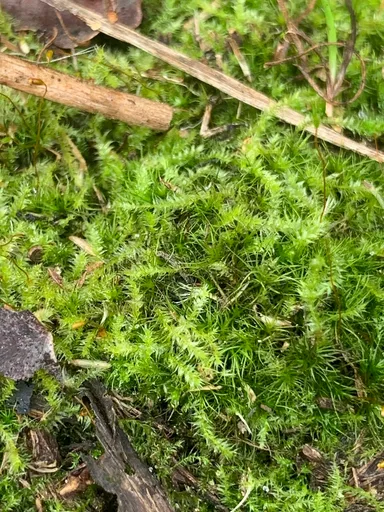
Taiwan moss
Taxiphyllum alternans
Low light · Epiphyte
 Low lightEpiphyte2 in (5 cm)
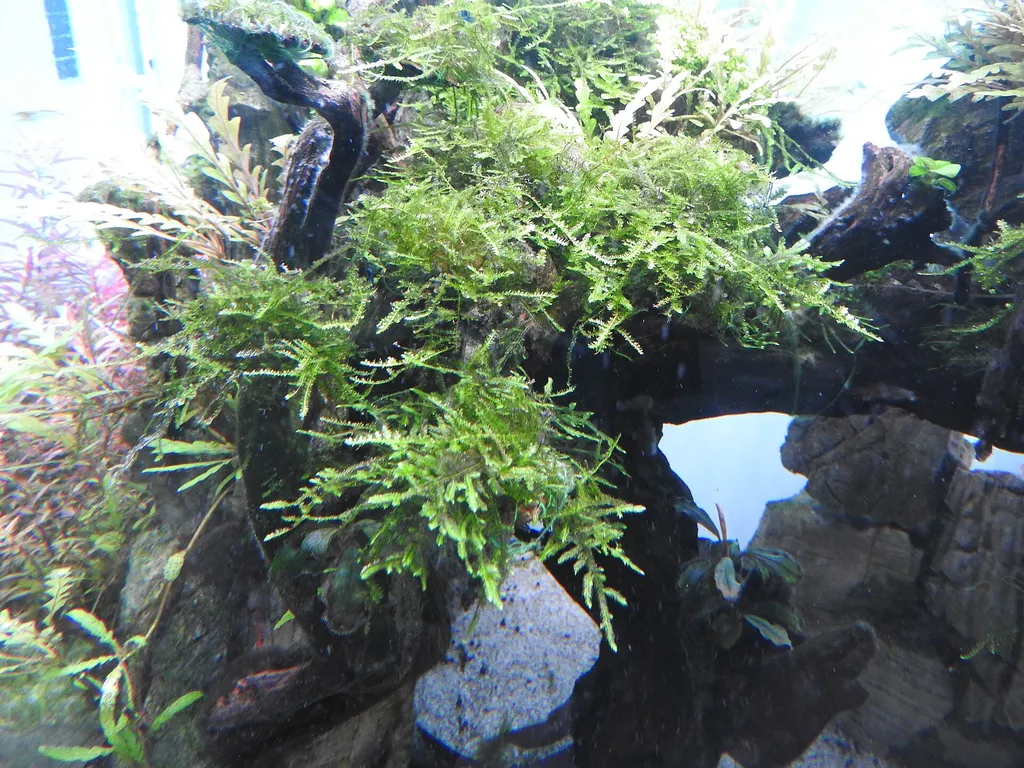
Peacock moss
Taxiphyllum sp. 'Peacock'
Low light · Epiphyte
 Low lightEpiphyte2 in (5 cm)
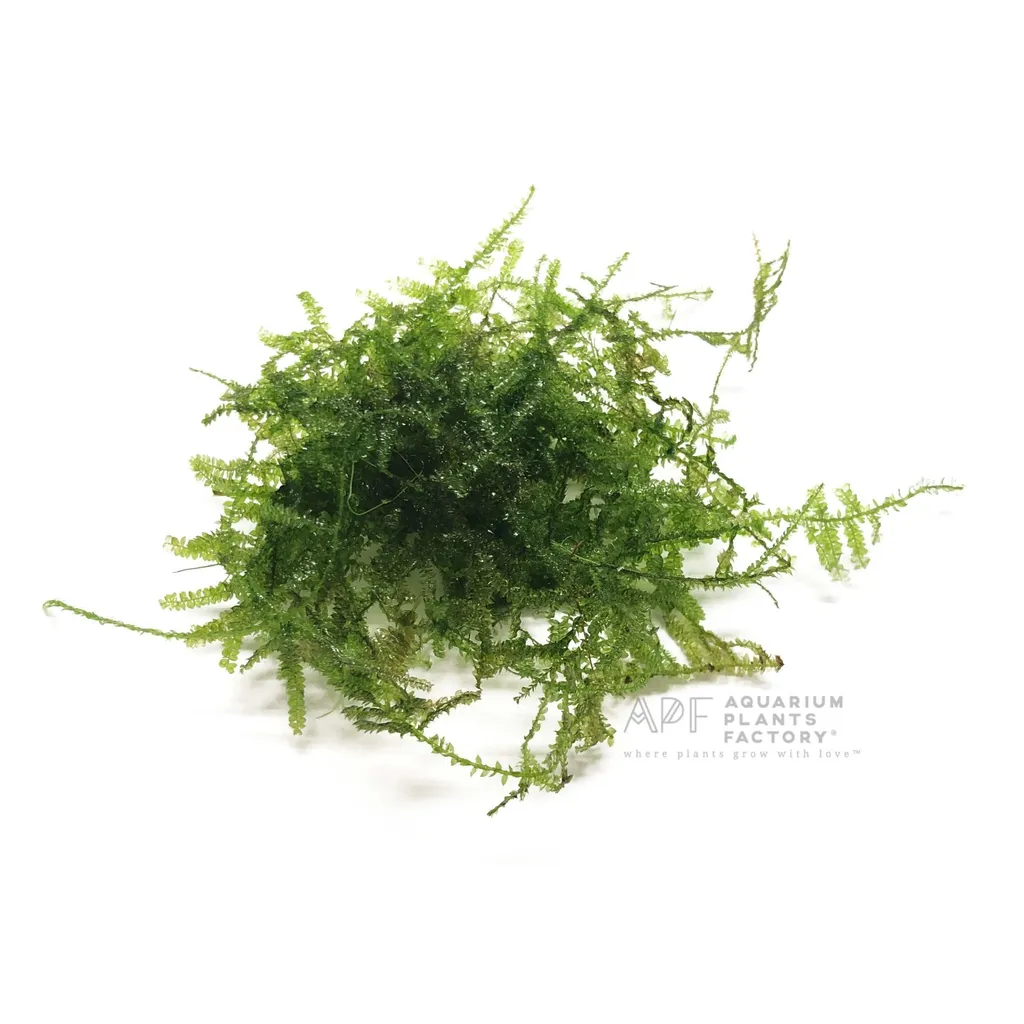
Spiky moss
Taxiphyllum sp. 'Spiky'
Low light · Epiphyte
 Low lightEpiphyte2 in (5 cm)
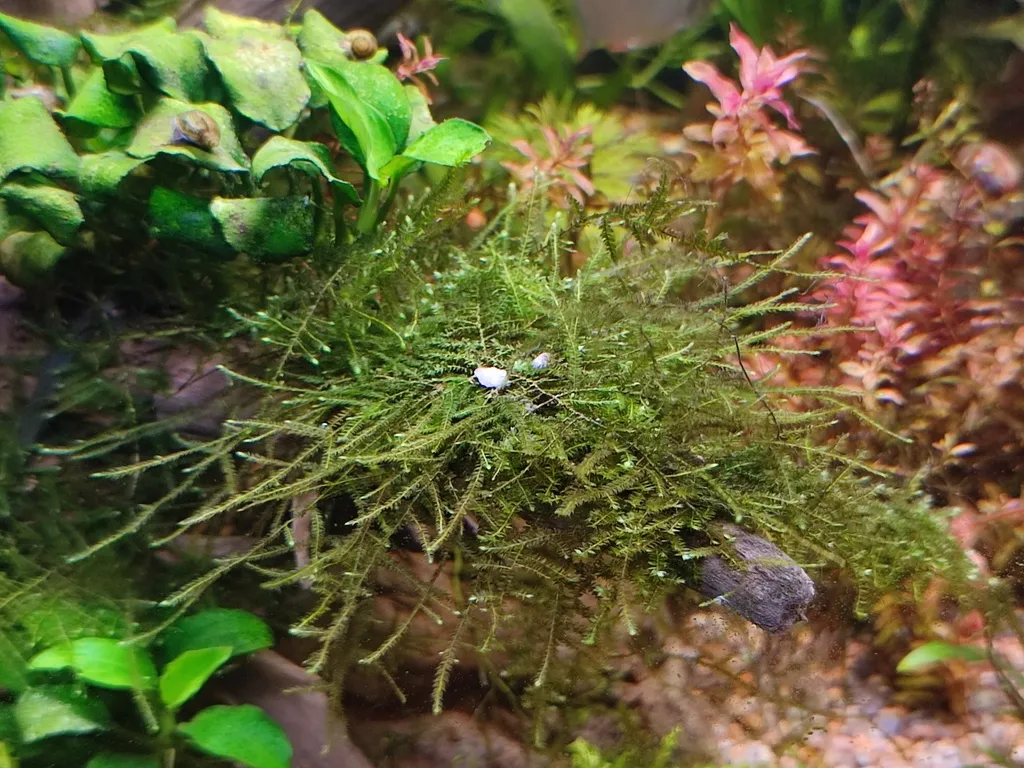
Christmas moss
Vesicularia montagnei
Low light · Epiphyte
 Low lightEpiphyte2 in (5 cm)
Singapore moss
Vesicularia dubyana
Low light · Epiphyte