Anchor moss
Vesicularia sp. 'Anchor'
Also known as Vesicularia sp. 'Anchor Moss'
FreshwaterMossCuttingsSide shoots
Care at a glance
- Light
- Low light
- CO2
- CO₂ beneficial
- Temperature
- 59–86°F
- 15–30°C
- Max height
- 2 in
- 5 cm
- Growth rate
- Slow
- Placement
- Epiphyte
- Type
- Moss
- pH
- 5.0–7.0
- Spread
- 5.9 in (15 cm)
- Nutrient uptake
- Water column
- Growth region
- Submersed or emersed
- Difficulty
- Medium
- Family
- Hypnaceae
- Origin
- Unknown wild origin (trade moss from Singapore, marketed around 2006)
Overview
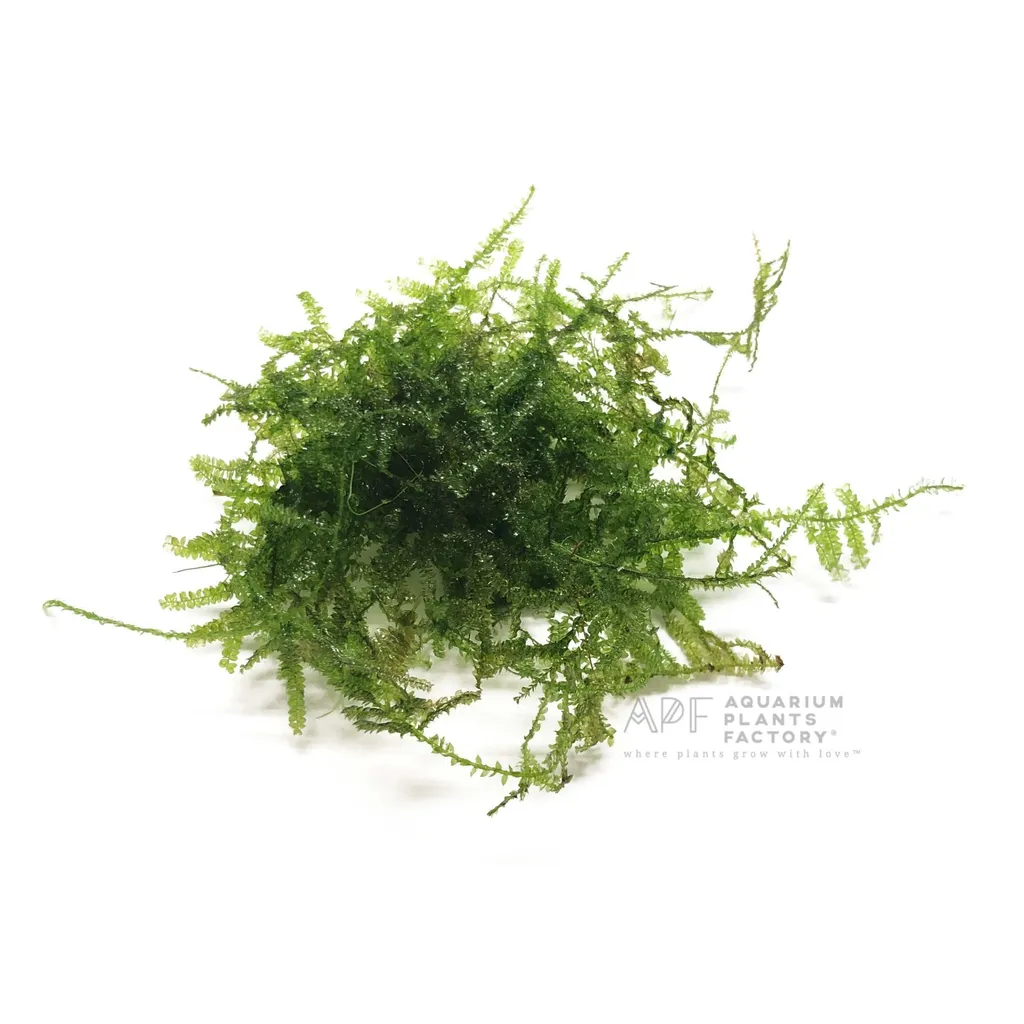
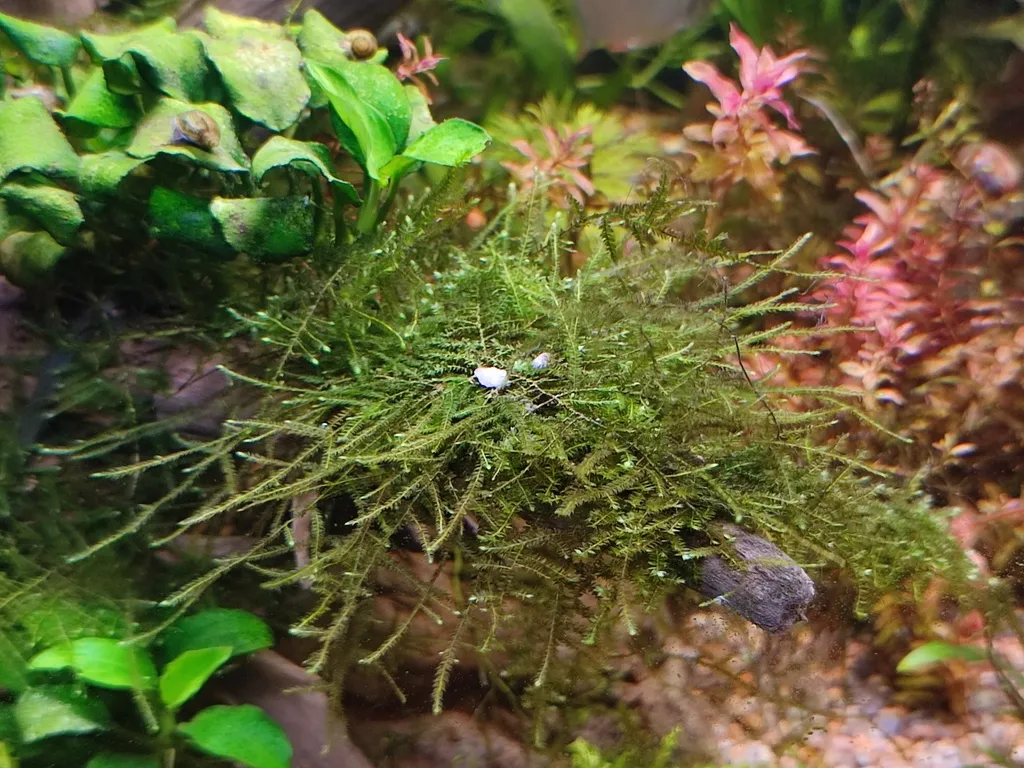
Tie or glue a thin layer of Anchor moss to wood, stone or mesh and give it a few weeks to grip. Flowgrow rates it medium and lists low to high light with 20 to 40 mg/l of CO2, and Buce notes that CO2 speeds growth and thickens the cushion. Stronger light turns Anchor moss a darker green. Growth is slow. Two US shops advise keeping it at 25 C or cooler. Trim the cushion now and then and rinse out trapped debris so the inner shoots stay green.
In the wild
Anchor moss has no known wild origin. Flowgrow, drawing on an early write-up by Loh Kwek Leong, says the Singapore company Bioplast brought it to market around 2006 or earlier, and Buce Plant also lists Singapore. Its genus, Vesicularia, grows on damp rock, soil and wood beside streams across tropical Asia, both above and below the waterline.
Good to know
Anchor moss is an unidentified Vesicularia in the family Hypnaceae, so it goes by a trade name. Its thick, broad stems branch at close to right angles, and it is a much paler green than most aquarium mosses. On wood or stone Anchor moss knits into compact cushions. Shops that also sell Mini Christmas moss tell the two apart by these traits, since Mini Christmas is darker and finer, with flat fronds in overlapping layers.
Did you know
Flowgrow cannot yet say whether Anchor moss, Mini Christmas moss and a Vesicularia sold as 'China moss' are one moss or three, and it warns that at least one moss sold as Anchor looks clearly different from the original.
Related plants
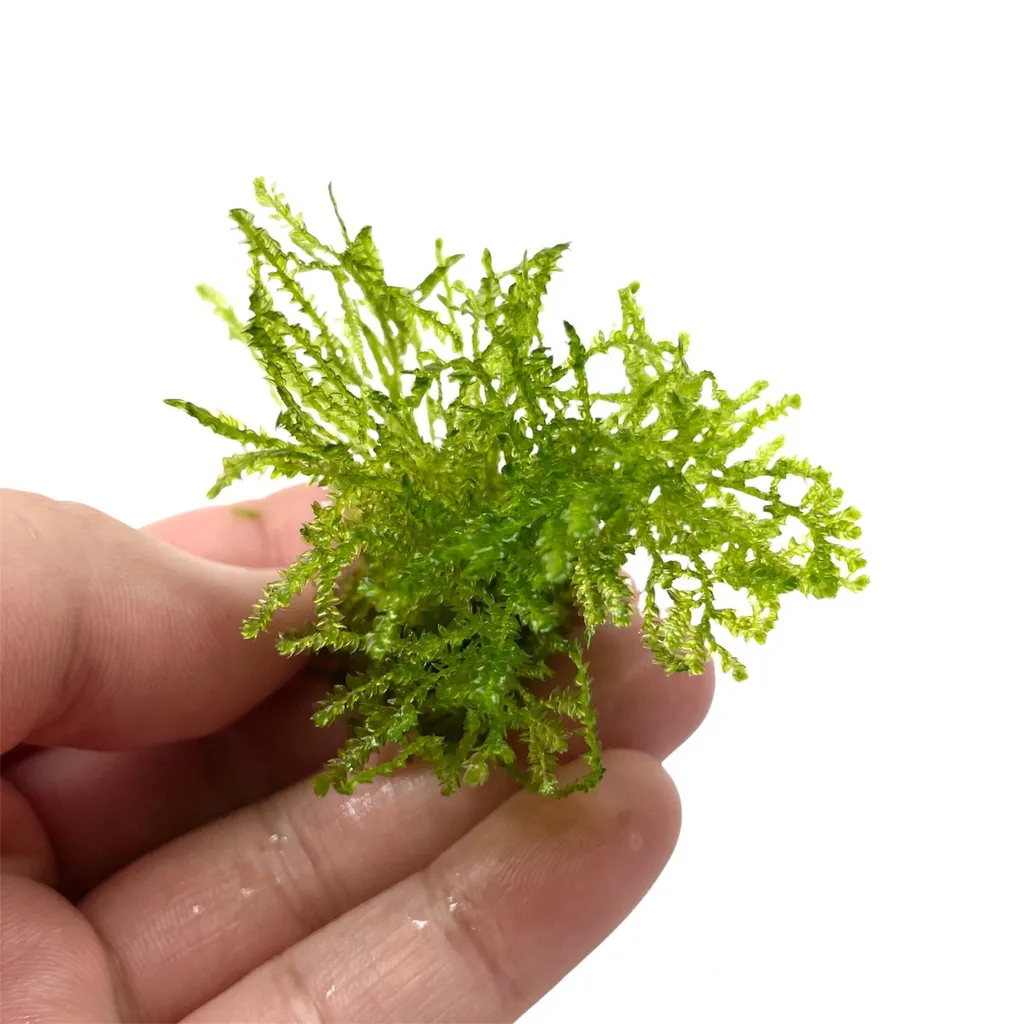
 Low lightEpiphyte2 in (5 cm)
Christmas moss
Vesicularia montagnei
Low light · Epiphyte
 Low lightEpiphyte2 in (5 cm)
Singapore moss
Vesicularia dubyana
Low light · Epiphyte
 Low lightEpiphyte2 in (5 cm)
Weeping moss
Vesicularia ferriei
Low light · Epiphyte
- Medium lightEpiphyte2 in (5 cm)
Erect moss
Vesicularia reticulata
Medium light · Epiphyte
- Low lightEpiphyte2 in (5 cm)
Mini Christmas moss
Vesicularia sp. 'Mini Christmas'
Low light · Epiphyte
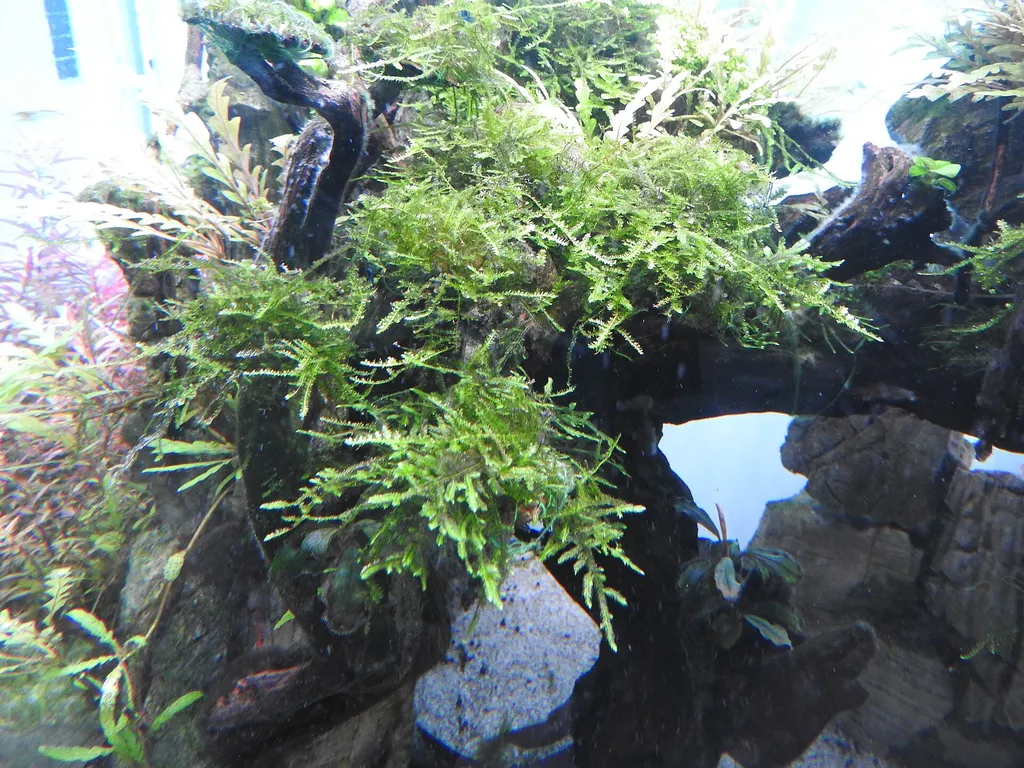 Low lightEpiphyte2 in (5 cm)
Peacock moss
Taxiphyllum sp. 'Peacock'
Low light · Epiphyte