Mini Christmas moss
Vesicularia sp. 'Mini Christmas'
Also known as Mini Xmas moss, Vesicularia sp. 'Mini', Vesicularia sp. 'Mini Christmas Moss', Vesicularia montagnei 'Mini', Taxiphyllum sp. 'Mini Christmas'
FreshwaterMossCuttingsSide shoots
Care at a glance
- Light
- Low light
- CO2
- CO₂ beneficial
- Temperature
- 59–86°F
- 15–30°C
- Max height
- 2 in
- 5 cm
- Growth rate
- Slow
- Placement
- Epiphyte
- Type
- Moss
- pH
- 5.0–7.0
- Hardness
- 0–30 dGH
- Spread
- 5.9 in (15 cm)
- Nutrient uptake
- Water column
- Growth region
- Submersed or emersed
- Difficulty
- Medium
- Family
- Hypnaceae
- Origin
- Unknown wild origin (trade moss, shops list Southeast Asia)
Overview
Mini Christmas moss is a moss of medium difficulty for nano tanks, moss walls and small driftwood trees.
Did you know
Aquarzon, an Australian moss grower, grew Mini Christmas moss beside regular Christmas moss for more than a year to confirm it stays more compact. Aquarzon also warns that much Australian stock sold as Mini Christmas is another moss.
Caring for Mini Christmas moss
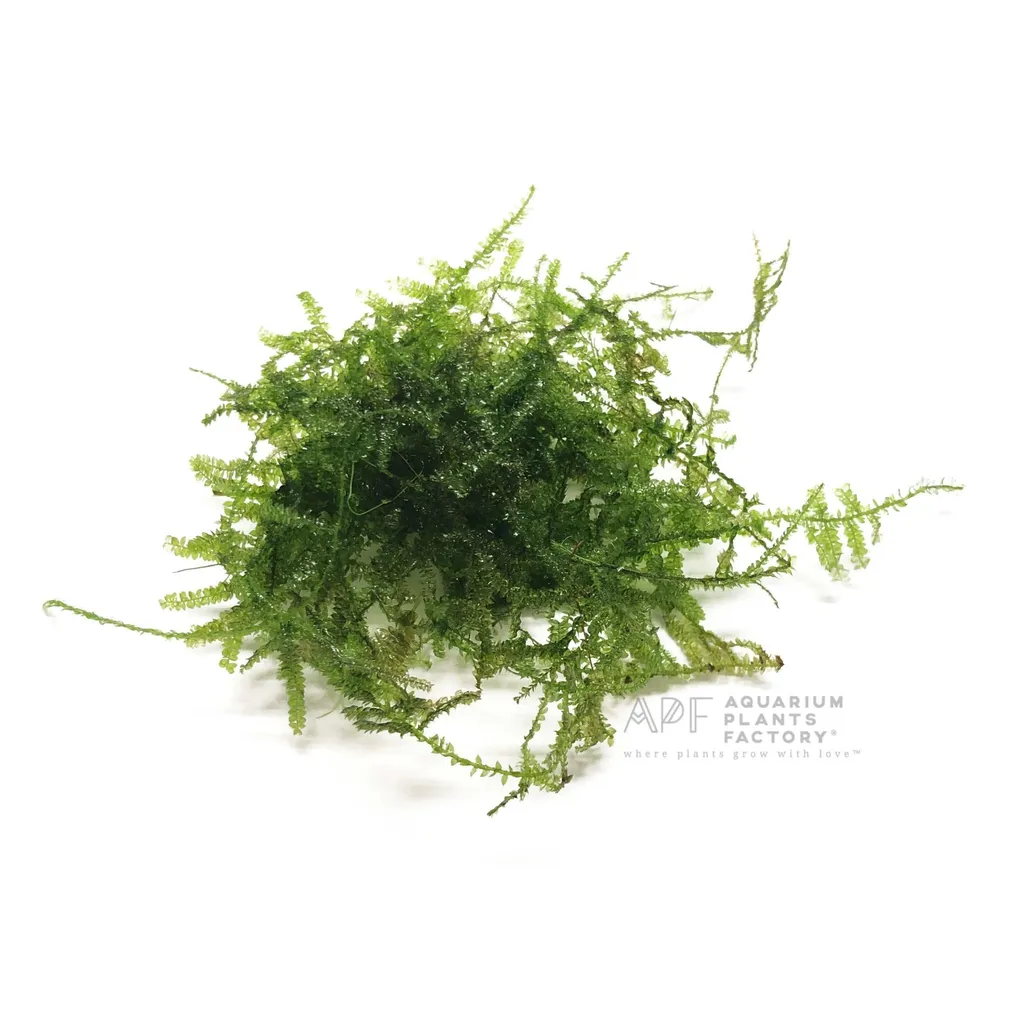
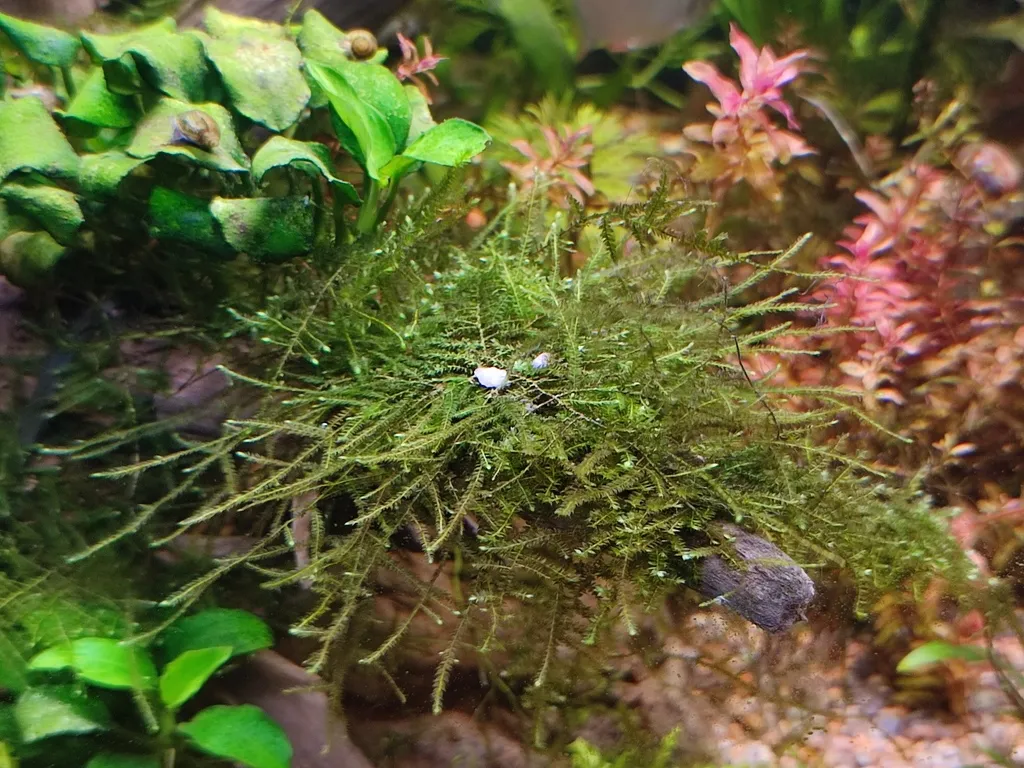
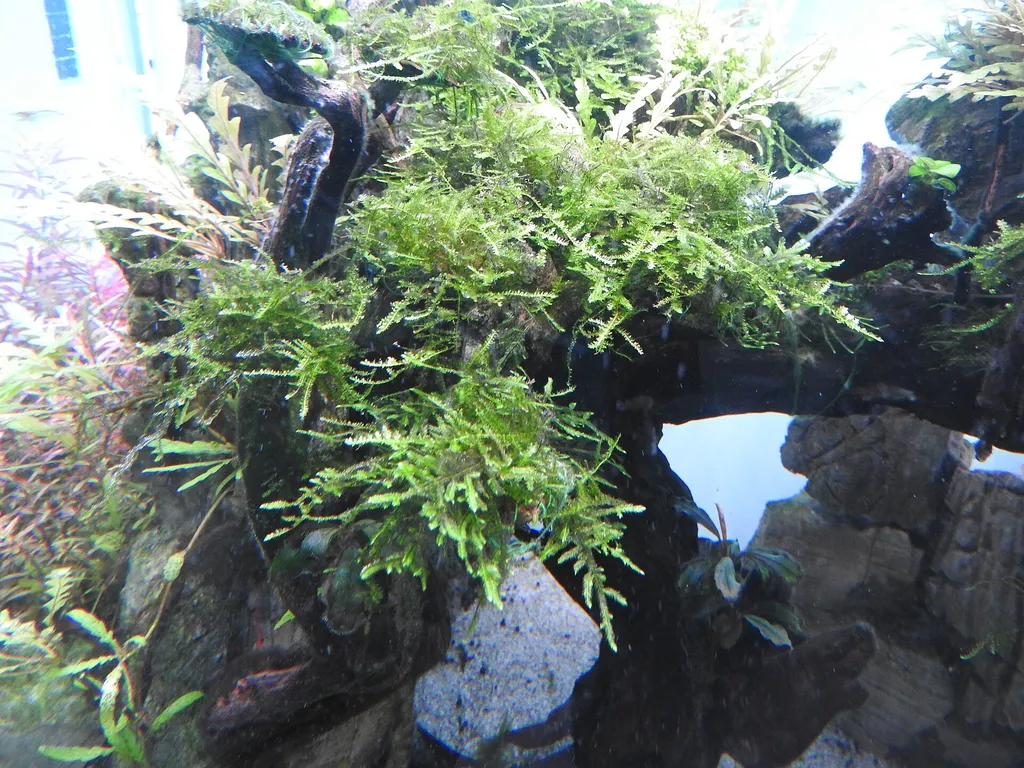
Tie or glue a thin layer of Mini Christmas moss to wood, stone or mesh, and the fronds spread in flat layers. It stays about 1 to 5 cm thick.
Mini Christmas moss gets by in low light. It feeds from the water column, and CO2 plus a regular liquid fertilizer give denser fronds. Flowgrow lists 20 to 40 mg/l of CO2. It tolerates 59 to 86°F (15 to 30°C), but cooler water tends to keep the fir-tree shape. Warm water makes it grow looser, more like java moss.
It grows slowly. Trim it often to force branching, and rinse out trapped debris. A cut stem tip or side shoot can be tied down on its own as a new piece.
Good to know
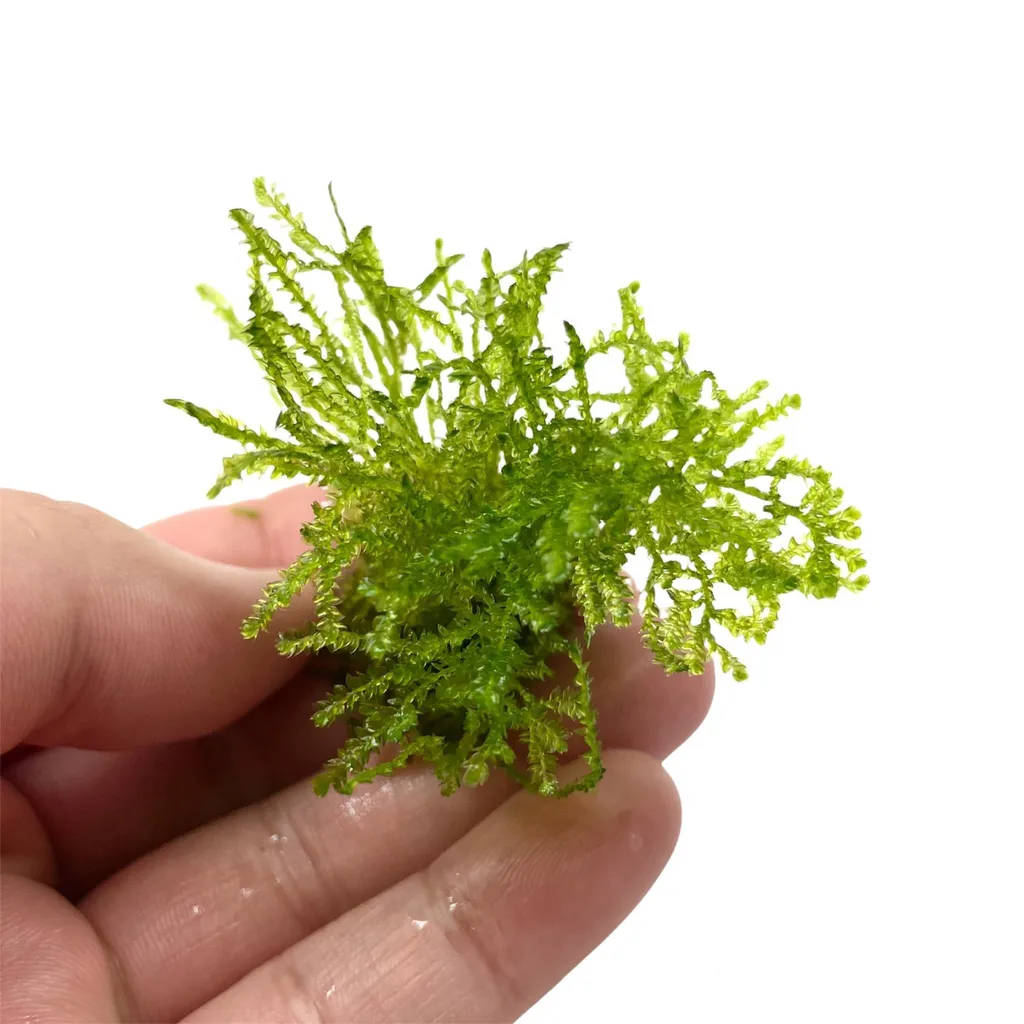
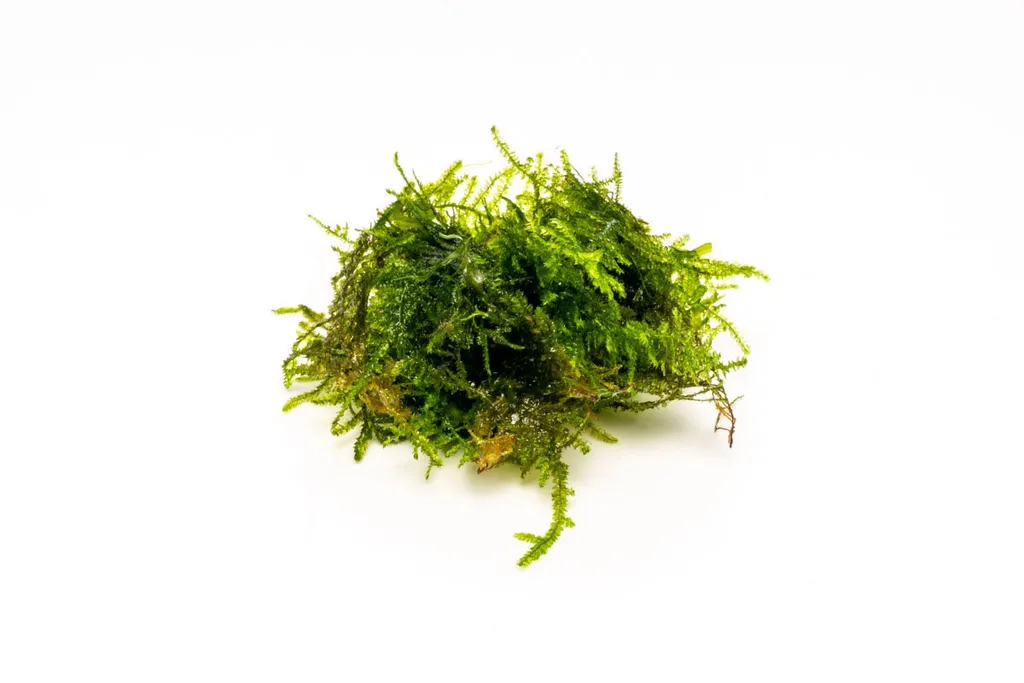
Mini Christmas moss is an unidentified Vesicularia in the family Hypnaceae. Flowgrow and Aquasabi list it as Vesicularia sp. with no species name, though one US shop labels it Vesicularia montagnei 'Mini'. Its fronds have the flat, triangular fir-tree outline of Christmas moss at about half the size. They grow on thinner, shorter shoots that lie flat or hang over. Shops that also sell Anchor moss call Mini Christmas the darker, finer moss, and Anchor the paler one with right-angled shoots.
In the wild
Mini Christmas moss has no known wild origin, and shops list only Southeast Asia or Asia. It first spread through the hobby under the name of a different moss before the Mini Christmas name stuck. Wild Vesicularia mosses cover wet stones and roots along tropical Asian streams. They spend part of the year above the water and part below it.
Common questions
Does Mini Christmas moss need to be planted in the substrate?
No. Mini Christmas moss grows on rock or wood rather than in the substrate. Tie it on with cotton thread or fishing line, or use gel superglue, until it anchors itself.
Does Mini Christmas moss need CO2?
No, but it helps. Mini Christmas moss can grow without injected CO2, and added CO2 makes it grow faster.
How much light does Mini Christmas moss need?
Mini Christmas moss is a low-light plant, and the light that comes with a standard tank kit is enough for it.
How do you propagate Mini Christmas moss?
Mini Christmas moss propagates by cuttings and side shoots. Cut off the top of a stem and replant it, and the stump left behind grows new shoots. Cut a side shoot off once it has a few leaves and tie it down on its own.
How tall does Mini Christmas moss grow?
Mini Christmas moss grows to about 2 in (5 cm) tall. It grows slowly.
Related plants
 Low lightEpiphyte2 in (5 cm)
Christmas moss
Vesicularia montagnei
Low light · Epiphyte
 Low lightEpiphyte2 in (5 cm)
Singapore moss
Vesicularia dubyana
Low light · Epiphyte
 Low lightEpiphyte2 in (5 cm)
Weeping moss
Vesicularia ferriei
Low light · Epiphyte
- Medium lightEpiphyte2 in (5 cm)
Erect moss
Vesicularia reticulata
Medium light · Epiphyte
 Low lightEpiphyte2 in (5 cm)
Anchor moss
Vesicularia sp. 'Anchor'
Low light · Epiphyte
 Low lightEpiphyte2 in (5 cm)
Peacock moss
Taxiphyllum sp. 'Peacock'
Low light · Epiphyte