Erect moss
Vesicularia reticulata
Also known as Vesicularia reticulata 'Erect Moss', Taxiphyllum sp. 'Erect'
FreshwaterMossDivisionFragmentation
Care at a glance
- Light
- Medium light
- CO2
- CO₂ beneficial
- Temperature
- 59–86°F
- 15–30°C
- Max height
- 2 in
- 5 cm
- Growth rate
- Slow
- Placement
- Epiphyte
- Type
- Moss
- pH
- 5.0–7.5
- Hardness
- 0–14 dGH
- Spread
- 3.9 in (10 cm)
- Nutrient uptake
- Water column
- Growth region
- Submersed or emersed
- Difficulty
- Medium
- Family
- Hypnaceae
- Origin
- Tropical Asia
Overview
Erect moss is a slow-growing moss for hardscape and a favorite for nano tanks and moss walls. It is more demanding than a basic java moss.
Did you know
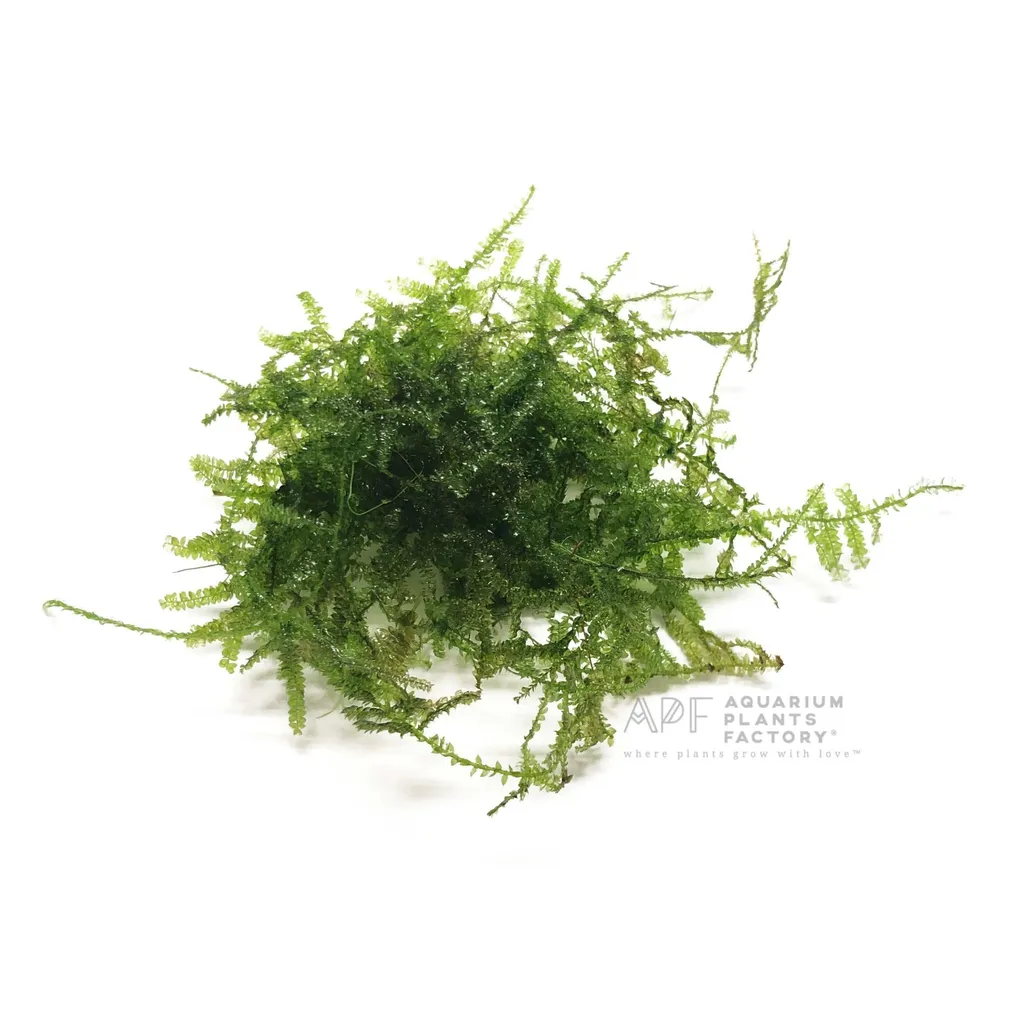
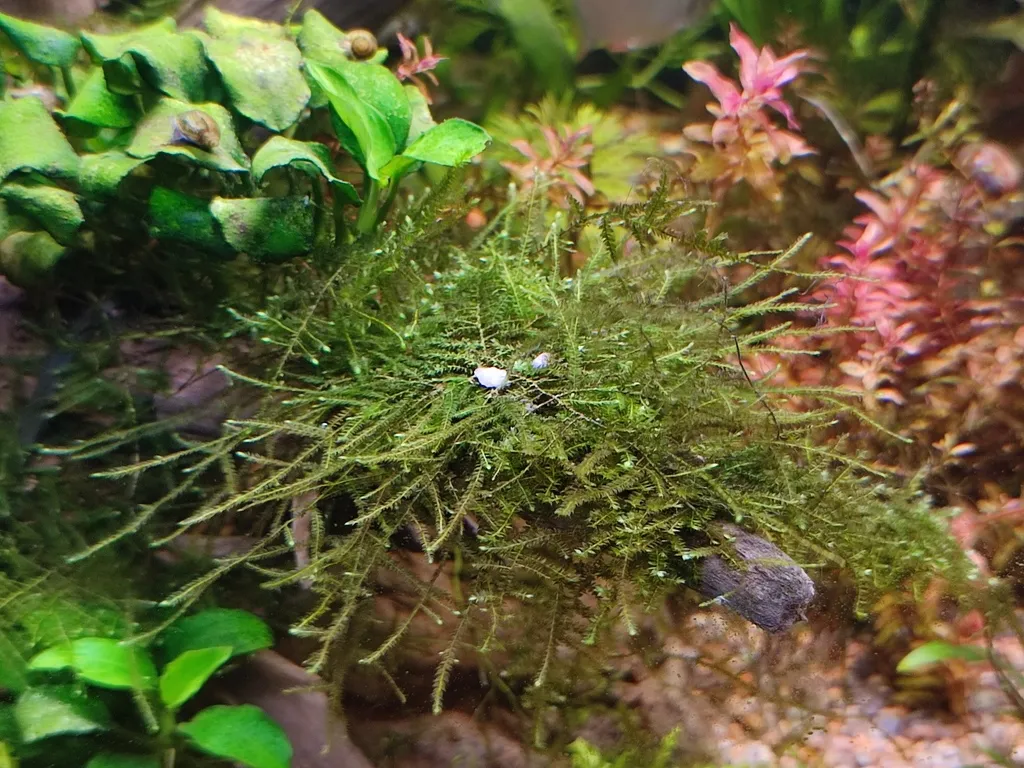
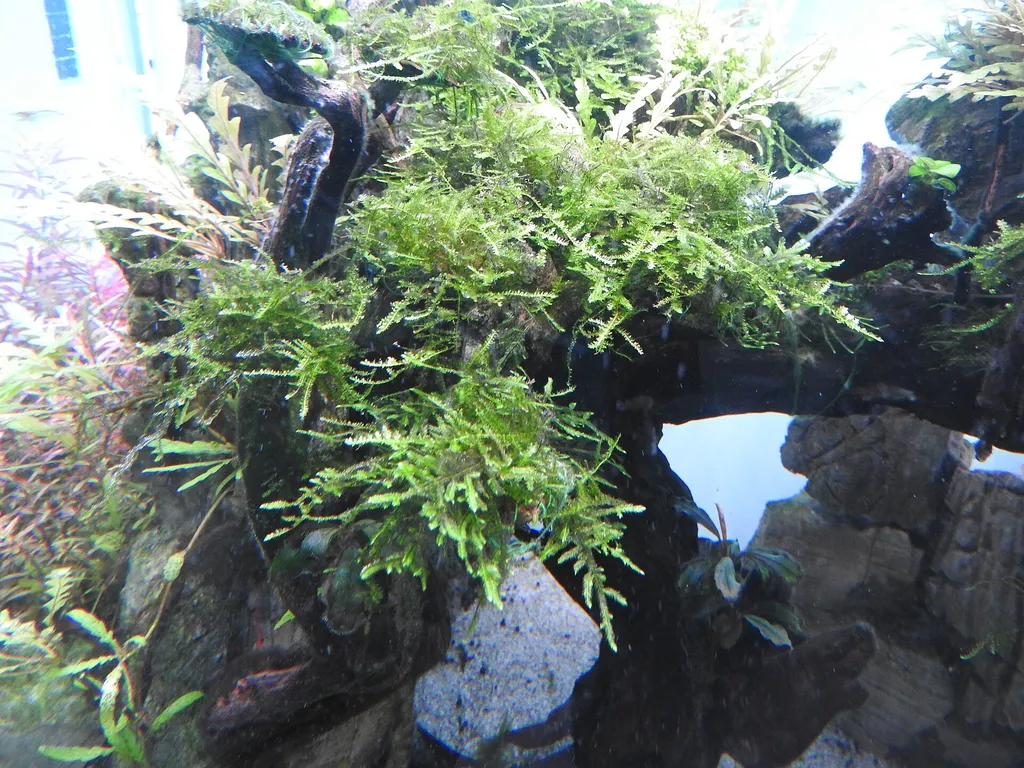
Erect moss grows toward the light in tidy vertical shoots, while most aquarium mosses flop and trail. A well-kept patch looks like a miniature forest of tiny green pine trees.
Caring for erect moss
Tie or glue a thin mat of erect moss to hardscape, and its growth will build a soft, layered texture. It wants medium light and looks its best with moderate to strong light, added CO2 and steady dosing.
It grows without injected CO2, though more slowly. It feeds from the water column, so dose a liquid fertilizer. It handles 59 to 86°F (15 to 30°C).
Erect moss is a slow grower, but trim it back regularly to keep the shape tight and stop the lower layers from browning out. To propagate it, divide a clump and tie the pieces back on.
Good to know
Erect moss, Vesicularia reticulata, is traditionally placed in the family Hypnaceae, close to Christmas moss, Vesicularia montagnei. Recent molecular work moves the genus toward Pylaisiaceae. Vesicularia is also under revision, with some hobby mosses being reassigned to Taxiphyllum, so names in this group are not fully settled. Its leaves are ovate to lanceolate, drawn out into a fine long tip that gives branch ends a feathery point. The trade name comes from its stems, which stand upright underwater, while the emersed land form creeps along surfaces.
In the wild
Erect moss is widely distributed through the Asian tropics. It grows in moist habitats on rock, wood and soil near water. Like most aquatic mosses it lives as an epiphyte with no true roots.
Common questions
Does erect moss need to be planted in the substrate?
No. Erect moss grows on rock or wood rather than in the substrate. Tie it on with cotton thread or fishing line, or use gel superglue, until it anchors itself.
Does erect moss need CO2?
No, but it helps. Erect moss can grow without injected CO2, and added CO2 makes it grow faster.
How much light does erect moss need?
Erect moss wants medium light. A light sold for planted tanks covers it.
How do you propagate erect moss?
Erect moss propagates by division and fragmentation. Pull a clump apart into smaller pieces and tie each one down. Pieces that break off keep growing, so pulling a clump apart spreads it.
How tall does erect moss grow?
Erect moss grows to about 2 in (5 cm) tall. It grows slowly.
Related plants
 Low lightEpiphyte2 in (5 cm)
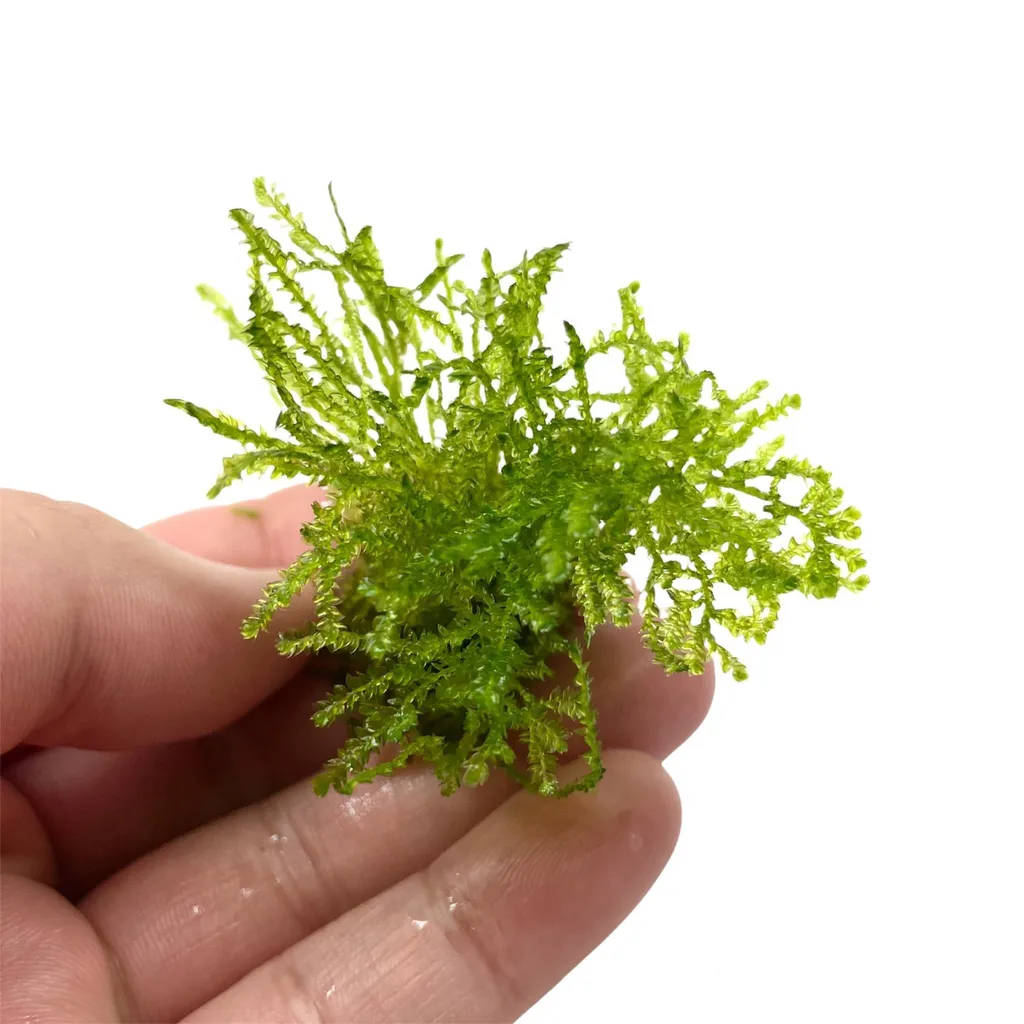
Christmas moss
Vesicularia montagnei
Low light · Epiphyte
 Low lightEpiphyte2 in (5 cm)
Singapore moss
Vesicularia dubyana
Low light · Epiphyte
 Low lightEpiphyte2 in (5 cm)
Weeping moss
Vesicularia ferriei
Low light · Epiphyte
- Low lightEpiphyte2 in (5 cm)
Mini Christmas moss
Vesicularia sp. 'Mini Christmas'
Low light · Epiphyte
 Low lightEpiphyte2 in (5 cm)
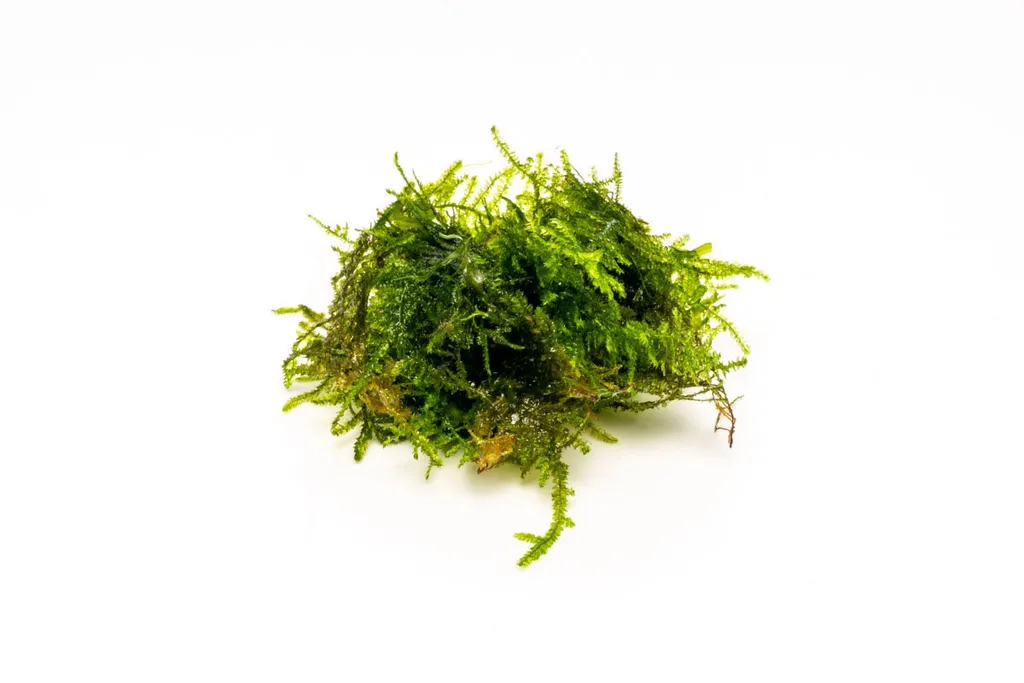
Anchor moss
Vesicularia sp. 'Anchor'
Low light · Epiphyte
 Low lightEpiphyte2 in (5 cm)
Peacock moss
Taxiphyllum sp. 'Peacock'
Low light · Epiphyte