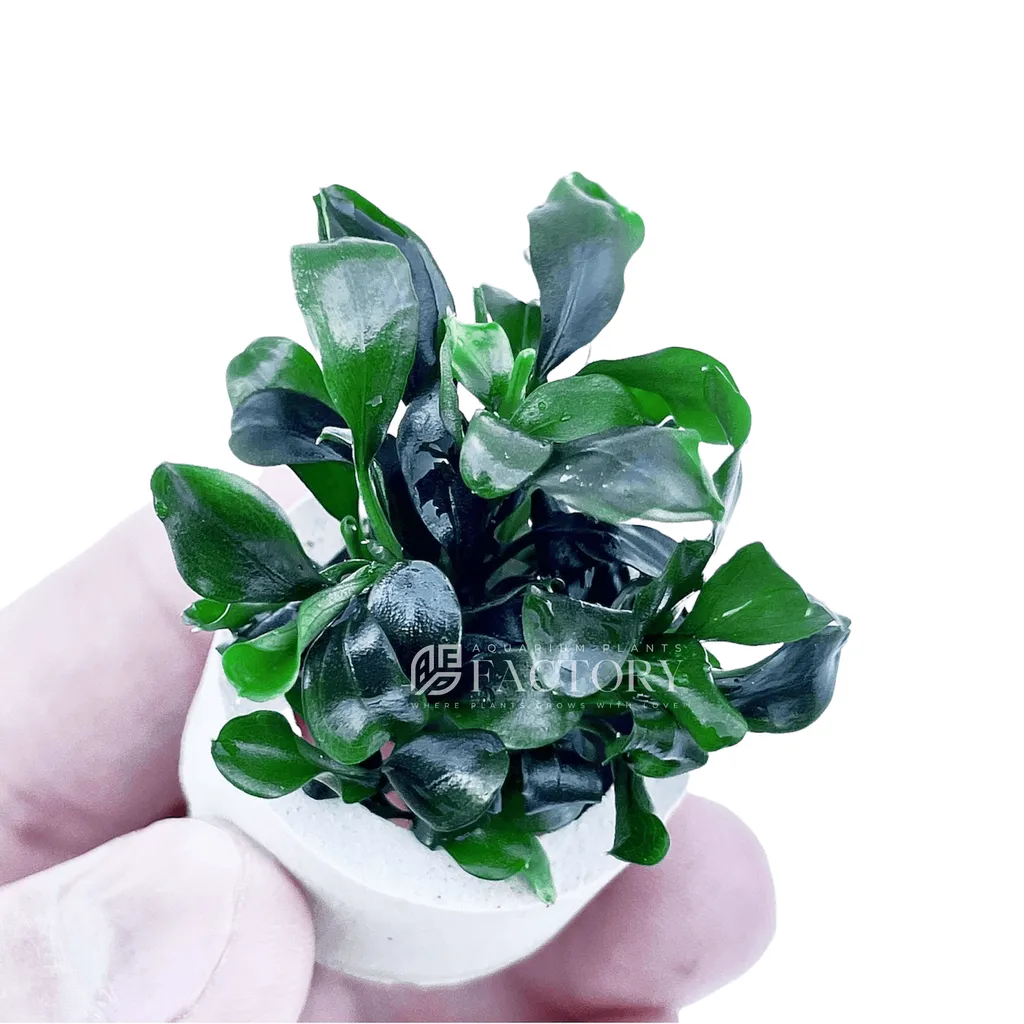
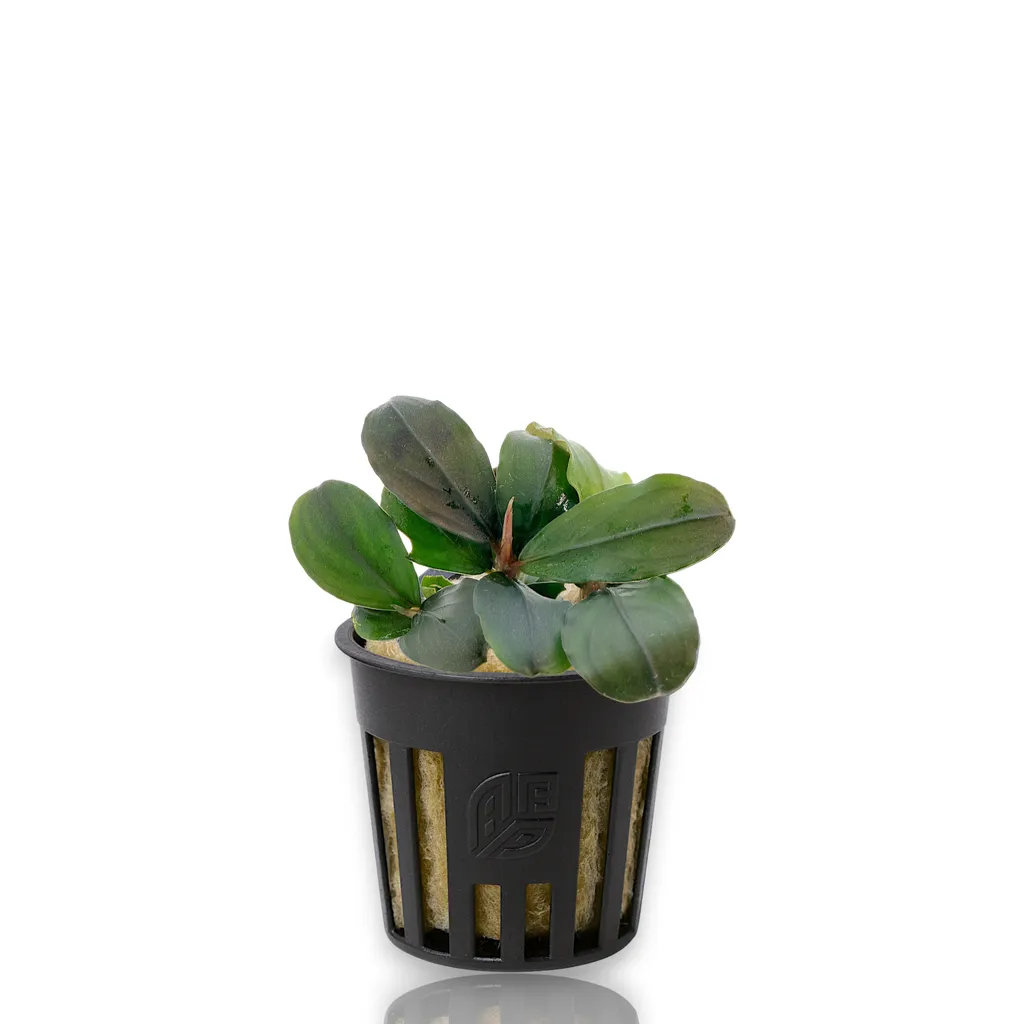
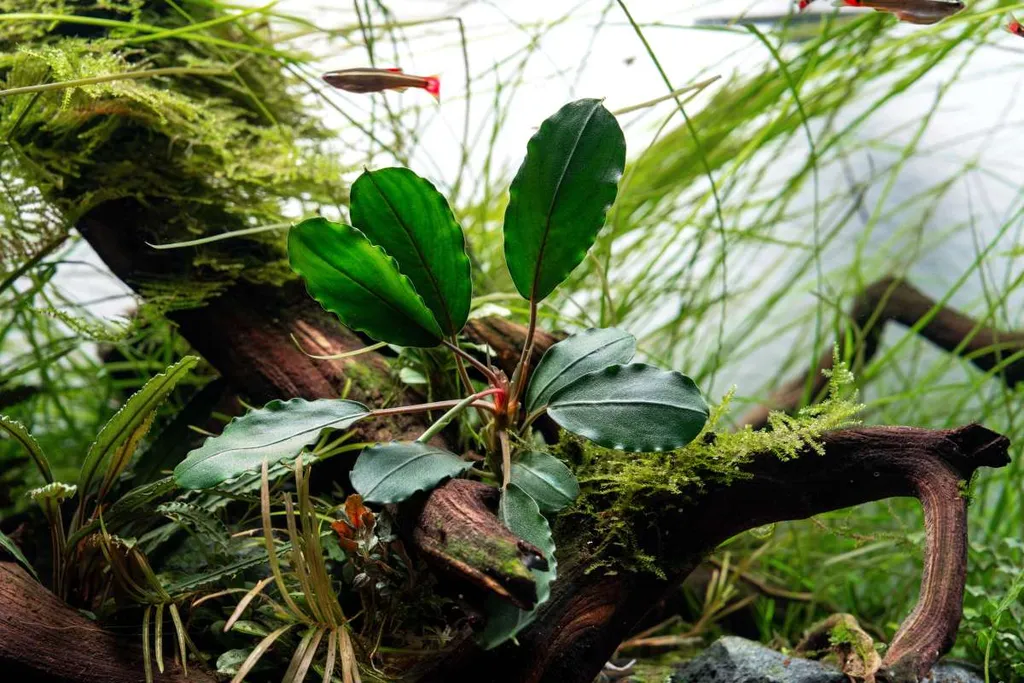
Bucephalandra Grappa Red is a small epiphyte for hardscape detail work, sized for nano tanks and the gaps between stones. It is an easy, slow-growing plant.
Did you know
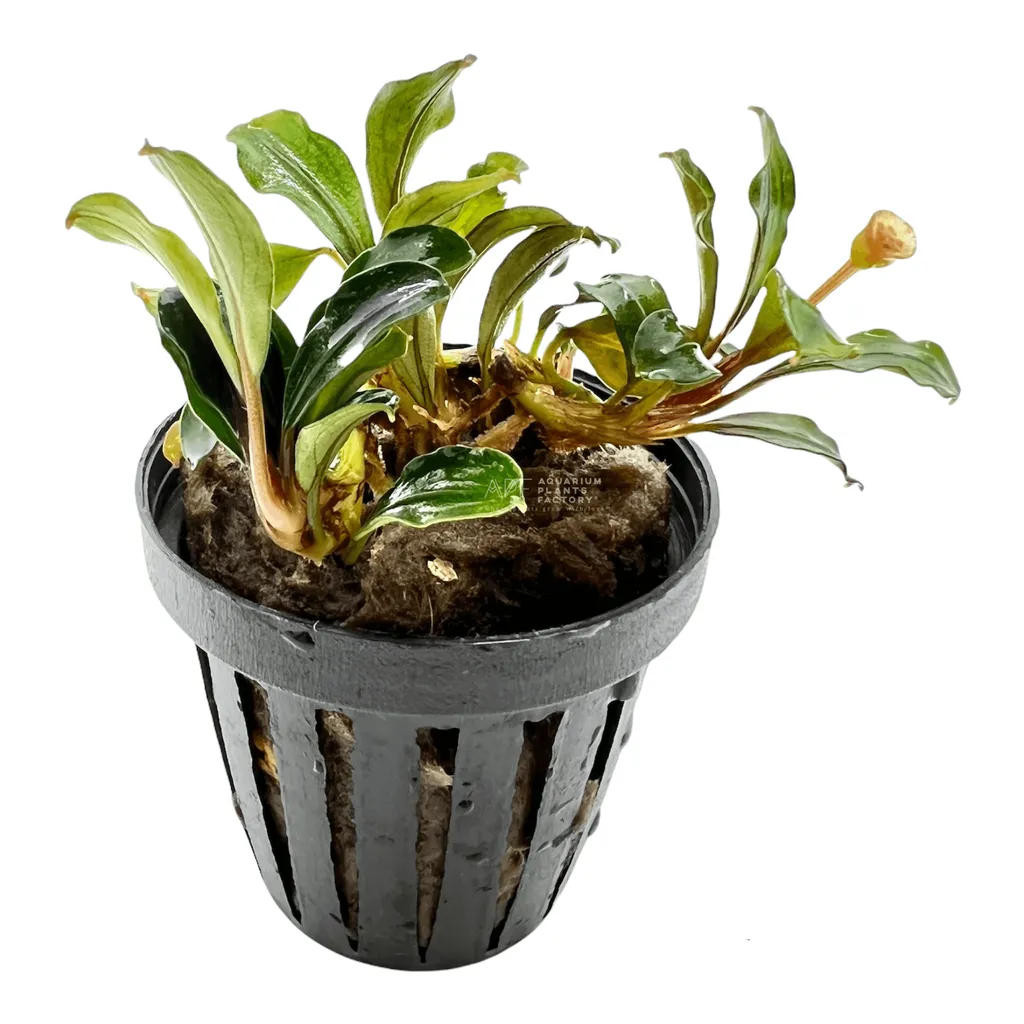
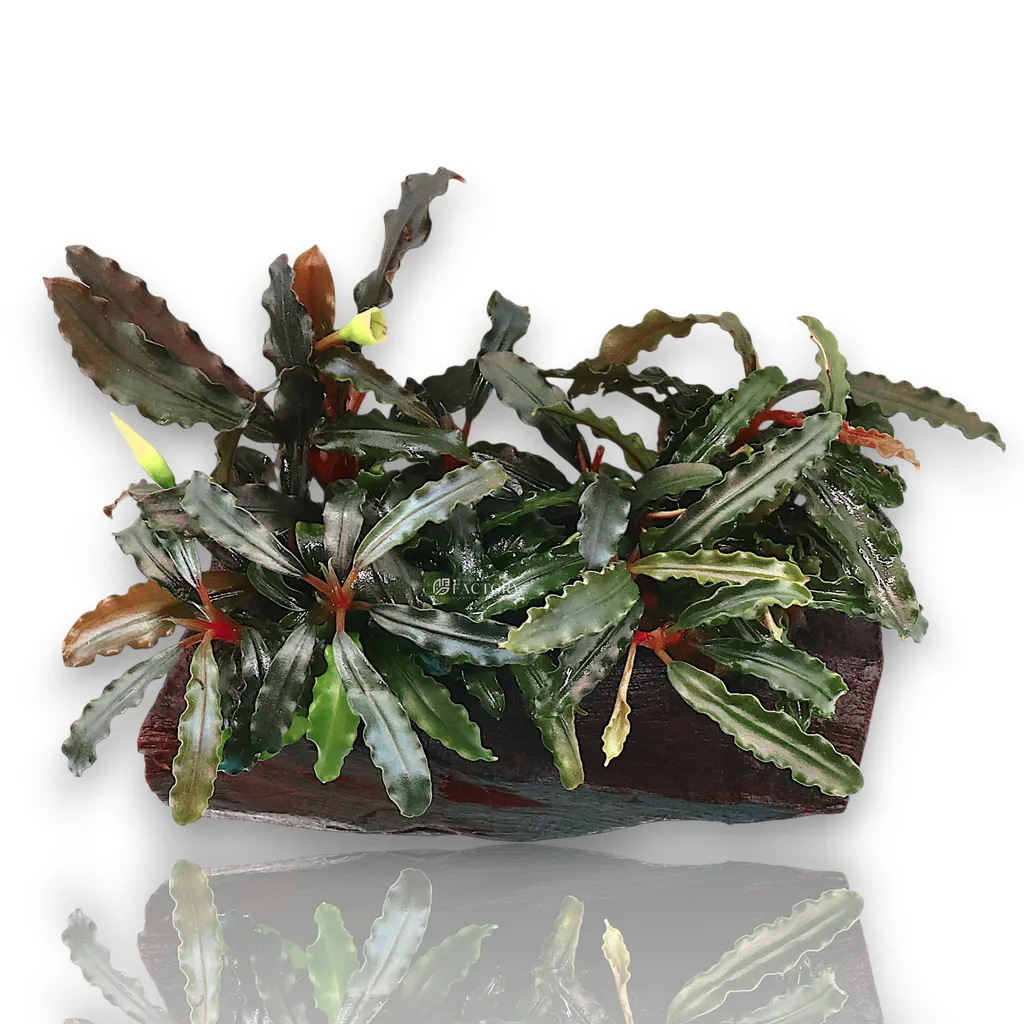
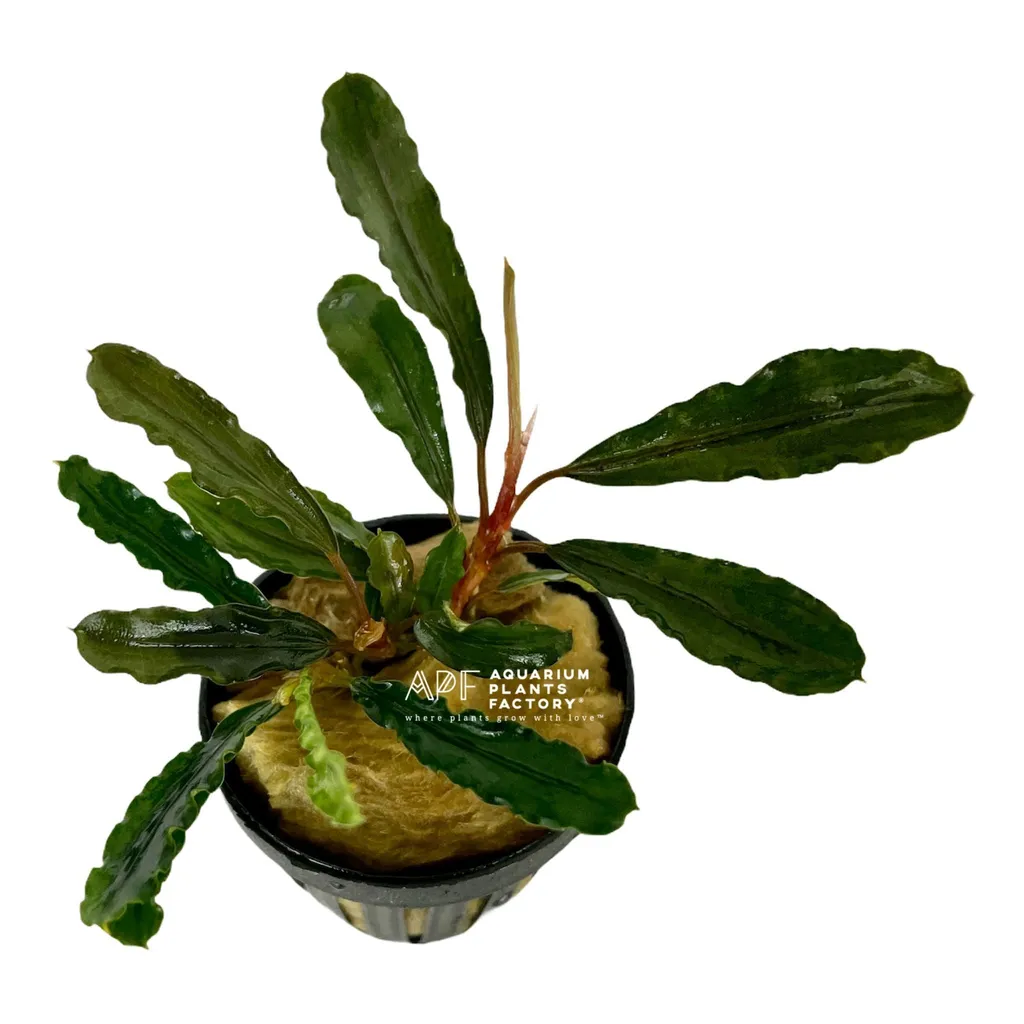
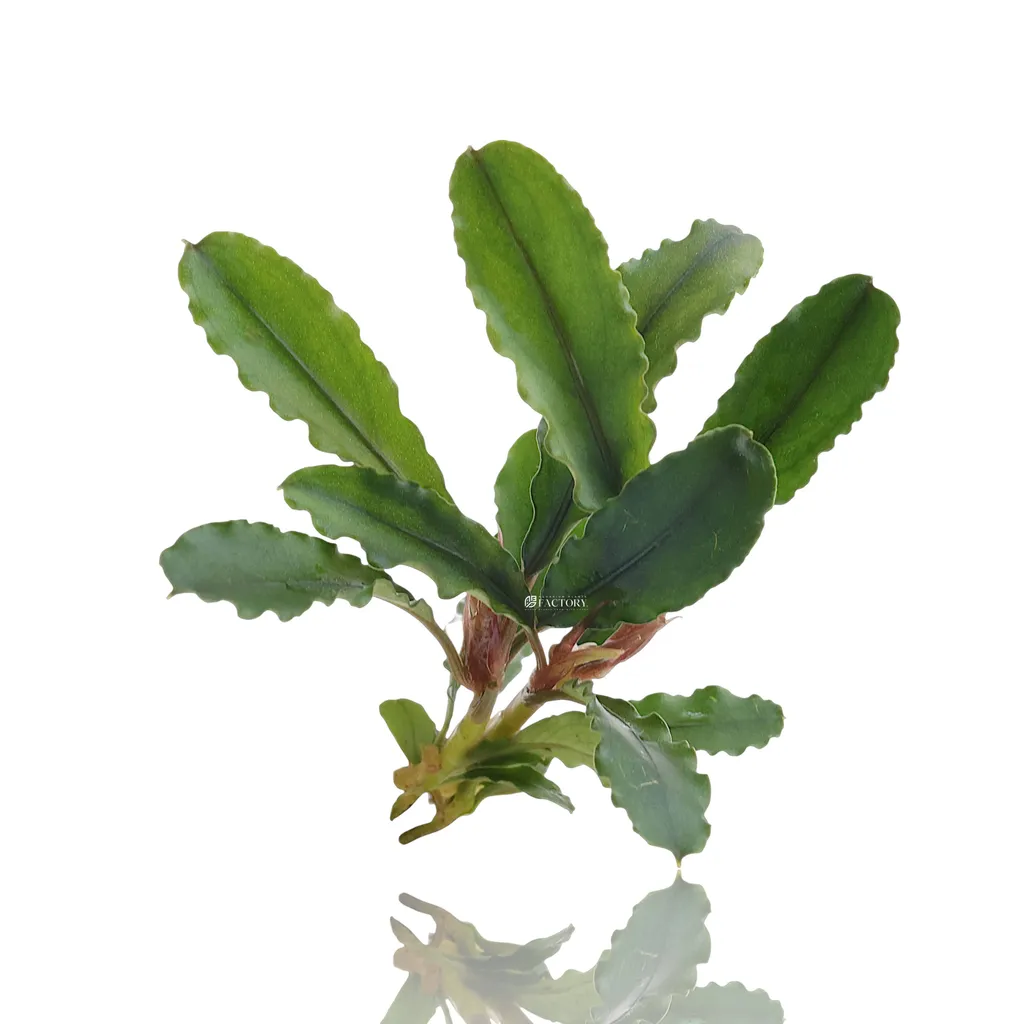
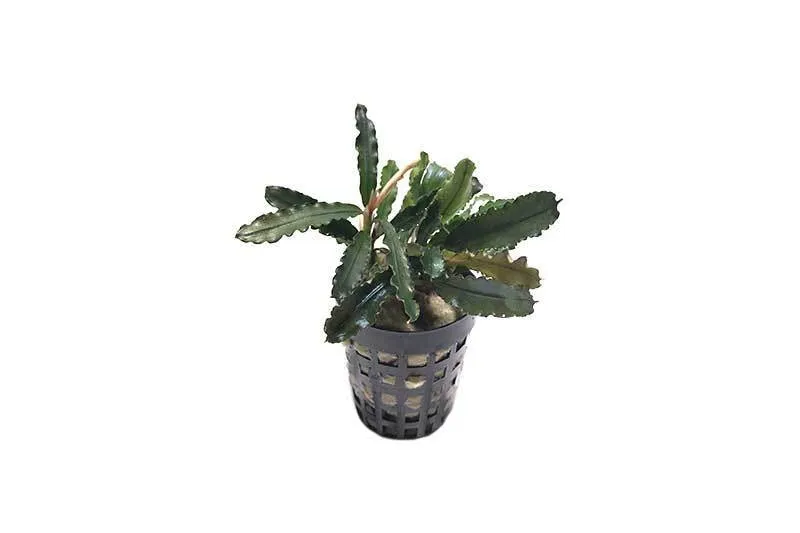
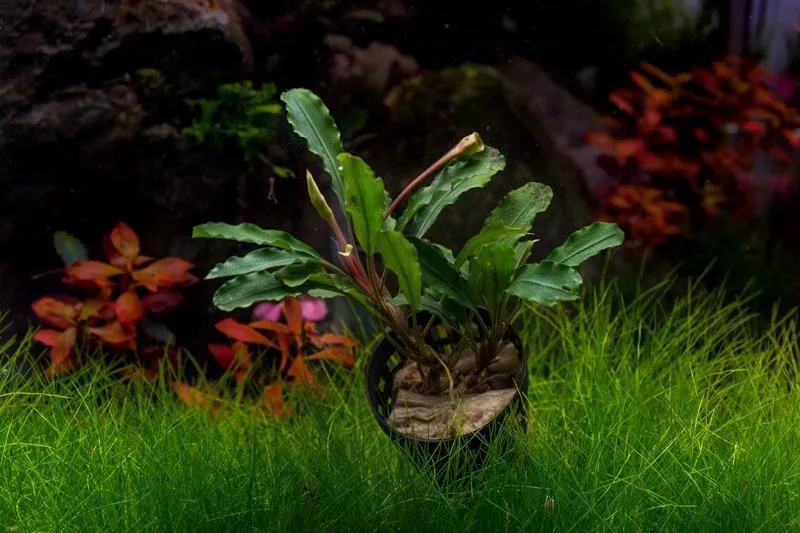
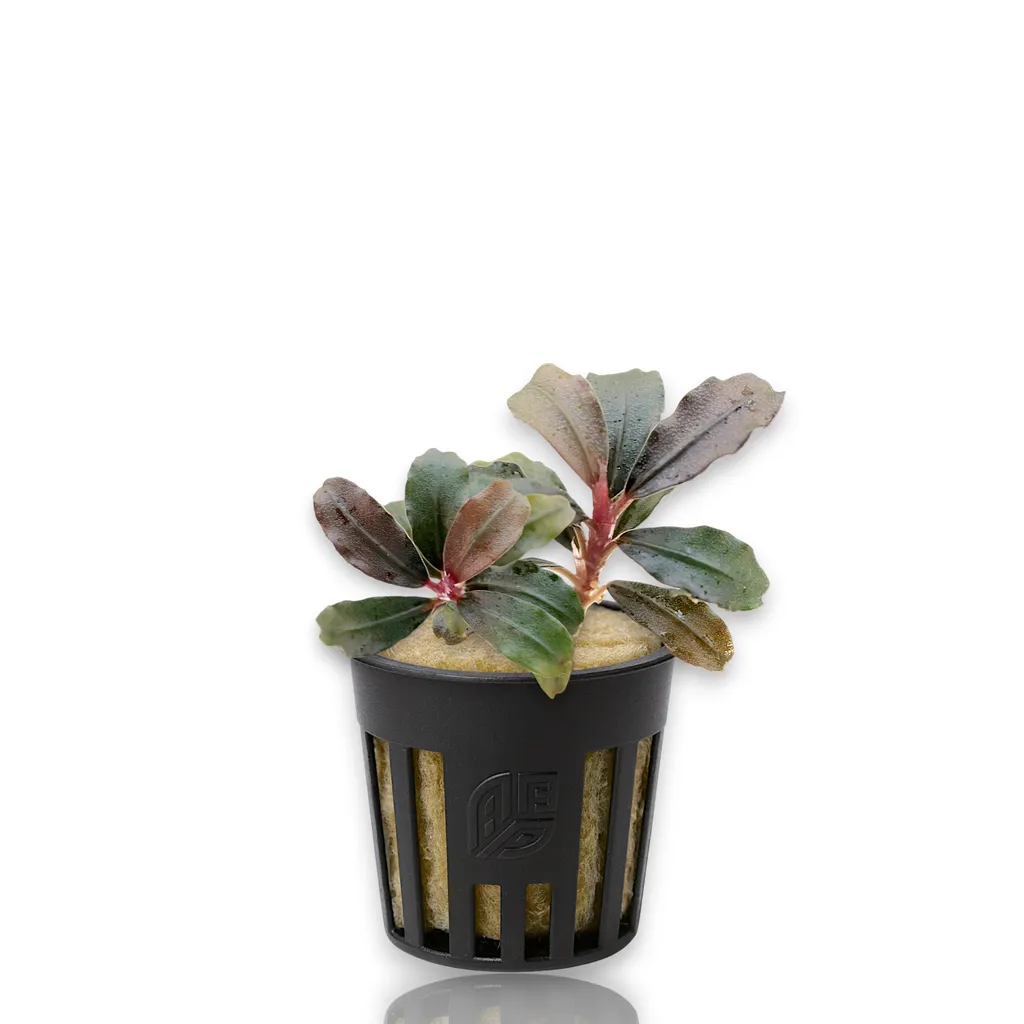
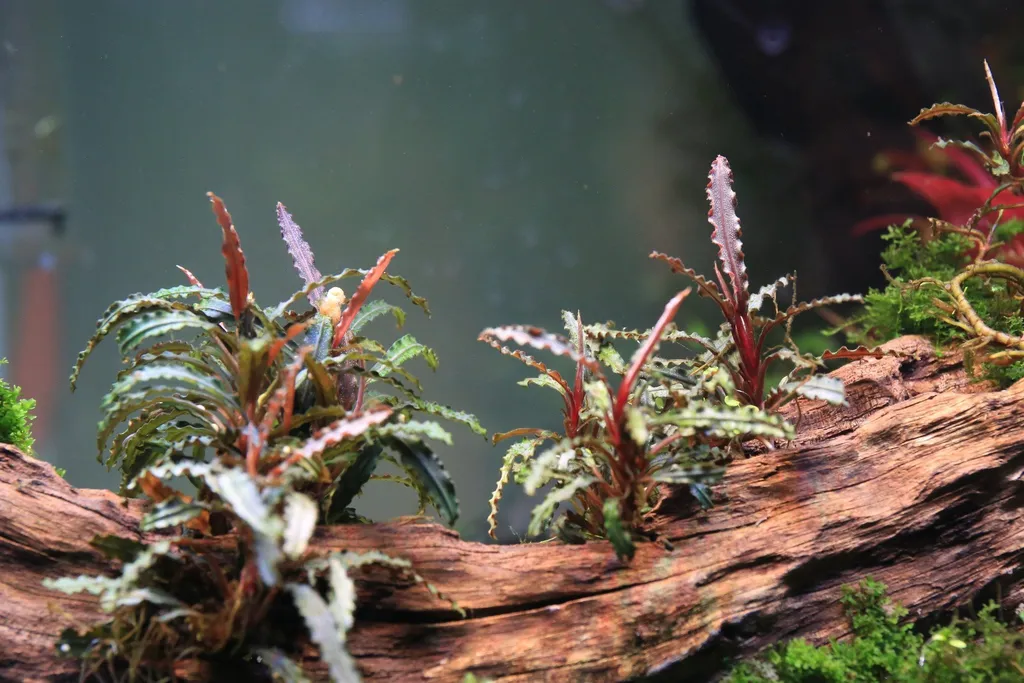
Grappa Red carries much of its red in the stems, unlike most Bucephalandra, where the show is in the leaf blade. The petioles stay reddish even when the leaves read dark green. That keeps some warmth in the plant even in a shaded low-tech tank.
Caring for Bucephalandra Grappa Red
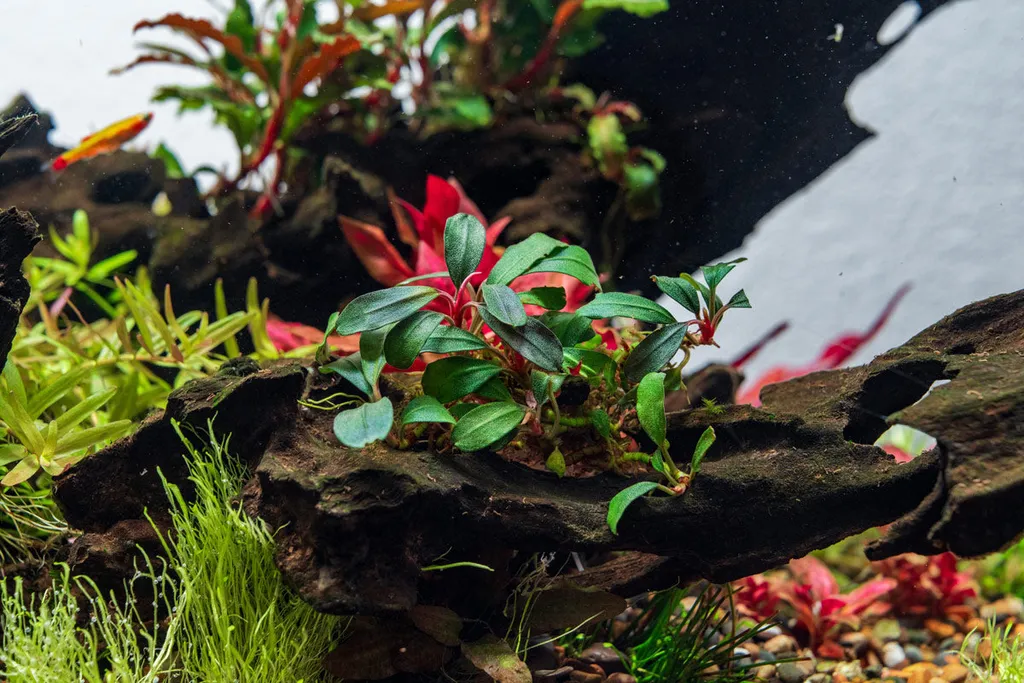
Glue or thread the rhizome onto rock or wood and keep it out of the substrate. A buried rhizome rots.
Bucephalandra Grappa Red grows in low to medium light without CO2 and stays tidiest there. CO2 and regular liquid fertilizer deepen the red tones and add a few more of its slow new leaves. Liquid feeding suits it, since it draws nutrients from the water as well as through its roots.
New leaves come slowly, so it rarely needs trimming. To propagate, cut the rhizome into sections and reattach them.
High light mostly feeds algae on the old leaves, so err dimmer. Keep the water stable at 72 to 82°F (22 to 28°C). Sudden swings in temperature or pH trigger melt in freshly imported pieces.
Good to know
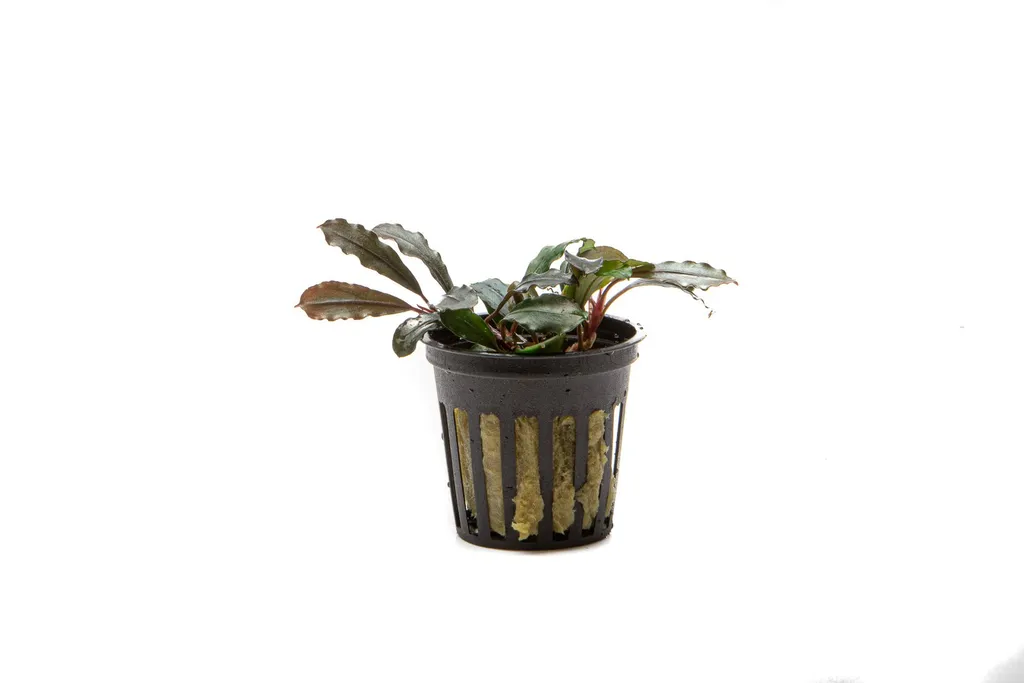
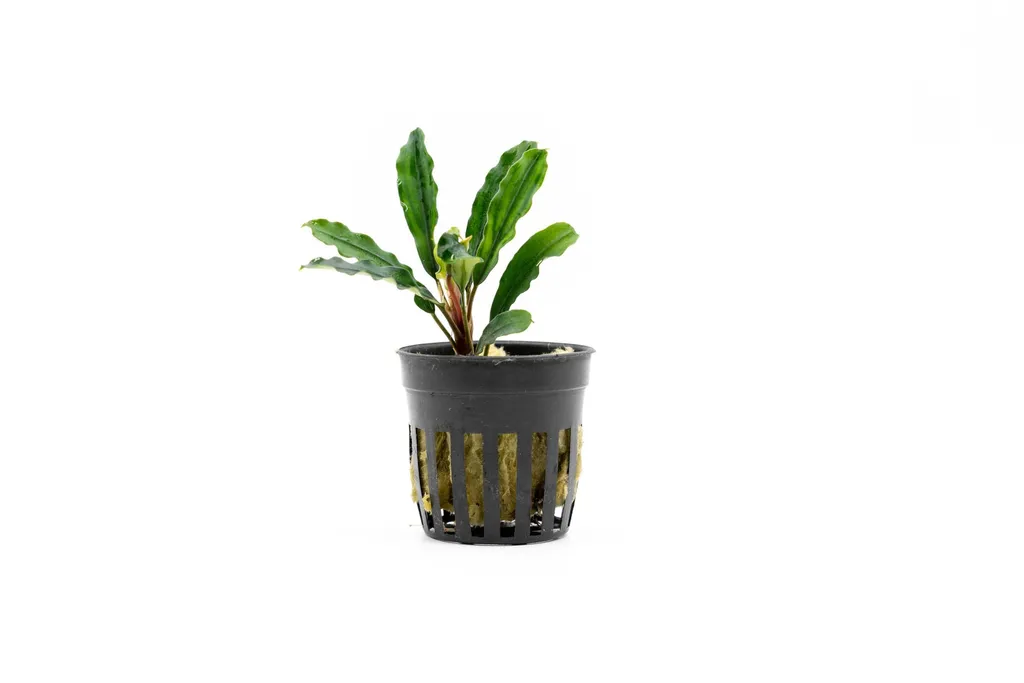
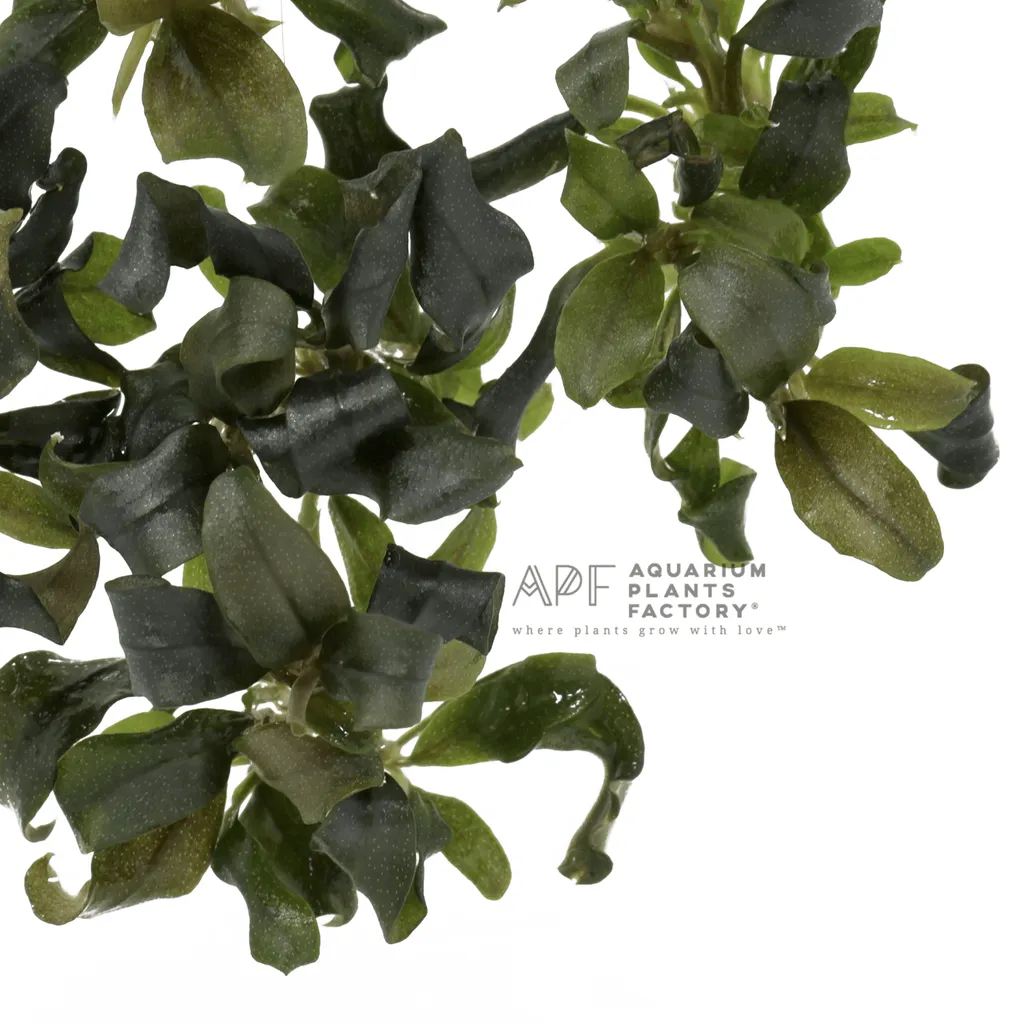
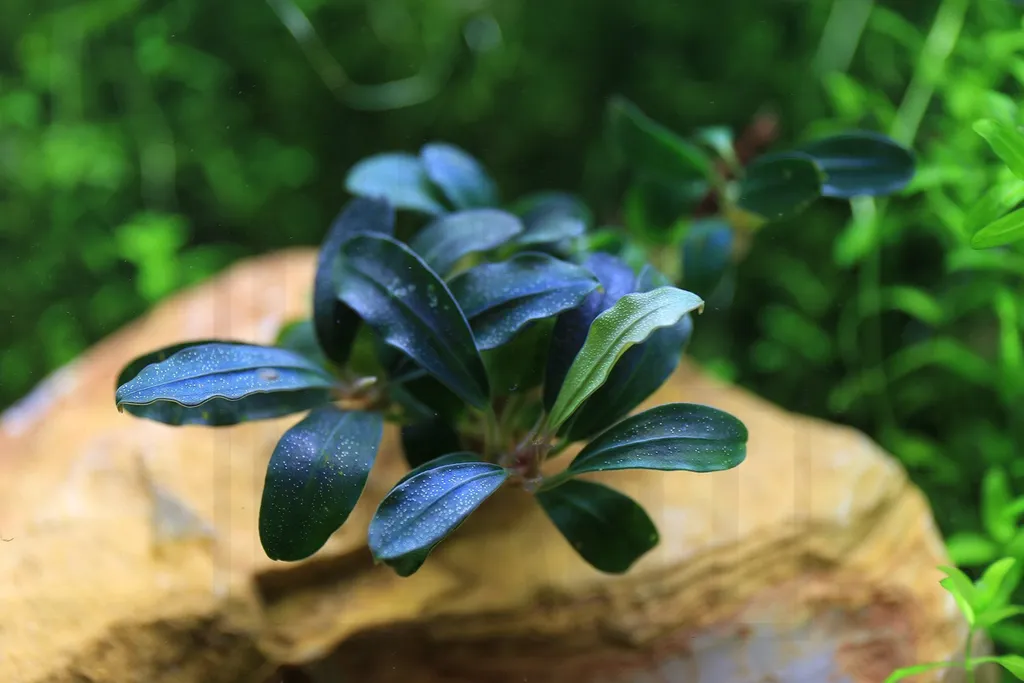
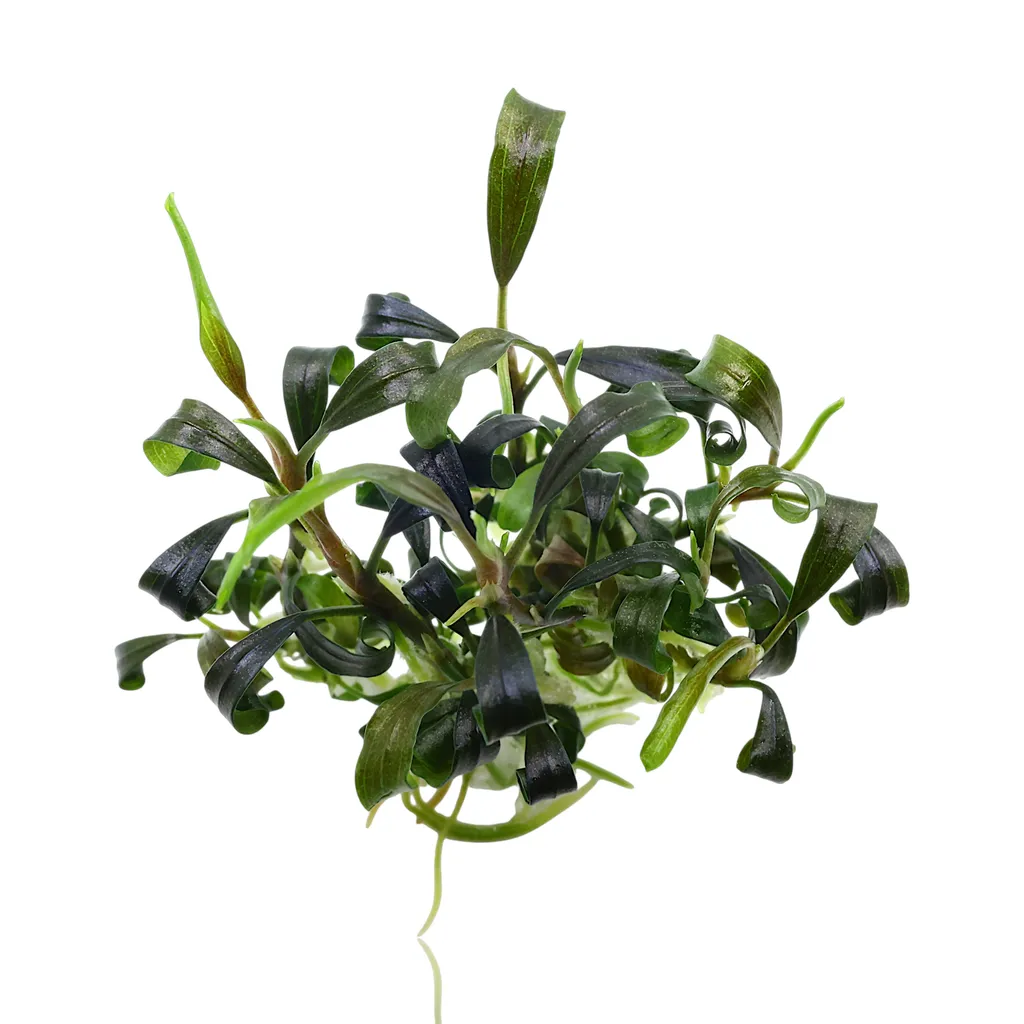
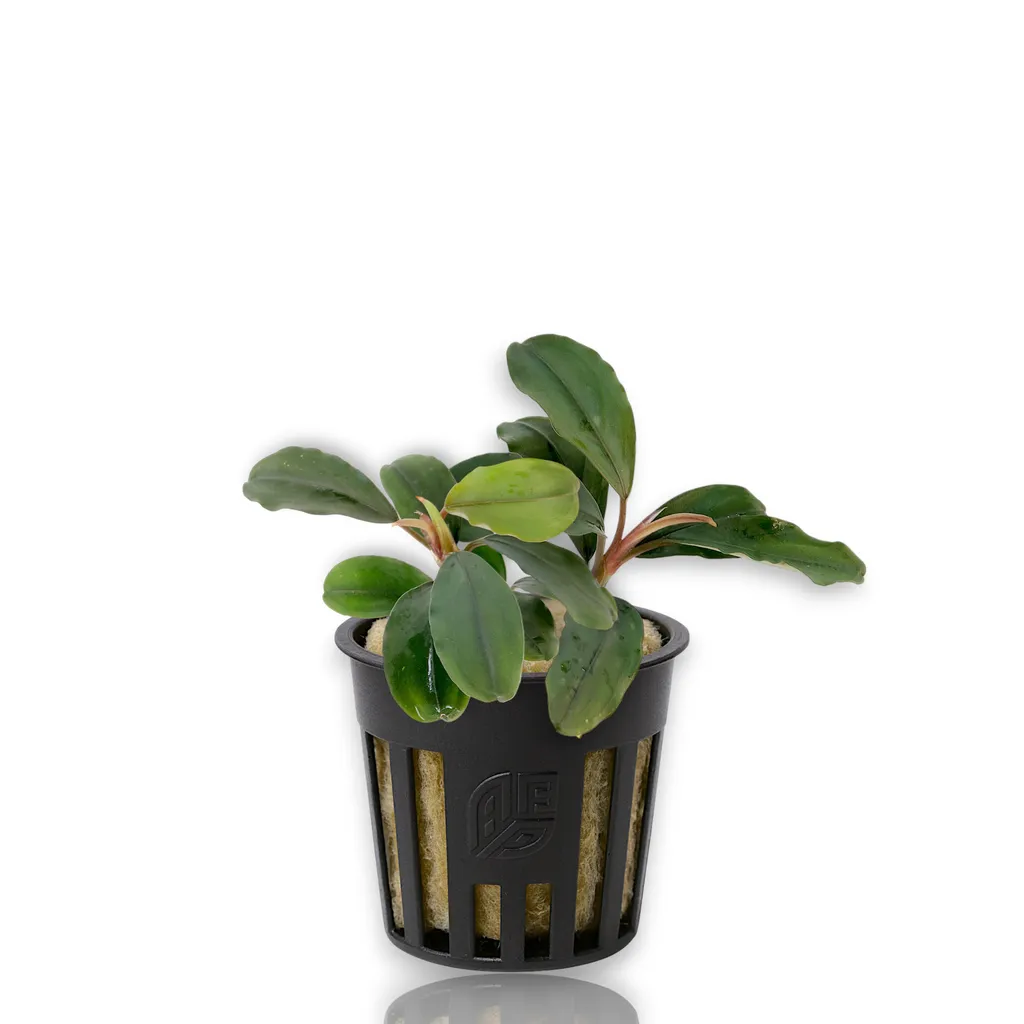
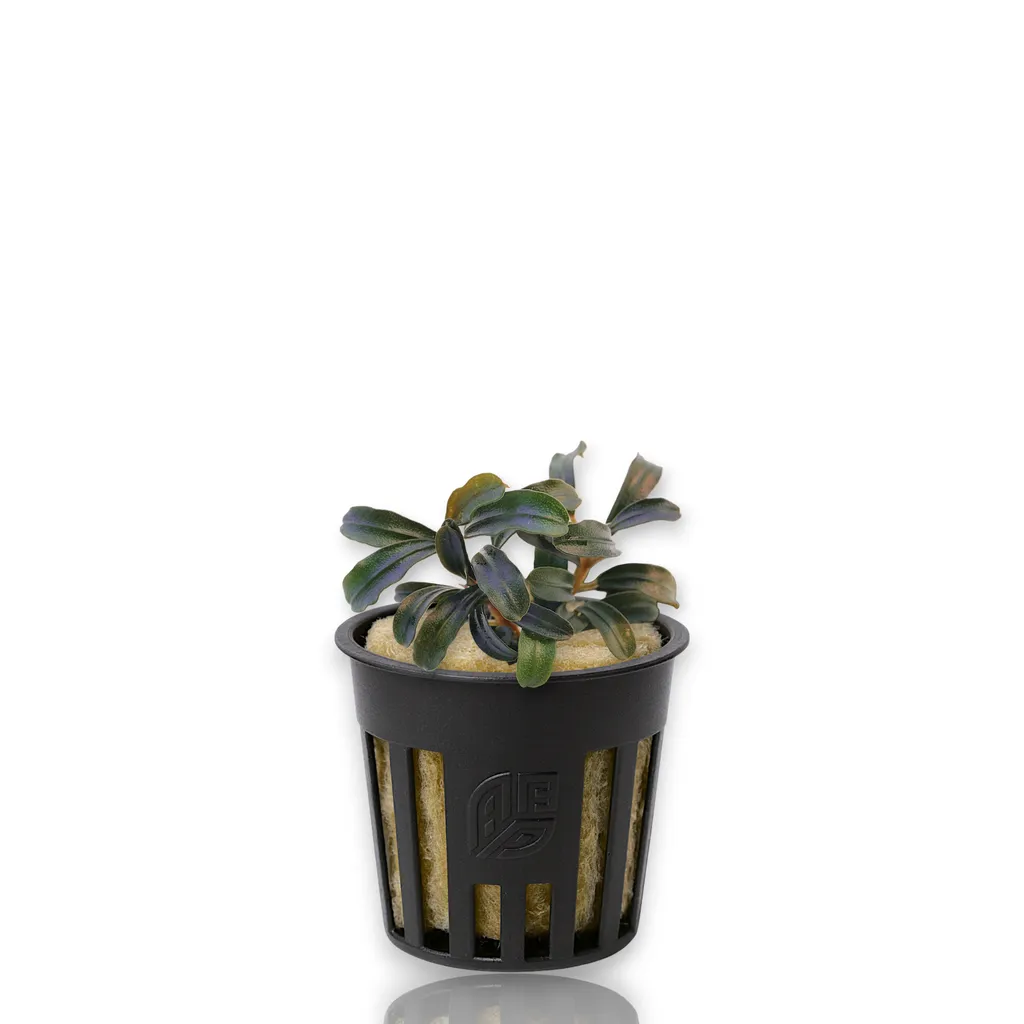
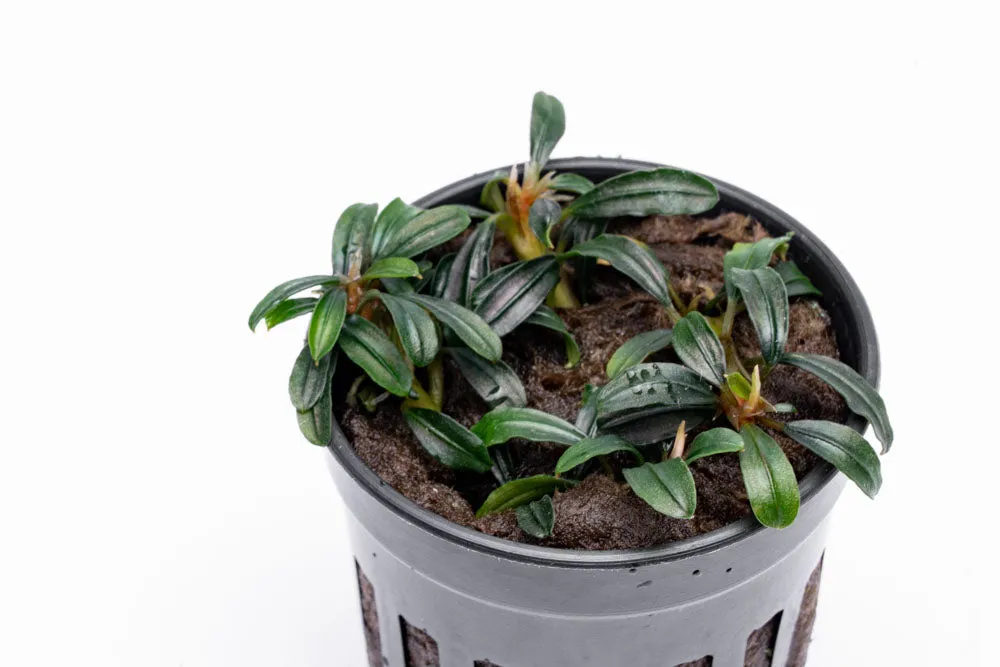
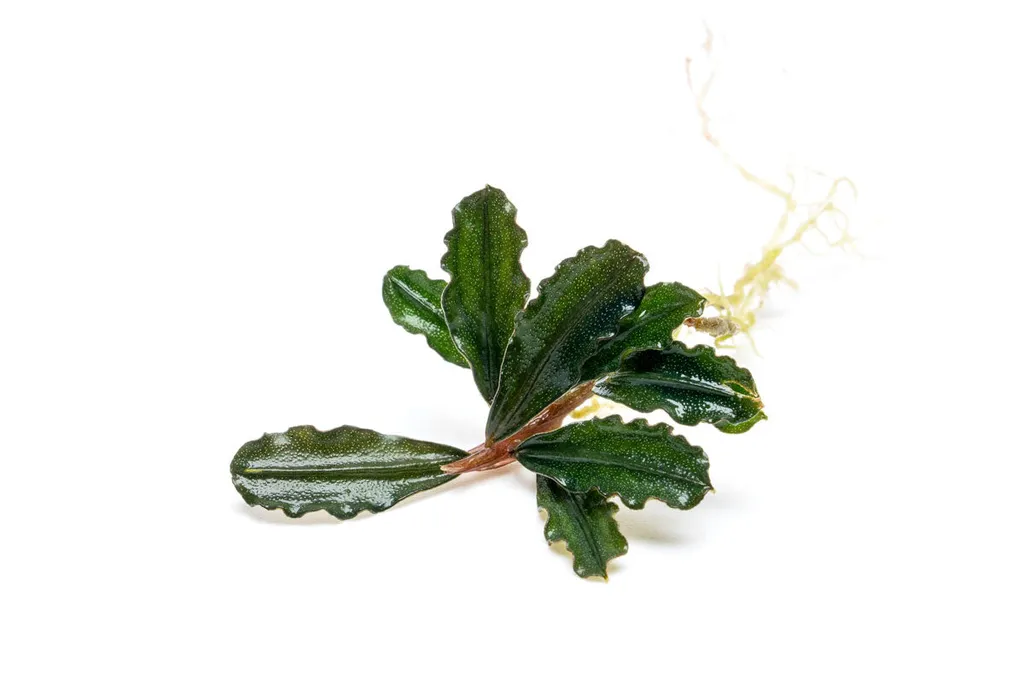
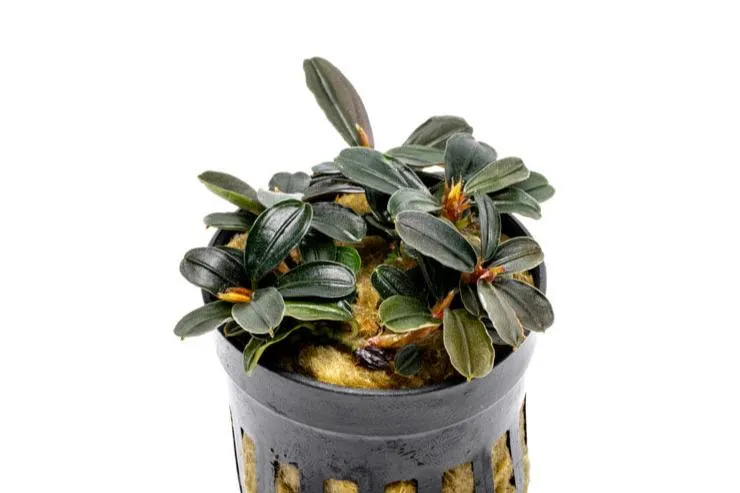
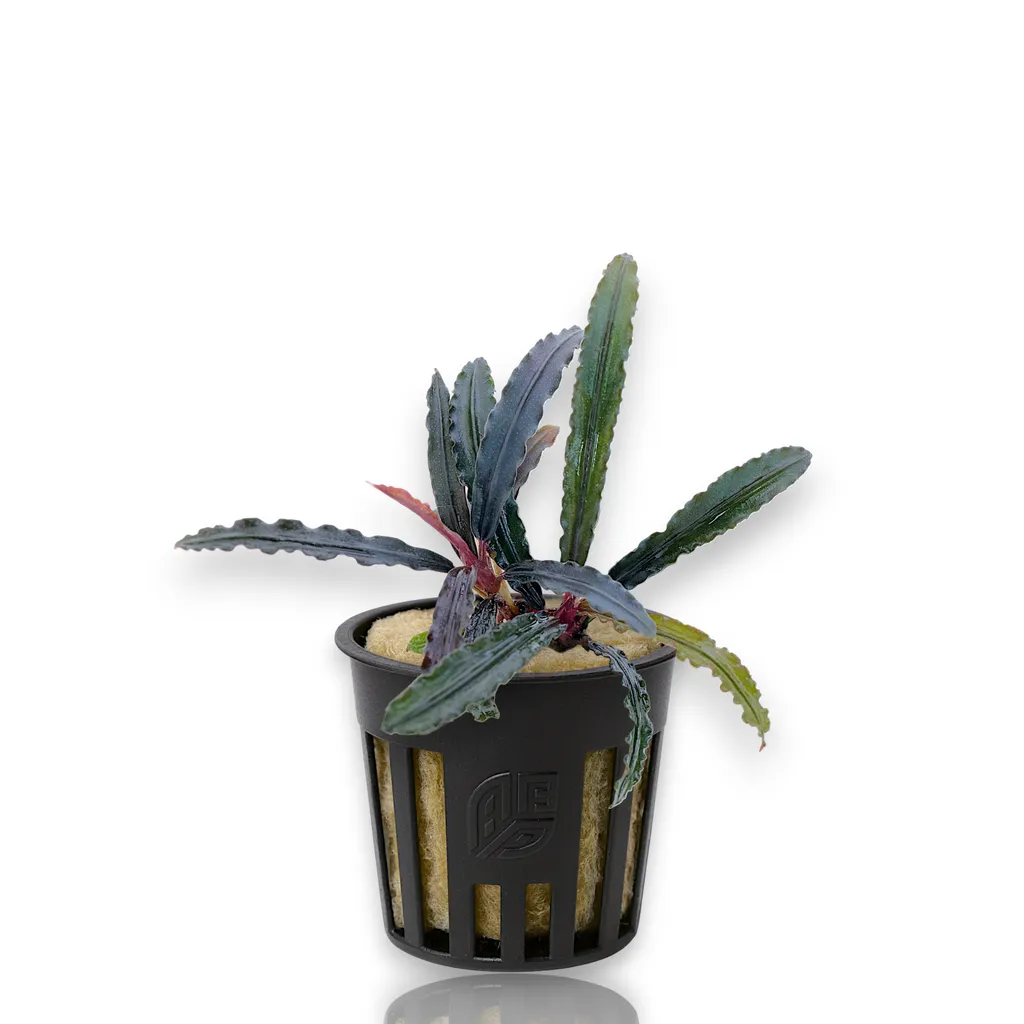
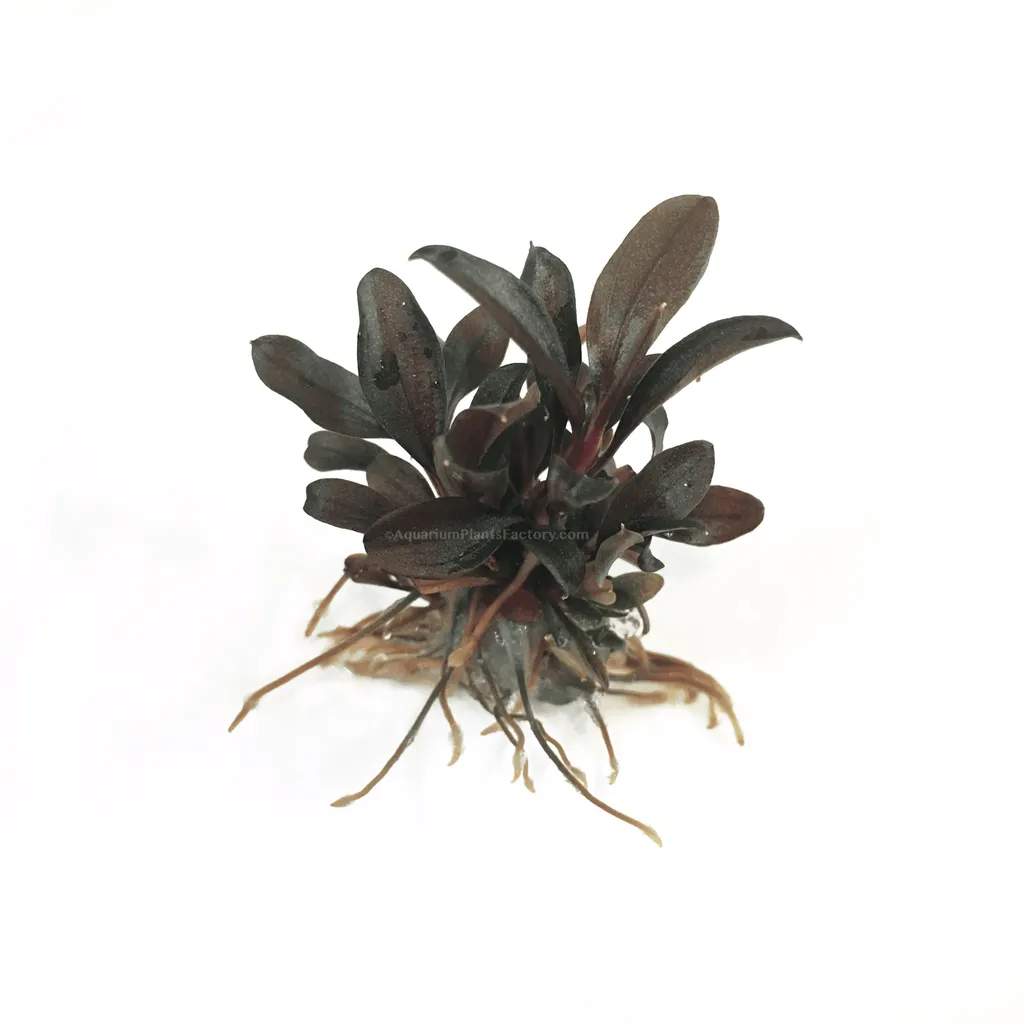
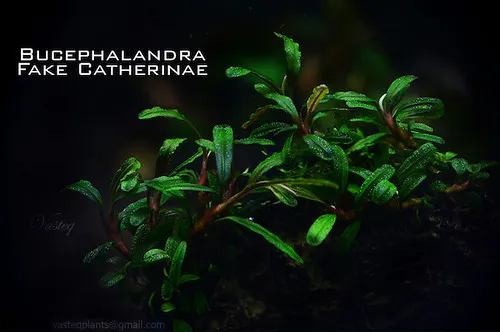
Grappa Red is a commercial cultivar name under the umbrella of Bucephalandra, in the family Araceae, tribe Schismatoglottideae. Most trade forms are treated as selections of the variable Bucephalandra motleyana complex. It has short, slender, teardrop-shaped leaves on reddish petioles, and under stronger light the foliage takes on a warm, coppery metallic sheen. A smaller clone circulates as Grappa Red Mini, and it is what most shops actually stock.
In the wild
Grappa Red is a trade selection of Bucephalandra, not a wild species. Its name comes from the trade rather than a documented collection site. Its parents grow on Borneo as rheophytes, anchored to rock and wood in and beside fast-flowing forest streams. They sit emersed on the banks in the dry season and fully submersed when the water rises. Farmed and tissue-culture material has largely replaced wild collection for forms like this one.
Common questions
Does Bucephalandra Grappa Red need to be planted in the substrate?
No. Bucephalandra Grappa Red grows attached to rock or wood, so tie or glue the rhizome in place. If you plant its roots, keep the rhizome above the substrate, since a buried rhizome rots.
Does Bucephalandra Grappa Red need CO2?
No, but it helps. Bucephalandra Grappa Red can grow without injected CO2, and added CO2 makes it grow faster.
How much light does Bucephalandra Grappa Red need?
Bucephalandra Grappa Red is a low-light plant, and the light that comes with a standard tank kit is enough for it.
Does Bucephalandra Grappa Red need root tabs?
No. Bucephalandra Grappa Red feeds from the water, so a liquid fertilizer suits it better. Root tabs only help if its roots reach into the substrate.
How do you propagate Bucephalandra Grappa Red?
Bucephalandra Grappa Red propagates by rhizome division. Cut the rhizome into pieces with several leaves each, then tie or plant each piece.
How tall does Bucephalandra Grappa Red grow?
Bucephalandra Grappa Red grows to about 3.1 in (8 cm) tall. It grows slowly and rarely needs trimming.
 Low lightEpiphyte3.9 in (10 cm)
 Low lightEpiphyte2.4 in (6 cm)
 Low lightEpiphyte2.4 in (6 cm)