Borneo (trade clone of the B. pygmaea complex, collection site unknown)
Overview
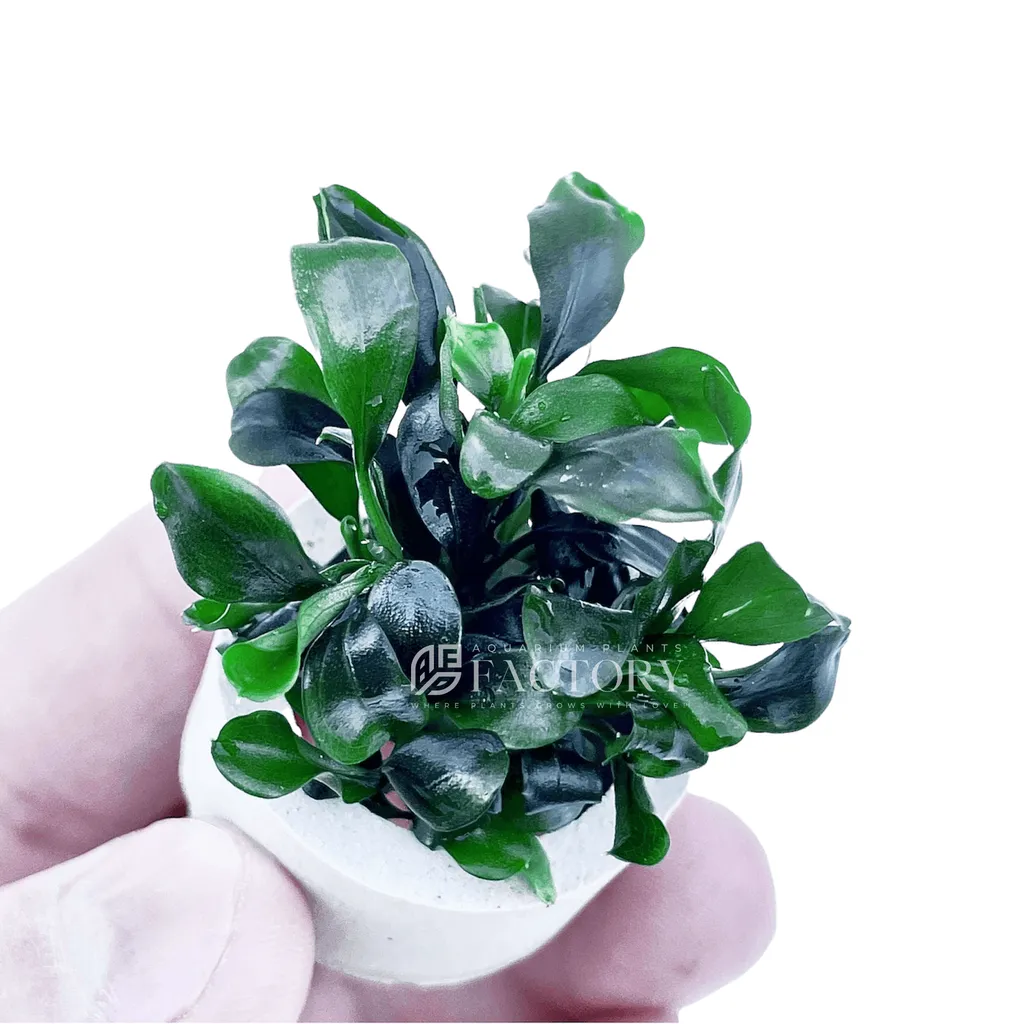
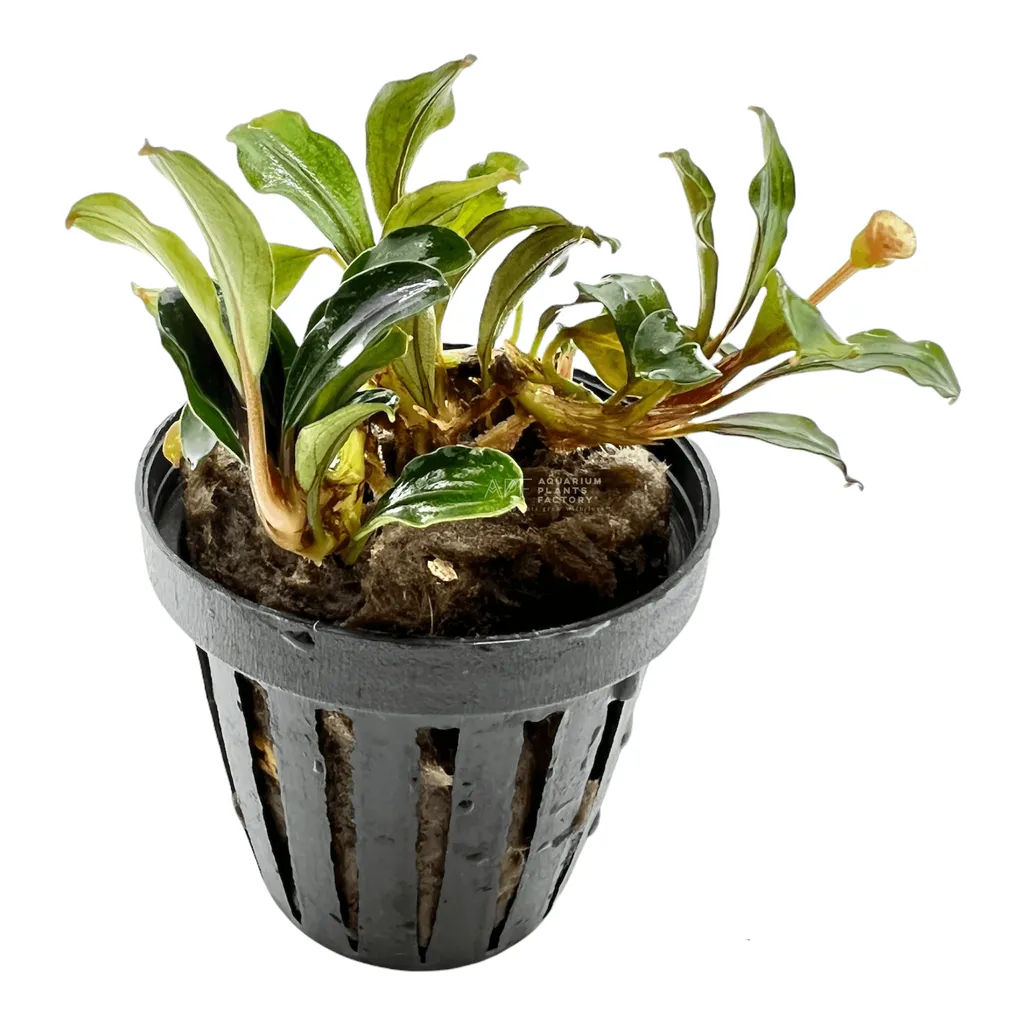
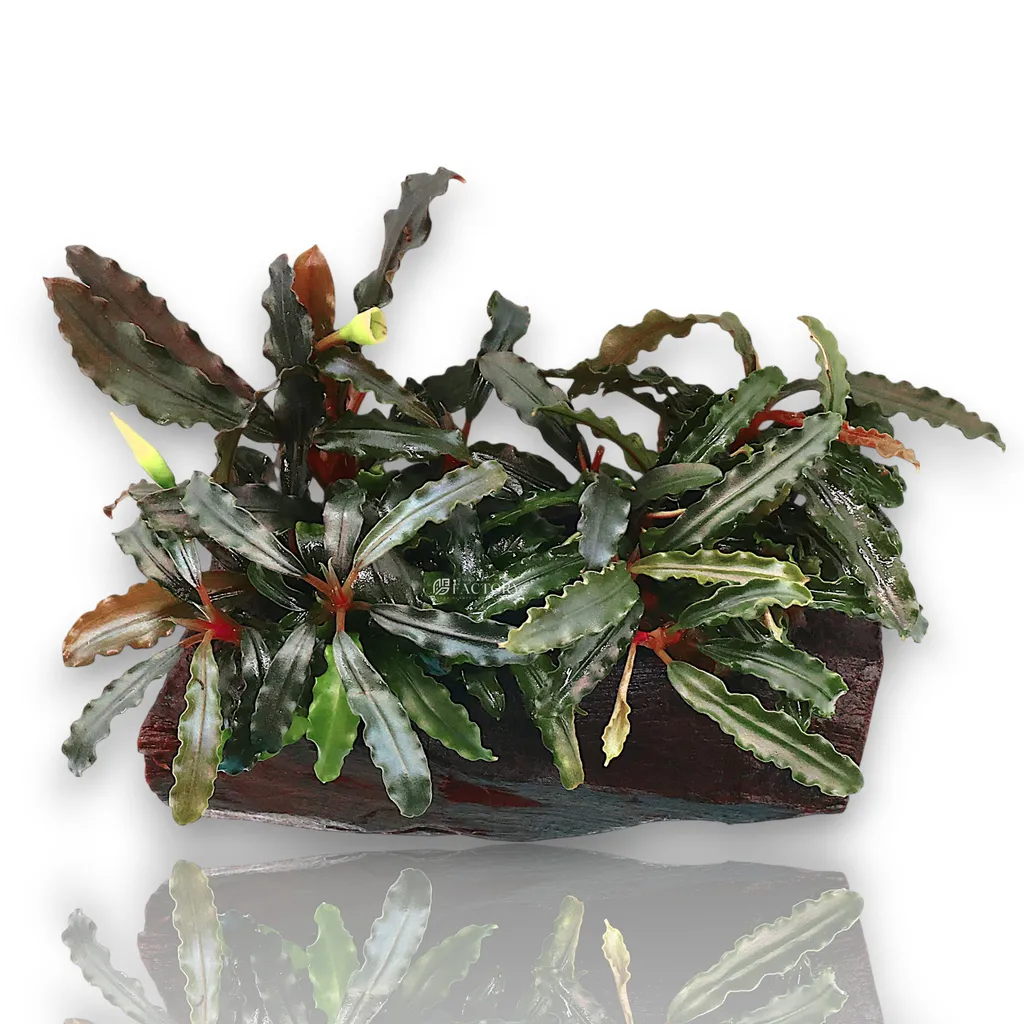
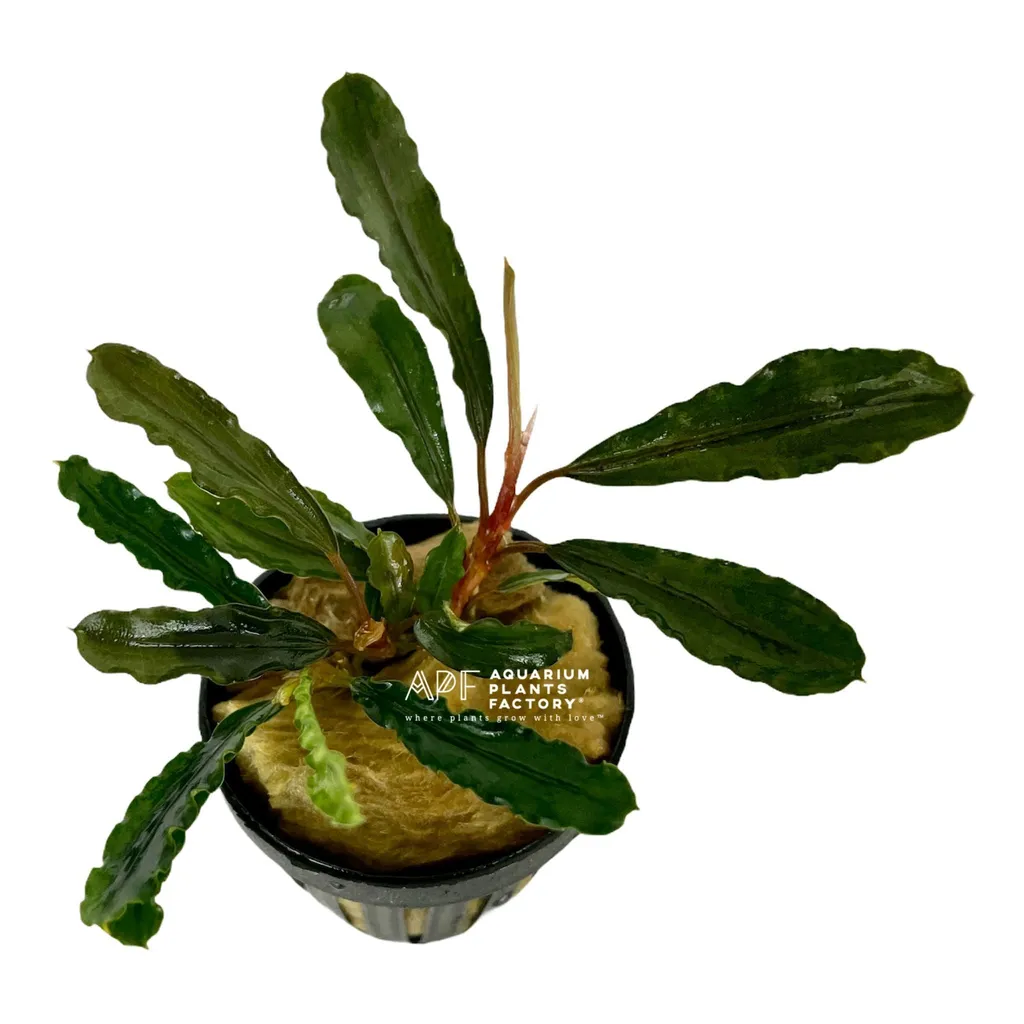
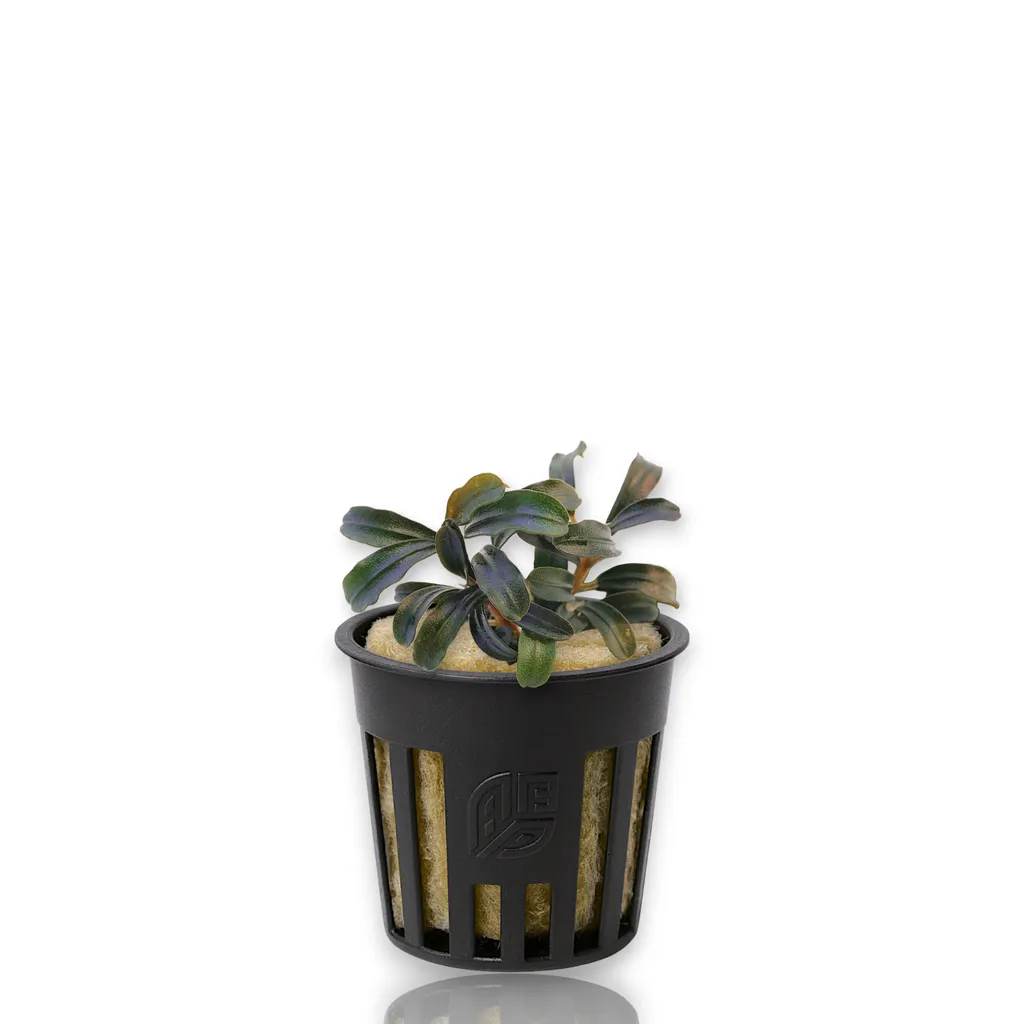
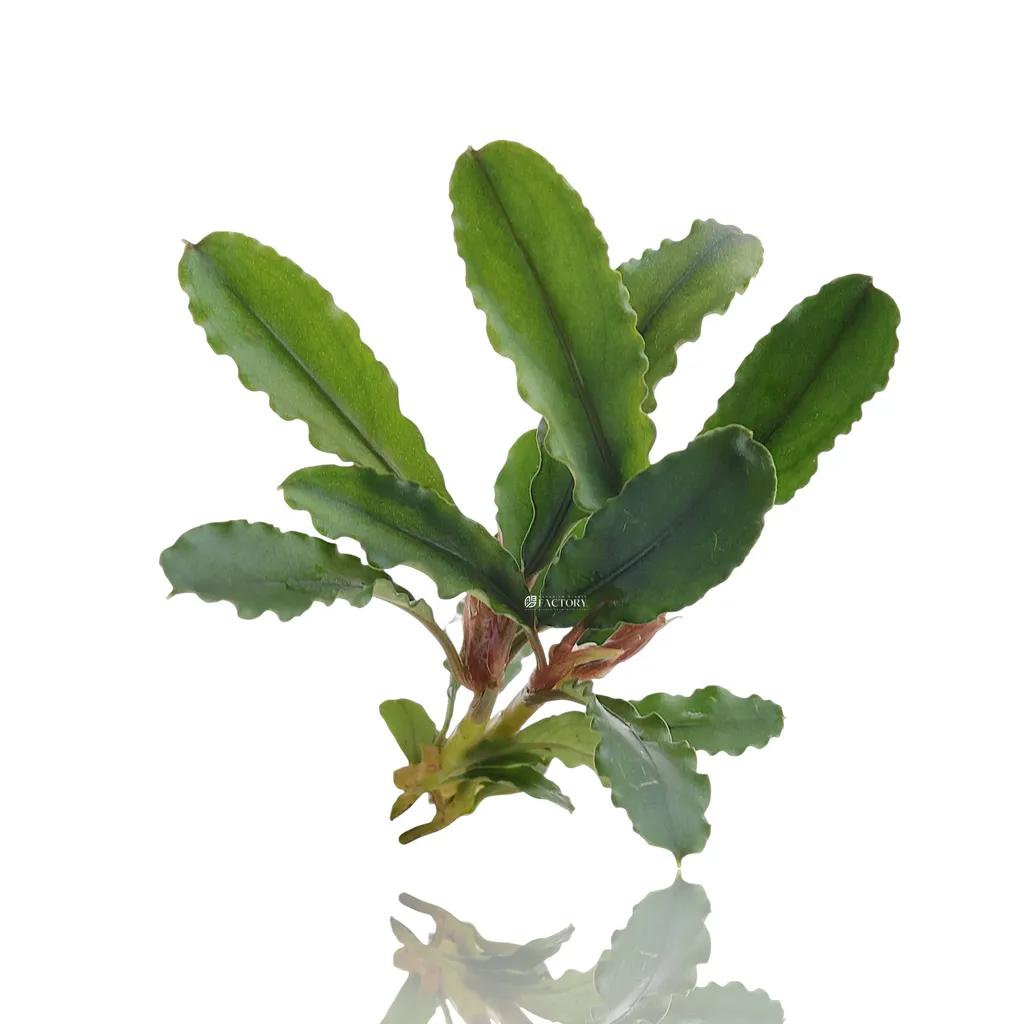
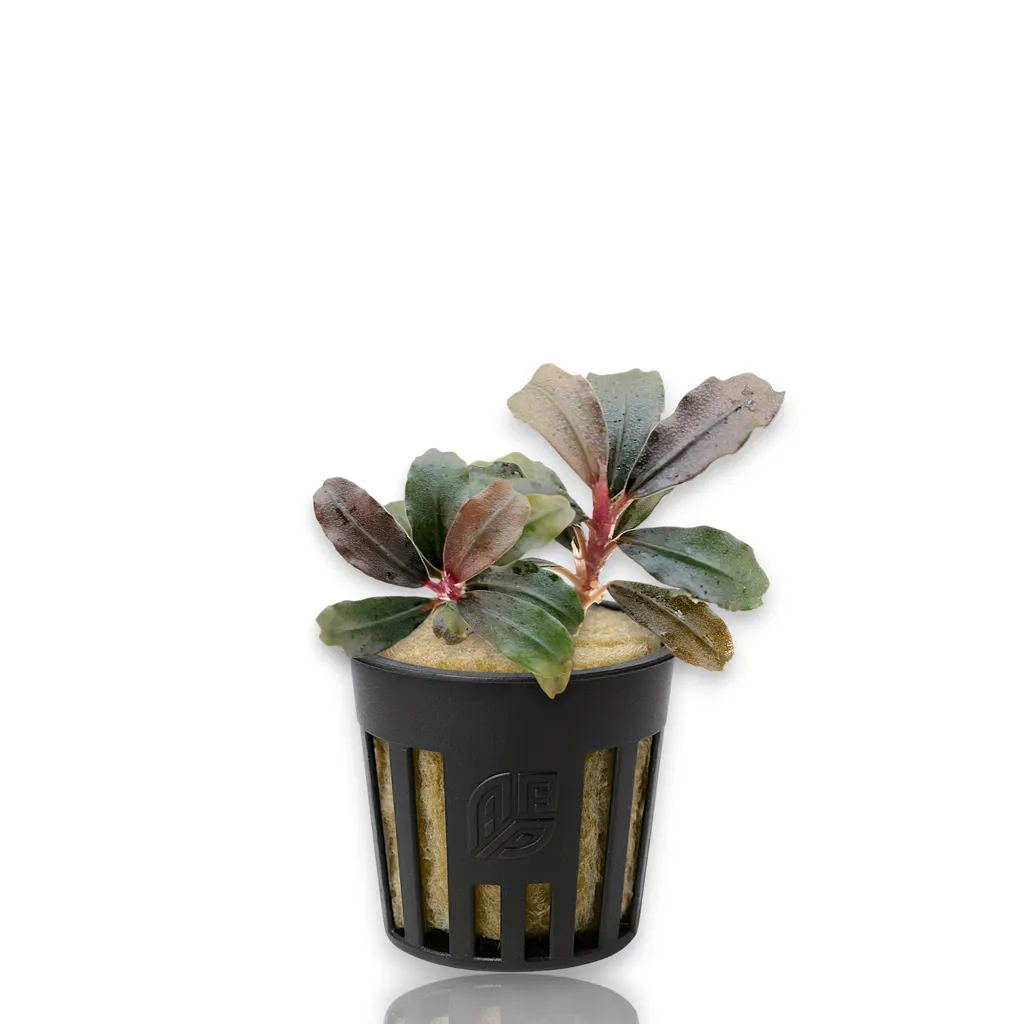
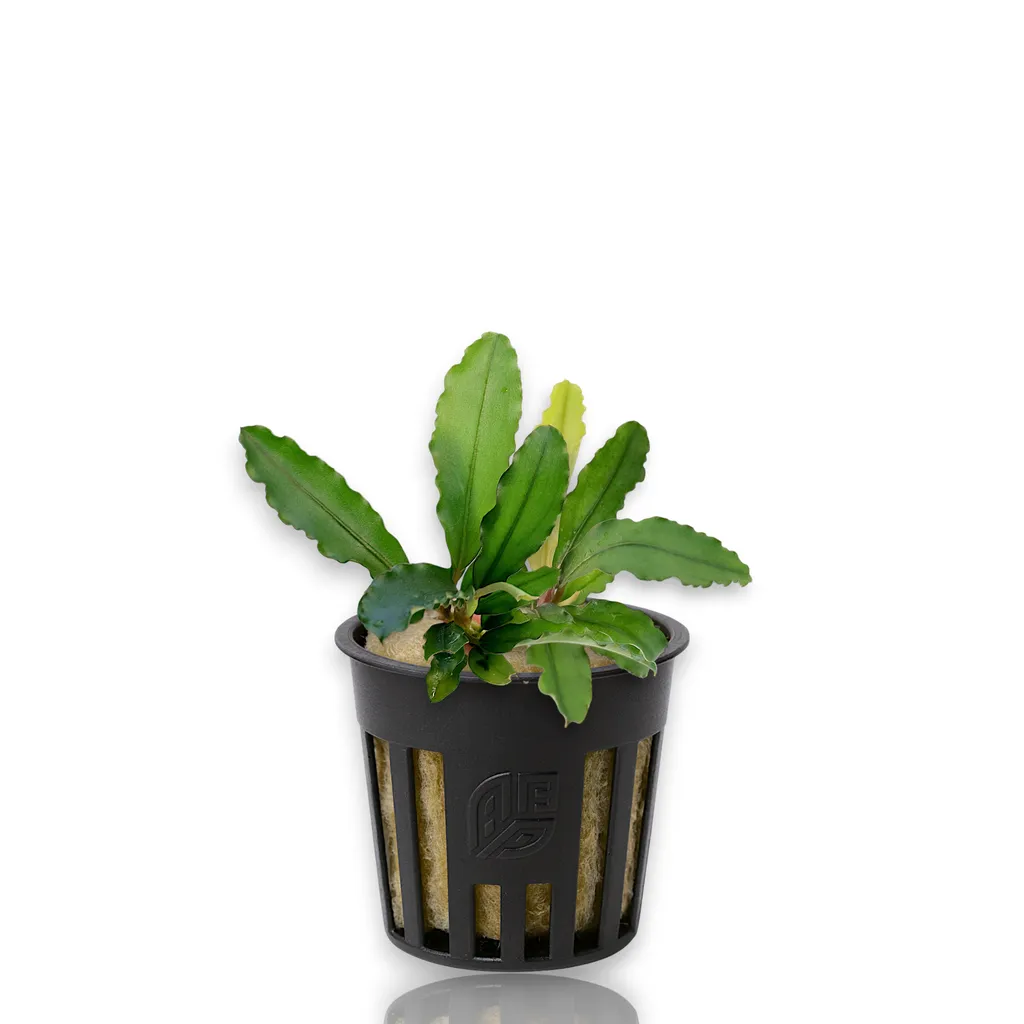
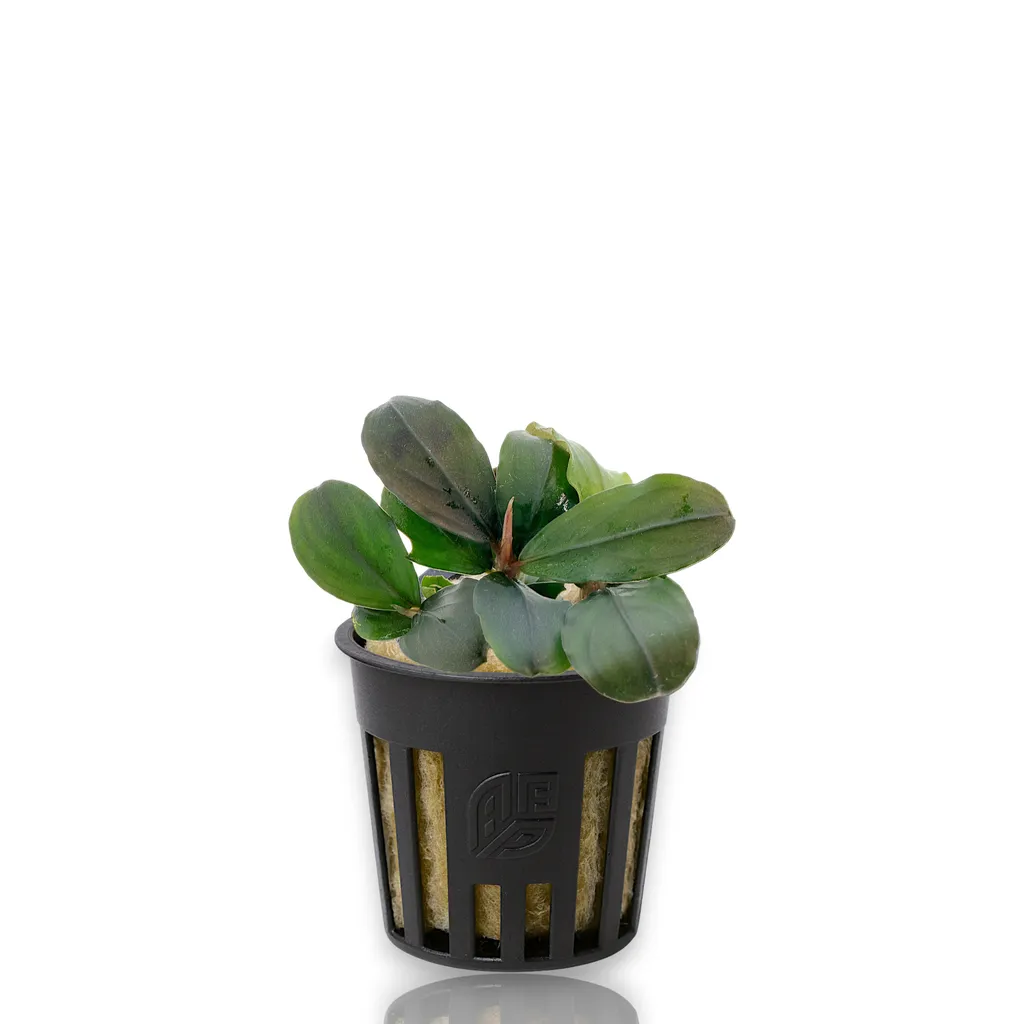
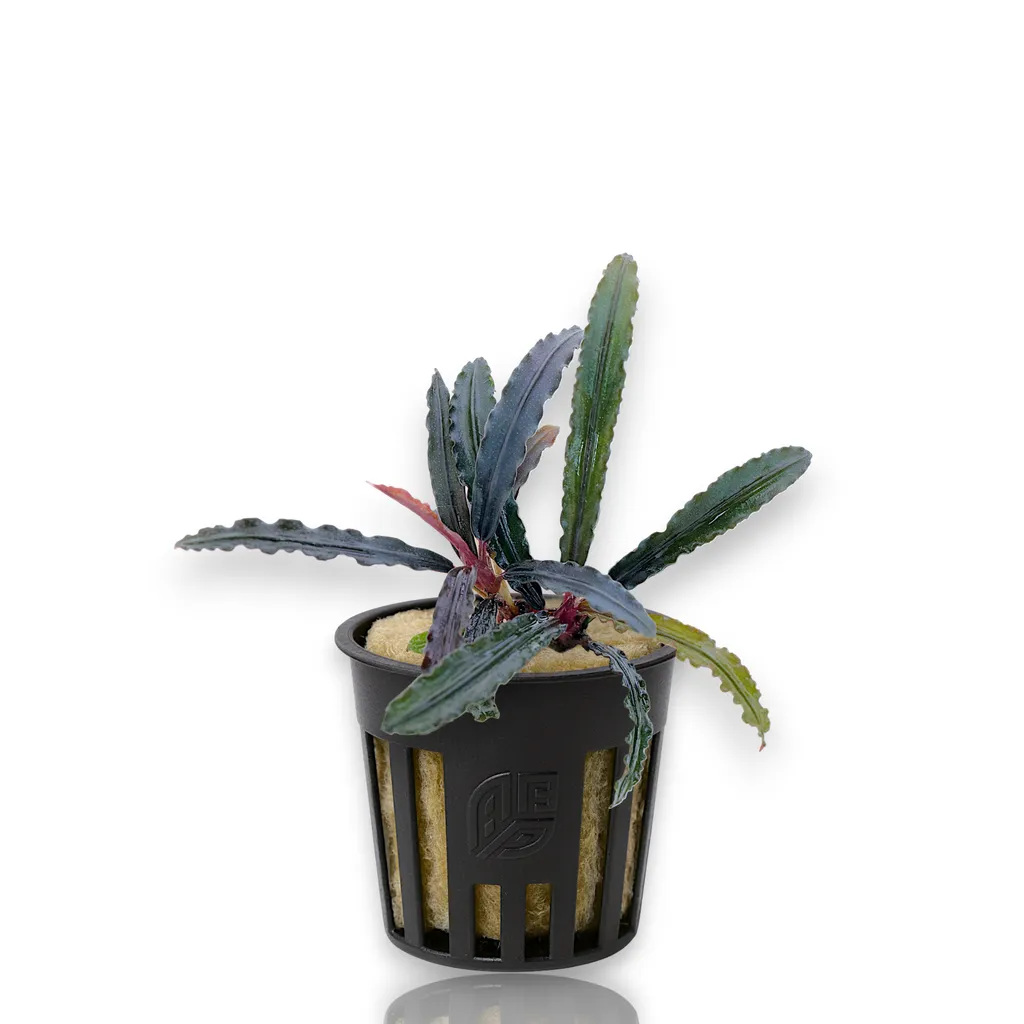
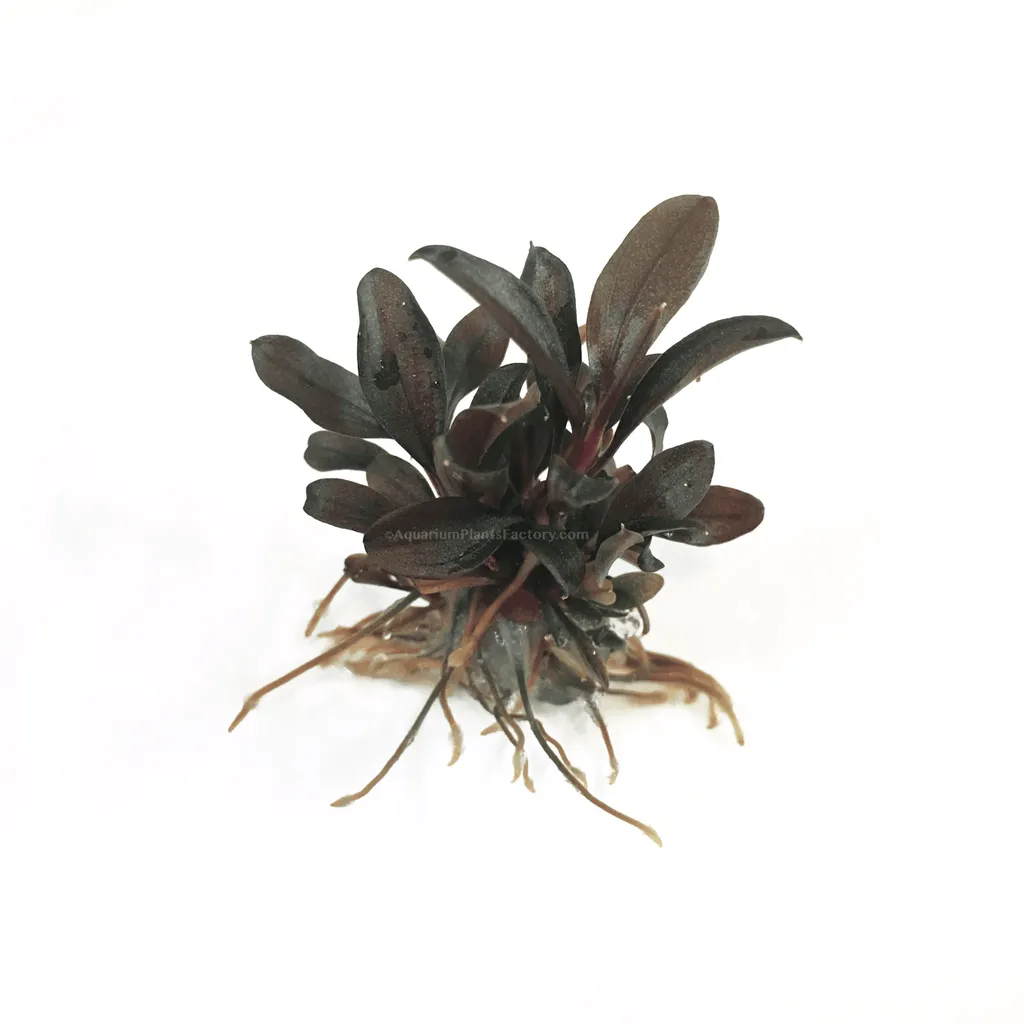
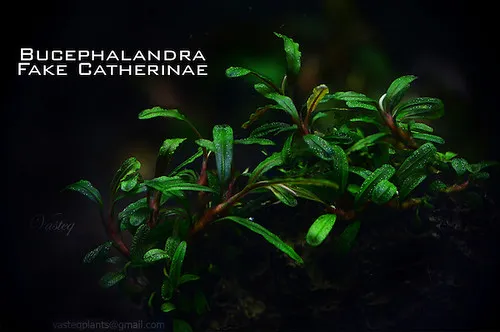
Biblis builds a bushy clump 5 to 8 cm high and 14 cm or more across, so it suits nano tanks and foregrounds. Emersed leaves are very dark olive to red-brown, and new leaves open a light brown-orange. Submersed leaves often turn dark purple, best under medium light with steady CO2 and fertilizer. It grows fairly fast for a Buce when conditions suit it. Cut off side shoots or head shoots to propagate it, which also makes the clump branch. It can sit on the substrate with the rhizome on top, and its roots will grow down into the soil.
In the wild
Biblis traces back to Borneo, home of the whole genus, but its species and collection site are unknown. The genus colonizes rocks in the flood zone of streams there, in soft, acidic water at tropical temperatures. Rising and falling water keeps the plants submersed for part of the year and emersed for the rest. Buce Plant's Biblis stock is farm-raised.
Good to know
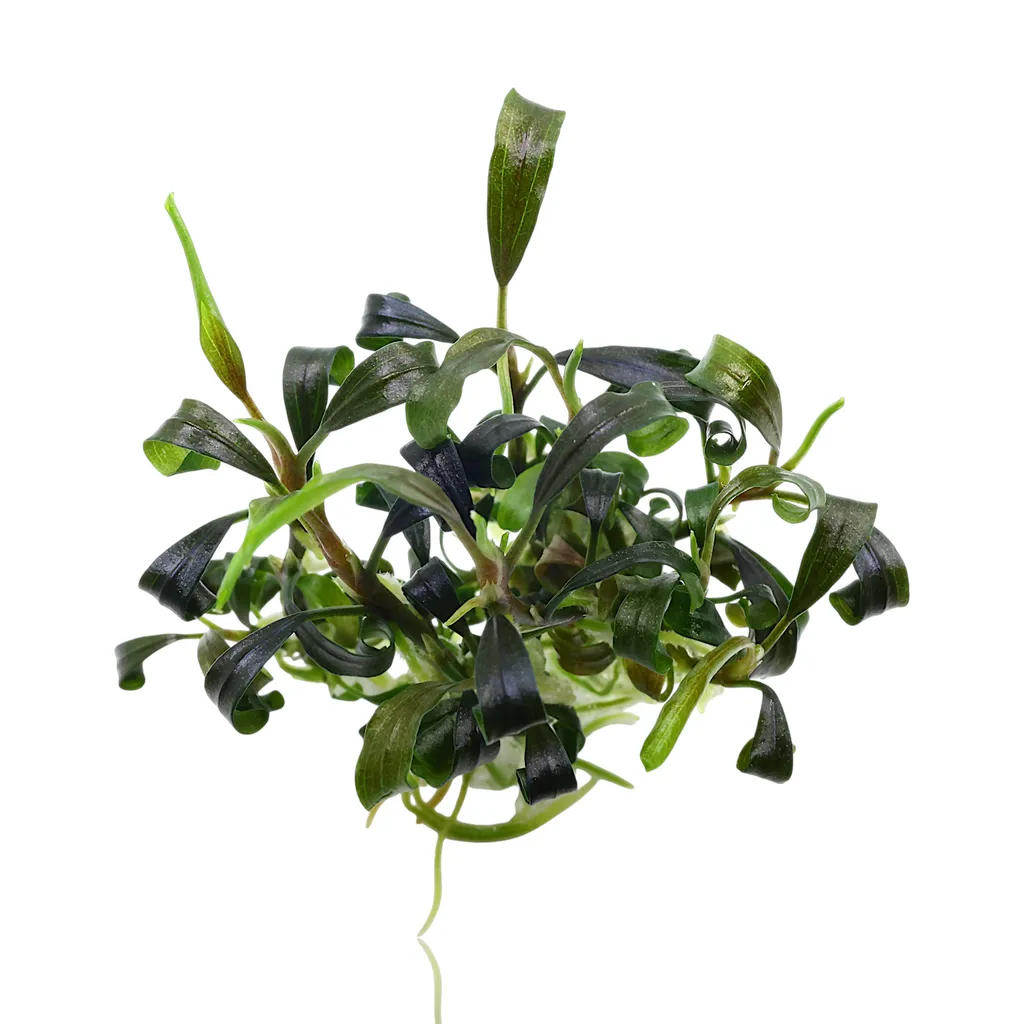
Biblis is an aroid, and like other Araceae it can flower with a small spadix. It appears among the trade names that botanists S.Y. Wong and P.C. Boyce (2014) list for undetermined plants of the Bucephalandra pygmaea complex. It looks much like Bucephalandra sordidula, Aquasabi notes. Its narrow blades run about 4 cm long and 9 mm wide, with tightly curled margins. Biblis Blue Sky and Biblis Blue are separate plants with smaller, greener leaves.
Did you know
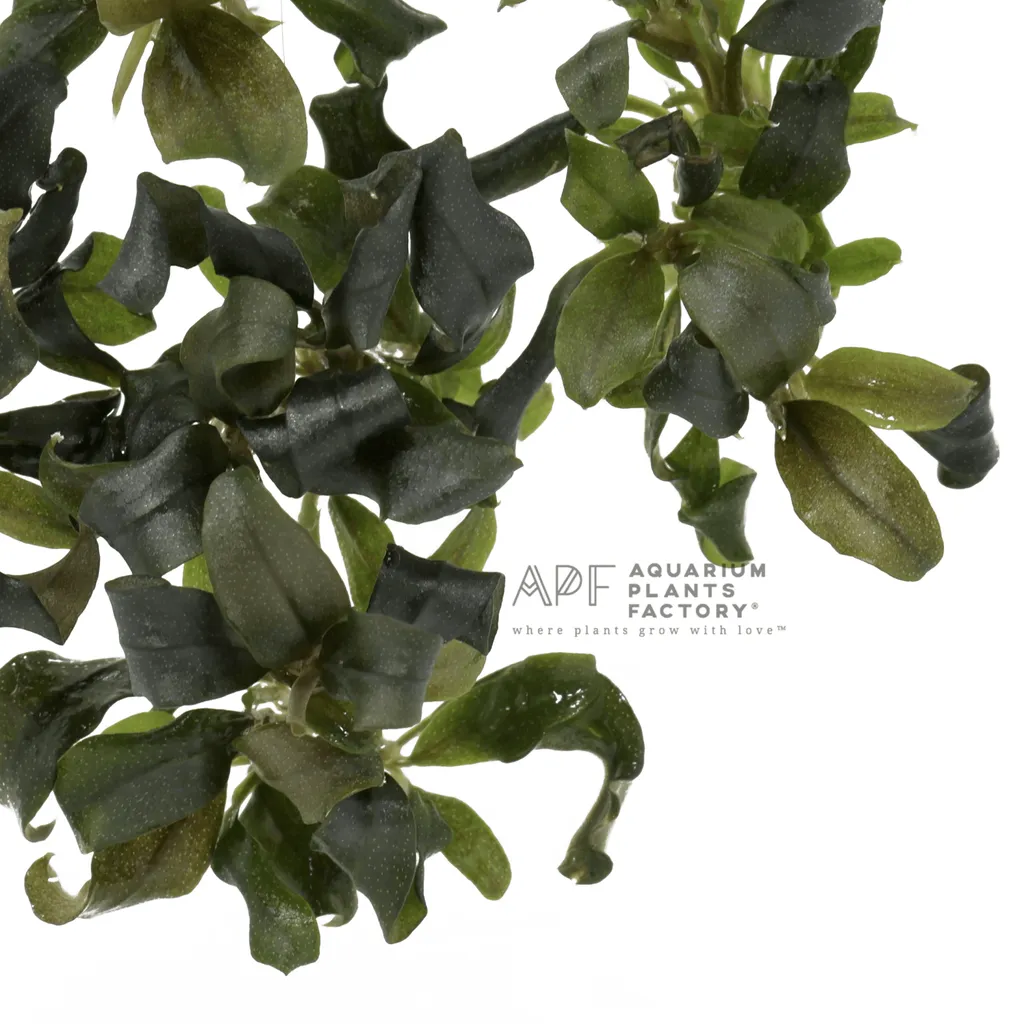
Leaves that Biblis grows underwater are covered in tiny silver spots. Aquasabi identifies them as stomata, the pores a leaf uses to exchange gases with its surroundings.
 Low lightEpiphyte3.9 in (10 cm)
 Low lightEpiphyte2.4 in (6 cm)