Bucephalandra goliath
Also known as Buce Goliath, Bucephalandra 'Goliathe', Bucephalandra 'Jupiter'
FreshwaterRhizomeRhizome division
Care at a glance
- Light
- Low light
- CO2
- CO₂ beneficial
- Temperature
- 72–82°F
- 22–28°C
- Max height
- 11.8 in
- 30 cm
- Growth rate
- Slow
- Placement
- Epiphyte
- Type
- Rhizome
- pH
- 6.0–7.5
- Hardness
- 2–12 dGH
- Spread
- 7.9 in (20 cm)
- Nutrient uptake
- Root + water column
- Growth region
- Submersed or emersed
- Difficulty
- Easy
- Family
- Araceae
- Origin
- Borneo (Nanga Pinoh and Nanga Taman area, West Kalimantan, Indonesia)
Overview
Goliath is one of the few Buce big enough for the background, with leaves up to 15 cm on 5 to 6 cm stalks. Large shop plants stand 15 to 30 cm tall. The stem climbs and turns bare over the years, leaving a tuft of leaves at the top. Its thick rhizome belongs high on driftwood or stone, well above the substrate, with room for the long leaves. Goliath needs only low to medium light, and it grows without added CO2. A leafy tip cut from an old stem starts a new plant.
In the wild
Bucephalandra goliath is known only from around Nanga Pinoh in Melawi Regency and Nanga Taman in Sekadau Regency, in West Kalimantan on Borneo. The type specimen came from granite waterfalls south of Nanga Pinoh, at about 250 m under humid lower hill forest. Its wild colonies are scattered and very local.
Good to know
Bucephalandra goliath is an aroid (Araceae) that S.Y. Wong and P.C. Boyce described in 2014 in Willdenowia volume 44. They named it after Goliath of Gath, the Philistine giant, for its large and robust build. Their paper gives Goliath, Goliathe and Jupiter as its trade names. The thick, leathery leaves are narrow ellipses 10 to 15 cm long and 1 to 1.5 cm wide, with a red midrib underneath. Godzilla, another big Buce, has broader leaves with ruffled edges.
Did you know
Old Goliath stems keep branching in the wild and hang off the waterfall rock as curtains more than 1 m long. An upright plant stands only about 15 cm tall.
Related plants
- Low lightEpiphyte6.7 in (17 cm)
Bucephalandra chimaera
Low light · Epiphyte
- Low lightEpiphyte5.9 in (15 cm)
Bucephalandra Kedagang Long
Bucephalandra sp. 'Kedagang Long'
Low light · Epiphyte
- Low lightEpiphyte5.9 in (15 cm)
Bucephalandra Pearl Grey
Bucephalandra sp. 'Pearl Grey'
Low light · Epiphyte
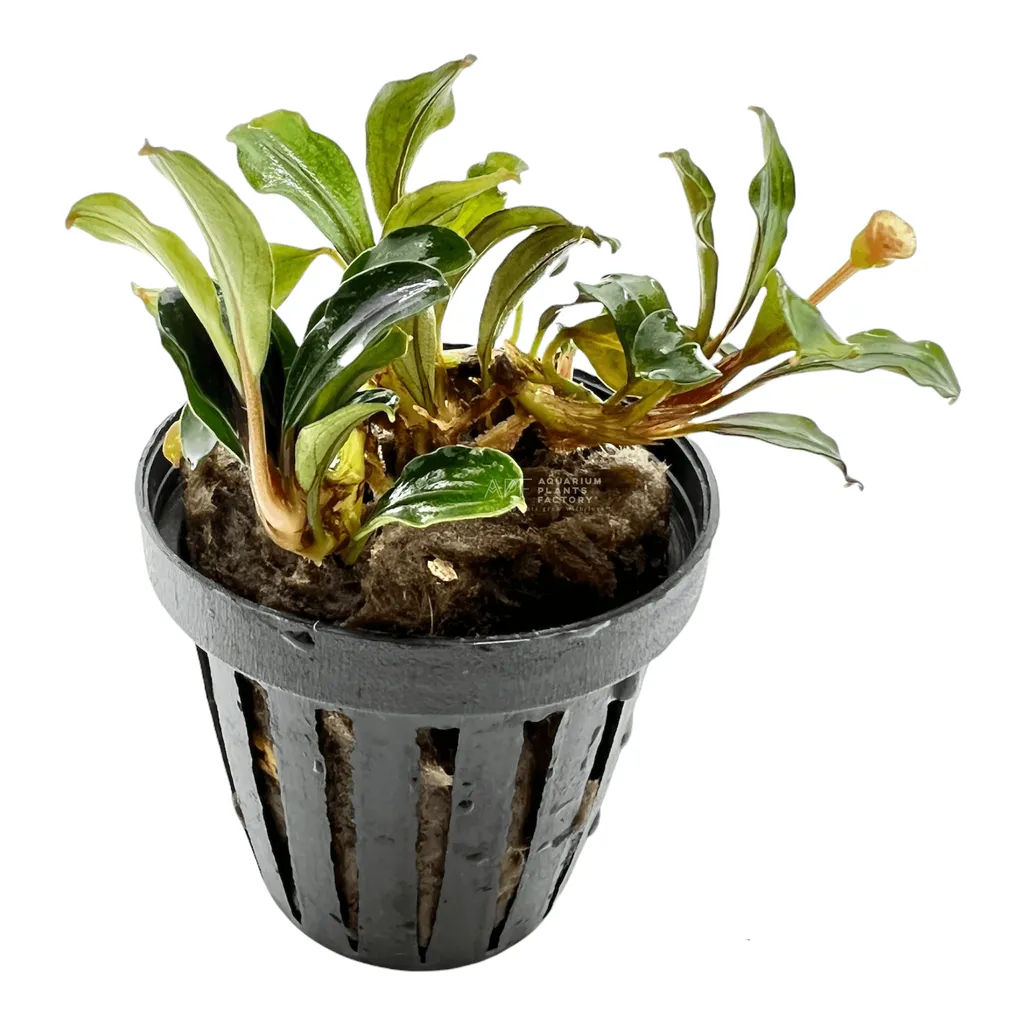 Low lightEpiphyte4.7 in (12 cm)
Bucephalandra kedagang
Bucephalandra sp. 'Kedagang'
Low light · Epiphyte
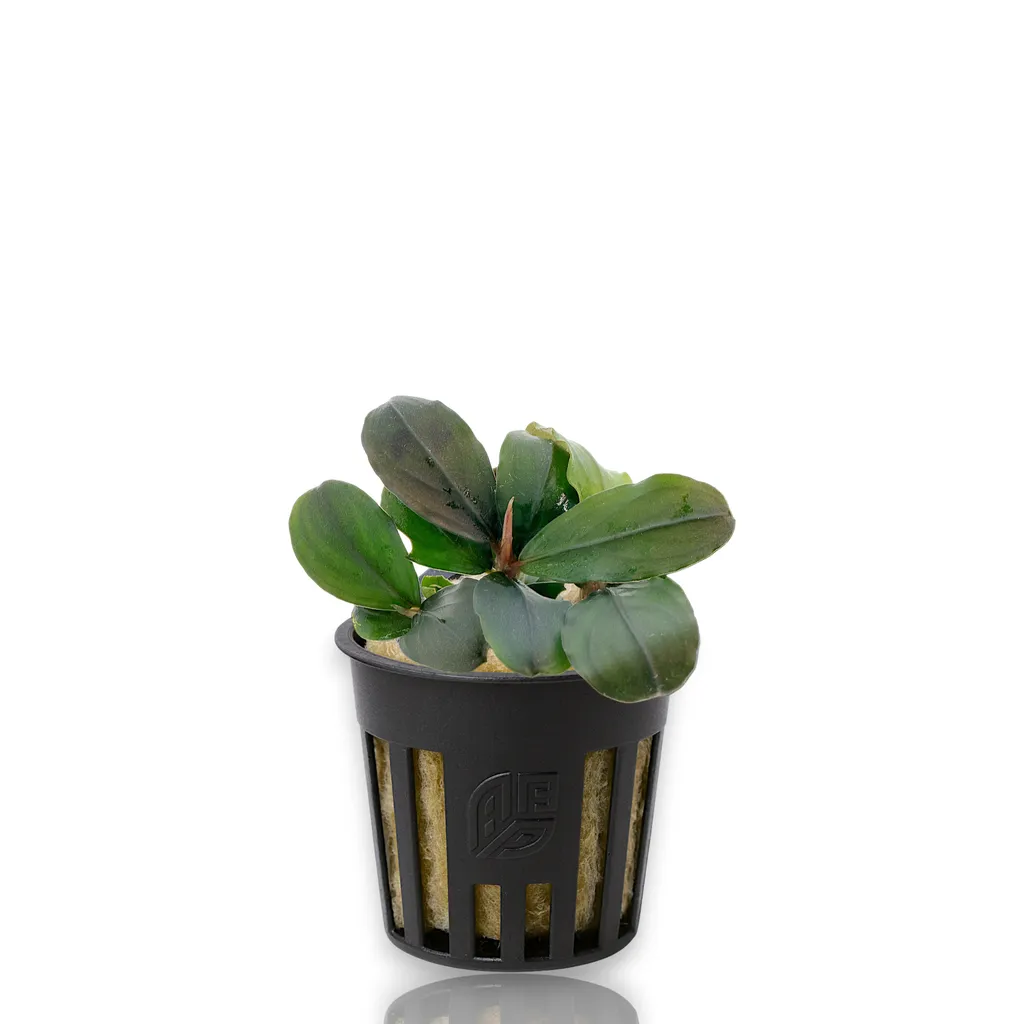 Low lightEpiphyte4.7 in (12 cm)
Bucephalandra Pandora Queen
Bucephalandra sp. 'Pandora Queen'
Low light · Epiphyte
- Low lightEpiphyte4.7 in (12 cm)
Bucephalandra Kedagang Round
Bucephalandra sp. 'Kedagang Round'
Low light · Epiphyte