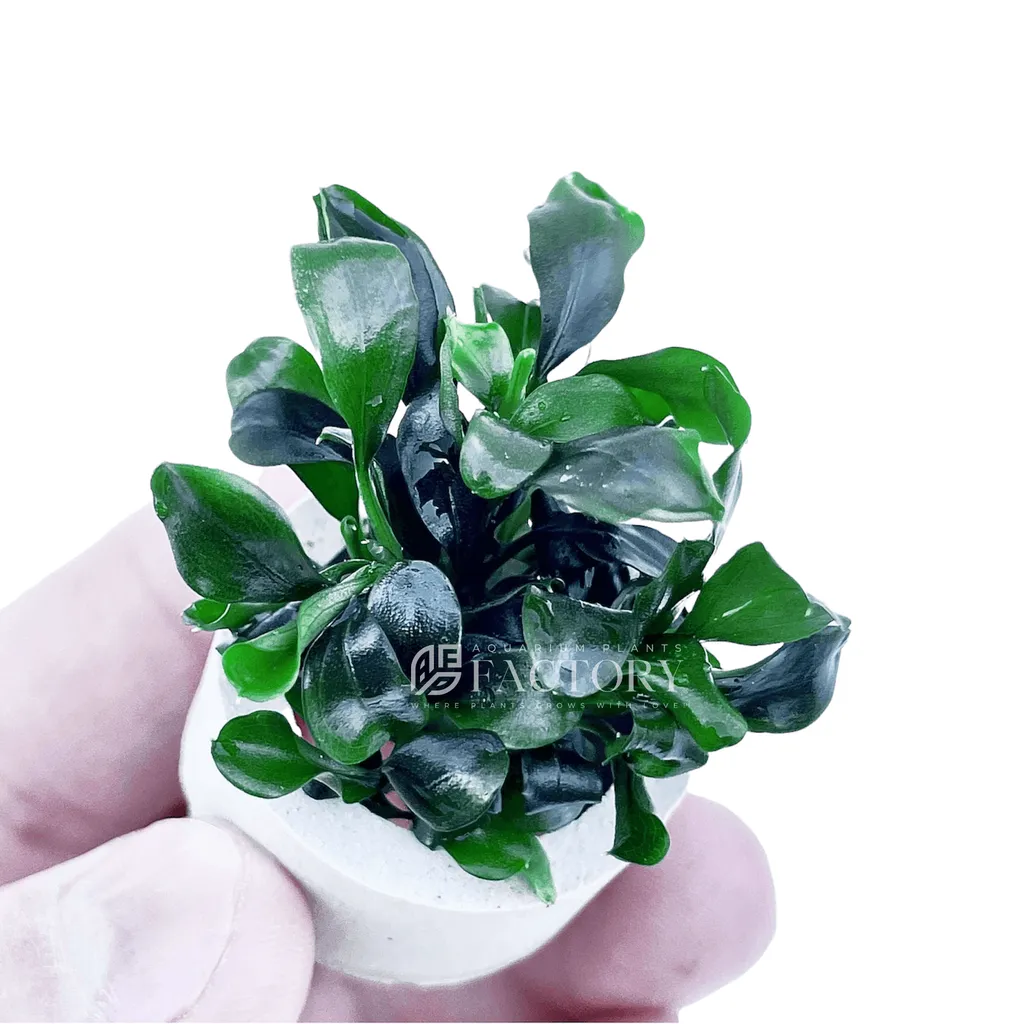
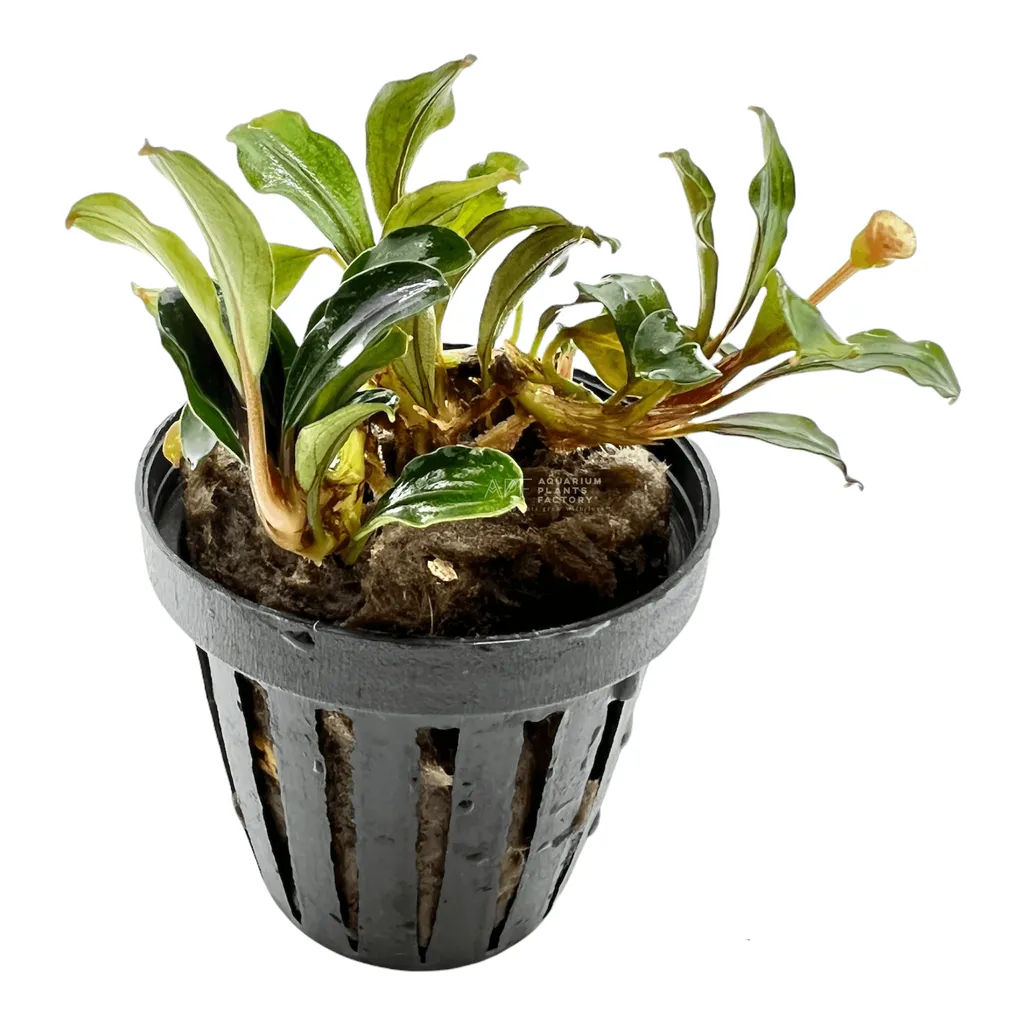
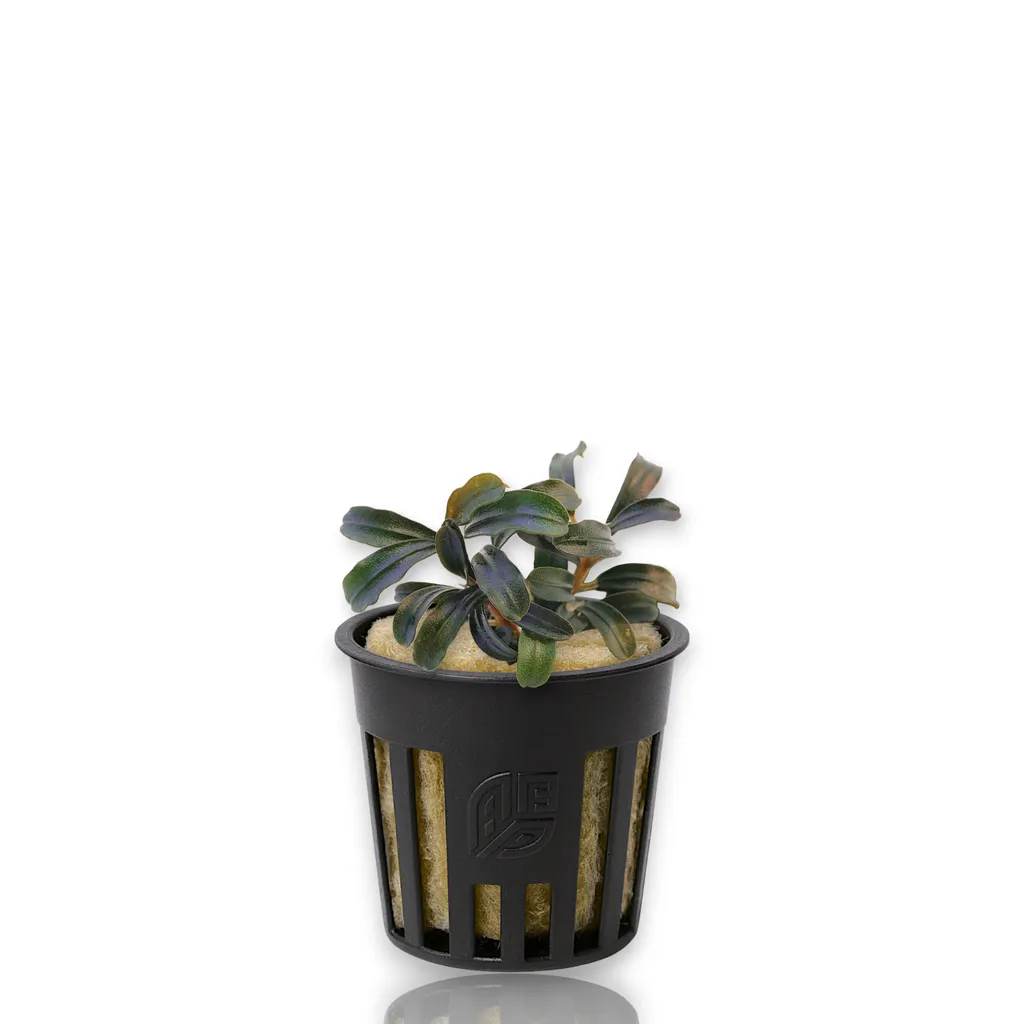
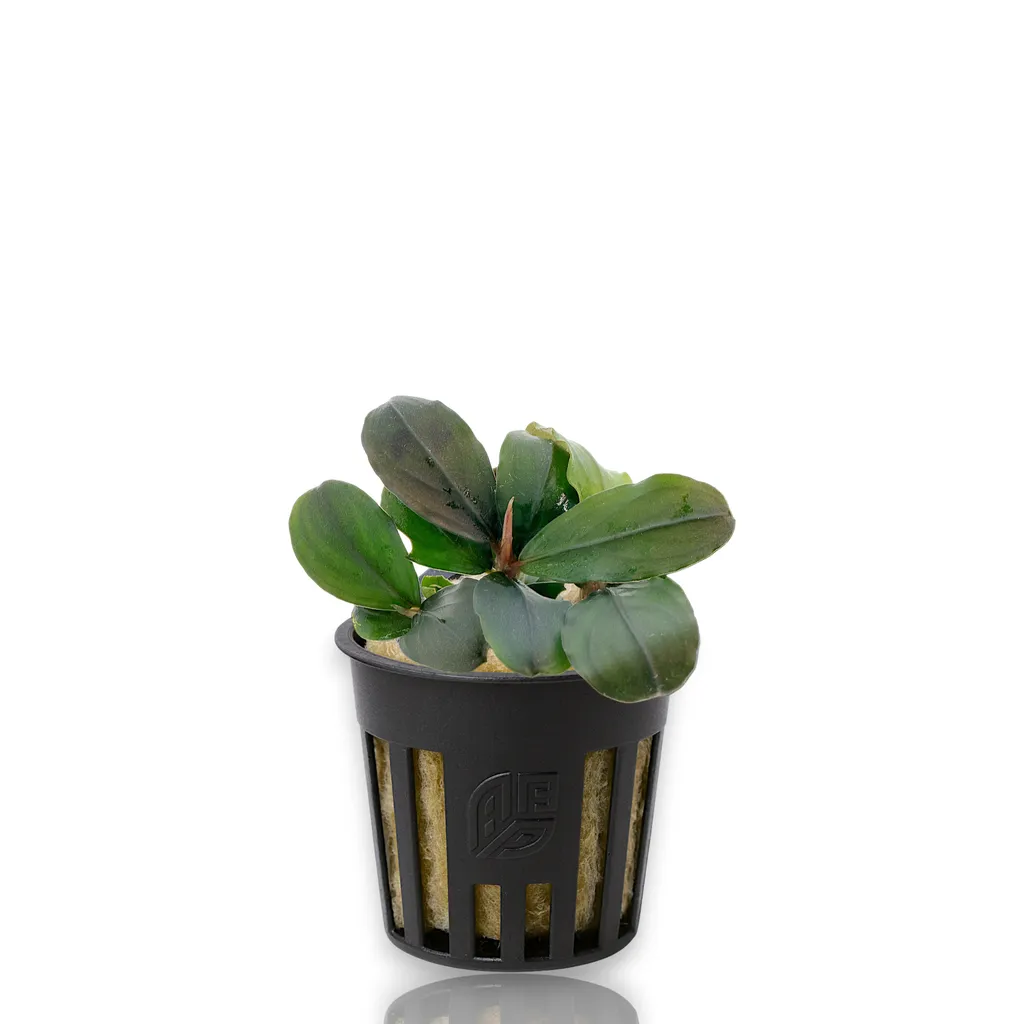
Pandora Queen forms dense clusters of chubby leaves that fill crevices in wood and gaps between stones. APF puts mature plants at 7.5 to 12.5 cm, a midground height in most tanks. The sheen shifts from emerald to blue or violet with the viewing angle, and RGB lighting shows it best. A dab of gel glue holds the rhizome on stone or wood until its roots grip, and it stays above the substrate. Expect a few leaves to melt after planting while it switches to submersed growth. Its very slow growth means almost no trimming.
In the wild
Pandora Queen reached the trade without a published collection site. Aquarzon says the first plants were found in 2017 in Sintang, West Kalimantan, and named Queen for the woman who found them. BucephalandraEU files a plant called Pandora under its Kudangan locality, in Lamandau Regency, Central Kalimantan. That Pandora may be a different clone from Pandora Queen.
Good to know
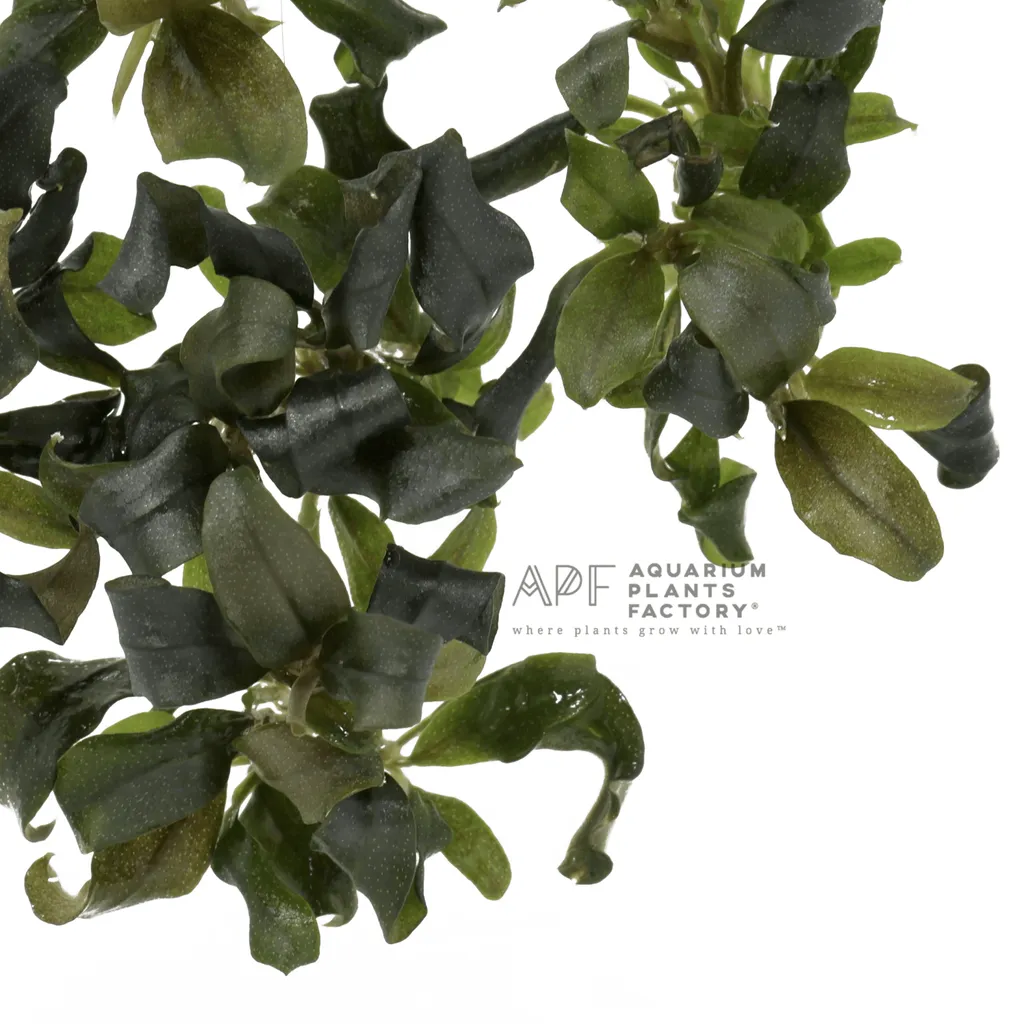
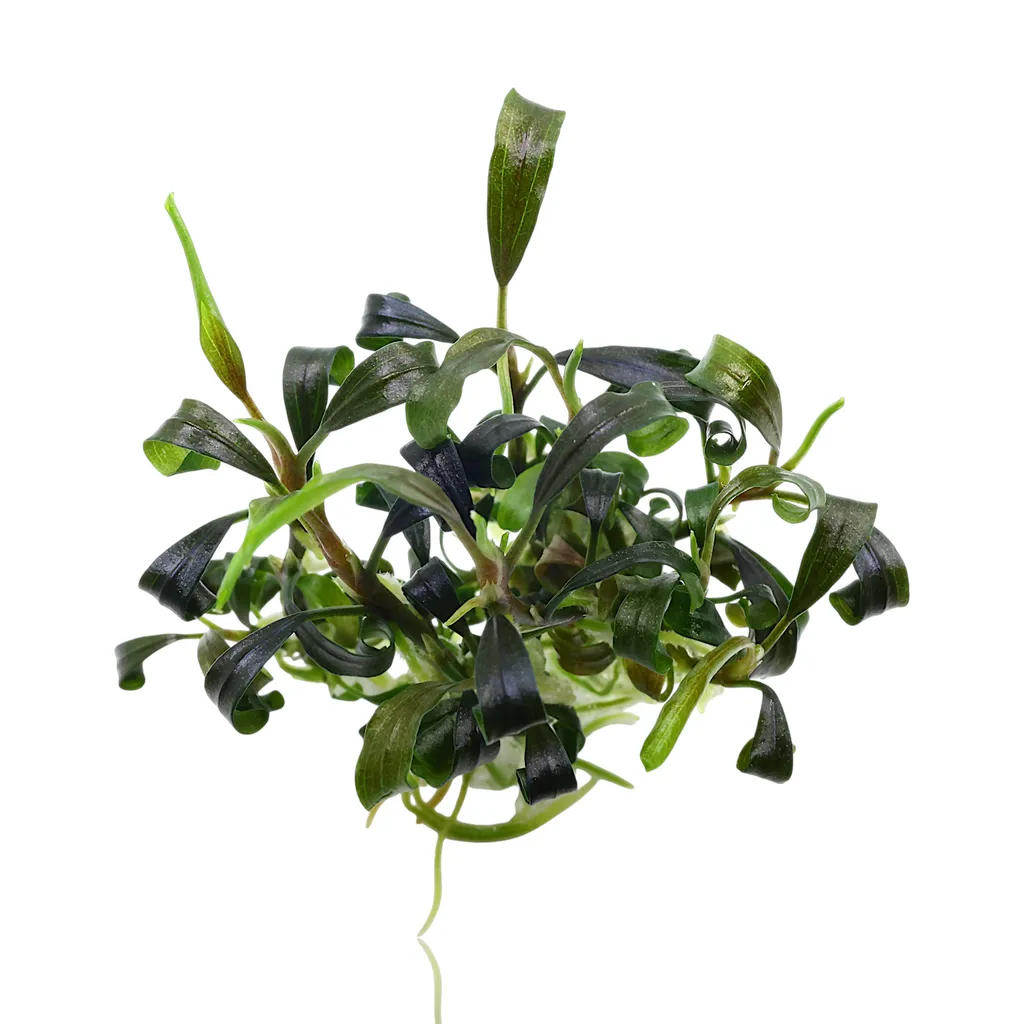
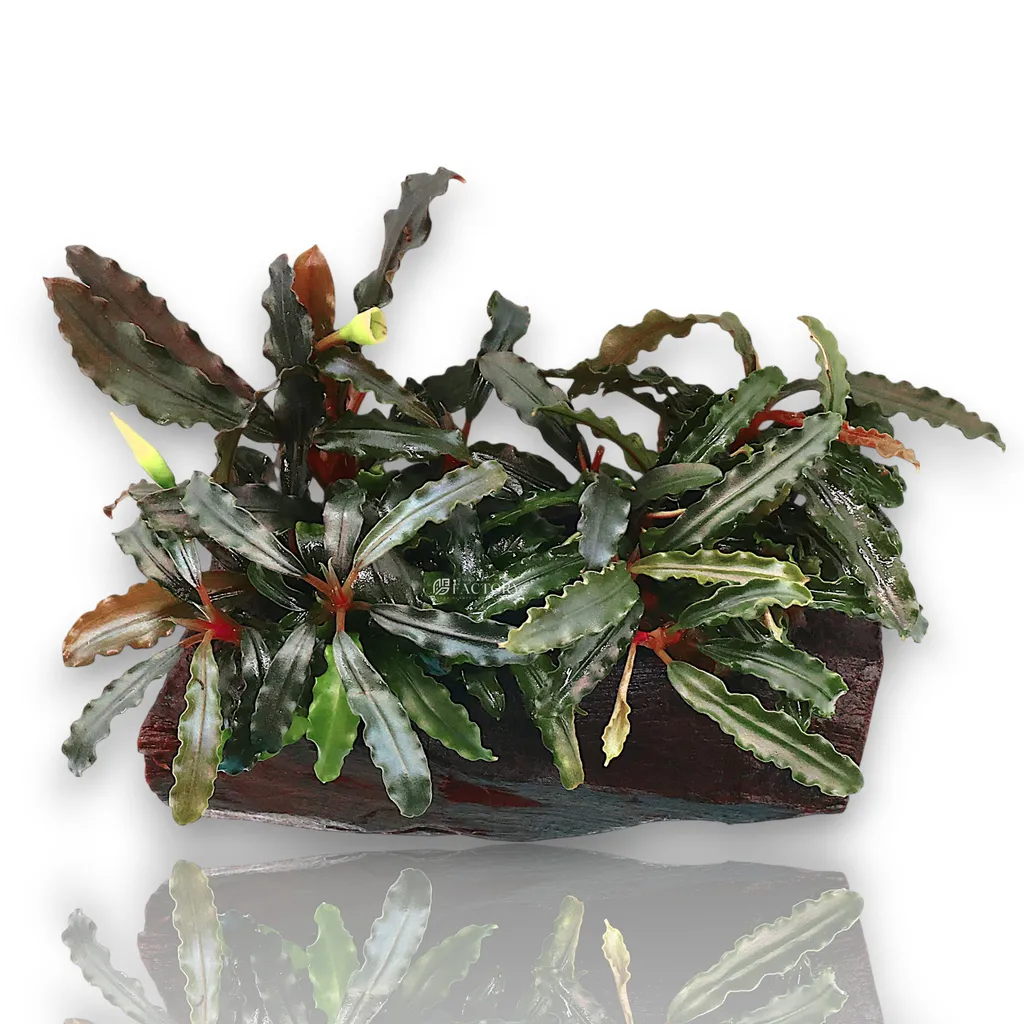
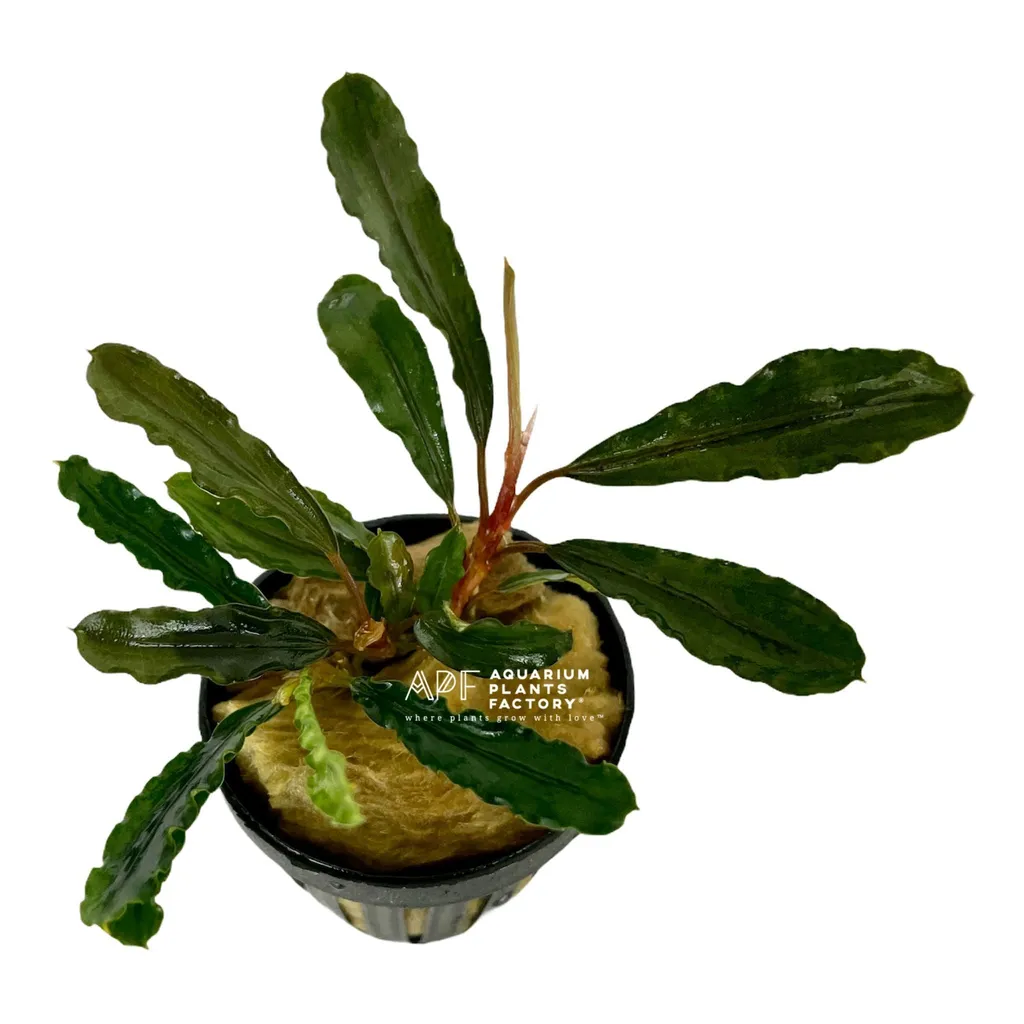
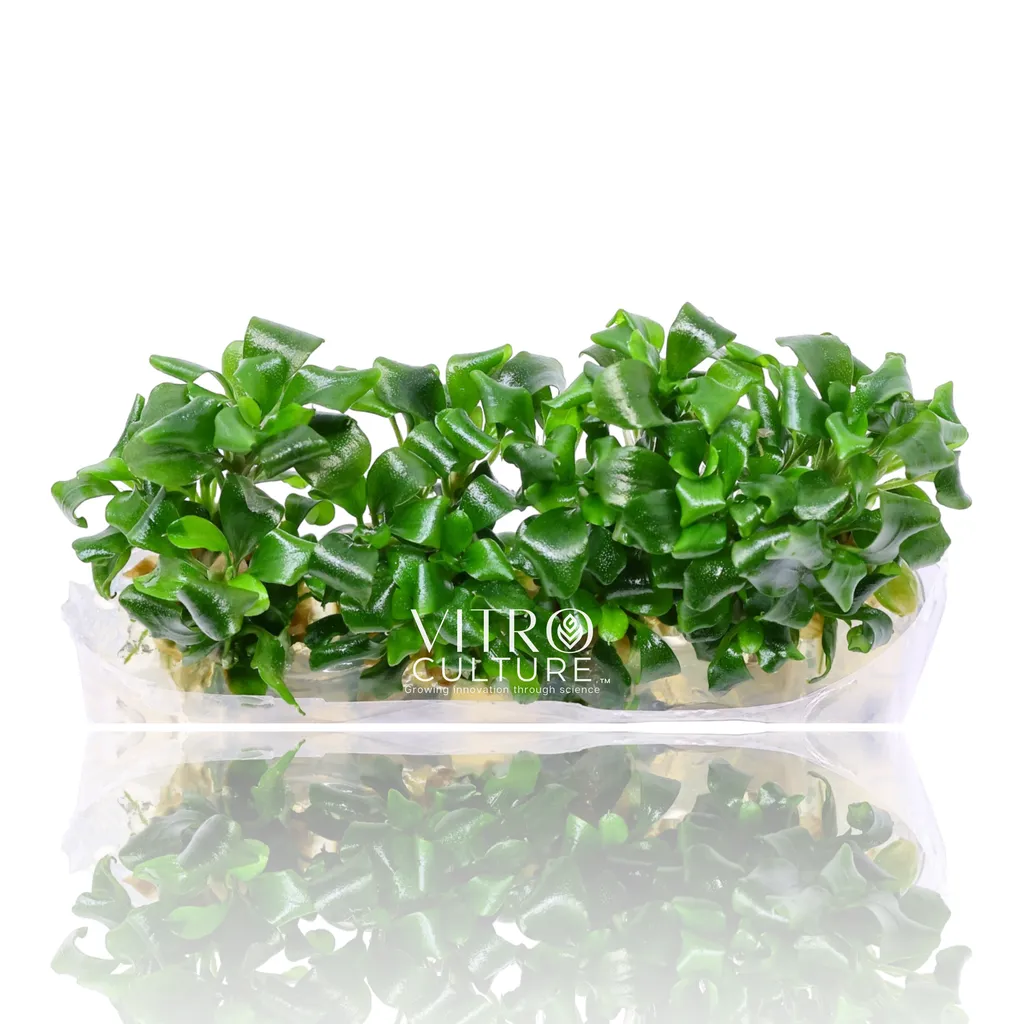
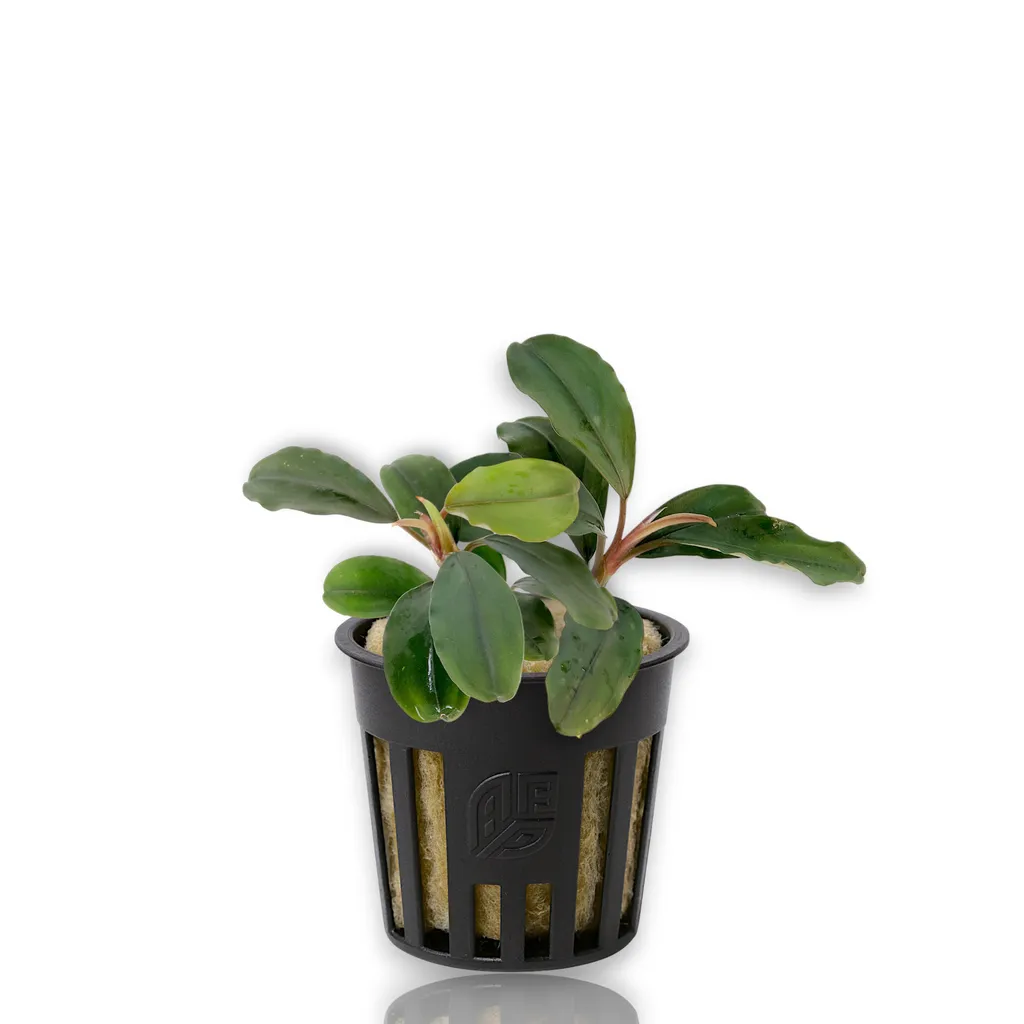
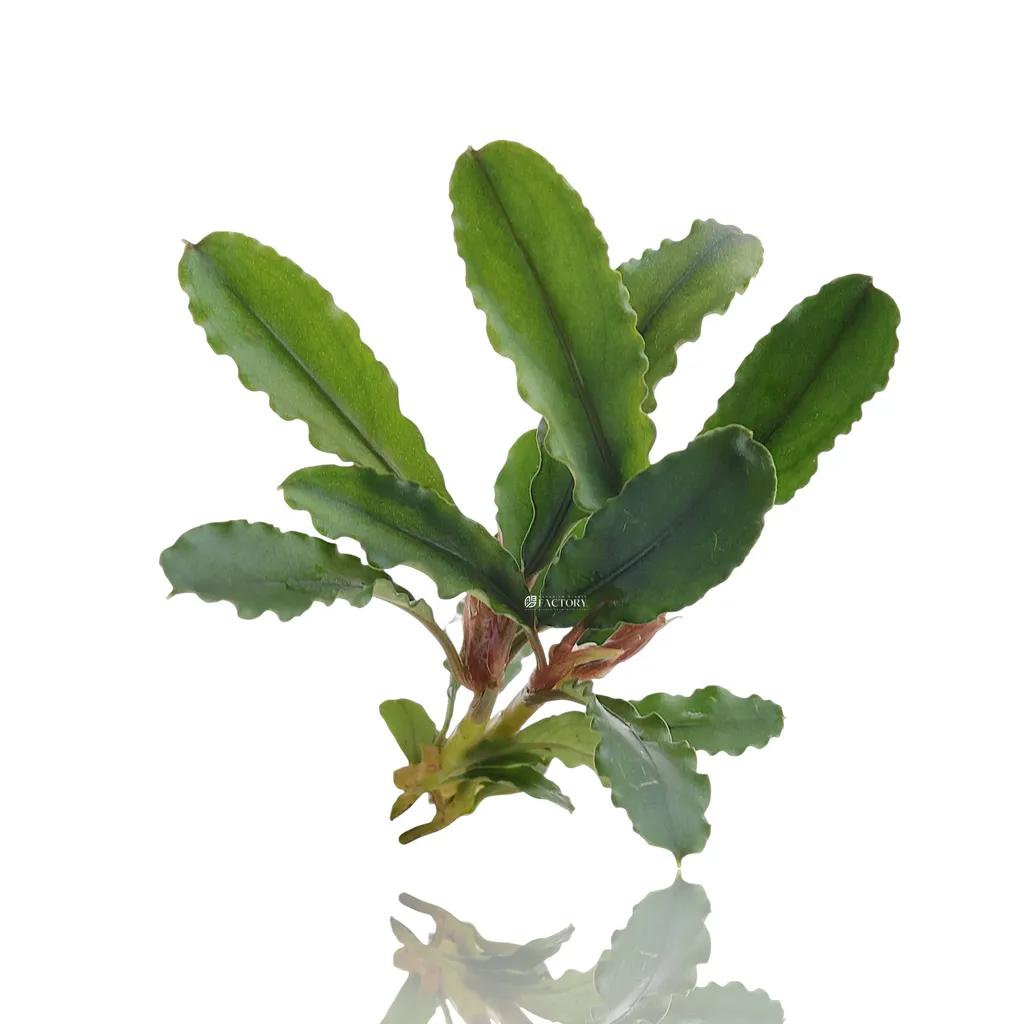
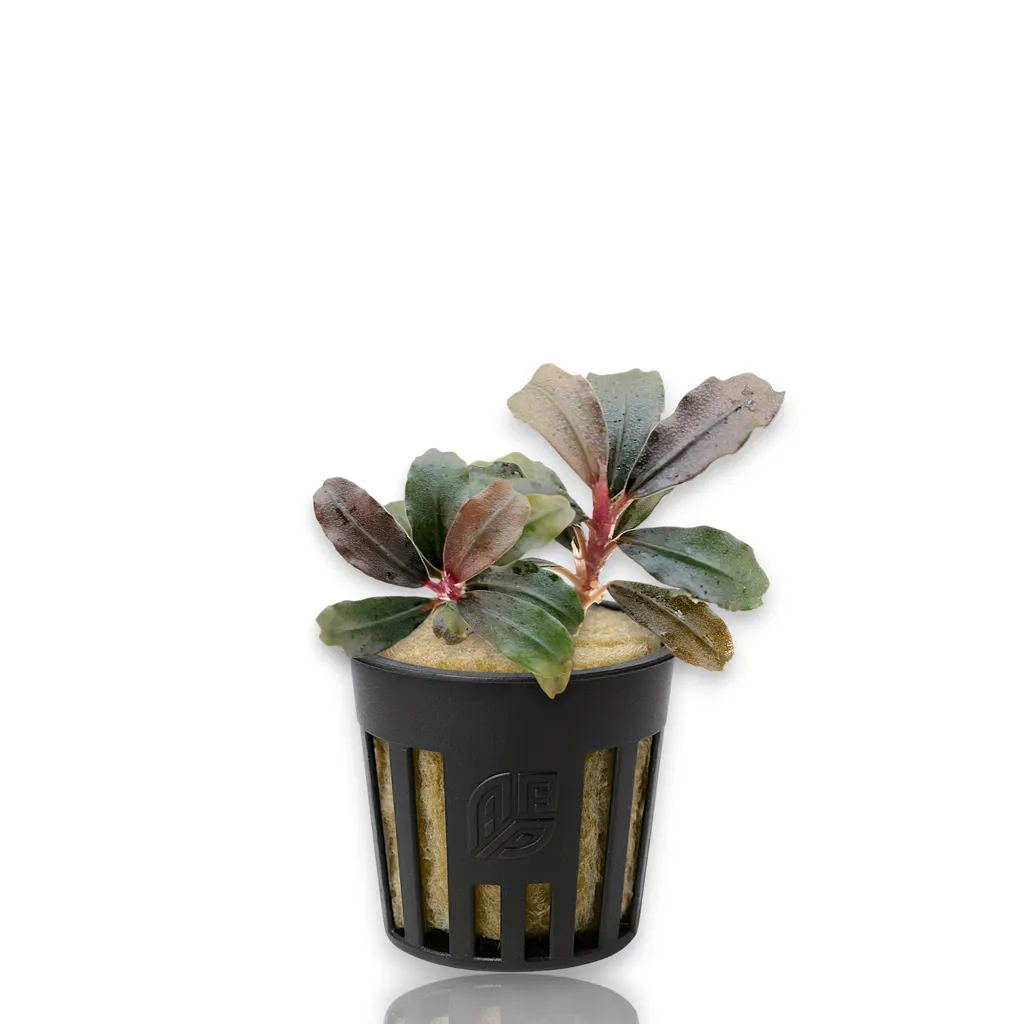
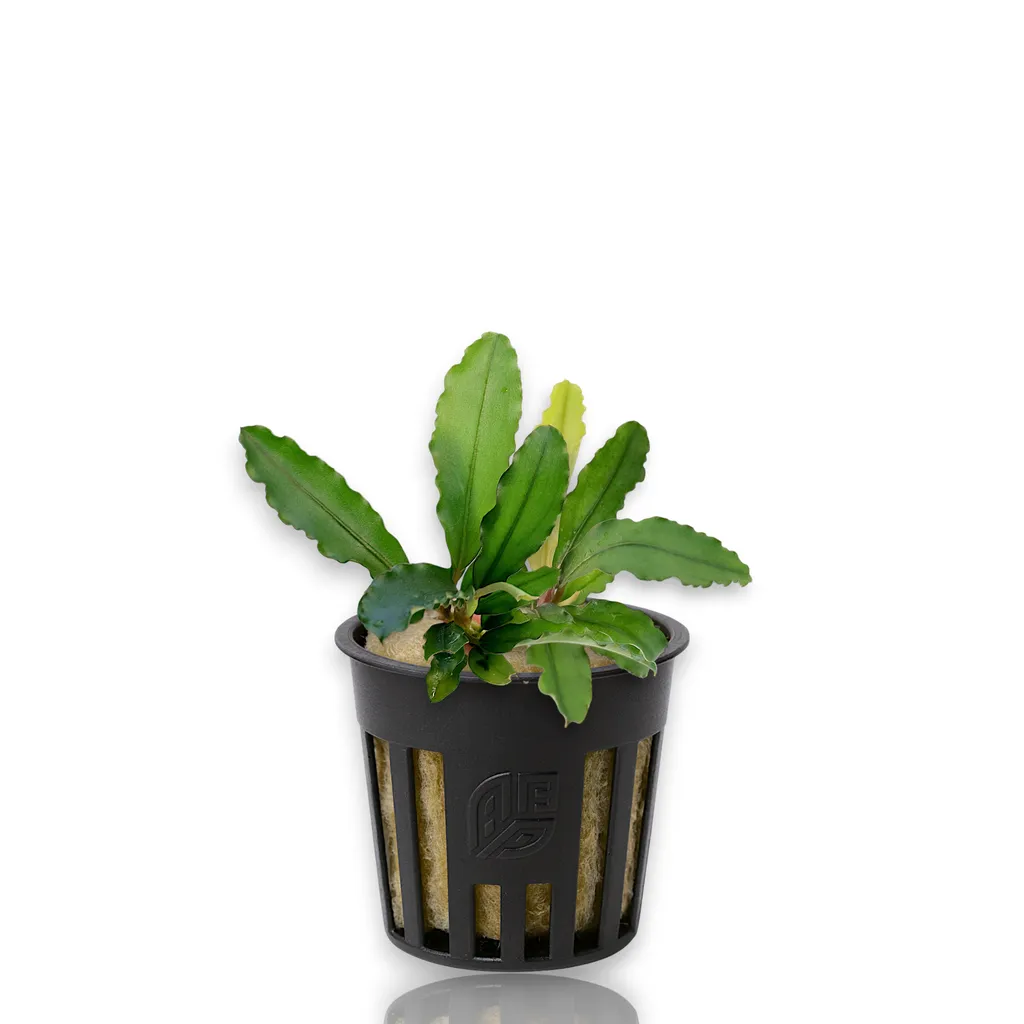
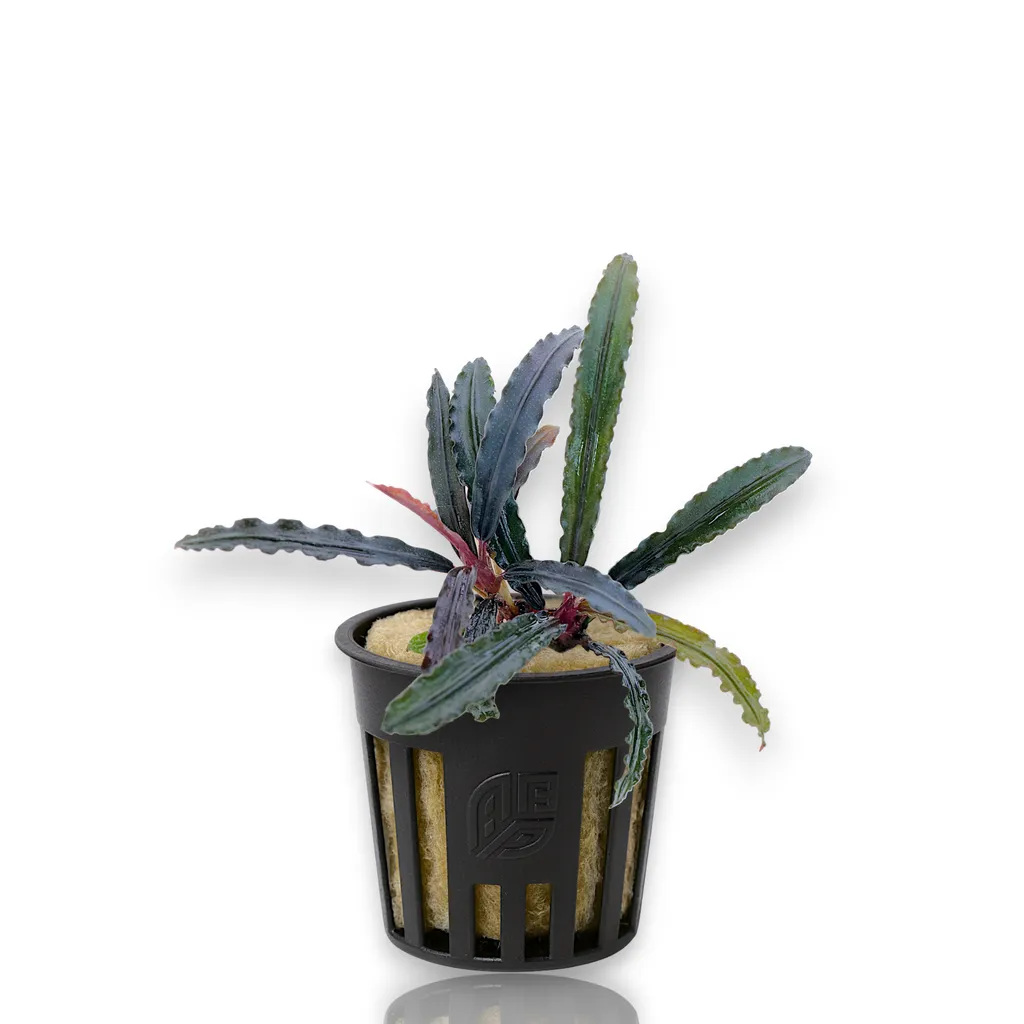
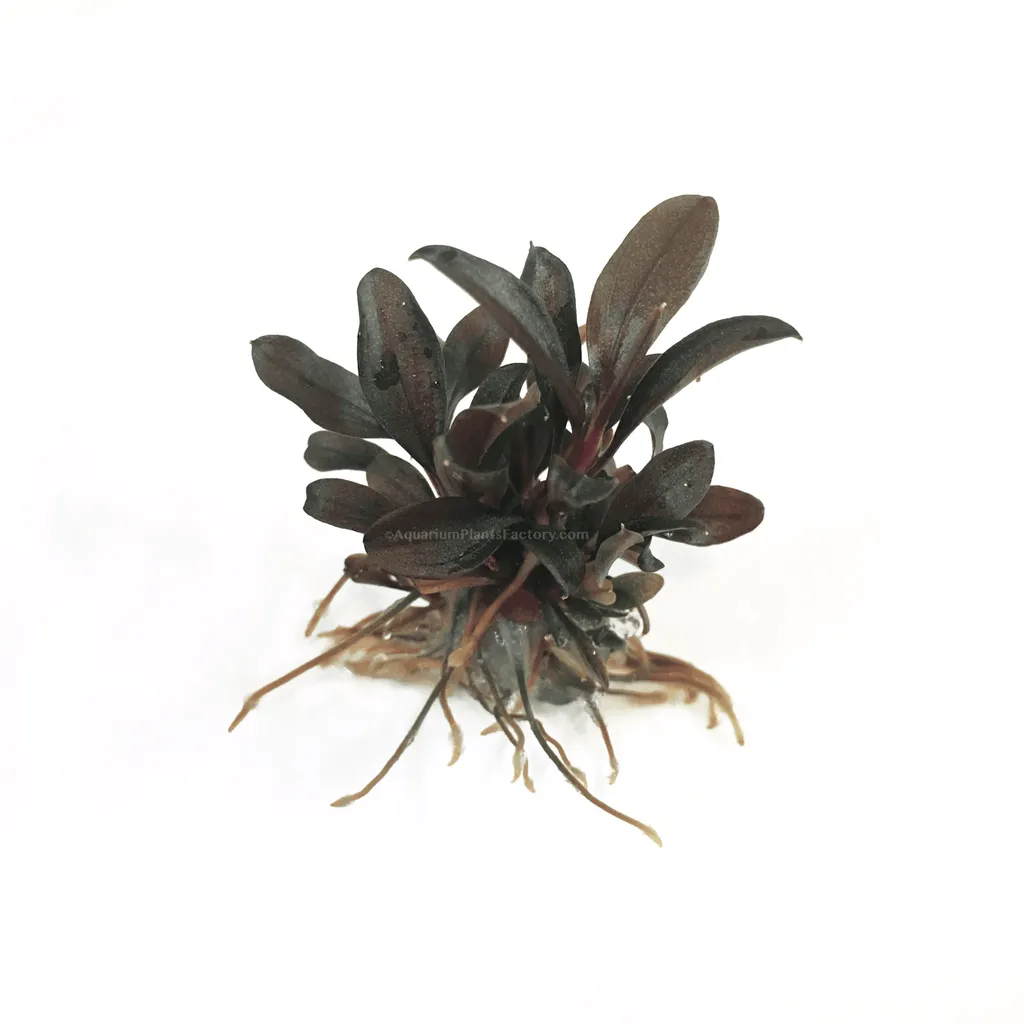
Pandora Queen is a trade name only, and its species within Bucephalandra (Araceae) is unknown. Shop photos show short, broad leaves, oval to nearly round, packed into compact clusters. The leaves are glossy dark green with a blue to violet sheen, and new ones open bronze. Aquarzon also lists Pandora Queen Long Leaf and Round Wavy forms in the trade. Apple Leaf has smaller, bright green round leaves, and Kedagang Round runs darker, toward red-brown.
Did you know
Cheaper Theia is sometimes sold as Pandora Queen, Aquarzon warns. Pandora Queen itself has round leaves that look dark even under ordinary room light.
 Low lightEpiphyte3.9 in (10 cm)
 Low lightEpiphyte2.4 in (6 cm)