Borneo (Kapuas river system, Kalimantan, Indonesia)
Overview
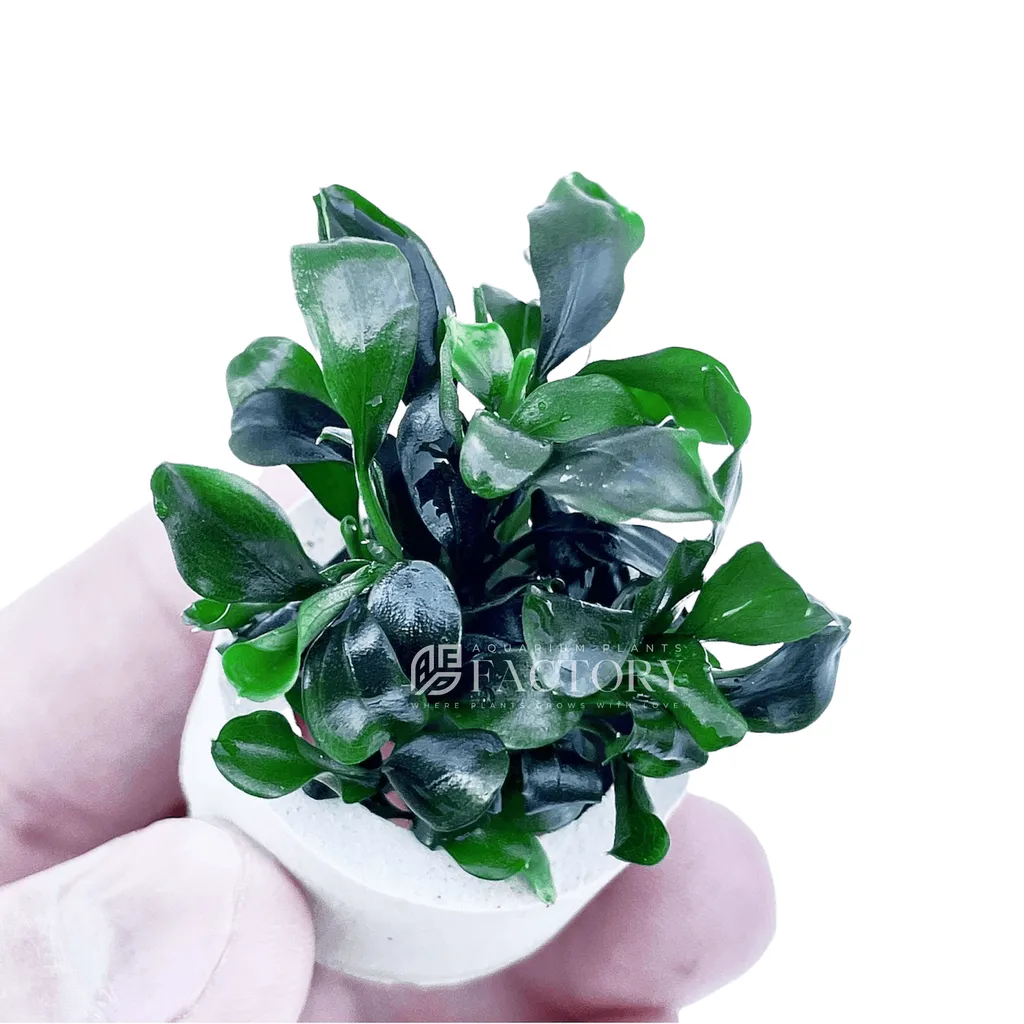
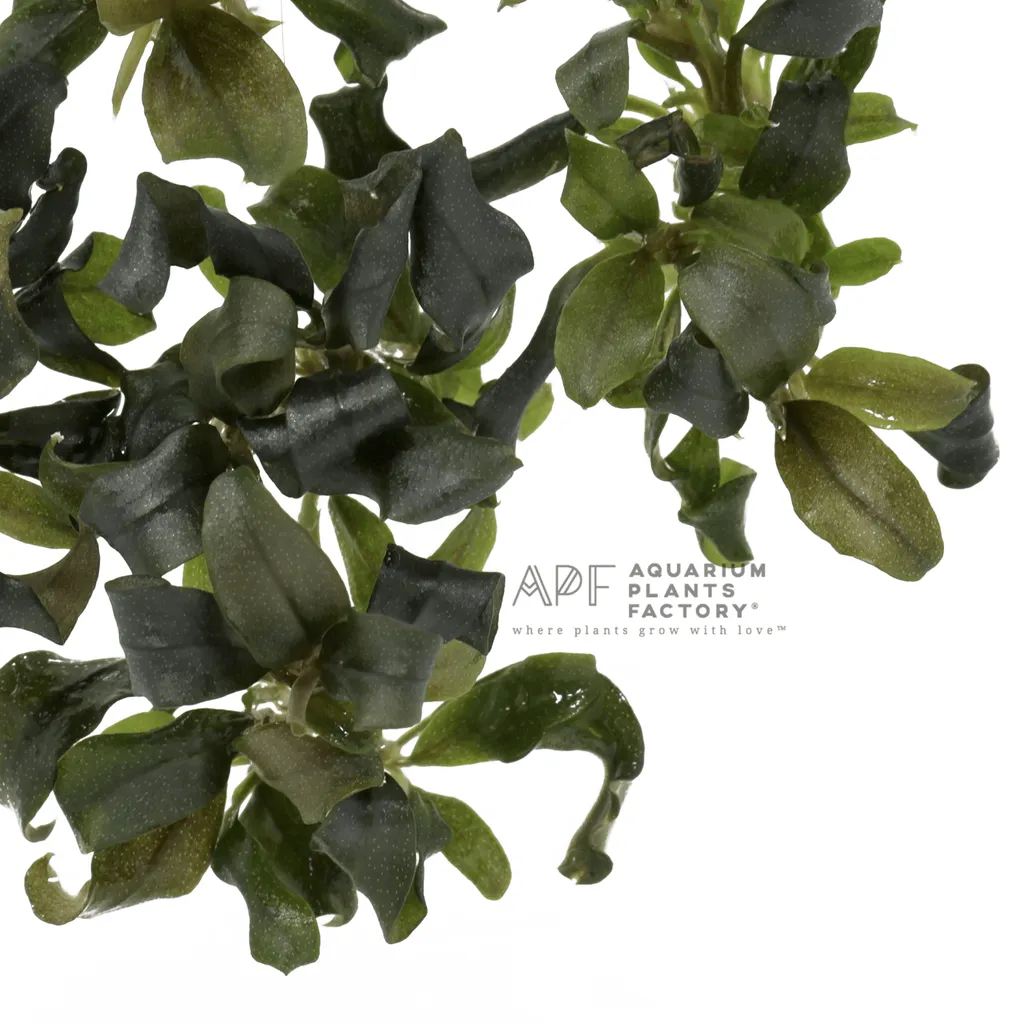
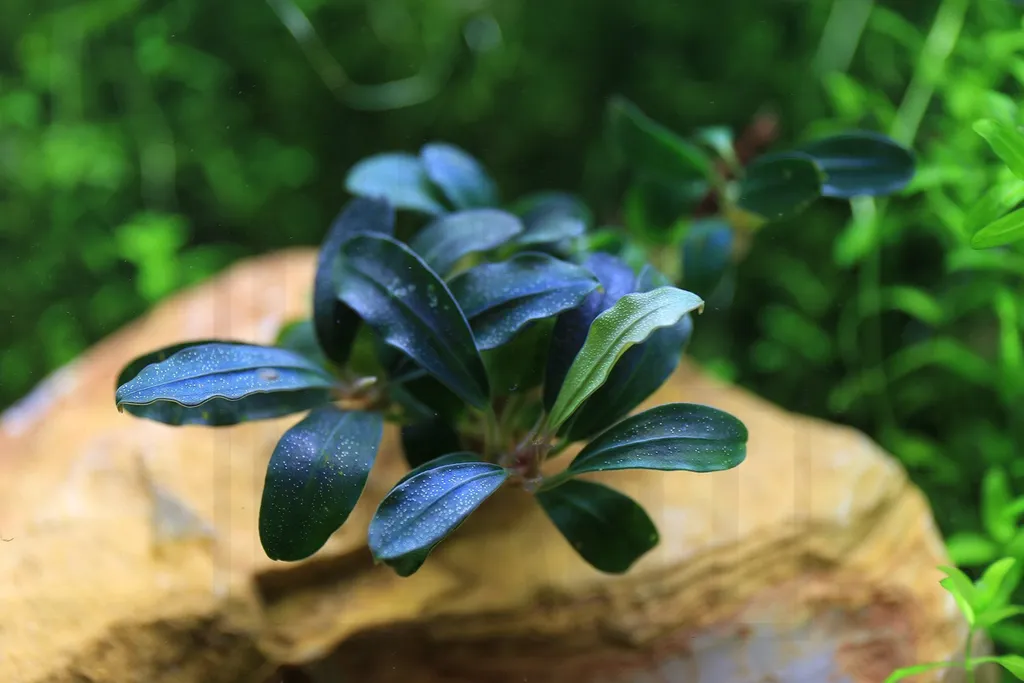
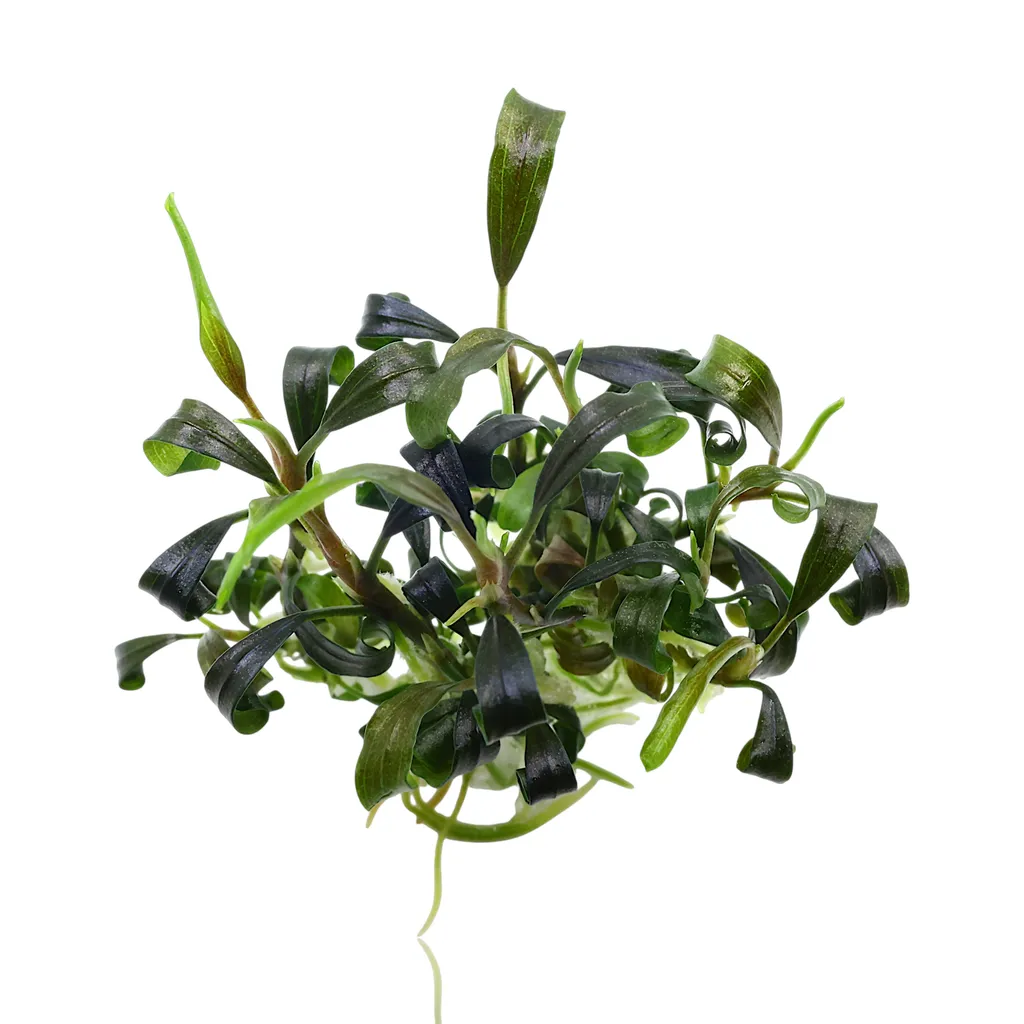
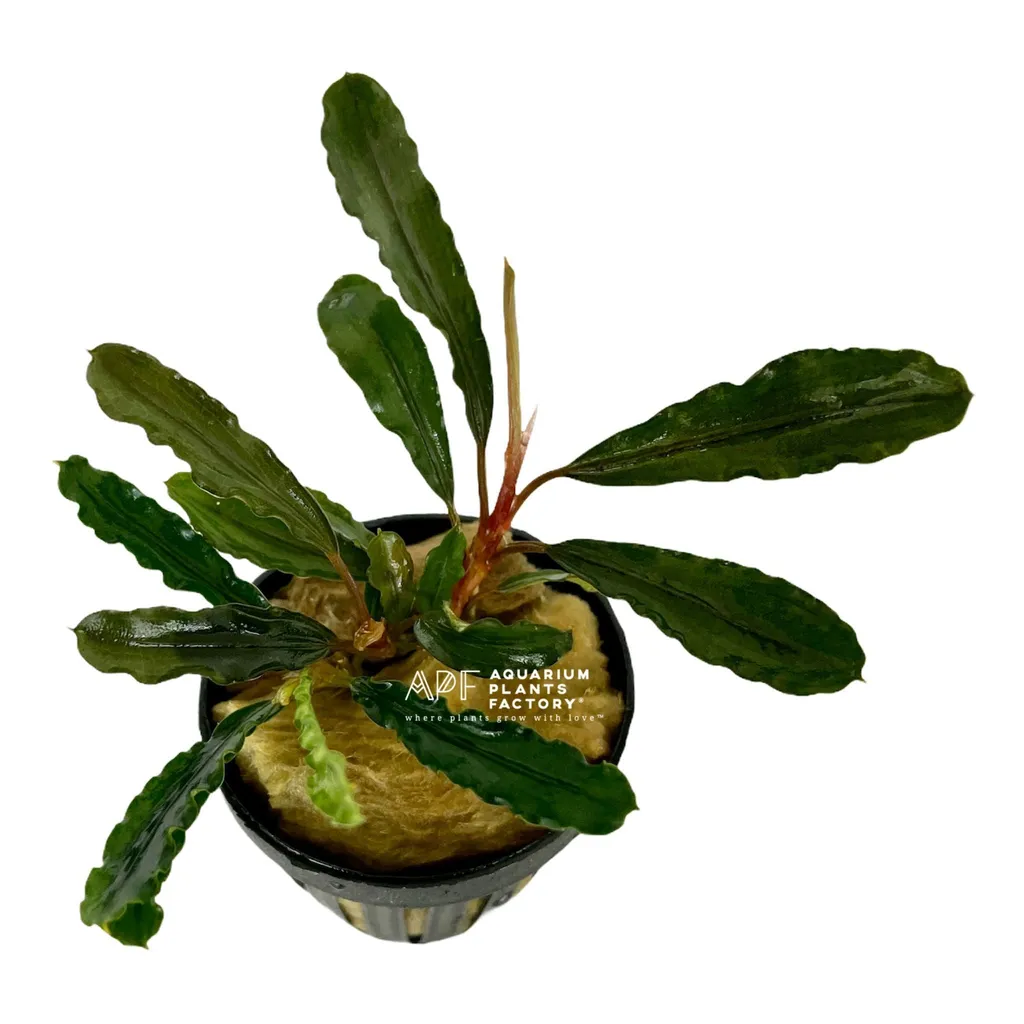
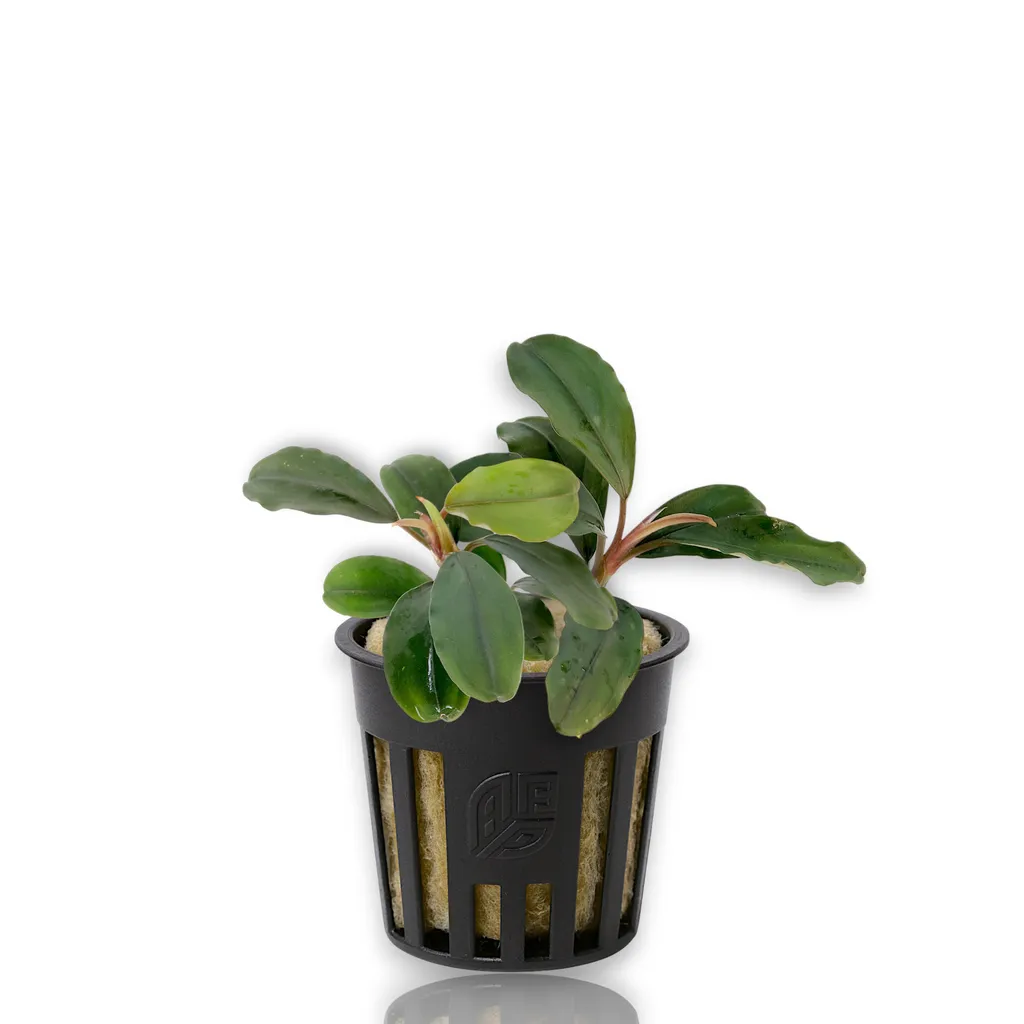
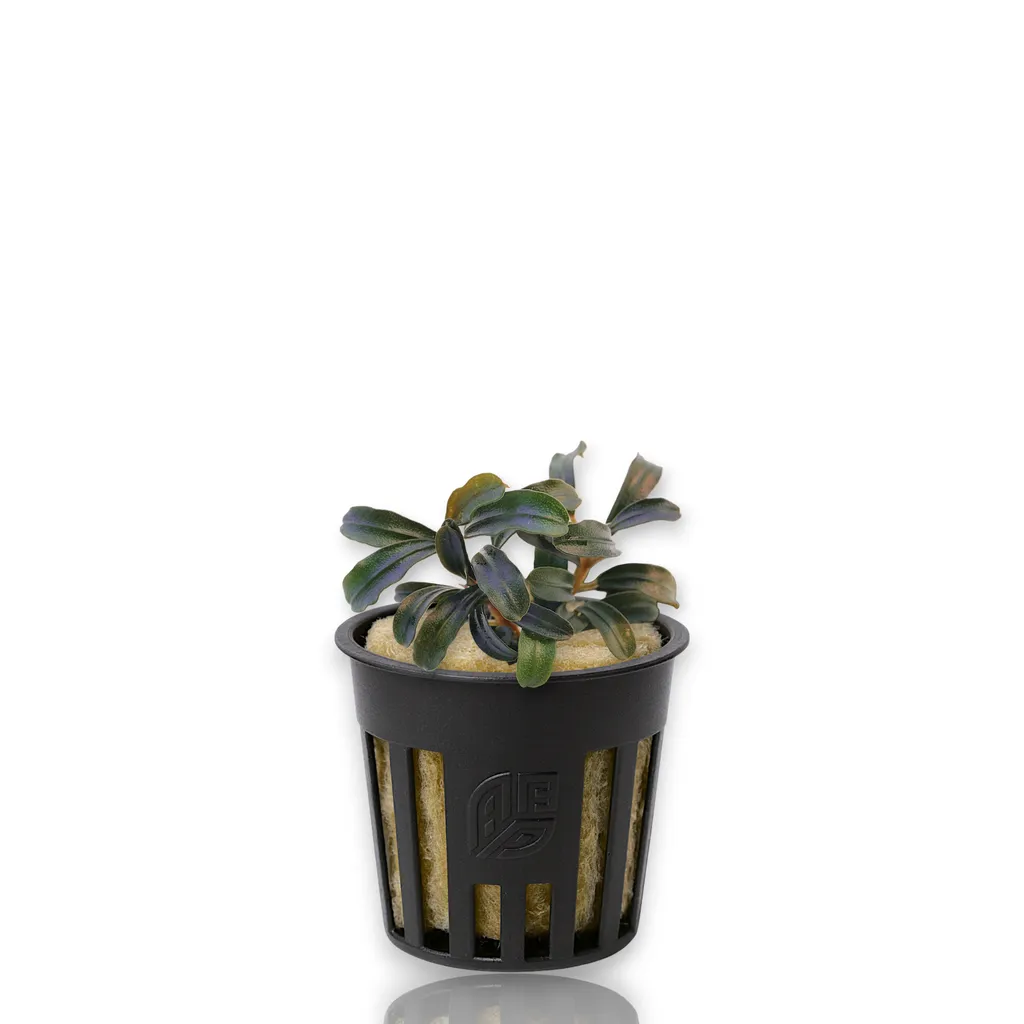
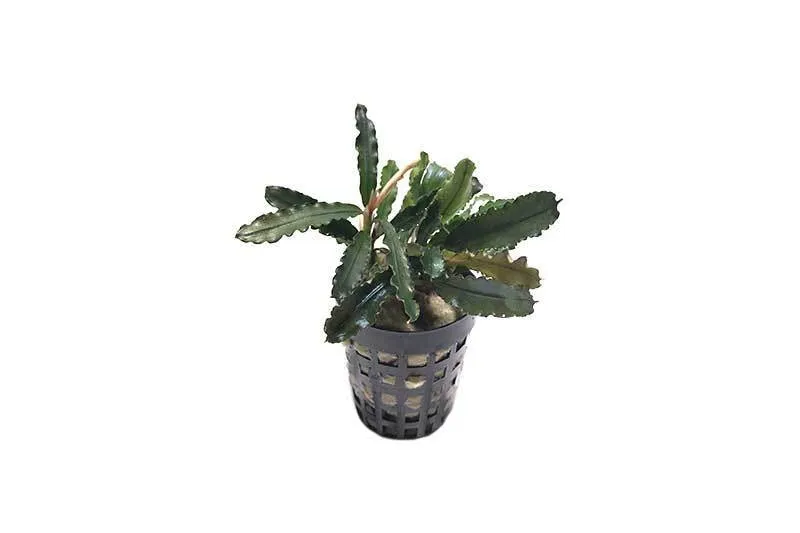
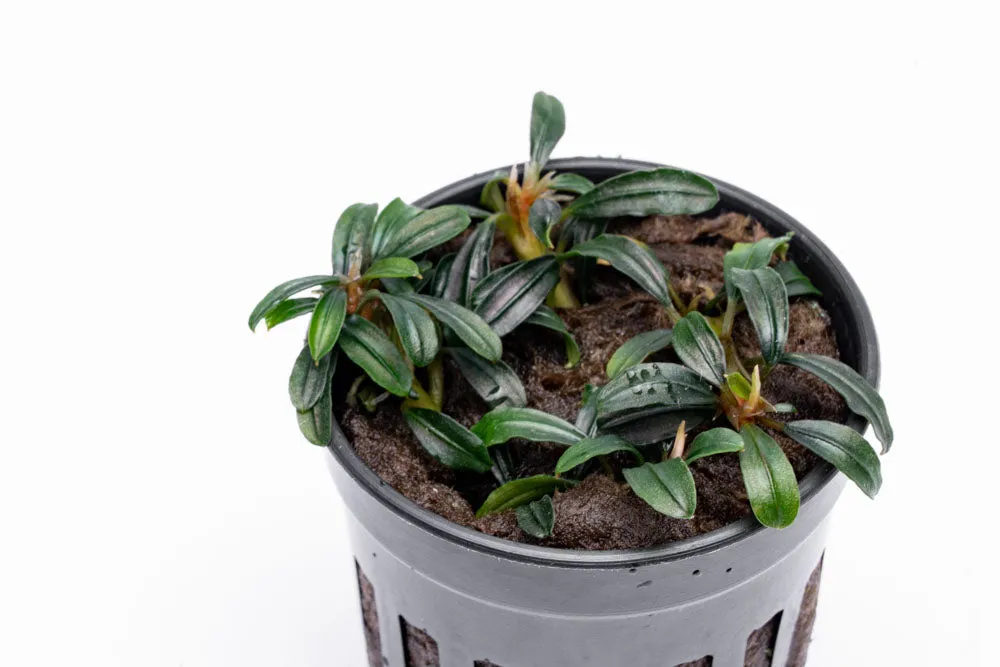
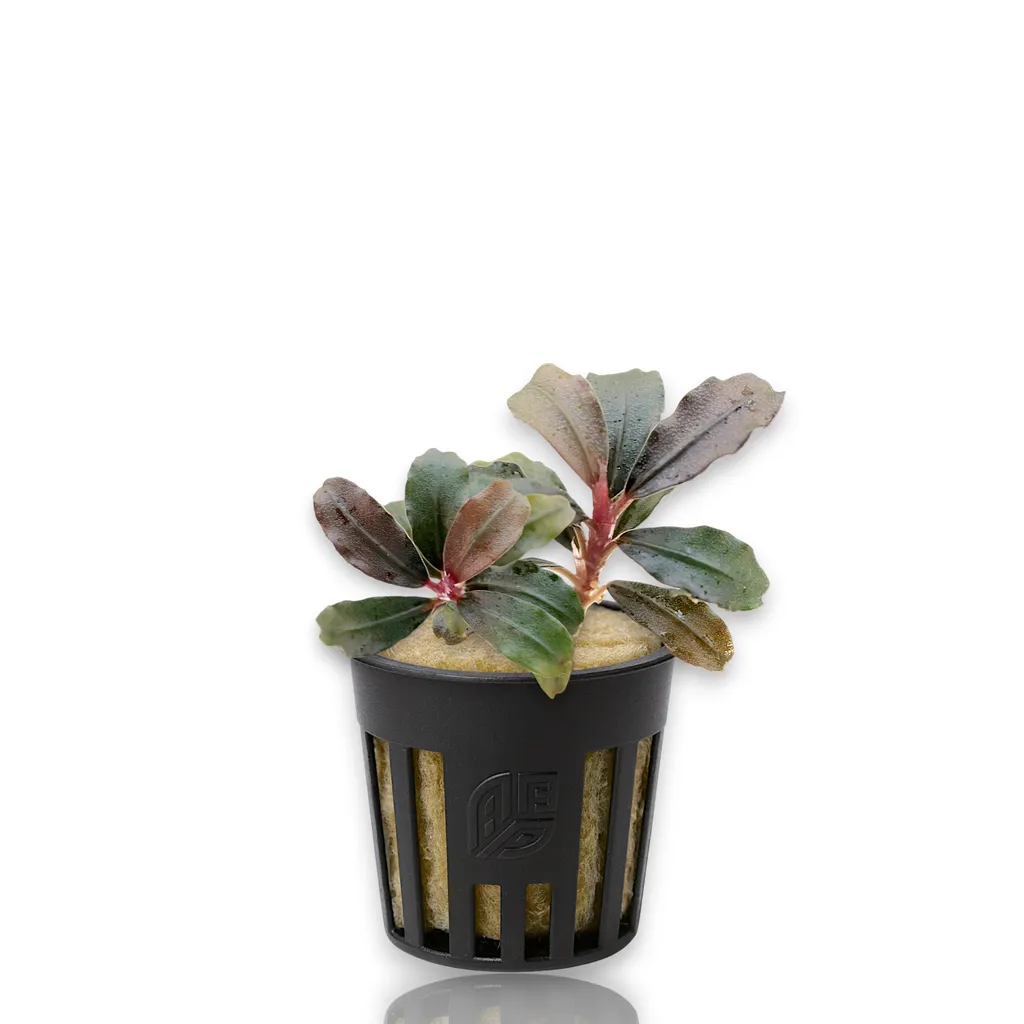
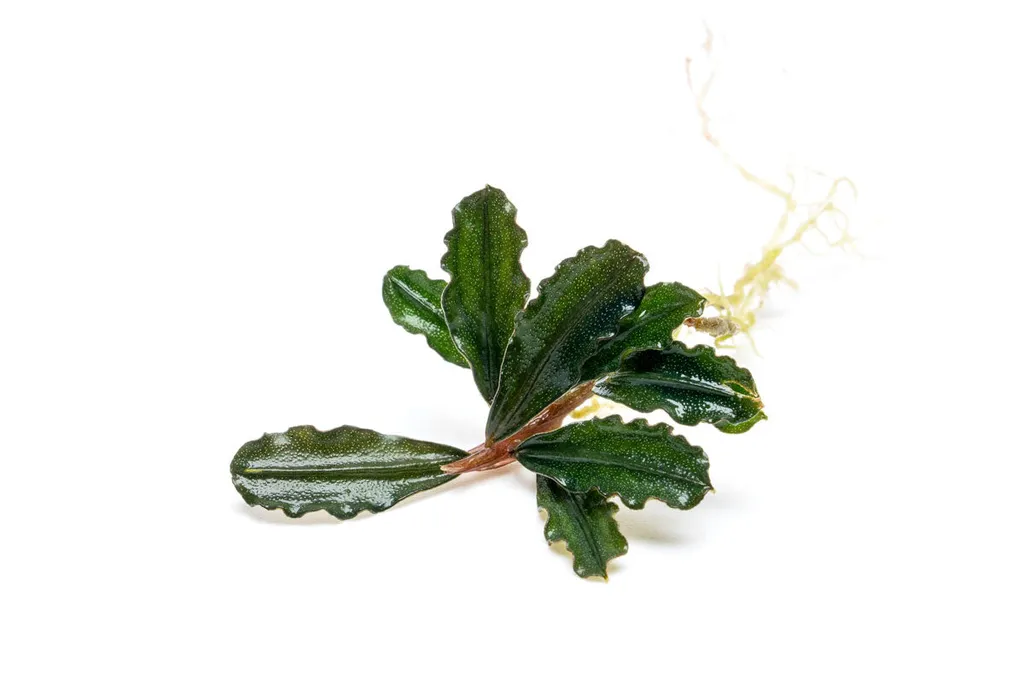
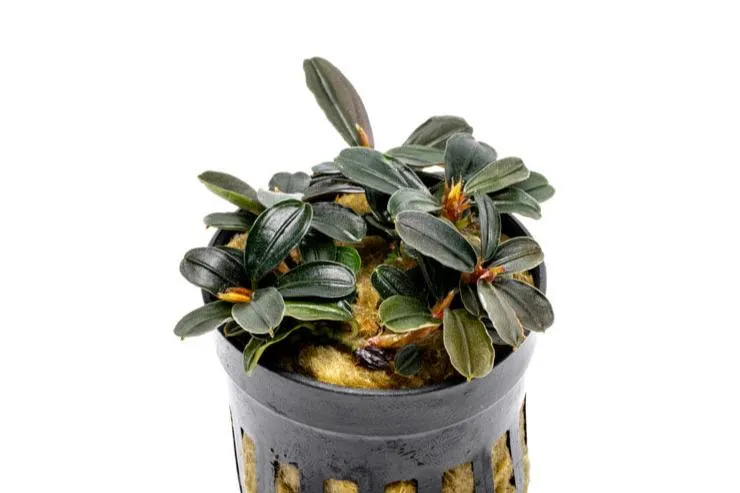
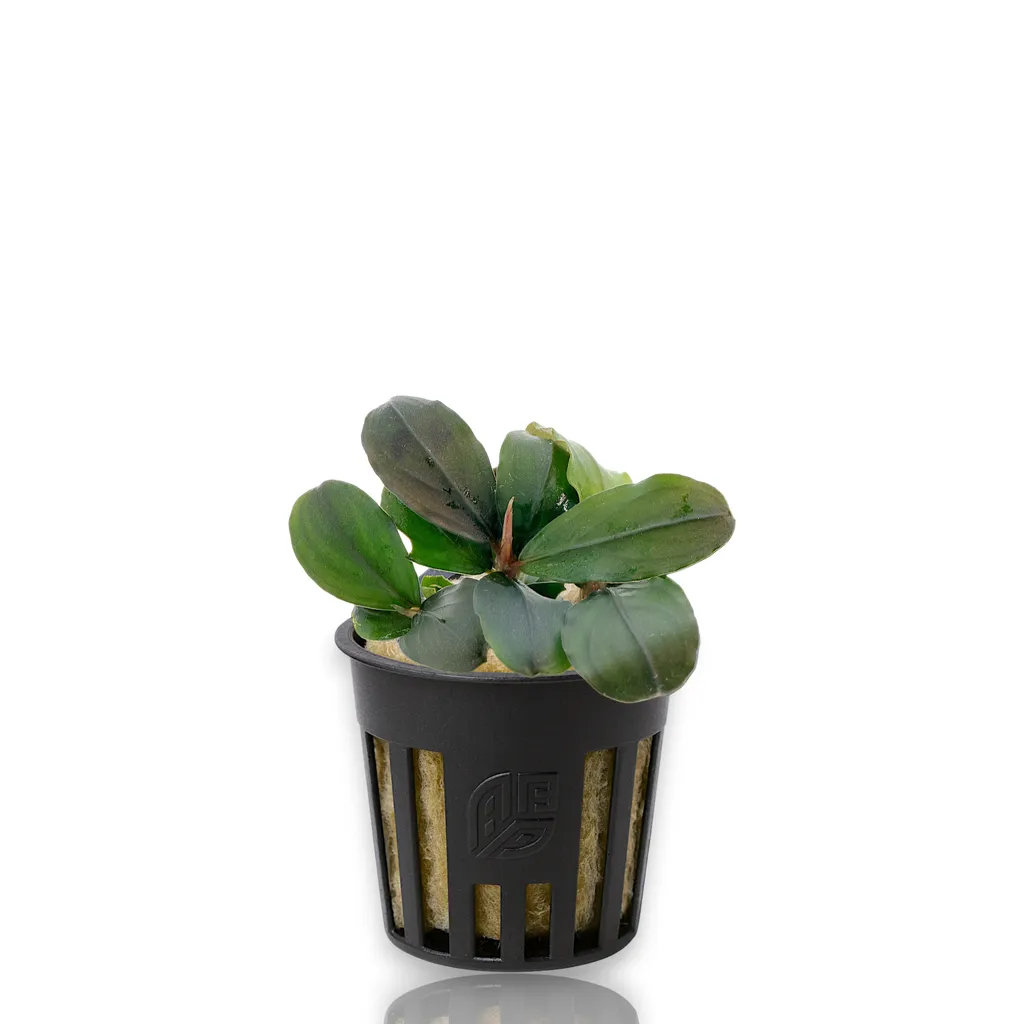
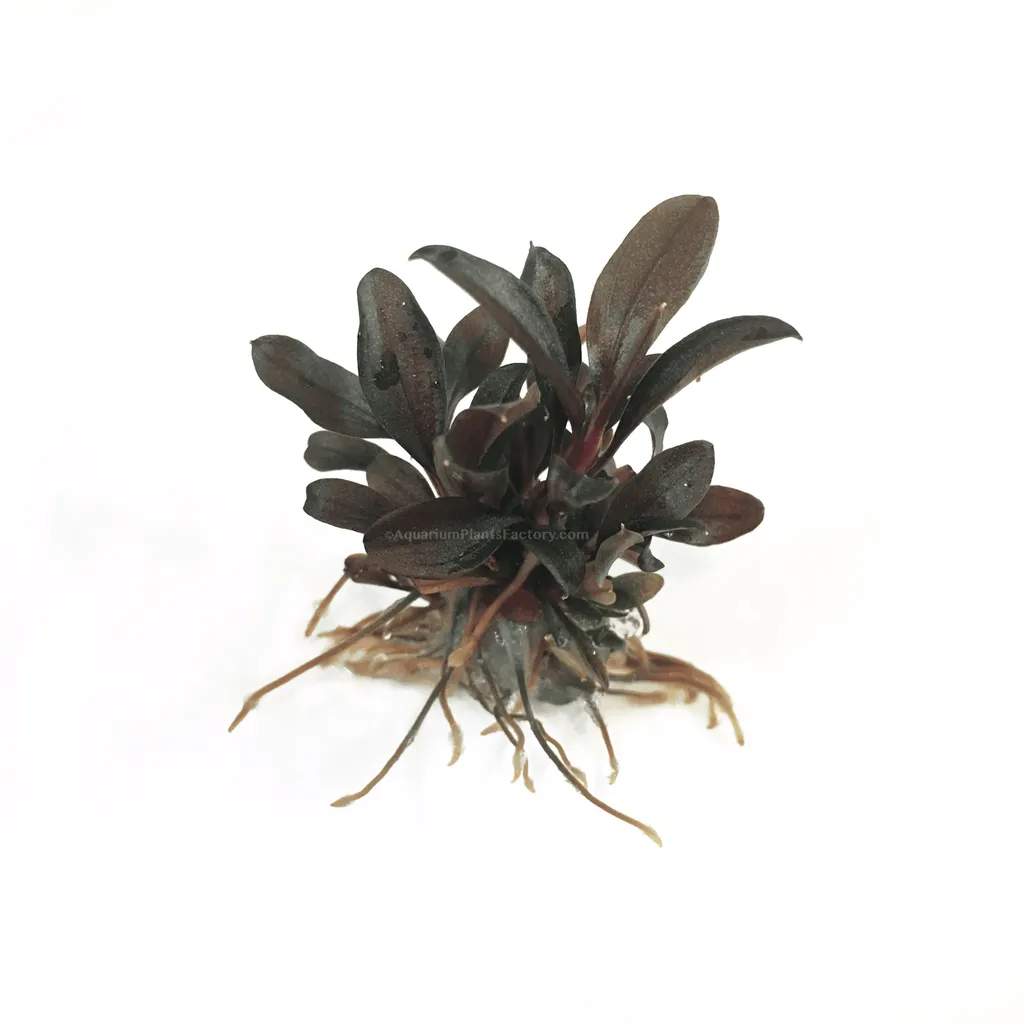
Bucephalandra Brownie Kapuas is a small clone with leaves about 2.5 to 5 cm long, sized for nano tanks. It is easy to keep but very slow.
Did you know
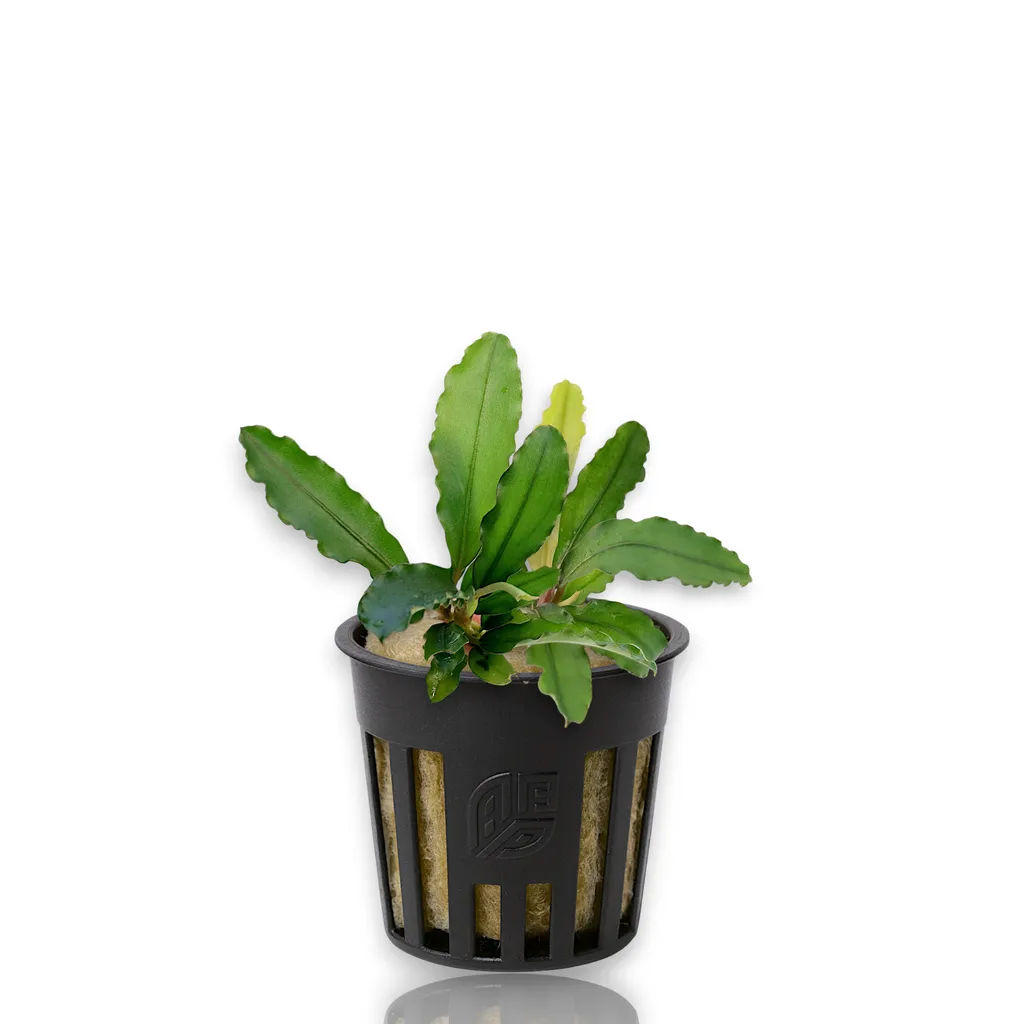
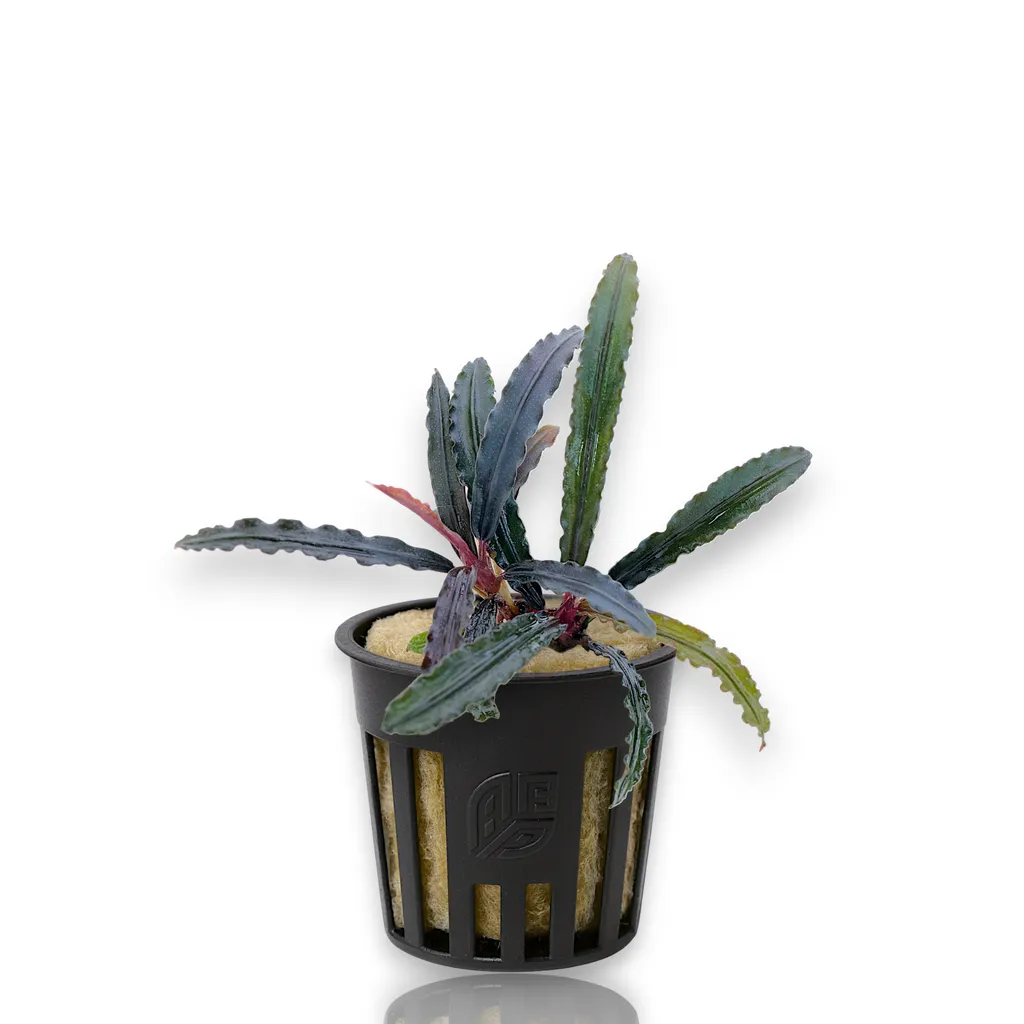
Brownie Kapuas shares its river name with other Buce labels. Sellers also offer a Kapuas Brownie Ghost and a Brownie Ghost "Ulu Kapus". The river name alone does not pin down Brownie Kapuas, so compare photos before you buy.
Caring for Bucephalandra Brownie Kapuas
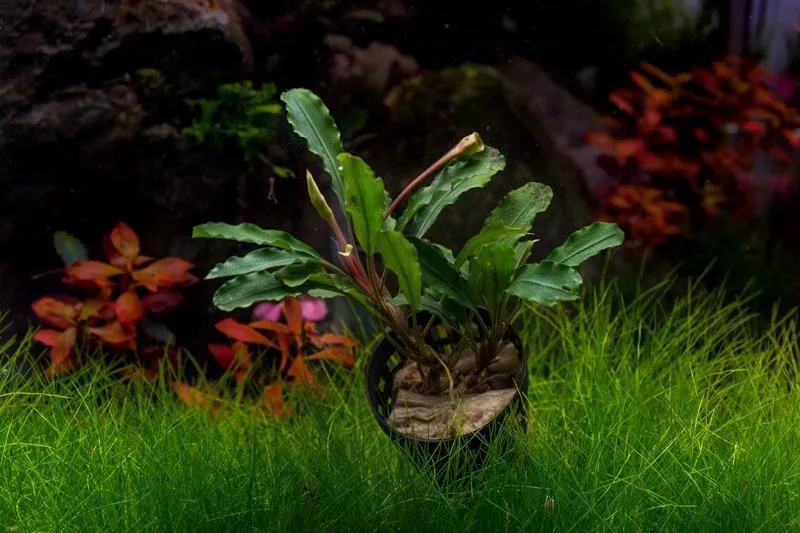
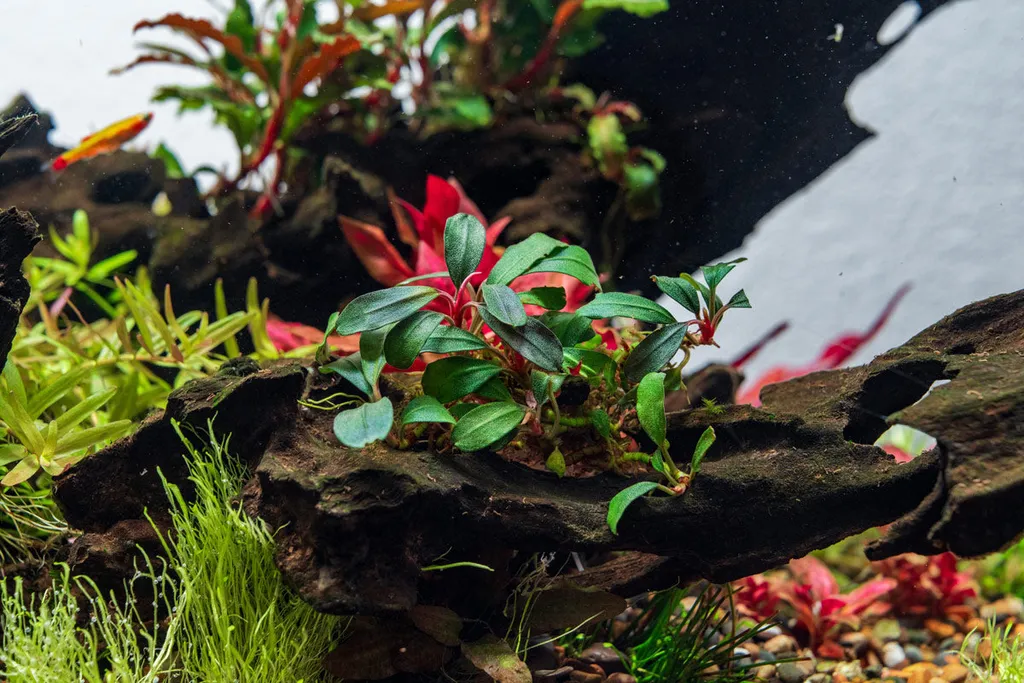
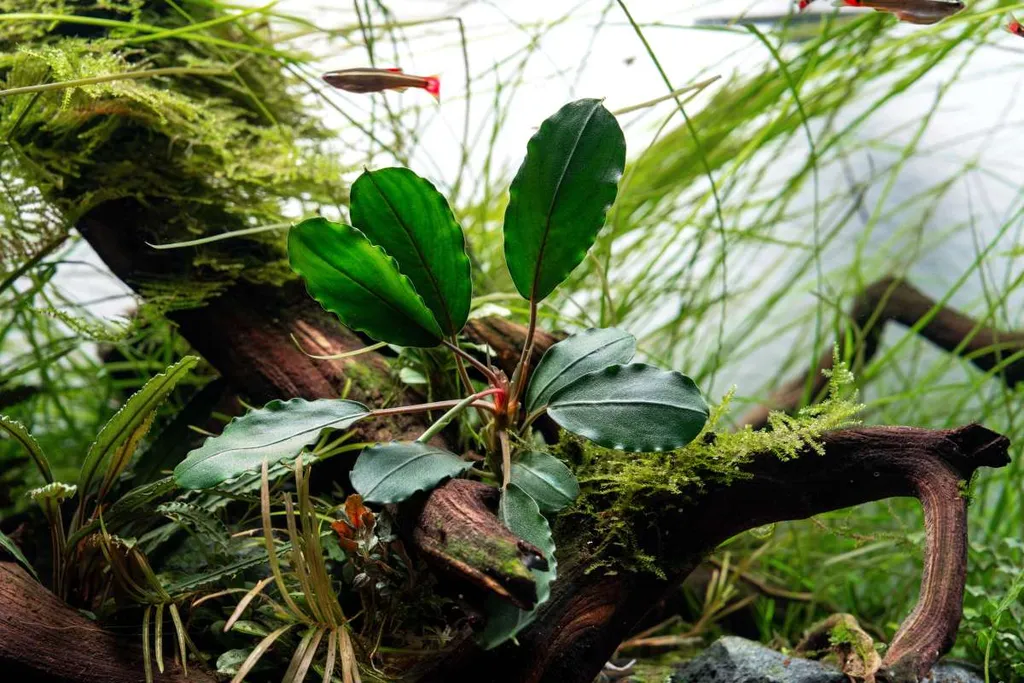
Fix Brownie Kapuas to rock or wood and keep the rhizome clear of the substrate. Its near-black leaves disappear against dark wood or black substrate, so mount it on pale stone or in front of bright green plants.
Low light is enough. Stronger light brings out the bronze and blue, though algae can settle on the old leaves. CO2 speeds its growth, and it takes nutrients through its roots and from the water, so a liquid fertilizer helps. Keep it at 72 to 82°F (22 to 28°C).
Aquarium Plants Factory puts its growth at under 5 cm a year, so buy several pieces for a filled-in patch. Once a clump fills its spot, divide the rhizome into pieces with several leaves each.
Good to know
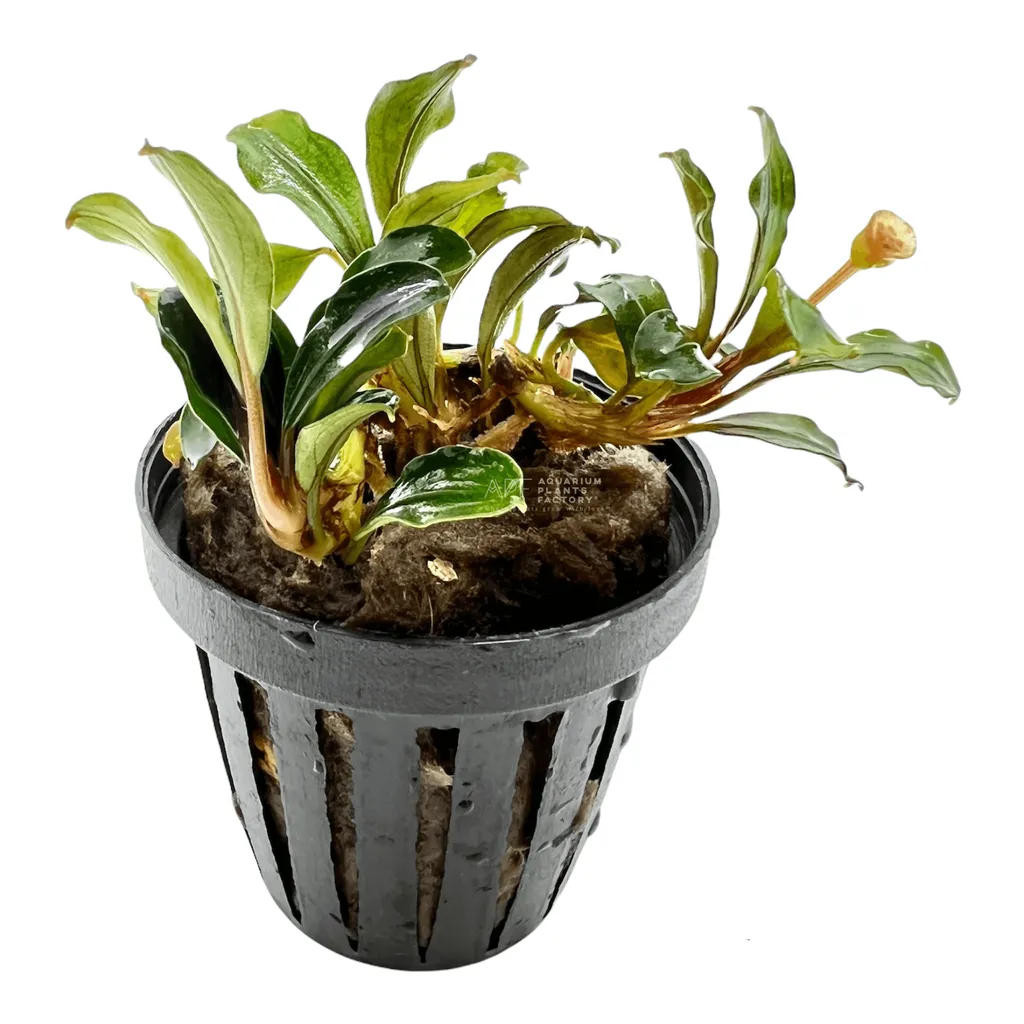
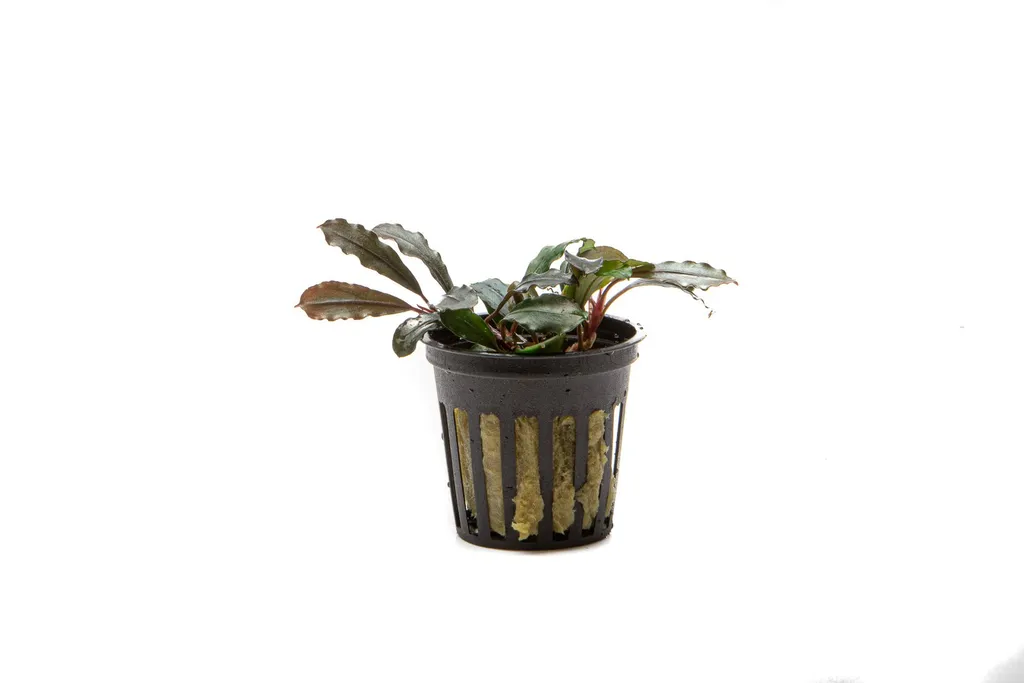
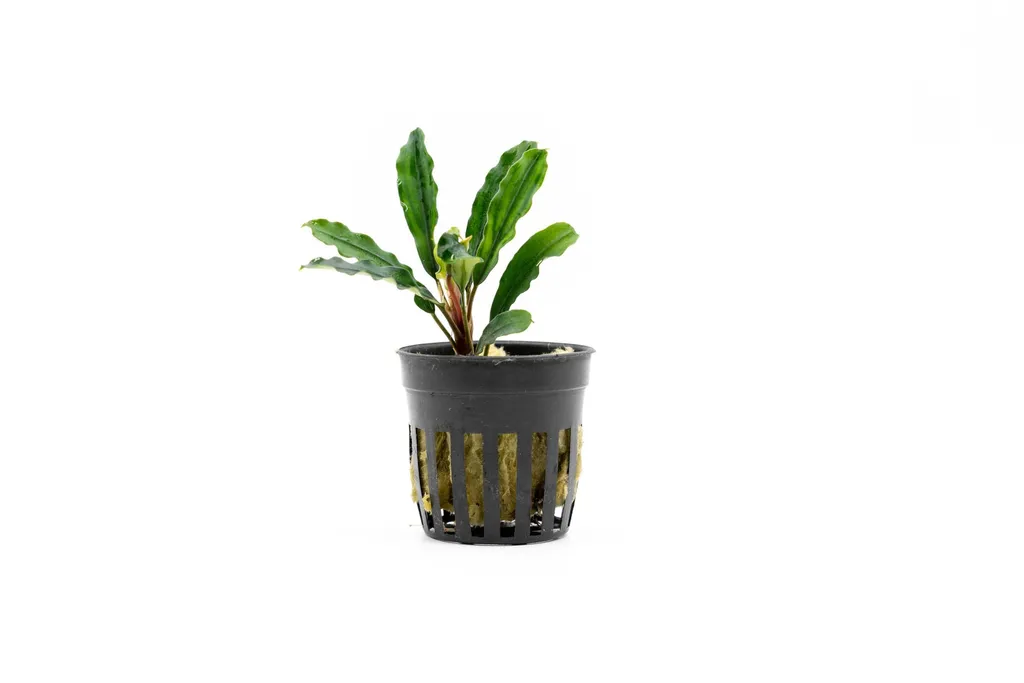
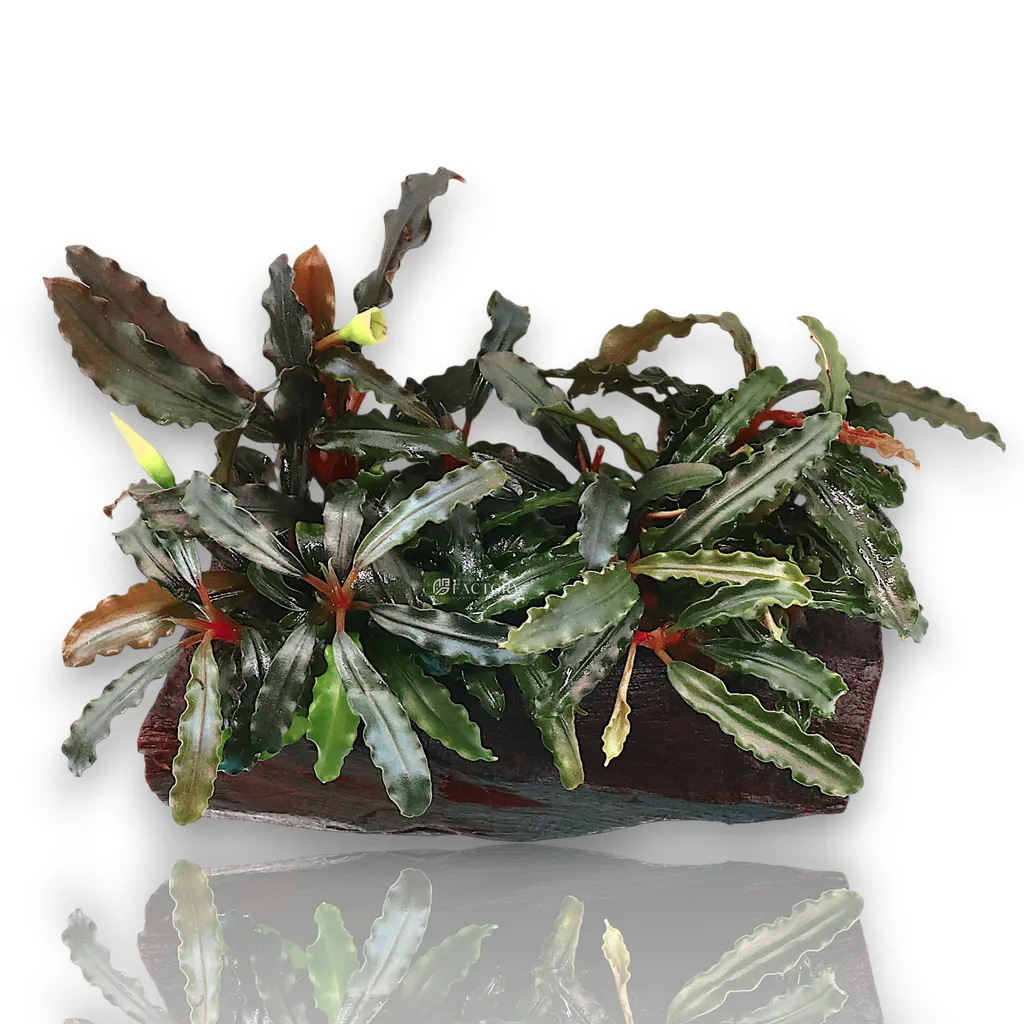
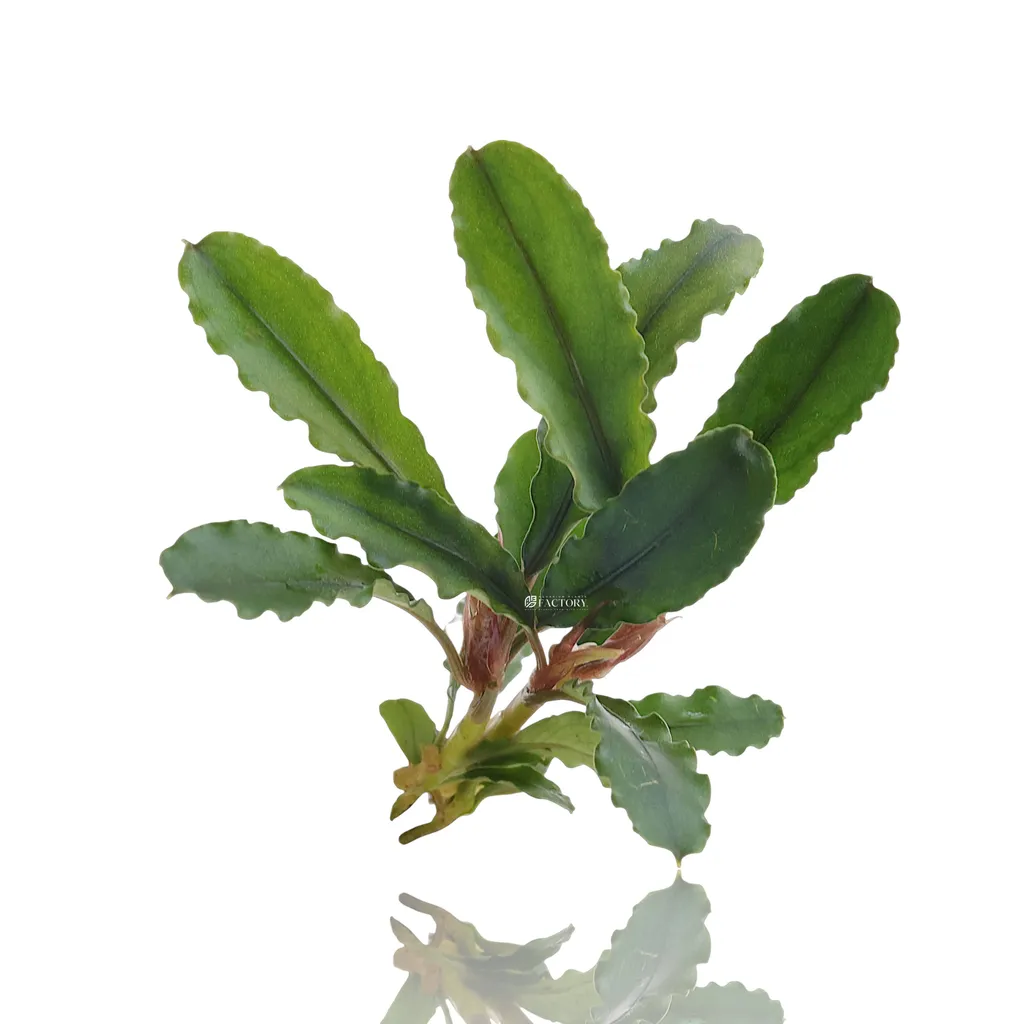
Brownie Kapuas is one of the Brownie trade clones of Bucephalandra, an aroid genus in the family Araceae. Wong and Boyce (2014) left that series undetermined within the B. motleyana complex, so the clone has a river name and no species name. The leaves are small, slightly curved ovals in chocolate brown to near black. Where light catches them they show bronze and olive highlights and a blue-purple sheen. Brownie Ghost has longer, wavier leaves, and Brownie Blue has broader, green-blue ones.
In the wild
Brownie Kapuas comes from the Kapuas river system of Borneo, Aquarium Plants Factory says, and no source names a closer site. Wild Bucephalandra grow as rheophytes, fixed to boulders in fast forest rivers and streams. They sit submersed when the water runs high and emersed on damp rock when it drops. Shop plants today are farm-grown or tissue-cultured.
Common questions
Does Bucephalandra Brownie Kapuas need to be planted in the substrate?
No. Bucephalandra Brownie Kapuas grows attached to rock or wood, so tie or glue the rhizome in place. If you plant its roots, keep the rhizome above the substrate, since a buried rhizome rots.
Does Bucephalandra Brownie Kapuas need CO2?
No, but it helps. Bucephalandra Brownie Kapuas can grow without injected CO2, and added CO2 makes it grow faster.
How much light does Bucephalandra Brownie Kapuas need?
Bucephalandra Brownie Kapuas is a low-light plant, and the light that comes with a standard tank kit is enough for it.
Does Bucephalandra Brownie Kapuas need root tabs?
No. Bucephalandra Brownie Kapuas feeds from the water, so a liquid fertilizer suits it better. Root tabs only help if its roots reach into the substrate.
How do you propagate Bucephalandra Brownie Kapuas?
Bucephalandra Brownie Kapuas propagates by rhizome division. Cut the rhizome into pieces with several leaves each, then tie or plant each piece.
How tall does Bucephalandra Brownie Kapuas grow?
Bucephalandra Brownie Kapuas grows to about 2.4 in (6 cm) tall. It grows slowly and rarely needs trimming.
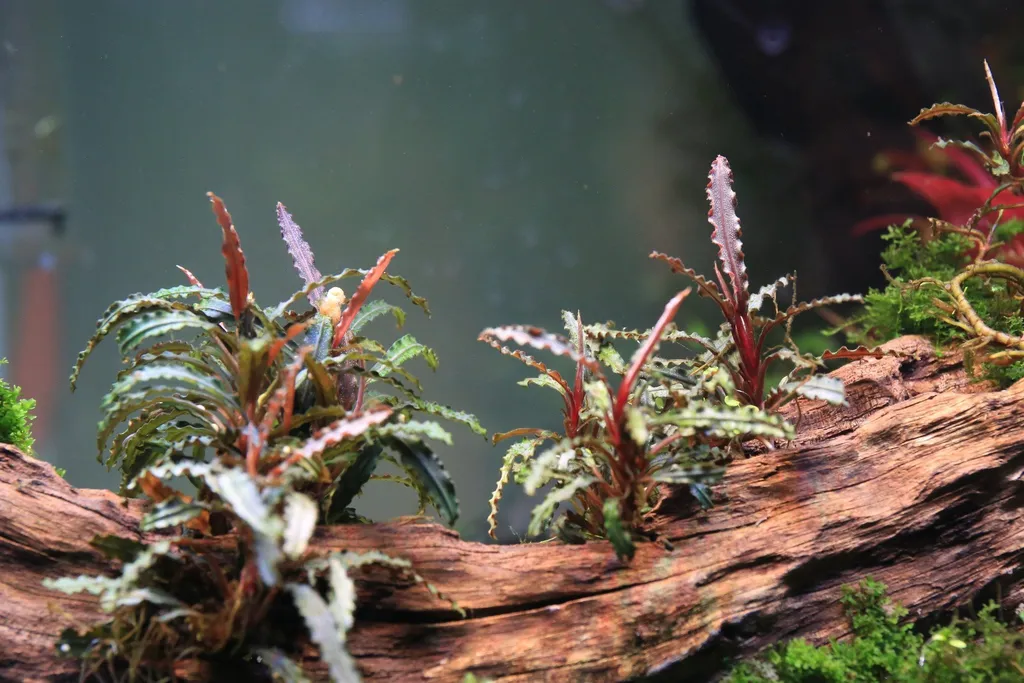 Low lightEpiphyte2.4 in (6 cm)
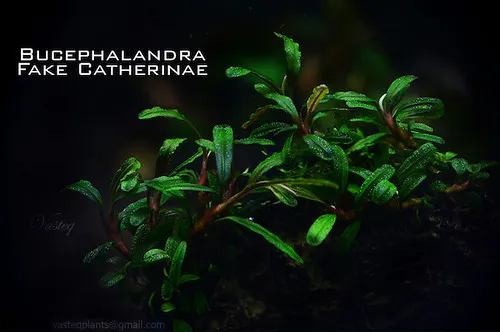 Low lightEpiphyte2.4 in (6 cm)
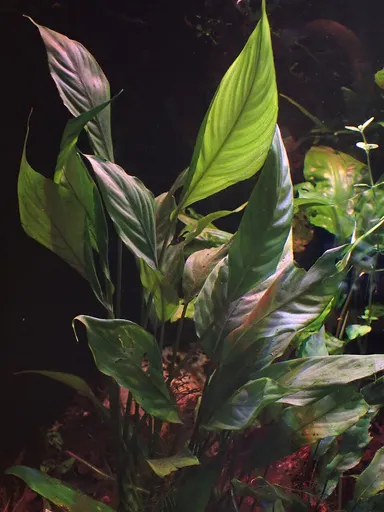 Low lightEpiphyte3.9 in (10 cm)