Form of Bucephalandra sp.
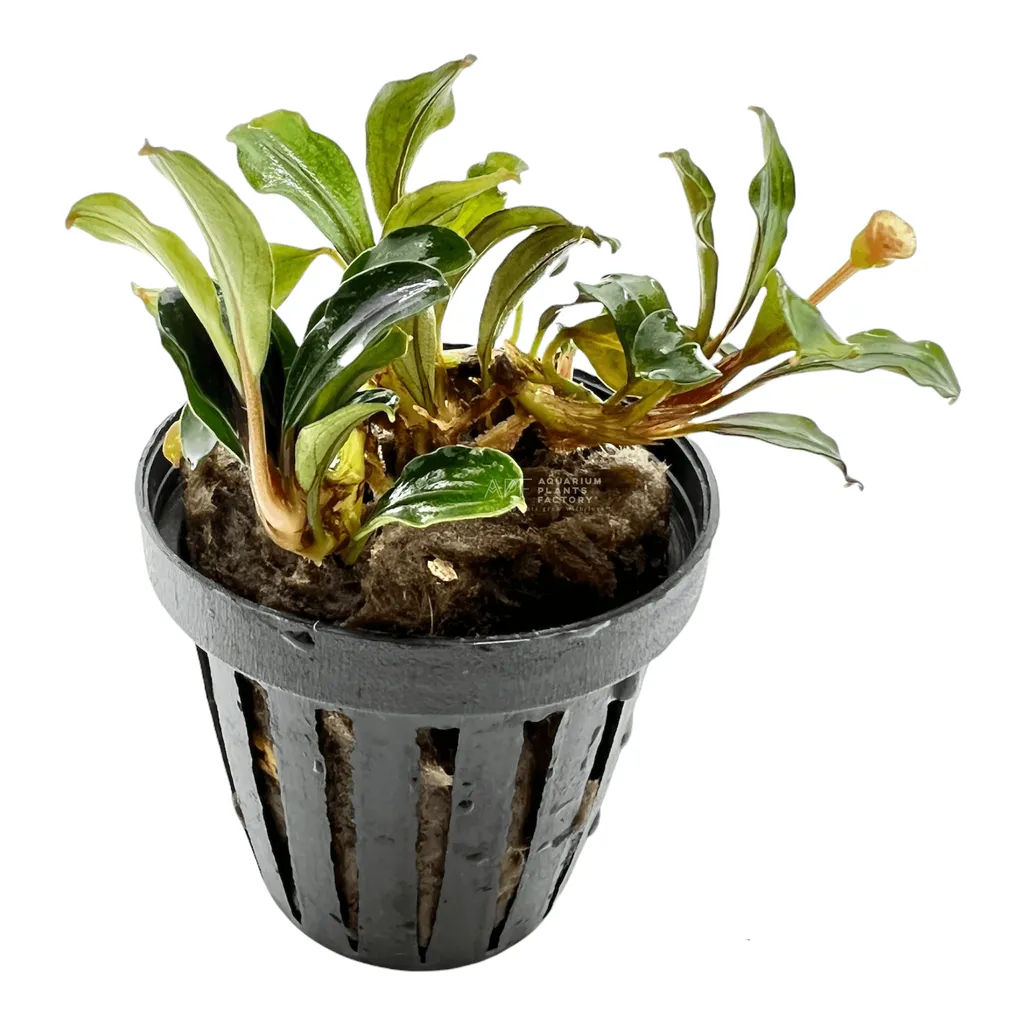
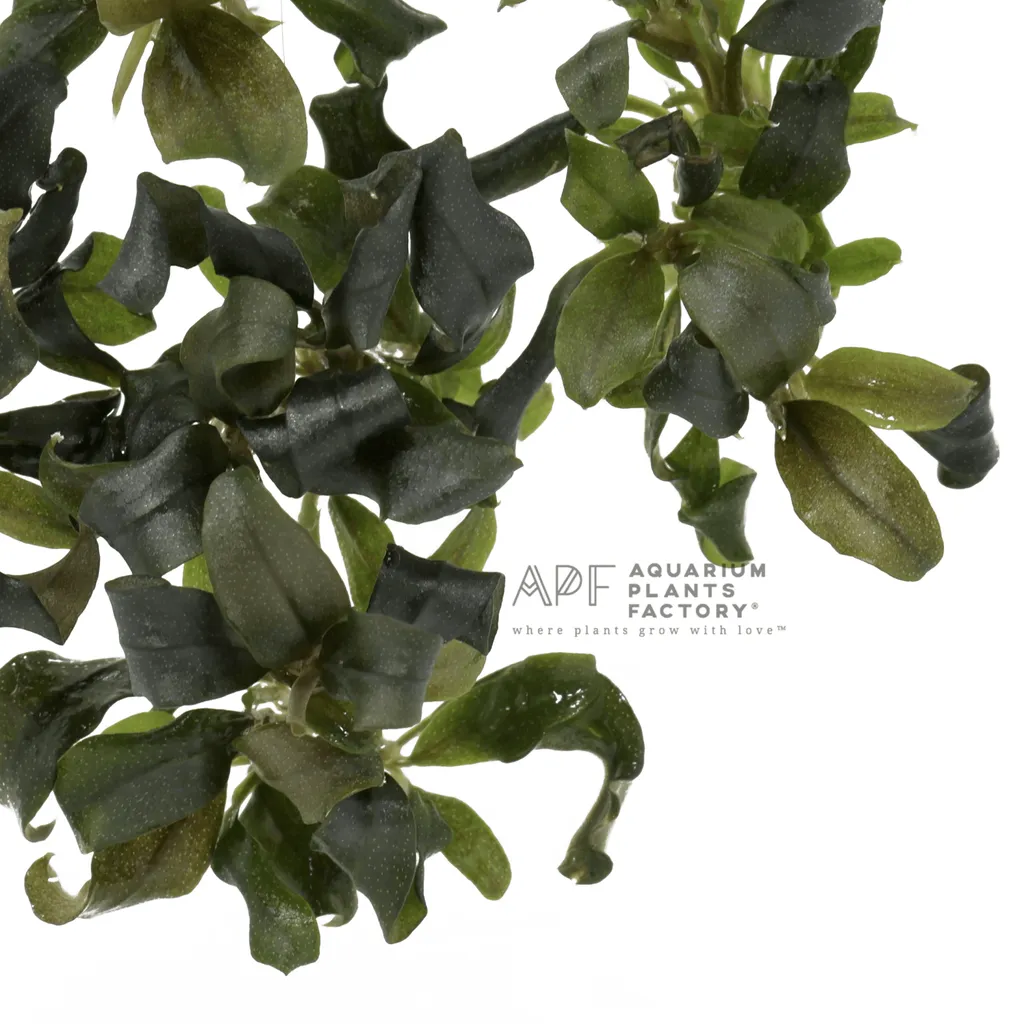
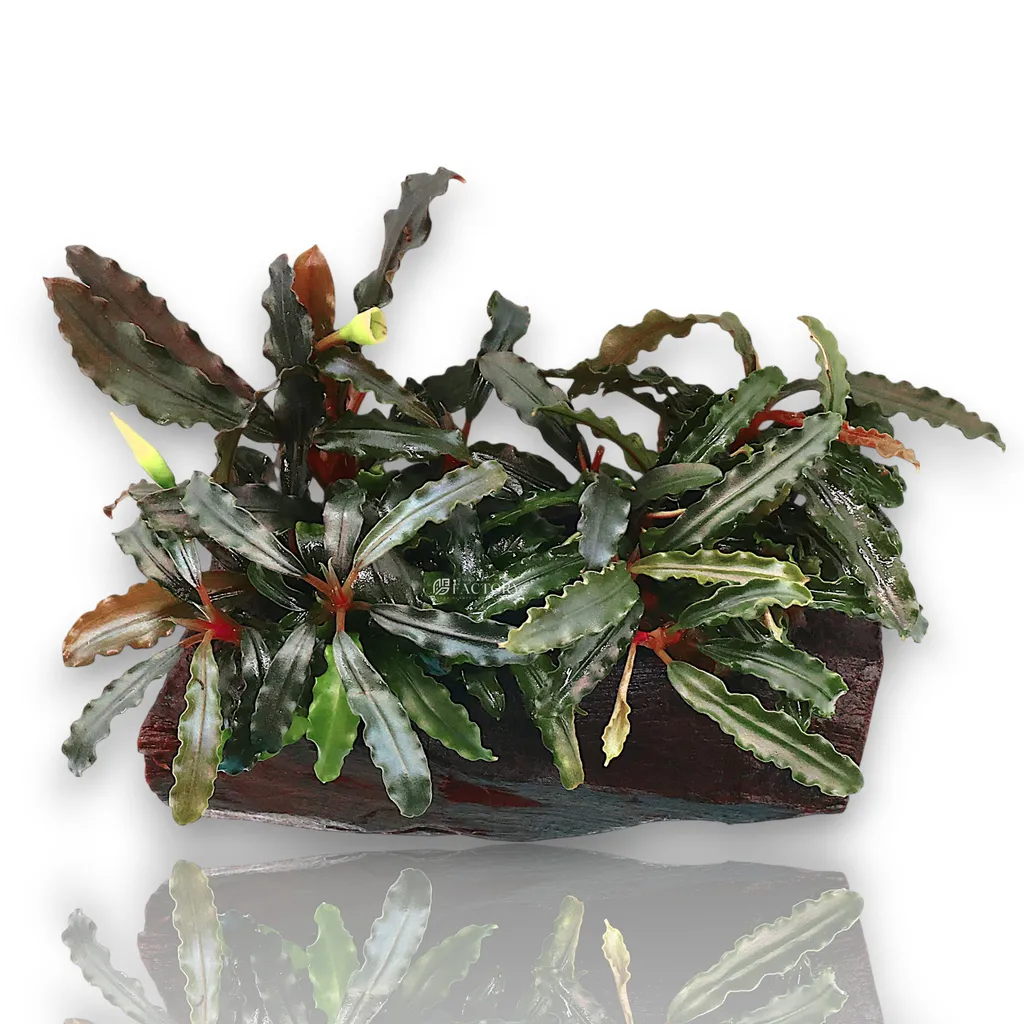
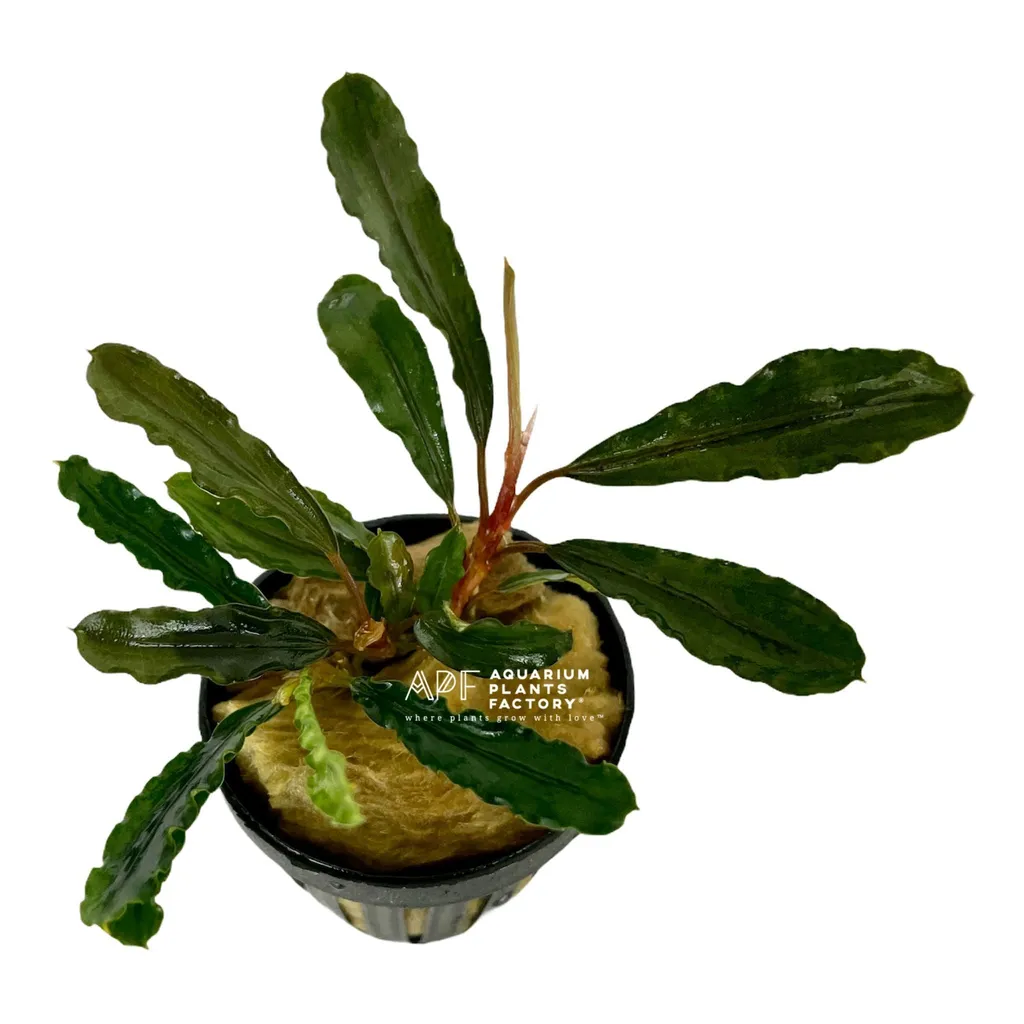
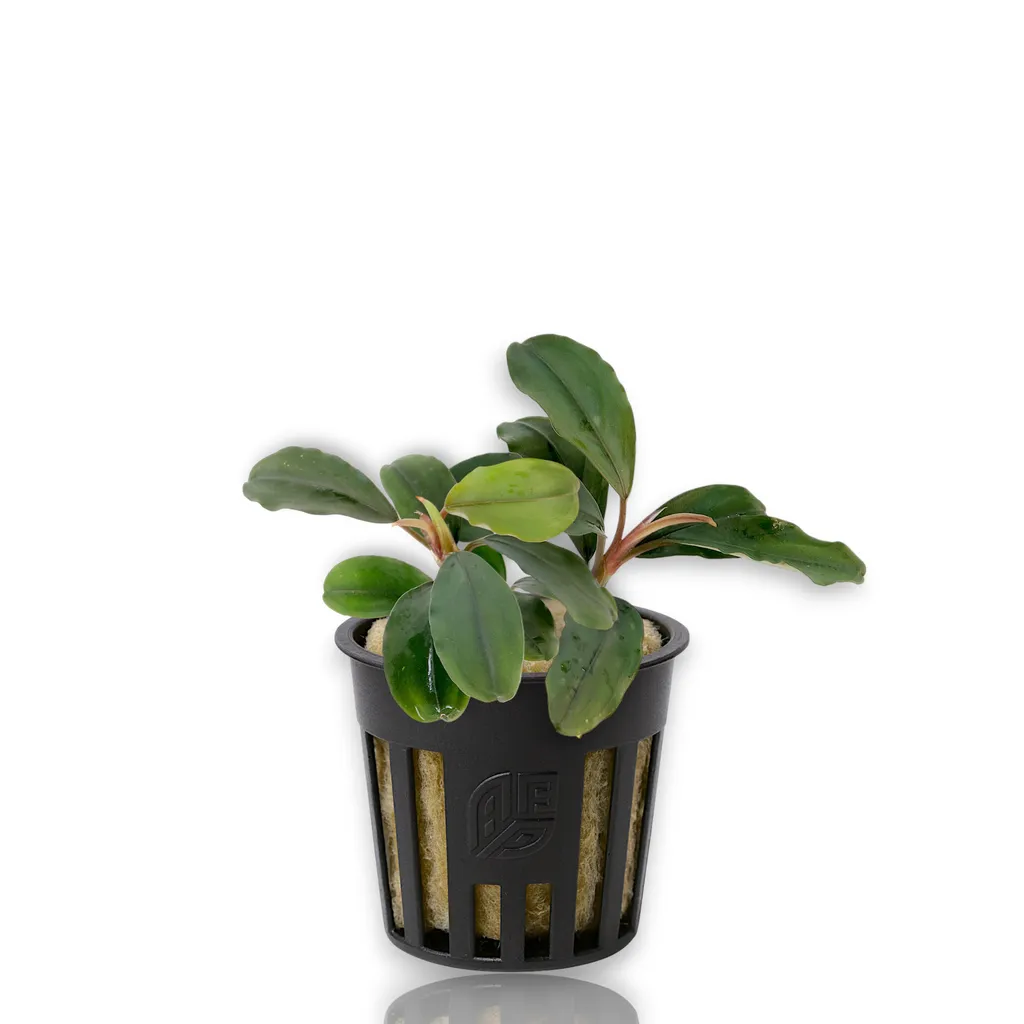
Bucephalandra Brownie Blue
Bucephalandra sp. 'Brownie Blue'
One of 17 forms of Bucephalandra sp. · See all forms →
Also known as Buce Brownie Blue, Bucephalandra 'Brownie Blue'
FreshwaterRhizomeRhizome division
Forms · Bucephalandra sp.
See all 17 →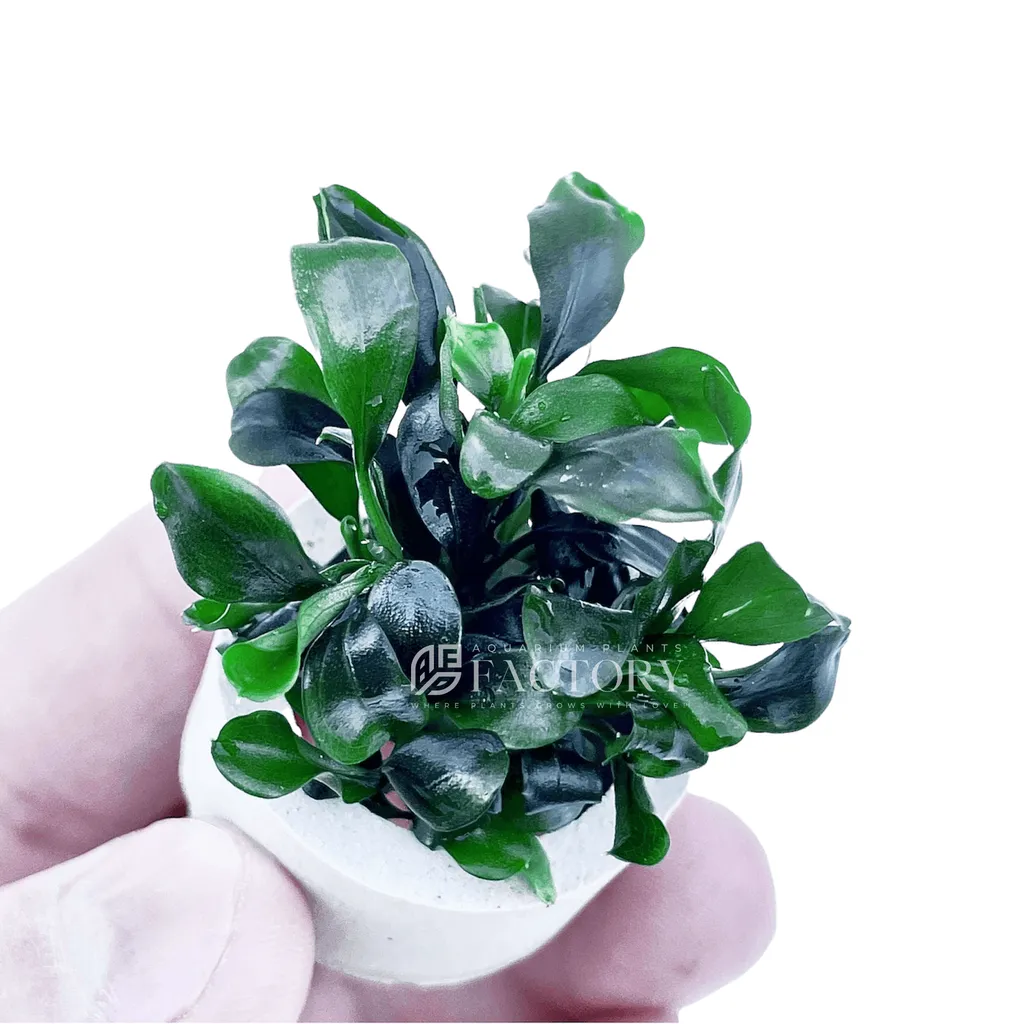
Care at a glance
- Light
- Low light
- CO2
- CO₂ beneficial
- Temperature
- 70–82°F
- 21–28°C
- Max height
- 3.1 in
- 8 cm
- Growth rate
- Slow
- Placement
- Epiphyte
- Type
- Rhizome
- pH
- 6.0–8.0
- Hardness
- 2–15 dGH
- Spread
- 3.9 in (10 cm)
- Nutrient uptake
- Root + water column
- Growth region
- Submersed or emersed
- Difficulty
- Easy
- Family
- Araceae
- Origin
- Borneo, Indonesia (cultivar of a wild-collected Bucephalandra)
Overview
Treat it like Anubias: glue or tie the rhizome to rock or driftwood and never bury the rhizome or it will rot. It does fine under low light without CO2, though injected CO2 and stable water speed up its already slow growth and bring out the blue-green iridescent sheen on adapted submerged leaves. It can sulk and drop older leaves after a move, so give it time and avoid sudden parameter swings.
In the wild
Bucephalandra are rheophytes native to Borneo, where they grow attached to rocks and wood along fast-moving forest streams. During the wet season they sit fully submerged, and in the dry season they emerge to flower above the waterline. Brownie Blue is one of many named trade forms selected from these wild populations.
Good to know
The genus Bucephalandra belongs to the arum family (Araceae), the same family as Anubias and Cryptocoryne, and its name refers to the bull-head shape of the spadix. Taxonomy is unsettled, with only a few dozen described species but hundreds of commercial cultivar names. It grows from a creeping rhizome and produces a true aroid inflorescence (spathe and spadix) when grown emersed.
Did you know
The prized blue shimmer is structural color, not pigment. Microscopic cell structures in the leaf surface scatter light, so the same leaf can look plain brown or vivid blue depending on the angle and lighting.
Related plants
 Low lightEpiphyte3.9 in (10 cm)
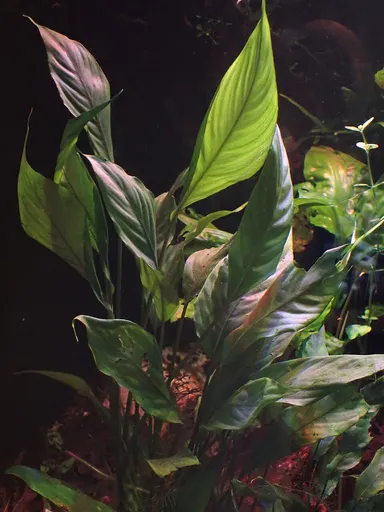
Bucephalandra motleyana
Low light · Epiphyte
- Low lightEpiphyte3.9 in (10 cm)
Bucephalandra sordidula
Low light · Epiphyte
 Low lightEpiphyte2.4 in (6 cm)
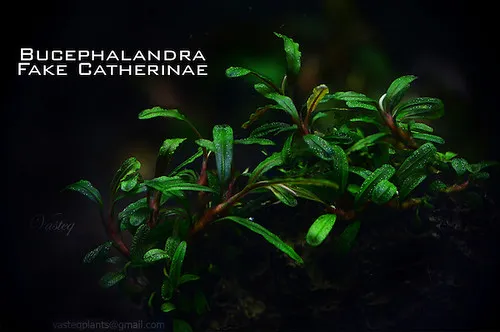
Bucephalandra catherinae
Low light · Epiphyte
- Low lightEpiphyte3.1 in (8 cm)
Anubias Petite Round
Anubias barteri 'Petite Round'
Low light · Epiphyte
- Low lightEpiphyte3.1 in (8 cm)
Schismatoglottis roseospatha
Low light · Epiphyte
- Low lightEpiphyte3.9 in (10 cm)
Anubias Chili Jalapeno
Anubias 'Chili Jalapeno'
Low light · Epiphyte