Form of Bucephalandra sp.
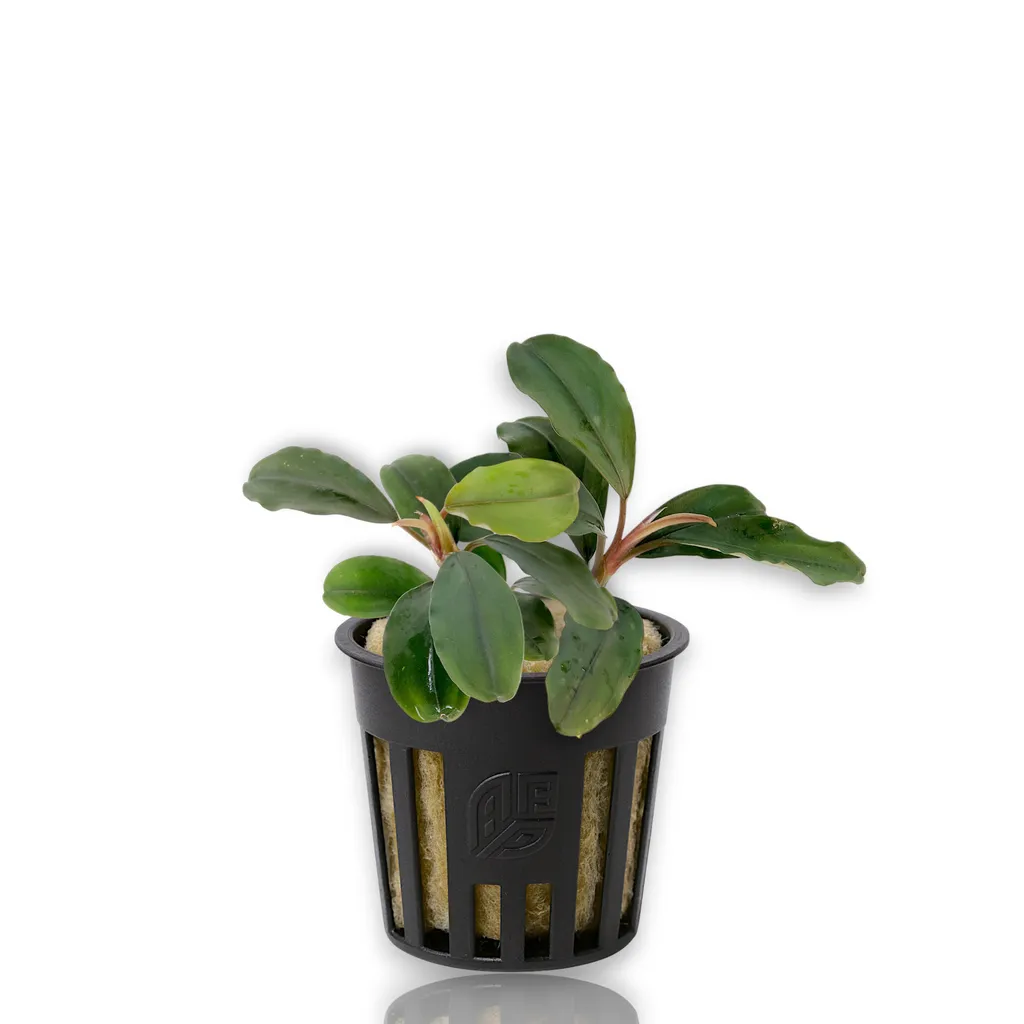
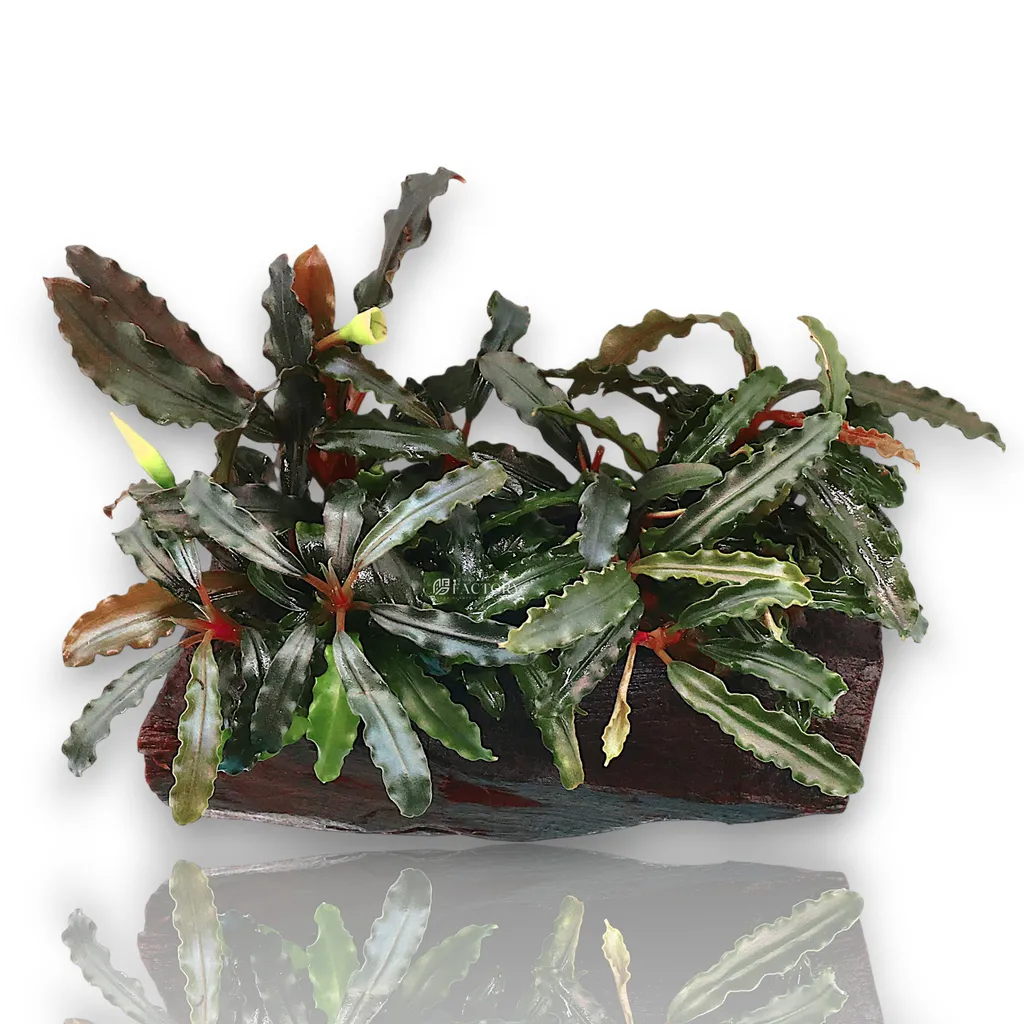
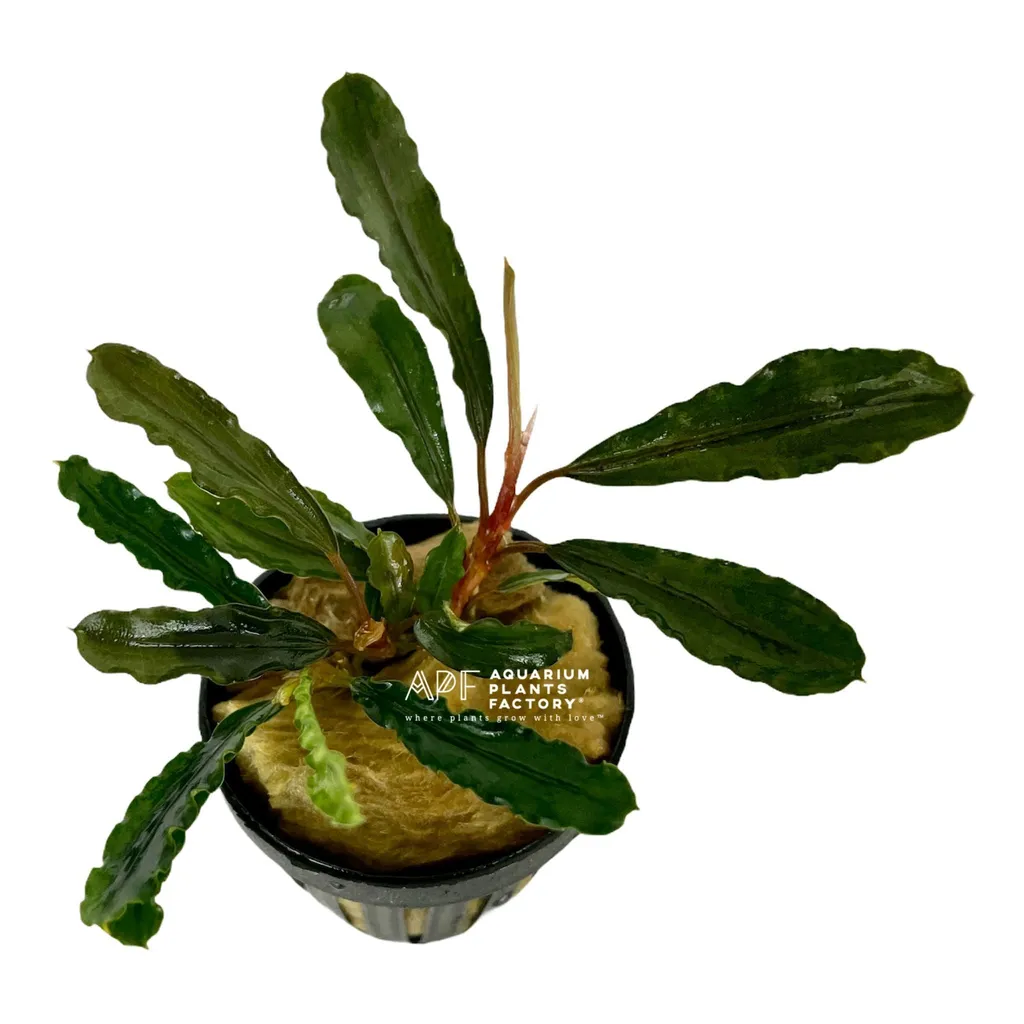
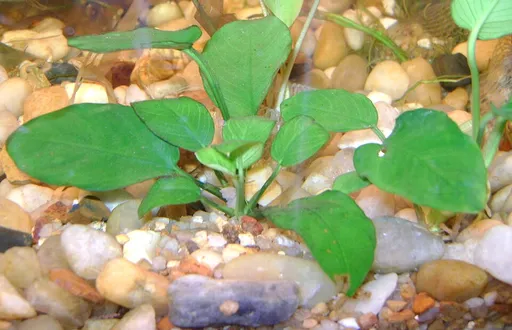
Bucephalandra Theia
Bucephalandra sp. 'Theia'
One of 17 forms of Bucephalandra sp. · See all forms →
Also known as Buce Theia, Bucephalandra Theia Green, Bucephalandra Theia Red
FreshwaterRhizomeRhizome division
Forms · Bucephalandra sp.
See all 17 →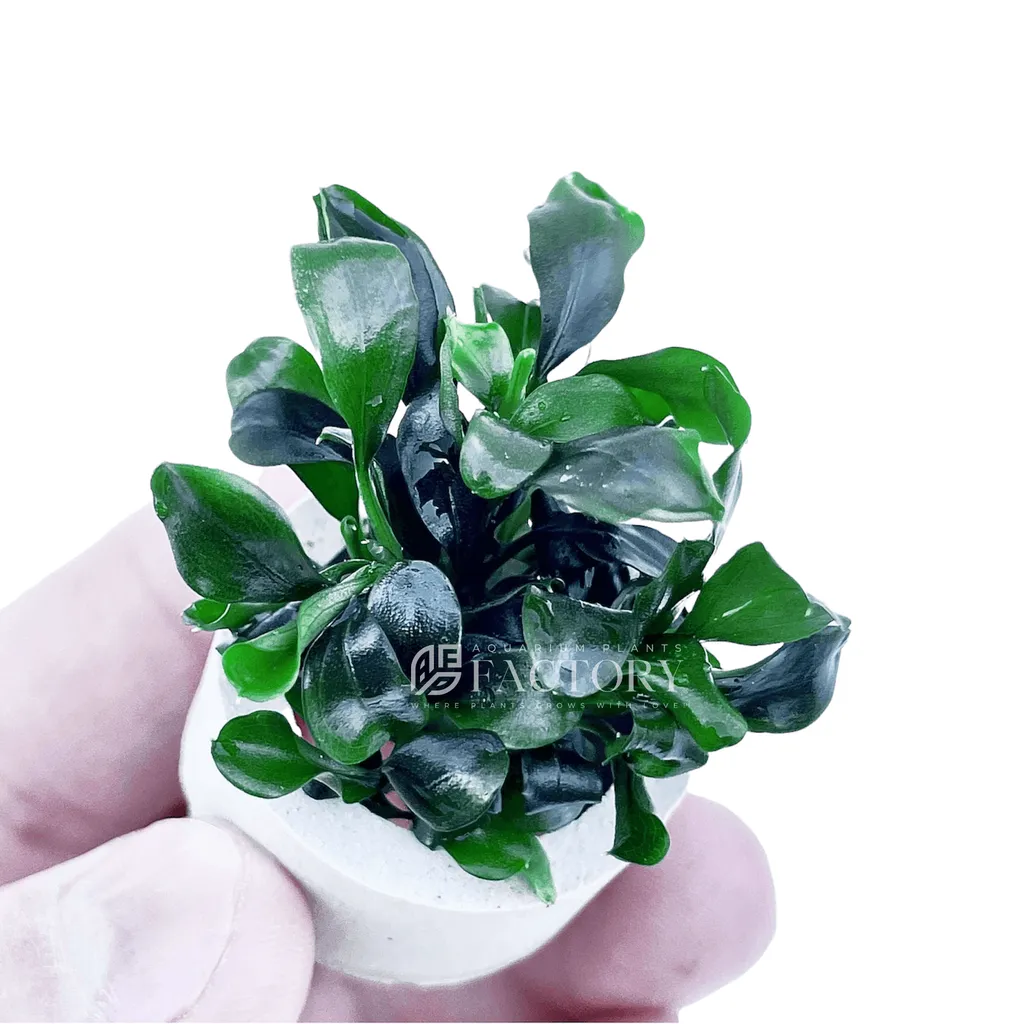
Care at a glance
- Light
- Low light
- CO2
- CO₂ beneficial
- Temperature
- 70–82°F
- 21–28°C
- Max height
- 3.9 in
- 10 cm
- Growth rate
- Slow
- Placement
- Epiphyte
- Type
- Rhizome
- pH
- 6.0–7.5
- Hardness
- 4–12 dGH
- Spread
- 5.9 in (15 cm)
- Nutrient uptake
- Root + water column
- Growth region
- Submersed or emersed
- Difficulty
- Easy
- Family
- Araceae
- Origin
- Borneo (Indonesia)
Overview
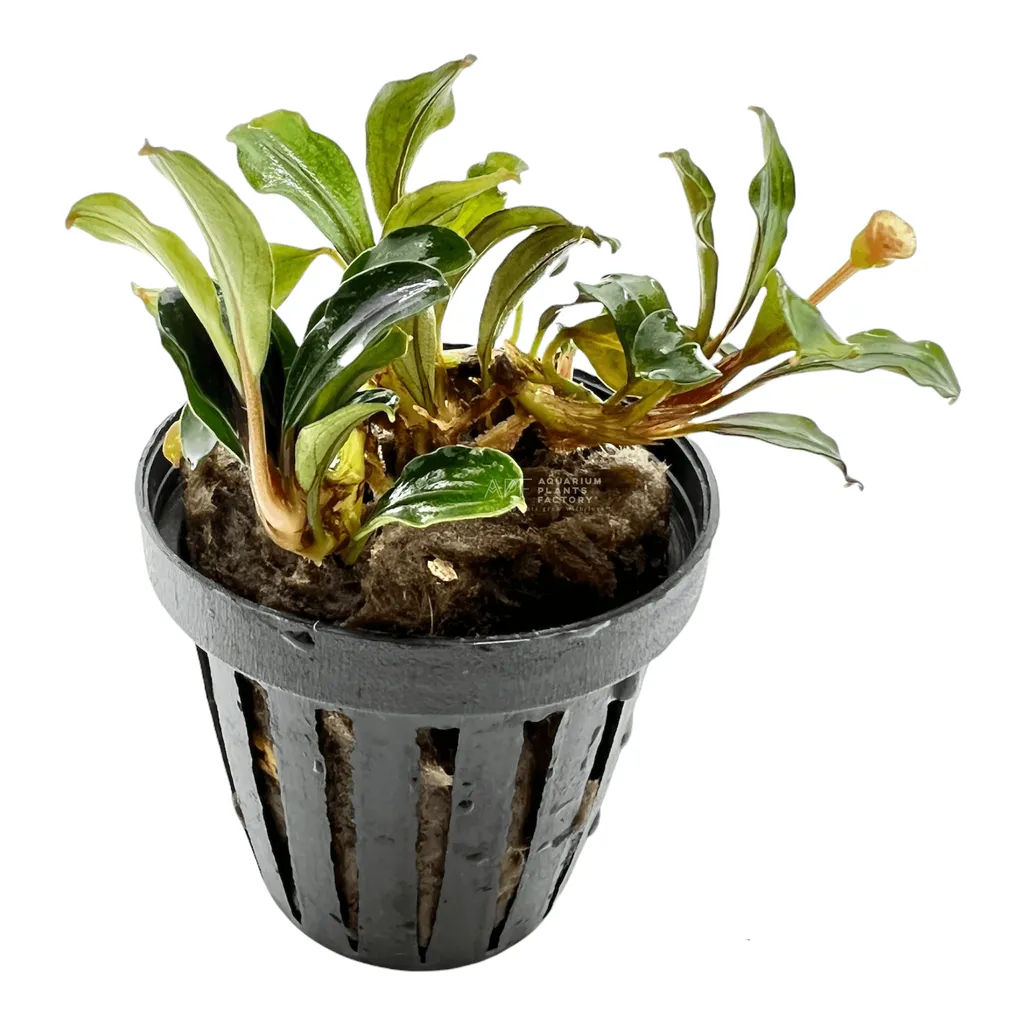
Superglue or tie the rhizome to rock or driftwood and never bury it, since a buried rhizome rots. Theia has broad soft leaves in olive to reddish-brown tones and stays easy in low light with no CO2, though moderate light and CO2 deepen the color and speed the slow leaf-by-leaf growth. Good flow and regular water changes keep algae off the slow-growing foliage.
In the wild
Like all Bucephalandra, 'Theia' is a trade form collected from Borneo, where the genus grows as an obligate rheophyte clinging to rocks in shaded, fast-flowing forest streams. It creeps along hardscape by a thin rhizome rather than rooting into soil, forming low mats over stone and wood.
Good to know
This is an undescribed cultivar, so it is sold under the trade name 'Theia' rather than a formal species epithet. The genus Bucephalandra is an aroid (family Araceae) endemic to Borneo, distinguished by scale-like staminodes on the spadix that separate the male and female flower zones, thicken over the developing fruit, then shed to expose the ripe berries.
Did you know
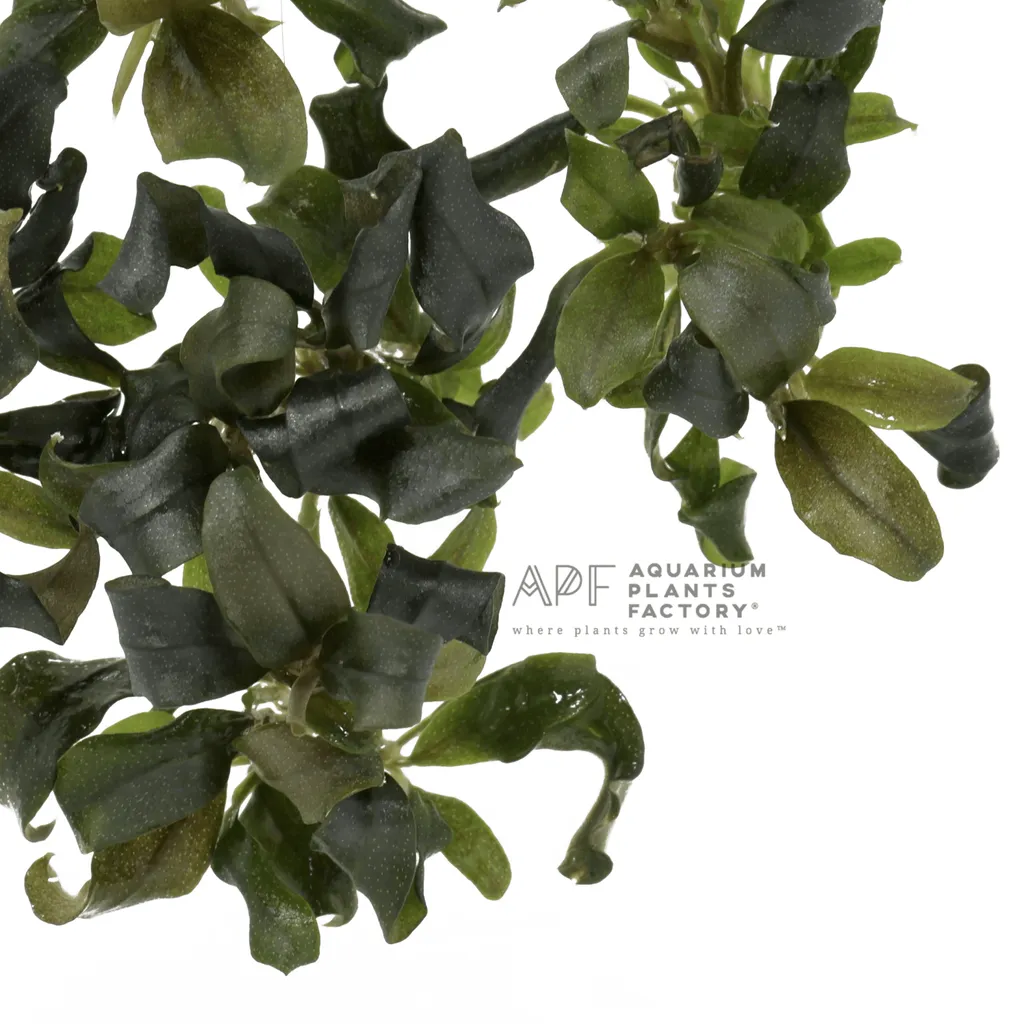
The metallic blue-green sheen seen on Bucephalandra leaves is structural color produced by light interference rather than a pigment, which is why the shimmer shifts as you change your viewing angle.
Related plants
 Low lightEpiphyte3.9 in (10 cm)
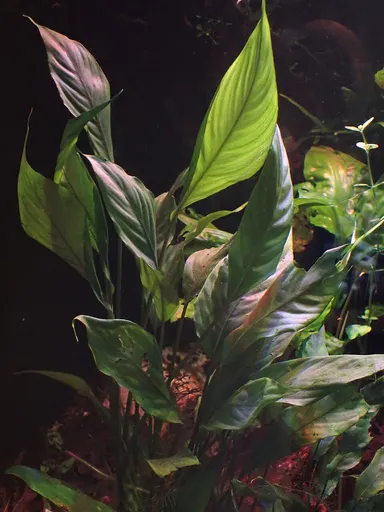
Bucephalandra motleyana
Low light · Epiphyte
- Low lightEpiphyte3.9 in (10 cm)
Bucephalandra sordidula
Low light · Epiphyte
 Low lightEpiphyte2.4 in (6 cm)
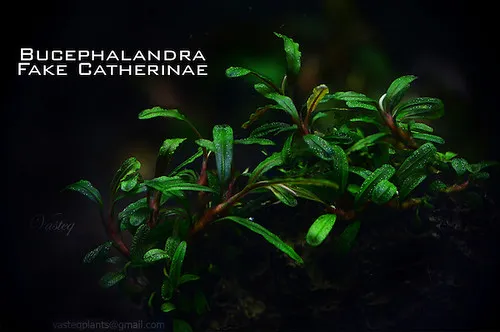
Bucephalandra catherinae
Low light · Epiphyte
- Low lightEpiphyte3.9 in (10 cm)
Anubias Chili Jalapeno
Anubias 'Chili Jalapeno'
Low light · Epiphyte
- Medium lightEpiphyte3.9 in (10 cm)
Anubias Snow White
Anubias barteri var. nana 'Snow White'
Medium light · Epiphyte
 Low lightEpiphyte4.7 in (12 cm)
Anubias nana
Anubias barteri var. nana
Low light · Epiphyte