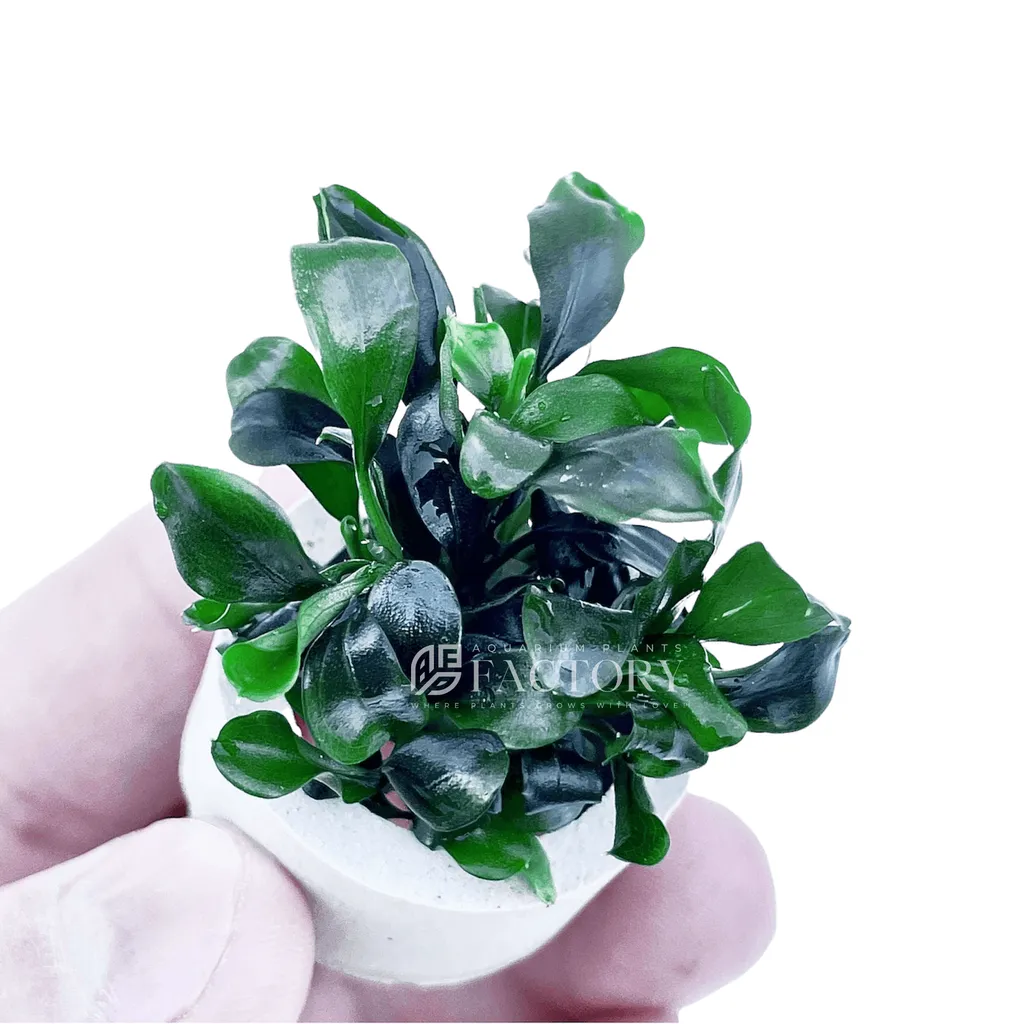
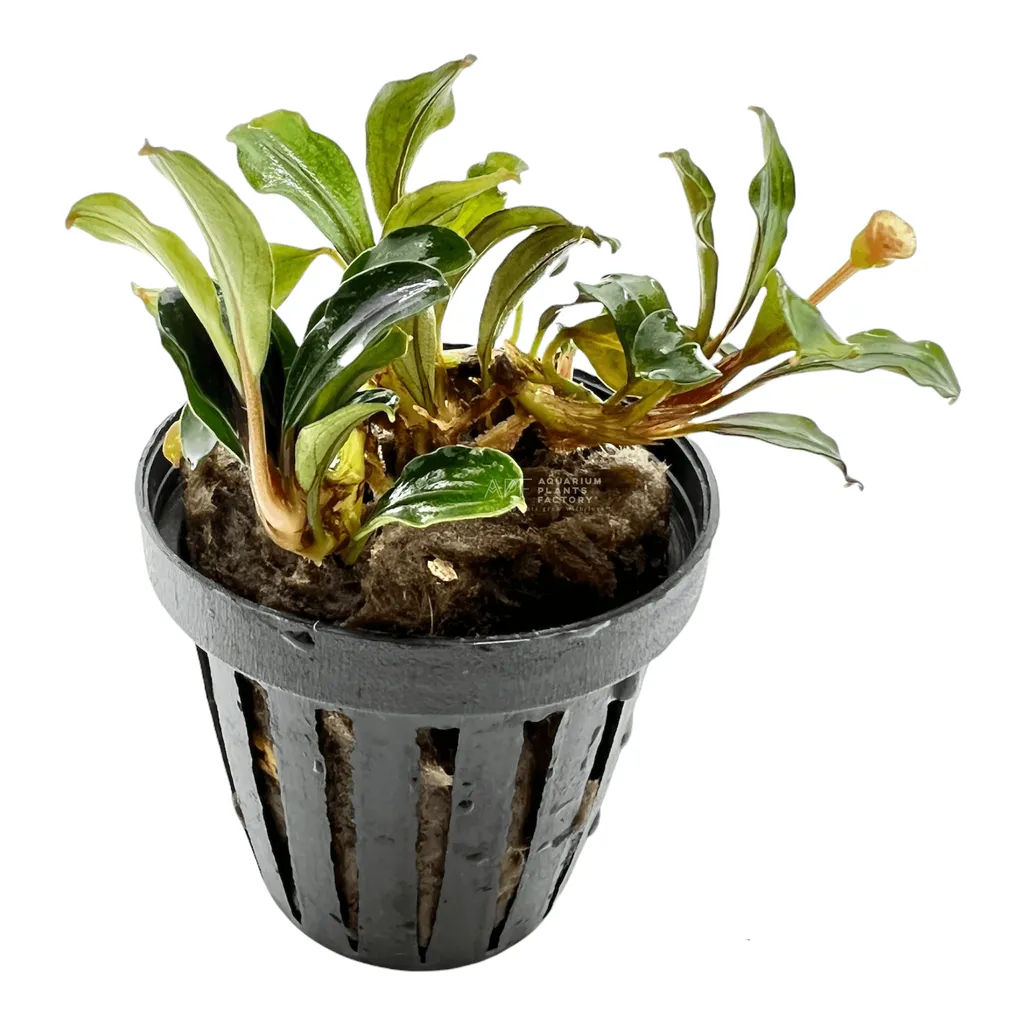
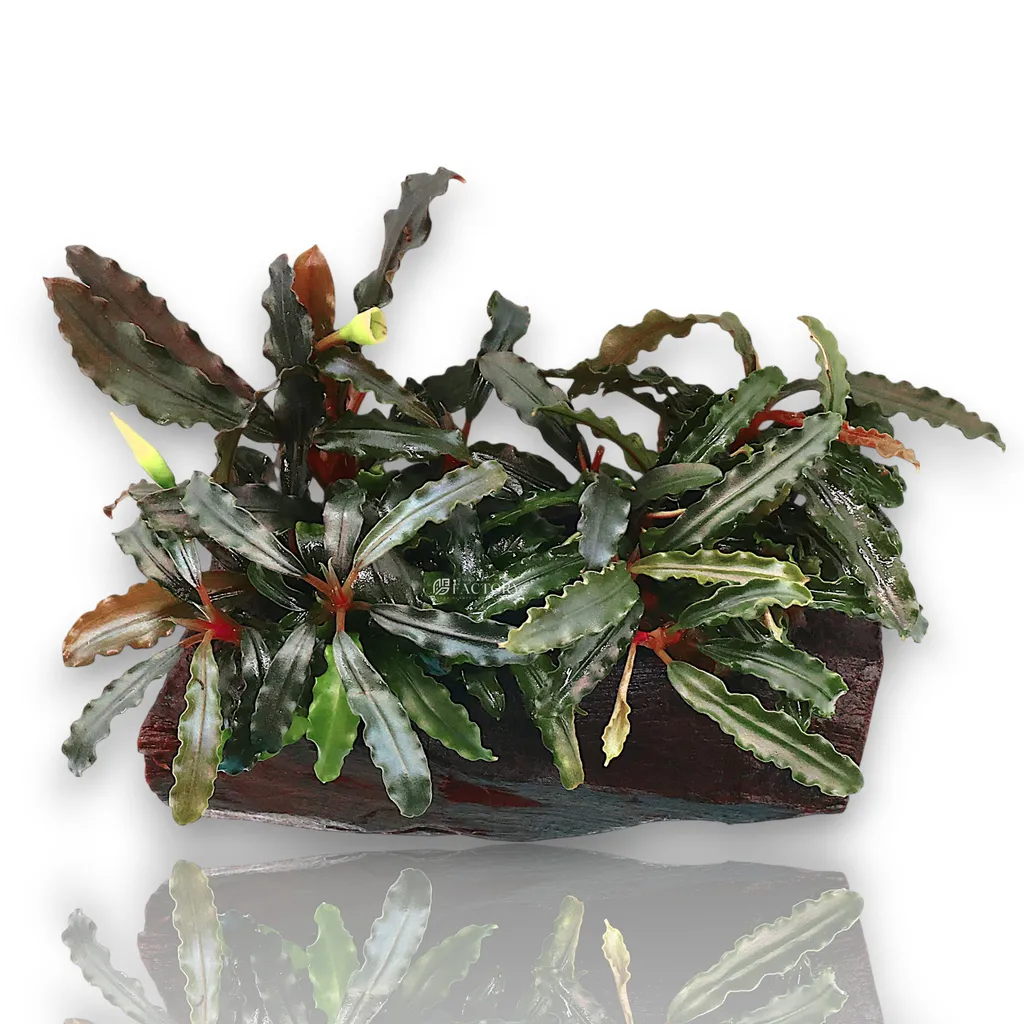
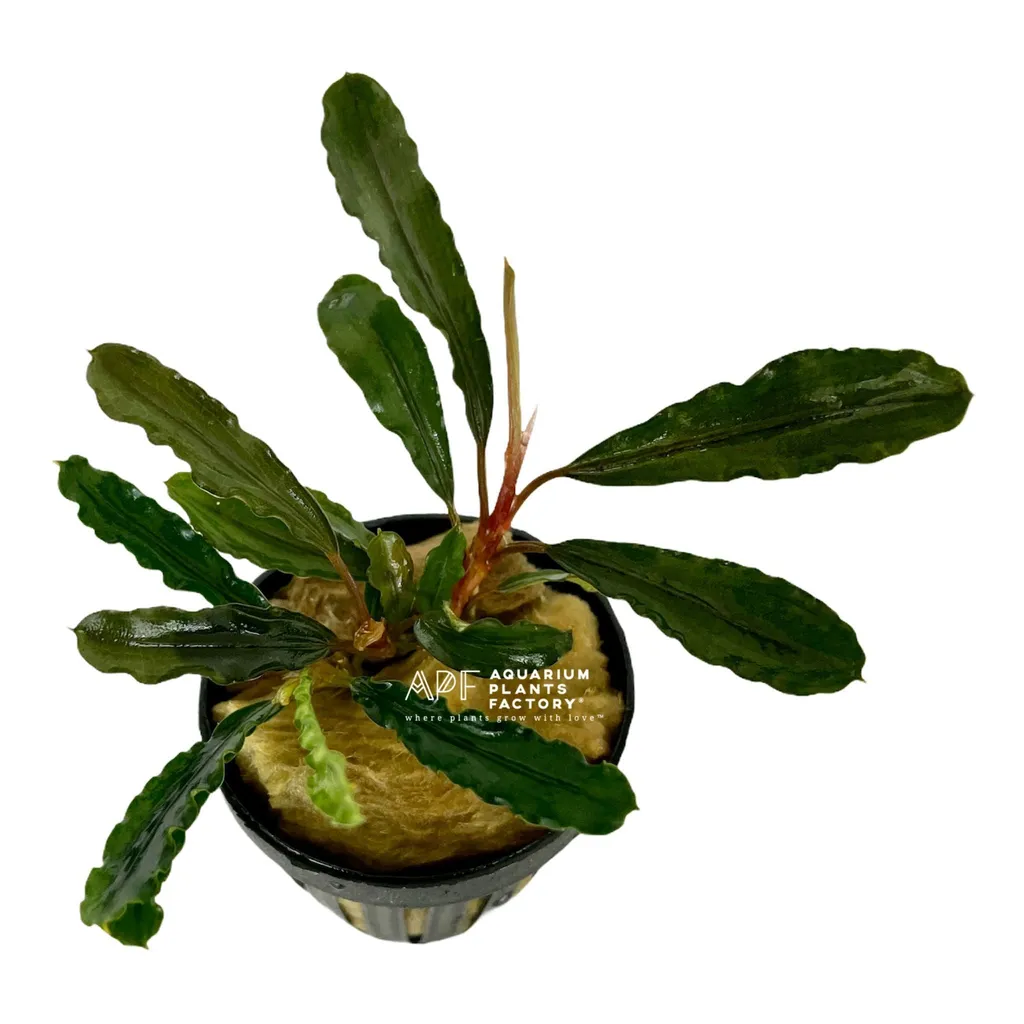
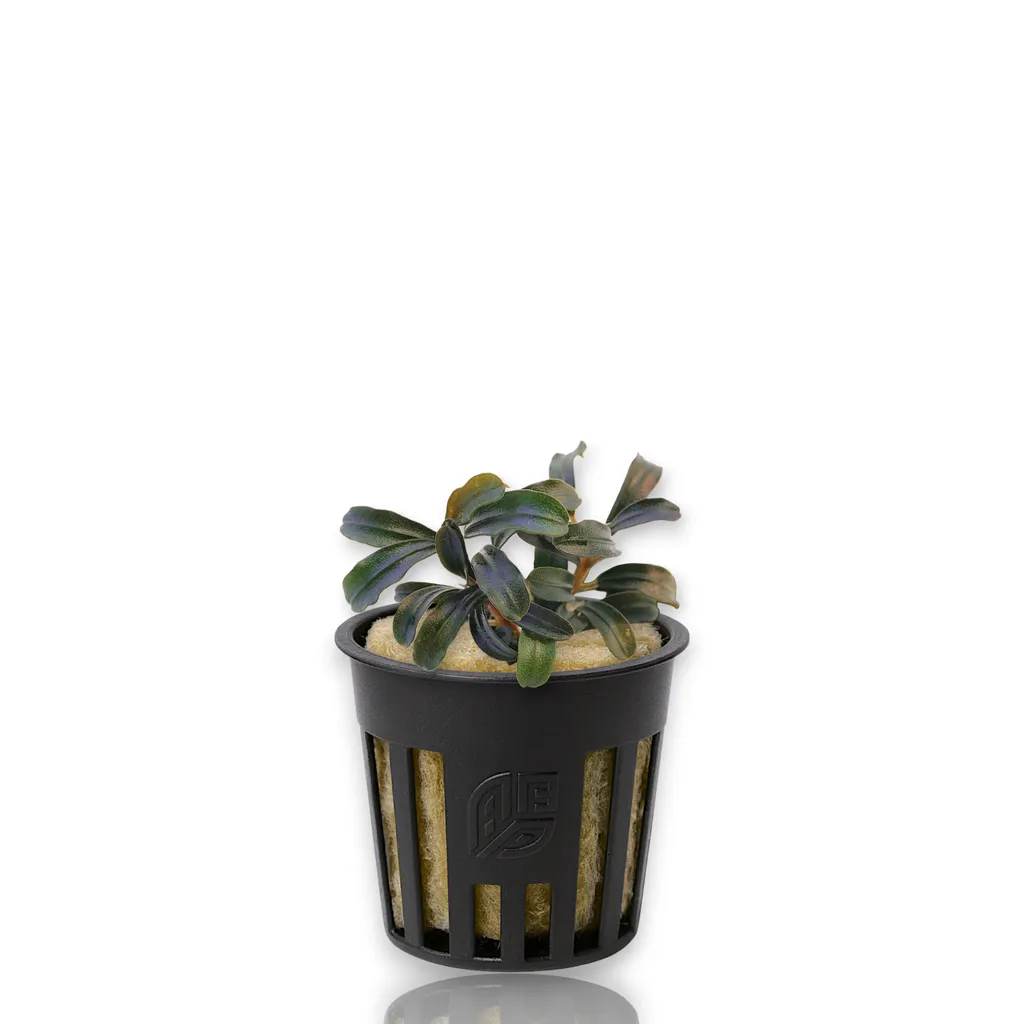
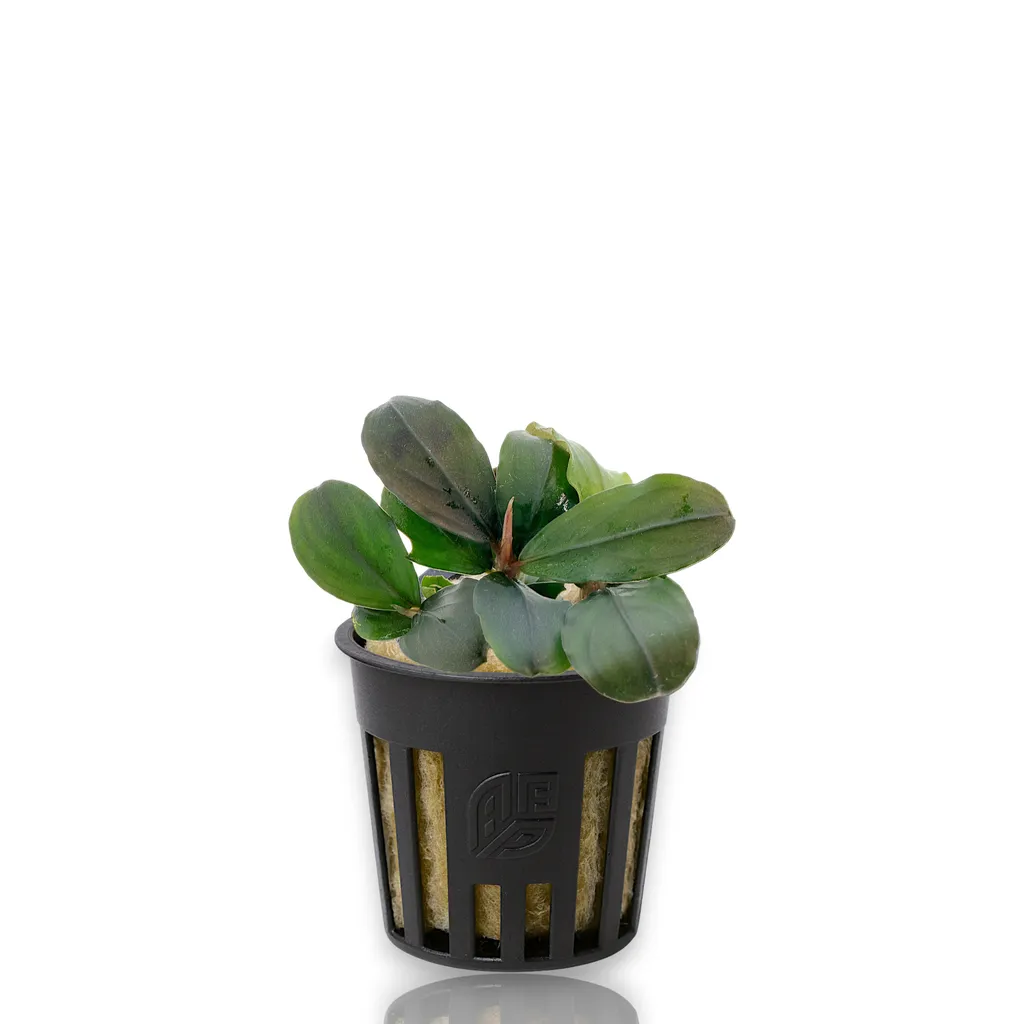
Dark Phantom is a compact clone with short leaves, suited to nano tanks, shrimp tanks and small stones. Its deep green reads best beside brighter green plants and mosses, so set it where lighter foliage surrounds it. Low to moderate light is enough. CO2, good circulation and regular fertilizer help it grow and color up. Attach it to stone or driftwood with glue or thread and leave the rhizome uncovered. Hold the water steady after planting to limit melt. Cut the rhizome with clean scissors to split a clump.
In the wild
No seller publishes a species or a collection site for Dark Phantom beyond the island of Borneo. Bucephalandra grow wild nowhere else, living as rheophytes on stone and wood in fast, oxygen-rich streams. The plants are submerged when rains raise the water and grow emersed in humid air when it falls.
Good to know
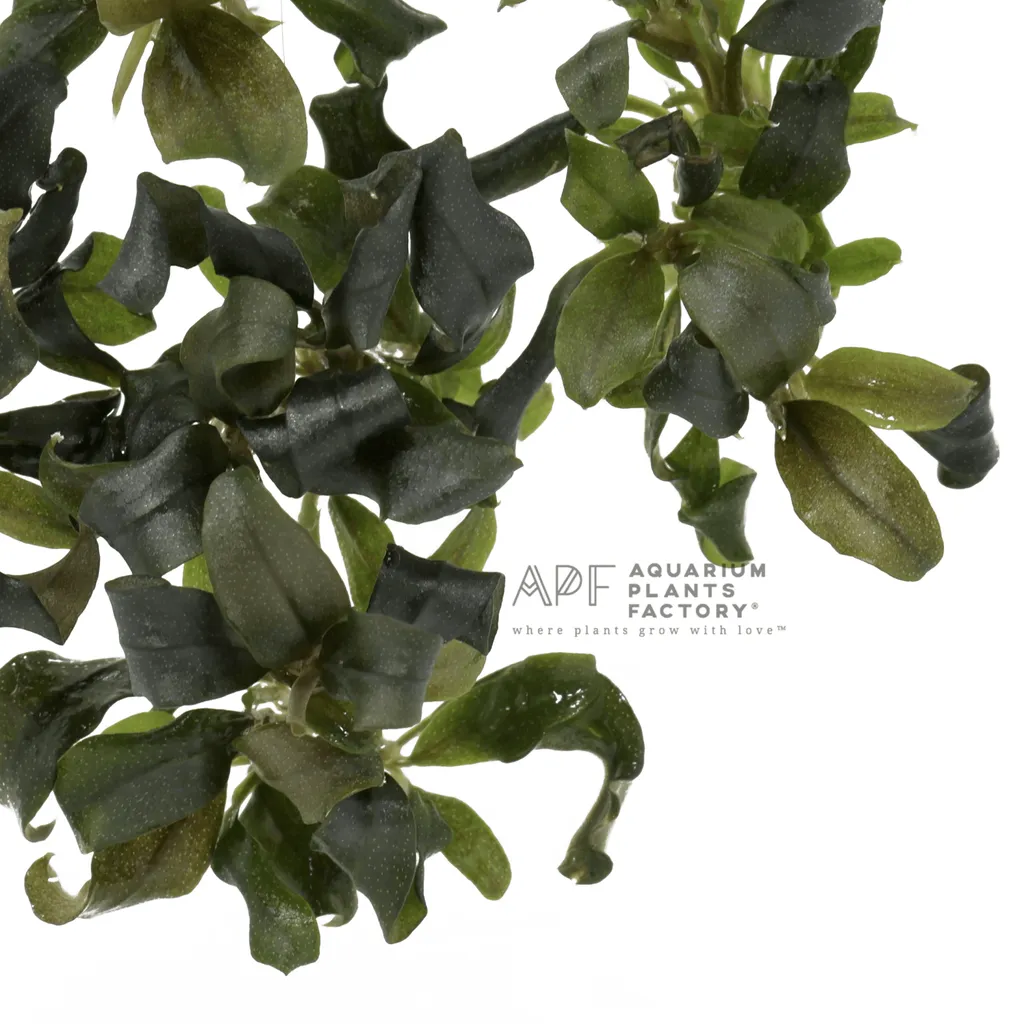
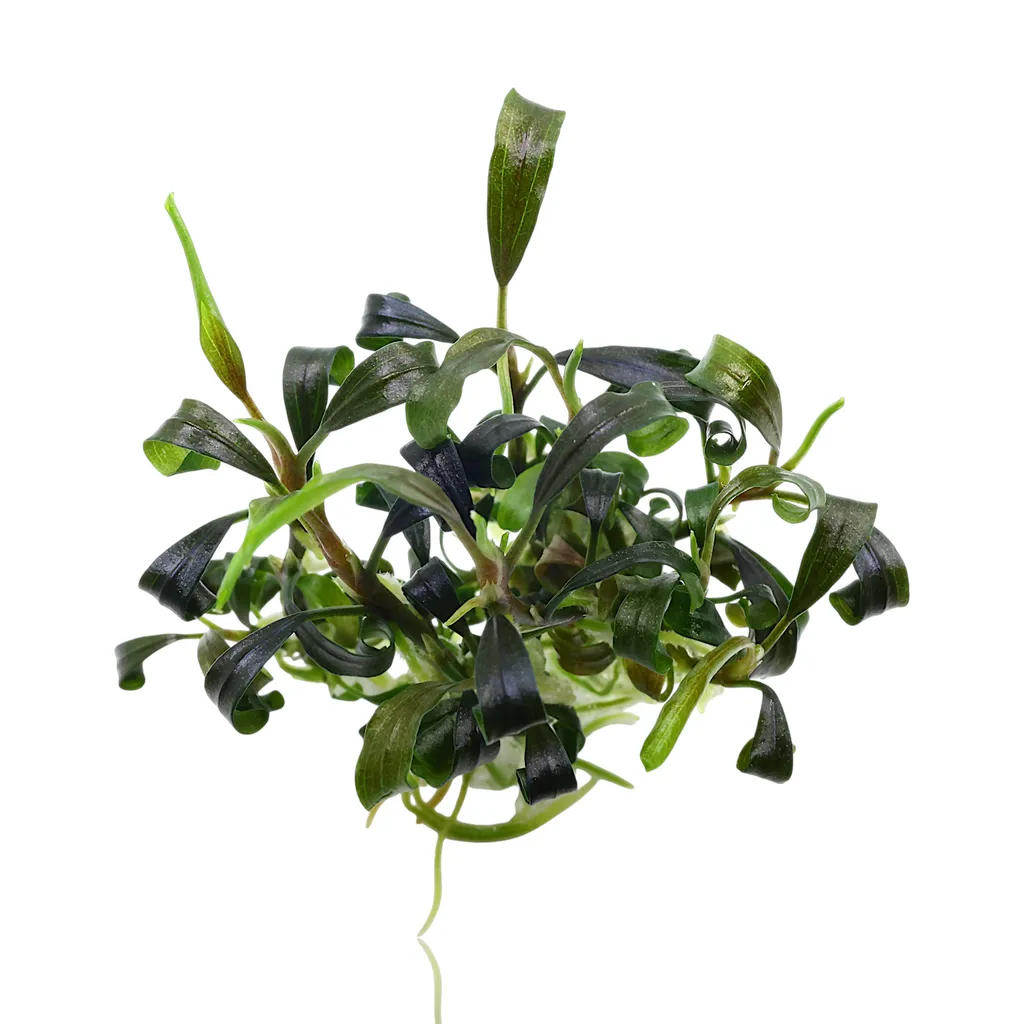
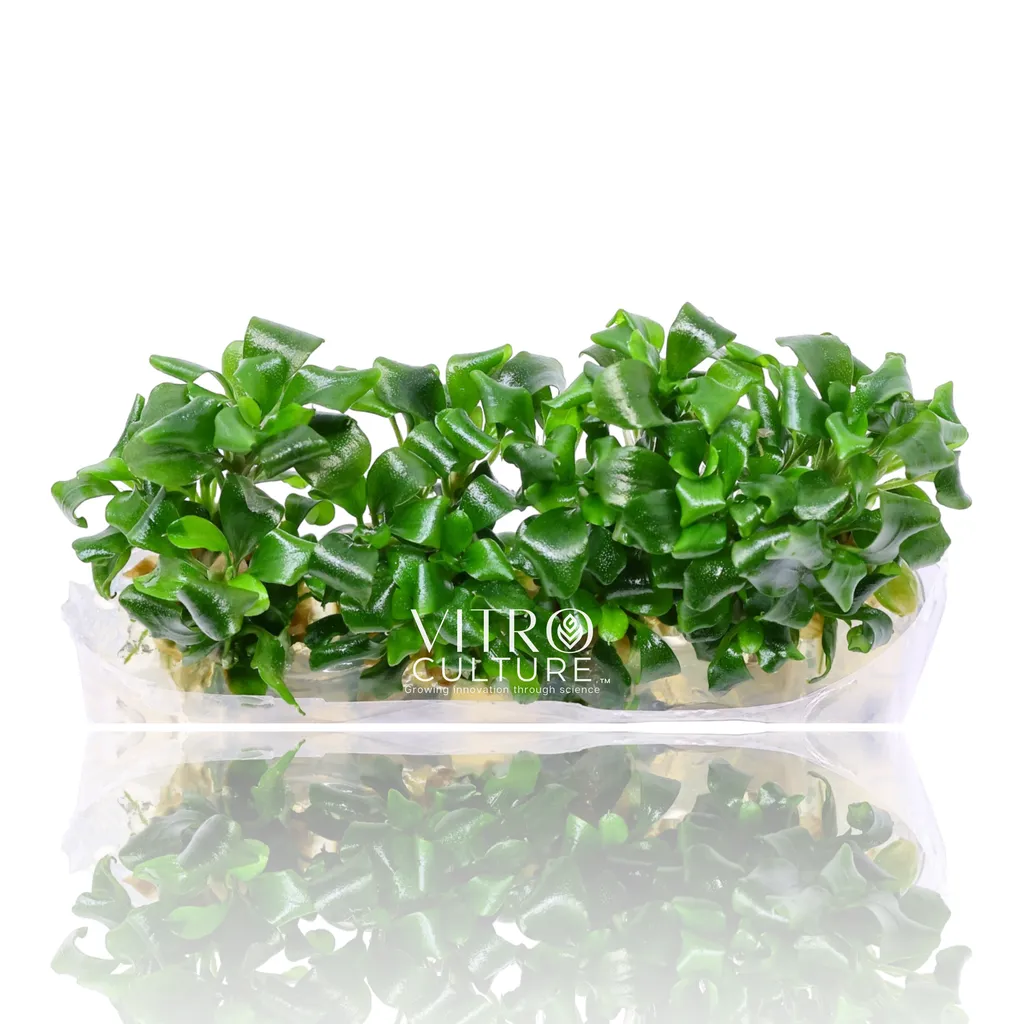
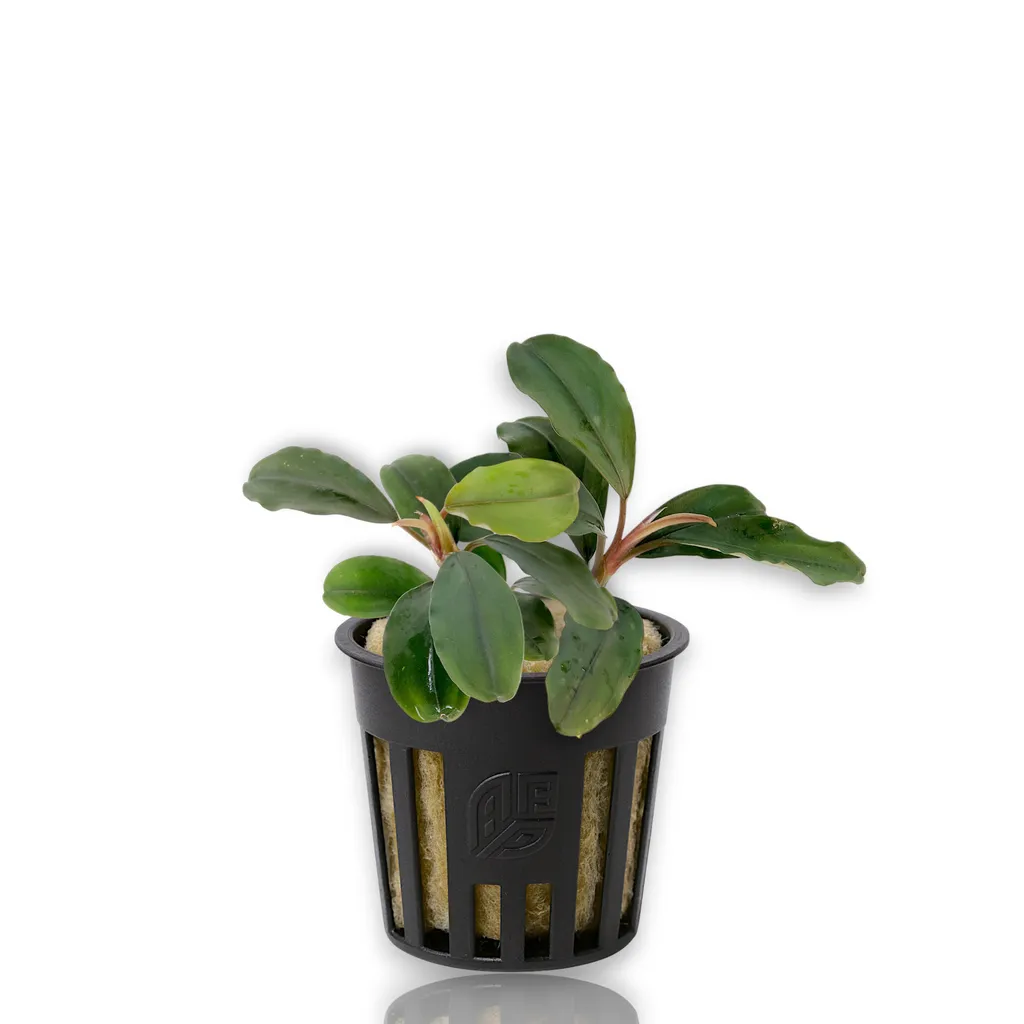
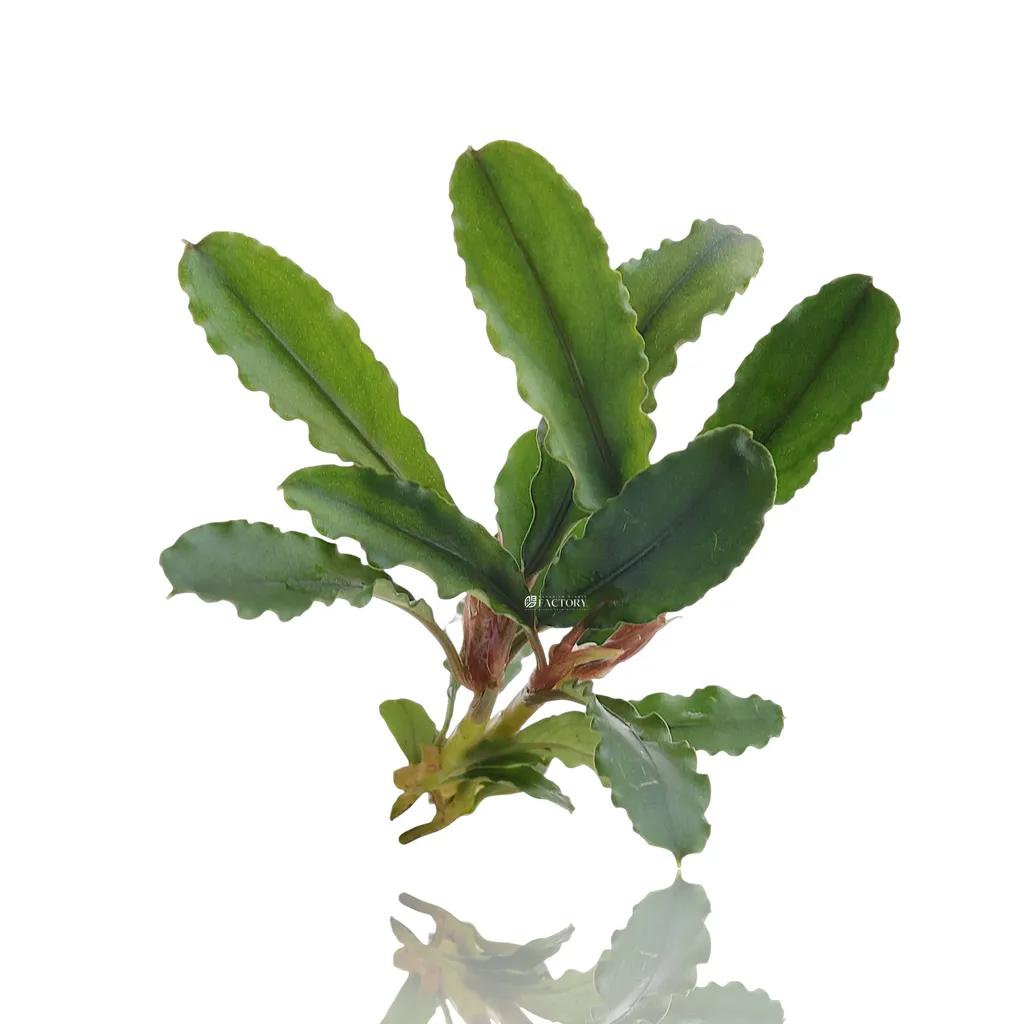
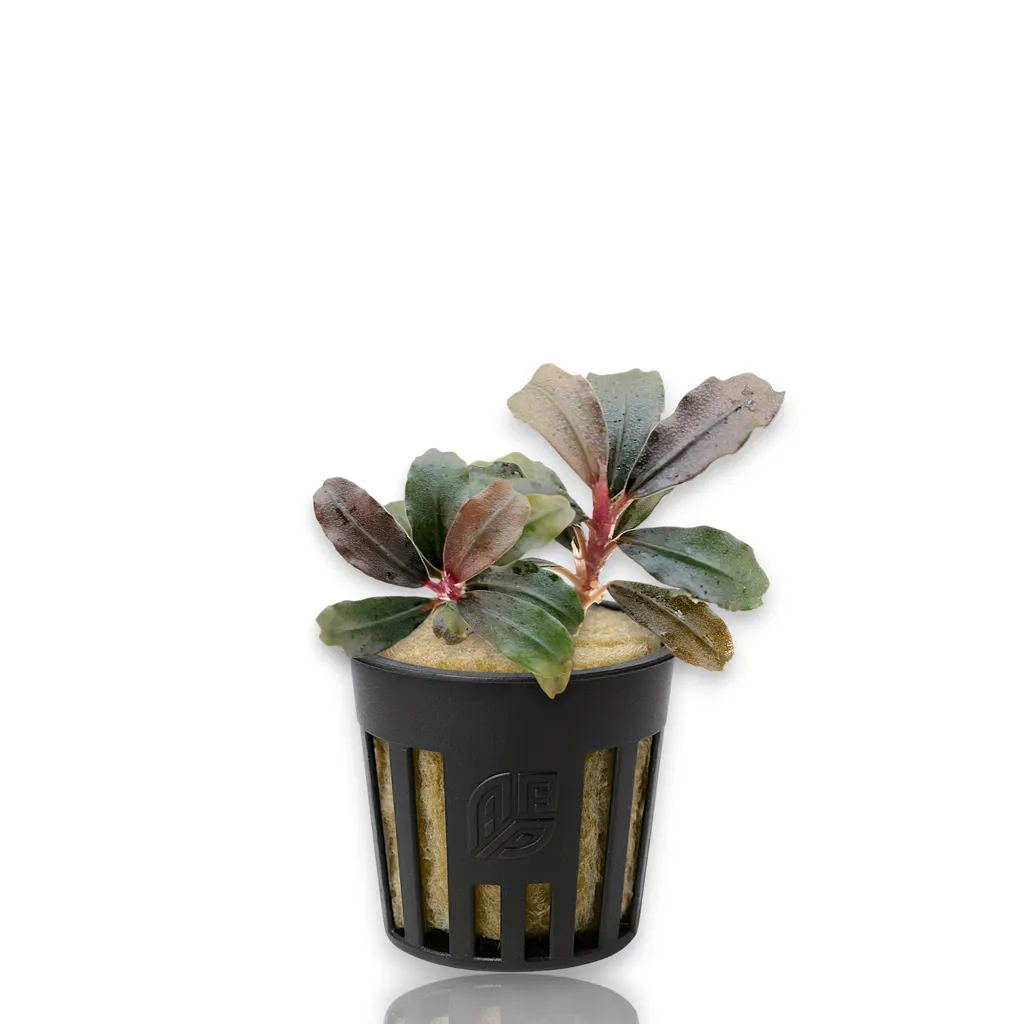
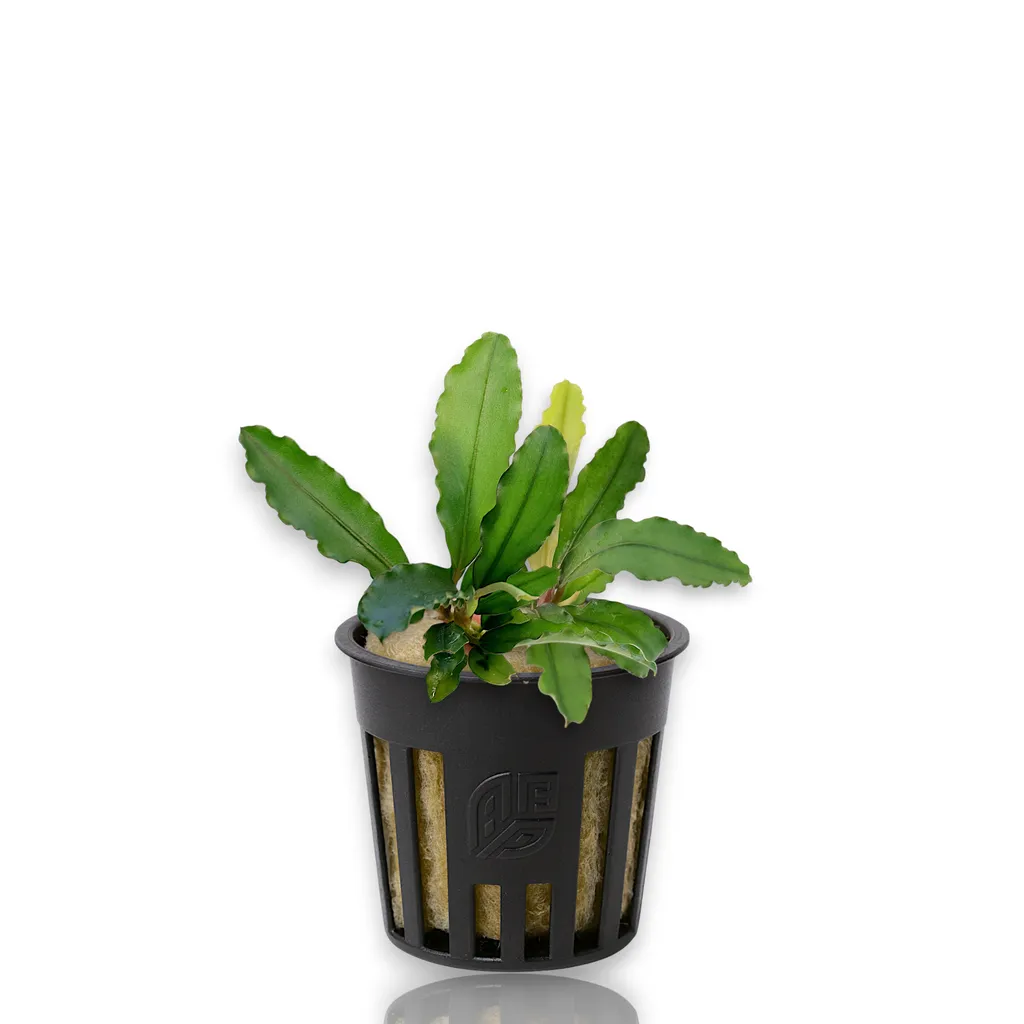
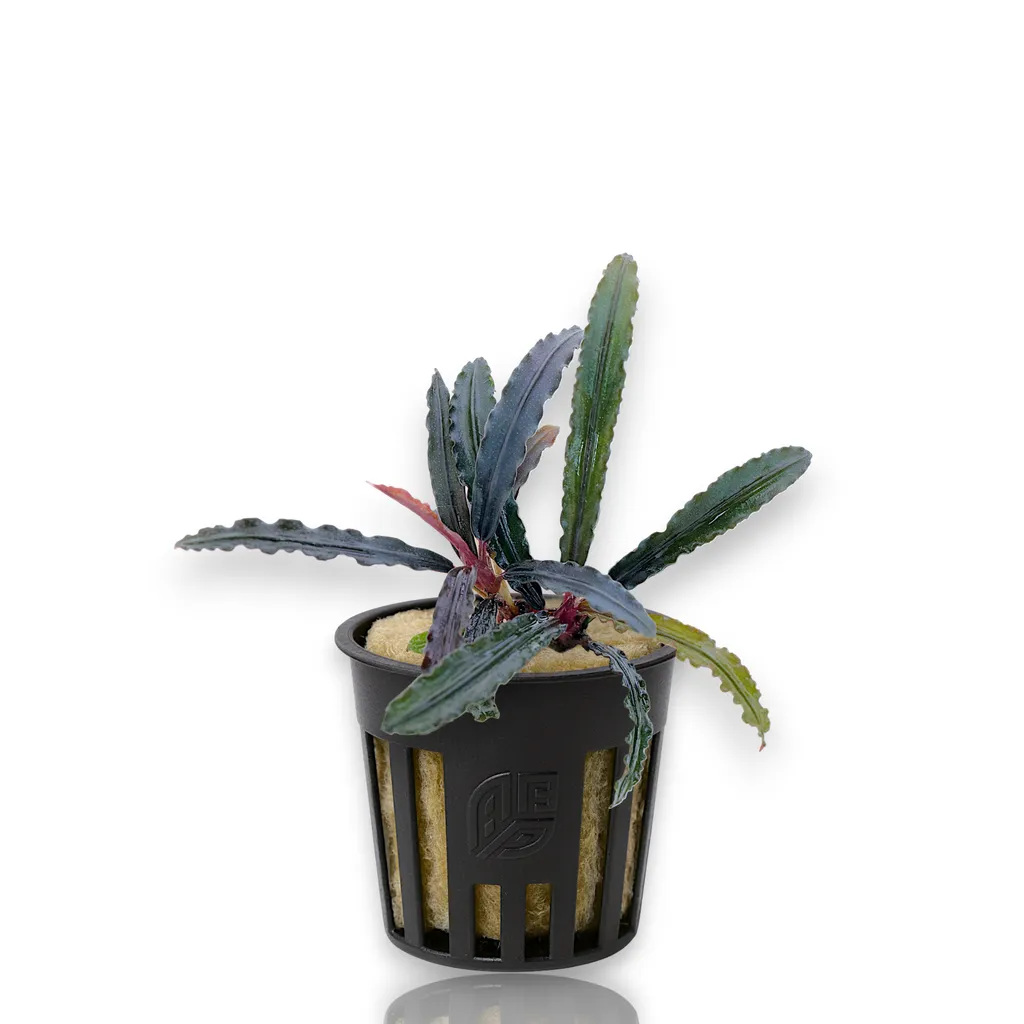
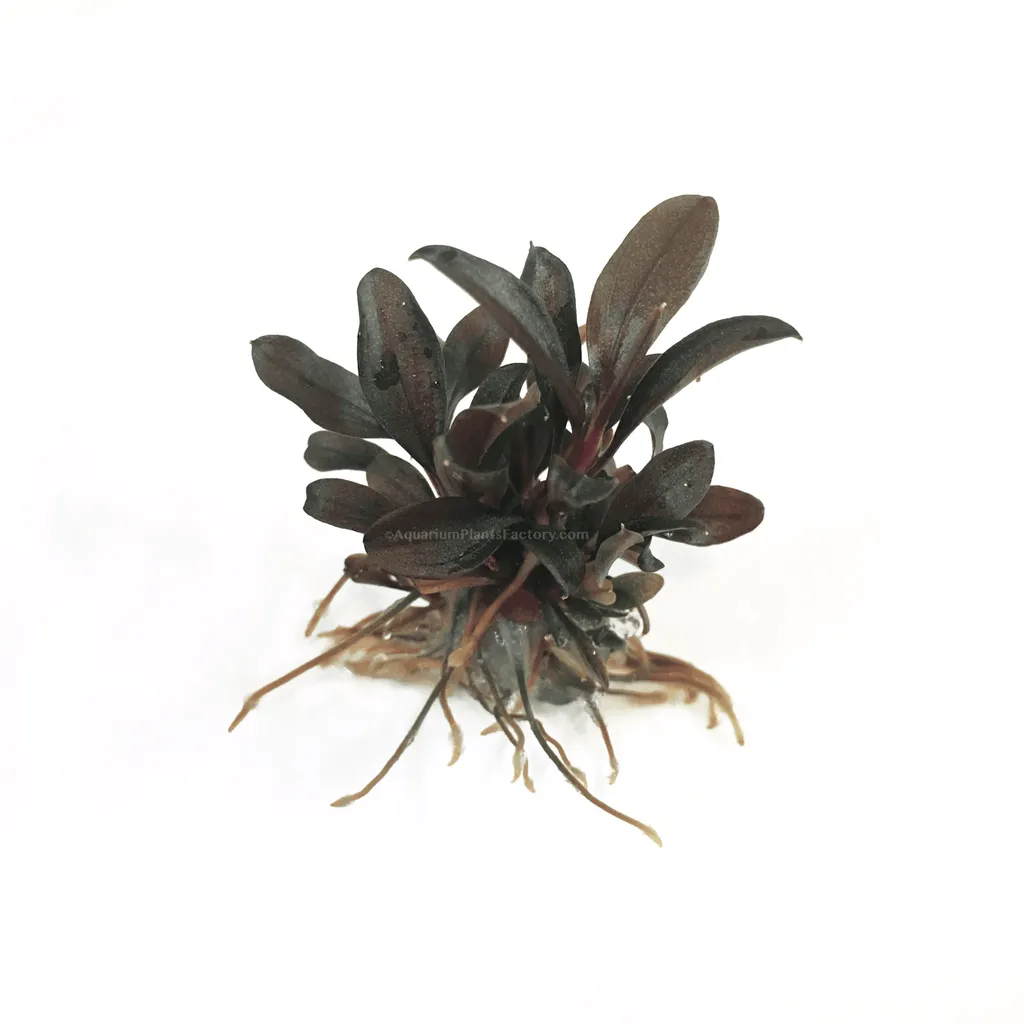
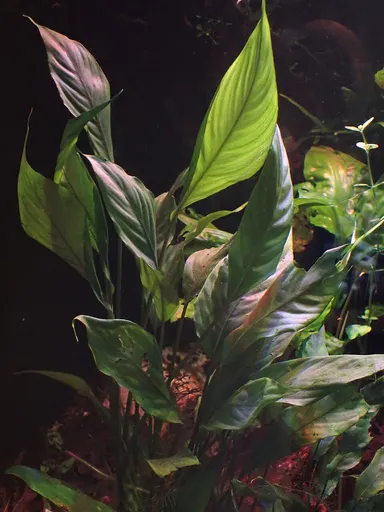
Dark Phantom is a Bucephalandra of unknown species and locality, placed like the rest of its genus in the arum family, Araceae. It grows compact, with short, obovate, glossy leaves in deep green. The margins are strongly rippled, and the stalks are red-brown. Its leaves are smaller and more crinkled than those of Dark Green Wavy and greener than the near-black leaves of Dark Velvet.
Did you know
Several other Buce carry Phantom in their names. Brownie Phantom, Red Phantom, Phantom Mini and a European Black Phantom are separate plants, so check the full name before ordering Dark Phantom.
 Low lightEpiphyte2.4 in (6 cm)
 Low lightEpiphyte3.9 in (10 cm)