Borneo (trade clone, species and collection site unknown)
Overview
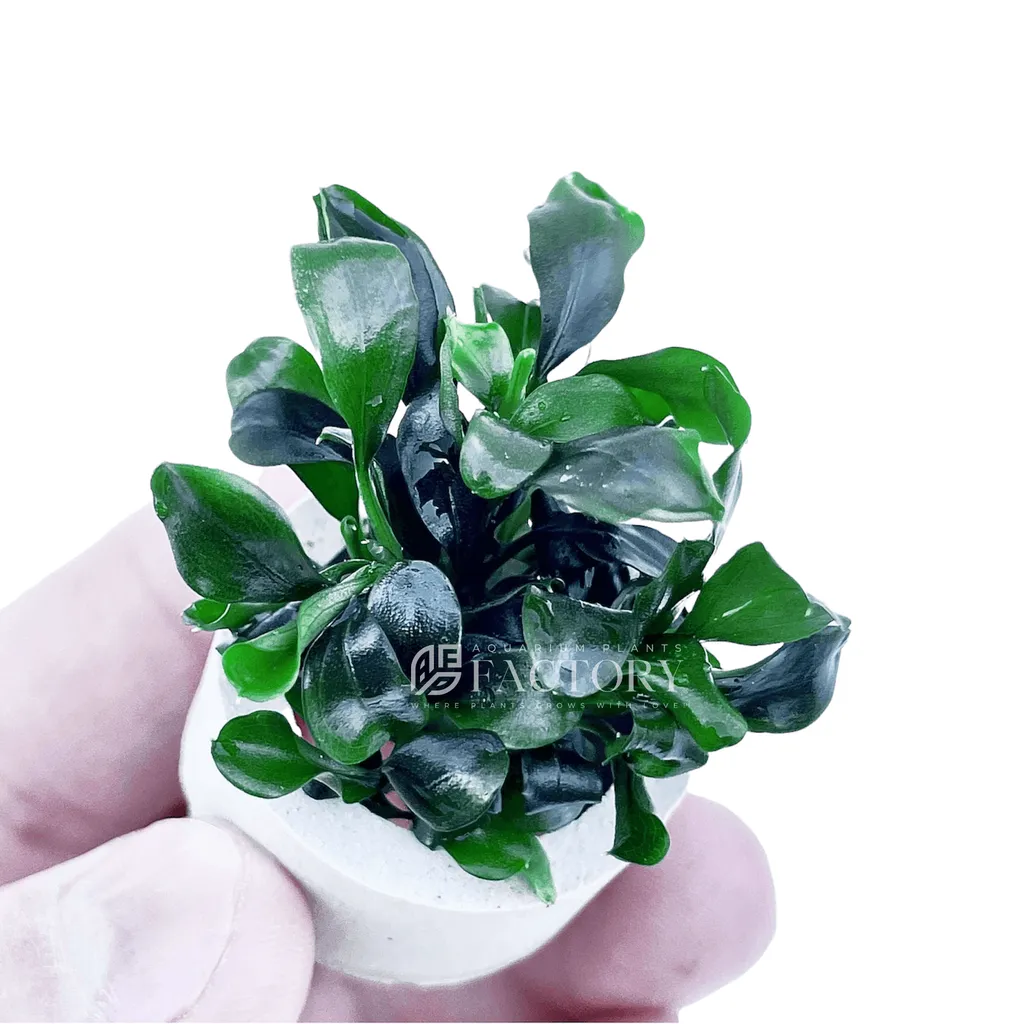
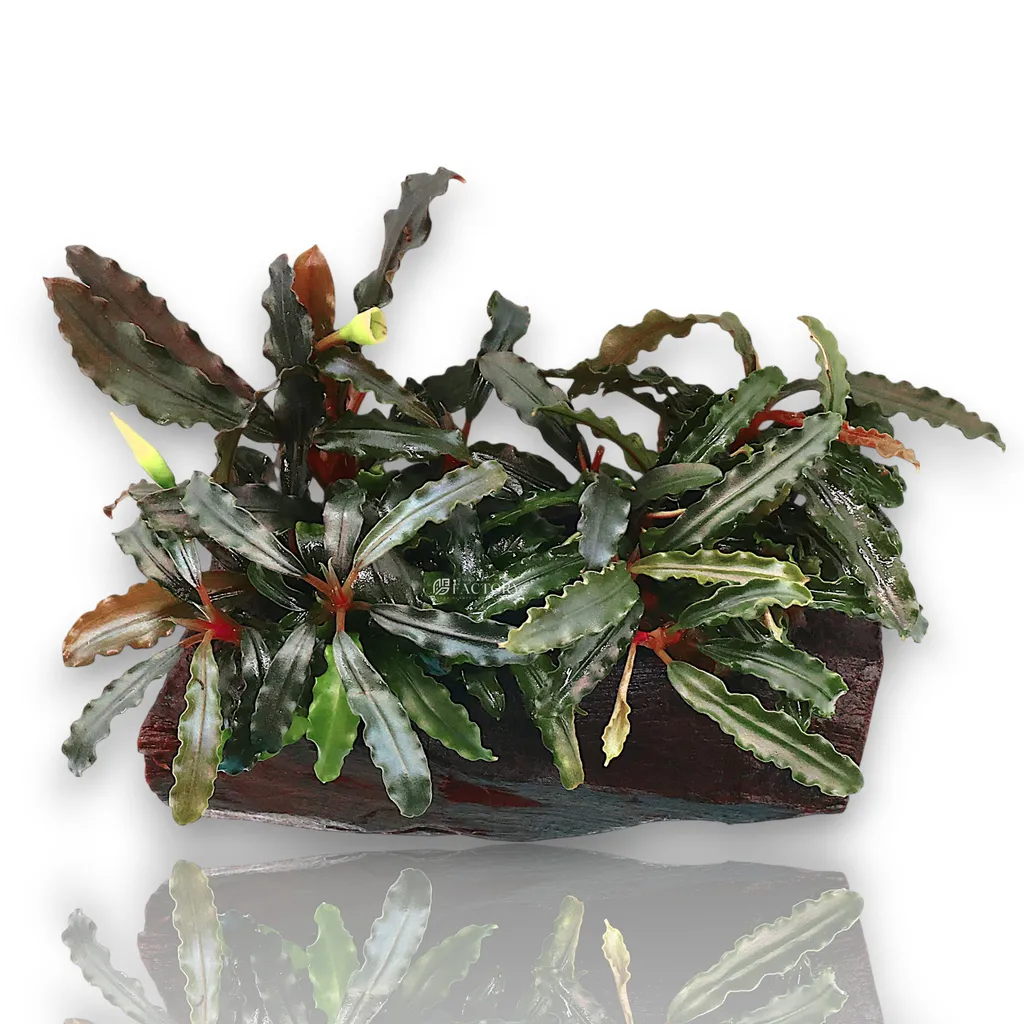
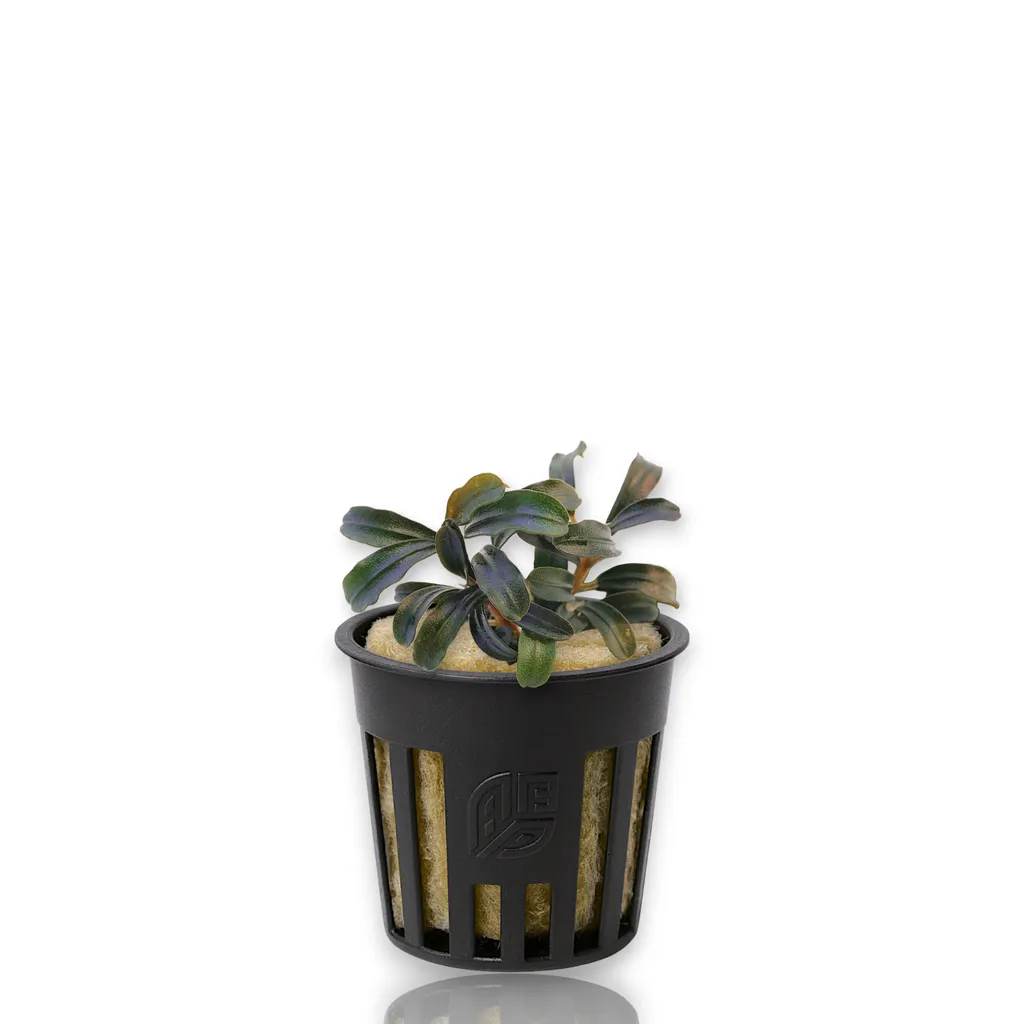
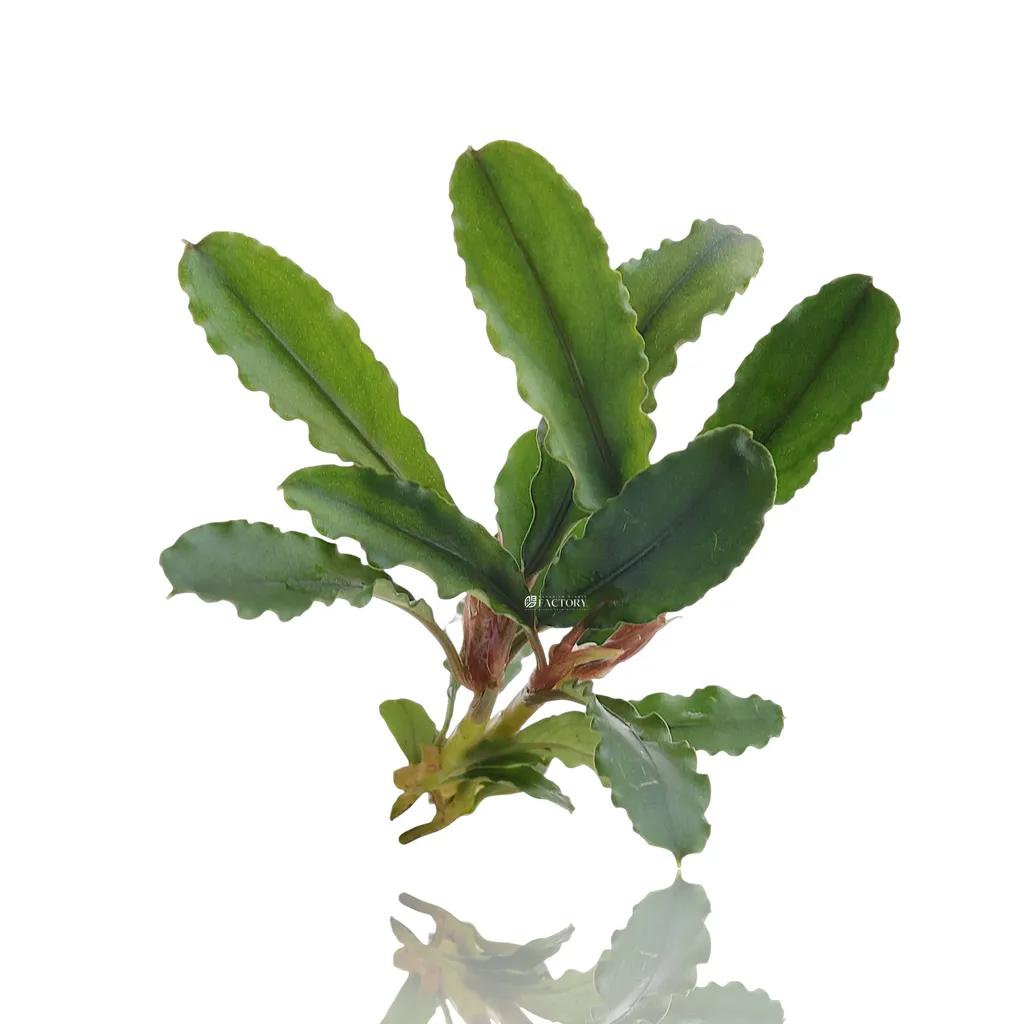
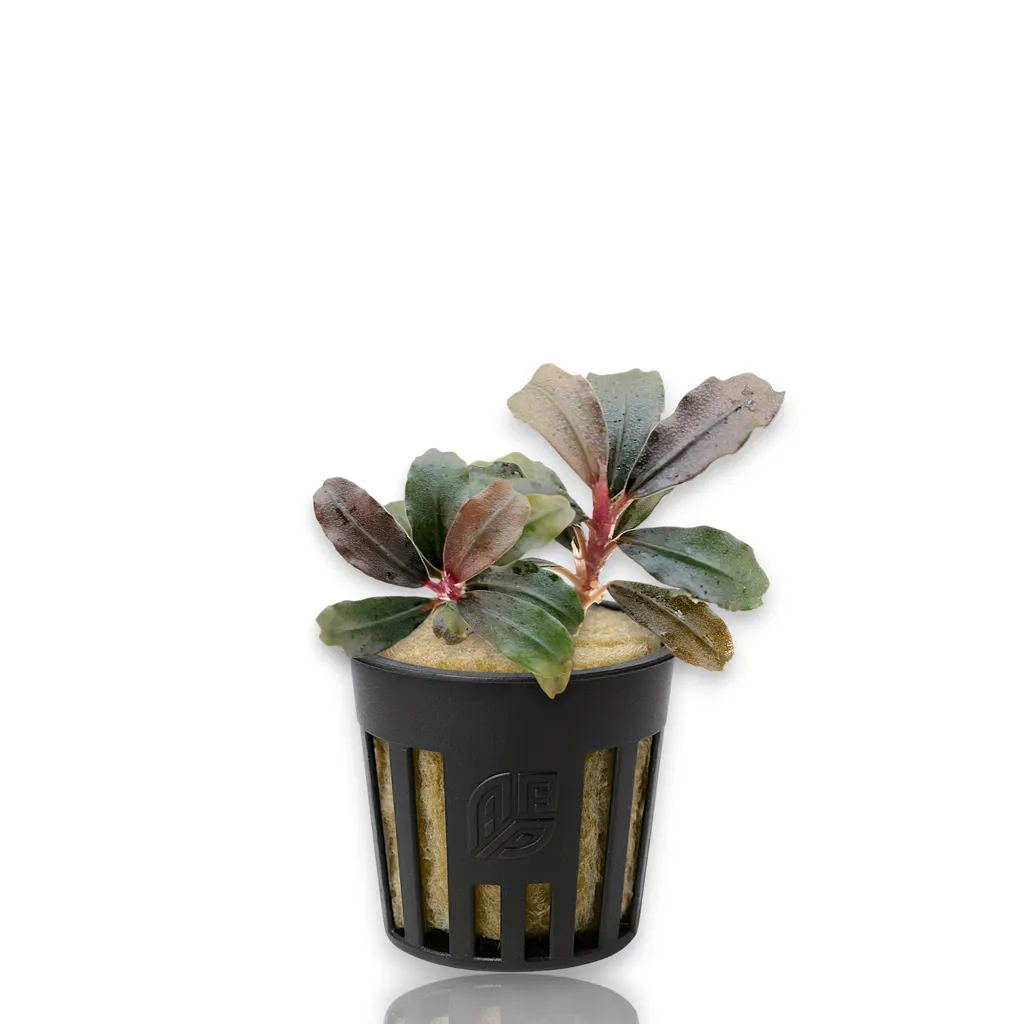
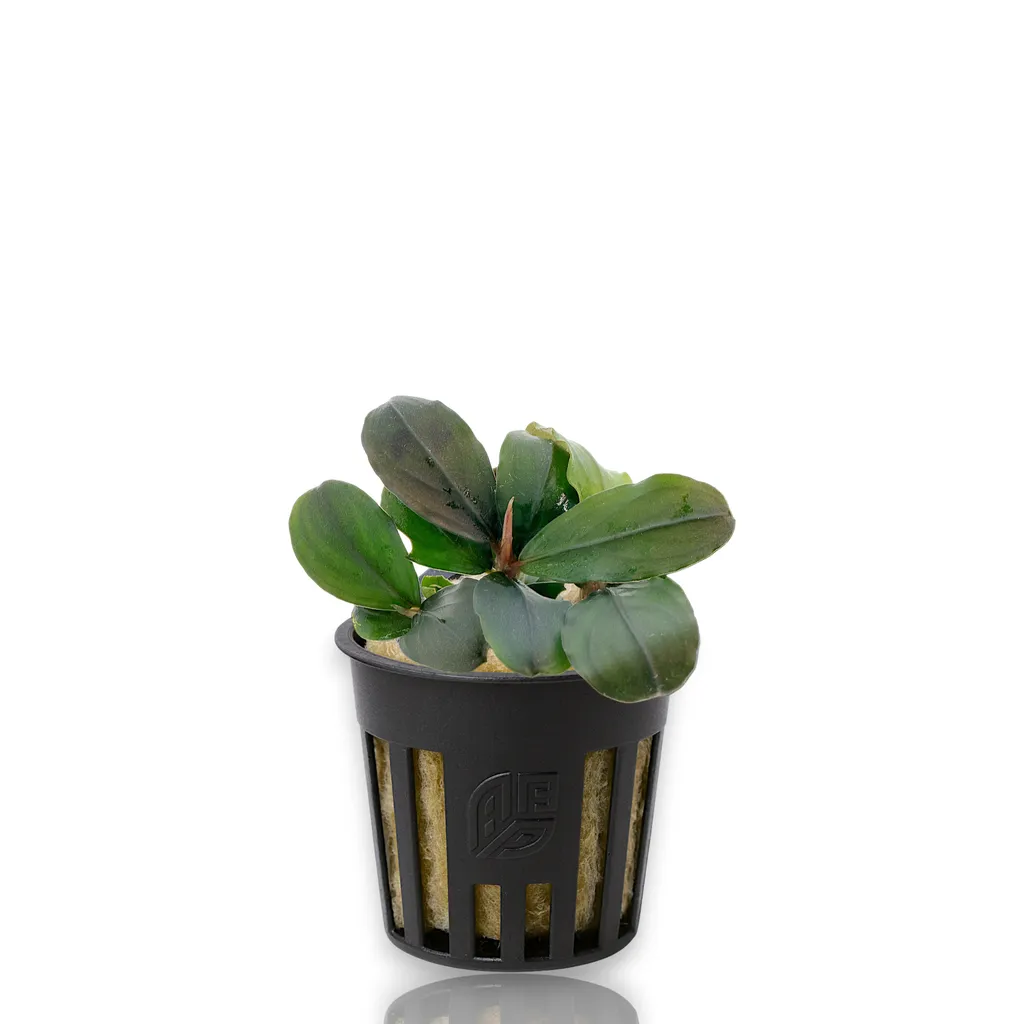
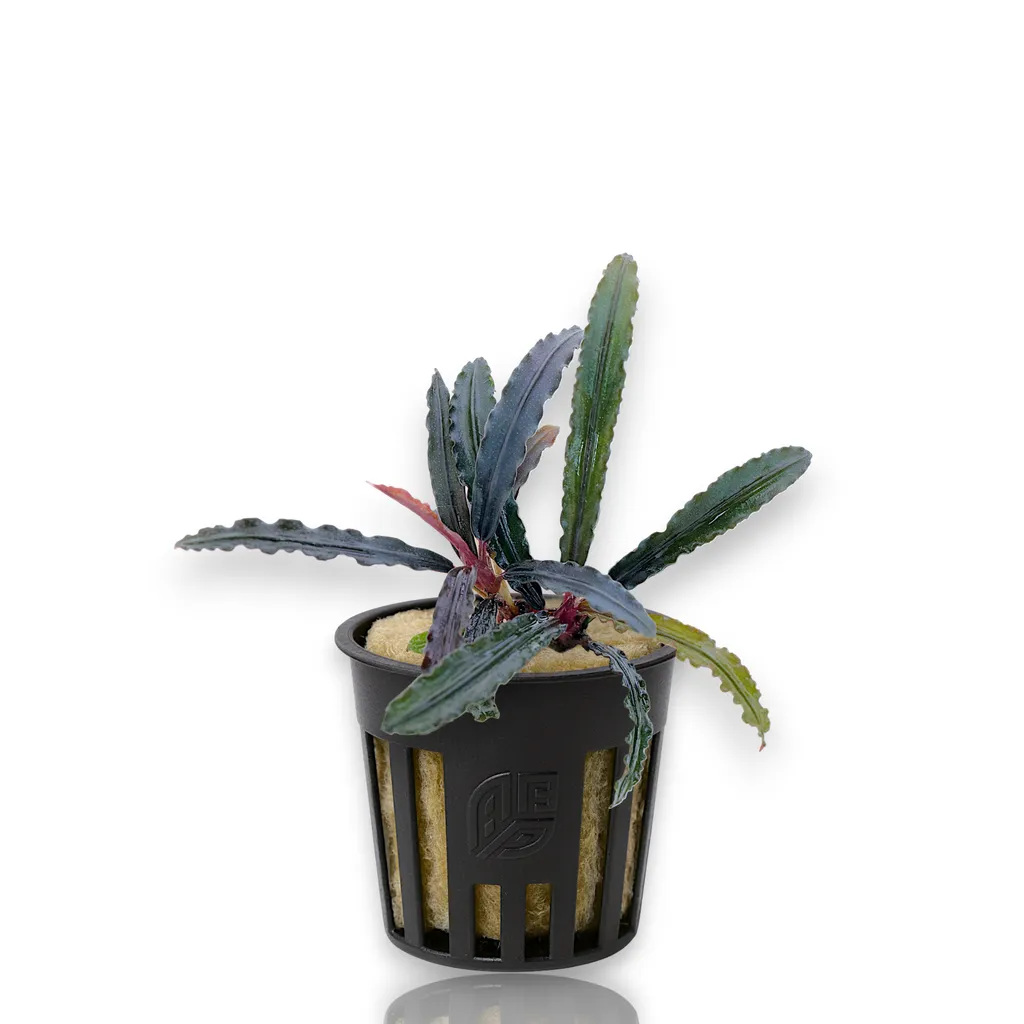
Artemis stays compact, reaching 5 to 10 cm in height. It works as a detail plant in the midground or along the front of a hardscape. RGB or full-spectrum LEDs bring out its violet highlights, while a warm white lamp shows the leaves as plain dark green. Keep the light low to medium, since stronger light invites algae on such slow leaves. Expect less than 5 cm of new growth in a year, so plant several rhizomes to cover a piece of wood. Fix it to driftwood or stone with thread or gel glue, leaving the rhizome exposed to the water.
In the wild
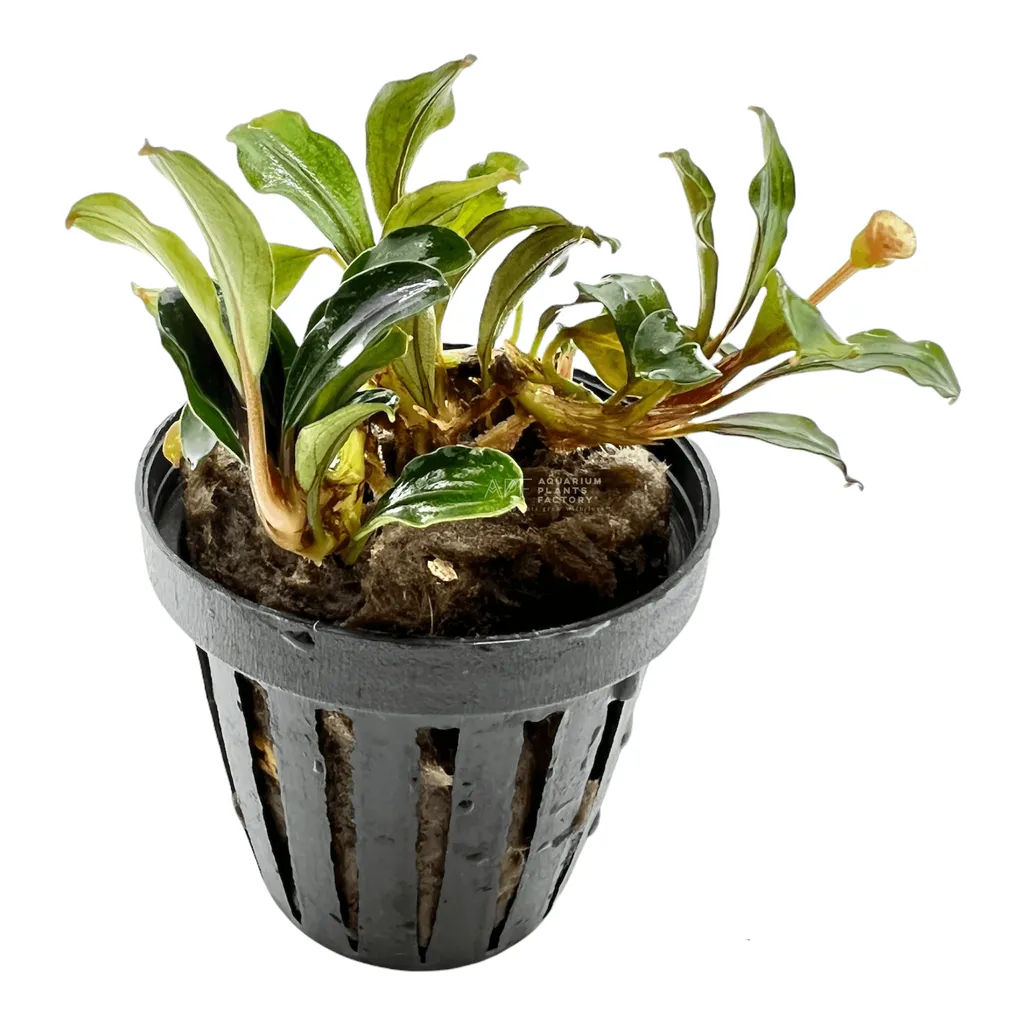
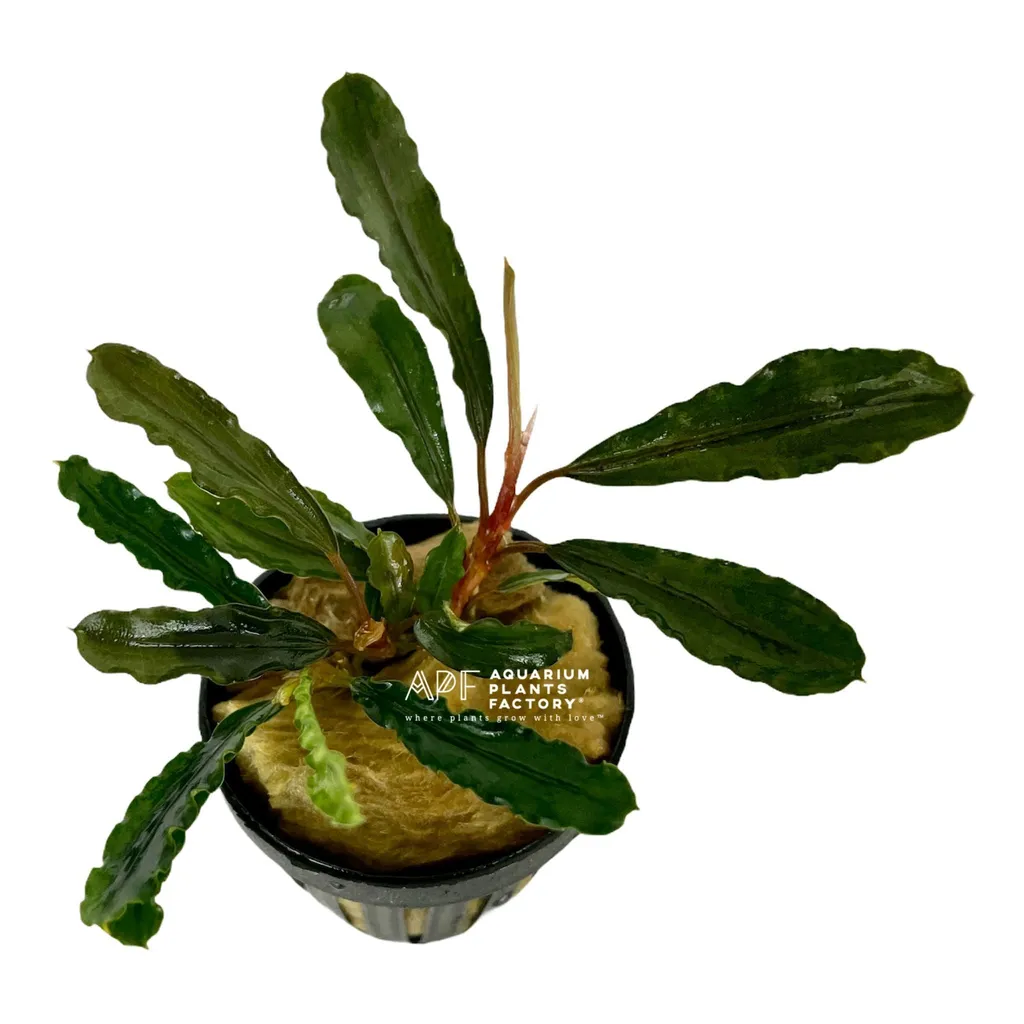
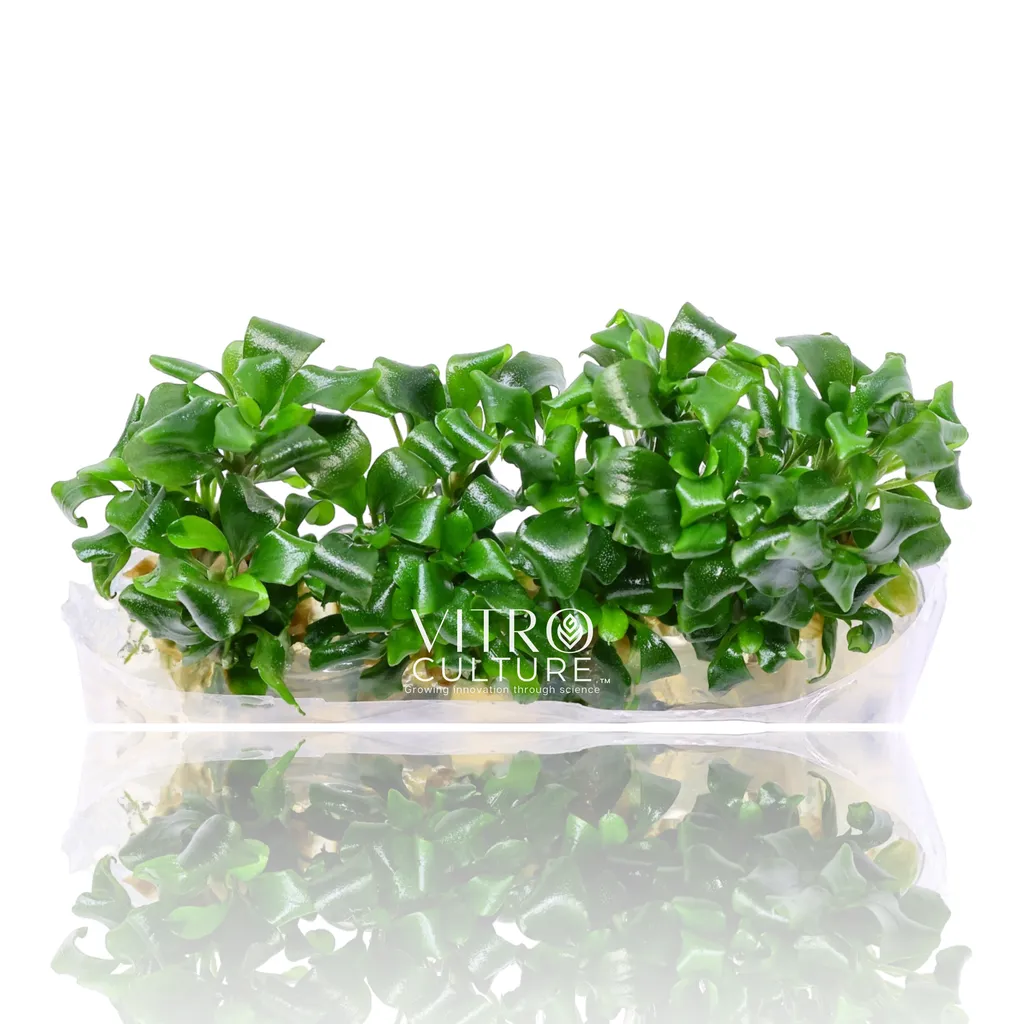
Artemis has no published species or collection site. It is sold farm-raised and as a tissue-culture cup at Aquarium Plants Factory. The genus is native to Borneo, where the plants cling to rocks in fast, shaded streams. The plants switch between submersed and emersed leaves as the water rises and falls with the seasons.
Good to know
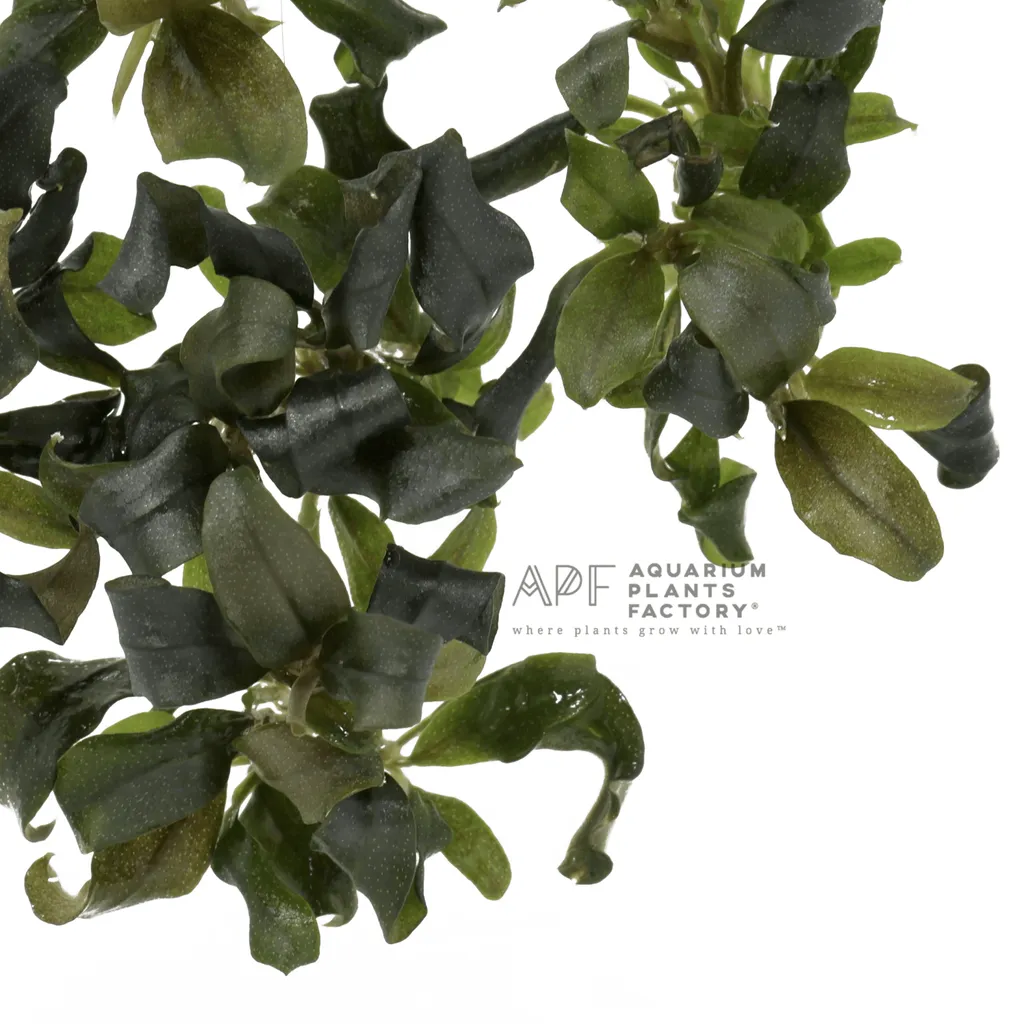
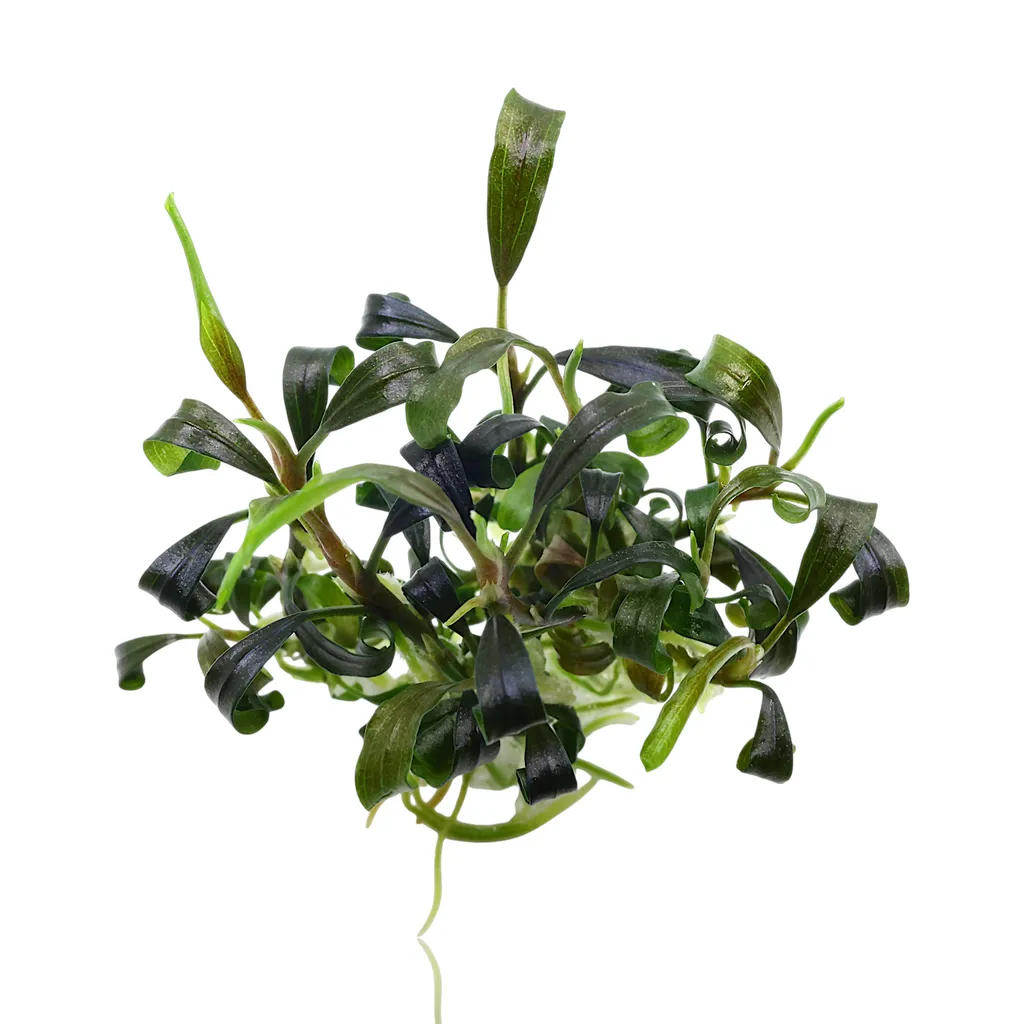
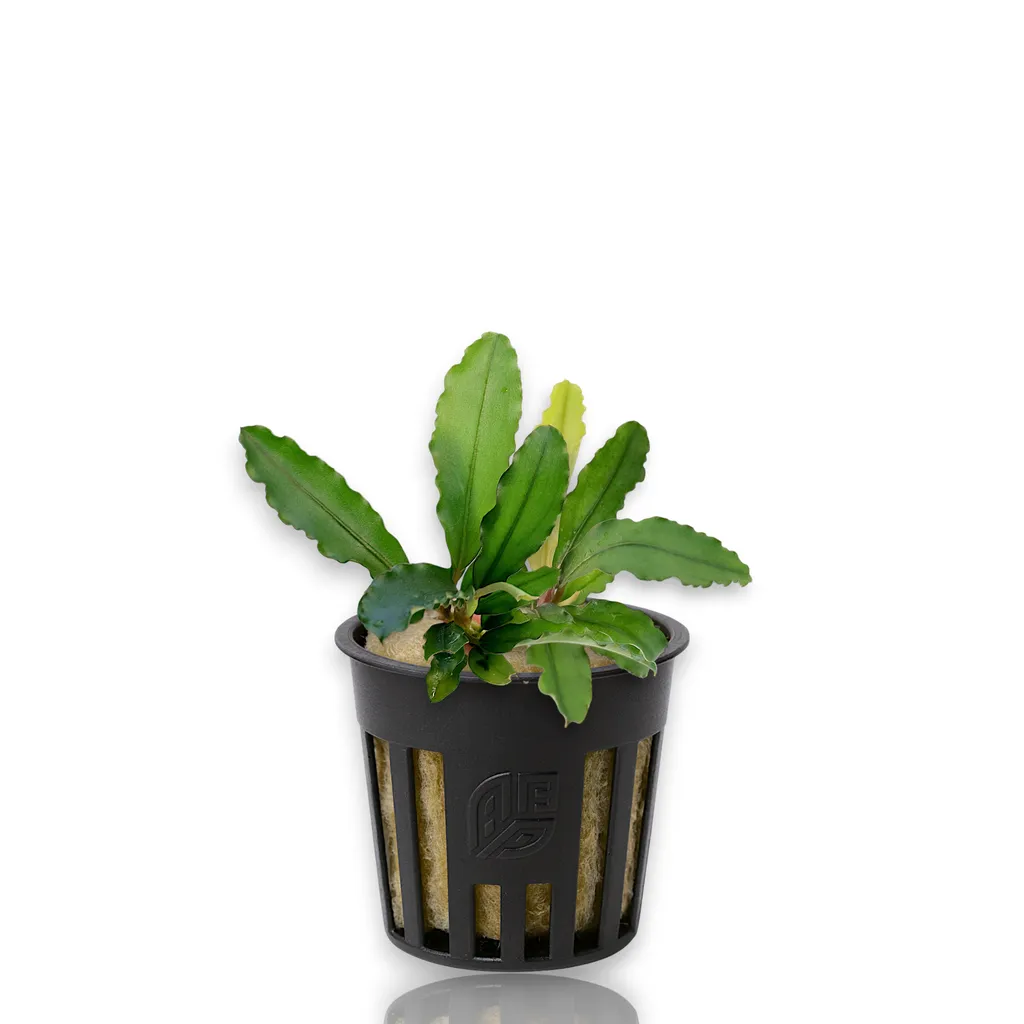
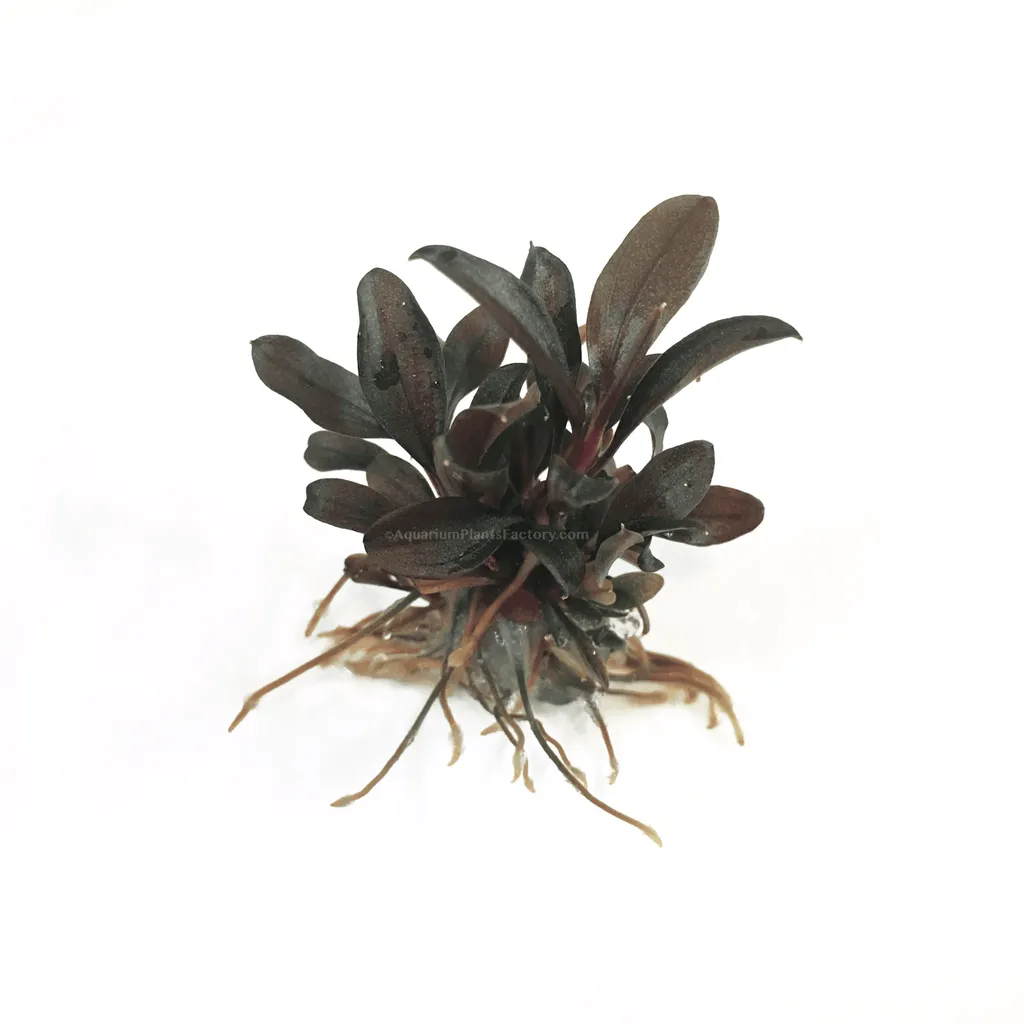
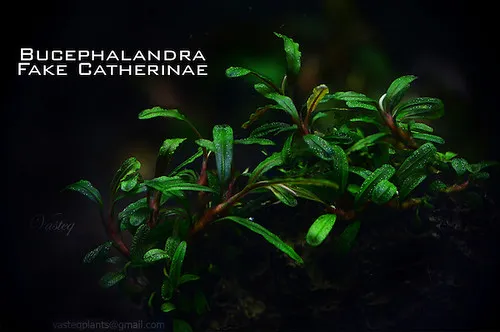
Artemis grows from a creeping rhizome, much like Anubias, its relative in the family Araceae. Its elongated, dark green leaves have crinkled, wavy margins and sit on red stalks. The green carries bronze undertones, and moderate to strong light adds a silvery sheen. Artemis has darker, narrower leaves than Wavy Green and lacks the near-black velvet look of the Velvet forms.
Did you know
Artemis holds its leaves in a crown that looks like a miniature palm tree. Buce Plant suggests using that shape to create a sense of scale in nanoaquascapes.
 Low lightEpiphyte3.9 in (10 cm)
 Low lightEpiphyte2.4 in (6 cm)