Also known as Buce Variegated Marble, Bucephalandra Green Wavy Marbled, Bucephalandra cf. pygmaea 'Marble Variegated', Bucephalandra sp. 'Marble Variegated'
Cultivated form (nursery selection from Green Wavy, no wild range)
Overview
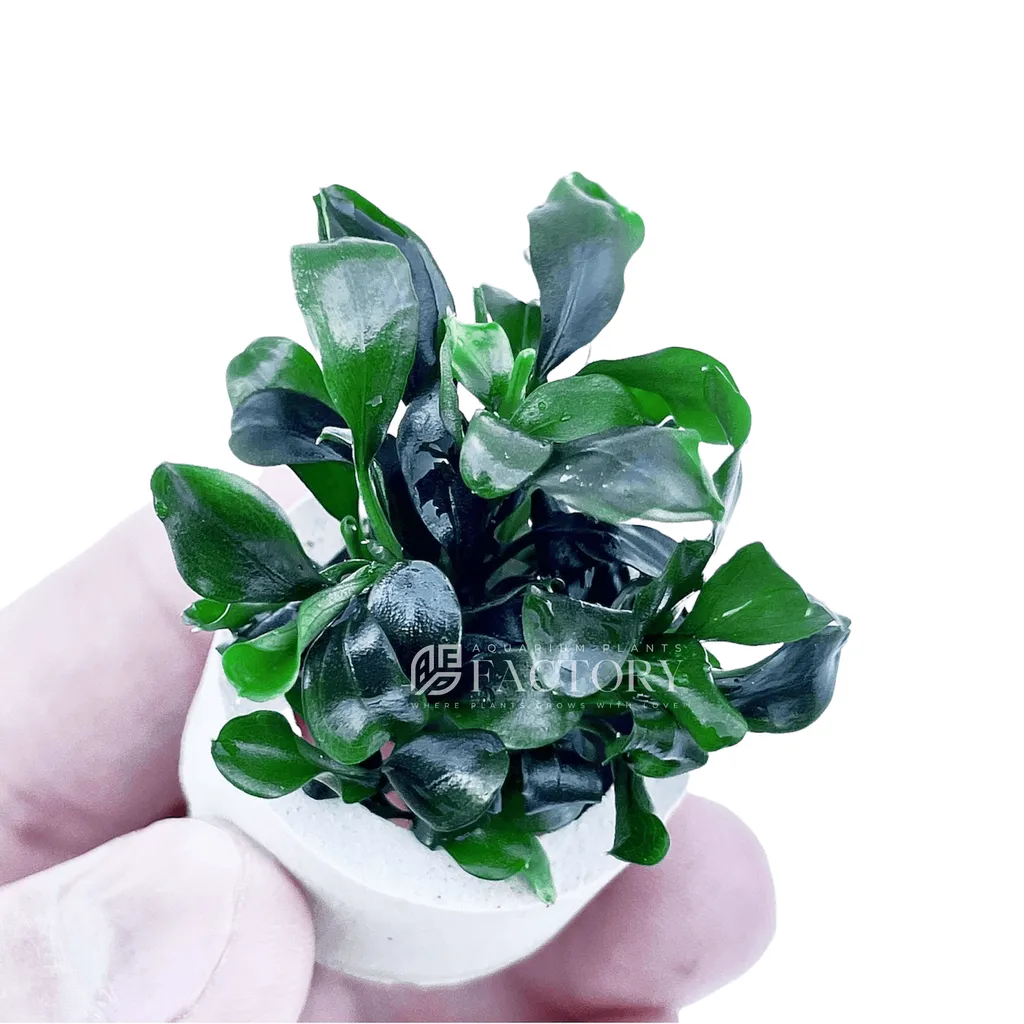
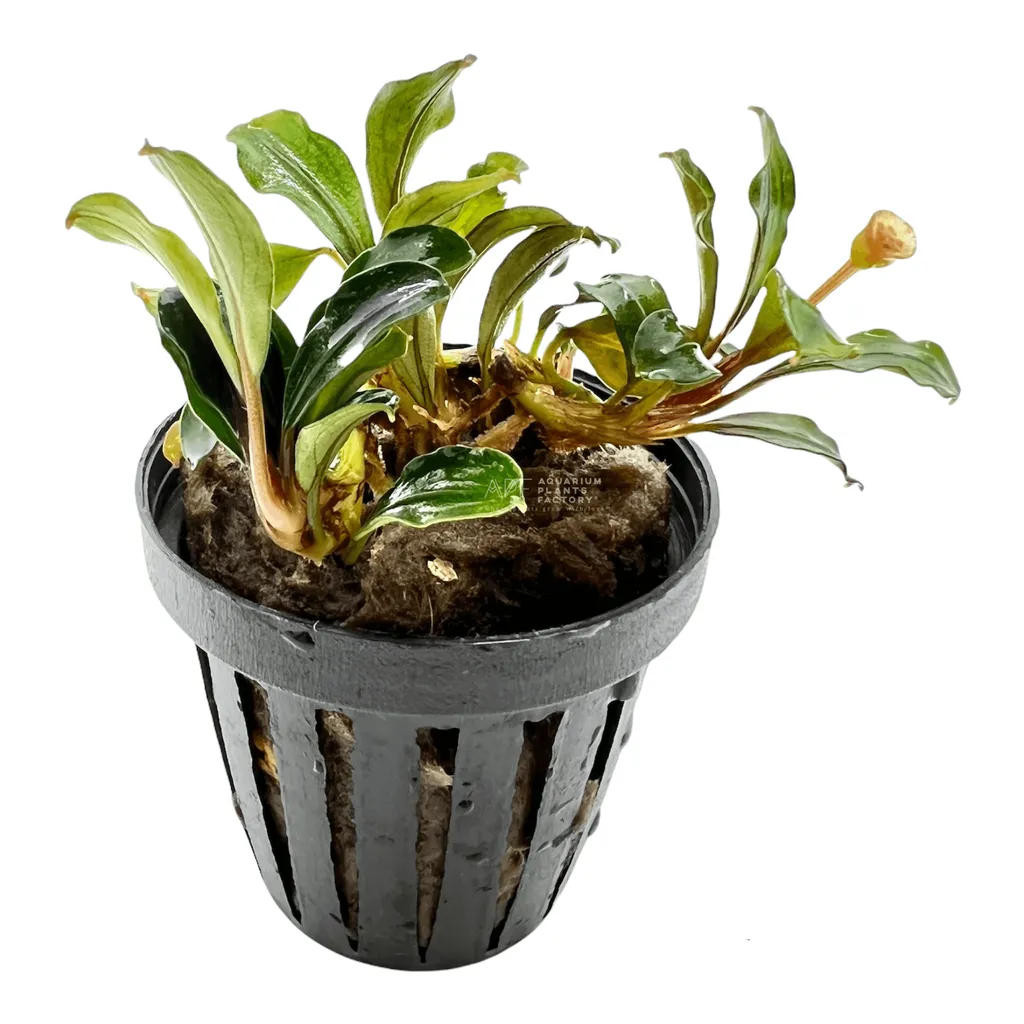
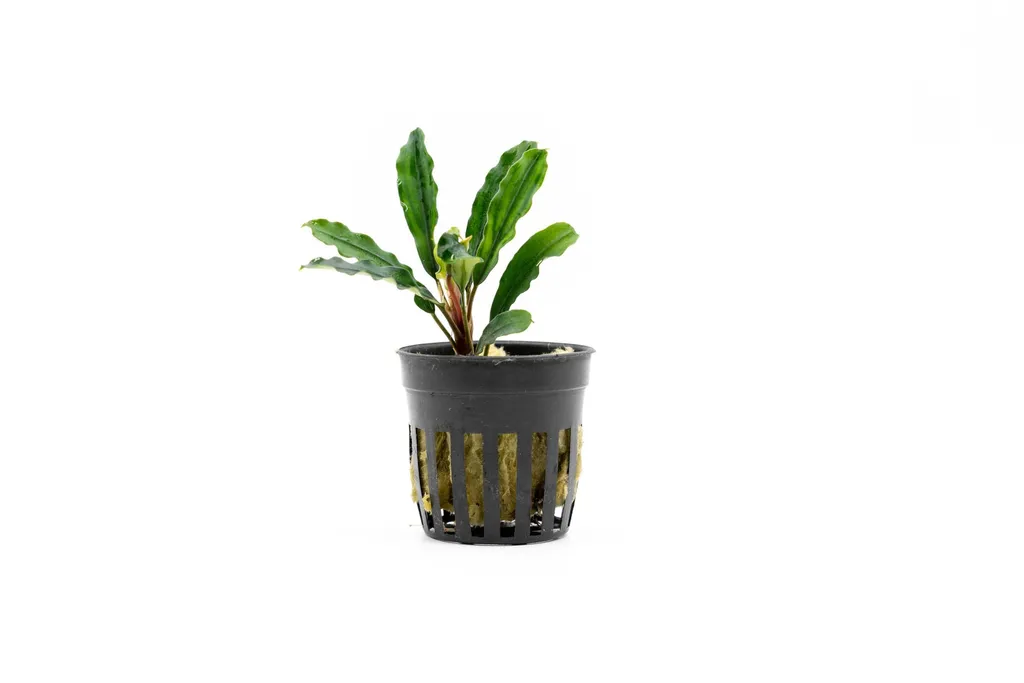
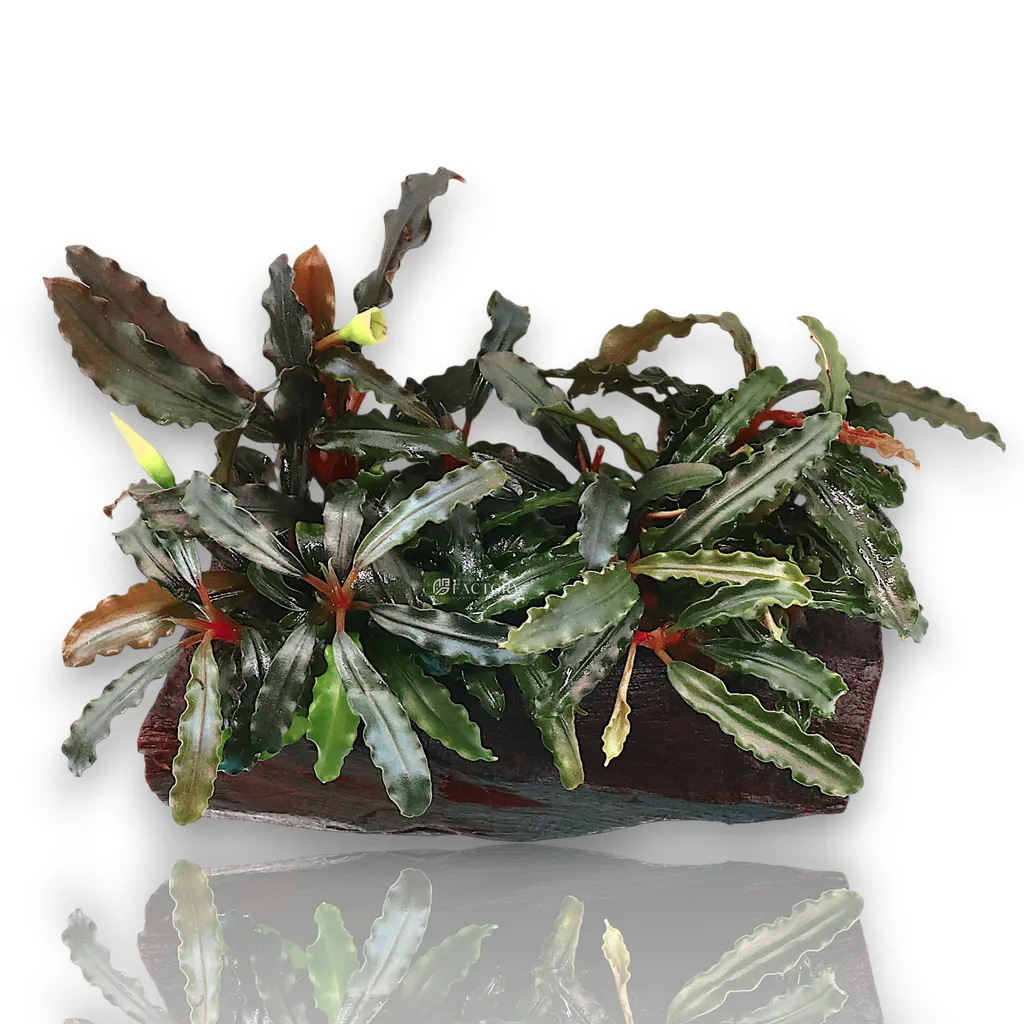
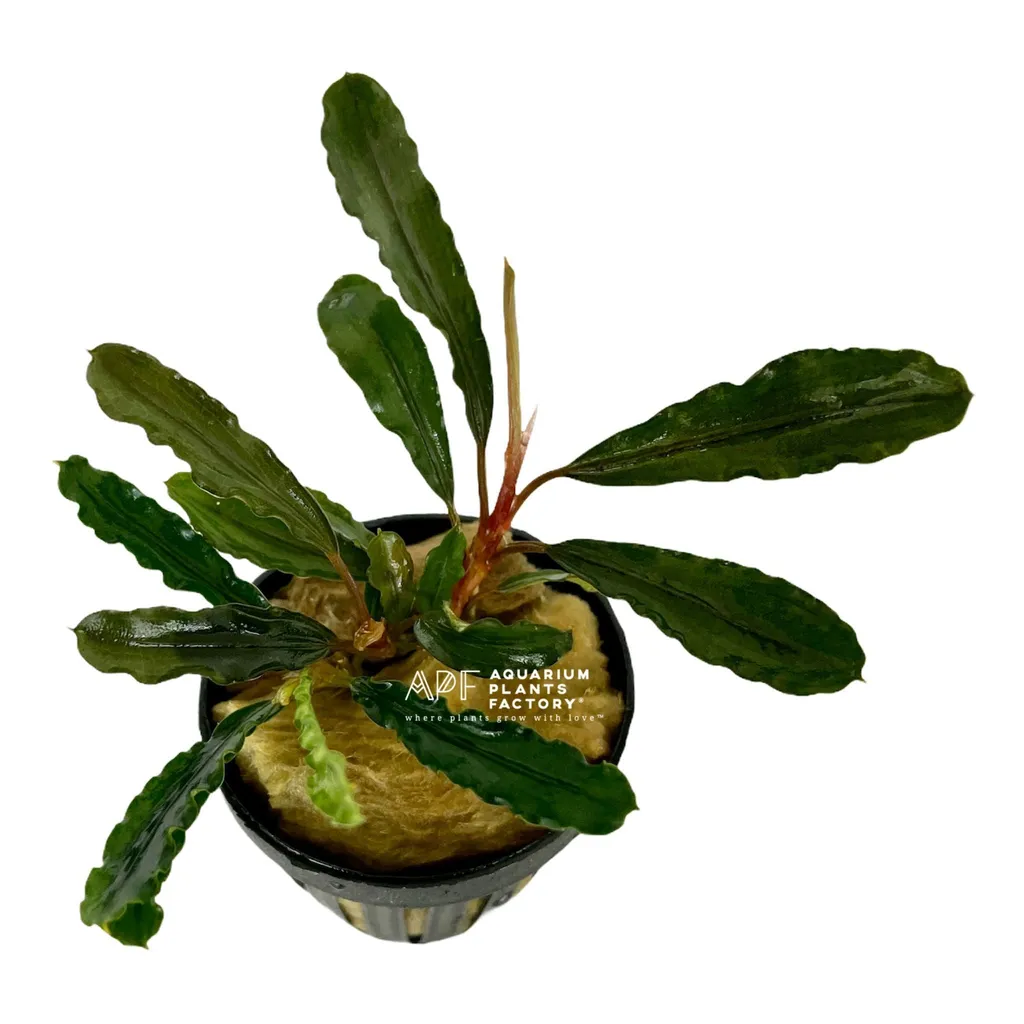
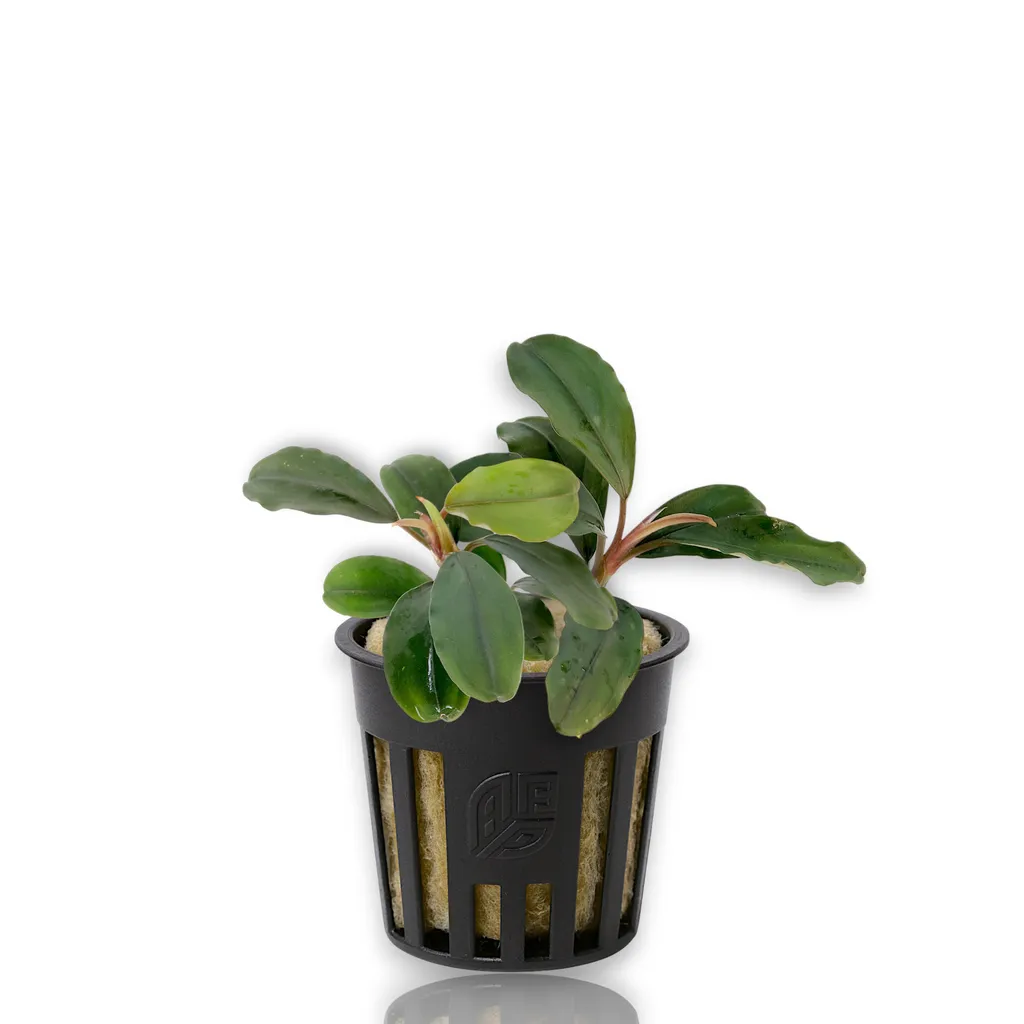
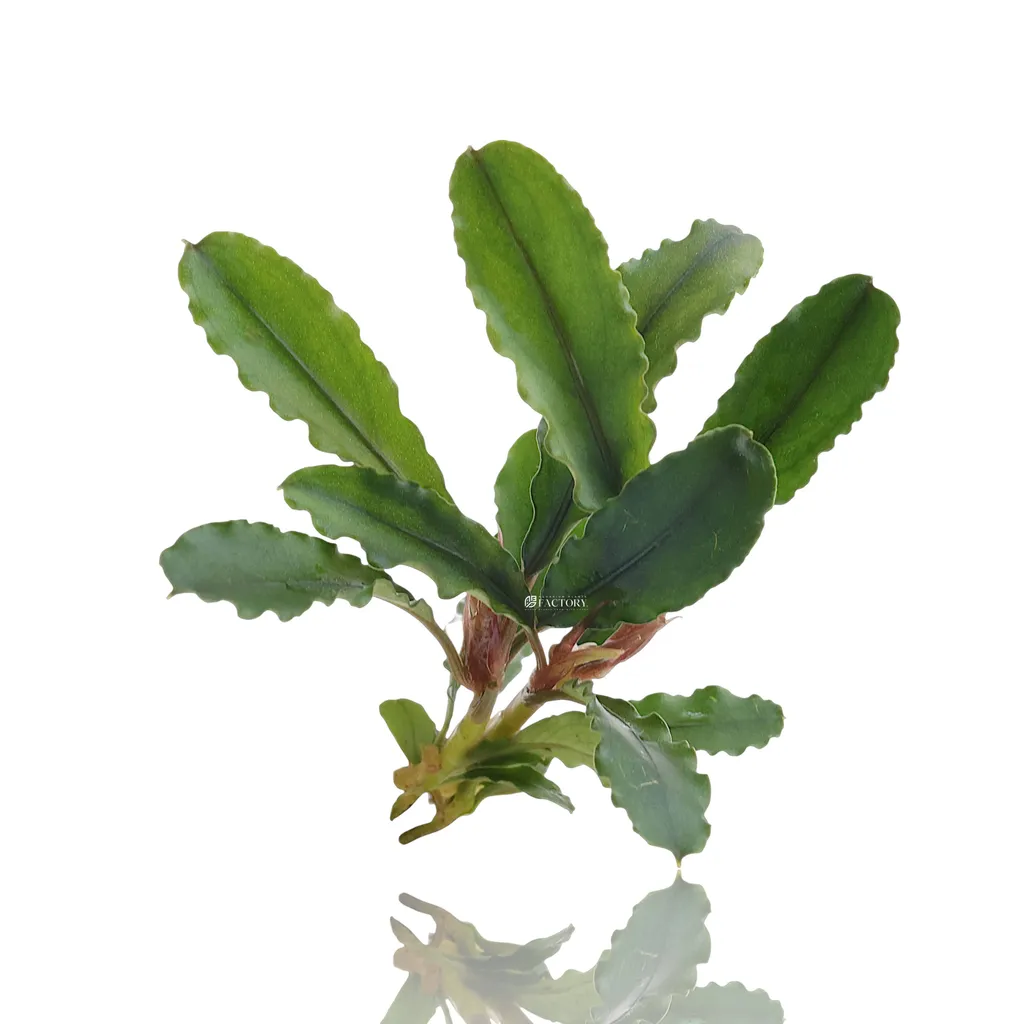
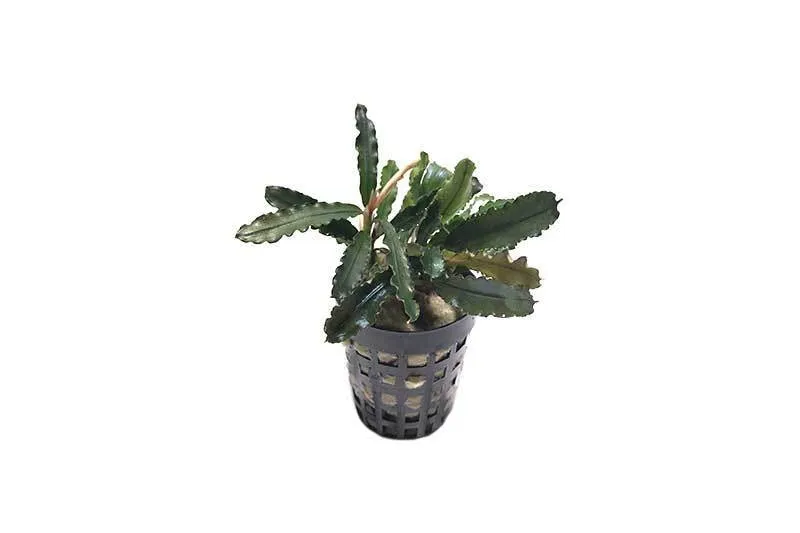
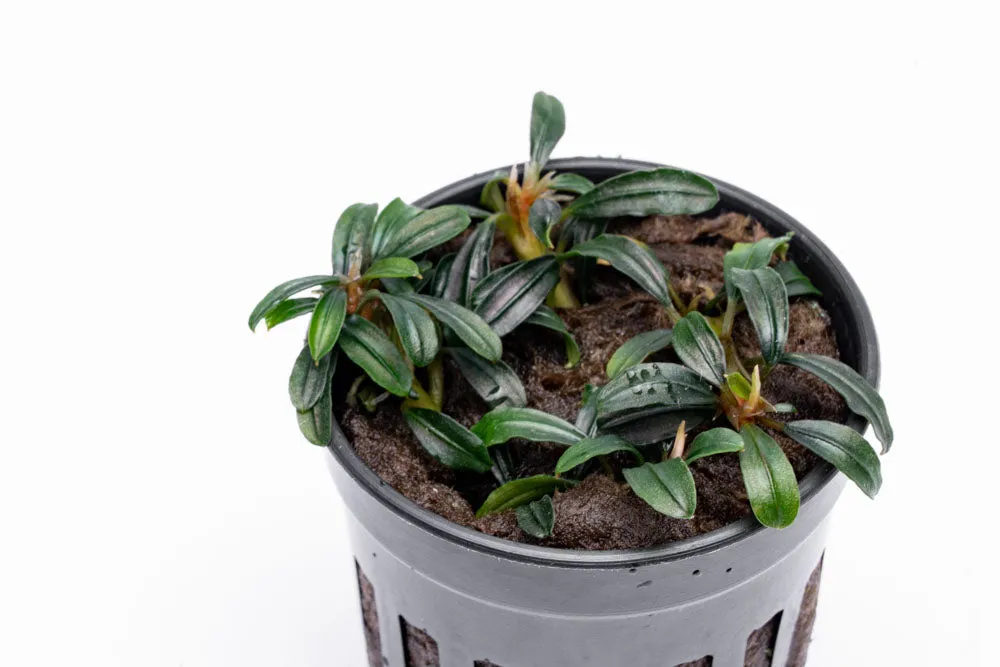
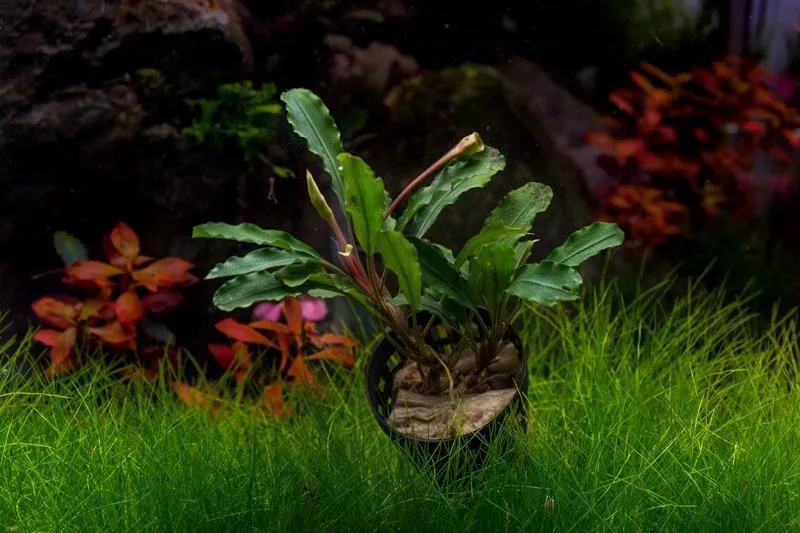
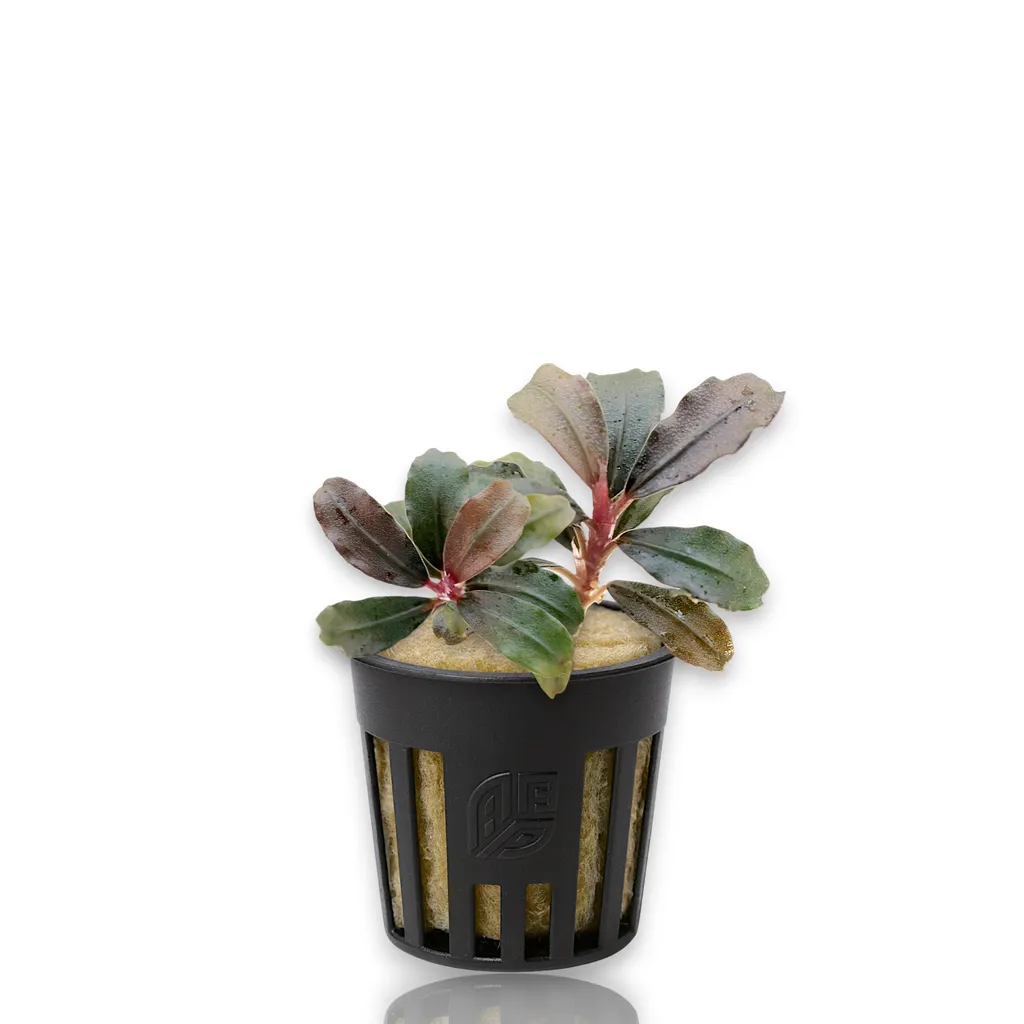
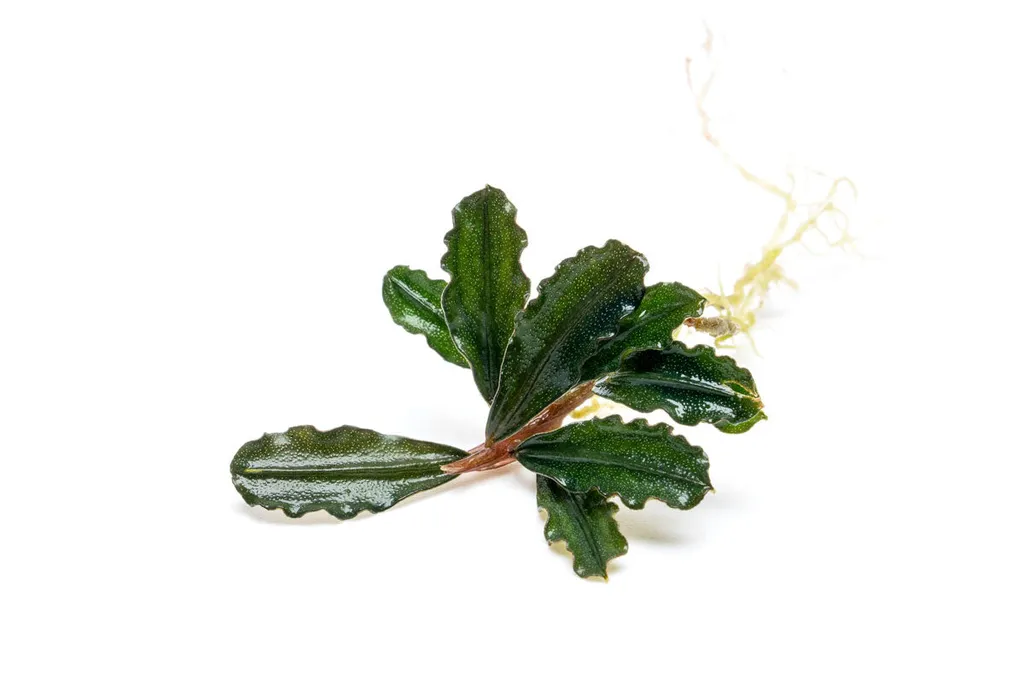
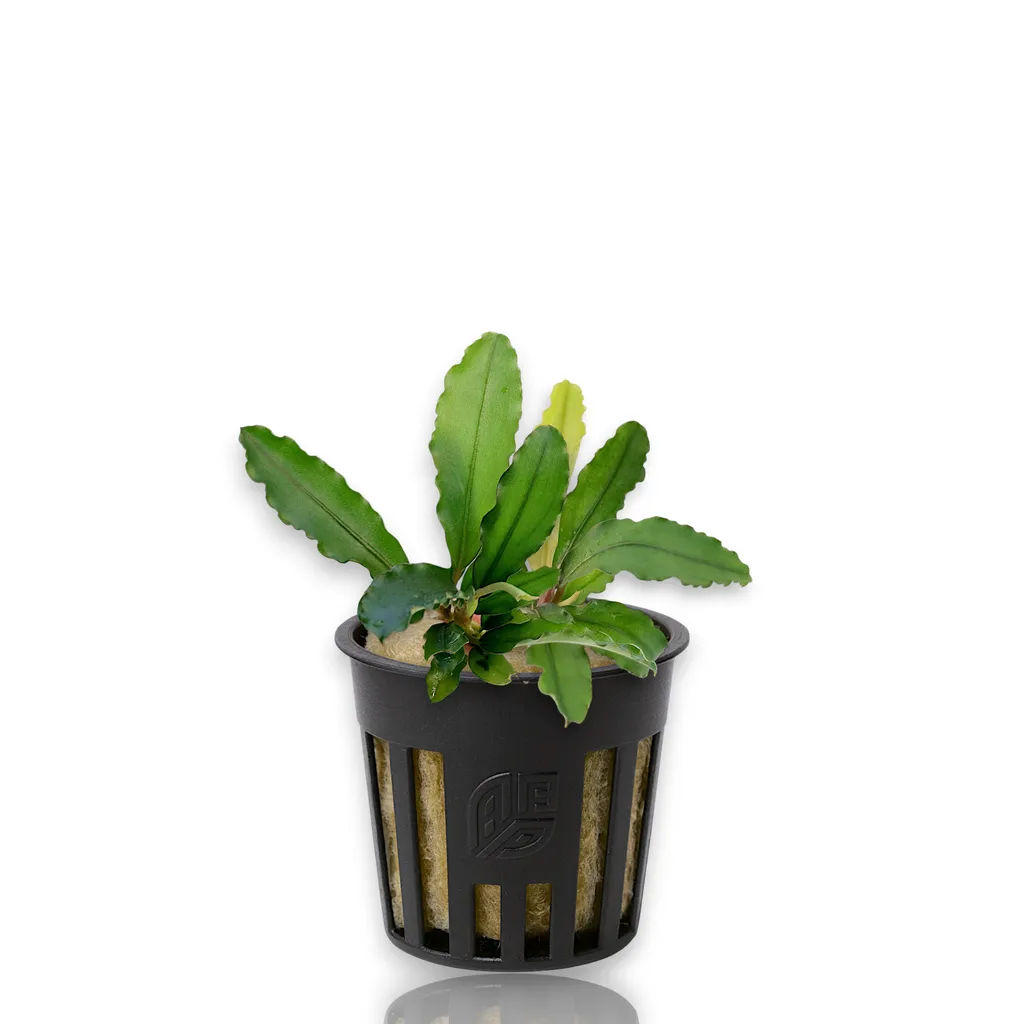
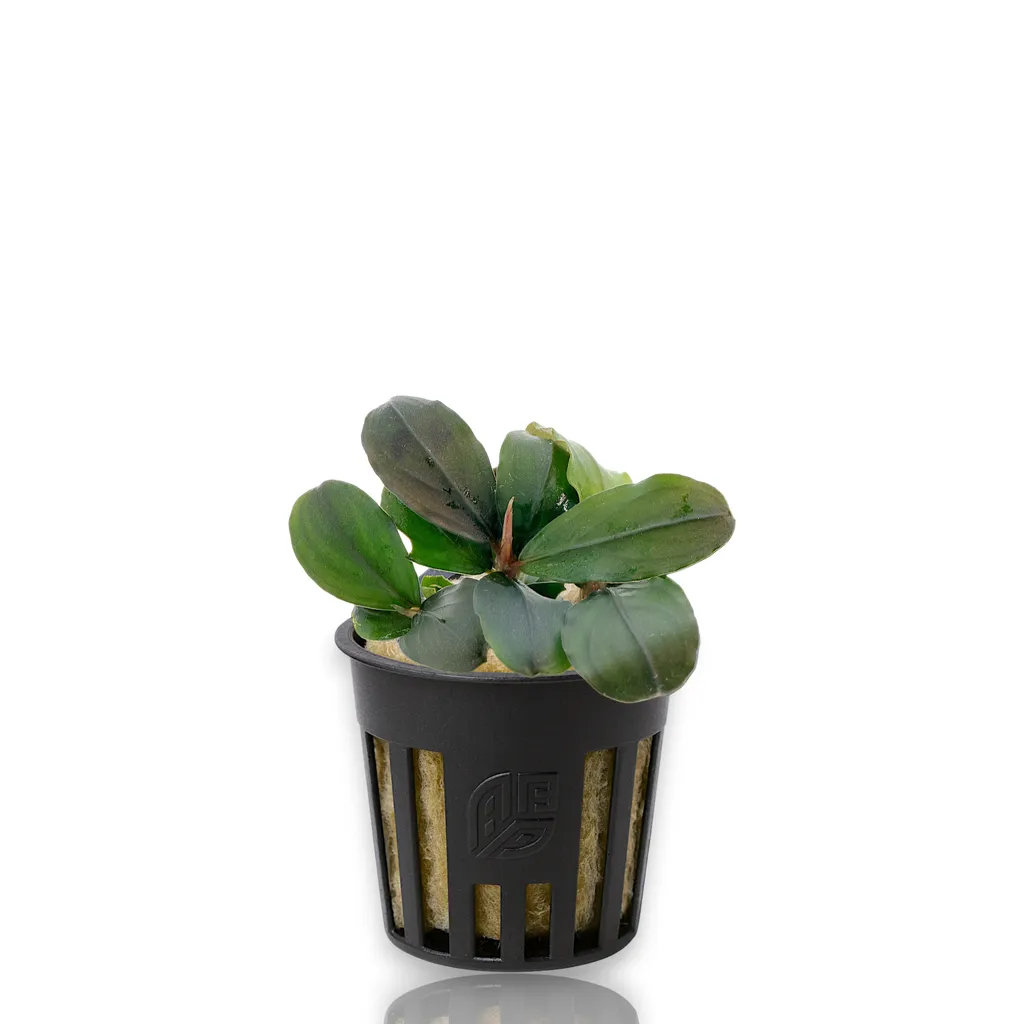
Bucephalandra Variegated Marble is an easy, slow-growing Buce with cream marbling, sold as a stabilized line.
Did you know
Variegated Marble also sells as Green Wavy Marbled at Buce Plant and as Bucephalandra cf. pygmaea 'Marble Variegated' at Wet Spot. That cf. pygmaea label is a guess, since Wong and Boyce (2014) found no trade name accurately applied to B. pygmaea.
Caring for Bucephalandra Variegated Marble
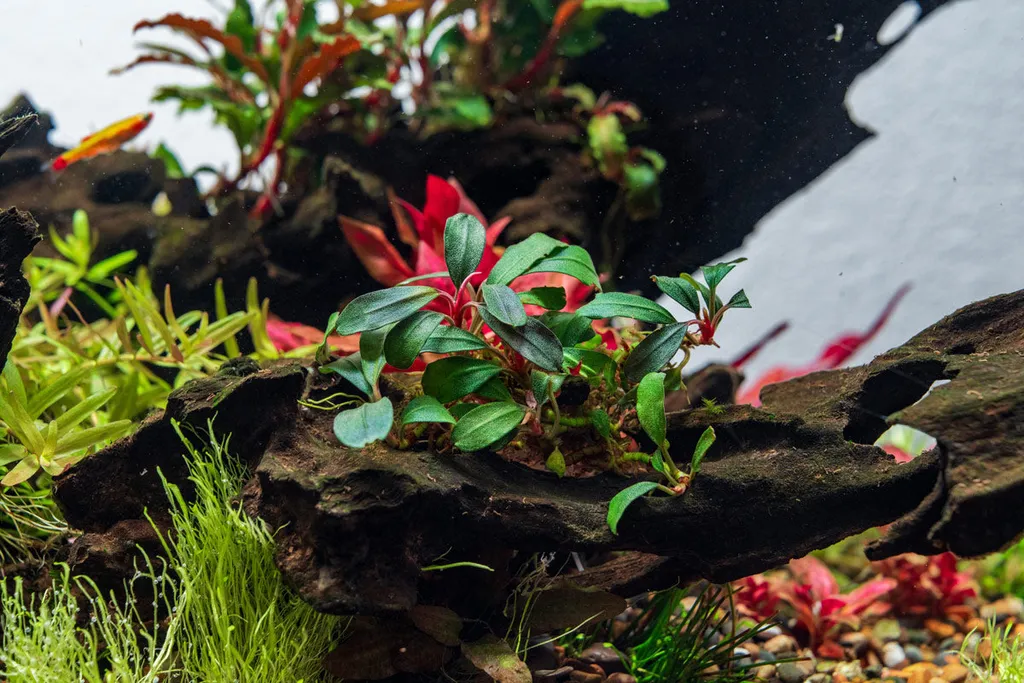
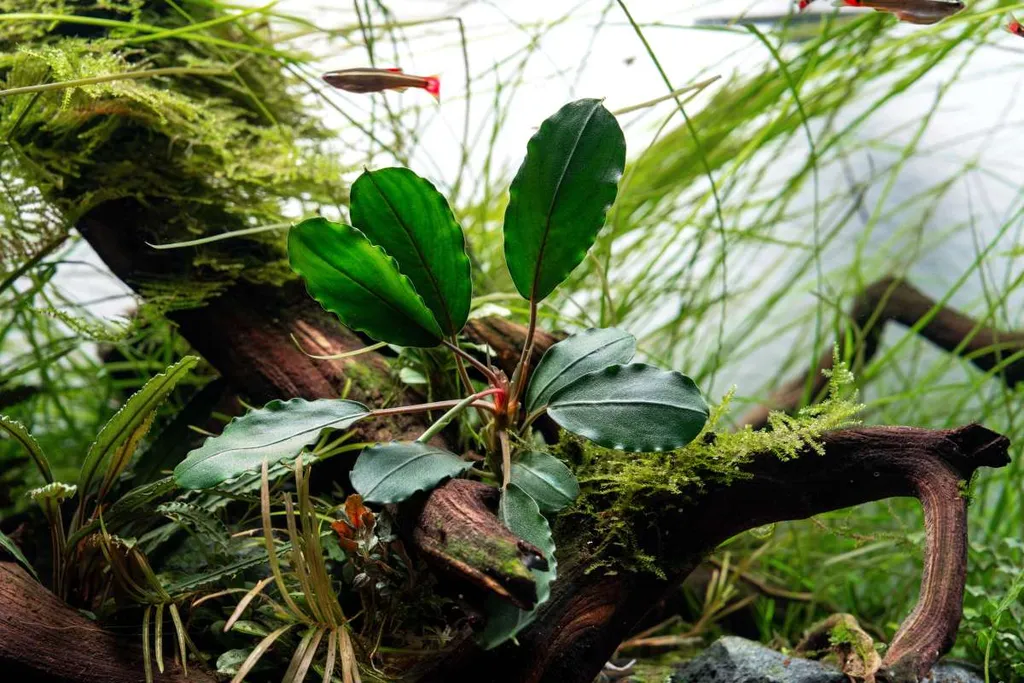
Mount the plant on wood or rock with the rhizome exposed. A buried rhizome rots.
Bucephalandra Variegated Marble grows under low light, but good full-spectrum LED light shows off the cream contrast. CO2 is not required, though it speeds the slow growth. Its roots and the water column both feed it, so dose a liquid fertilizer rather than root tabs. Keep the water steady at 72 to 82°F (22 to 28°C) to limit melt.
Marbling in Buce is often unstable, and a plant may arrive with little pattern. Cut away any rhizome branch that puts out plain green leaves. All-green growth is more vigorous and can crowd out the marbled leaves. Split the rhizome with sharp scissors to make new plants.
Good to know
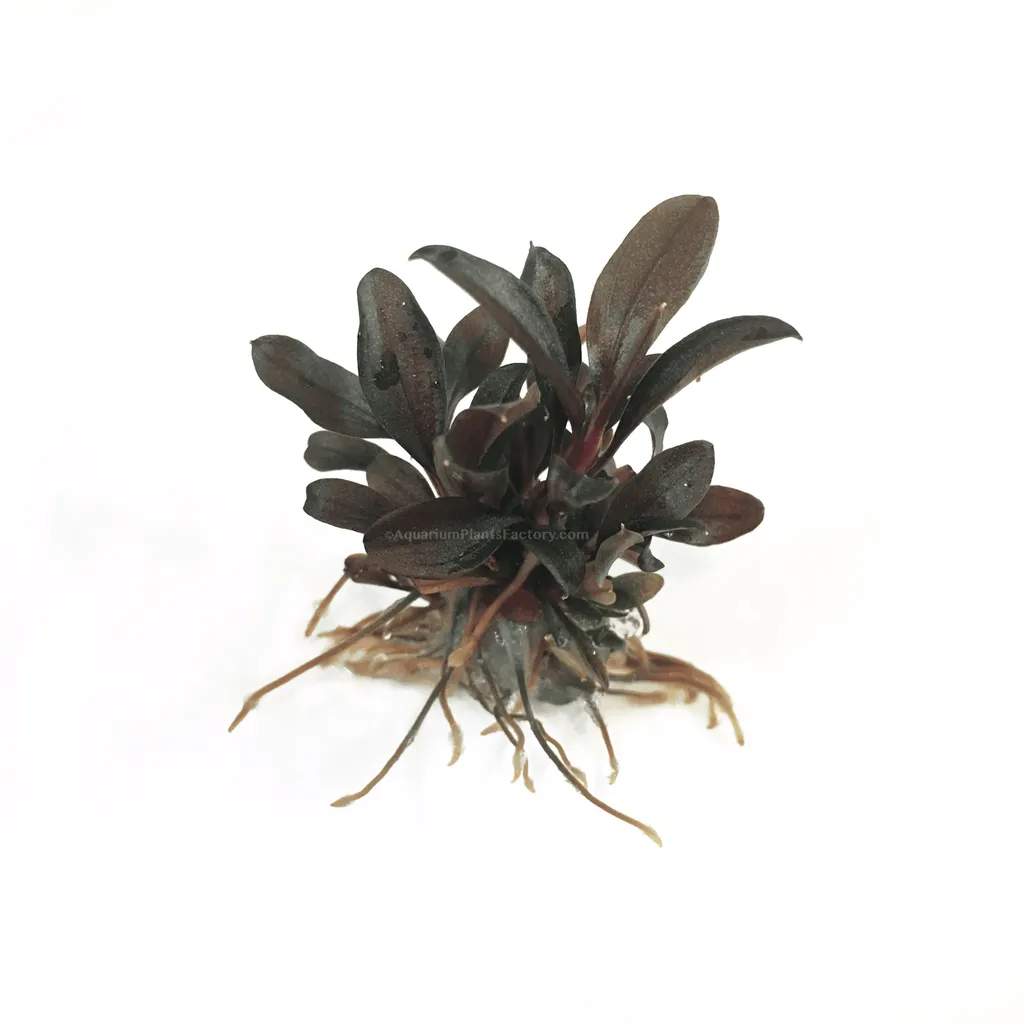
Variegated Marble is a sport, meaning a mutated shoot, of the Green Wavy Buce, an aroid in the family Araceae. It keeps Green Wavy's ruffled leaf and adds cream to pale yellow marbling over green. Wet Spot describes it as a chlorophyll mutation that causes sectoral variegation, so the pale patches carry little or no chlorophyll. Rainbow Marble is a different plant, with darker leaves mottled bronze and pink.
In the wild
Variegated Marble has no wild range, because it is a Green Wavy mutation kept going by growers. Buce Plant says the line took several years of propagation before the marbling held. Green Wavy itself is a farmed trade form from Borneo, with no published collection site. Wild Bucephalandra there anchor to stream rocks, sitting underwater at high water and in open air when levels fall.
Common questions
Does Bucephalandra Variegated Marble need to be planted in the substrate?
No. Bucephalandra Variegated Marble grows attached to rock or wood, so tie or glue the rhizome in place. If you plant its roots, keep the rhizome above the substrate, since a buried rhizome rots.
Does Bucephalandra Variegated Marble need CO2?
No, but it helps. Bucephalandra Variegated Marble can grow without injected CO2, and added CO2 makes it grow faster.
How much light does Bucephalandra Variegated Marble need?
Bucephalandra Variegated Marble is a low-light plant, and the light that comes with a standard tank kit is enough for it.
Does Bucephalandra Variegated Marble need root tabs?
No. Bucephalandra Variegated Marble feeds from the water, so a liquid fertilizer suits it better. Root tabs only help if its roots reach into the substrate.
How do you propagate Bucephalandra Variegated Marble?
Bucephalandra Variegated Marble propagates by rhizome division. Cut the rhizome into pieces with several leaves each, then tie or plant each piece.
How tall does Bucephalandra Variegated Marble grow?
Bucephalandra Variegated Marble grows to about 3.1 in (8 cm) tall. It grows slowly and rarely needs trimming.
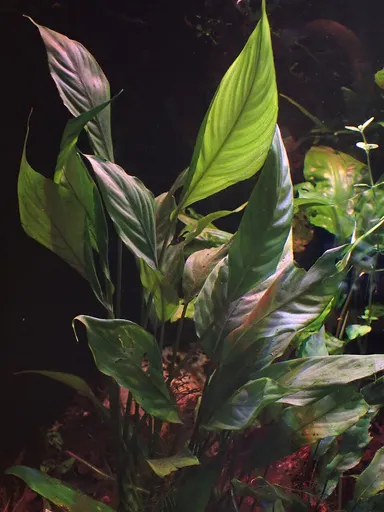 Low lightEpiphyte3.9 in (10 cm)
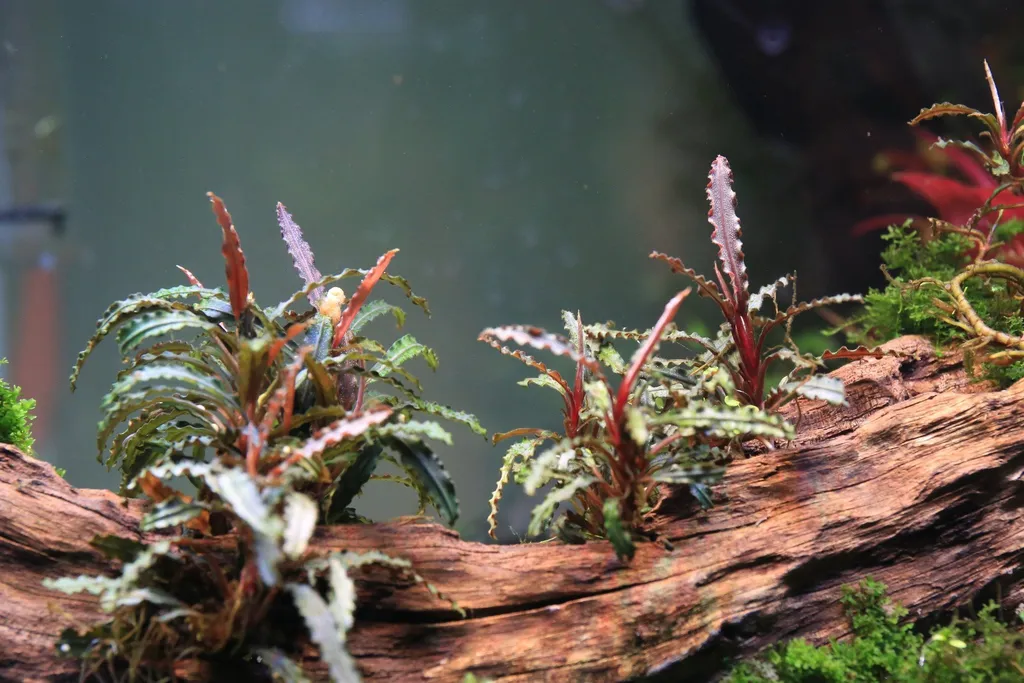 Low lightEpiphyte2.4 in (6 cm)
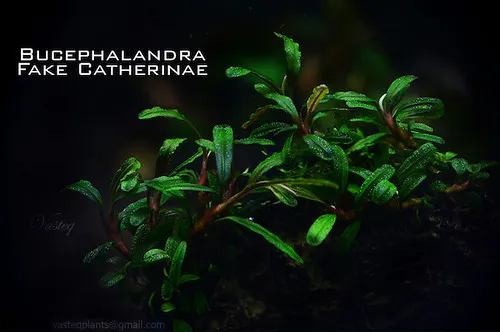 Low lightEpiphyte2.4 in (6 cm)